1 city

 Search
 Brazil
 Argentina
 Bolivia
 Chile
 Colombia
 Ecuador
 Guyana
 French Guiana
 Falkland Islands (Malvinas)
 Paraguay
 Peru
 Suriname
 Uruguay
 Venezuela
 Germany
 Austria
 Belgium
 Croatia
 DenmarkSlovakia
 Spain
 Finland
 France
 Greece
 the Netherlands
 Hungary
 Ireland
 Iceland
 Italy
 Luxembourg
 Norway
 Poland
 Portugal
 the United Kingdom
 the Czech Republic
 Sweden
 Switzerland
 Turkey
 Canada
 the United States
 Mexico
 the Dominican RepublicTurkey
 South Africa
 Australia
 Fiji
 New Zealand
 Papua New Guinea
Region · The Tatras and Eastern Slovakia
Košice and St. Elizabeth Cathedral, the Slovak Paradise, Dobšiná Ice Cave, the caves of the Slovak Karst and the vineyards of Slovak Tokaj.
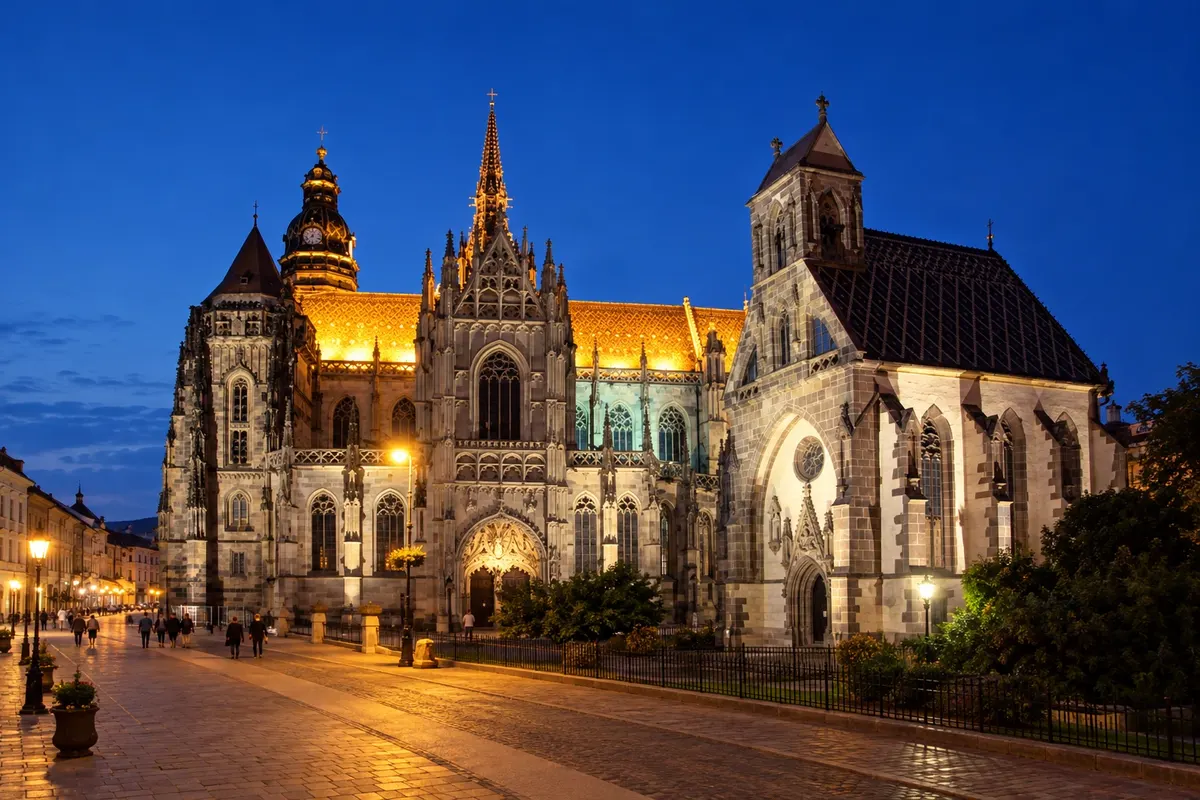
In the photo: St. Elizabeth Cathedral, in Košice.
Illustrative images. The pictures in this guide are illustrations based on the real place, not photographs, and may differ from it.

The region
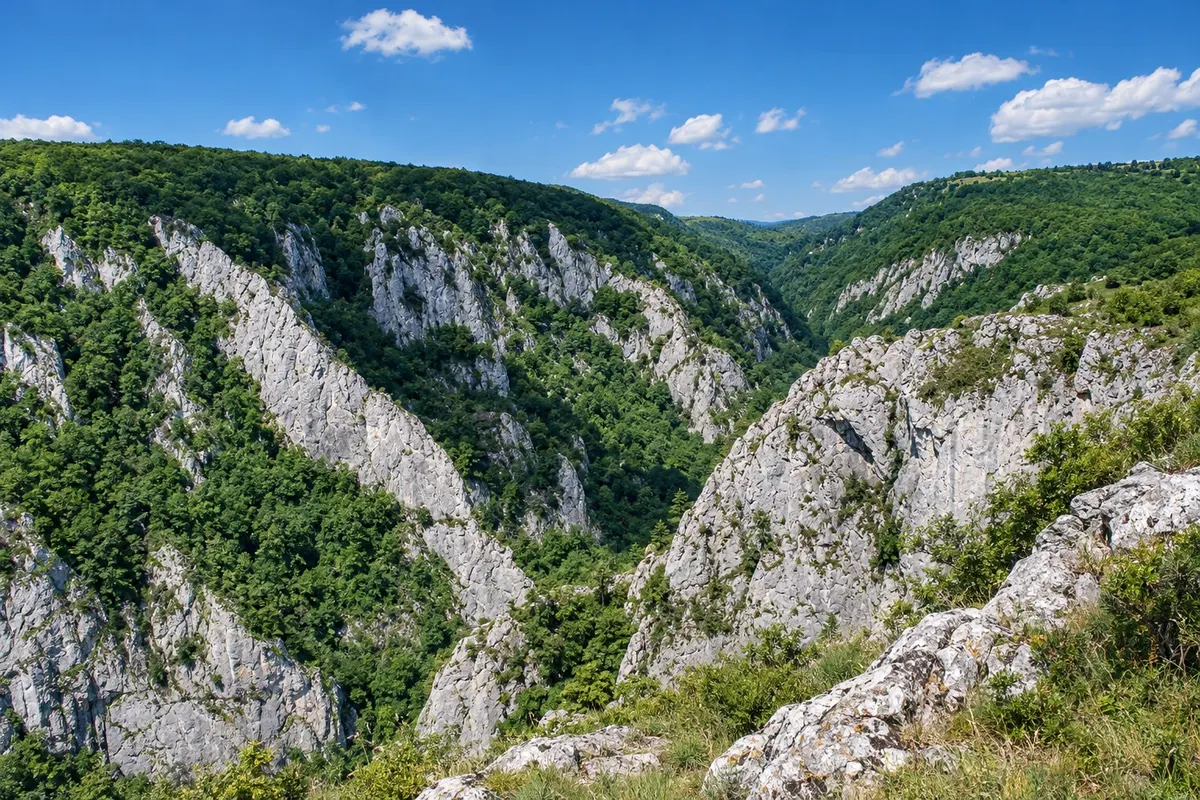
The Košice region, in the southeast of the country, borders Hungary and Ukraine. It stretches from the gorges of the Slovak Paradise and the Volovec Mountains in the west to the Zemplín plain in the east, passing through the limestone plateaus of the Slovak Karst to the south.
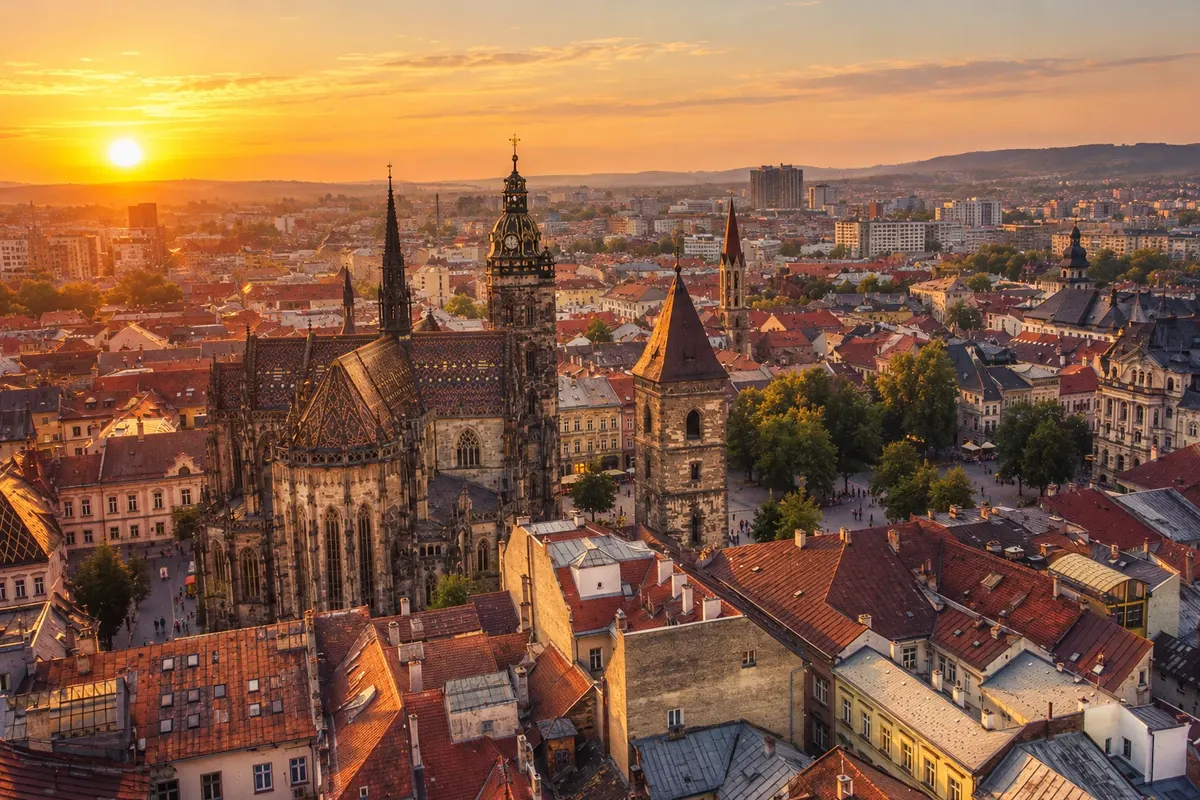
Košice, the country’s second city, has its center along Hlavná Street, wide and lined with Baroque and 19th‑century façades. In the middle stands St. Elizabeth Cathedral, Gothic and the largest church in Slovakia, together with St. Urban Tower and the State Theatre, in front of which there is a musical fountain. In the cathedral’s crypt is the tomb of Francis II Rákóczi, who led a Hungarian uprising against the Habsburgs in the early 18th century.
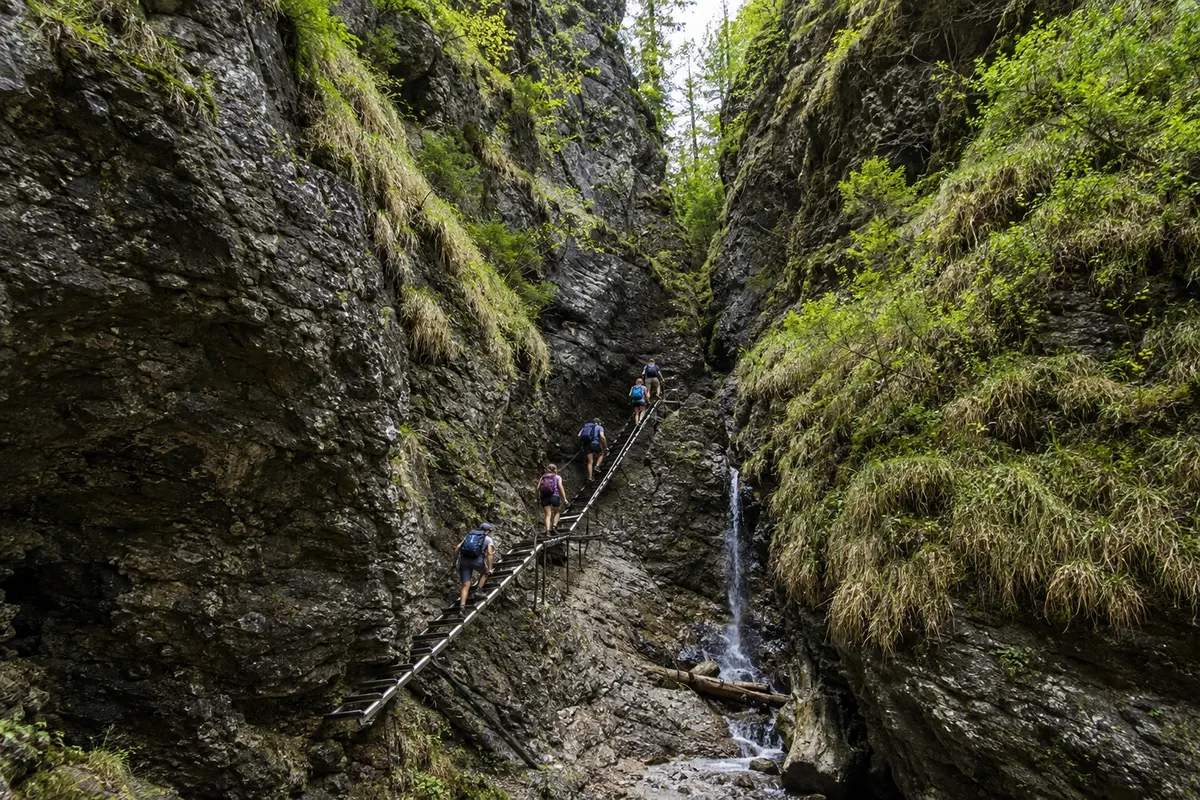
Slovak Paradise National Park is known for its narrow gorges, such as Suchá Belá, which are crossed by metal ladders, bridges and chains, and for the Hornád River canyon. To the south of the park, Dobšiná Ice Cave preserves one of the largest volumes of ice in any cave and is part of the UNESCO World Heritage listing for the caves of the Aggtelek and Slovak Karst.
In the Slovak Karst, near Rožňava, the Domica, Gombasecká and Ochtinská caves — the latter noted for aragonite formations — are also UNESCO sites. In Betliar, the Andrássy family manor house, set in a park, is visited with a guide. At the southeastern extreme, seven municipalities around Malá Tŕňa and Viničky make up the Slovak part of the Tokaj wine region.
Destinations
Cities
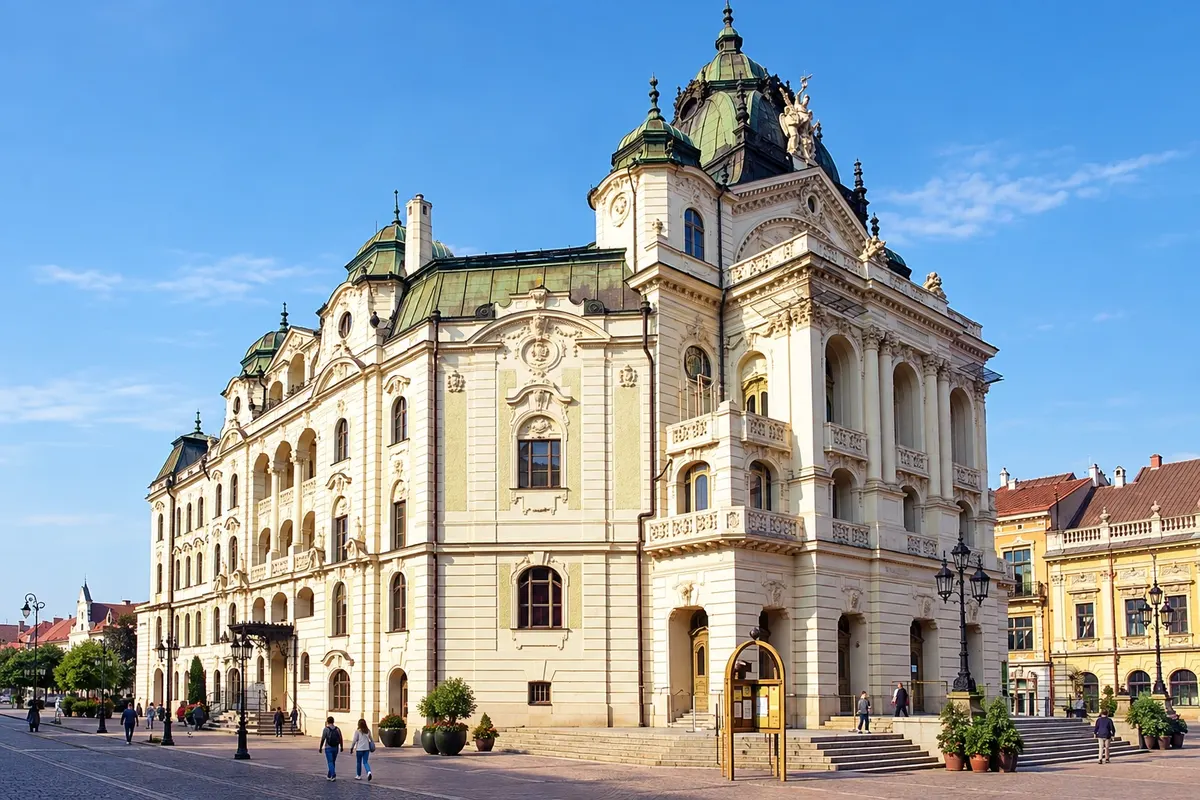
The largest city of eastern Slovakia and capital of the Košice region. Hlavná Street, wide and elongated, brings together St. Elizabeth Cathedral, Gothic, the Urban Tower, the State Theatre with the Fountain that Sings and Baroque palaces. To the north, the East Slovak Museum holds the gold treasure found in 1935 in the center.
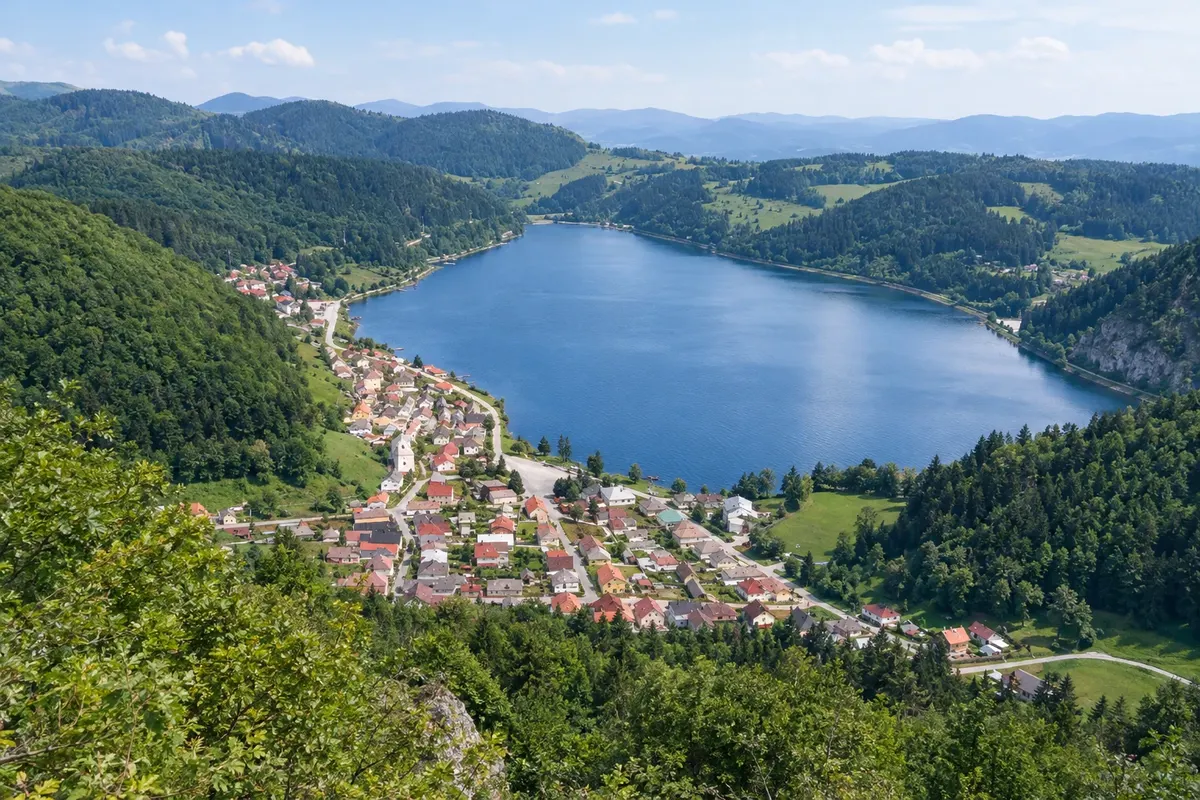
Village on the southern edge of Slovak Paradise, on the shore of Palcmanská Maša lake, with green waters and surrounded by limestone cliffs, crossed by a railway line. It is the closest base to the Dobšiná Ice Cave, protected by UNESCO, about 6 km away.
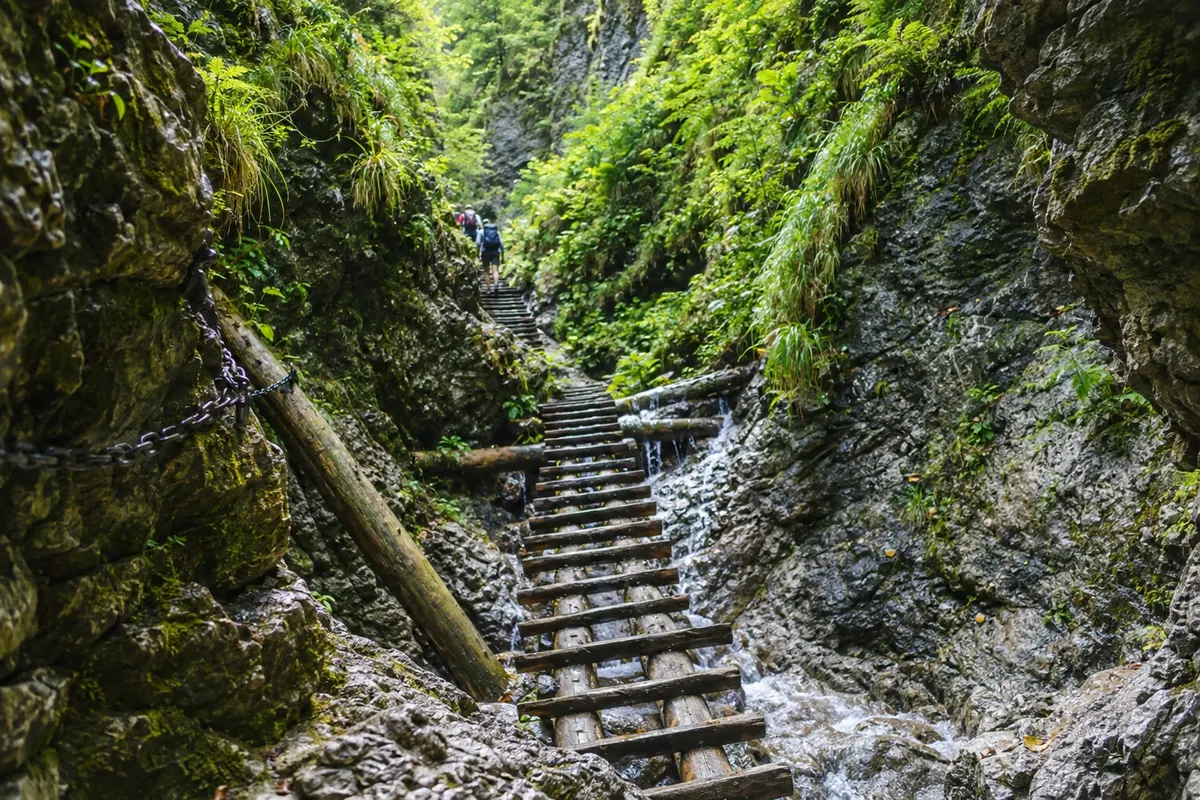
Village on the northwest edge of the Slovak Paradise, home to the tourist settlement of Podlesok, from where the trail into the Suchá Belá gorge departs — the park’s most visited gorge, with ladders and waterfalls. From the same area you can reach the ruins of the Carthusian monastery at Kláštorisko, on the high plateau.
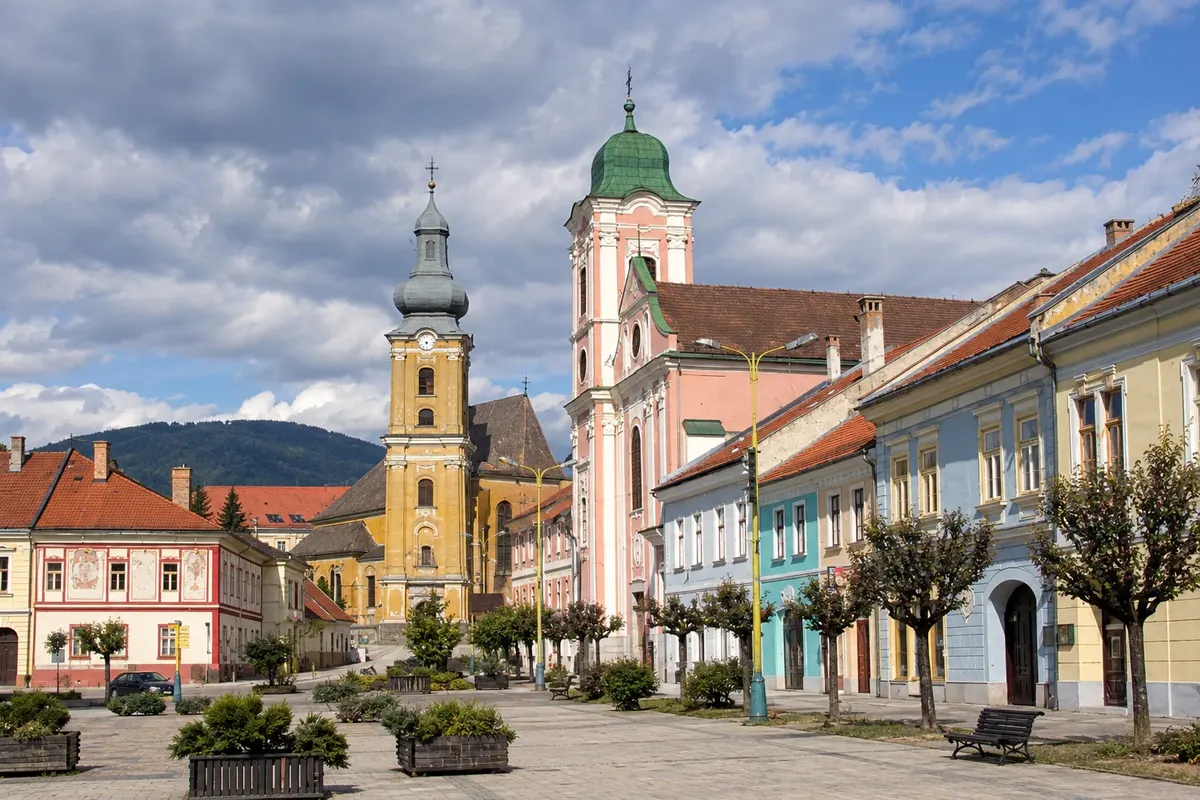
Former mining town in the Slaná valley, gateway to the Slovak Karst. In the medieval square stand the Renaissance watchtower, open to climb, and nearby the Gothic cathedral, which houses a 1513 panel depicting mining work. In the surroundings are the Betliar manor, the Domica, Gombasek and Ochtiná caves and the Zádiel Gorge.
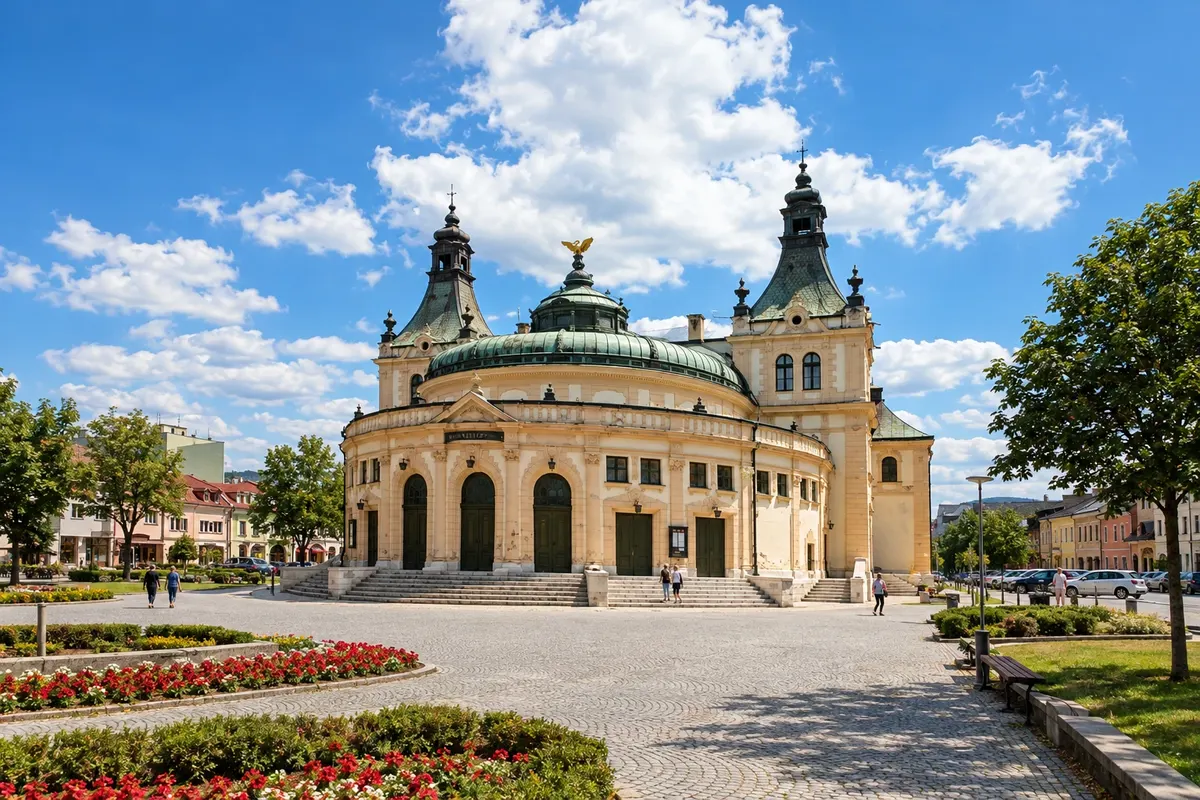
Town of about 35,000 on the northern edge of the Slovak Paradise, with an elongated, tree-lined, lens-shaped square and the Church of the Assumption, whose 87-meter tower is the tallest in the country. A few kilometers away, the tourist hub of Čingov is the starting point for the Tomášovský výhľad viewpoint and the Hornád canyon.
The caves receive most visitors in the summer season, and Dobšiná Ice Cave is generally open only from May to early September. The trails through the gorges of Slovak Paradise are busiest from June to October; some are one‑way and have seasonal closures, so check before you go. In Košice, summer brings festivals in the squares, and in December Hlavná Street hosts a Christmas market.
Košice Airport (KSC) has flights to Vienna, Warsaw, Prague, Bratislava and other European cities. Košice is the terminus of the country’s main railway that comes from Bratislava via Žilina and Poprad, about 400 km away, and there are connections to Hungary. To reach Slovak Paradise, take a train or bus to Spišská Nová Ves, and from there to Hrabušice and Čingov; Dedinky and Dobšiná, on the park’s southern side, are easier to reach by car.
Your questions
The historic centre along Hlavná Street, with the cathedral, the musical fountain, the Gothic chapel of St. Michael and stretches of the old city walls. One day is enough to see the centre; with more time you can continue to Slovak Paradise or the Slovak Karst.
Many climb through narrow gorges with metal ladders, bridges and chains anchored to the rock, such as Suchá Belá from Podlesok, in Hrabušice, and the Prielom Hornádu section along the river. Some gorges can only be walked in one direction. Good hiking shoes and fitness help; check before you go which sections are open.
Only with a guide, on a route of about 500 m, at a temperature close to 0 °C: bring warm clothing. The entrance is about a 25‑minute uphill walk from the parking area at the village of Dobšinská Ľadová Jaskyňa. It generally opens from mid‑May to early September and is usually closed on Mondays; confirm opening times before you go.
Yes. The Tokaj wine region is divided between Hungary and Slovakia, and the Slovak part comprises seven municipalities in the far southeast, such as Malá Tŕňa and Viničky. cellars carved into the rock store the region’s sweet and dry wines; check visiting hours before you go.