
park · Mucugê, BA
Parque Municipal (Projeto Sempre Viva)
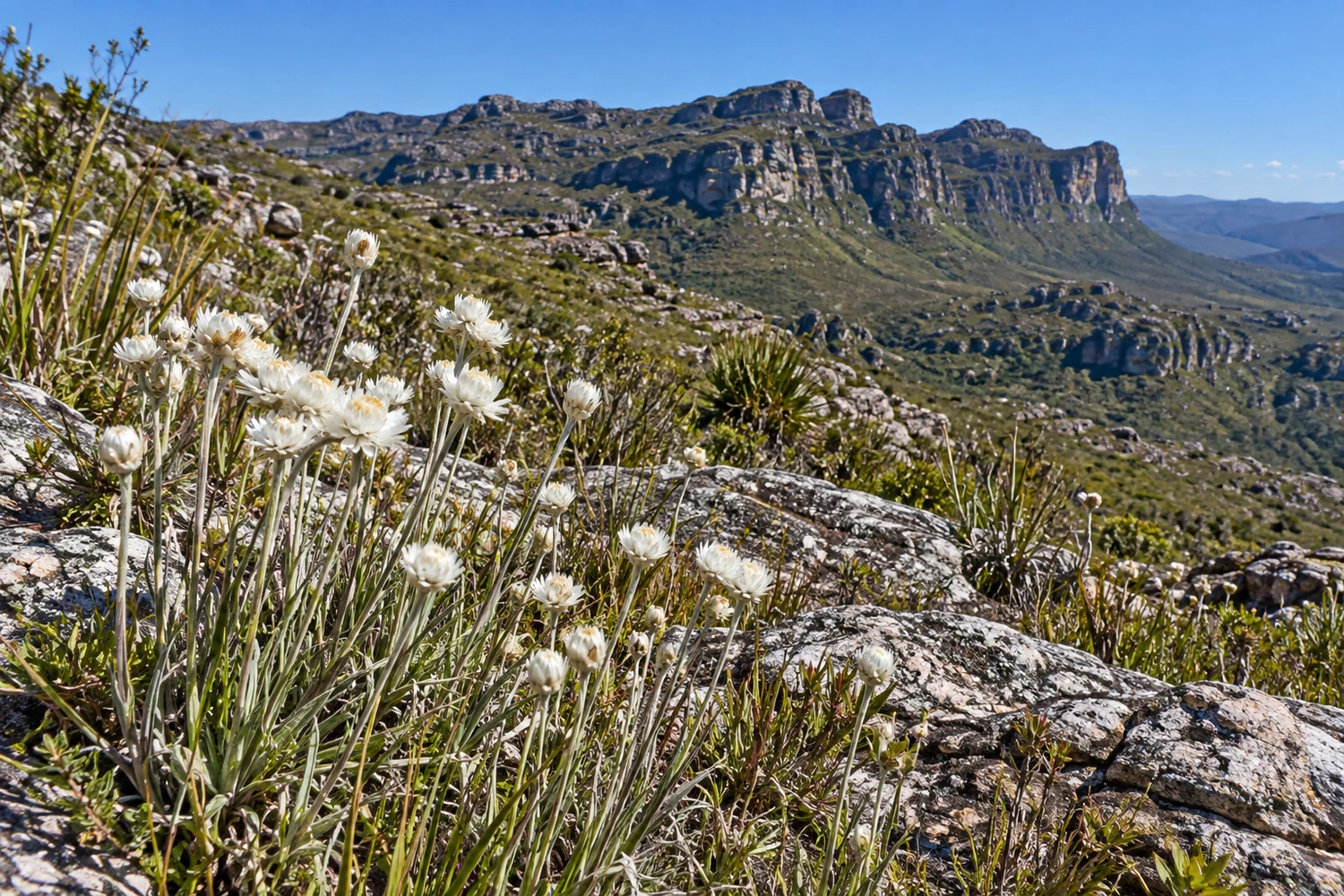
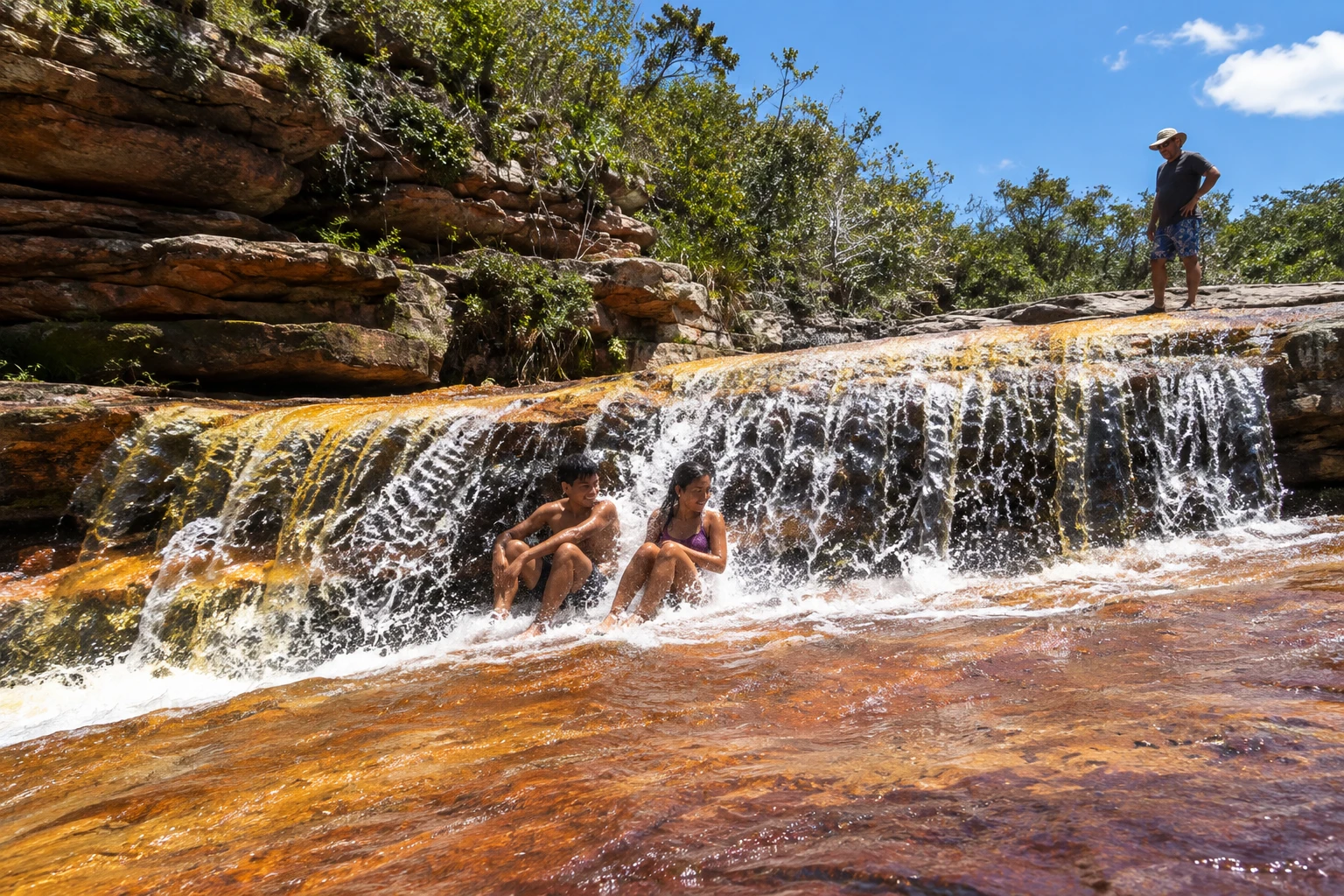
A 270-hectare area where Projeto Sempre Viva, in partnership with UEFS (a state university), studies the reproduction of an endemic, endangered species of sempre-viva (everlasting flower). The park's trails lead to the Tiburtino and Piabinha waterfalls.
Illustrative images. The pictures in this guide are illustrations based on the real place, not photographs, and may differ from it.
Discover
About Parque Municipal (Projeto Sempre Viva)
The Mucugê Municipal Park, better known as Projeto Sempre-Viva, is on the outskirts of town, in Chapada Diamantina. It was created in 1999 to protect the mountain's rocky grasslands and, in particular, the Mucugê sempre-viva (everlasting flower), a flower that exists only in this region and nearly disappeared because of picking for sale.
The sempre-viva got its name because, once picked, it keeps its shape and color for many years. For decades, it was pulled up in large quantities to be sold as decoration. The park was created to change this story: there, researchers from Bahia universities study the plant and work on growing and propagating it.
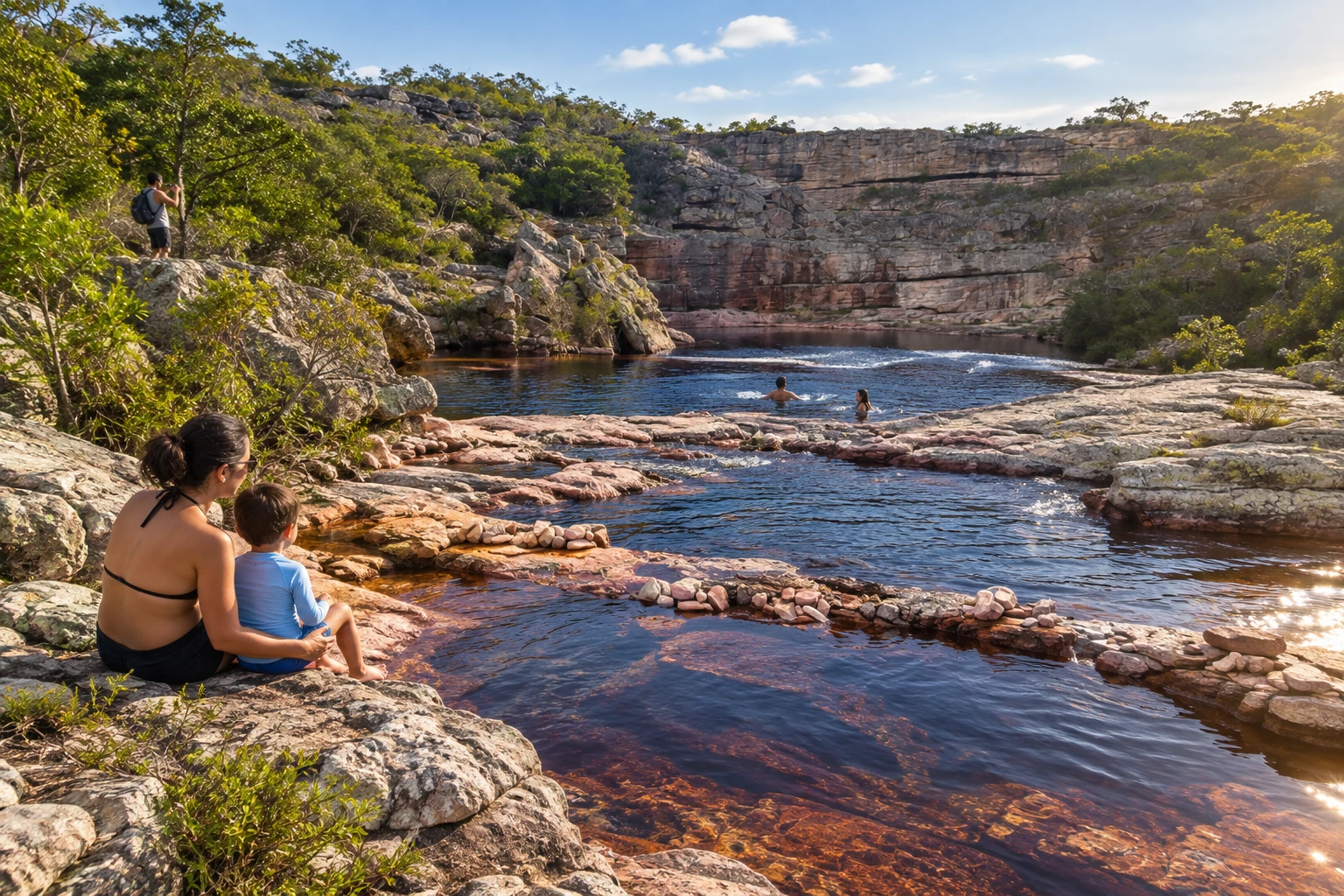
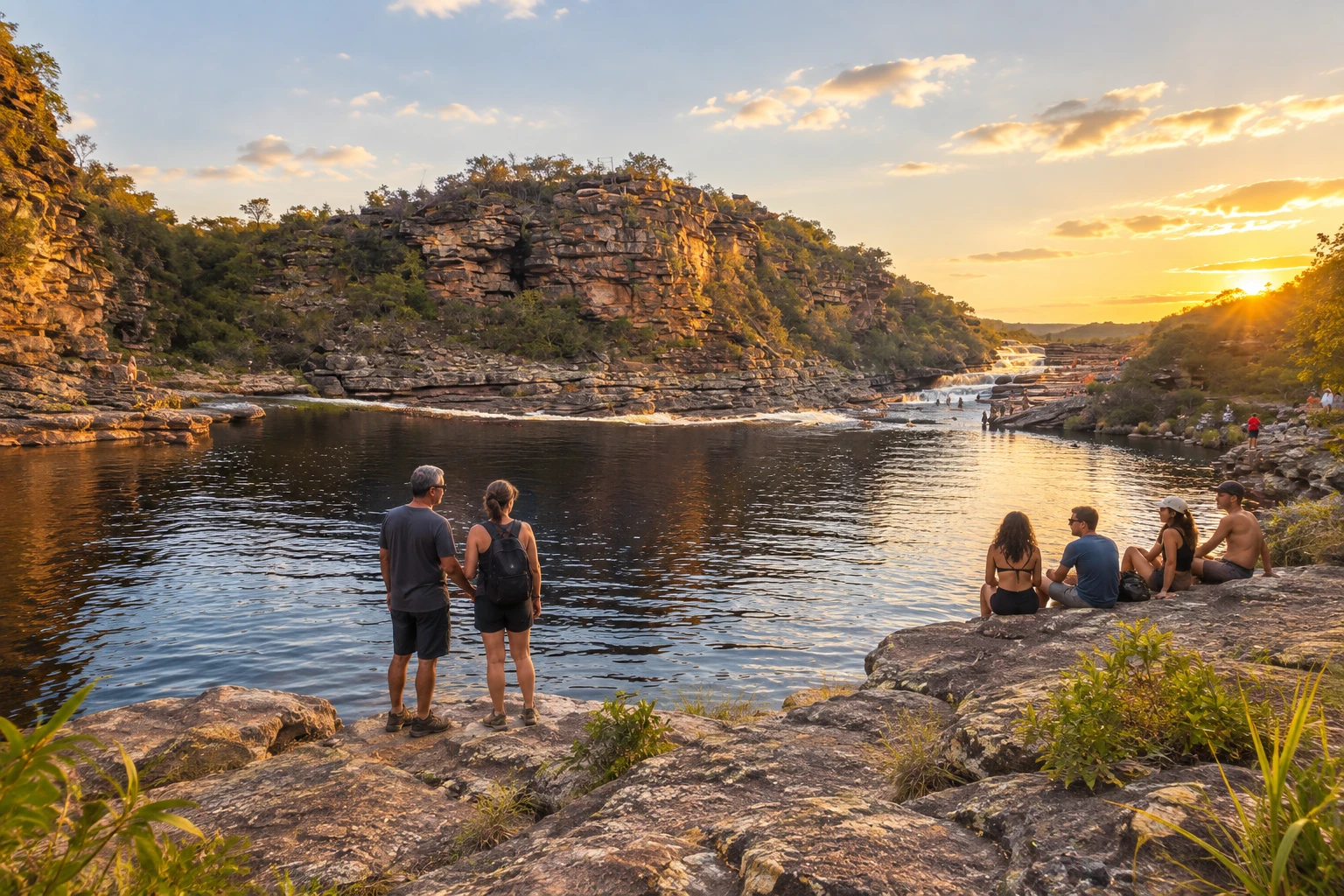
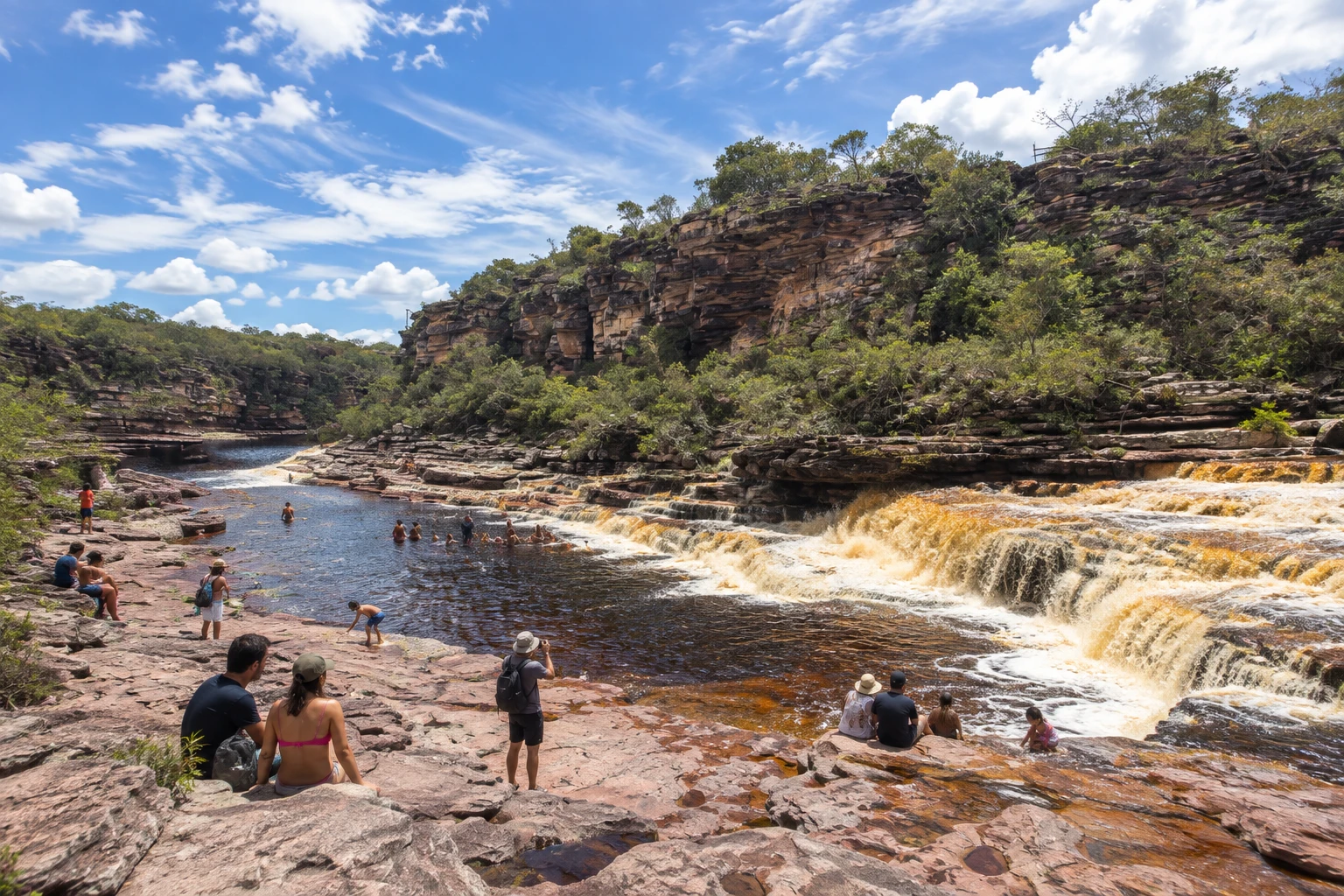
The visit starts at the visitor center, where a park guide explains the flower and the conservation work. Then a marked trail, done without a guide, crosses the mountain vegetation and follows the Cumbuca River to two waterfalls: Piabinha, small and near the start, and Tiburtino, a little farther on, with a wide pool for swimming among the rocks.
The park is also home to the Museu Vivo do Garimpo, which recreates the homes and tools of the miners who made Mucugê's history in the diamond era.
The trails are wide, practically flat and easy, good for families with children and for people who don't want to take on the Chapada's long hikes. The volume of the waterfalls changes a lot between the rainy and dry seasons.
Before you go
Practical information
How much time to set aside
Two to three hours, counting the talk at the visitor center, the trail to the two waterfalls and the Museu Vivo do Garimpo.
Best time
In the morning or early afternoon, with light for the trail and time for a swim; in the rainy season, from November to April, the waterfalls are fuller, and in the dry season the water is calmer and the trail firmer.
How to get there
The park is beside the highway that links Mucugê to Andaraí, about ten minutes by car from downtown Mucugê. Access is on a paved road and there is parking at the entrance.
Tip
Bring a swimsuit, towel, sunscreen and water: the trail is short, but has sunny stretches, and the pool at Cachoeira do Tiburtino invites you to stay a good while. There is an entrance fee; check the hours with the Mucugê Tourism Department before you go.
A look at the place
Parque Municipal (Projeto Sempre Viva) in pictures
These pictures are illustrations based on the real place, not photographs. They may differ from the place.
Click the picture to enlarge it.
Get your questions answered
Frequently asked questions about Parque Municipal (Projeto Sempre Viva)
What is Projeto Sempre-Viva in Mucugê?
It is the Mucugê Municipal Park, created in 1999 to protect the rocky grasslands of Chapada Diamantina and the Mucugê sempre-viva (everlasting flower), a flower found only in this region that was threatened by picking. The park combines research, a trail, waterfalls and the Museu Vivo do Garimpo.
Do I need a guide to visit the Sempre-Viva Park?
No. On arrival, a park guide gives a talk about the flower and its conservation, and then the trail to the waterfalls is marked and done on your own.
Can you swim at the waterfalls in the Sempre-Viva Park?
Yes. The Piabinha and Tiburtino waterfalls, on the Cumbuca River, have pools for swimming; Tiburtino's is the widest. The water volume varies with the rainy season.
Is the Projeto Sempre-Viva trail difficult?
No. The trails are wide, almost flat and easy, suitable for families with children.
Is there an entrance fee for the Sempre-Viva Park?
Yes, there is an entrance fee. Check rates and hours with the Mucugê Tourism Department before you go.