
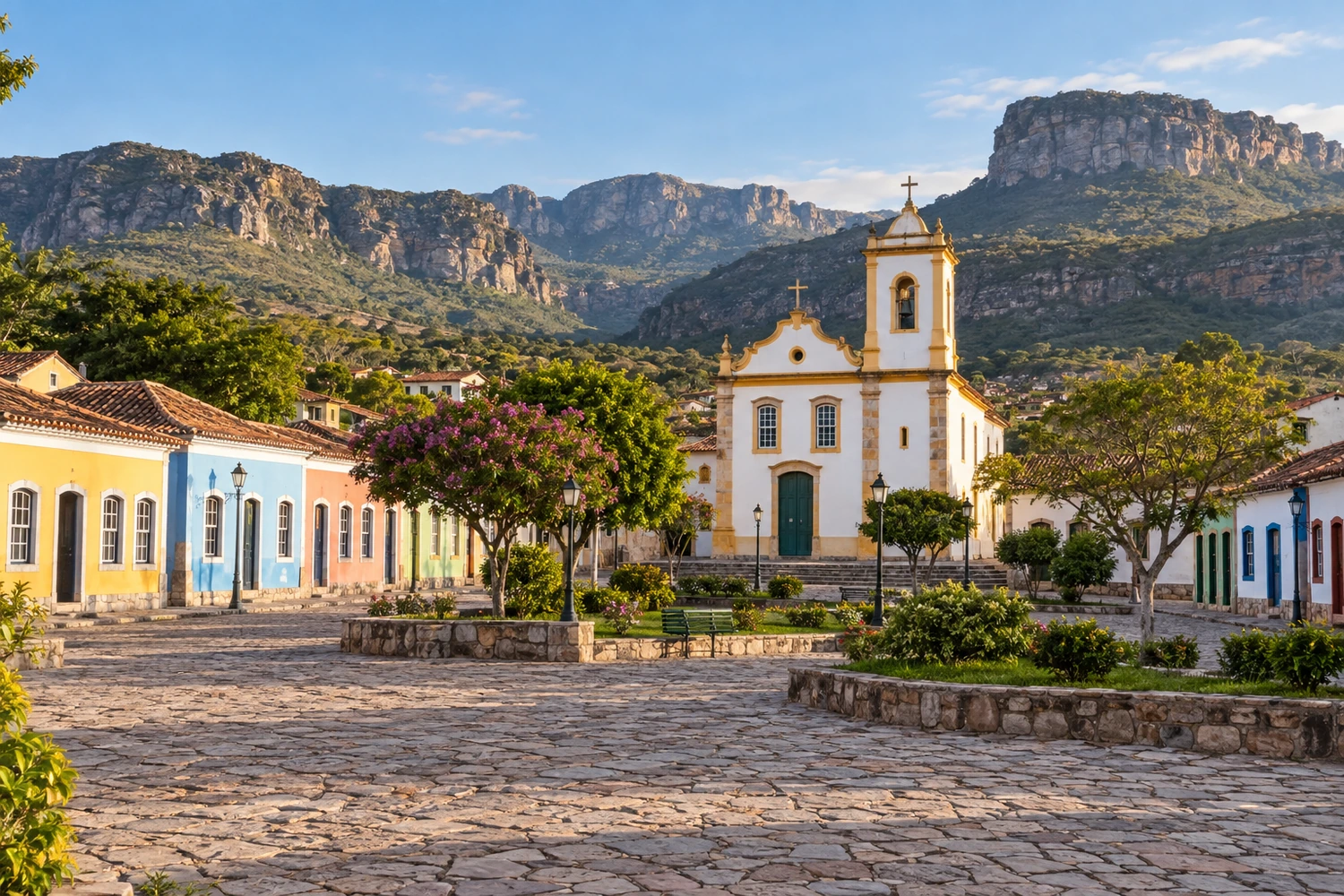
historic center · Mucugê, BA
Centro Histórico
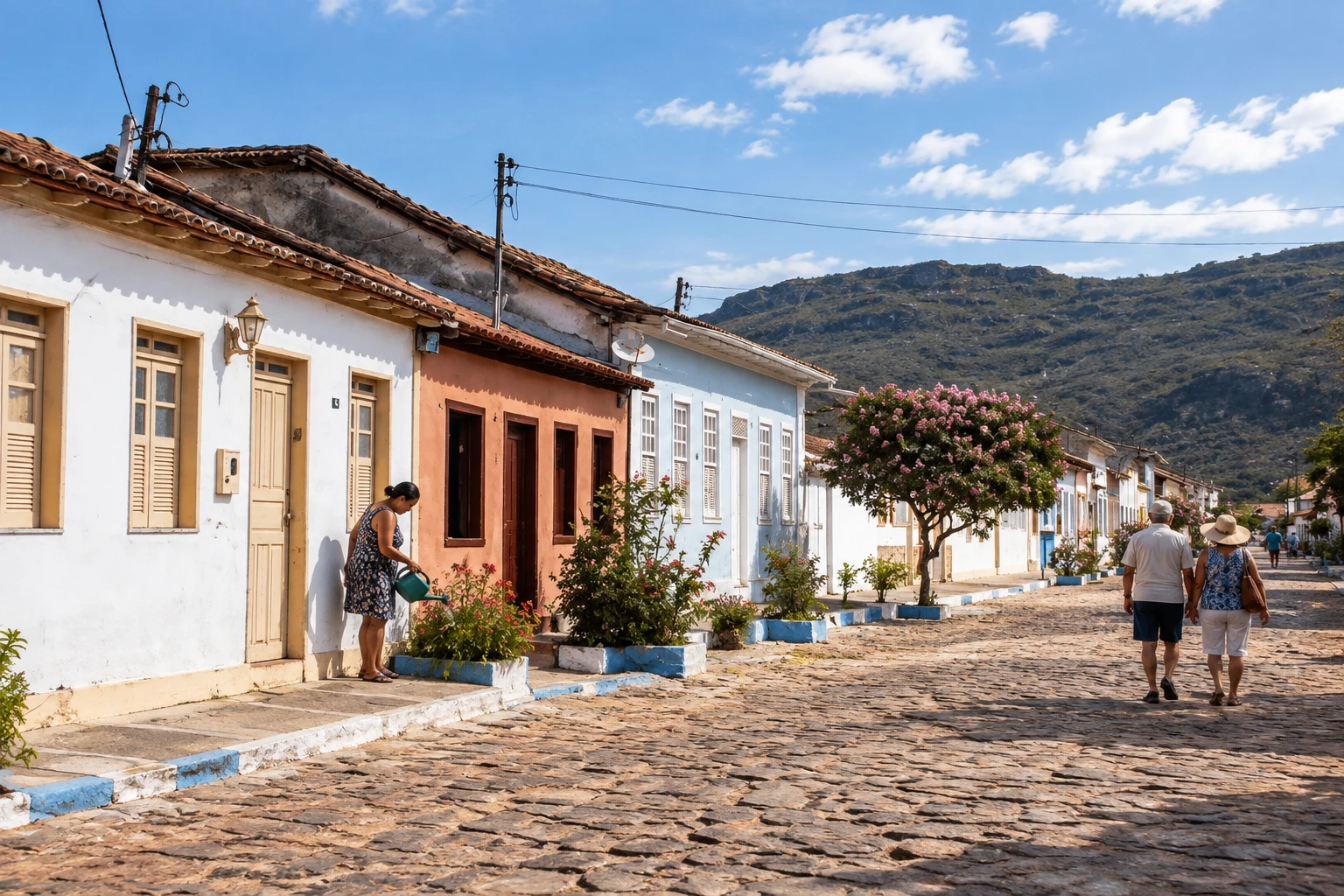
Founded after diamonds were discovered in the local river in 1844, the town ensemble was protected by Iphan (the national heritage institute) in 1980. It includes about 300 single-story houses and 10 two-story townhouses of adobe or stone from the second half of the 19th century, laid out in an L shape.
Illustrative images. The pictures in this guide are illustrations based on the real place, not photographs, and may differ from it.
Discover
About Centro Histórico
The historic center of Mucugê is one of the best-preserved town ensembles in Chapada Diamantina. The town sits in a wide, flat valley surrounded by the slopes of Serra do Sincorá, and the 19th-century houses are still in use, almost all of them as homes.
The story begins in 1844, when a miner found diamonds in the Mucugê River. The rush drew thousands of people within a few years, and the village grew fast at the height of mining. When the diamond era ended, the town lost importance, which helped preserve the old houses. The architectural and landscape ensemble was protected by Iphan (the national heritage institute) in 1980.
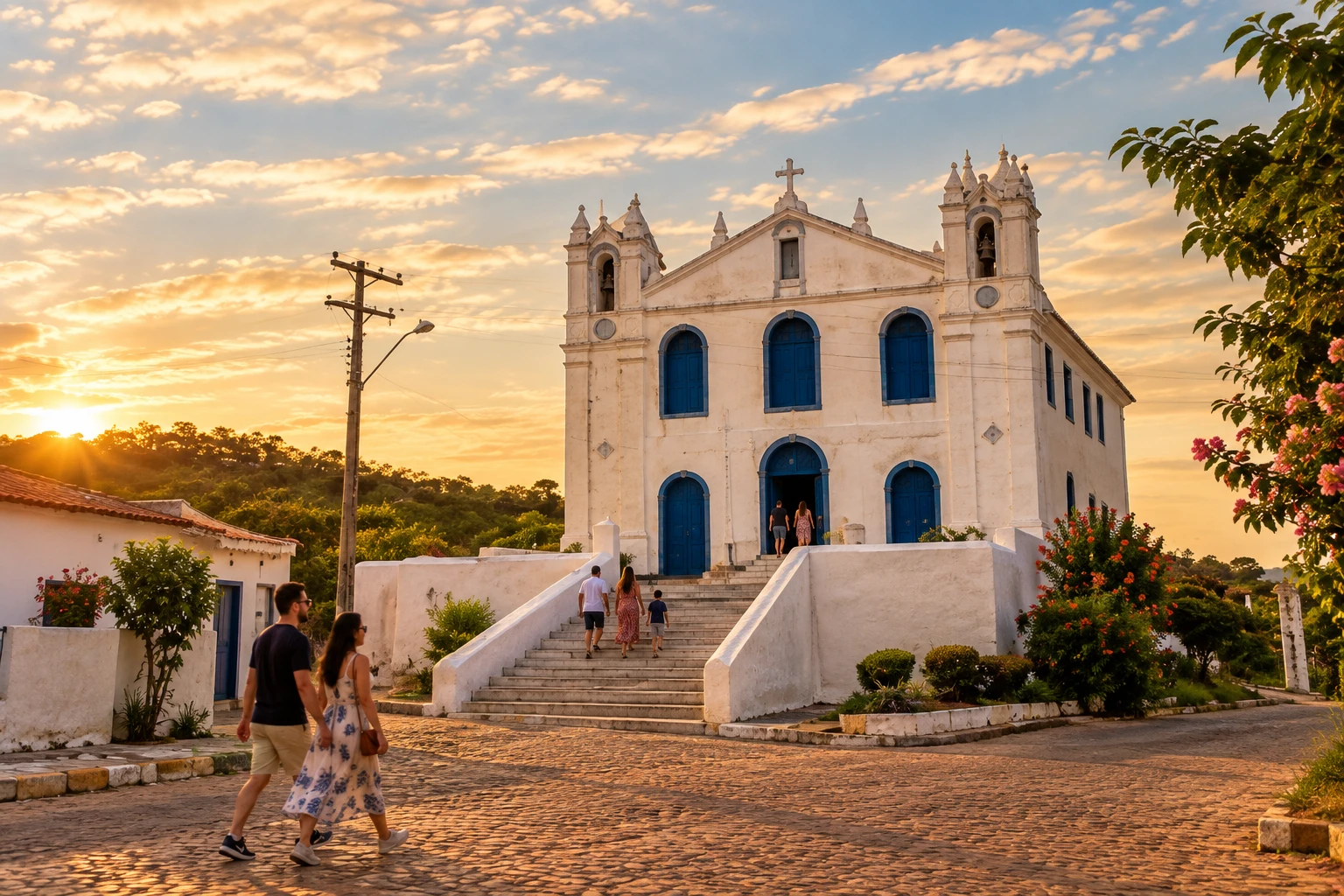
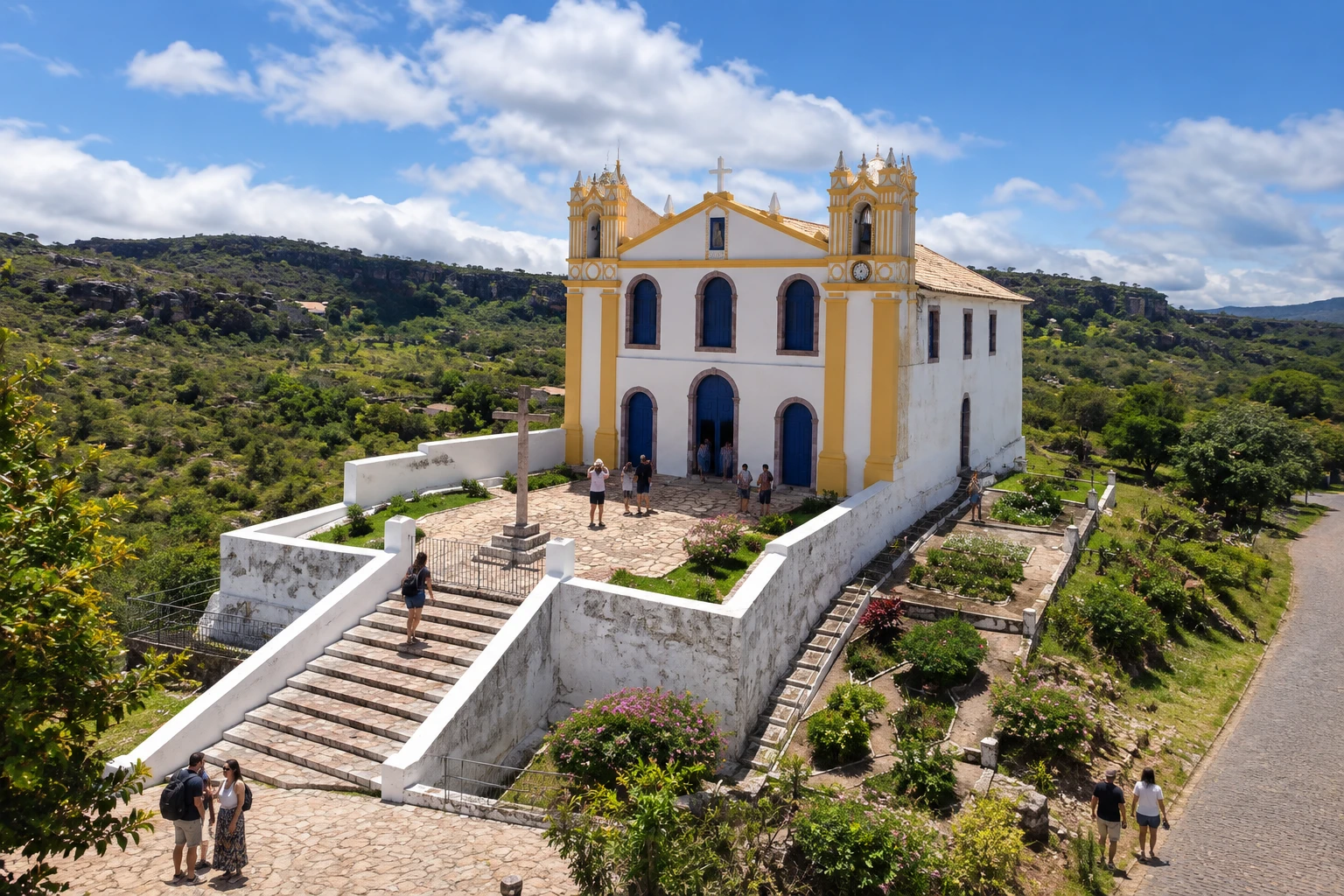
It includes about 300 single-story houses and 10 two-story townhouses, most of them adobe or stone, typical of the second half of the 19th century. The layout is L-shaped, with a church at each end: the Igreja Matriz de Santa Isabel, with a neoclassical facade, and the Igreja de Santo Antônio. One of the arms is Rua Direita do Comércio, parallel to the stream, probably the village's original core.
You explore on foot, at an easy pace, along clean paved streets with gardens and flower beds. The streets are mostly flat, which makes walking easy. The center is where you find the pousadas (guesthouses), restaurants and the town's nightlife, and it is the base for visiting the Byzantine Cemetery and the region's waterfalls.
Before you go
Practical information
How much time to set aside
One to two hours to walk the main streets and see the churches and the square.
Best time
In the late afternoon, when the low light shows off the facades and the town gets livelier; in the dry season (April to September) the sky is usually clearer and the nights cold.
How to get there
The historic center is downtown Mucugê itself, in Chapada Diamantina. The town is reached via the BA-142; coming from Lençóis, drive on the BR-242 and then on the BA-142. Within the center, you can do everything on foot.
Tip
Bring a jacket: Mucugê sits high in the mountains and the nights are usually cold. Take the chance to walk to the Byzantine Cemetery, at the entrance to town.
A look at the place
Centro Histórico in pictures
These pictures are illustrations based on the real place, not photographs. They may differ from the place.
Click the picture to enlarge it.
Get your questions answered
Frequently asked questions about Centro Histórico
Is the historic center of Mucugê a protected heritage site?
Yes. The architectural and landscape ensemble of Mucugê was protected by Iphan (the national heritage institute) in 1980.
How long does it take to see the historic center of Mucugê?
One to two hours is enough to walk the main streets and see the churches and the square.
Is there a fee to visit the historic center?
No. The visit is a walk through the town's streets and is free.
How did Mucugê begin?
The village grew after diamonds were found in the Mucugê River in 1844, which set off a rush of miners to the region.
Can I walk from downtown to the Byzantine Cemetery?
Yes. The cemetery is at the entrance to town, beside the BA-142, near the historic center.