
monument · Mucugê, BA
Cemitério Bizantino (Santa Isabel)
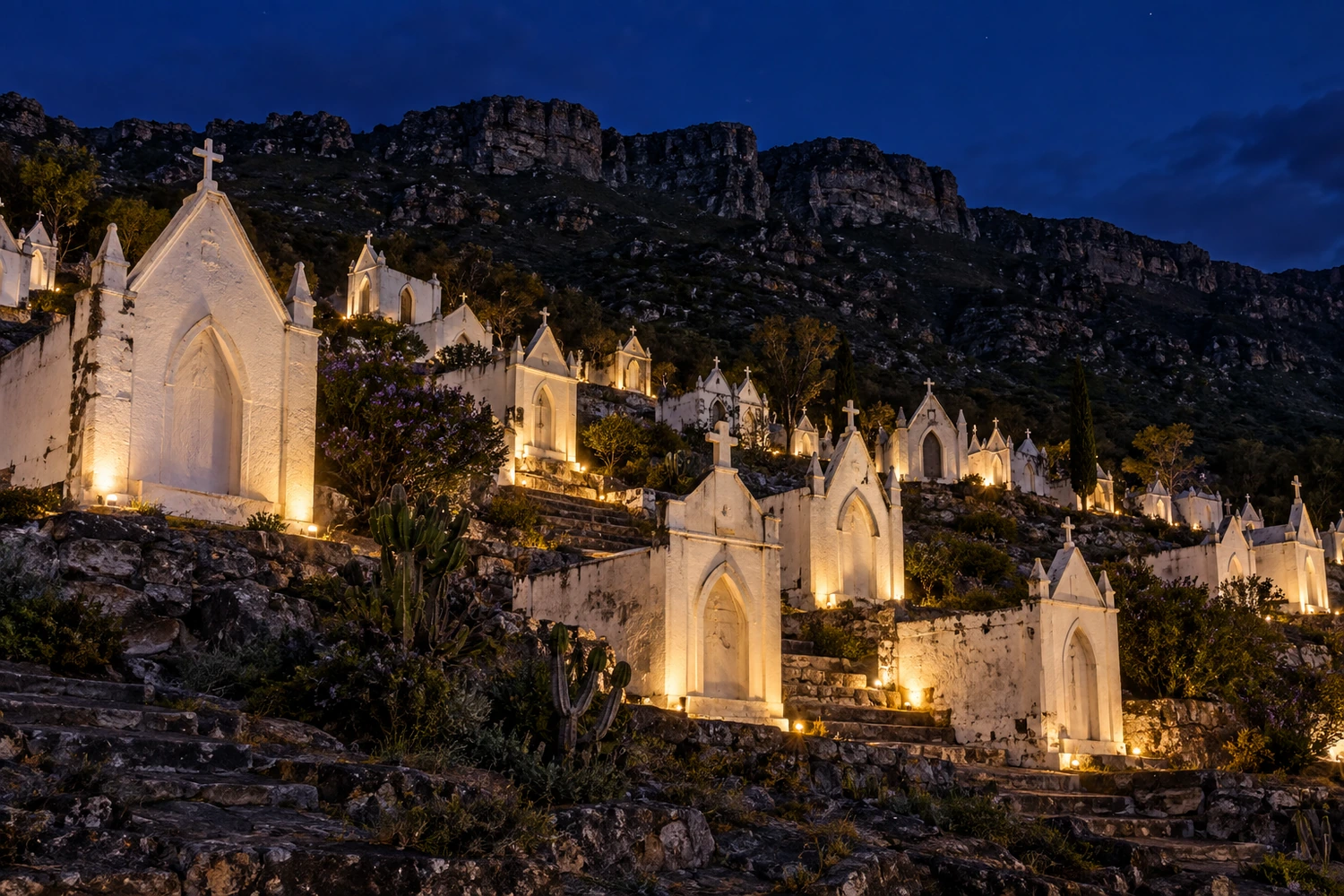
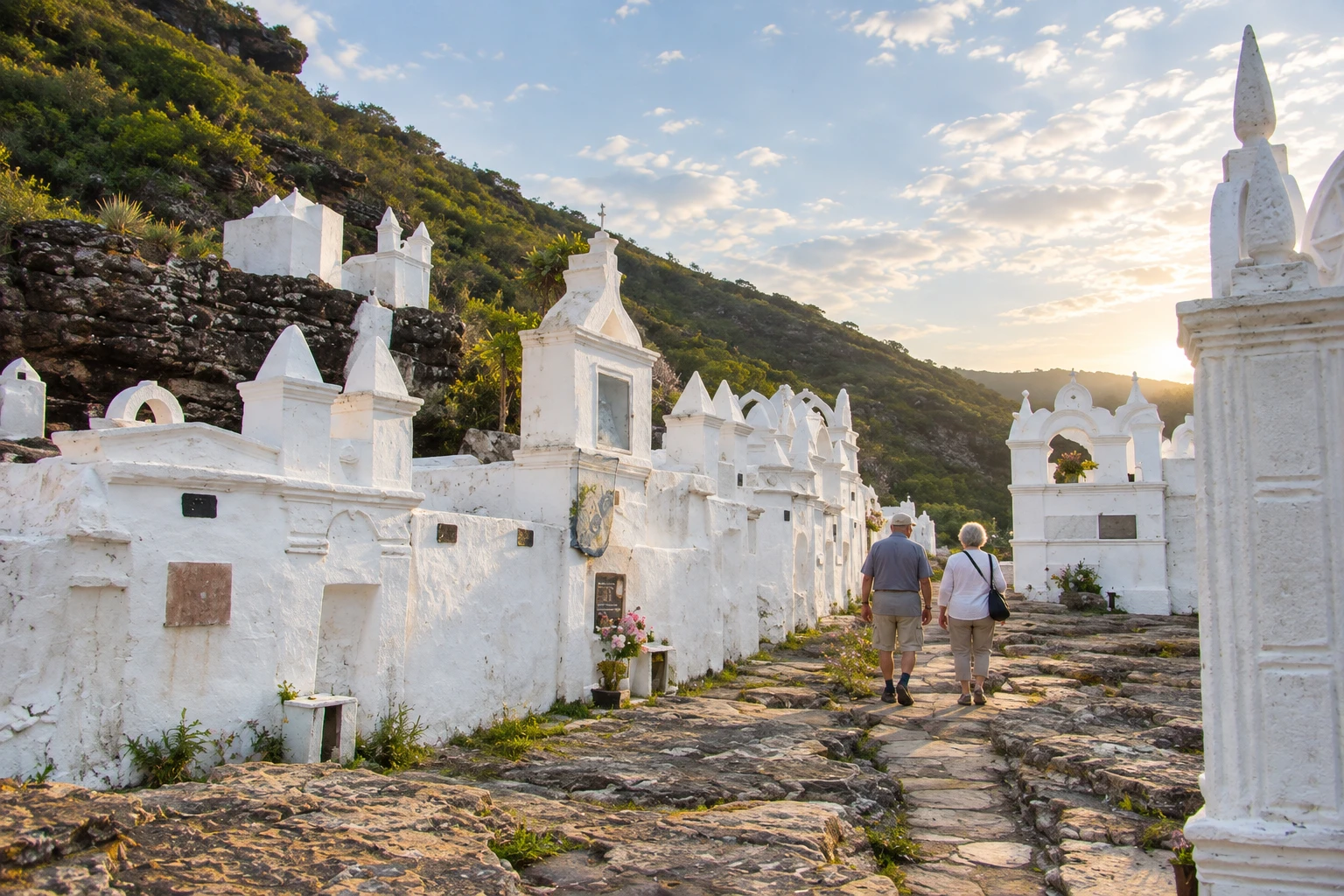
Built between 1854 and 1886 after a cholera epidemic, it has white neo-Gothic tombs, with domes that recall Byzantine architecture, set into the rocky hillside. At night, the tombs are lit in a bluish light.
Illustrative images. The pictures in this guide are illustrations based on the real place, not photographs, and may differ from it.
Discover
About Cemitério Bizantino (Santa Isabel)
Cemitério Santa Isabel, better known as the Byzantine Cemetery, is the postcard image of Mucugê, in Chapada Diamantina. It is at the entrance to town, beside the highway, at the foot of a rocky hill of Serra do Sincorá.
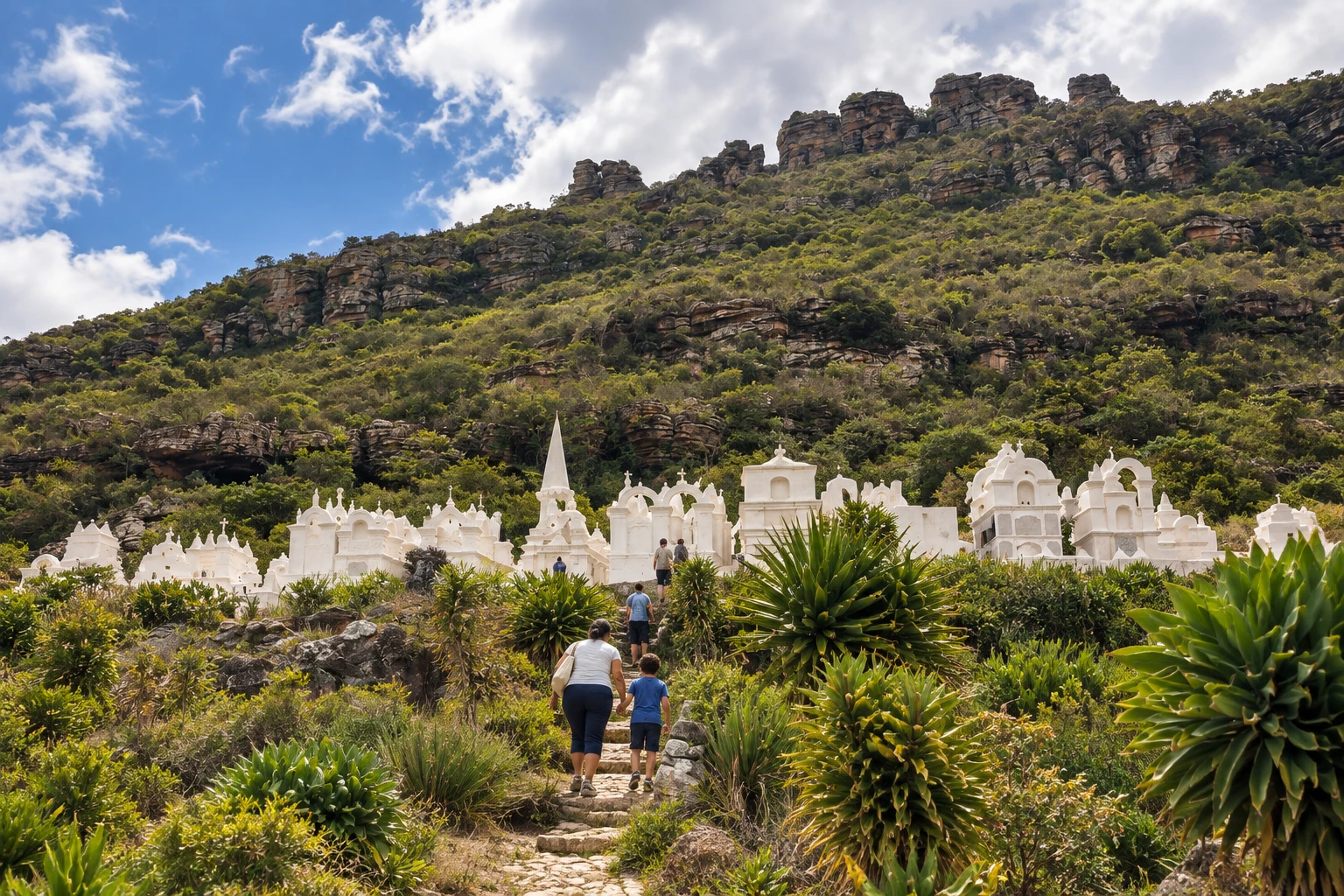
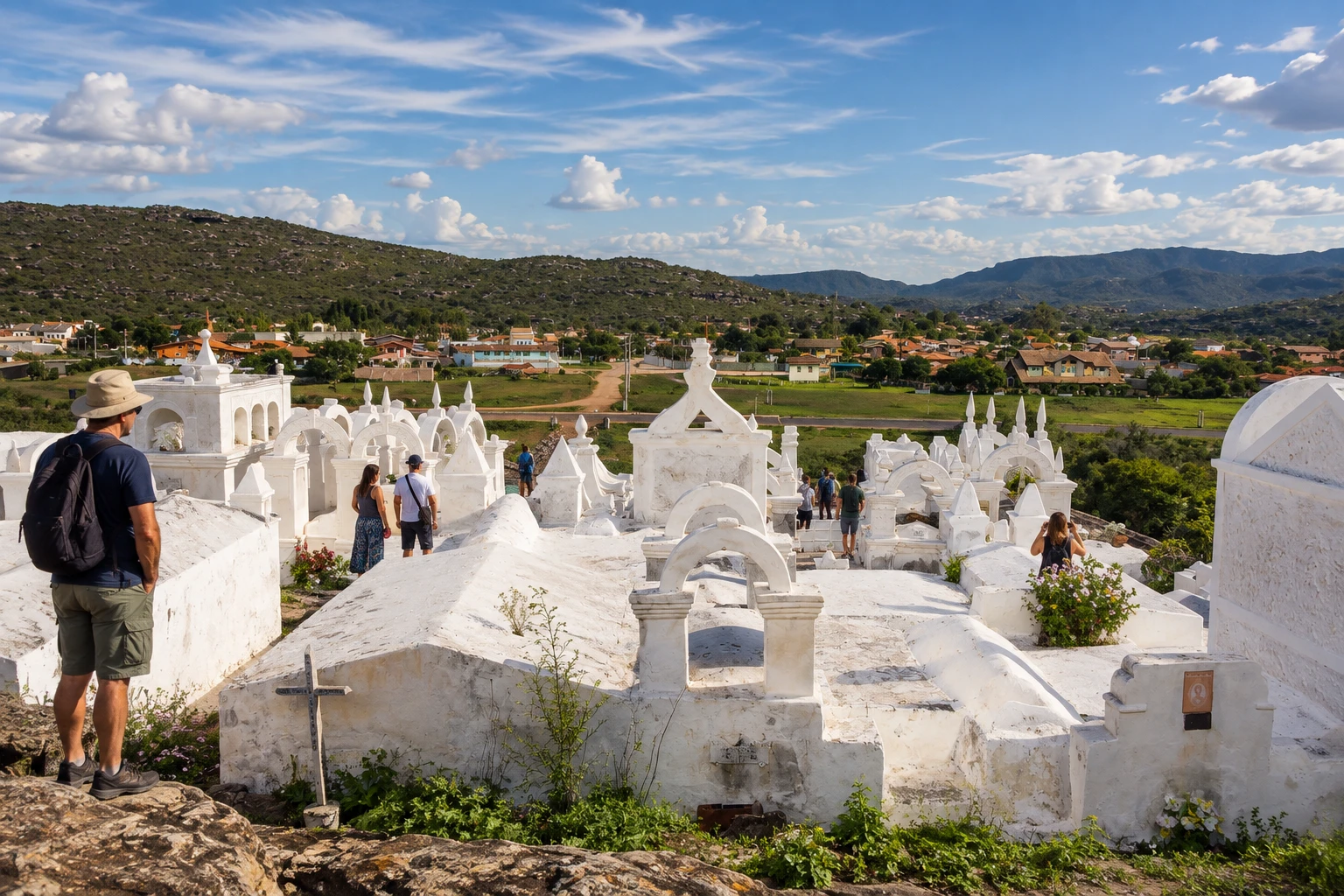
It opened in the mid-19th century, at the height of diamond mining, when a cholera epidemic struck the village. The tombs were built on the rocks, in plastered and whitewashed brick, with pinnacles, arches and scrolls that look like small churches. The nickname Byzantine came from the local people; the features are more classical and medieval than truly Byzantine. The cemetery is part of Mucugê's architectural and landscape ensemble, protected by Iphan (the national heritage institute) in 1980.
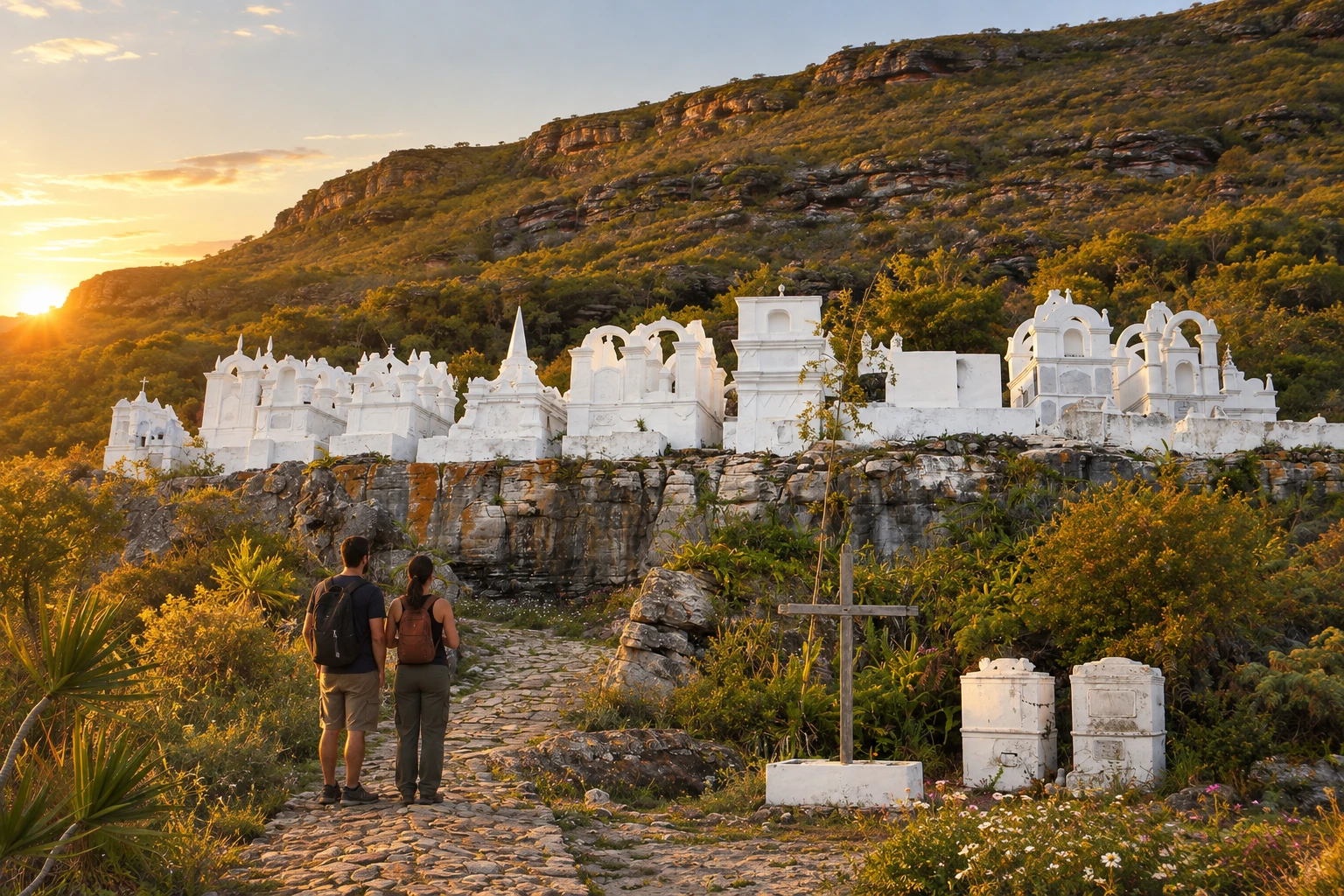
The charm lies in the contrast between the white tombs and the rock wall and mountain vegetation behind them. The best view is from outside, at the roadside, where you can see the whole ensemble on the hillside. At night, the tombs are lit up and the cemetery is even more striking.
The visit is quick and doesn't require a guide. Remember that it is a cemetery: move around discreetly and respect people visiting family graves.
Before you go
Practical information
How much time to set aside
15 to 30 minutes is enough to see the site and take photos.
Best time
In the late afternoon, when the low light makes the tombs stand out against the mountains, or right after dark, to see the cemetery lit up; the dry season (April to September) usually has clearer skies.
How to get there
It is at the entrance to Mucugê, beside the BA-142, near the historic center. You can walk from downtown or stop your car on the shoulder as you arrive in town.
Tip
Combine the visit with a walk around the historic center and come back at night to see the tombs lit up; be careful when taking photos from the roadside.
A look at the place
Cemitério Bizantino (Santa Isabel) in pictures
These pictures are illustrations based on the real place, not photographs. They may differ from the place.
Click the picture to enlarge it.
Get your questions answered
Frequently asked questions about Cemitério Bizantino (Santa Isabel)
Is there an entrance fee for the Byzantine Cemetery in Mucugê?
No. The visit is free and doesn't require a guide.
Why is it called the Byzantine Cemetery?
It is a popular nickname, because of the tombs shaped like small churches, with pinnacles and arches. The official name is Cemitério Santa Isabel.
Why was the cemetery built?
It opened in the mid-19th century, during the diamond-mining era, when a cholera epidemic struck Mucugê.
Can I walk there from downtown Mucugê?
Yes. The cemetery is at the entrance to town, beside the BA-142, near the historic center.
Is the cemetery lit up at night?
Yes. The tombs are lit up at night, and the view from the road is one of the best-known images of Chapada Diamantina.