
village · Andaraí, BA
Vila de Igatu
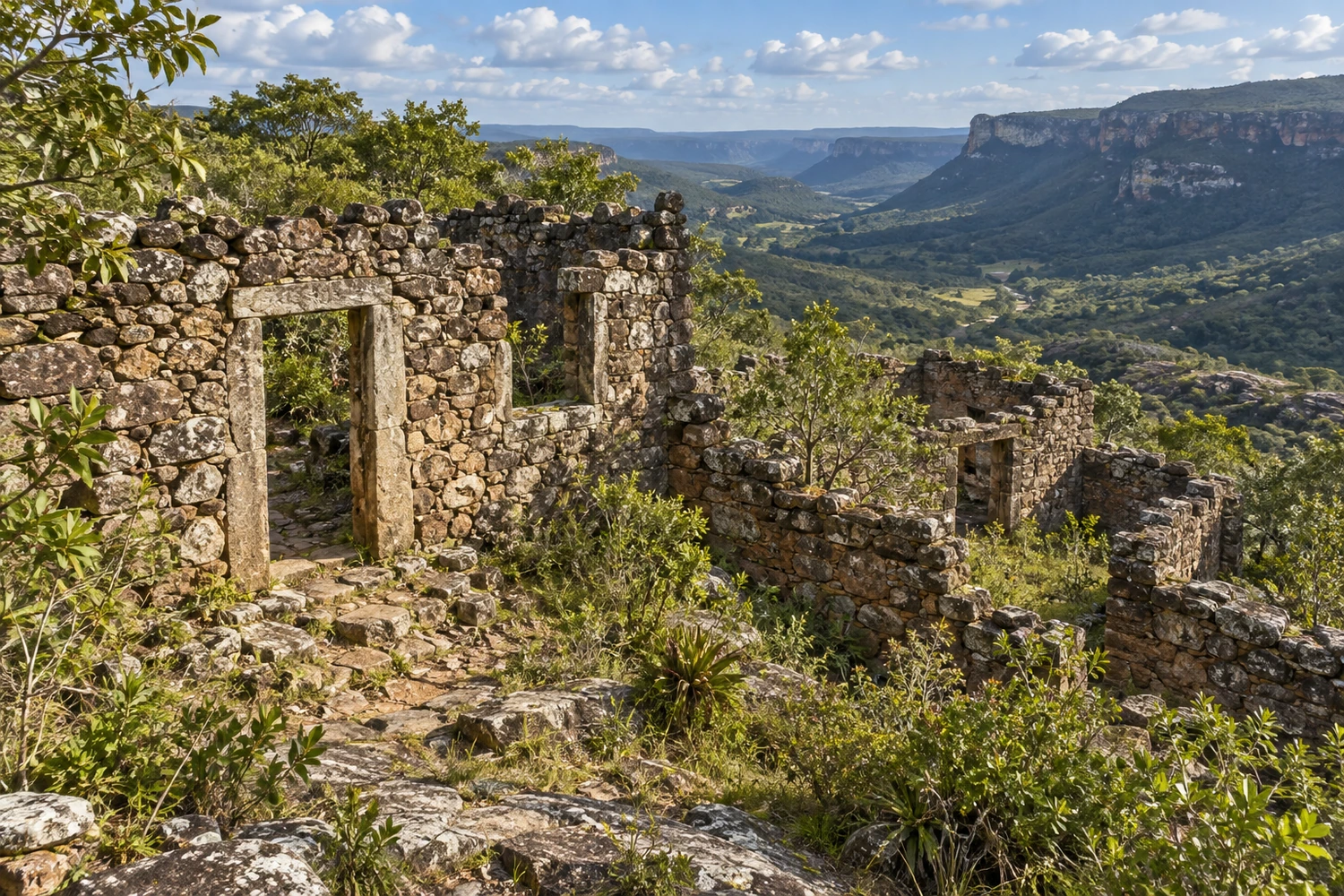
A district that was home to about 9,000 people at the height of diamond mining, in the 19th century, and today has a few hundred residents. Its stone houses and ruins, built without mortar, earned it the nickname "Machu Picchu of Bahia."
Illustrative images. The pictures in this guide are illustrations based on the real place, not photographs, and may differ from it.
Discover
About Vila de Igatu
Igatu is a district of Andaraí, in Chapada Diamantina, in Bahia. It is a small village of stone streets, surrounded by mountains and by ruins of houses from the diamond-mining days. Because of these ruins, it earned the nickname "Machu Picchu of Bahia."
The village was born in the mid-19th century, during the region's diamond rush, and once had thousands of residents. The miners built houses of stacked stones, without mortar. When mining declined, most of the population left and many houses were abandoned. Today a few hundred people live there, many of them descendants of miners. In 2000, Iphan (the national heritage institute) protected Igatu's architectural, urban and landscape ensemble, including the ruins of stone dwellings.
You explore on foot. You can walk through the ruins of the Luiz dos Santos neighborhood, home to Galeria Arte & Memória, with mining tools and objects, see the Igreja de São Sebastião (church) and the old cemetery, and climb to Mirante do Cruzeiro (viewpoint), overlooking the Paraguaçu valley. Near the village are Gruna do Brejo, an old diamond mine, and trails to waterfalls.
Visiting the village is easy, but the ground is uneven stone, with ups and downs. It is not an easy outing for people with reduced mobility. The trails and mine nearby take more fitness and, ideally, a local guide.
Before you go
Practical information
How much time to set aside
A few hours is enough to walk around the village; if you also want to do the nearby trails and the mine, plan on one or more days.
Best time
It works year-round, but choose days without rain: the stone streets and trails get slippery when wet.
How to get there
Igatu is in the municipality of Andaraí, in Chapada Diamantina. Access is through a signposted turnoff on the BA-142 highway, between Andaraí and Mucugê, then along a stone and dirt road. There are no buses to the village: you need to go by car or with an agency.
Tip
Wear sturdy sneakers or boots: the stone streets and trails are uneven and slippery (according to the blog Trilhas e Cantos); also make sure your tires are in good shape, because the access road is stone and dirt (blog O Mundo é Pequeno para Mim).
A look at the place
Vila de Igatu in pictures
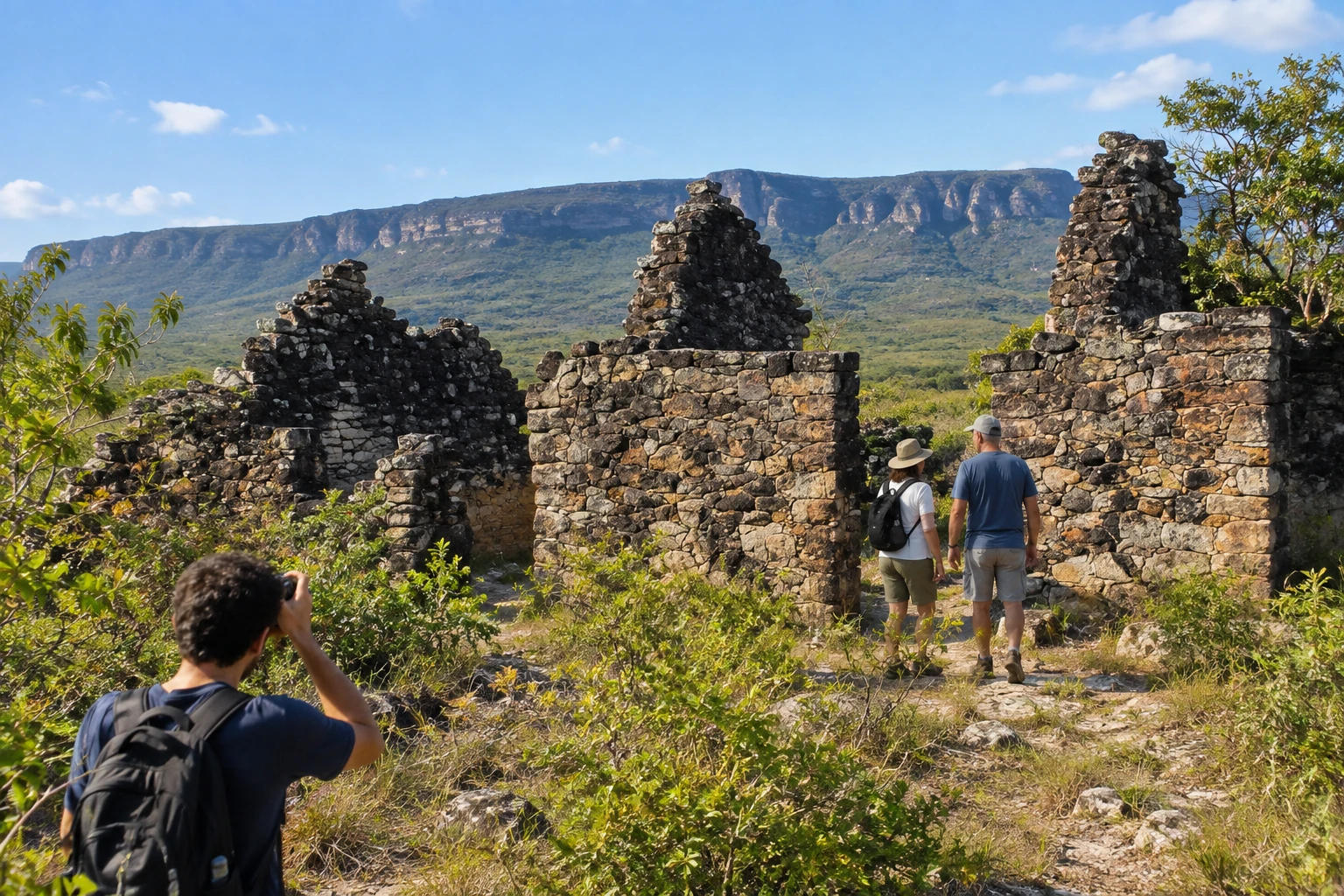
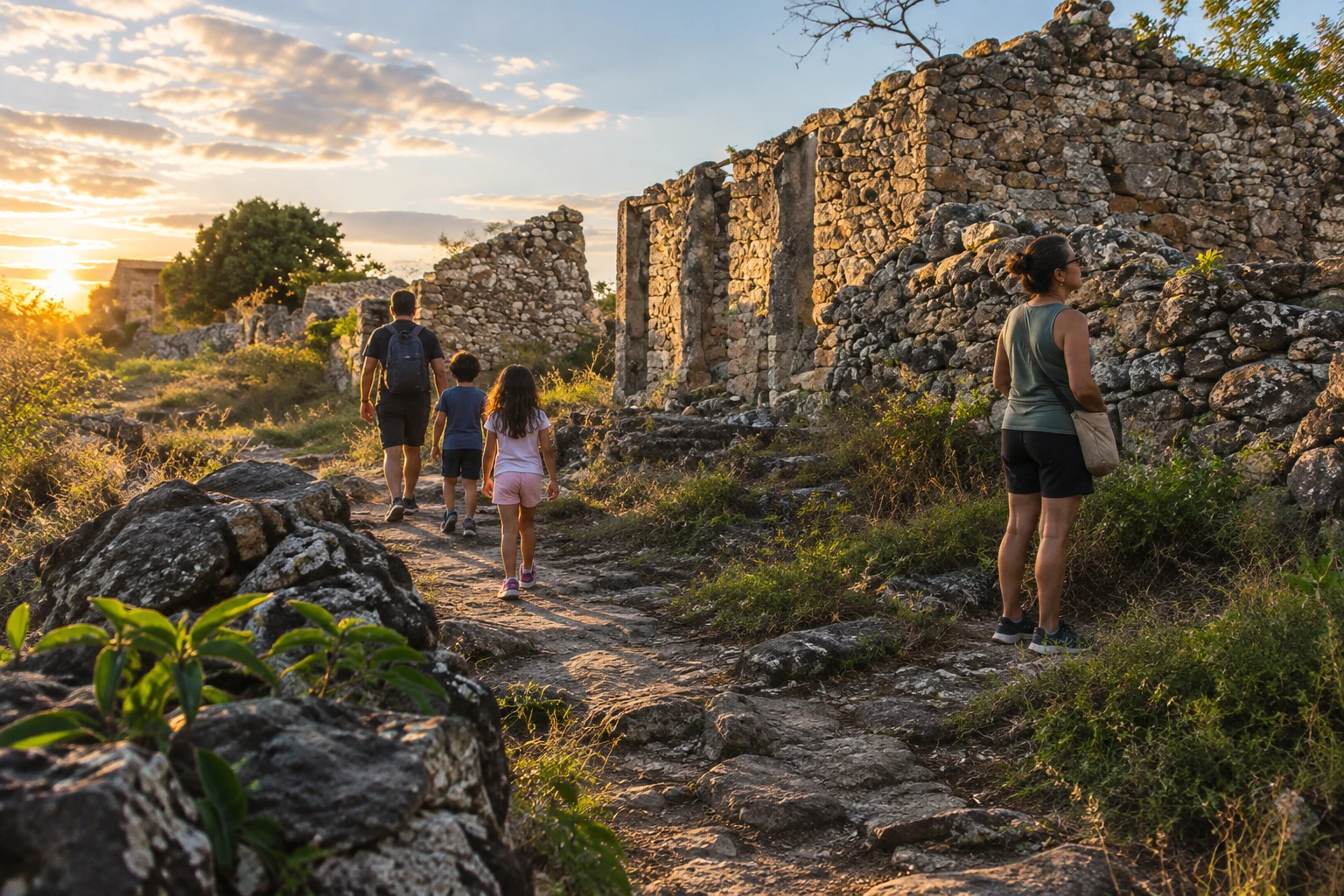
These pictures are illustrations based on the real place, not photographs. They may differ from the place.
Click the picture to enlarge it.
Get your questions answered
Frequently asked questions about Vila de Igatu
Where is the village of Igatu?
Igatu is a district of Andaraí, in Chapada Diamantina (BA). The turnoff is on the BA-142 highway, between Andaraí and Mucugê.
Why is Igatu called the "Machu Picchu of Bahia"?
Because of the ruins of stone houses built without mortar by 19th-century diamond miners, scattered across the mountainside.
Is there a bus to Igatu?
There are no buses to the village. You need to go by car or with an agency; the last stretch is a stone and dirt road.
Can I explore Igatu on foot?
Yes. The village is small, and you visit the streets, ruins, church and viewpoint on foot. Wear sturdy shoes, because the stone ground is uneven.
Do I need a guide in Igatu?
To walk around the village, no. For Gruna do Brejo and the waterfall trails nearby, going with a local guide is recommended.