riverside beach
Island of Love
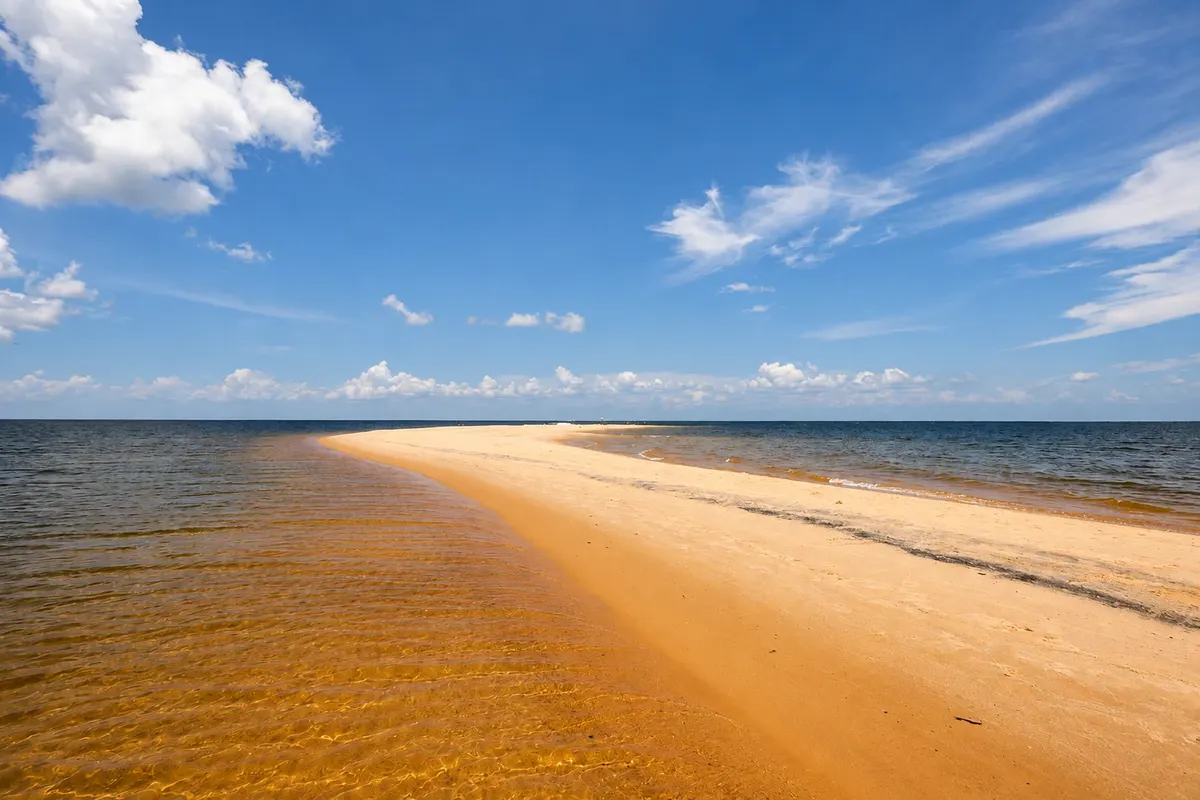
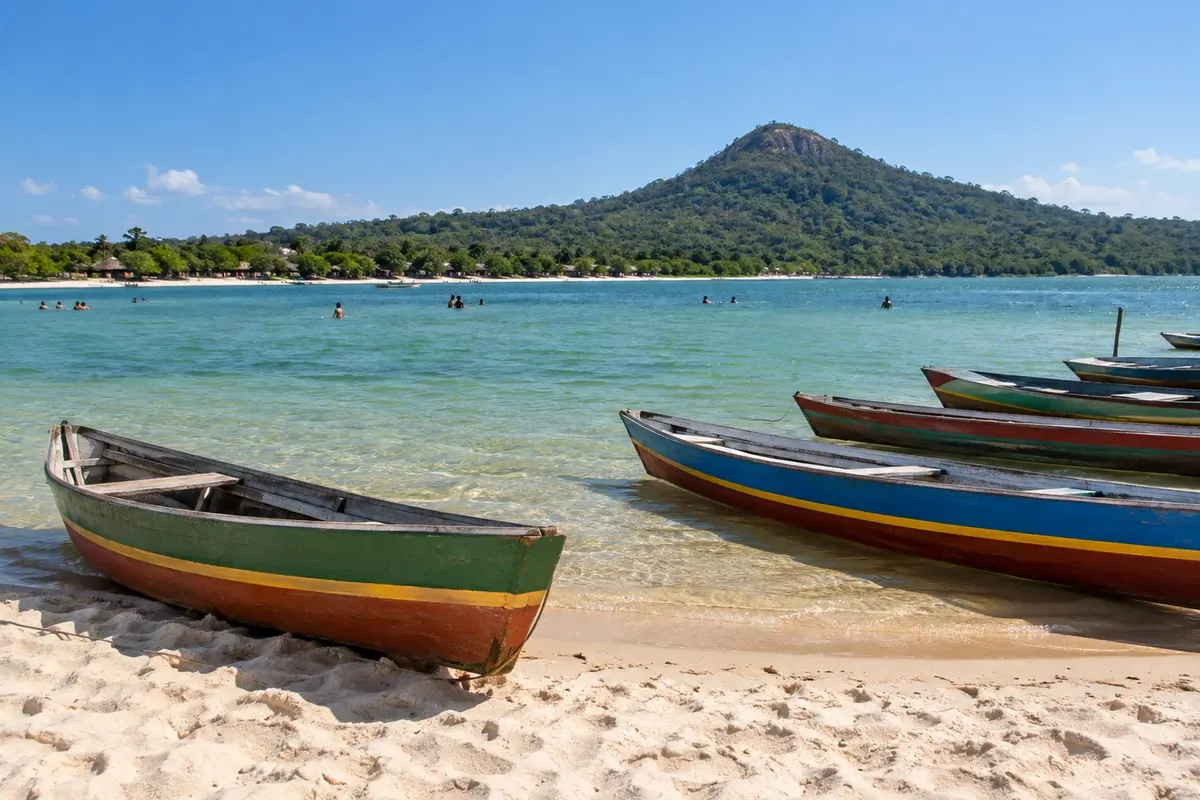
A sandbank in front of the village, reached by canoe in a few minutes, with warm, shallow water on both sides. Its size changes with the level of the Tapajós.

 Search
Brazil
 Antarctica
 Argentina
 Bolivia
 Chile
 Colombia
 Ecuador
 Guyana
 French Guiana
 Falkland Islands (Malvinas)
 Paraguay
 Peru
 Suriname
 Uruguay
 Venezuela
 Germany
 Austria
 Belgium
 Croatia
 Denmark
 Slovakia
 Slovenia
 Spain
 Finland
 France
 Greece
 the Netherlands
 Hungary
 Ireland
 Iceland
 Italy
 Luxembourg
 Norway
 Poland
 Portugal
 the United Kingdom
 the Czech Republic
 Sweden
 Switzerland
 Turkey
 Bermuda
 Canada
 the United States
 Greenland
 Mexico
 Saint Pierre and Miquelon
 the Dominican Republic
 JapanTurkey
 South Africa
 Egypt
 Australia
 Fiji
 New Zealand
 Papua New Guinea
Pará · Brazil
In the destination Alter do Chão and Lower Tapajós.
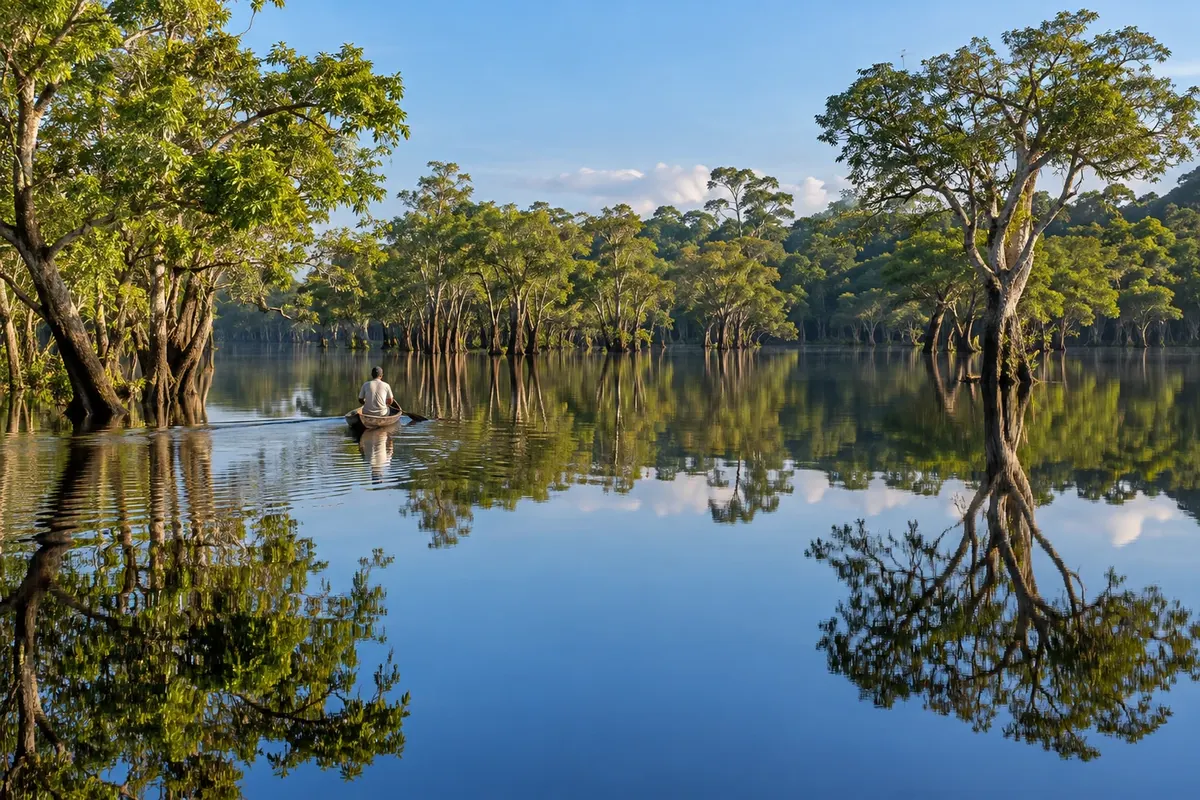
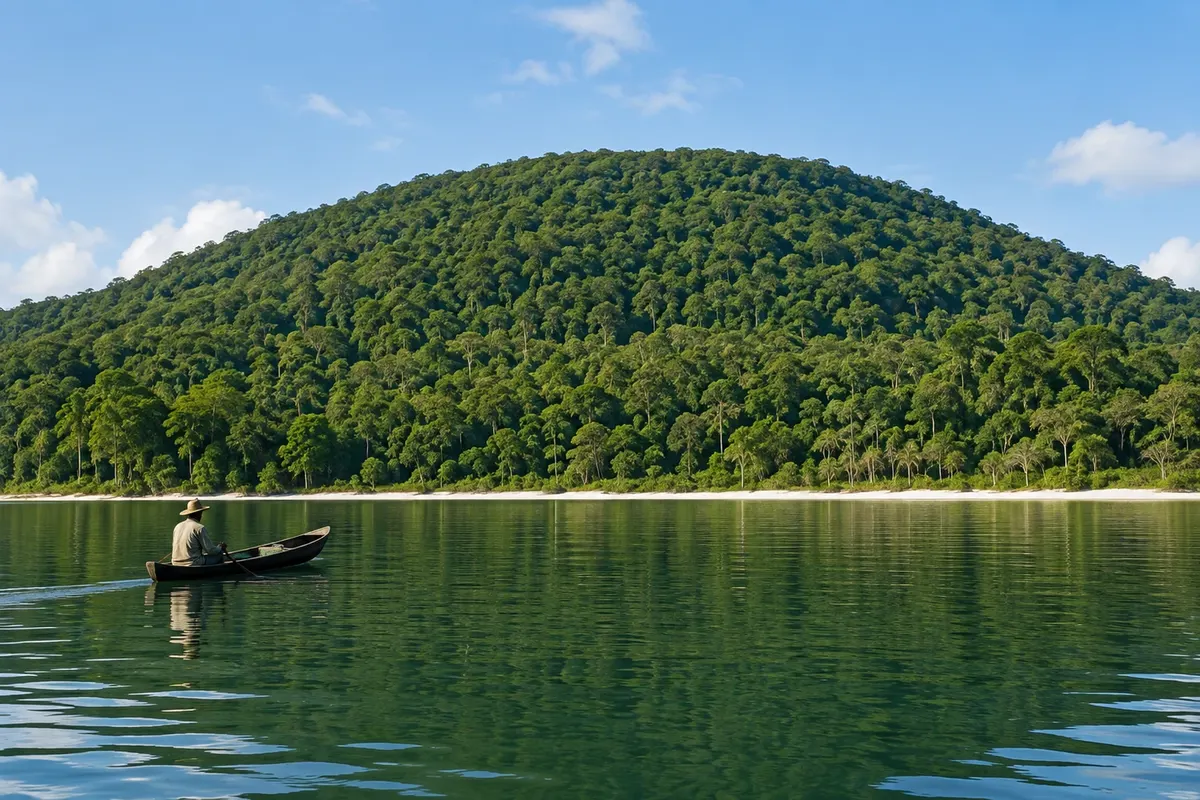
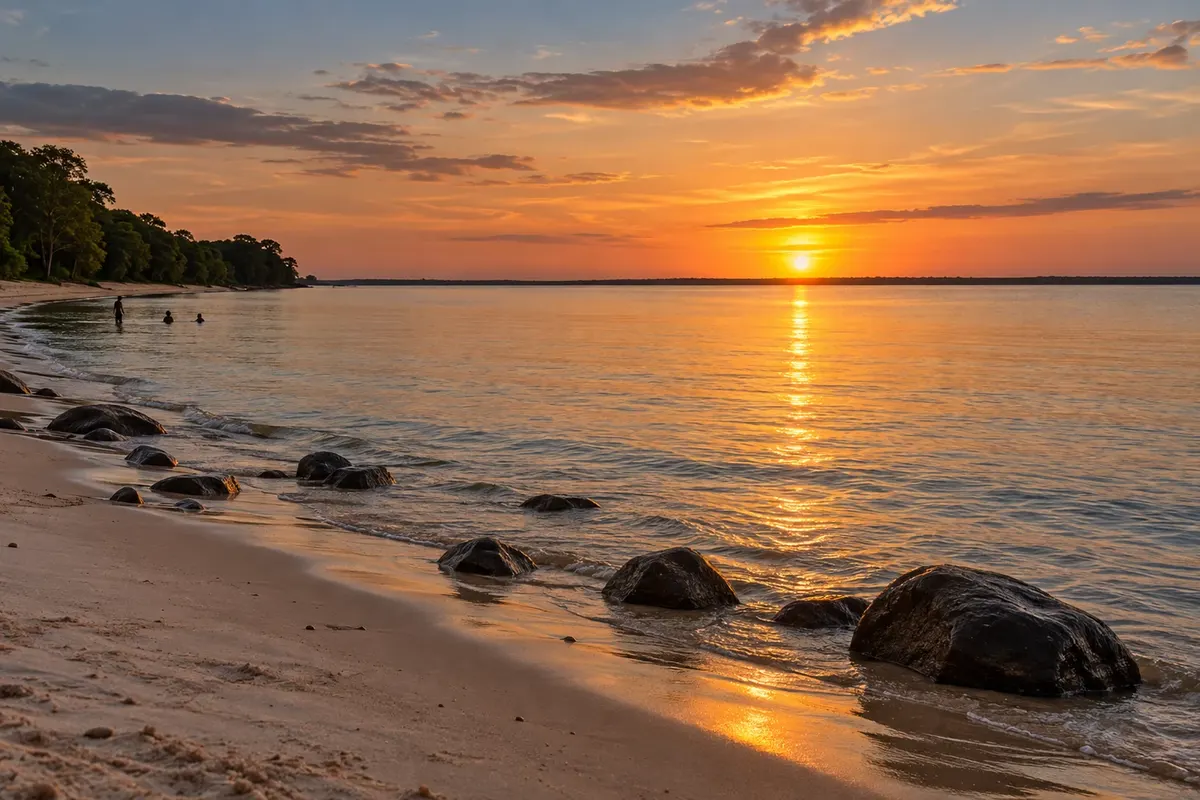
Illustrative images. The pictures in this guide are illustrations based on the real place, not photographs, and may differ from it.
The city
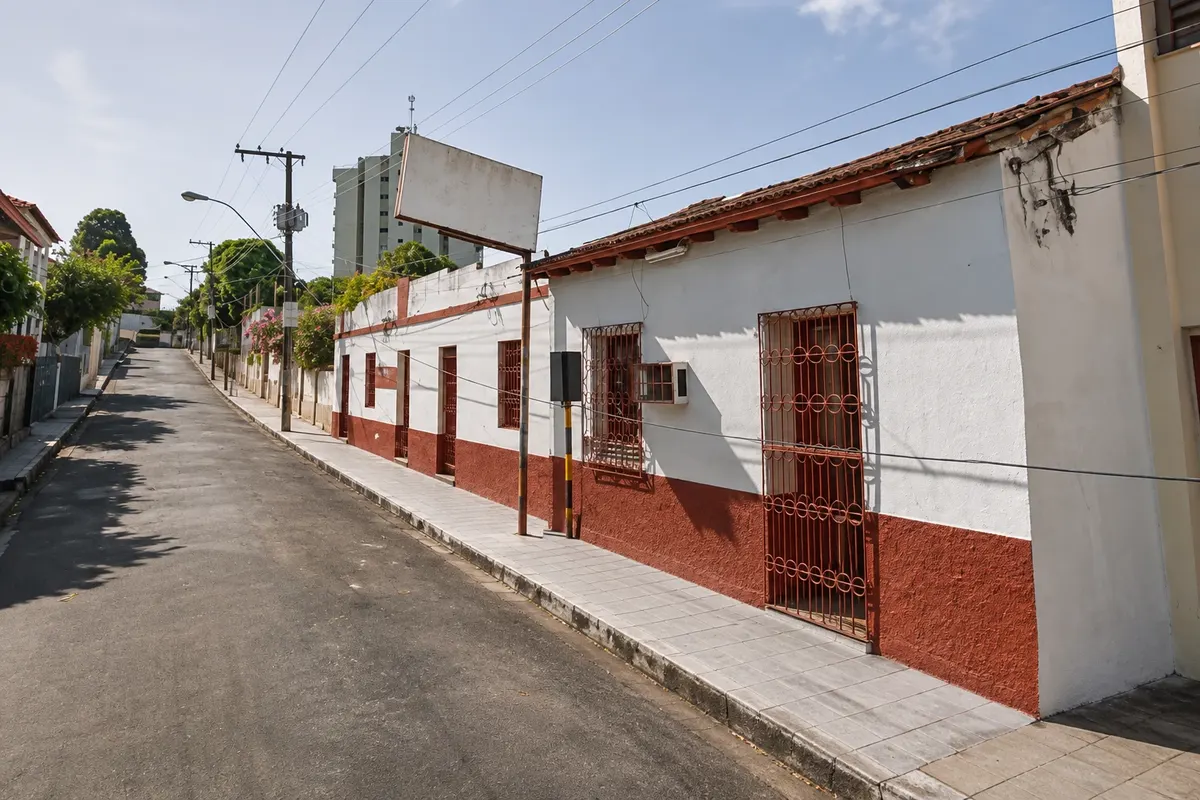
Santarém grew up at the meeting of the Tapajós and Amazon rivers and combines beaches with historic heritage. The waterfront, the downtown churches and the riverside communities show different sides of the municipality.
Santarém is in western Pará, at the point where the Tapajós River pours into the Amazon. Founded in 1661, it is the third largest municipality in Pará, with about 332,000 inhabitants, a port for line boats and the airport that serves the whole region. Many travelers pass through only en route to Alter do Chão, but the city has a riverfront, markets, museums and river beaches that fill one or two days well.
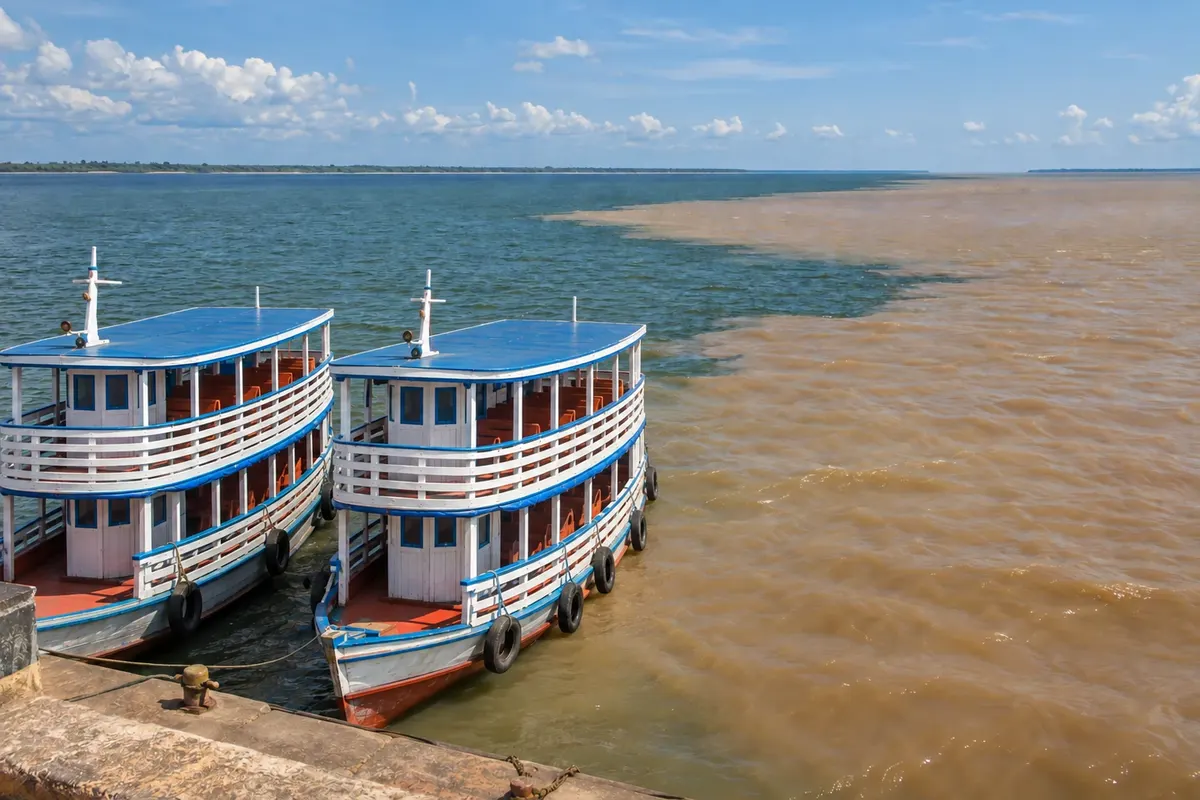
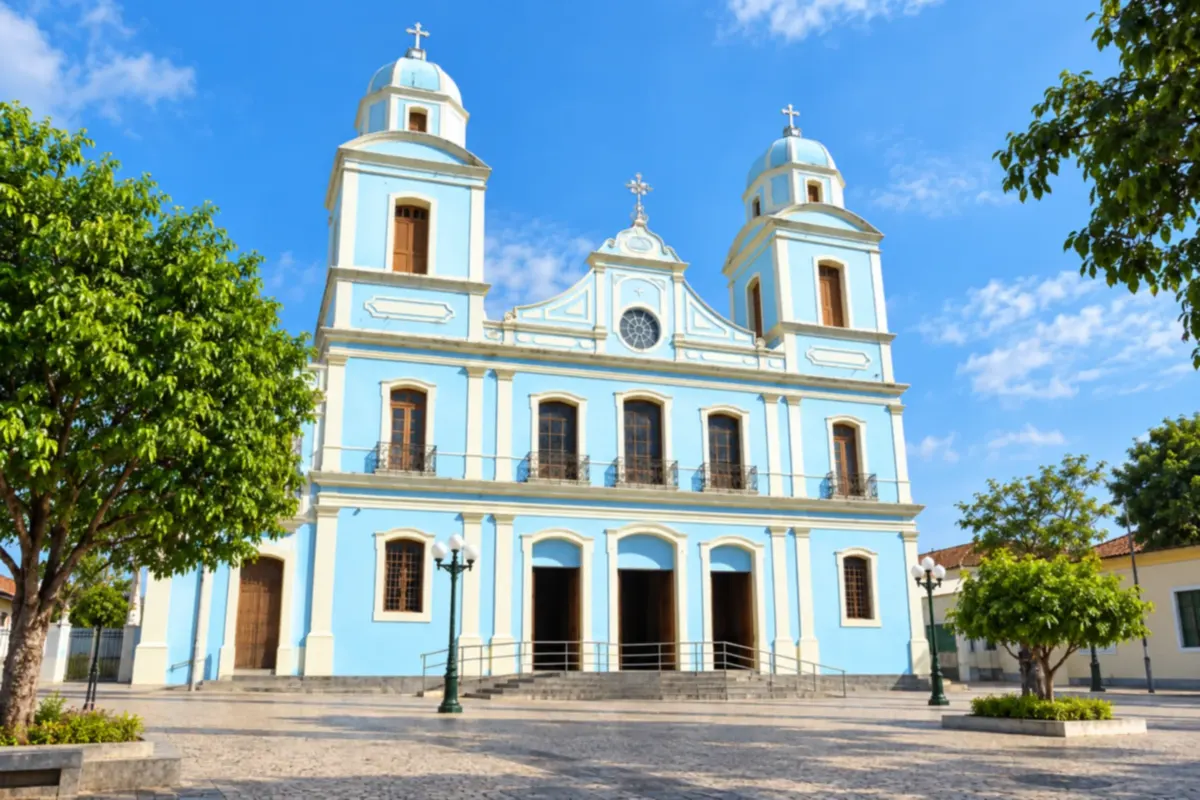
The city’s face is the Avenida Tapajós waterfront, a promenade from which you can see the meeting of the waters: the Tapajós, with clear greenish water, runs alongside the Amazon, muddy, without mixing for several kilometers. Downtown are the Cathedral of Our Lady of Conception, with works begun in 1754; the Museum of Sacred Art and History; Praça Mirante do Tapajós, on the site of an old fort; and the João Fona Cultural Center, with Tapajós ceramics. The Fish Market and Mercadão 2000 show the fish, fruits, manioc flours and herbs that supply the region.
The municipality is much larger than the city. Alter do Chão, about 38 km from the center via PA-457, is a district of Santarém: a village on the Tapajós shore, facing Ilha do Amor and Lago Verde, with inns, restaurants and the departure point for most speedboat tours. Also in the municipality are Praia do Maracanã, about 6 km from the center, Carapanari Beach, 20 km away, Ponta de Pedras, 36 km, the Canal do Jari and the communities of the Arapiuns River, inside the Tapajós-Arapiuns Extractive Reserve.
Travel timing depends more on the river than on rainfall. From January to May it rains a lot, and the Tapajós rises until it covers the beaches; generally the highest level comes between May and June. That is when water reaches near the promenade and you navigate by canoe through the flooded forest. From August the river falls and sandbanks reappear; October and November usually have the widest beaches. It is hot year-round, with highs between 28 °C and 32 °C.
Those who choose to sleep in Santarém stay close to the airport, boat terminal, markets and meeting-of-the-waters tours, and visit the beaches by day. Those wanting to wake up on the sand stay in Alter do Chão and reserve a day for the city. The Tapajós National Forest and the village of Belterra, in neighboring municipalities, make good day trips from either base.
At the table, river fish dominate: tambaqui, pirarucu and charutinho, a small fish served fried as an appetizer. Santarém’s feijão-manteiguinha, a small pale bean, accompanies dishes, and tacacá and açaí appear at stalls and in the communities of Eixo Forte, the rural area between the city and Alter do Chão.
74 places to stay in Santarém.
7 places to eat in Santarém.
Santarém highlights and titles
The local experience
A sandbank in front of the village, reached by canoe in a few minutes, with warm, shallow water on both sides. Its size changes with the level of the Tapajós.
A shallow lake next to the village, explored by canoe through areas of flooded forest. The route passes the so-called Floresta Encantada, with trees standing in the water.
A short, steep trail ending at a natural viewpoint over Lago Verde and the Tapajós. Best done very early or late in the afternoon because of the heat.
A Tapajós beach marked by reddish rock formations that reach out over the water. A good full-day option, away from the bustle of the village.
In front of the Santarém waterfront, the greenish water of the Tapajós meets the muddy water of the Amazon without mixing. You can see it from the shore or by boat.
Discover Encontro dos rios Tapajós e Amazonas
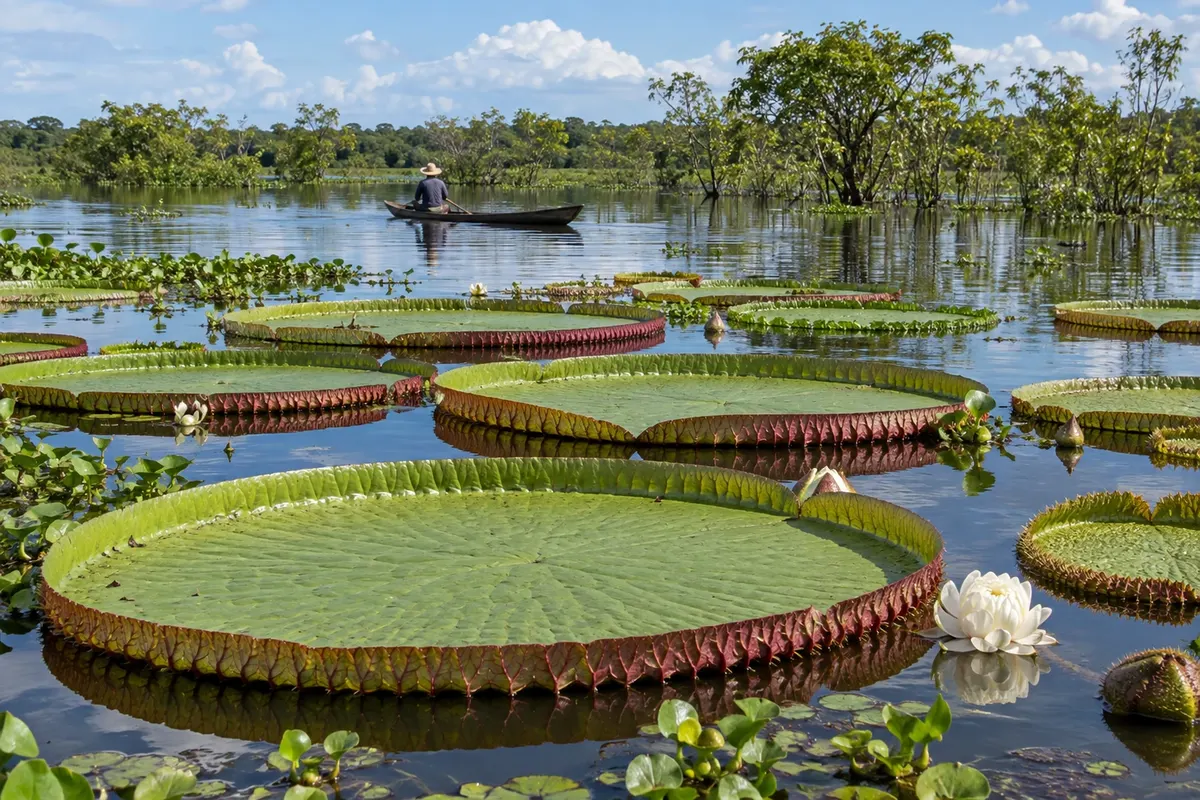
A canoe trip through floodplain corridors where the landscape changes completely between the high-water and dry seasons. A good place to see birds and giant water lilies.
A clear-water river with deserted beaches and communities that welcome visitors in family-run pousadas. It is the route for anyone who wants to spend days on the water.
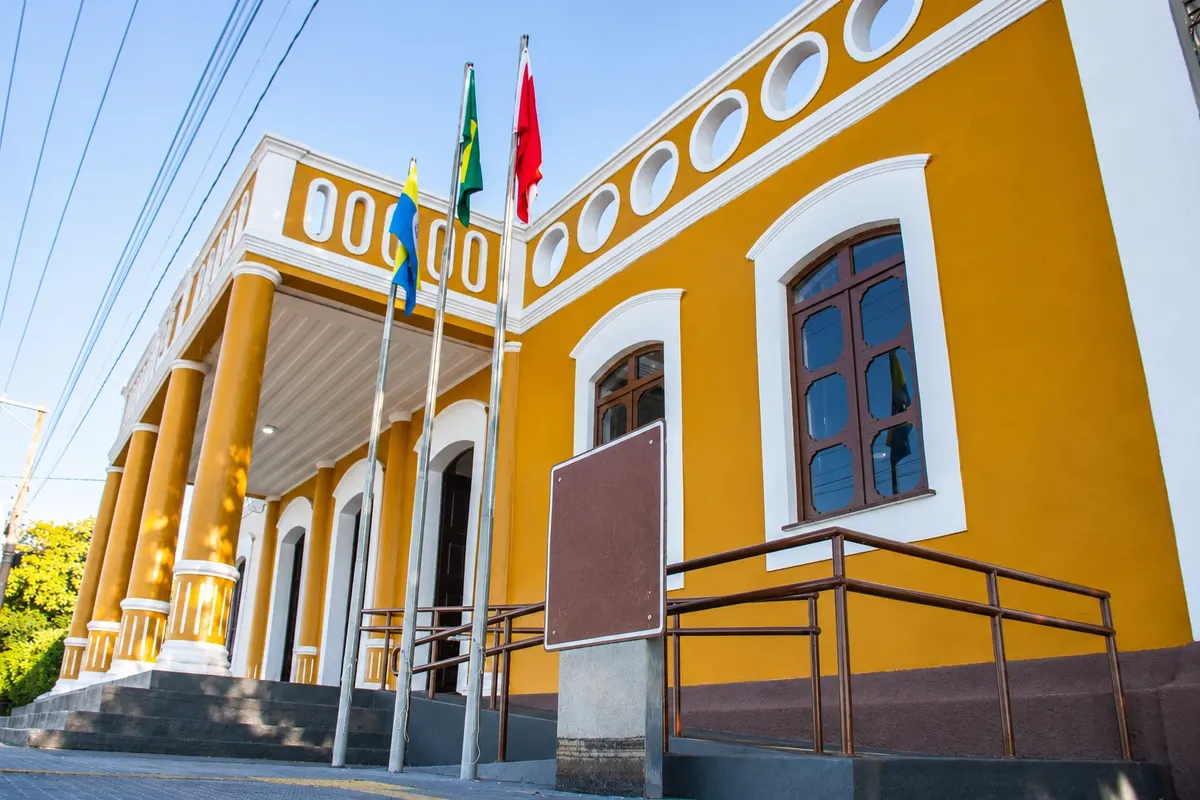
The Santarém Museum is housed in a 19th-century building on the Tapajós waterfront, originally built for the city council and mayor’s office. It preserves a collection of Tapajonic archaeological ceramics, as well as paintings, period furniture and exhibitions about the region’s history.
Discover João Fona Cultural Center
White sand point that juts into the Tapajós near Alter do Chão, reached by boat. It’s the most popular spot in the area to watch the late afternoon, with the sun setting over the river.
House-museum in downtown Santarém with clothing, textiles and pieces created by Dica Frazão from roots, fibers, seeds and tree inner bark from the Amazon, including an outfit made for Queen Fabiola of Belgium.
To choose before you go
Where each tour starts, how long it takes, how it is done, what is included and the price range.
The old center of Santarém follows the river, and the walk is almost entirely flat. Start at the waterfront of Avenida Tapajós, a 1,640-meter promenade where you can watch the boats and, in the distance, the line where the Tapajós and the Amazon run side by side. In front of Fisherman's Square is the Tourist River Terminal, the boarding point for tours and a place for craft exhibitions. A few blocks away is the Cathedral of Our Lady of Conception, one of the city’s oldest buildings, with construction begun in 1754. Beside it, the Museum of History and Sacred Art houses sacred pieces, objects, and documents. On the same avenue, the Tapajós Handicraft Center, known as Cristo Rei, has 14 craft and community product stalls. The Dica Frazão Museum holds more than 150 pieces made from roots, fibers, and seeds by the artisan who gave the house its name, including a patchouli dress. Continue to the Prainha neighborhood. The Tapajós Viewpoint Square stands on the site of an old fortress, preserves cannons, and has kiosks and views over the cityfront and the meeting of the waters. Nearby, the João Fona Cultural Center operates in a building erected between 1853 and 1868 that once served as city hall, council, and courthouse, and displays Tapajonic archaeological pottery. Finish back at the waterfront, which becomes the city’s meeting point in the late afternoon when the heat decreases and the bars and food stalls open.
Stops: Santarém waterfront, Tourist River Terminal, Cathedral of Our Lady of Conception, Museum of History and Sacred Art, Tapajós Handicraft Center – Cristo Rei, Dica Frazão Museum, Tapajós Viewpoint Square, João Fona Cultural Center.
Includes: There is no fee to walk along the waterfront, the squares and the cathedral. Museums have specific opening days and may charge admission: check each one’s current rates and hours. Guides, when hired, are paid separately.
Tip: The João Fona Cultural Center is open only on weekdays; schedule the walk for a weekday if you want to go inside. Go early or late afternoon: from late morning to early afternoon the heat is strong and there is little shade on the waterfront. The municipal tourist information center is on the waterfront itself and operates on weekdays.
Best time: All year round. From January to May bring an umbrella. At high water, between May and June, the river reaches near the promenade level.
This is the outing to understand what is eaten and sold in the Lower Amazon. Mercadão 2000, opened in 1985, is the city’s main market and supplies the region. In hundreds of stalls you’ll find regional fruits, vegetables, fresh fish, manioc flours, Brazil nuts, jambu, tucupi, medicinal herbs and handicrafts. You’ll also find local herbal liqueurs and baths and jambu cachaça. A typical purchase is Santarém’s feijão-manteiguinha, a small, lighter-colored bean than common beans that cooks quickly. In the city’s restaurants it is often served as a salad alongside fish. The Fish Market is nearby, on the banks of the Tapajós. It sells the day’s Amazon species, but it is better known for the dolphins: vendors offer fish scraps, and pink river dolphins and tucuxis, which are gray, often approach the shore, especially when the river is high. From the upper level of the market you can see them free in the river. Both places function as true markets, with wet floors, narrow aisles and lots of activity. Take your time, try fruits you don’t know and ask their names: the vendors are used to questions.
Stops: Mercadão 2000, Fish Market, Tapajós River.
Includes: There is no entrance fee to the market or the fish market. Purchases and any samples are paid separately; bring cash.
Tip: Go in the morning, when the fish arrive and the stalls are full. Wear closed shoes, as the ground is wet. Manioc flour, Brazil nuts and feijão-manteiguinha travel well in luggage; to take fish or fruit pulp, ask the vendor how to pack it.
Best time: All year. River dolphins tend to appear more when the river is high, from March to July.
From the waterfront and the Mirante do Tapajós Square the meeting of the waters looks like a line in the middle of the river. By boat you reach in a few minutes the point where the clear water of the Tapajós and the muddy water of the Amazon flow side by side, and you can see the color difference up close. The two rivers have different density and temperature, so they take several kilometers to mix. Because the stretch is short, the tour from Santarém usually continues to a second spot. The most common is Igarapé-Açu, on the other side of the river, facing the town: a channel of stilt houses, artisanal fishing and many birds, navigated by boat or canoe, with simple restaurants on the water. When the river is high, giant water lilies (victórias-régias) appear there. The other option is Maicá Lake, about 5 km from the center, fed by the Amazon. It’s one of the municipality’s birdwatching points, for species such as herons and ducks, and in the flooded forest you can often see river dolphins, caimans, sloths and monkeys. This itinerary requires an early departure and a driver who knows the lake. Boats depart from the Tourist River Terminal on the waterfront. There are trips in regional boats, slower and shaded, and in speedboats. Agencies in Alter do Chão also sell the meeting-of-the-waters tour, but as a full-day trip combined with a city tour.
Stops: Meeting of the Tapajós and Amazon rivers, Santarém waterfront, Igarapé-Açu, Maicá Lake.
Includes: Generally boat and operator. Lunch, drinks, and fees charged by residents or communities are paid separately. The price is usually per boat, shared among passengers: finalize the route and check the current price list before boarding.
Tip: Agree in advance which stops are included, because the meeting of the waters alone does not last long. Early morning is better for birdwatching in Maicá; late afternoon is cooler and ends with the river sunset. Bring a hat, sunscreen, insect repellent, and water.
Best time: All year. From January to August, with higher river levels, the channels and flooded forest remain navigable for longer.
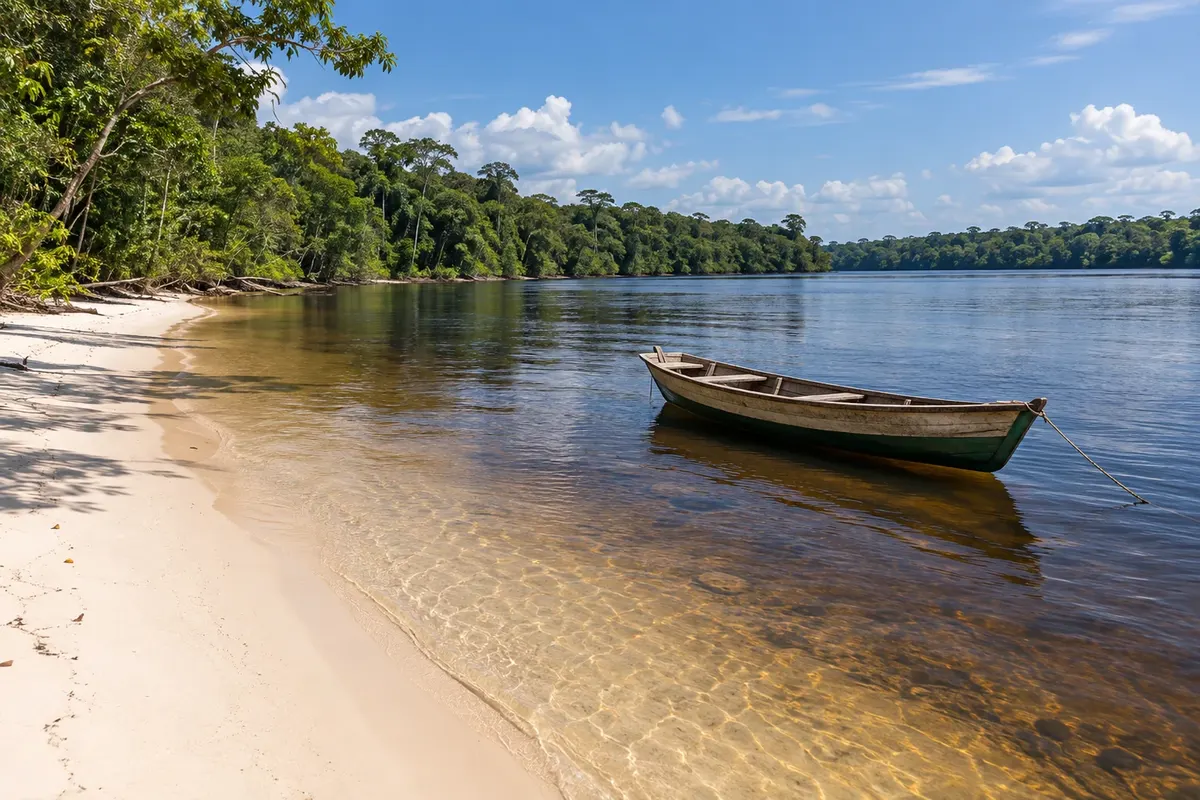
These are river beaches for people staying in town who don’t want to go to Alter do Chão. Both are on the Tapajós bank, with warm, wave-free water, and depend on the river level: the sand strip is wide at low water and shrinks or disappears at high water. Praia do Maracanã is the nearest urban beach, about 6 km from the center, in a fishing village. It has a riverside promenade and a row of bars and restaurants on the waterfront, and is popular both for swimming and for food, with emphasis on fish and fried charutinho. It fills up on weekends and holidays. Praia do Carapanari, about 20 km from the urban area, has a more secluded profile: light sand, wide bank, few buildings and regional cuisine restaurants known in the city. It’s the choice for those who want a long lunch facing the river, with a swim before and after. There is also Praia do Arariá, small and more isolated, reached mainly by boat from the central area. During the beach season, the municipality publishes water quality analyses for the main bathing spots; check the latest report before choosing where to enter the water.
Stops: Praia do Maracanã, Praia do Carapanari, Tapajós River.
Includes: Access to the beaches is free. Transport, consumption at bars and restaurants and rental of table or beach umbrella, when available, are paid separately.
Tip: For Carapanari, arrange the return with the driver, because ride-hailing cars are not always available there. For the most popular restaurants, reserve a table for weekend lunch. Bring sunscreen and a hat: the light-colored sand reflects a lot of sun.
Best time: August to December, when the river is low and the sand is exposed. From February to June the beaches are usually covered.
Ponta de Pedras is a riverside community on the Tapajós, about 36 km from downtown Santarém, in the Eixo Forte region. The beach is one of the municipality’s most extensive: a wide strip of white sand interrupted by reddish rock formations that extend into the water and give the place its name. The land route follows Everaldo Martins highway (PA-457), the same road to Alter do Chão, and then a branch road to the community. By boat, the beach is a stop on itineraries departing from Alter do Chão, about 27 km from the village. The water is calm and gradually deepens, which attracts families with children. In the community there are local restaurants, some operating for decades, that serve tambaqui, pirarucu and charutinho, and small inns for those who want to stay overnight. The sunset is over the river. Short boat trips leave from the beach to nearby lakes and channels, such as Lago Preto, Lago do Tapari, Lago do Jacaré and Canal do Jari, arranged with local boatmen. In November the community hosts the Charutinho Festival, dedicated to riverside cuisine. At the start of the river’s rise, between December and January, there is often still sand; at the peak of the flood the sand strip becomes reduced.
Stops: Ponta de Pedras, Tapajós River, Eixo Forte.
Includes: Access to the beach is free. Transport, lunch, drinks and boat trips are paid separately: check the current price list with the provider.
Tip: Go on a weekday to have a less crowded beach. The day before, ask about the condition of the access track, especially in the rainy season. Without a car, arrange a driver for the whole day with a set return time.
Best time: August to December, at low water, when sand and rocks are exposed. November hosts the Charutinho Festival.
Alter do Chão is a district of Santarém, about 38 km from downtown along the Everaldo Martins highway (PA-457), all paved. The trip takes 40 minutes to 1 hour. On the scheduled bus, board in town or near the Rio Tapajós Shopping Mall; the final stop is the village terminal, a few minutes’ walk from the waterfront. The day starts on the village waterfront, facing Ilha do Amor, a sandbar between the Tapajós and Lago Verde. At low water, from August to December, you cross by catraia, the local wooden boat, in less than five minutes; in very low water you can walk across. The island has thatch kiosks with tables in shallow water. From the end of the sandbank starts the Serra Piroca trail, short, with a final steep climb to the top, at 110 meters, where you can see the river, the lake and the village. Do it early or late in the afternoon. In high water, from February to July, the island is covered and the program changes: the tour is by canoe through Lago Verde’s flooded forest, among the tree canopies, and the bathing spot is Praia do Cajueiro on the waterfront, or whatever sand remains. If you have more than one day, stay in the village and take speedboat tours from there, such as Canal do Jari and the Tapajós beaches.
Stops: Alter do Chão village, Ilha do Amor, Lago Verde, Serra Piroca, Praia do Cajueiro.
Includes: The ferry crossing, the canoe on Lago Verde, the trail guide (optional) and purchases at the kiosks are paid separately. The bus is paid on boarding. Check each provider’s current price table.
Tip: On beach Sundays the bus fills and the island gets crowded; prefer a weekday. Bring cash for the ferry. Check the last return bus or arrange a taxi if you plan to stay for the sunset.
Best time: August to December for Ilha do Amor with sand; February to July for the flooded forest. In September, the Sairé fills the village.
Eixo Forte is the rural area between the city of Santarém and Alter do Chão along highway PA-457. Some communities there welcome visitors to show how products that arrive on the region’s tables are made. In Santa Luzia families produce açaí. With a scheduled visit, a local resident shows the entire fruit production process and serves açaí to taste. In November the community holds the Açaí Festival. In Irurama the stop is at the farinha house, where cassava is turned into farinha. In São Braz you sample tacacá, a typical Pará soup made with tucupi and jambu. These are short visits—conversation and tasting—that fit within a morning or an afternoon and pair well with a trip to or from Alter do Chão. There is no ticket office or park infrastructure: hosts are families, on prearranged days. The community of Boa Esperança, in the same rural region, holds the Tapioca Festival in August.
Stops: Community of Santa Luzia, Community of Irurama, Community of São Braz, Eixo Forte.
Includes: Each community charges for the guided visit and for anything consumed; transport is paid separately. Check the current price list when booking.
Tip: Book in advance through a tour guide, a local agency, or the tourist information center: families do not wait for unannounced visitors. Bring cash and coordinate the visit with your trip to or from Alter do Chão, which is on the same road.
Best time: All year. August has the Tapioca Festival in Boa Esperança; November has the Açaí Festival in Santa Luzia.
The Arapiuns flows into the Tapajós about 20 km from Alter do Chão and runs within the municipality of Santarém, between the Tapajós-Arapiuns Extractive Reserve and the Lago Grande agro-extractive settlement. At low water it has white-sand beaches such as Ponta Grande, Toronó, Icuxi and Caracaraí. Communities along the banks organize tourism in which the residents themselves host, cook and guide. The one-day trip by speedboat usually goes to the community of Coroca, where there is a stingless bee meliponiculture, a lake with Amazon turtles and tucumã straw handicraft. To stay longer, the route departs from Santarém on a scheduled boat: it is about four hours to Anã, the first community in the reserve, and a similar time to Urucureá. Anã shows fish and bee farming and family agriculture, and offers lodging in a community hammock shelter. Urucureá has a weaving workshop where tucumã fibers are dyed with flowers, roots, barks and fruits. the Atodi village offers an 11 km forest trail, a homemade remedies workshop, the manioc-grating session (farinhada) and the piracaia, the fish roasted on the beach at night. You sleep in hammocks, eat what the community prepares and groups are small. The pace follows the place: river baths, conversation and the day’s activities.
Stops: Arapiuns River, Anã community, Urucureá community, Atodi village, Coroca community, Tapajós-Arapiuns Extractive Reserve.
Includes: Cooperative and agency itineraries usually include boat, lodging in hammock shelters, meals and activities with local residents. Community fees and handicrafts may be paid separately. Check the current price table and what is included in each itinerary.
Tip: Book in advance, because the communities need time to prepare for visitors. Bring a hammock or confirm if one is provided, repellent, a flashlight, lightweight long-sleeve clothing and cash; mobile signal is weak or nonexistent. Ask about the departure days of the scheduled boat.
Best time: August to December, when the Arapiuns beaches are formed. During high water, visits continue, with more canoe travel and less sand.
Day by day
Suggestions to plan the trip. Change the order of the days according to the weather and tour availability.
Start early at Mercadão 2000, when the fish, fruit and farinha stalls are full, and walk to the Fish Market to see if the river dolphins are near the riverbank. Head to the center: Cathedral of Our Lady of Conception, Museum of History and Sacred Art and the Tapajós Handicraft Center, Cristo Rei. If it’s a weekday, visit the João Fona Cultural Center at Prainha to see Tapajós-style ceramics, and climb up to Praça Mirante do Tapajós next door. Have river fish with feijão-manteiguinha for lunch and rest during the hottest hours. In mid-afternoon, board at the Tourist River Terminal for the meeting-of-the-waters boat trip, with entry into the Igarapé-Açu. On the return, stay on the waterfront for the sunset and the early evening activity. If you have a flight the same day, swap the boat for the viewpoint and allow extra time: the airport is about 14 km from the center.
Morning at Mercadão 2000 and the Fish Market. Then walk through the center: cathedral, museums, Cristo Rei, Praça Mirante do Tapajós and, on a weekday, the João Fona Cultural Center. In the afternoon, a boat from the Tourist River Terminal to the meeting of the waters and the Igarapé-Açu. Birdwatchers can substitute this trip with an early visit to Maicá Lake and leave the markets for later. Evening on the waterfront.
In low water season, from August to December, go early to Alter do Chão by public bus or car: crossing to Ilha do Amor, swimming, lunch at the kiosks and, late afternoon, the Serra Piroca trail. Return before the last bus or with a prearranged taxi. In high water season, from February to July, Ilha do Amor is submerged: in Alter do Chão take the canoe trip through the flooded forest of Lago Verde and have lunch on the village waterfront. If you prefer not to take the road, spend the day between Praia do Maracanã, about 6 km from the center, and Carapanari beach, 20 km away, with riverside lunch.
Mercadão 2000 and the Fish Market in the morning; historic center, museums and Praça Mirante do Tapajós afterwards. In mid-afternoon, a boat trip to the meeting of the waters and the Igarapé-Açu, departing from the Tourist River Terminal. End the afternoon and have dinner on the waterfront.
Leave early via PA-457. With a planned visit, stop in an Eixo Forte community to see açaí production or a farinha house. Arrive in Alter do Chão in the morning: Ilha do Amor in low water or a canoe on Lago Verde in high water. Climb Serra Piroca late afternoon if the weather is steady, and return to the city after sunset with arranged transport.
In low water, spend the day at Ponta de Pedras, about 36 km from the center: wide beach, reddish rocks, fish lunch in the community and sunset on the river. In high water, or for those who prefer forest, substitute with the Tapajós National Forest in the neighboring municipality of Belterra, about 50 km via BR-163: a guided community trail to large trees and a swim in an igarapé. Depart early and bring closed shoes, insect repellent and water. In both cases, go by rented car or with transport hired for the day.
Best time to go
The seasons shown are the most usual ones; nature doesn't always follow the calendar.
River rising · Frequent rain
It rains a lot, in heavy showers, with lows around 25 °C and highs near 29 °C. The Tapajós rises and the beaches shrink; at the beginning of the month, Ponta de Pedras and Maracanã still usually have sand. City activities continue as normal: markets in the morning, museums on weekdays, and the waterfront in the late afternoon. Bring an umbrella and allow extra time for boat trips.
Carnival · High river
Frequent rain and humid heat, with highs near 29 °C. The beaches are covered or greatly reduced. Carnival, in February or March depending on the year, features celebrations in the town and in Alter do Chão. With the river high, pink river dolphins often approach the Fish Market, and the Igarapé-Açu boat trip gains navigable channels.
Wettest month · Flood
This is usually the rainiest month of the year, almost every day, with highs near 28 °C. With no beaches, the trip focuses on the town, the flooded forest of Lago Verde in Alter do Chão, and Lago do Maicá. Dirt access roads, such as the one to Ponta de Pedras, require checking conditions the day before. Visitor numbers are low.
Flood · Heavy rain
Rain continues heavy, with highs near 28 °C, and the rivers keep rising. It’s time for canoe trips among flooded trees and for bird and dolphin watching. In town, schedule outdoor activities early in the morning before the showers, and leave museums for the afternoon.
River near its highest level
Rain begins to decrease at the end of the month but is still frequent; highs are near 28 °C. The Tapajós approaches its highest level of the year and, along the waterfront, the water reaches the promenade. The beaches are covered. A good month for the meeting of waters with the Igarapé-Açu and for Lago do Maicá, with departures early.
Santarém anniversary (22) · High river
It rains much less, with more hours of sun and highs near 29 °C. The river remains high and the flooded forest stays navigable. On the 22nd the city celebrates its founding anniversary, a municipal holiday. The beaches have not returned yet: those coming for them should expect to wait at least until August.
School holidays · River begins to fall
Clearer days, with lows around 25 °C and highs near 29 °C. The river begins to fall slowly, but there is still little sand. It’s a good month for the town, for boat trips and for the Serra Piroca trail in Alter do Chão on stable days. Brazilian school holidays increase visitor numbers.
Beaches returning · Tapioca Festival (Boa Esperança)
Dry month, with highs around 30 °C. The Tapajós falls and the first sandbanks reappear at Maracanã, Carapanari, Ponta de Pedras and Ilha do Amor. The rural community of Boa Esperança holds the Tapioca Festival. Visitor numbers grow gradually; it’s still easy to book tours.
Sairé, in Alter do Chão · Drier month
This is usually the driest month, with highs near 31 °C and beaches formed. In the second half of the month, the district of Alter do Chão hosts Sairé, a religious and cultural festival over 300 years old, featuring contests of the Pink and Tucuxi river dolphins. The village and the road fill up, and accommodation in town is more sought after: book in advance.
Wide beaches · Warmest month
Very hot, with highs near 32 °C, and little rain. The beaches are usually at their largest, and Ponta de Pedras clearly shows the rocks that give it its name. Do city programs early or late in the afternoon and spend the hottest hours in the water. Busy on weekends.
Feast of the Immaculate Conception (last Sunday) · Charutinho Festival · Açaí Festival
The beaches remain formed, with highs near 31 °C, and showers return gradually, generally late in the afternoon. It’s the month of municipal festivities: the Charutinho Festival in Ponta de Pedras, the Açaí Festival in the community of Santa Luzia, and the Círio of Our Lady of the Conception, whose main procession takes place on the last Sunday and draws large crowds in the town center.
Rain increases · End of low water · New Year’s on the beaches
Rain increases and highs are near 30 °C. The river begins to rise, but there is often still plenty of sand on the beaches, which fill up during the year-end celebrations, especially in Alter do Chão and Ponta de Pedras. Book accommodation and transport for New Year’s well in advance and confirm boat trips the day before.
Plan the journey
Santarém has an airport with regular flights, Maestro Wilson Fonseca (STM), about 14 km from the center. There are direct flights from Belém, Manaus and Brasília; from other cities arrivals usually connect through one of these three. Routes and frequencies change throughout the year: confirm with the airline before buying.
From the airport to the center there are taxis, ride-hailing cars and city buses. Taxi cooperatives serve at arrivals; agree the price before getting in.
If you’re going straight to Alter do Chão from the airport, take PA-457 without passing through the center: it’s between 34 and 38 km, a 40-minute to 1-hour taxi or booked transfer. The bus to the village does not depart from the airport; you must take a city bus to Rio Tapajós Shopping Mall and transfer lines there.
For flights arriving at night or in the early morning, arrange transport before departure.
Santarém lies in the middle of the Amazon river route between Manaus and Belém, and the scheduled riverboat is the traditional regional transport. Vessels carry passengers in hammocks, on deck, or in cabins, and also transport cargo.
From Manaus, downstream, the trip takes about 30 to 36 hours. From Santarém to Belém, also with the current, it’s about 45 hours. In the opposite direction, upstream, it takes longer: from Belém to Santarém count on around three days. The river distance between Belém and Santarém is about 880 km.
Arrivals use the Santarém River Terminal in the Prainha neighborhood, with a waiting room and snack bars. Boats to nearby communities and towns, such as those on the Arapiuns and Tapajós rivers, use the waterfront ports.
Departure days, accommodation type and duration vary depending on the vessel and the river level. Buy tickets at the terminal or from the company, and confirm everything the day before. Bring a hammock if you’ll travel on deck, and arrive early to choose your spot.
By land, Santarém is the terminus of BR-163, the Santarém–Cuiabá highway, an axis of about 1,750 km to the capital of Mato Grosso. The Trans-Amazonian (BR-230) meets BR-163 in Rurópolis. Conditions change with rain, and parts of the region have had long dirt stretches: check road conditions, plan stops and avoid driving at night.
From Belém, the road journey is long—over a day—and few visitors travel it; plane and boat are the common choices.
Santarém’s bus station is on the road to BR-163. From there depart buses to towns in western Pará, like Itaituba, and long-distance lines. In the rainy season, delays can occur.
For nearby areas, roads are short: PA-457 takes you to Alter do Chão in about 38 km of pavement, and BR-163 leads to Belterra, about 45 km away, and to the entrances of the Tapajós National Forest.
Alter do Chão is about 38 km from the center via the Everaldo Martins highway (PA-457), paved. By car, taxi or ride-hailing app, the trip takes 40 minutes to 1 hour.
The bus line to Alter do Chão passes the center and the Rio Tapajós Shopping Mall, with departures throughout the day, and ends at the village terminal. It’s the cheapest way to go; on beach Sundays and during Sairé the buses fill up and the municipality usually adds extra vehicles. Pay the fare on boarding: check the current rate table.
For Praia do Maracanã, about 6 km from the center, taxis, ride-hailing and mototaxis are convenient. For Carapanari, about 20 km away, and for Ponta de Pedras, 36 km, the most practical option is a rented car or a driver hired for the day, with return time agreed in advance.
On the return at night, don’t rely solely on ride-hailing apps outside the urban area.
The historic center, the waterfront and the Tourist River Terminal are close together and can be walked, preferably early in the morning or late afternoon because of the heat. From the center to Mercadão 2000 and the Fish Market you can walk along the riverbank or take a short taxi ride.
For longer distances there are taxis, ride-hailing cars, city buses and mototaxis, widely used in town for short trips; prefer licensed mototaxistas.
Renting a car isn’t necessary if you stay only in town and go to Alter do Chão. A car helps for overland itineraries with multiple stops: communities along the Eixo Forte, Carapanari, Ponta de Pedras, Belterra and the entrances to the Tapajós National Forest. There are rental agencies at the airport; book in advance during low water.
Boat tours depart from the Tourist River Terminal on the waterfront. If you prefer not to organize each leg, you can hire a local tour guide or an agency in town that combines transport and visits on the same day.
Get your questions answered
Alter do Chão is a district of Santarém: a village on the Tapajós bank, about 38 km from the city center via PA-457. It has pousadas, restaurants and the departure point for speedboat tours, but the airport, the boat terminal, hospitals and markets are in the city of Santarém.
It depends on what matters most for your trip. In Alter do Chão you sleep next to Ilha do Amor and the boat departures, and the village is walkable. In Santarém you are close to the airport, the boat terminal, the markets and the trips to the meeting of the waters, with more urban services. Many people split their stay: most nights in the village and one night in the city, on arrival or the night before the flight.
One full day is enough for the markets, the historic center and the boat to the meeting of the waters. With two days you can include a beach near the city or a day in Alter do Chão. Three days allow adding Ponta de Pedras or the Tapajós National Forest without changing accommodation.
Yes. The line between the Tapajós and the Amazon is visible from the city waterfront and, from higher up, from Praça Mirante do Tapajós. By boat you reach the exact point in a few minutes and can see the color difference right next to the vessel.
At the Fish Market (Feira do Pescado), on the banks of the Tapajós, pink river dolphins and tucuxis often approach the shore behind fish scraps, especially when the river is high. They are also seen on boat trips to the meeting of the waters and to Lago do Maicá. They are wild animals: there are days when they do not appear.
Maracanã Beach, about 6 km from the center, with bars and restaurants on the Tapajós waterfront. Carapanari Beach is about 20 km away, and Ponta de Pedras is 36 km. All depend on the river level and have more sand from August to December.
Generally from August to December, during the Tapajós low water, with the widest sandbanks in October and November. From February to July the high river covers much of them, including Ilha do Amor in Alter do Chão. The level varies from year to year: confirm with your accommodation or with a boatman before finalizing dates.
Yes, with different expectations. Without beaches, activities are the city, the markets, the meeting of the waters, the flooded forest of Lago Verde, travelled by canoe among the treetops, and bird and dolphin watching. It rains a lot from January to May, so leave flexibility in your schedule and start tours early.
River fish: tambaqui, pirarucu and charutinho, a small fish often served fried. Santarém’s manteiguinha beans accompany dishes, often served as a salad. Also try tacacá, açaí with farinha, tapioca and piracaia, fish grilled on the embankment. Restaurants are concentrated along the waterfront, in the center and on the beaches of Maracanã and Carapanari.
At Mercadão 2000: manioc flours, Brazil nuts, manteiguinha beans, regional herbs and fruits. At the Tapajós Handicraft Center, Cristo Rei: handicrafts and products from local communities, like tucumã palm straw weavings from the Arapiuns River. The method of making bowls (cuias) in the Lower Amazon is recognized as Brazil’s intangible cultural heritage.
The João Fona Cultural Center is only open on weekdays. Other downtown museums have their own schedules, which change: check before you go. If visiting museums is important to you, plan your city day for a weekday.
Yes. The forest is in the neighboring municipality of Belterra, with access via BR-163, about 50 km from town. You go by car, with hired transport or an agency tour, and the trails are done with guides from the communities, such as Jamaraquá and Maguari. Plan for a full day.
No for getting around the city or to Alter do Chão, which has regular buses and taxis. A car, rented or with a driver, makes days with several land stops easier, such as Carapanari, Ponta de Pedras, the communities of Eixo Forte and Belterra.
Beyond the guide