

 Brazil
 Antarctica
 Argentina
 Bolivia
 Chile
 Colombia
 Ecuador
 Guyana
 French Guiana
 Falkland Islands (Malvinas)
 Paraguay
 Peru
 Suriname
 Uruguay
 Venezuela
 Germany
 Austria
 Croatia
 Denmark
 Slovakia
 Slovenia
 Spain
 Finland
 France
 Greece
 the Netherlands
 Hungary
 Ireland
 Iceland
 Italy
 Luxembourg
 Norway
 Poland
 Portugal
 the United Kingdom
 the Czech Republic
 Sweden
 Switzerland
 Turkey
 Bermuda
 Canada
 the United States
 Greenland
 Mexico
 Saint Pierre and Miquelon
 the Dominican Republic
 Japan
 South Africa
 Egypt
 Australia
 Fiji
 New Zealand
 Papua New Guinea
Illustrative images. The pictures in this guide are illustrations based on the real place, not photographs, and may differ from it.

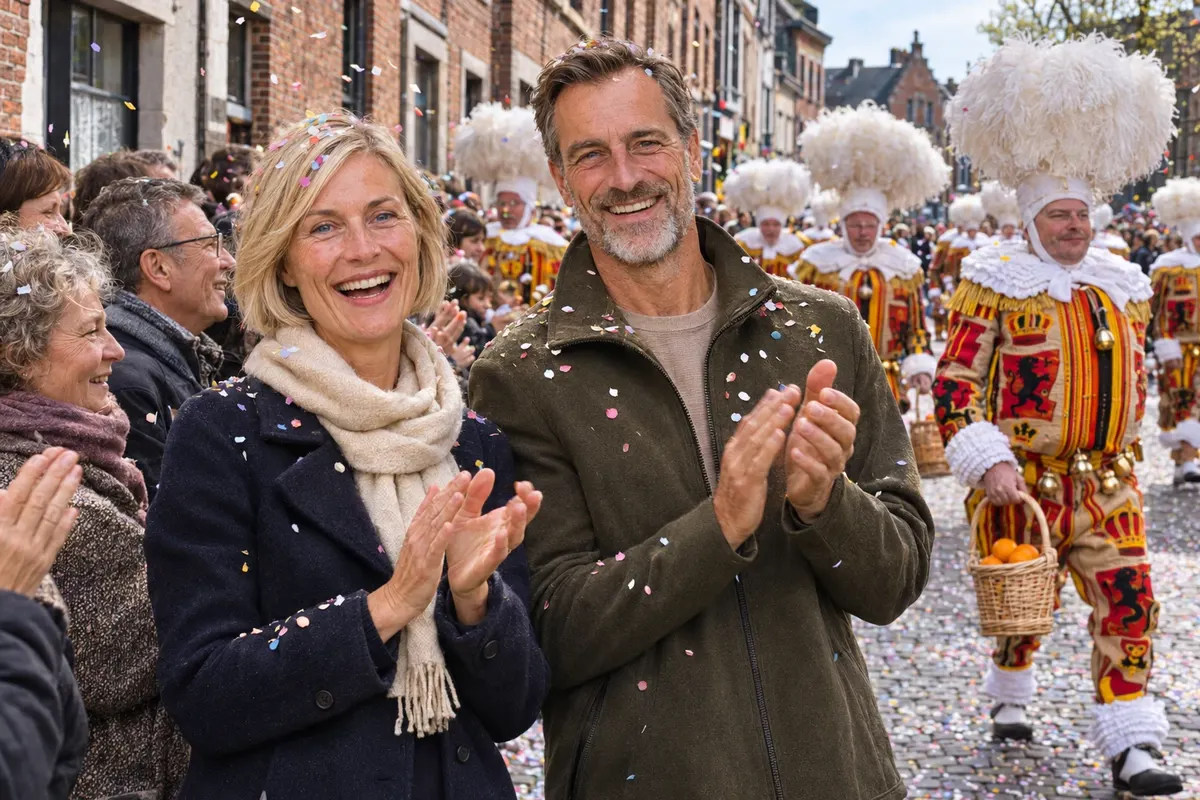
Popular festivals
Carnivals and popular festivals
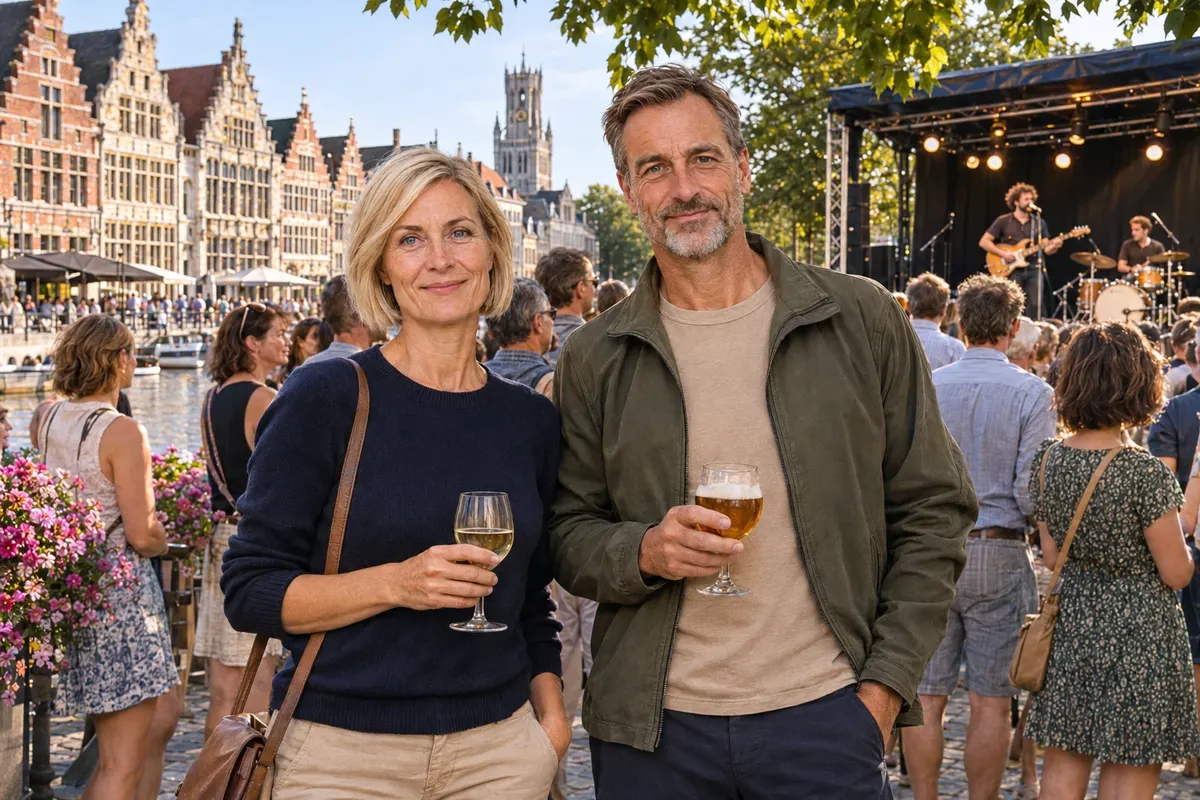
Follow the Gilles, watch a giant dance, or choose a square in Ghent to enjoy the Gentse Feesten.
A basket of oranges, a red nose, and a dragon are clues to recognize the festivals of three Belgian towns. The basket goes with the Gilles of Binche, the nose belongs to the Blancs Moussis of Stavelot, and the dragon appears in Mons’ Doudou. Identifying these characters helps decide which town to stay in and when it’s worth being out on the street.
The calendar is also part of that choice. Binche and Malmedy celebrate on Carnival days. Stavelot holds its parade during Lent. In Mons and Ath, the traditional festival is called a ducasse. In Ghent, the Gentse Feesten give visitors ten summer days to discover what happens in each square.
Gilles Tuesday in Binche
At the Binche Carnival, drums and the clacking of wooden clogs announce the Gilles before the procession comes into view. In the morning, the wax mask with painted-on glasses is one of the costume’s hallmarks. Later, the baskets of oranges and the large feathered hats appear. Watching different moments of the day helps you notice how the Gille’s appearance changes.
The festival is part of the UNESCO Intangible Cultural Heritage. When choosing a spot, look for a stretch where you can see the whole group approach. The cadence of several Gilles’ steps together tells as much about the parade as the detail of a single costume.
The masked figures of Cwarmê and Laetare
Cwarmê is the name of Malmedy’s carnival. It runs from Saturday to Shrove Tuesday and brings together characters with their own gestures and antics. Before the procession, check the program for the traditional figures. Recognizing a character by the way they walk or interact with spectators makes it easier to follow the antics when several groups are in the street.
In Stavelot, look for the Laetare, celebrated around the fourth Sunday of Lent. The Blancs Moussis dress in white from head to toe, and a long red nose stands out from the pale mask. If you plan to photograph, a stretch that allows you to see the sequence of white hoods gives a good sense of the effect the group creates when it passes.
Mons’ Car d’Or and Ath’s giant Goliath
Mons’ Doudou has a sequence worth knowing before choosing a place in the square. On Trinity Sunday, the Car d’Or carries the relics of Sainte-Waudru in procession. On the return, the crowd helps the cart climb the church ramp. The combat of Saint George and the dragon comes afterwards, in the Grand-Place. In the program, that staging appears under the name Lumeçon.
At the Ducasse d’Ath, the Saturday duel is another highlight. David faces Goliath in front of the public, and on Sunday the giant goes out in procession. The carriers, hidden under the large figures, do delicate work to balance and spin them to the music. If you can stay for both days, you’ll see the same character perform a story in the square and then dance through the town.
From square to square at the Gentse Feesten
In July, the Gentse Feesten occupy Ghent for ten days. Concerts, street theatre, and children’s attractions share the program. If you have only an afternoon, choose one play or show and explore the nearby squares before it starts. If you stay several days, it’s worth returning to a square at a different time to see how the audience and the performance change.
With family, check the duration of the performance and look on the map for an easy exit route. In the processions in other towns, a street with a good view of the groups passing may work better with children than the arrival square. Keep the performers’ space clear, especially during religious acts.
Frequently asked questions
Which Belgian carnival takes place during Lent?
The Laetare of Stavelot. The reference is the fourth Sunday of Lent, and the most famous characters in the procession are the Blancs Moussis.
When can you see the giants of the Ducasse d’Ath?
The festival takes place on the fourth weekend of August. The David and Goliath performance is part of Saturday, and the giants’ procession happens on Sunday.
Can you see the Gentse Feesten in one day?
Yes. Choose the performances for that day and plan your visit around the squares where they will take place. The program changes over the ten days of the festival.
Where to go: Carnivals and popular festivals
Pick a region or type what you are looking for to see the cities and who offers it in each.
Beyond the guide


