

 Brazil
 Antarctica
 Argentina
 Bolivia
 Chile
 Colombia
 Ecuador
 Guyana
 French Guiana
 Falkland Islands (Malvinas)
 Paraguay
 Peru
 Suriname
 Uruguay
 Venezuela
 Germany
 Austria
 Croatia
 Denmark
 Slovakia
 Slovenia
 Spain
 Finland
 France
 Greece
 the Netherlands
 Hungary
 Ireland
 Iceland
 Italy
 Luxembourg
 Norway
 Poland
 Portugal
 the United Kingdom
 the Czech Republic
 Sweden
 Switzerland
 Turkey
 Bermuda
 Canada
 the United States
 Greenland
 Mexico
 Saint Pierre and Miquelon
 the Dominican Republic
 Japan
 South Africa
 Egypt
 Australia
 Fiji
 New Zealand
 Papua New Guinea
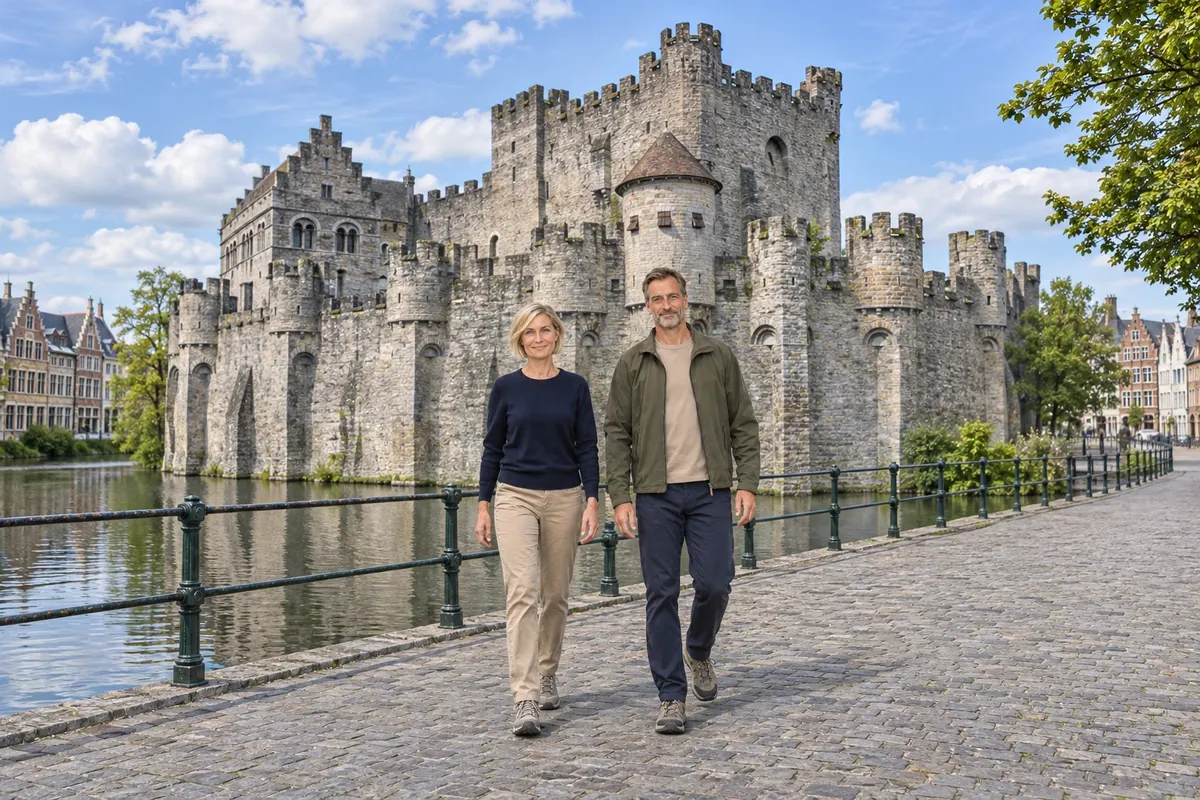
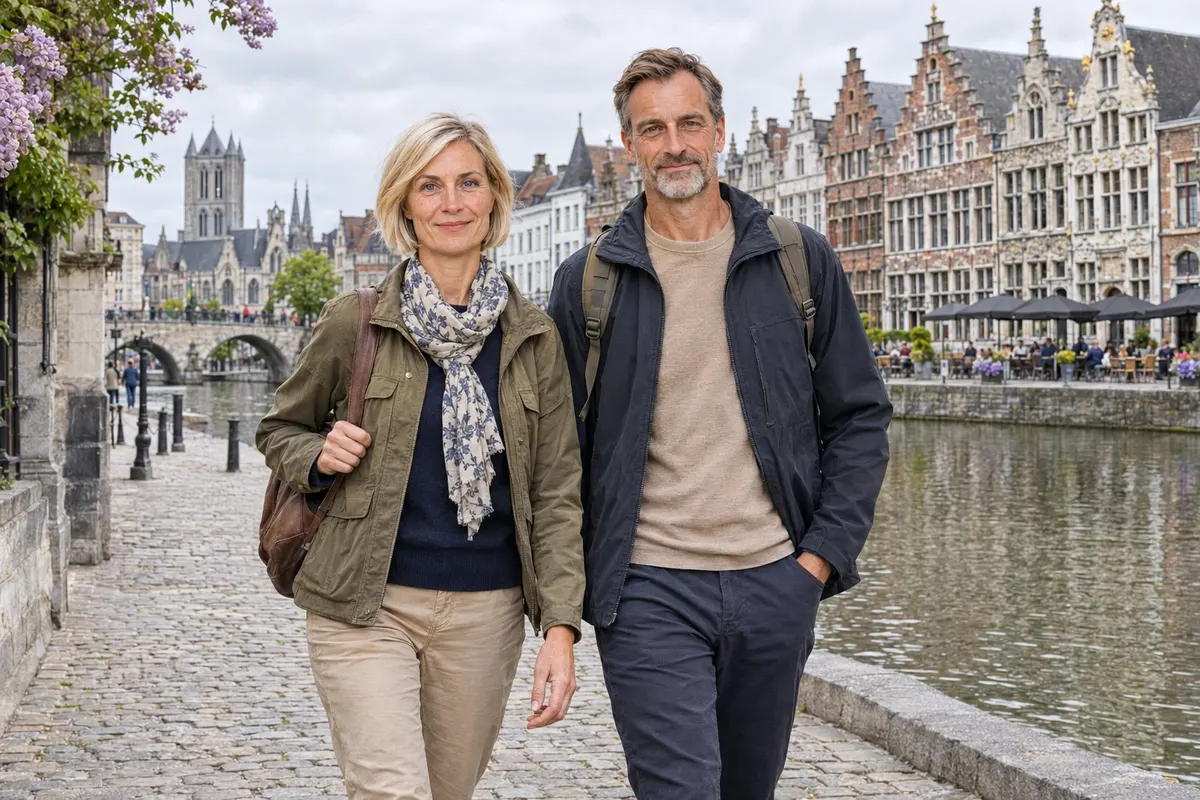
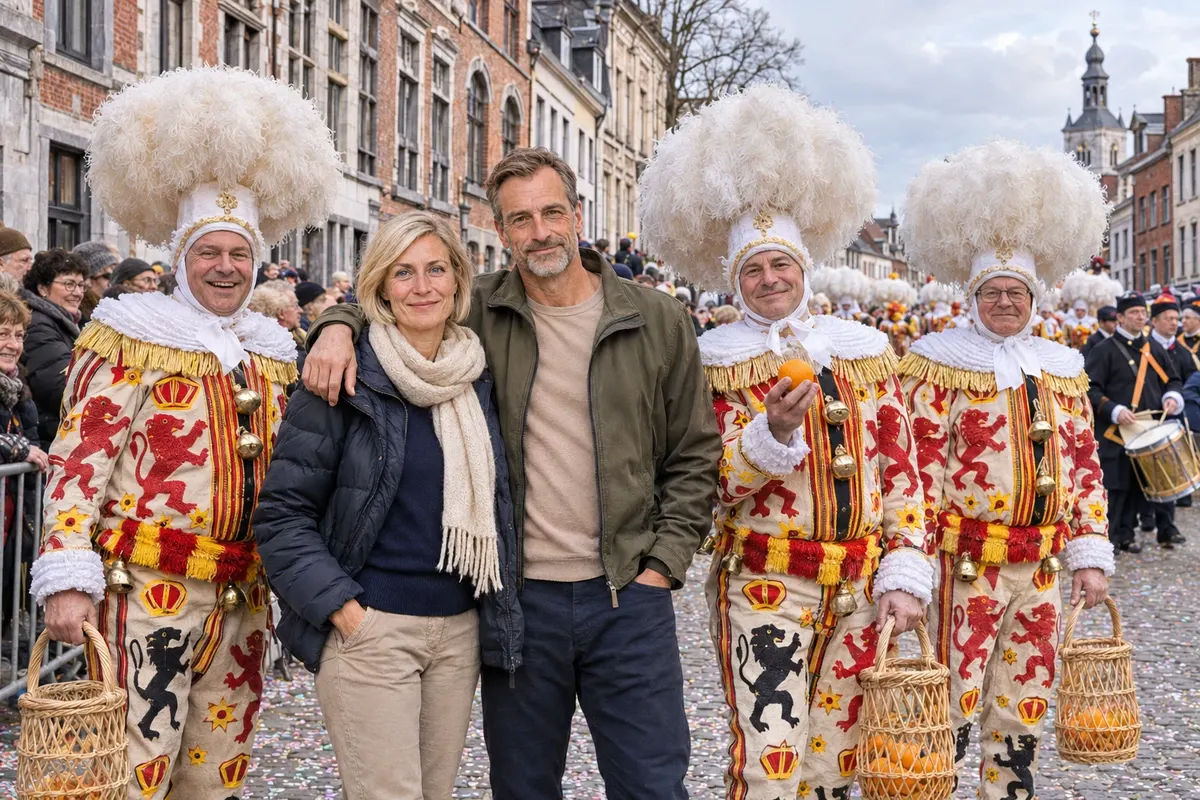
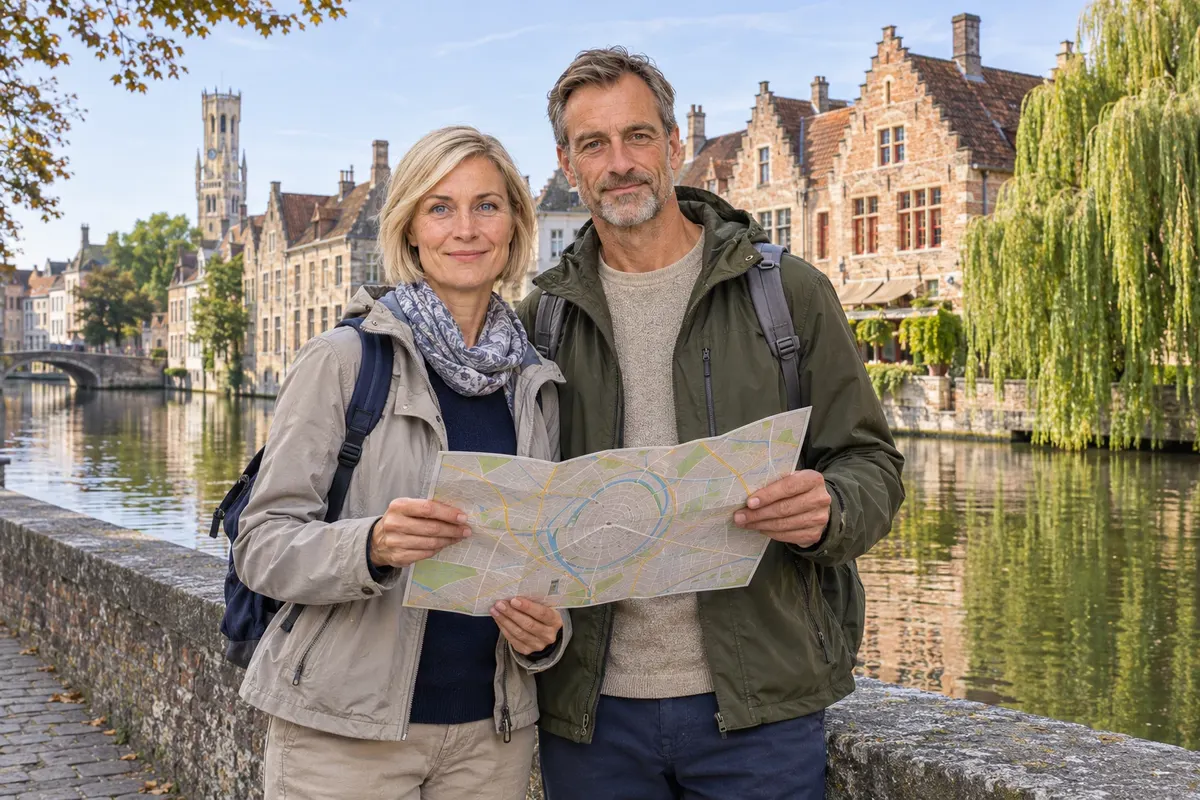
Illustrative images. The pictures in this guide are illustrations based on the real place, not photographs, and may differ from it.

Culture and history
Cultural and historical tourism in Belgium
In Bruges, a bridge changes the view of the row of houses. In Leuven, you need to enter the church to find the painting. Each place asks for a particular way of looking.
A walk through central Ghent can start at the old quays and end in front of an altarpiece that requires getting close to distinguish the figures. In Belgium, a city’s history can be visible along the river or fit on a painted panel.
Things to do
Historic centers
Follow Bruges’ canals, cross Brussels’ Grand-Place and discover where people once entered Tongeren.
Learn more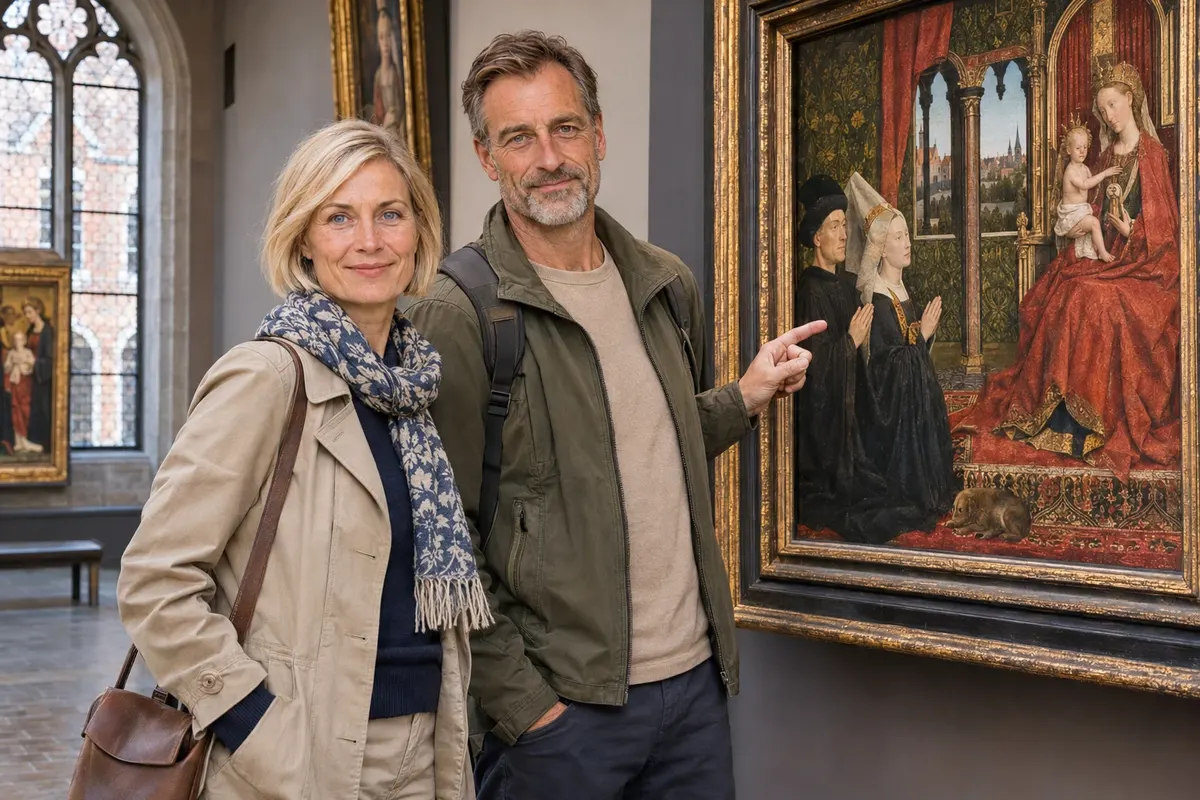
Flemish masters
See the details of a Van Eyck panel in Ghent and the place a Last Supper painted by Bouts occupies in Leuven.
Learn more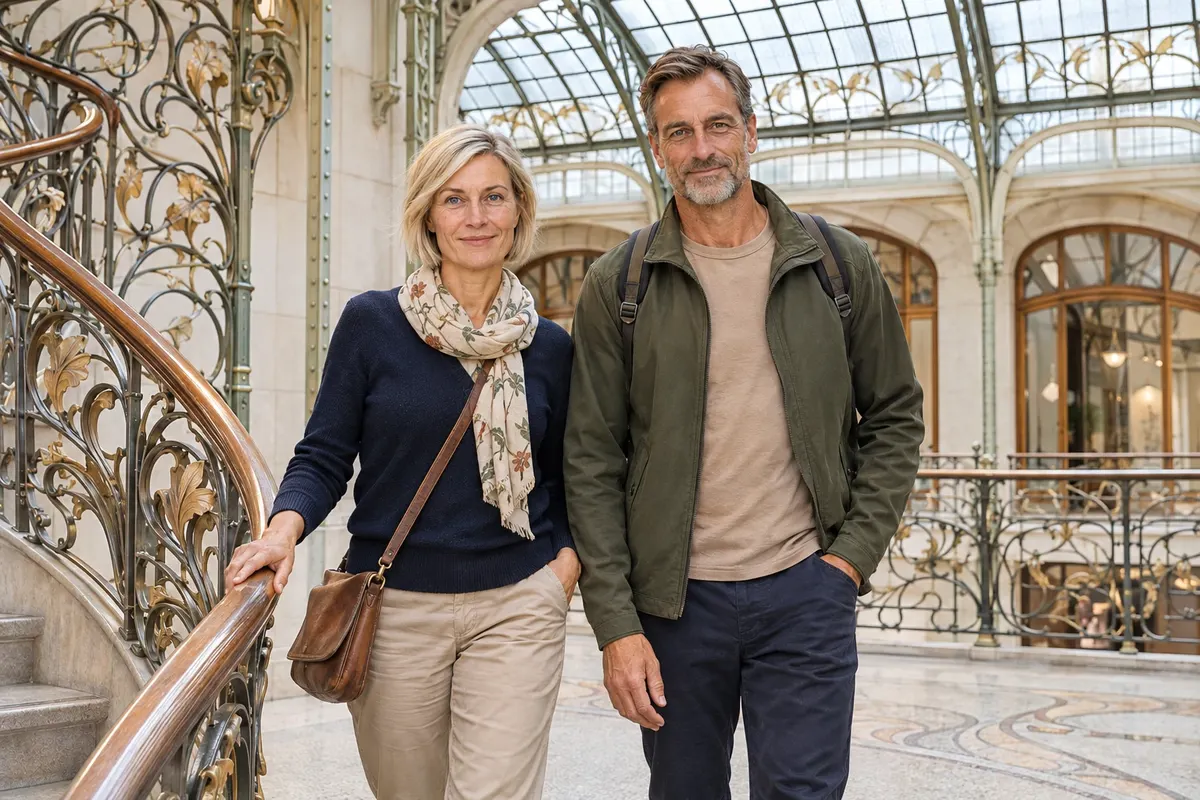
Art nouveau
Two former shops in Brussels show what iron and glass did for commercial architecture.
Learn more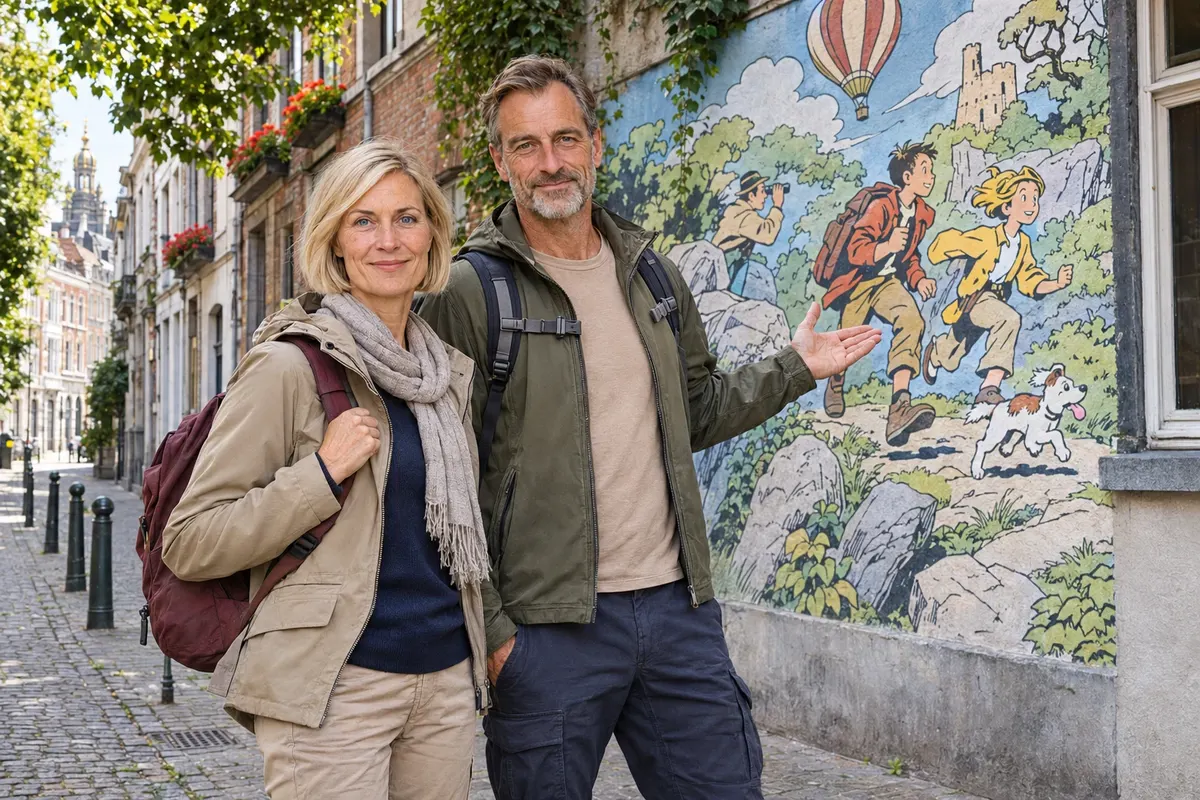
Comics
Read a story in panels at the museum and find the characters again on Brussels façades.
Learn more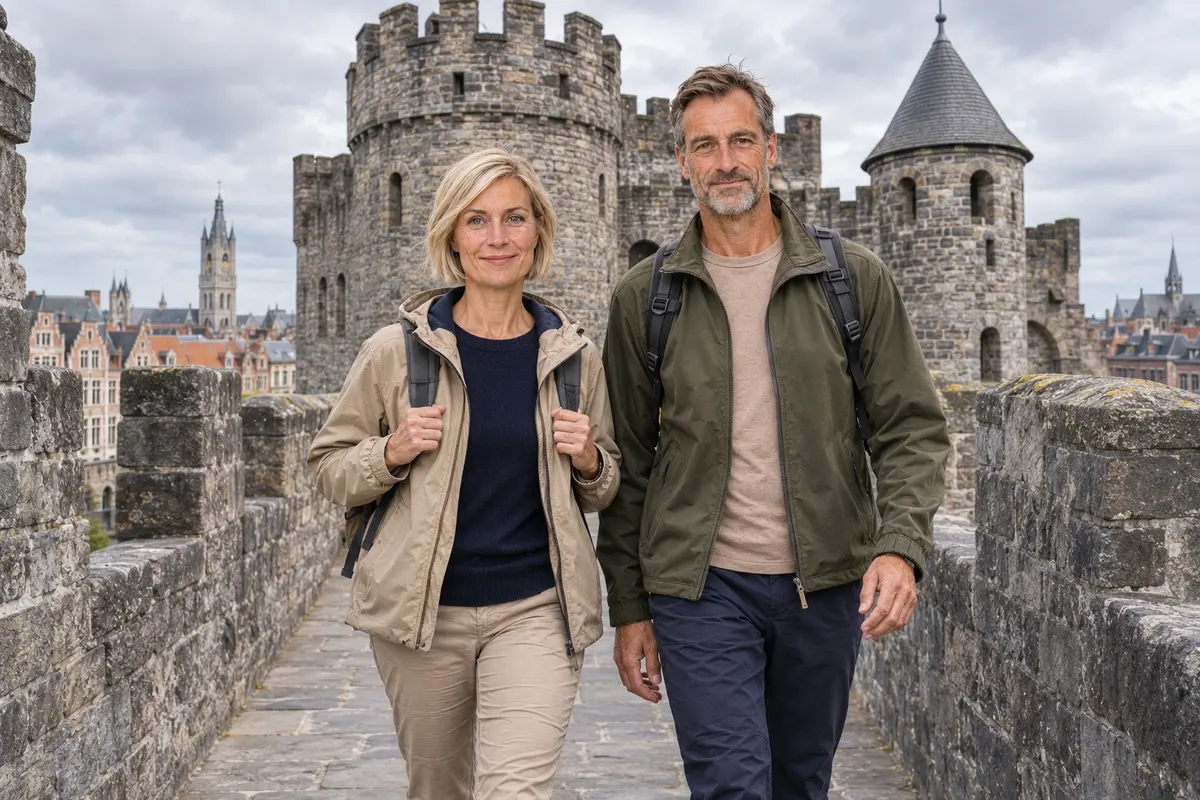
Castles and citadels
From the top of the walls at Bouillon or Namur, follow the course the river cuts between the slopes.
Learn more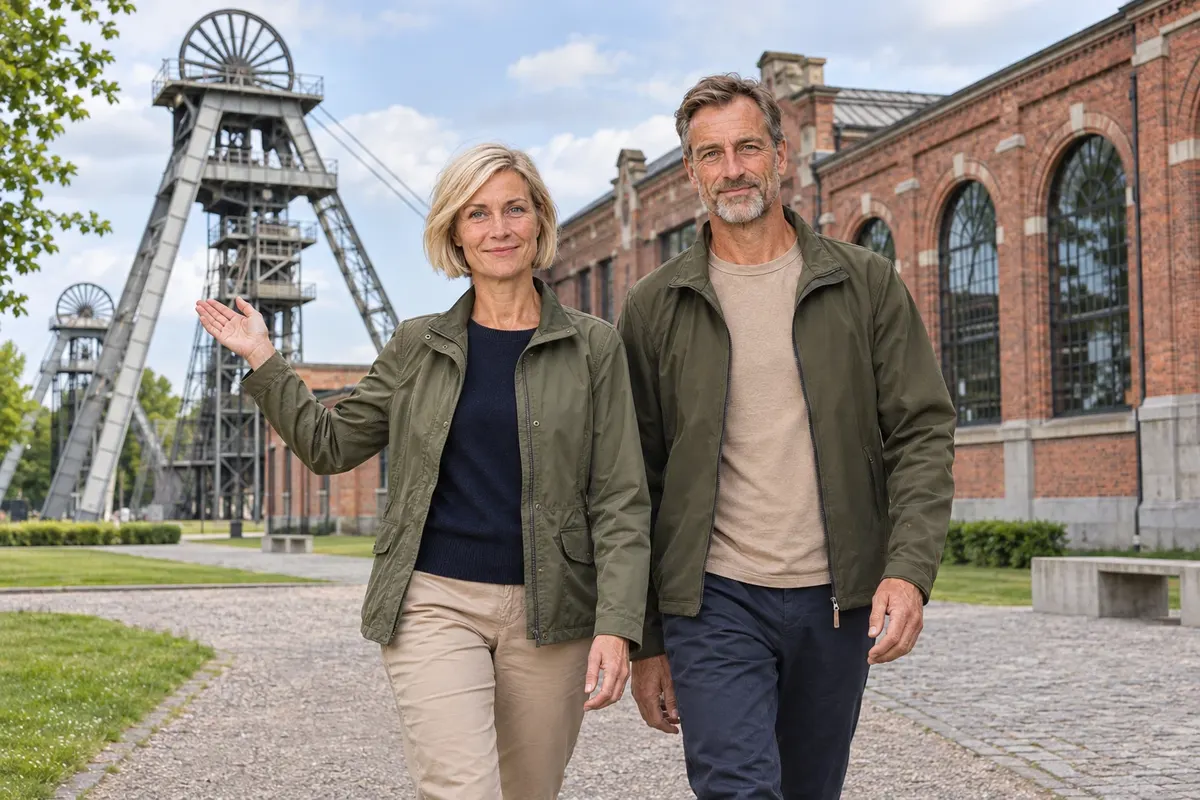
Industrial heritage
Walk the tunnels and surface installations of the former Winterslag mine in Genk.
Learn more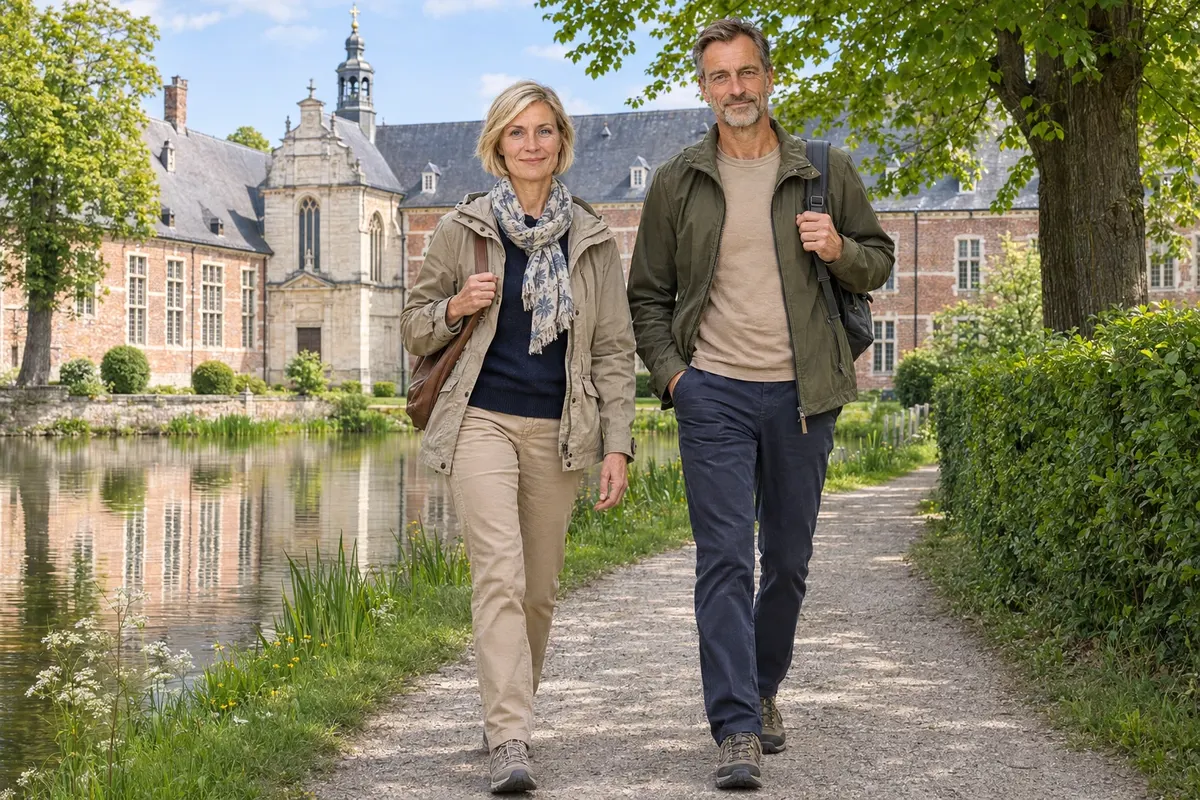
Abbeys
Explore a garden with a vineyard in Ghent, the old nurseries of Leuven and the remains of the church in Stavelot.
Learn moreWhere to go in Belgium
Pick a region or type what you are looking for to see the cities and who offers each activity.
- Bruxelas BX
- Antuérpia AN
- Mechelen AN
-
Gante OV
Historic centers · Flemish masters · Castles and citadels · Abbeys
- Lovaina VB
- Genk LI
- Tongeren LI
- Bruges WV
- Tournai HT
- Huy LG
- Stavelot LG
- Bouillon LX
- La Roche-en-Ardenne LX
- Dinant NA
- Namur NA
For outdoor walking, consider the squares of Bruges or the fortifications that follow the Meuse. To enter a building and understand how it worked, there is a former mine in Genk and abbeys in Ghent, Leuven and Stavelot. Brussels lets you combine architecture and drawing in a single visit. The Belgian Comic Strip Center occupies a former commercial building designed by Victor Horta.
Squares and canals of the historic towns
In Bruges, the Markt offers an open view of the historic center recognized by UNESCO. Leave the square down a street that leads to the canals and compare the two sides of the same row of houses. In Ghent, a walk along the Leie quays allows you to observe a city that grew up where that river meets the Scheldt.
In Brussels, enter the Grand-Place through one of the narrow streets and turn your gaze back to the point where you arrived. The change of scale helps to perceive the size of the ensemble. The Grote Markt plays a similar role on a walk through Antwerp’s old town. Mechelen invites you to go from square to square. For those interested in the limits of the medieval city, the starting point in Tongeren is a gate, the Moerenpoort. In Tournai, the cathedral and the Grand-Place give direction to the walk.
Flemish painting in its intended place
Some works remain connected to the buildings for which they were painted. At St. Bavo’s Cathedral in Ghent, the Ghent Altarpiece gathers scenes spread across panels by the Van Eyck brothers. In Leuven, The Last Supper by Dieric Bouts can be seen in St. Peter’s Church. Notice the perspective of the room that Bouts painted around the table.
The Groeninge Museum in Bruges fits into the same itinerary as someone who spent the morning examining the facades of the center. In Antwerp, the Royal Museum of Fine Arts is a reference for seeing Rubens. In Brussels, the Old Masters Museum holds works by both Rubens and Bruegel. If the trip was planned to see a specific painting, check its status in the collection before choosing the date.
The art nouveau of Brussels’ old shops
The Old England building draws attention for the amount of glass framed by metal. Approaching on the sidewalk lets you distinguish the iron pieces that, seen from afar, look like drawn strokes on the facade. The building served commerce and now houses the Musical Instruments Museum. The old shop windows still attract the gaze of passersby.
At the building that houses the Belgian Comic Strip Center, the focus shifts from the facade to the interior. Victor Horta designed the building for the textile trade. Upon entering, look for the path of light to the exhibition space and notice how the floors connect with one another.
The city of comics between paper and wall
At the Belgian Comic Strip Center, a board lets you follow the passage from one instant to the next. It’s worth looking at the drawings first without reading the balloons, then returning to the same page to see what the text adds. Notice which panel the eye lingers on.
On Brussels’s murals, it’s the pedestrian who moves. From a distance the whole composition appears. Up close, it’s easier to see the outline of the figures. Choose a few nearby facades on the comic route map and use the streets between them to get to know the neighborhood.
Castles in the Ardennes and citadels on the Meuse
In Bouillon, the medieval castle occupies a rise surrounded by the Semois. Before climbing, observe the shape of the hill from the town. From the top, try to locate the bank from which you came. In La Roche-en-Ardenne, the curve that helps explain the castle’s position is that of the Ourthe. The ruins reveal the relationship between the rock of the slope and the walls built on it.
Dinant, Namur and Huy offer three perspectives on the Meuse. There are galleries in Dinant’s citadel, the confluence with the Sambre beneath Namur’s citadel, and a fortified hill at Huy Fort. To include a fortification in a day of urban walking, another choice is the Gravensteen in central Ghent. When planning the visit, check access separately for the courtyard, the rooms and the viewpoints.
Genk and the memory of mining work
At the former Winterslag mine in Genk, the visit to C-mine alternates the scale of the surface facilities with that of the tunnels. Look for the shaft tower before entering. Its silhouette serves as a reference to imagine the mine’s vertical axis and the connection that had to exist between the work underground and the machines on the surface.
The underground part of the route helps you perceive what changes when street references disappear. The lighting, the sounds and the audio guide’s accounts give context to the space. Check the route to know which sections include stairs.
Gardens and traces of former abbeys
Saint Peter’s Abbey in Ghent gathers a cloister, exhibition spaces and a garden with a vineyard. In Leuven, the paths of Park Abbey lead to the old nurseries. In both cases, it’s worth reserving part of the visit for the grounds around the buildings. The cultivated areas and fishponds help imagine the supply systems of an entire community.
In Stavelot, the visit is divided between the museums of the former abbey and the remains of the medieval church. First look for the church’s footprint on the ground. Then, upon entering the preserved buildings, it’s easier to place each period within the complex.
Frequently asked questions
Which city combines a historic center and Flemish painting?
Bruges pairs the Markt and the canals with the Groeninge Museum. In Ghent, a walk along the quays can end in front of the Ghent Altarpiece in St Bavo’s Cathedral.
Where can you see art nouveau and comics in the same walk?
In Brussels. The Belgian Comic Strip Center lets you explore both arts in the same building. To continue outdoors, choose part of the mural route.
How to divide a day of cultural sightseeing in Belgium?
Begin with the visit that depends on interior access, such as a church, a museum or a former mine. Arrange walks through squares, canals and gardens around it, taking daylight and the terrain into account.
More in Culture and history

Beyond the guide


