1 city

 Search
 Brazil
 Antarctica
 Argentina
 Bolivia
 Chile
 Colombia
 Ecuador
 Guyana
 French Guiana
 Falkland Islands (Malvinas)
 Paraguay
 Peru
 Suriname
 Uruguay
 Venezuela
 Germany
 Austria
 Belgium
 Croatia
 Denmark
 Slovakia
 Slovenia
 Spain
 Finland
 France
 Greece
 the Netherlands
 Hungary
 Ireland
 Iceland
 Italy
 Luxembourg
 Norway
 Poland
 Portugal
 the United Kingdom
 the Czech Republic
 Sweden
 Switzerland
 Turkey
 Bermuda
 Canada
 the United States
 Greenland
 MexicoSaint Pierre and Miquelon
 the Dominican RepublicTurkey
 South Africa
 Egypt
 Australia
 Fiji
 New Zealand
 Papua New Guinea
Commune · Miquelon and Langlade
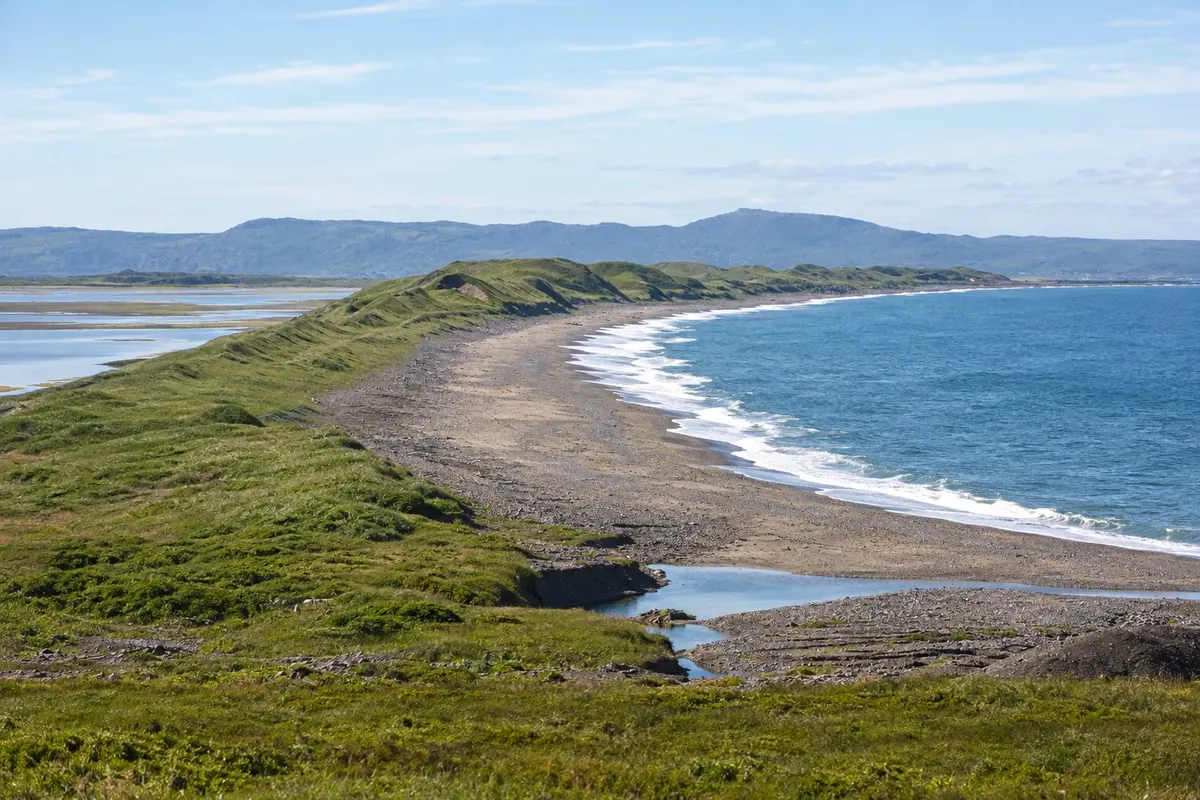
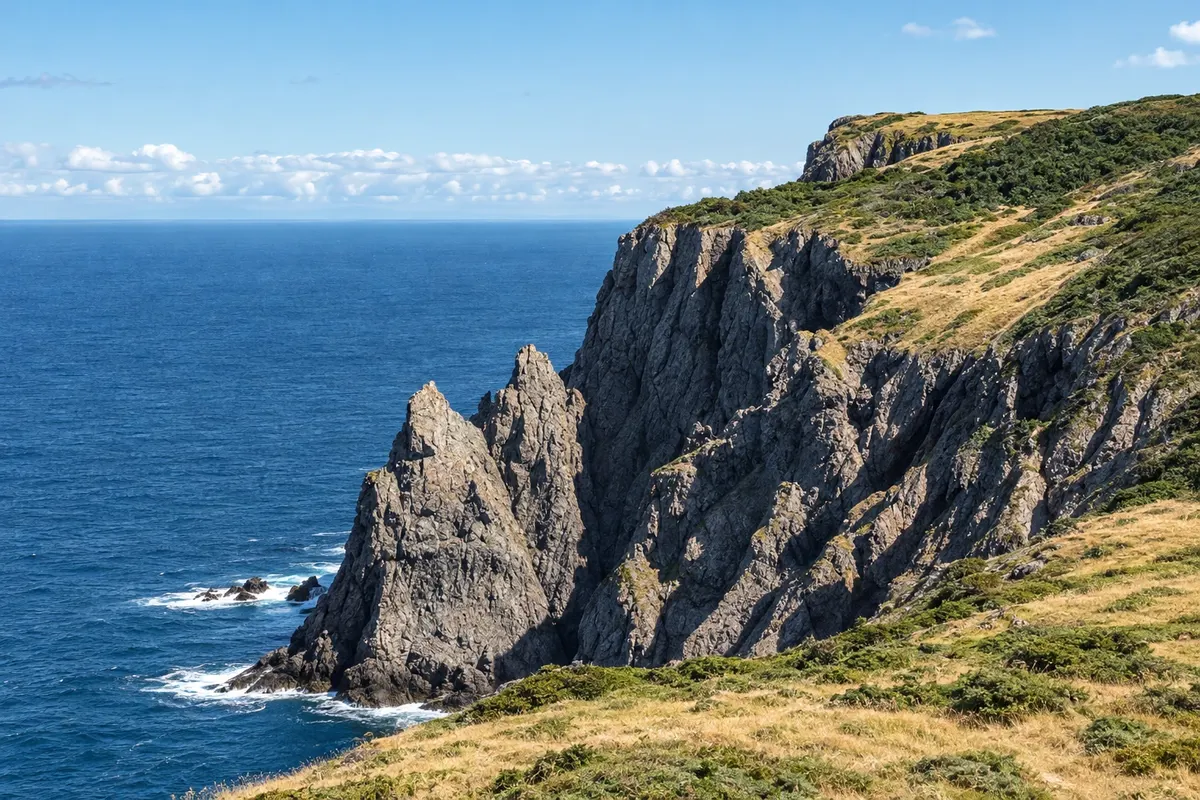
Nature in the northern part of the archipelago: the Grand Barachois lagoon and its seals, the sandbar that links Miquelon to Langlade, Cap de Miquelon and a fishing village with Acadian and Basque roots.
In the photo: Cliffs on the coast of Cap de Miquelon.
Illustrative images. The pictures in this guide are illustrations based on the real place, not photographs, and may differ from it.
The commune
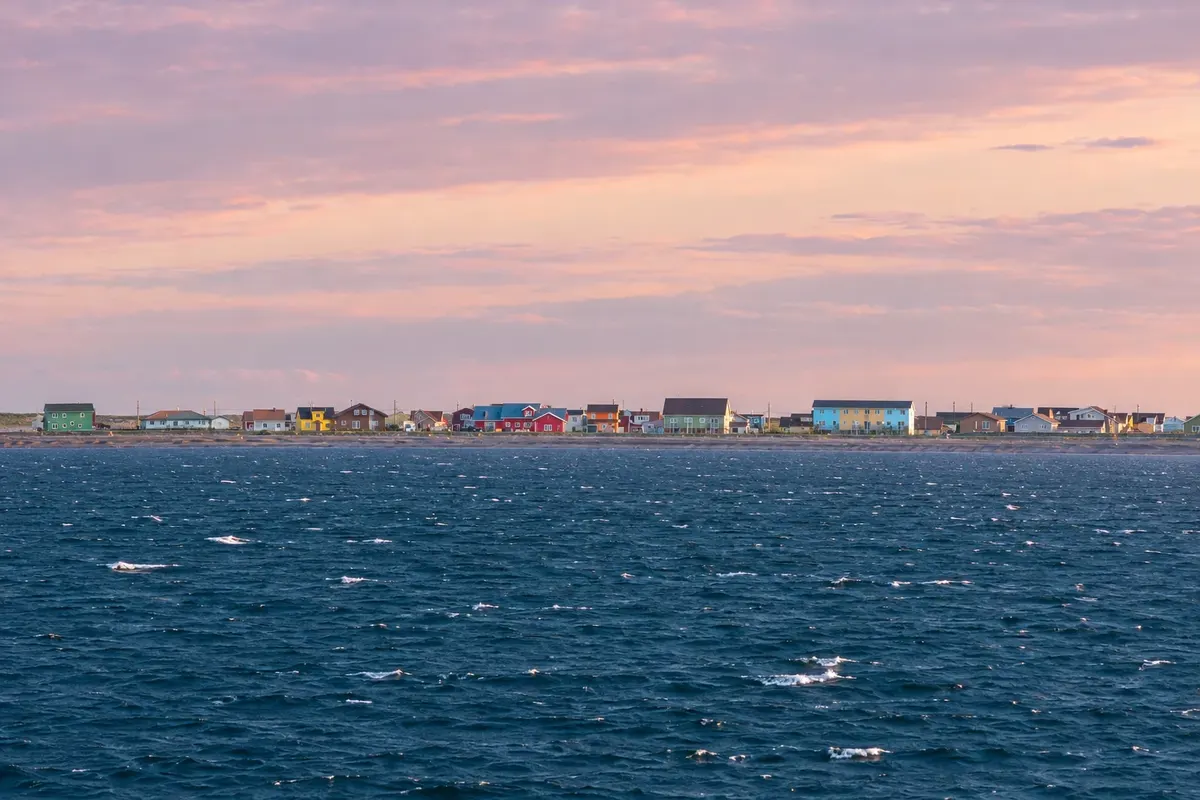
The commune of Miquelon-Langlade occupies most of the archipelago, about 205 km², and has around 600 residents, almost all in the village of Miquelon. There are three former islands joined by sandbars: Le Cap in the north, Grande Miquelon in the center, and Langlade, also called Petite Miquelon, in the south. The highest point of the territory, the Morne de la Grande Montagne, at 240 m, is on Grande Miquelon.
The village of Miquelon grew around the church Notre-Dame-des-Ardilliers and the harbour. Some families descend from Acadians who came from the Canadian Maritime provinces, commemorated by a monument, and from Basque fishermen. The Musée de Miquelon displays the inhabitants’ objects and customs, and the Maison de la Nature et de l'Environnement presents the islands’ fauna and flora and organises guided walks. On the west coast, the Cap Blanc lighthouse was built in 1883 after an English frigate wrecked off the cape.
South of the village begins the Langlade isthmus, a sand and dune strip more than 10 km long between the ocean and the saltwater lagoon of the Grand Barachois. The lagoon hosts colonies of grey seals and common seals, which often rest on sandbanks, and receives migratory birds; an observatory and boat trips allow close views. On the isthmus, horses are allowed to roam free for much of the year.
To the north, Cap de Miquelon is a reserve of cliffs, heathland and viewpoints, with trails such as the Vallée de la Cormorandière. Langlade, to the south, has no permanent residents: Anse du Gouvernement has summer houses, a chapel and the seasonal ferry pier, and the Belle Rivière crosses hills covered in boreal forest to the Pointe Plate lighthouse, dating from 1881.
The Miquelon and Langlade destination includes the village of Miquelon, the lagoon, the isthmus, the cape and Langlade’s beaches and trails.
Destinations
Cities
From July to September, average maximums in the archipelago are between 17 and 19 °C, and the seasonal ferries operate: Saint-Pierre–Langlade and, from May to September, Fortune–Miquelon. Seals live in the Grand Barachois lagoon year-round. Fog is frequent in July; in winter, cold, wind and snow make trails and crossings more difficult.
The village of Miquelon has an aerodrome (MQC), with short flights from Saint-Pierre when weather permits, and a port with a ferry to Saint-Pierre of about 90 minutes that also carries cars. From May to September there is a ferry between Miquelon and Fortune, Newfoundland. Langlade receives the seasonal ferry from Saint-Pierre at Anse du Gouvernement in about 75 minutes, and in summer there is also a boat between Miquelon and Langlade. Confirm schedules before you go.
Your questions
Grey seals and common seals often rest on the sandbanks of the Grand Barachois lagoon, south of the village of Miquelon. You can observe them from the observatory, on foot along the lagoon edge, on guided walks organised by the Maison de la Nature et de l'Environnement, or on boat trips on the lagoon. Keep your distance from the animals and do not go onto the sandbanks.
By ferry, departing from the port of Saint-Pierre, in about 90 minutes, with space for cars, or by plane, on a short flight to Miquelon aerodrome. Timetables vary by season and are not daily in all months: book in advance.
Yes. In the season, a ferry leaves Saint-Pierre for Anse du Gouvernement in about 75 minutes, and in summer there is a boat from Miquelon. You can also reach Langlade via the isthmus road. Langlade has no permanent residents: bring water and snacks for the trails and check the return schedule.
One full day is enough for the village, the Grand Barachois and the isthmus. With two days you have time for the Cap de Miquelon trails and for Langlade. Because access depends on ferry or plane, plan arrival and departure before booking accommodation.
It helps, because the lagoon, the isthmus, the cape and Langlade are far from the village. Cars can go on the ferry from Saint-Pierre. Without a car, there are guided minibus tours and organised walks by the Maison de la Nature et de l'Environnement.