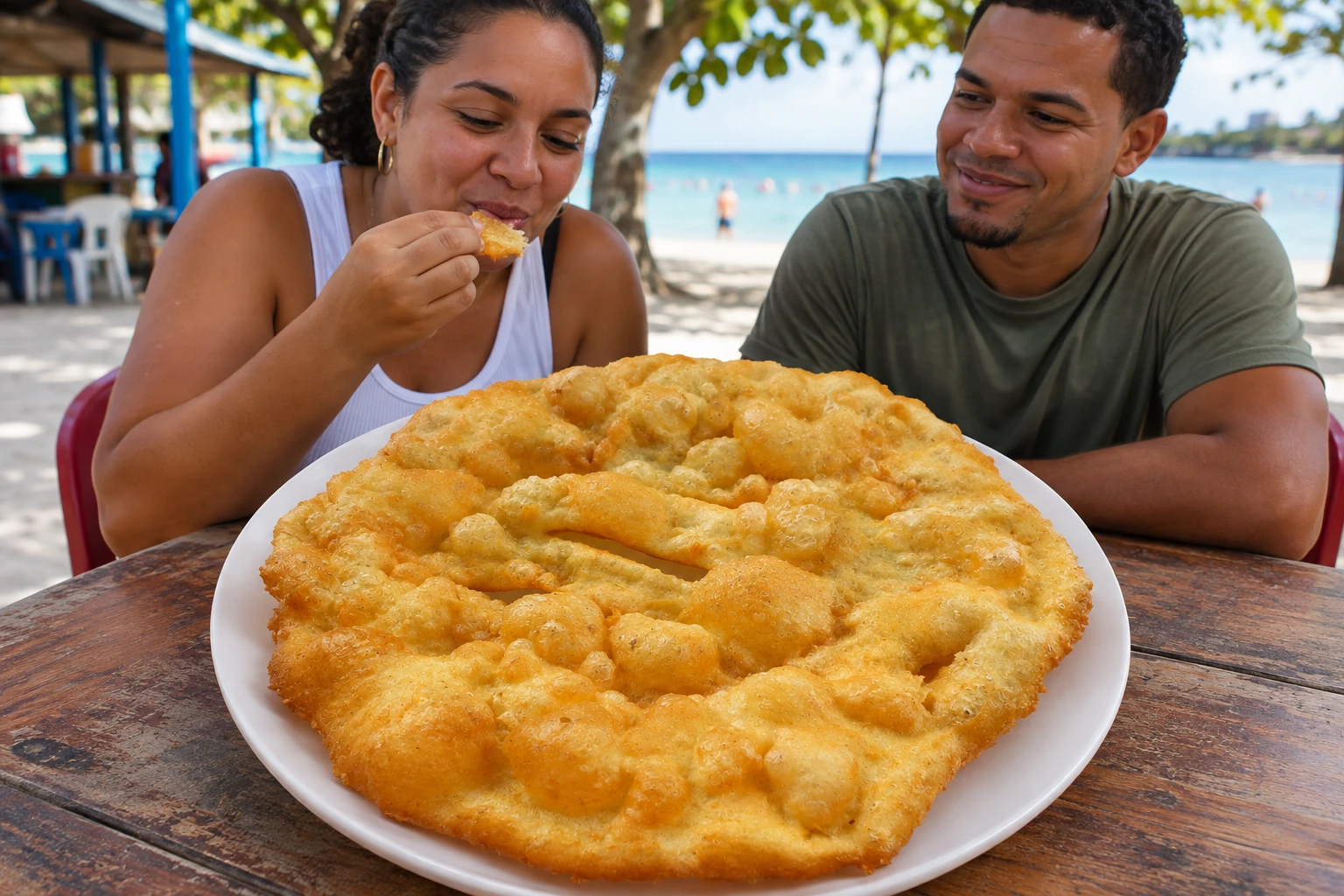
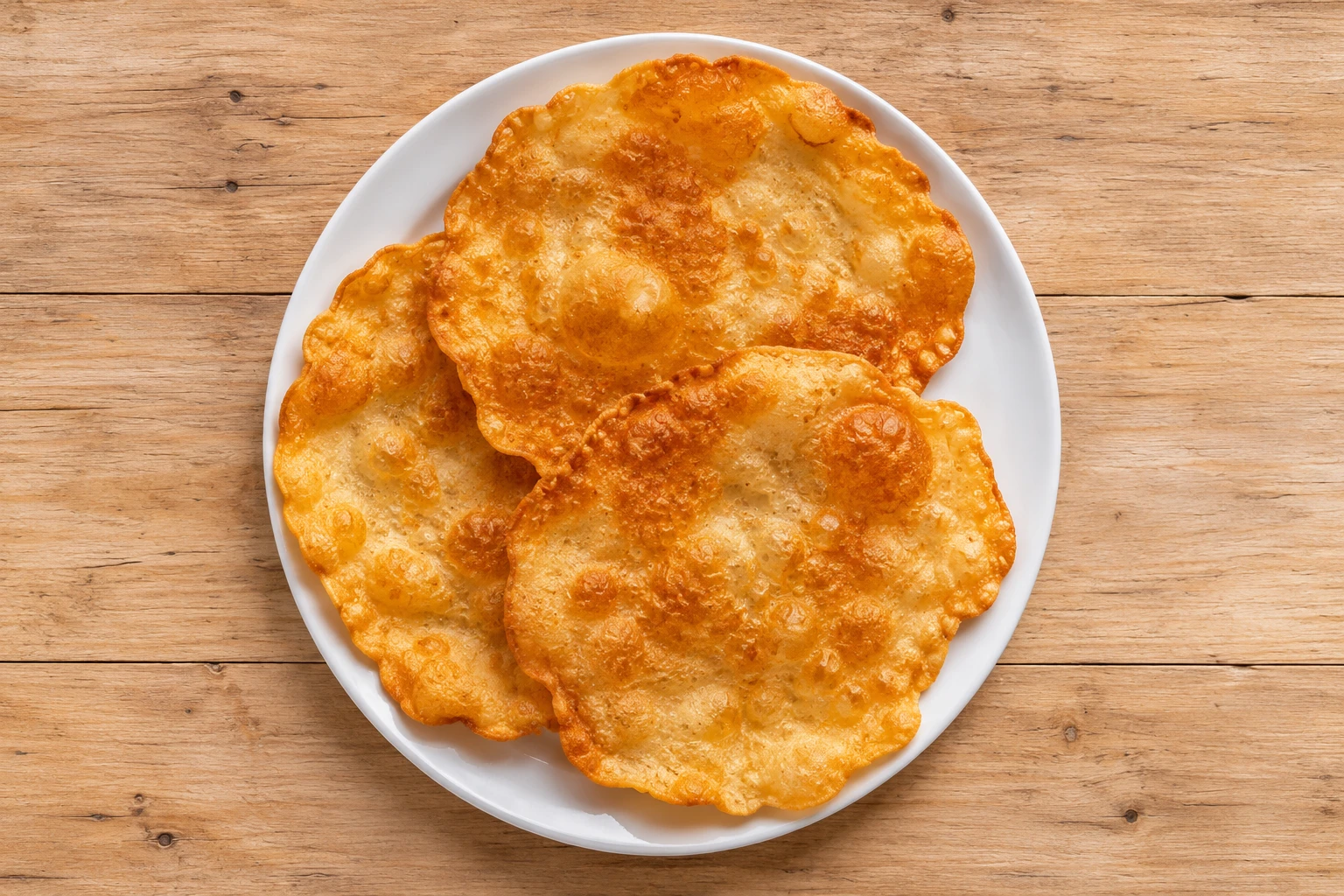
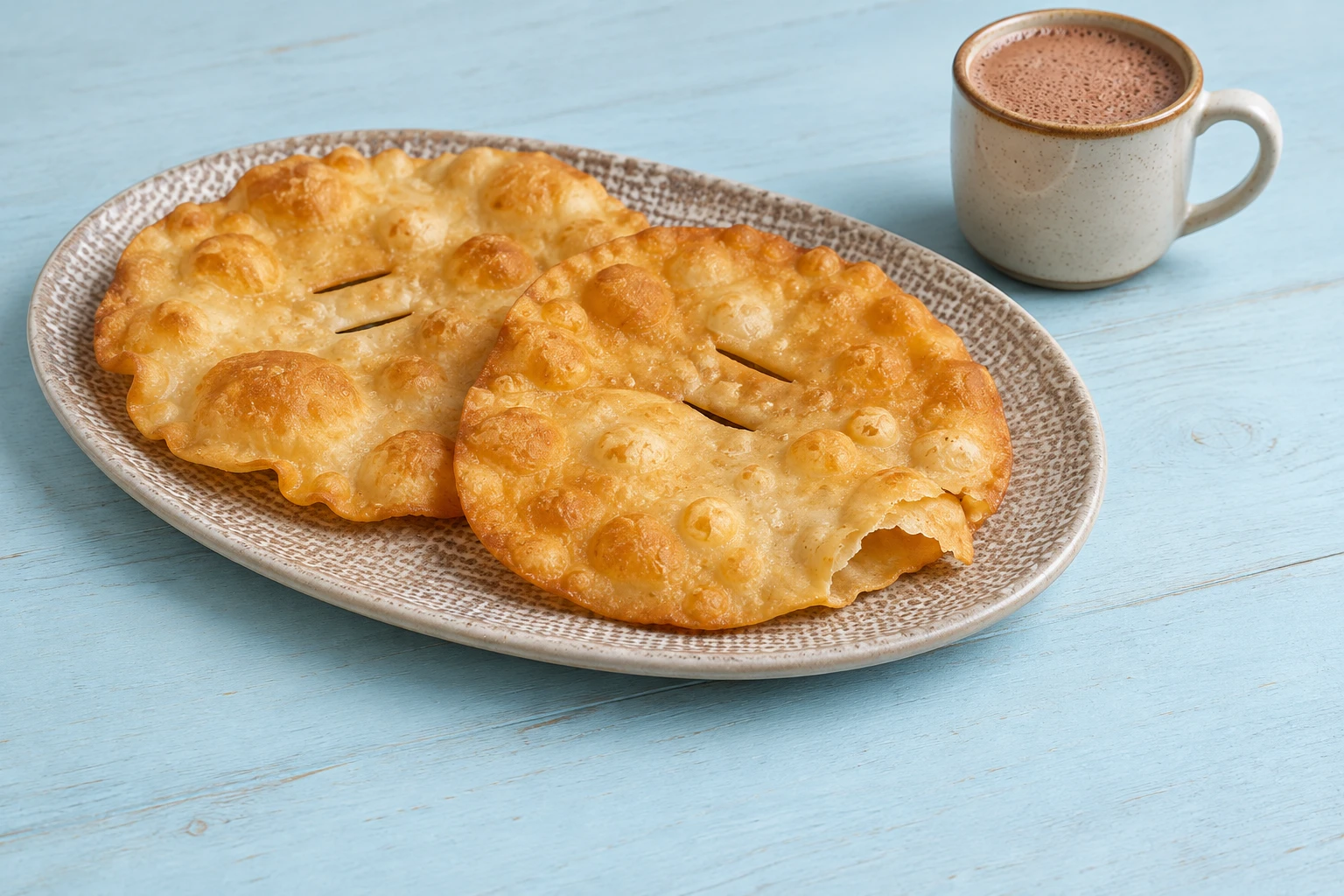
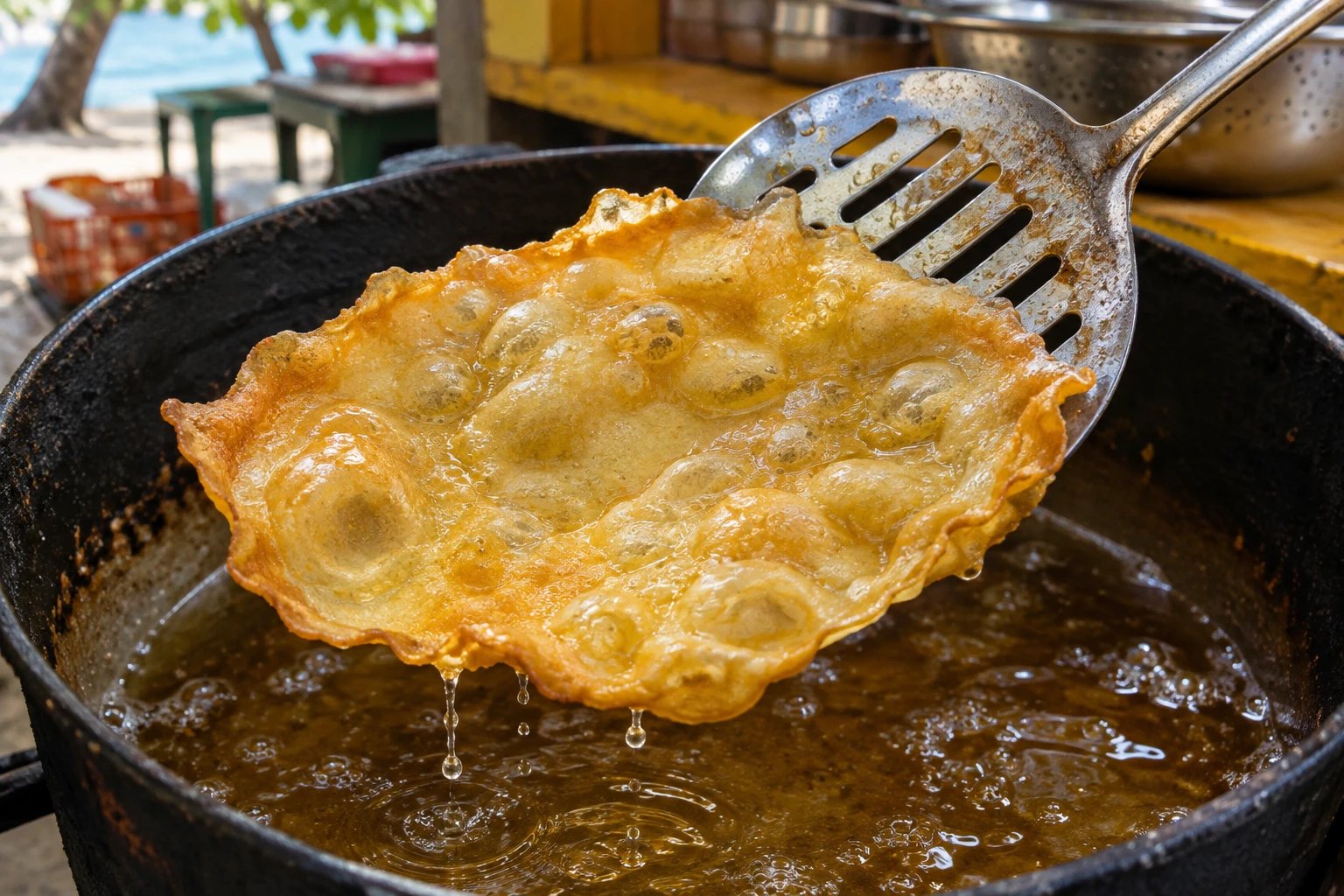
Yaniqueque is a simple dough of wheat flour, water, salt, a little sugar and garlic, rolled very thin and fried in oil or lard until golden and crispy. Its wide, flat shape led Dominicans to compare it to a vinyl record, a long play. It’s eaten hot, on its own or served with fried fish.
The name is the Dominican version of johnnycake, the name for flour cakes from the English-speaking Caribbean islands and North America. Tradition attributes the recipe to immigrants from those islands who arrived on the country’s eastern coast. Sociologist Carlos Andújar, a professor at the Universidad Autónoma de Santo Domingo, recounts another version: a man from San Pedro de Macorís who made a flour pie, “Johnny’s pie,” which may have given the snack its name.
According to Andújar, the yaniqueques of Boca Chica, a beach east of Santo Domingo, are the most famous in the country. There the snack is sold at stalls near the sand and is part of the weekend outing for people who leave the capital for the sea. The custom spread to other regions, but Boca Chica remains the place most closely associated with it.
Besides the traditional version, there is filled yaniqueque: the same dough folded into a half-moon like an empanada, filled with egg, cheese, ham, chicken, beef or seafood. Many Dominicans also eat it for breakfast with a cup of hot chocolate.


 Brazil
 Argentina
 Bolivia
 Chile
 Colombia
 Ecuador
 Guyana
 French Guiana
 Falkland Islands (Malvinas)
 Paraguay
 Peru
 Suriname
 Uruguay
 Venezuela
 Germany
 Austria
 Belgium
 Croatia
 Denmark
 Spain
 Finland
 France
 Greece
 the Netherlands
 Hungary
 Ireland
 Iceland
 Italy
 Luxembourg
 Norway
 Poland
 Portugal
 the United Kingdom
 the Czech Republic
 Sweden
 Switzerland
 Turkey
 Canada
 the United States
 Mexico
 South Africa
 Australia
 Fiji
 New Zealand
 Papua New Guinea