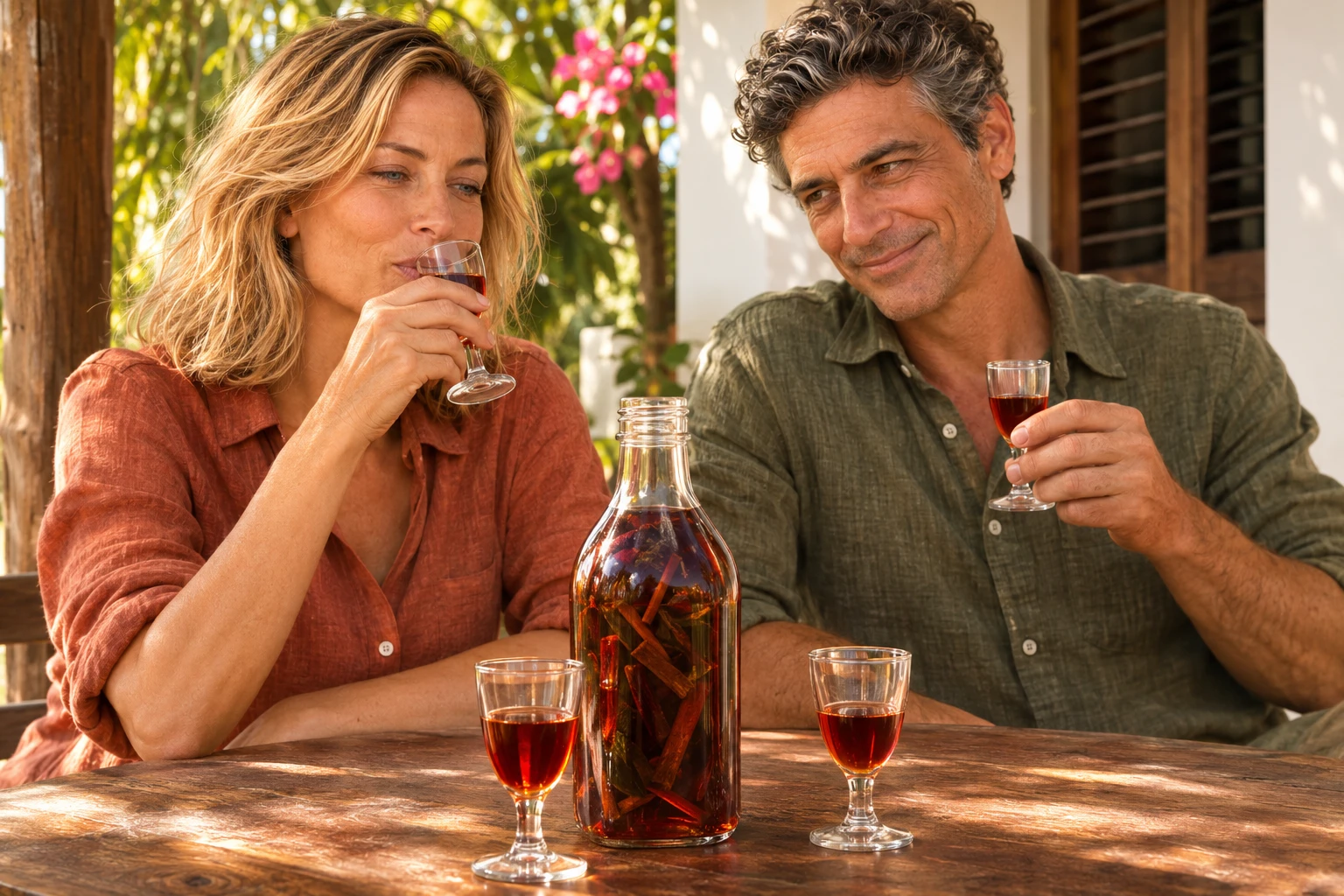
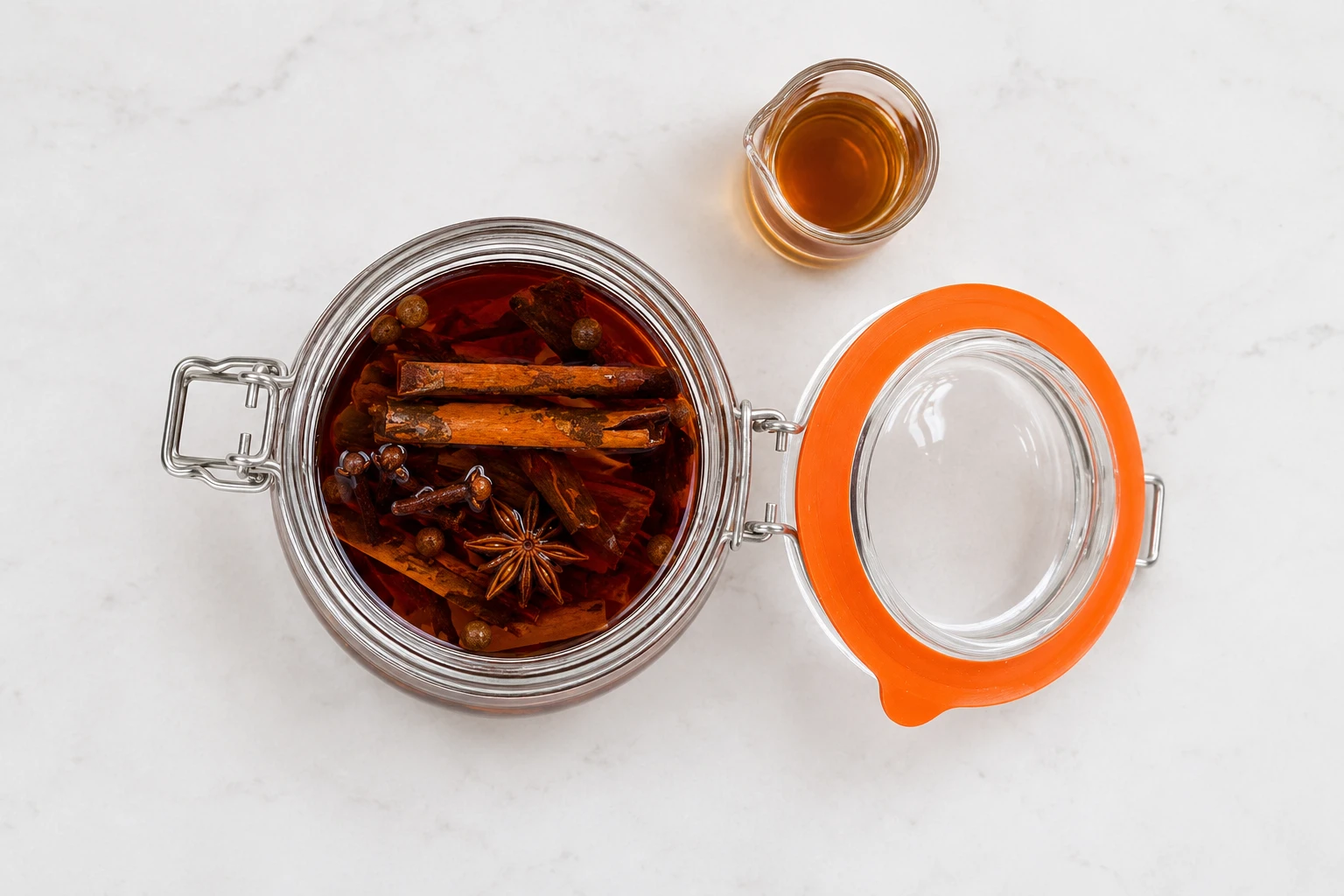
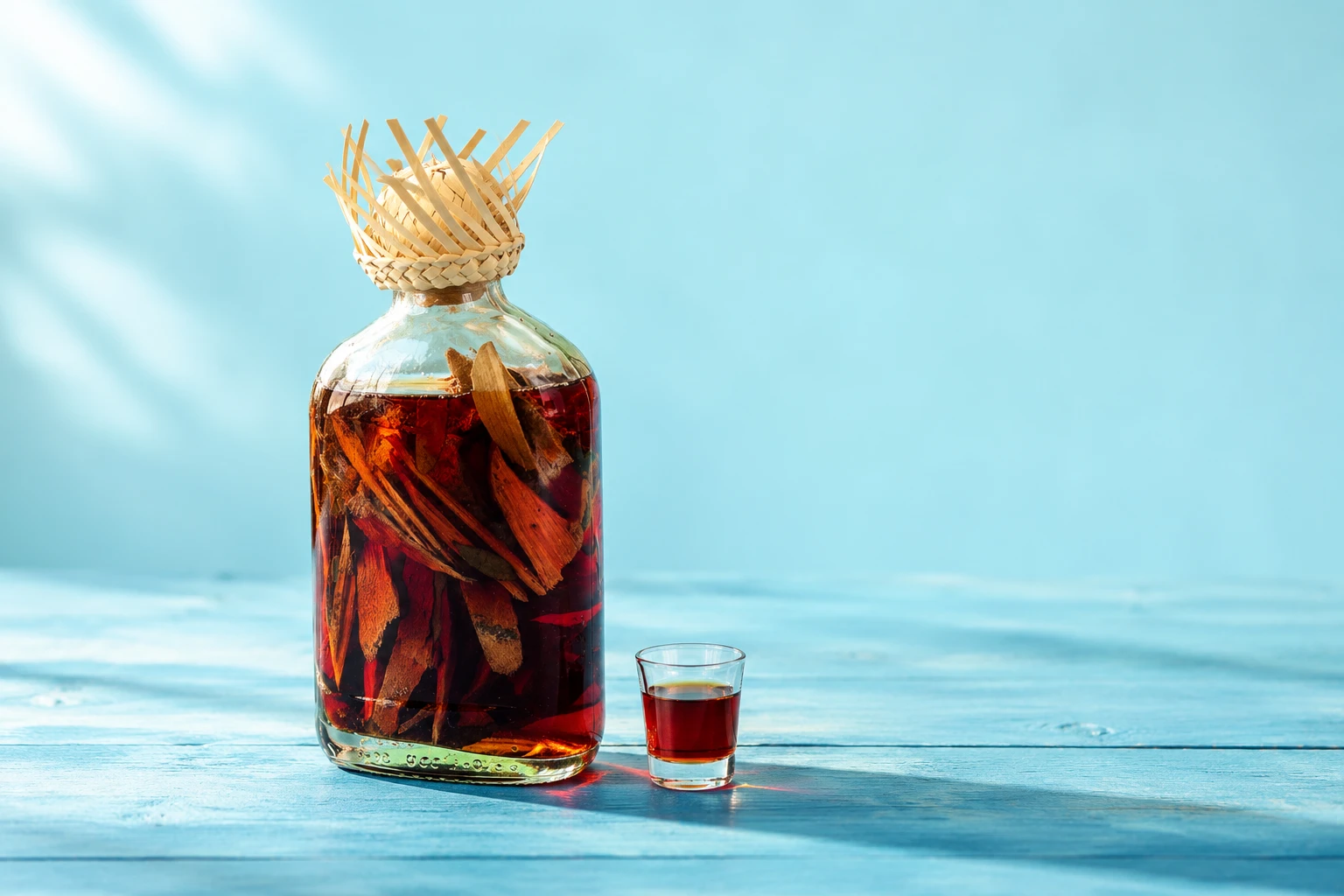
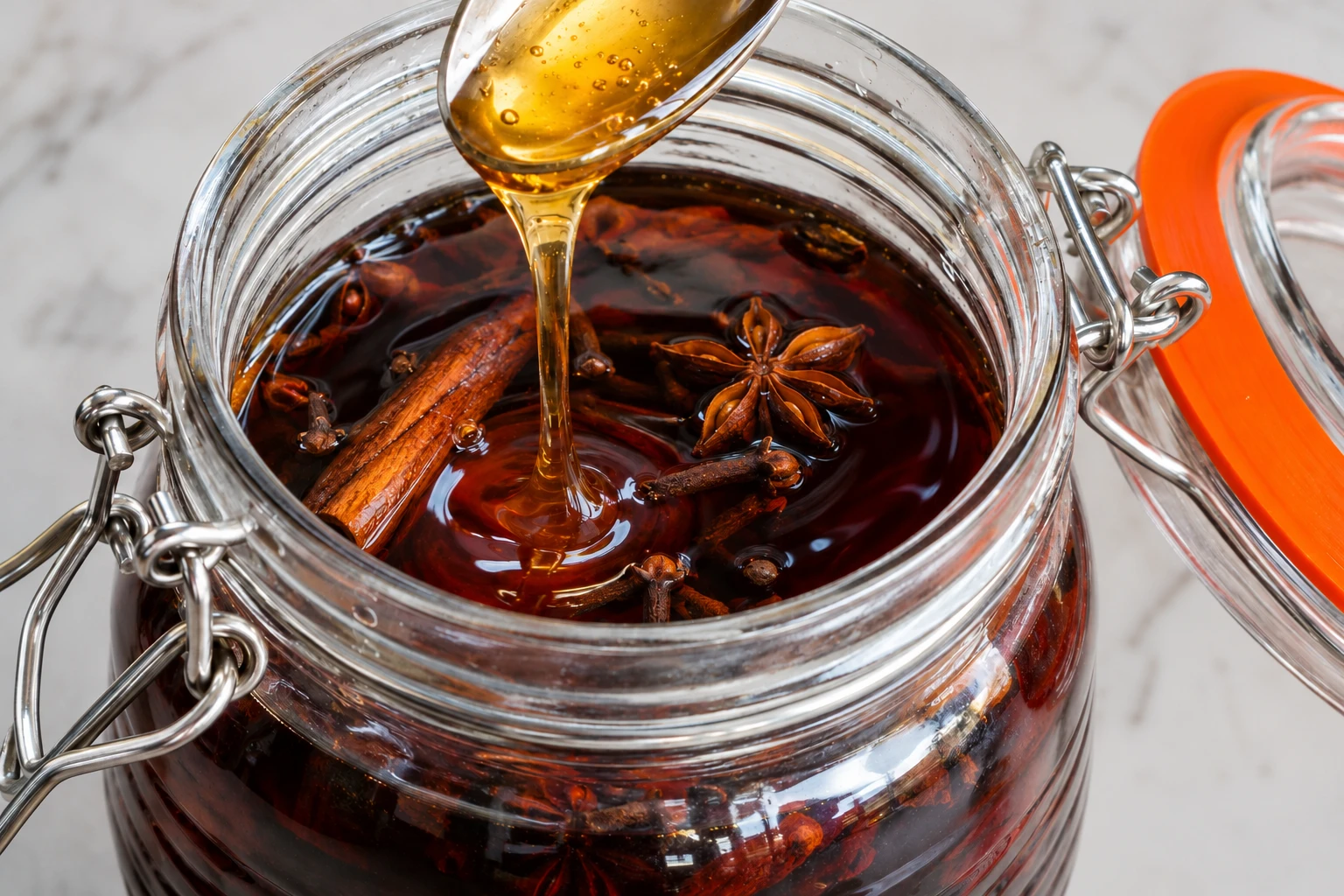
Mamajuana is prepared in a bottle filled with pieces of wood, peels, roots and herbs such as bejuco indio, palo de Brasil, anise and cinnamon. Rum is poured over that mixture, often along with red wine and honey, and the bottle rests until the liquid takes on color and flavor. Because the peels last, the bottle can be refilled several times, and each family adjusts the taste, sweeter or spicier.
The name is a Dominican variant of damajuana, the glass carboy protected with wicker used to transport liquids. According to linguist Roberto Guzmán, the word comes from the French dame-jeanne, entered Spanish via Andalusia and spread through the Americas with sailors; the form mama would be an affectionate variant.
The origin of the drink is told in different versions. Some historians link it to the plant infusions of the Taínos; others to the healing practices brought by Africans in the 16th century. Alcohol would have been added later. For a long time it was prepared by healers and rural families, used as a home remedy.
Historian Rafael Ramírez considers that mamajuana, once a drink of the lower classes, gained prestige and became a symbol of Dominican identity. Ready-made bottles or bottles containing only the peels are sold in markets and in the Colonial Zone of Santo Domingo, and many travelers take it home as a souvenir. It is a strong alcoholic drink, served in small doses.


 Brazil
 Argentina
 Bolivia
 Chile
 Colombia
 Ecuador
 Guyana
 French Guiana
 Falkland Islands (Malvinas)
 Paraguay
 Peru
 Suriname
 Uruguay
 Venezuela
 Germany
 Austria
 Belgium
 Croatia
 Denmark
 Spain
 Finland
 France
 Greece
 the Netherlands
 Hungary
 Ireland
 Iceland
 Italy
 Luxembourg
 Norway
 Poland
 Portugal
 the United Kingdom
 the Czech Republic
 Sweden
 Switzerland
 Turkey
 Canada
 the United States
 Mexico
 South Africa
 Australia
 Fiji
 New Zealand
 Papua New Guinea