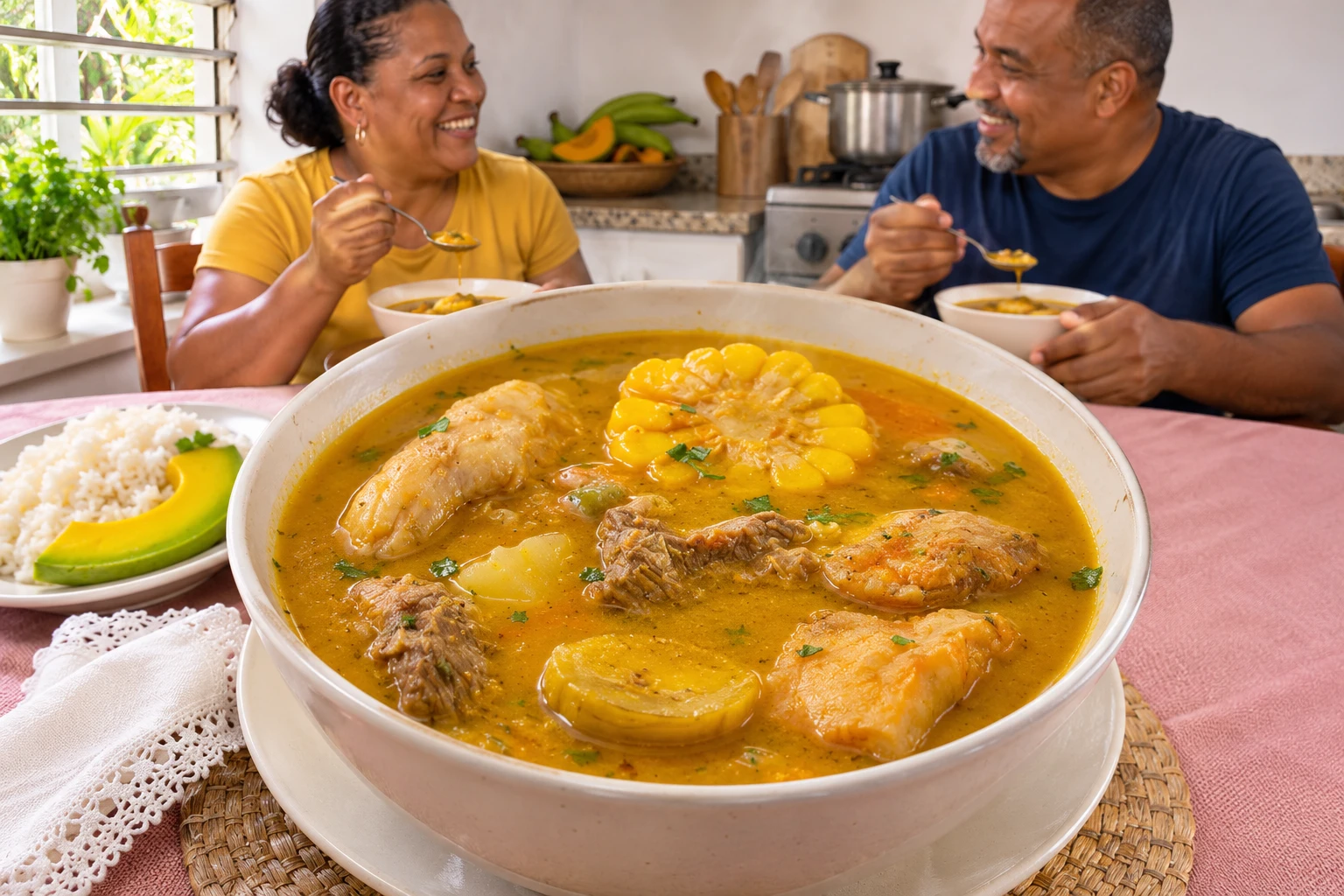
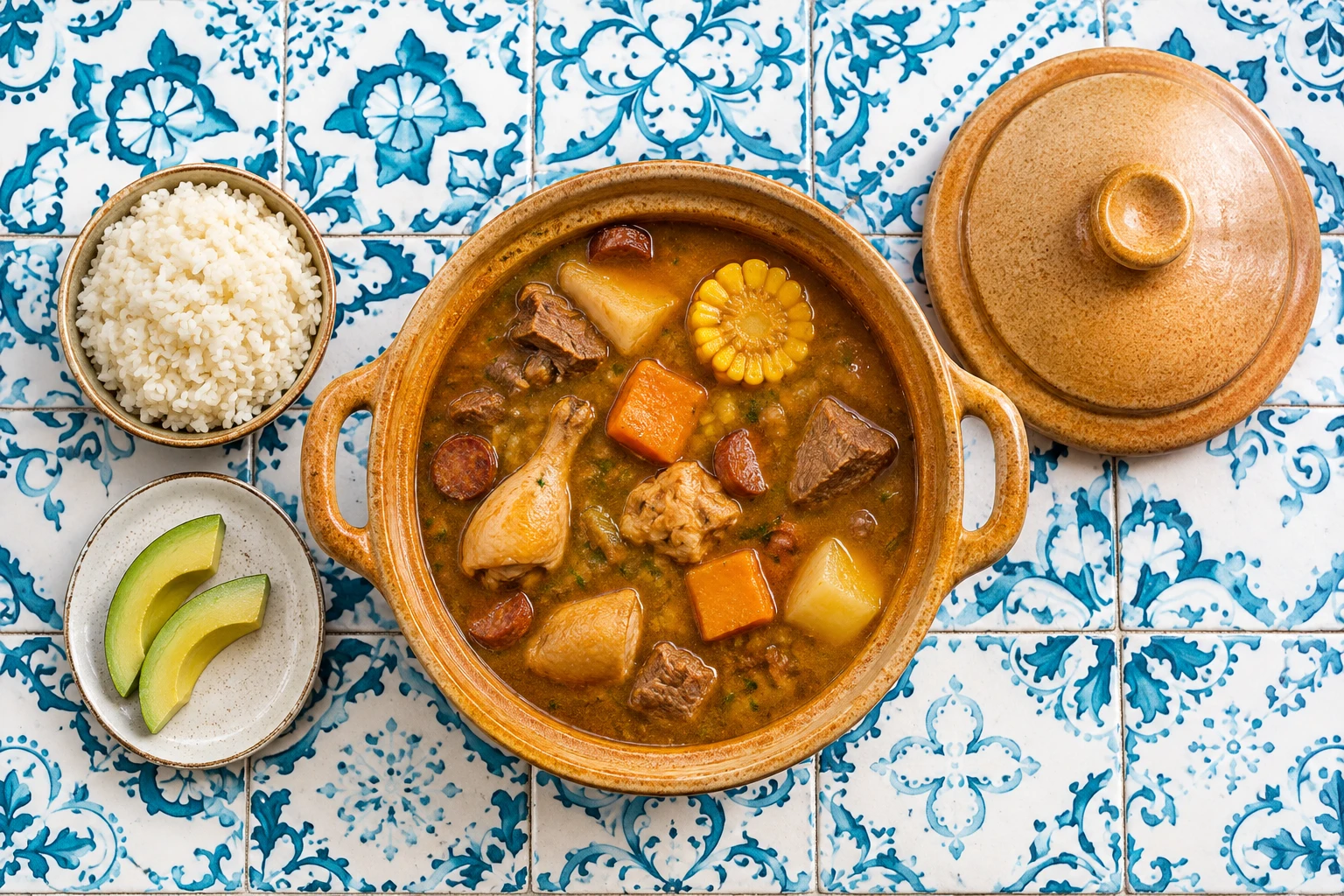
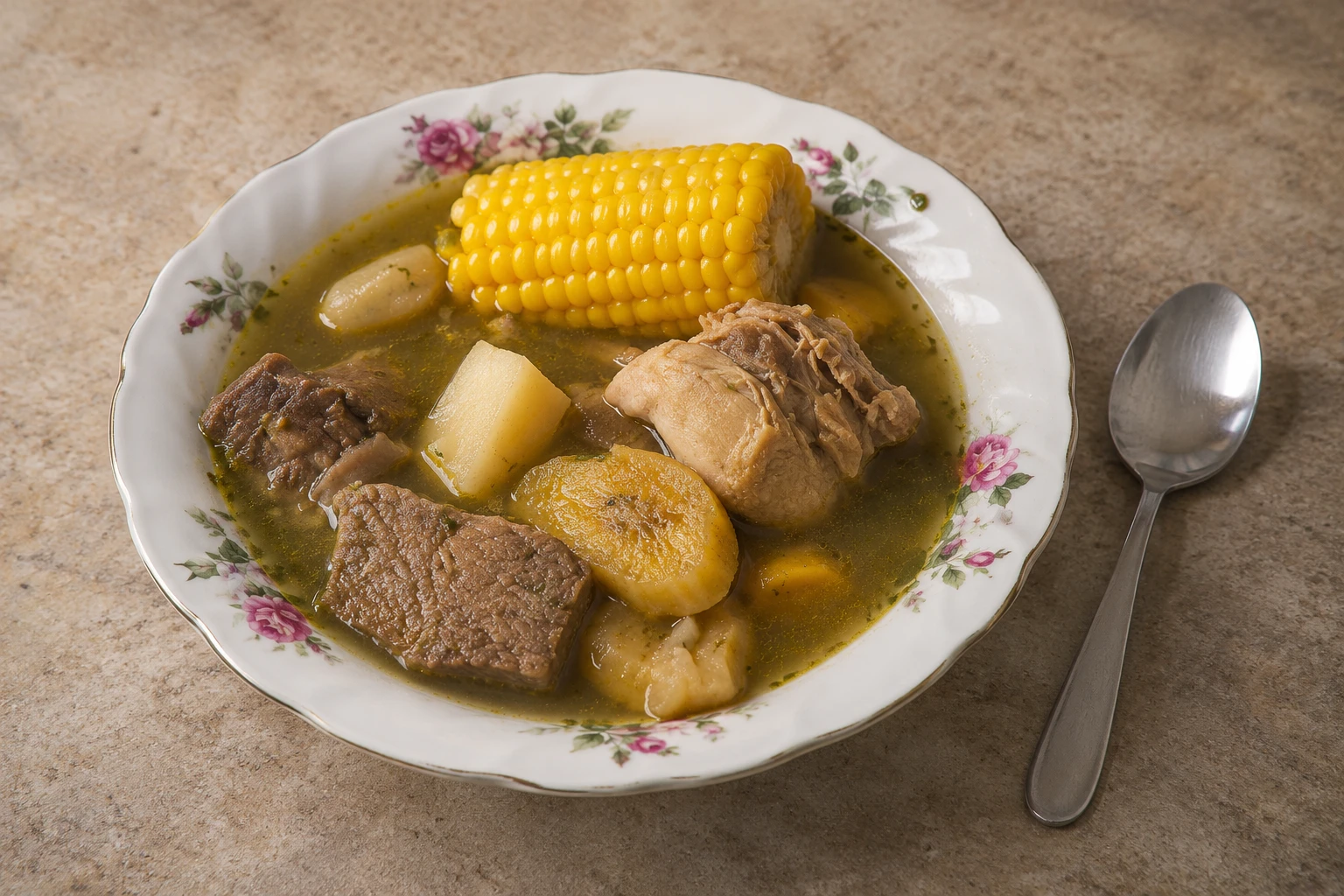
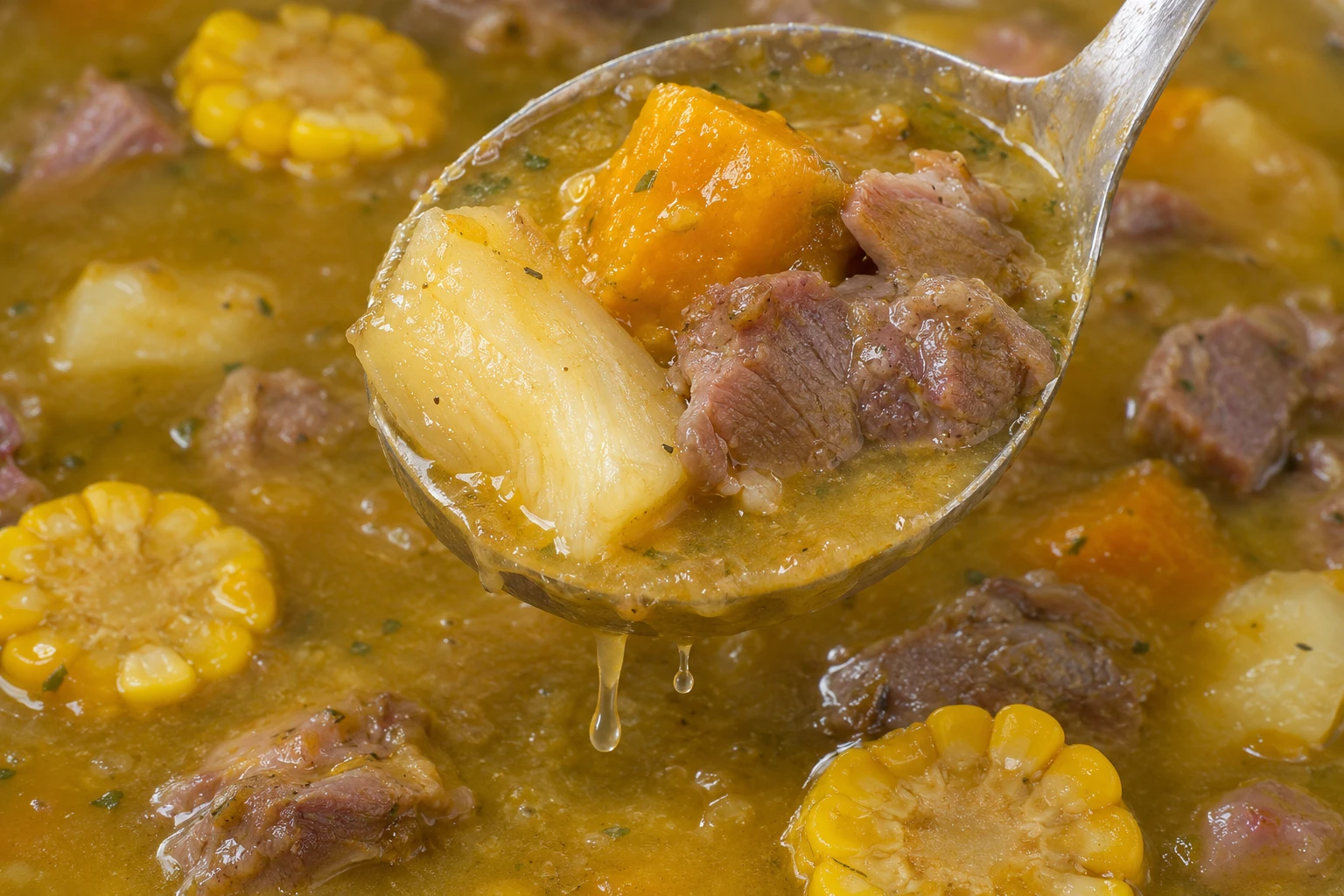
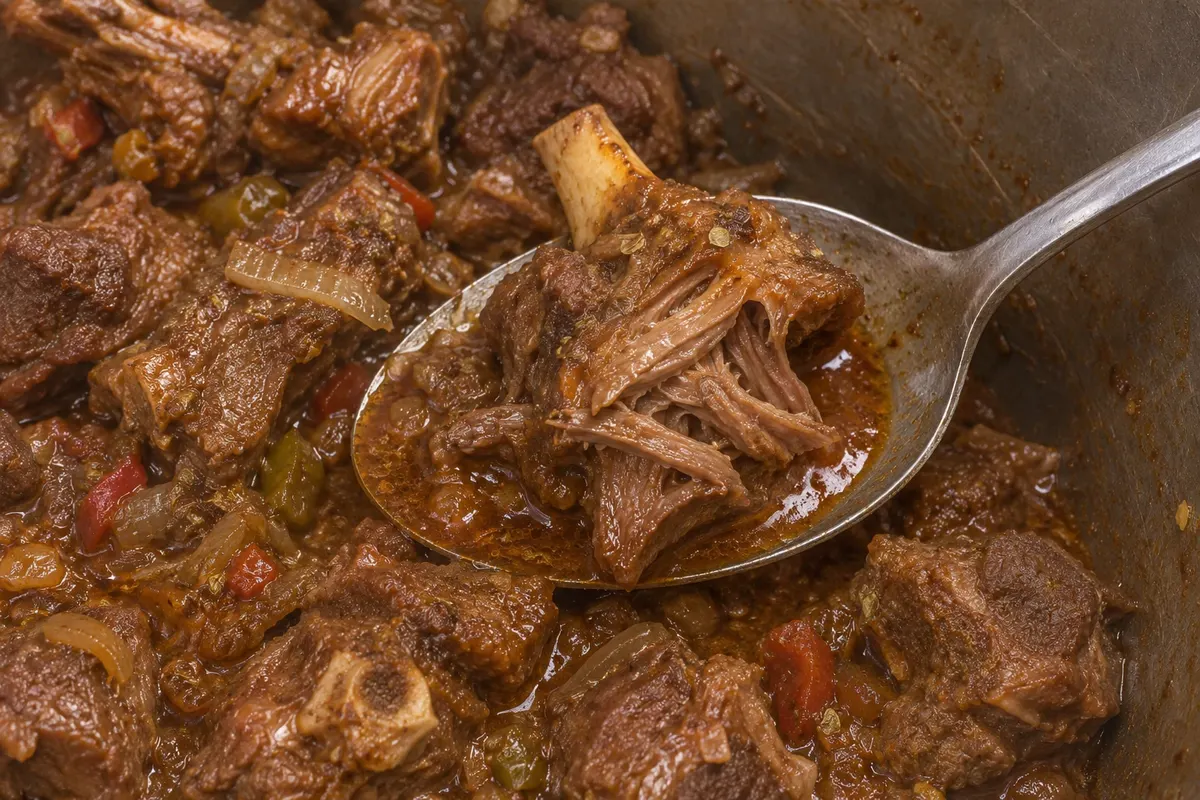
Sancocho is the Dominican gathering dish. In a large pot meats, tubers and seasonings are cooked until the broth thickens: green plantain, cassava, yam, yautía, auyama, sometimes corn, with a sofrito of garlic, onion, cilantro and oregano. It’s served very hot, with white rice and slices of avocado, and it’s normal to sweat at the table, even in the heat.
Its history is linked to the colonial era and to the formation of Dominican identity. One account attributes its origin to the broth of Canarian immigrants called salcocho, enriched by Spanish, African and Taíno influences. Historian Frank Moya Pons associates the dish with the abundance of cattle on the island during the colonial period.
Sancocho can be made with a single meat—chicken, beef or pork—or the famous sancocho de siete carnes, which mixes several meats. The seven meats are often a tradition without a fixed recipe: abundance in the pot is what matters.
The dish accompanies rainy days, family visits, birthdays, baptisms and the return of those who live abroad. The song “El sancocho prieto,” from 1951, is known across the country, and in everyday speech to say something is a sancocho means that everything is mixed together.


 Brazil
 Argentina
 Bolivia
 Chile
 Colombia
 Ecuador
 Guyana
 French Guiana
 Falkland Islands (Malvinas)
 Paraguay
 Peru
 Suriname
 Uruguay
 Venezuela
 Germany
 Austria
 Belgium
 Croatia
 Denmark
 Spain
 Finland
 France
 Greece
 the Netherlands
 Hungary
 Ireland
 Iceland
 Italy
 Luxembourg
 Norway
 Poland
 Portugal
 the United Kingdom
 the Czech Republic
 Sweden
 Switzerland
 Turkey
 Canada
 the United States
 Mexico
 South Africa
 Australia
 Fiji
 New Zealand
 Papua New Guinea