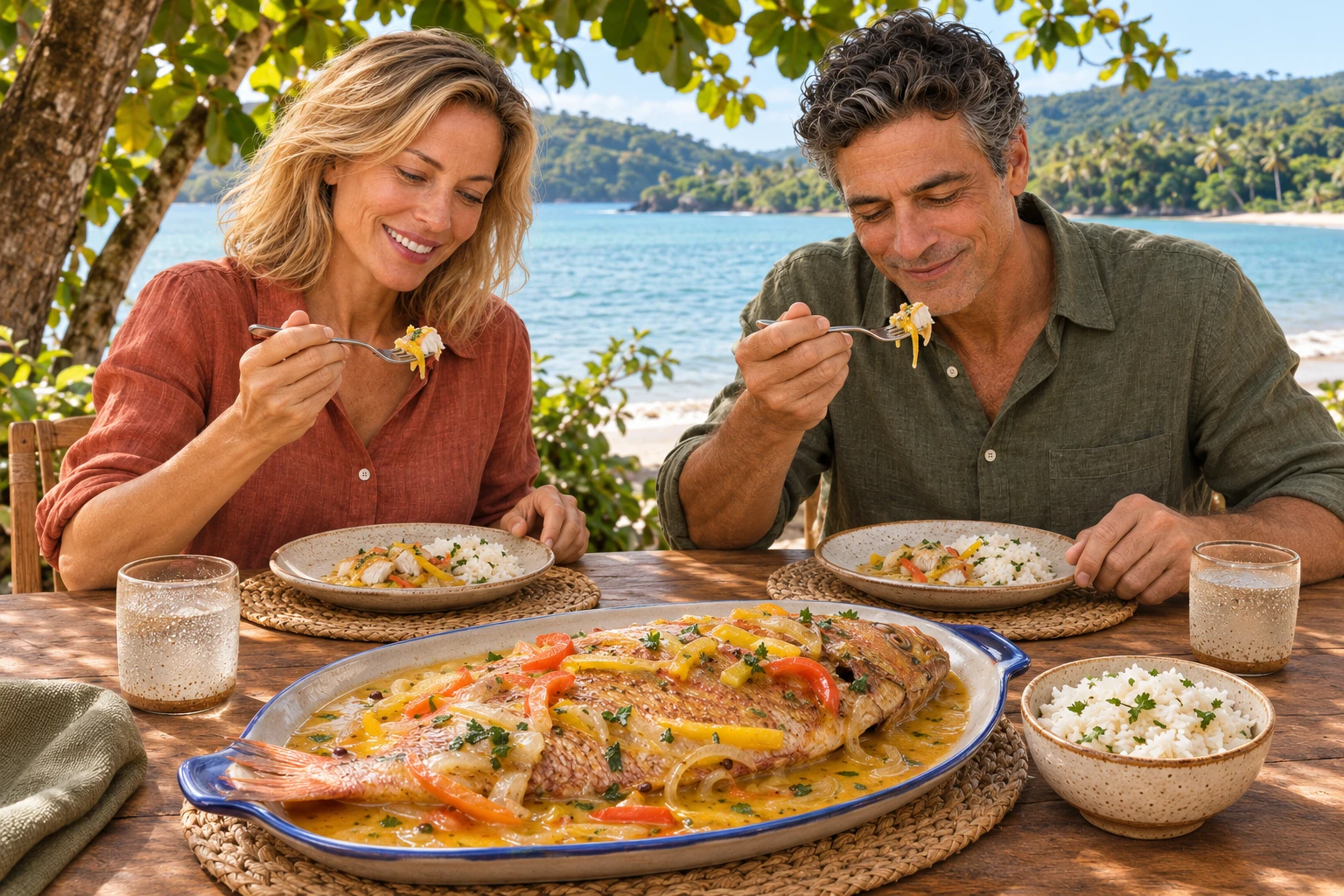
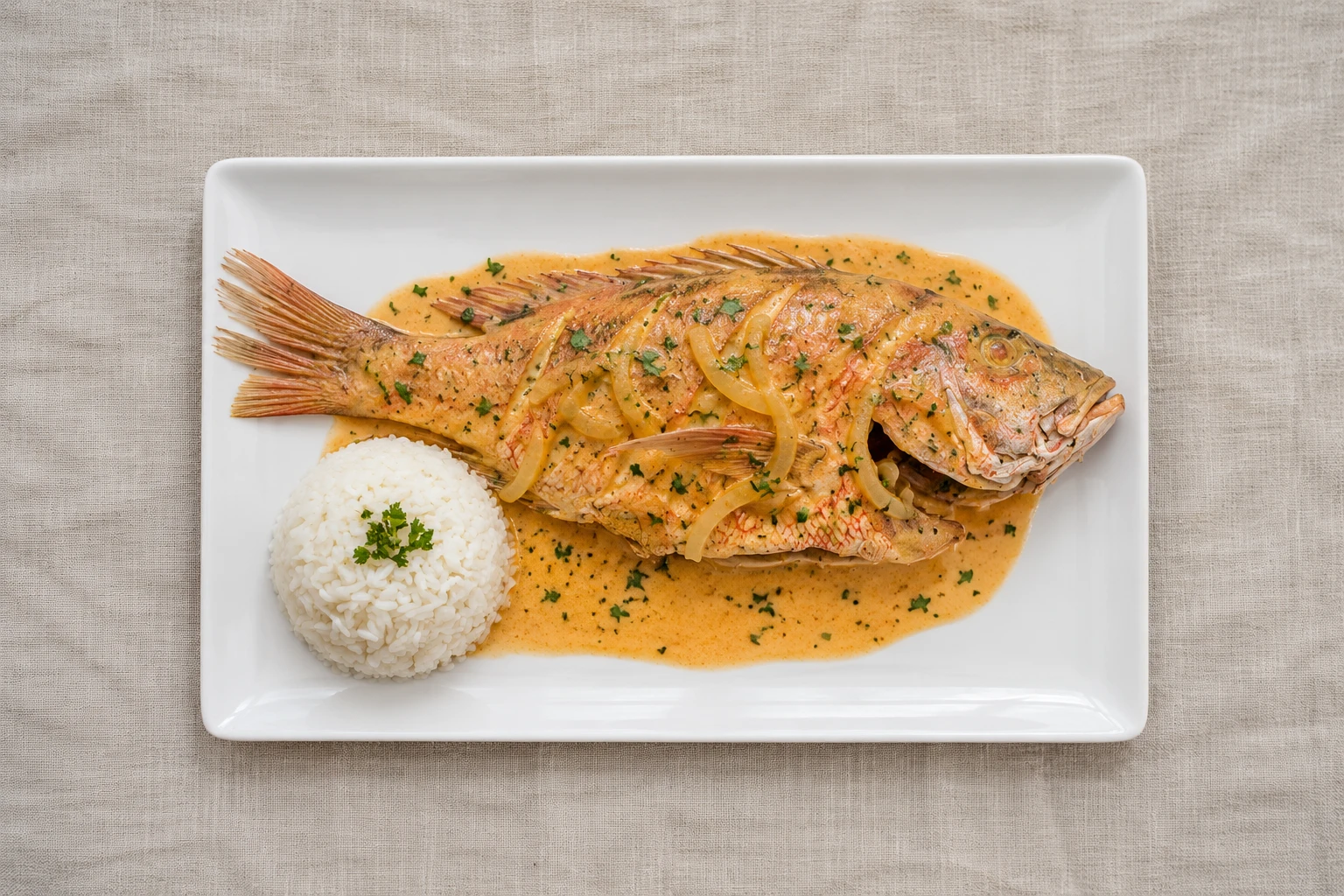
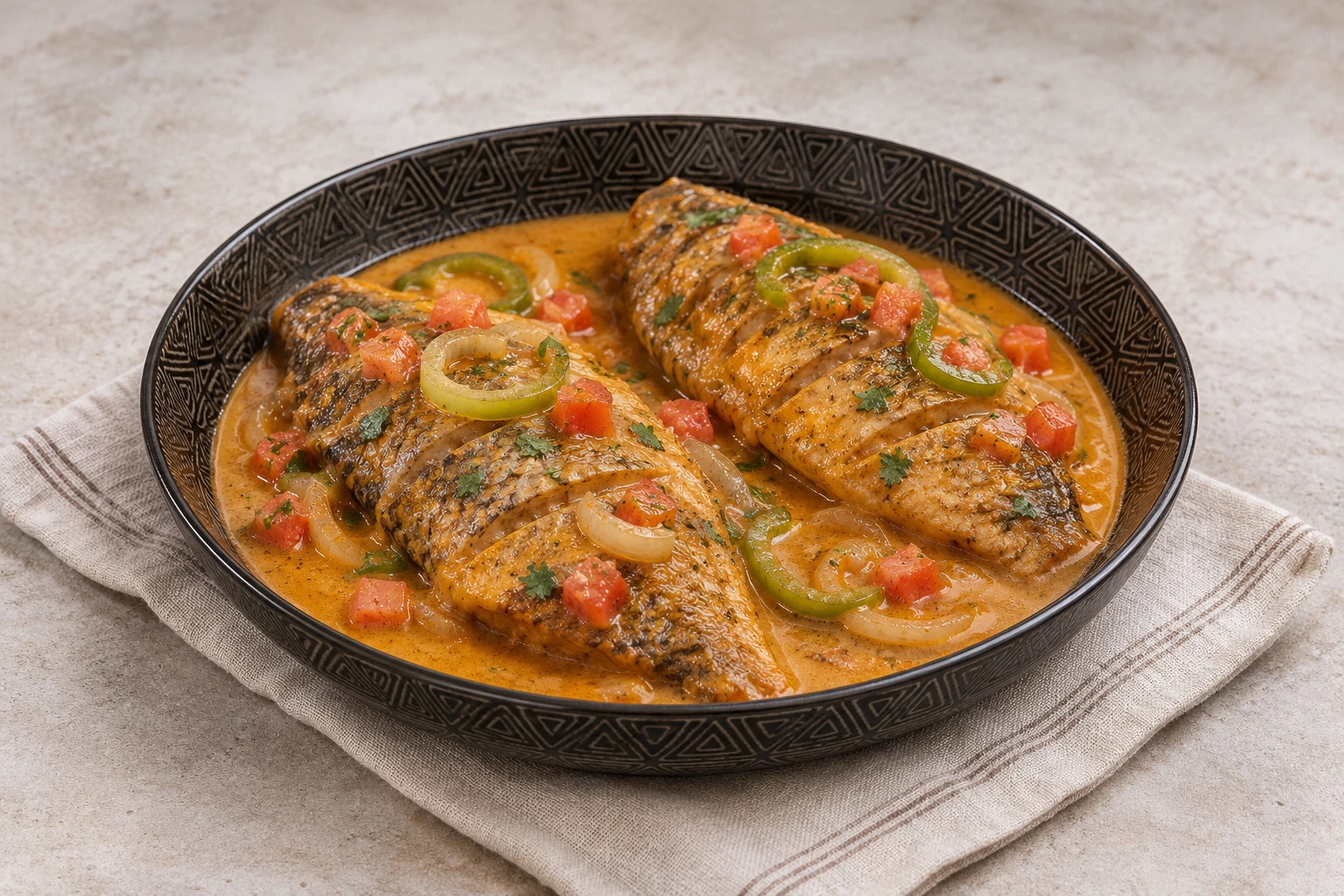
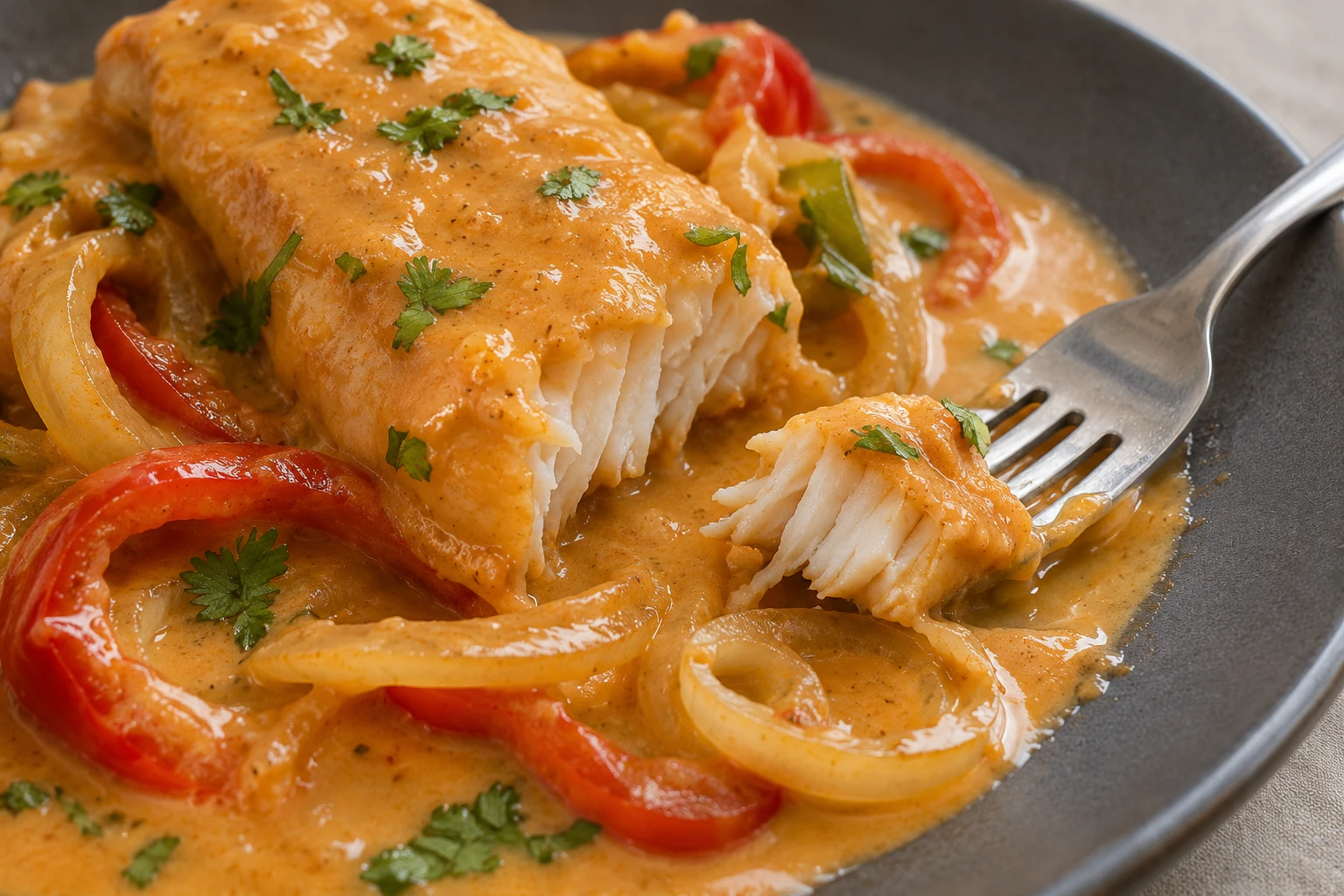
On the Samaná peninsula, in the northeast of the Dominican Republic, coconut is everywhere: in the coconut groves that cover the hillsides, in rice, bread, sweets and in the region’s best-known dish, pescado con coco. It is Samaná’s signature dish, where coconut and ginger are central ingredients of the local cooking.
The tradition is linked to the peninsula’s history. In the early 19th century, during the Haitian administration of the island, formerly enslaved people freed in the United States arrived in Samaná; they preserved for generations the English language, surnames and their recipes. Their kitchens mixed with those of the island, and freshly grated and squeezed coconut became the hallmark of Samaná’s dishes.
The fish, whole or in steaks, is seasoned with lime or sour orange, salt, oregano and garlic; in some homes it is fried before going into the sauce. Separately, the coconut milk is warmed with cilantro, onion, garlic and annatto, the bija, which gives color and flavor. Some recipes also use tomato or tomato paste. The sauce must be stirred constantly so the milk does not curdle, and the fish is added when the sauce is already hot, to cook for just a few minutes.
The dish is served with white rice or moro de guandules, which on the peninsula also includes coconut, and sometimes with fried plantain. For locals, the secret is fresh coconut: in Samaná many people do not use canned coconut milk. Pescado con coco is found in homes and in the restaurants along the malecón of Santa Bárbara de Samaná, Las Terrenas and Las Galeras.


 Brazil
 Argentina
 Bolivia
 Chile
 Colombia
 Ecuador
 Guyana
 French Guiana
 Falkland Islands (Malvinas)
 Paraguay
 Peru
 Suriname
 Uruguay
 Venezuela
 Germany
 Austria
 Belgium
 Croatia
 Denmark
 Spain
 Finland
 France
 Greece
 the Netherlands
 Hungary
 Ireland
 Iceland
 Italy
 Luxembourg
 Norway
 Poland
 Portugal
 the United Kingdom
 the Czech Republic
 Sweden
 Switzerland
 Turkey
 Canada
 the United States
 Mexico
 South Africa
 Australia
 Fiji
 New Zealand
 Papua New Guinea