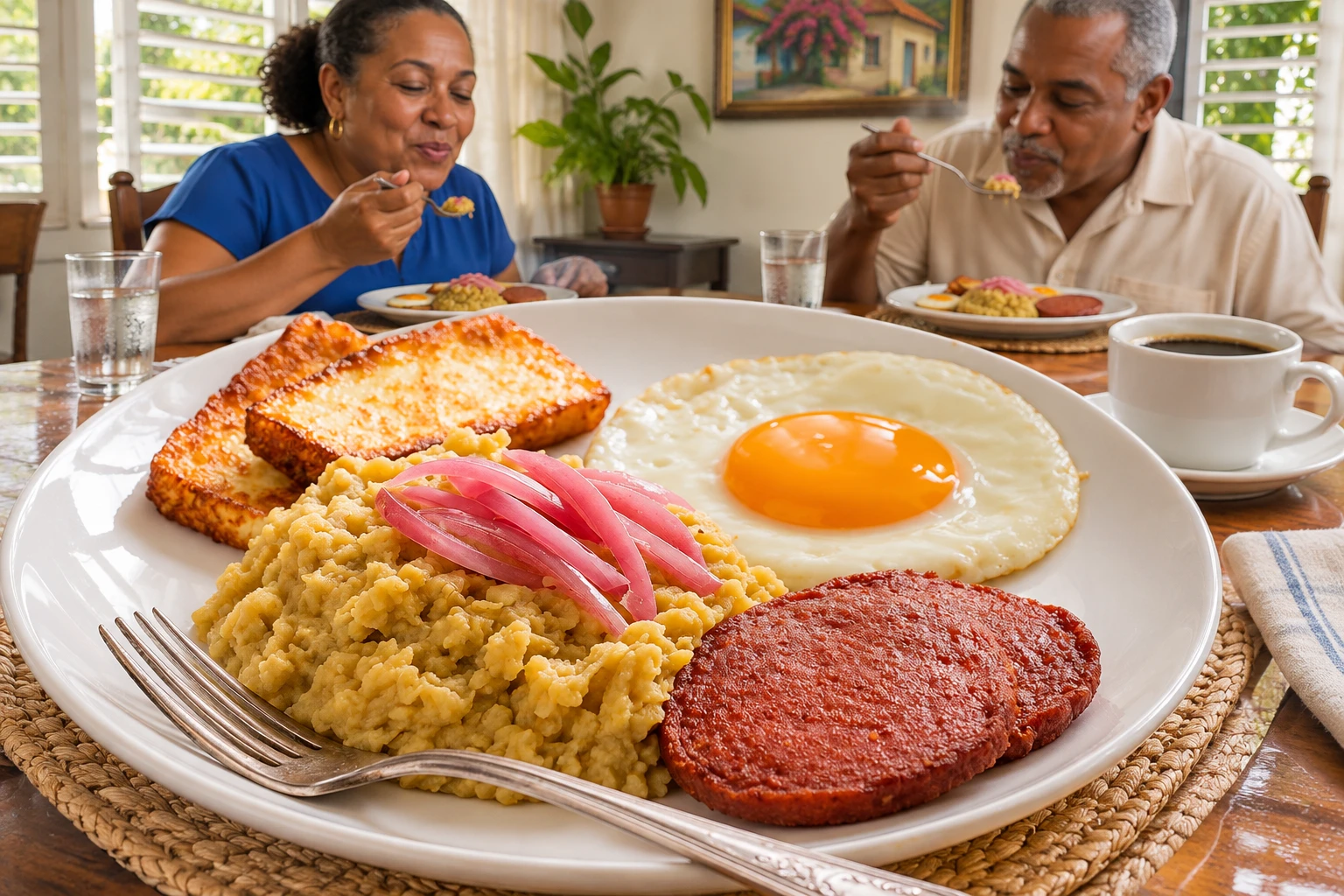
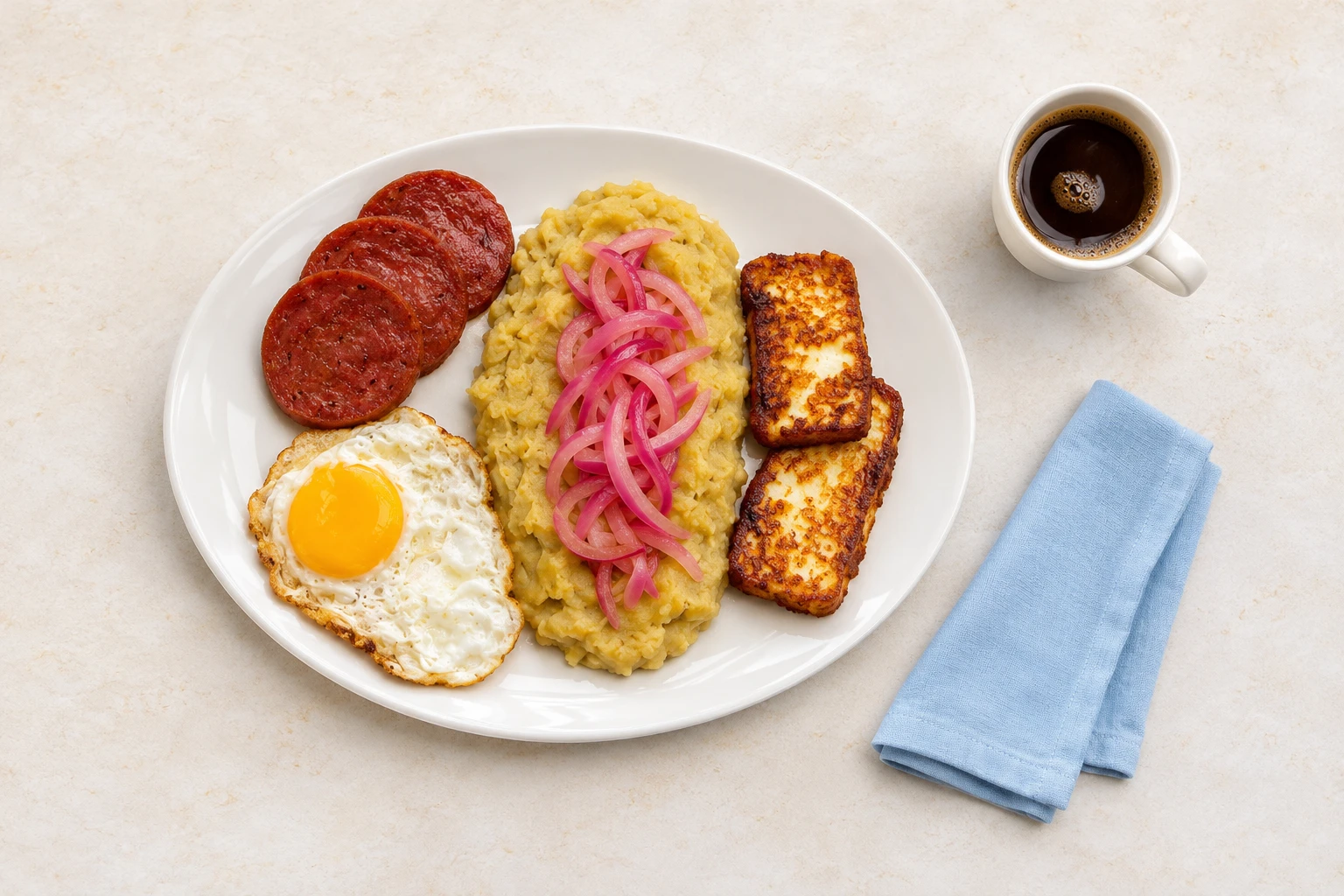
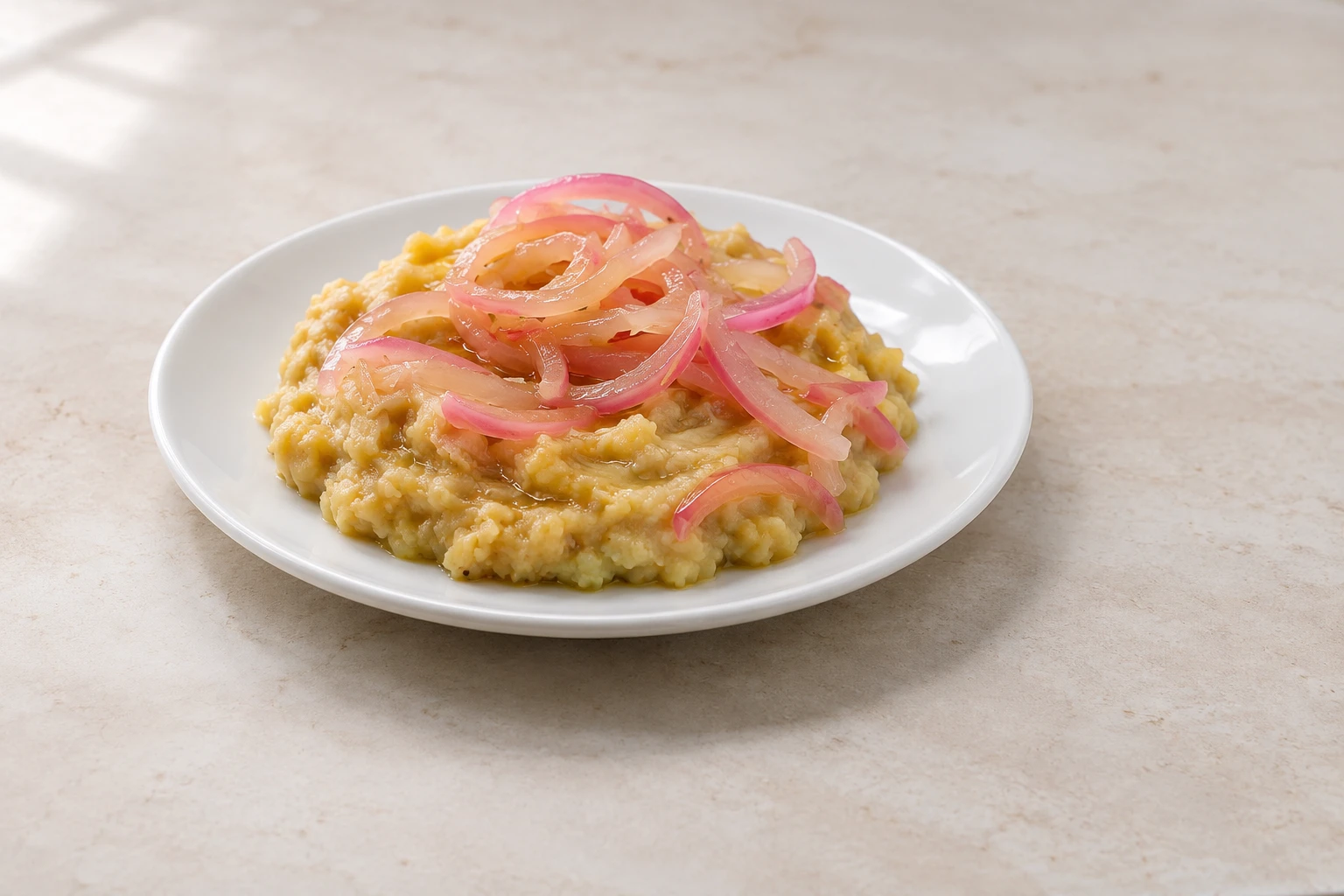
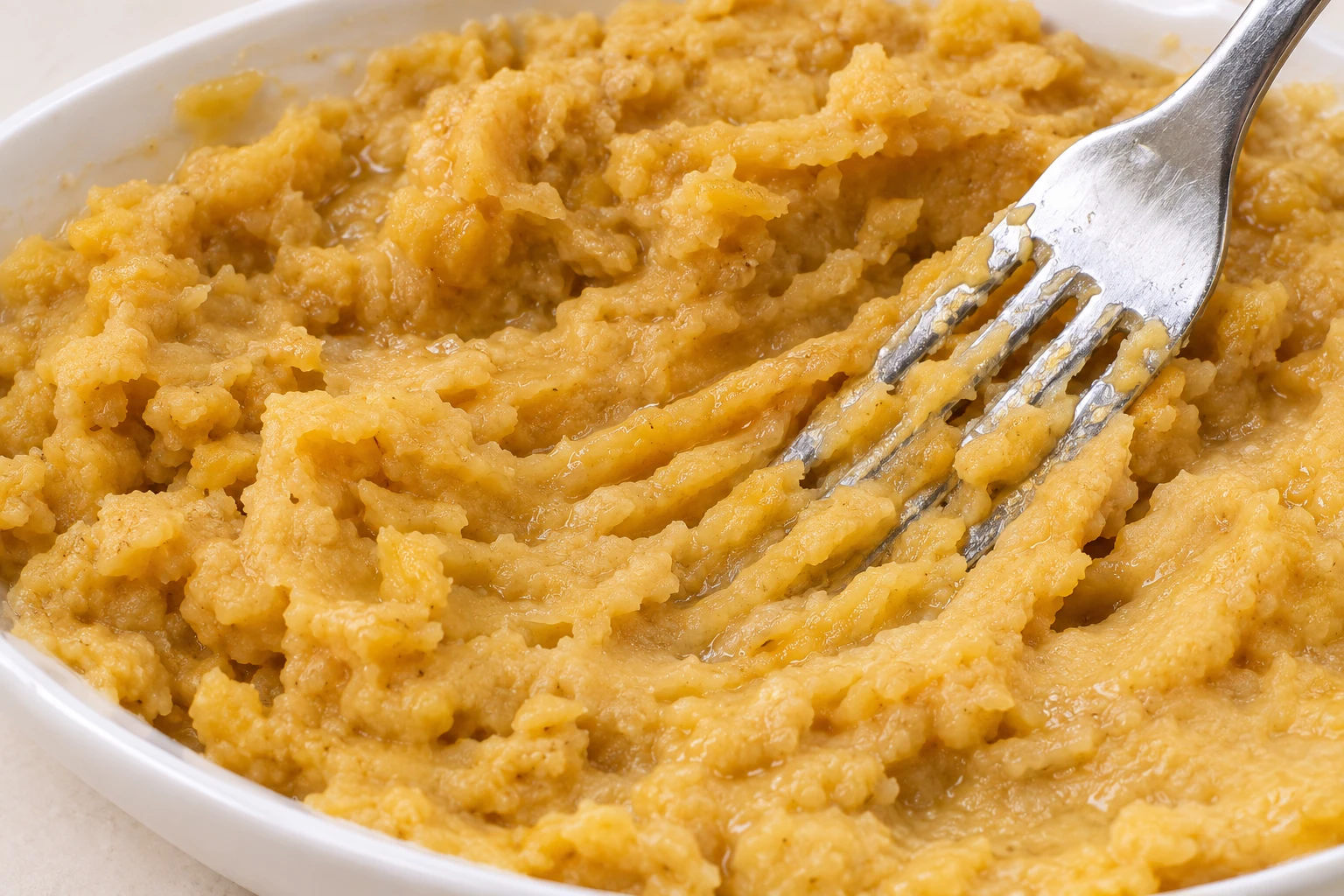
Mangú is the breakfast that most identifies Dominicans. The green plantain is peeled, boiled in salted water until soft and mashed with butter or oil, gradually adding the water it cooked in until it becomes a smooth puree. On top goes red onion sautéed in vinegar, which gives acidity and color.
Mangú preserves an African heritage adapted to Dominican cooking and is one of the central breakfast dishes. The plantain arrived in the Antilles in the 16th century and, according to historian Frank Moya Pons, became part of the enslaved people’s diet on the plantations alongside meat and cassava flatbread (casabe), eventually becoming a central ingredient in the country’s cuisine.
The most requested version is mangú con los tres golpes: the puree served with fried white cheese, fried Dominican salami and a fried egg. Some add avocado. Mangú also appears at lunch and dinner, and there are versions made with other tubers, like yautía.
About the name, a popular story says it came from an American soldier who, tasting the puree during the occupation, said “man, it’s good.” It’s a folk tale without proof of the name’s origin.


 Brazil
 Argentina
 Bolivia
 Chile
 Colombia
 Ecuador
 Guyana
 French Guiana
 Falkland Islands (Malvinas)
 Paraguay
 Peru
 Suriname
 Uruguay
 Venezuela
 Germany
 Austria
 Belgium
 Croatia
 Denmark
 Spain
 Finland
 France
 Greece
 the Netherlands
 Hungary
 Ireland
 Iceland
 Italy
 Luxembourg
 Norway
 Poland
 Portugal
 the United Kingdom
 the Czech Republic
 Sweden
 Switzerland
 Turkey
 Canada
 the United States
 Mexico
 South Africa
 Australia
 Fiji
 New Zealand
 Papua New Guinea