Gubbio’s Festa dei Ceri

Religious festival · Úmbria

Gubbio’s Festa dei Ceri

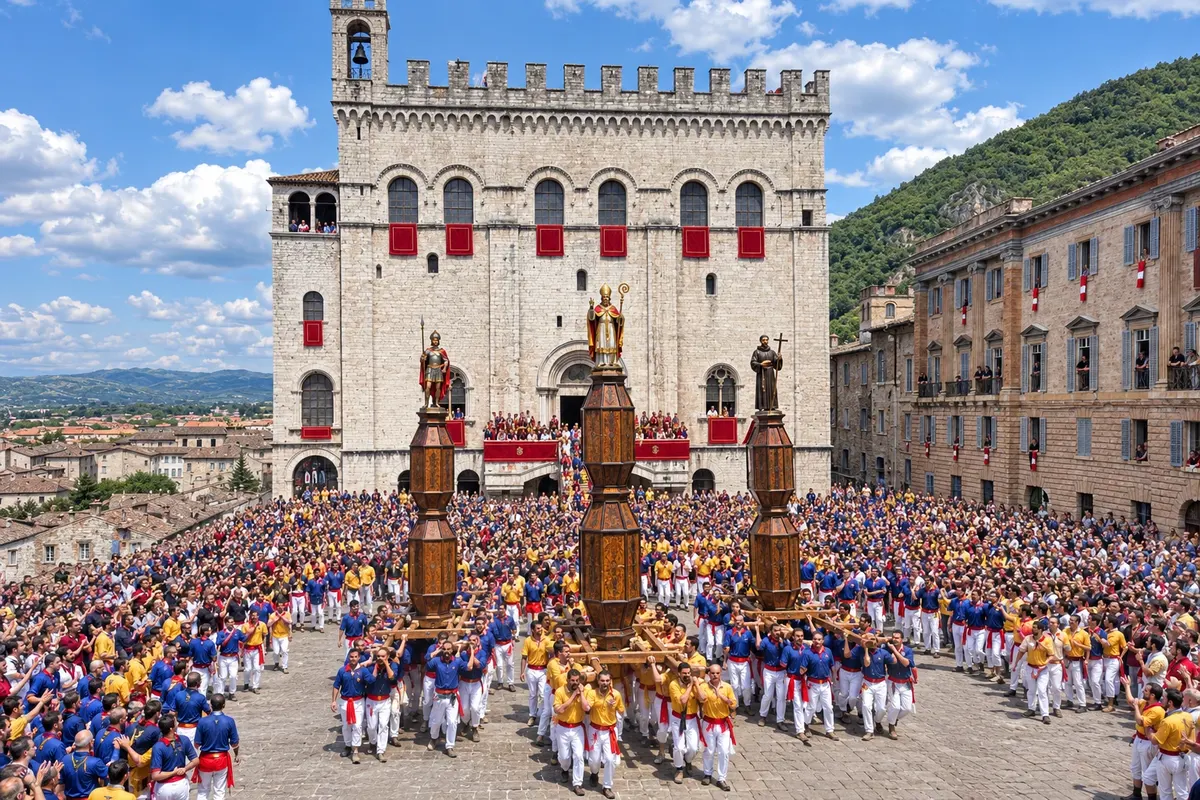
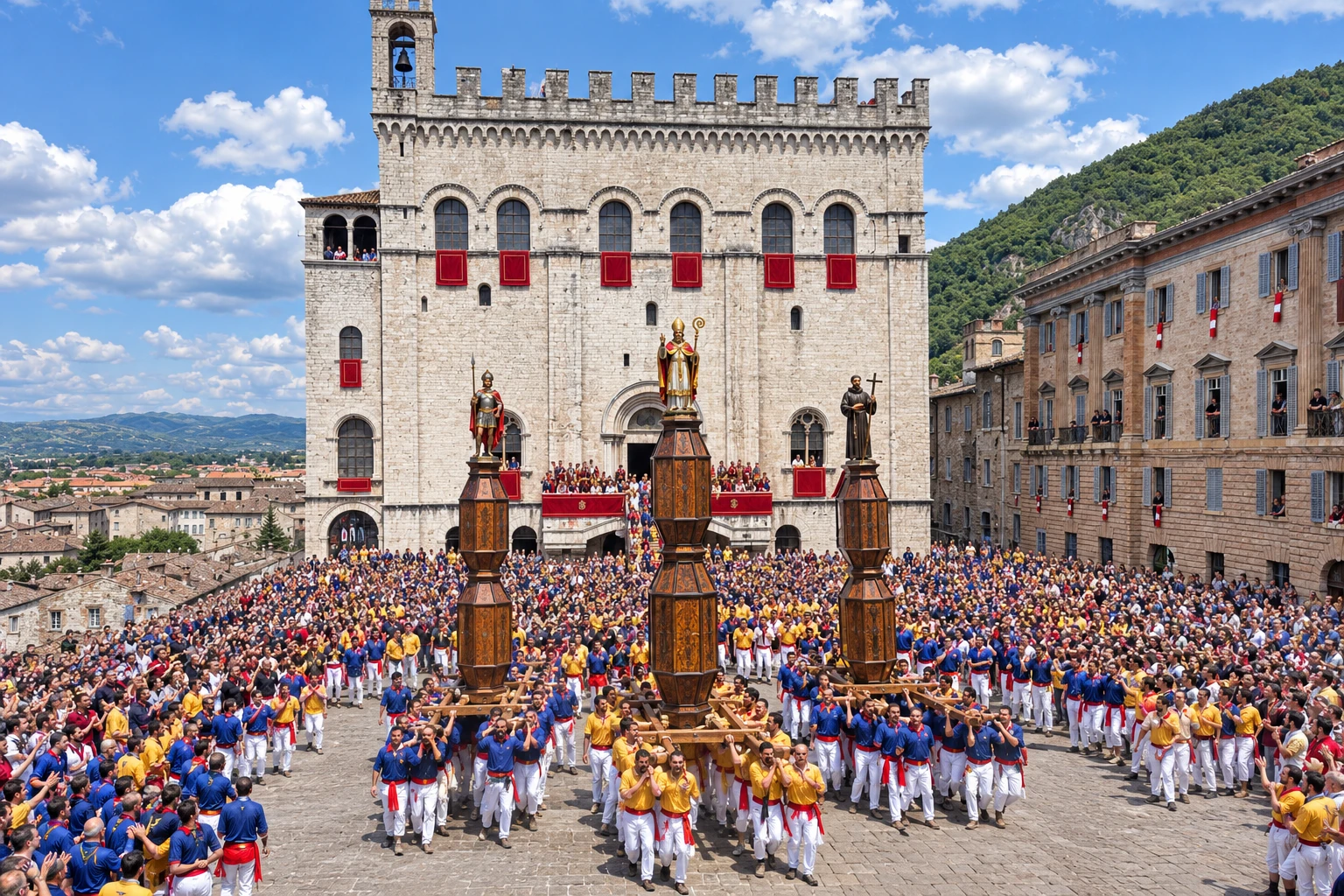
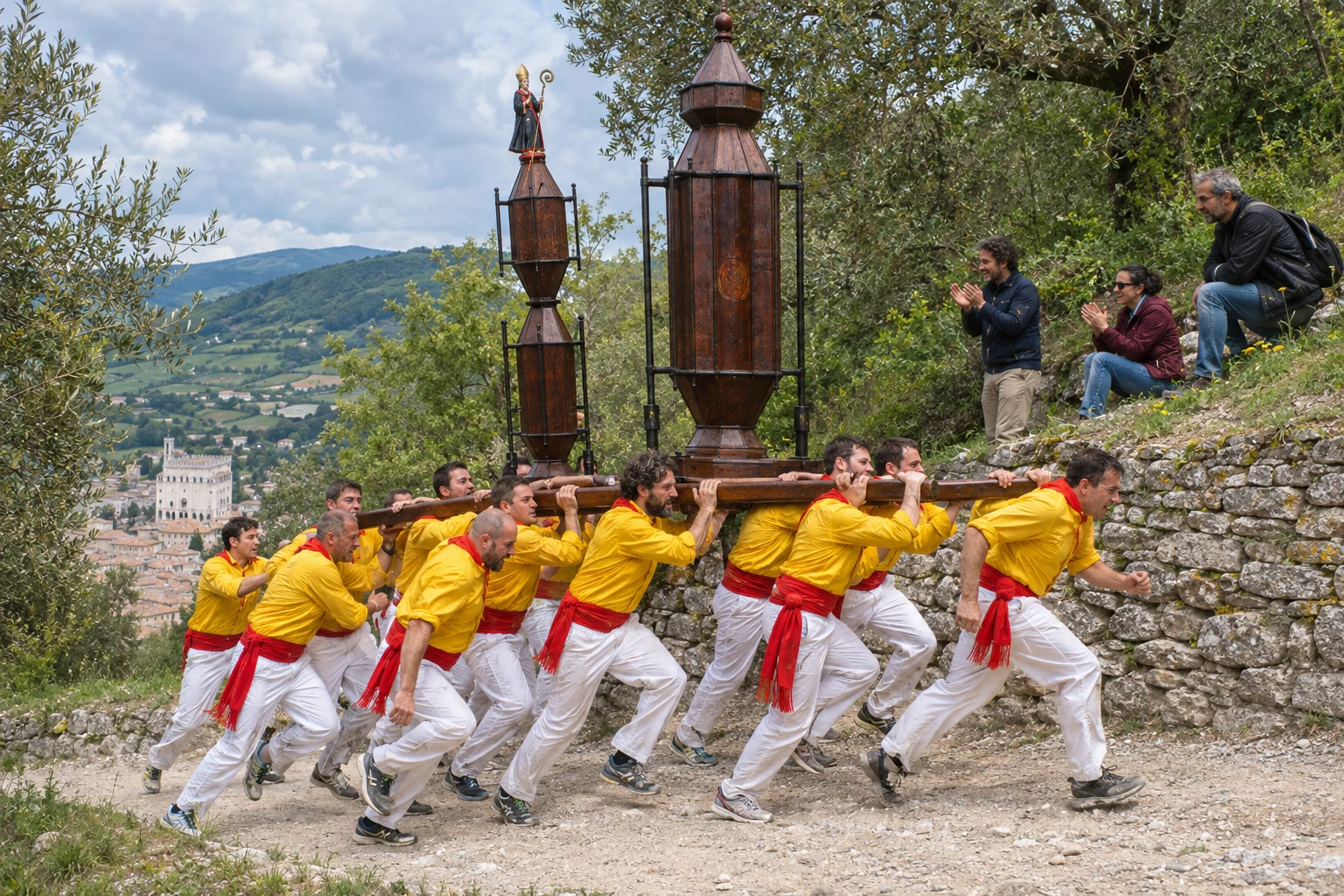
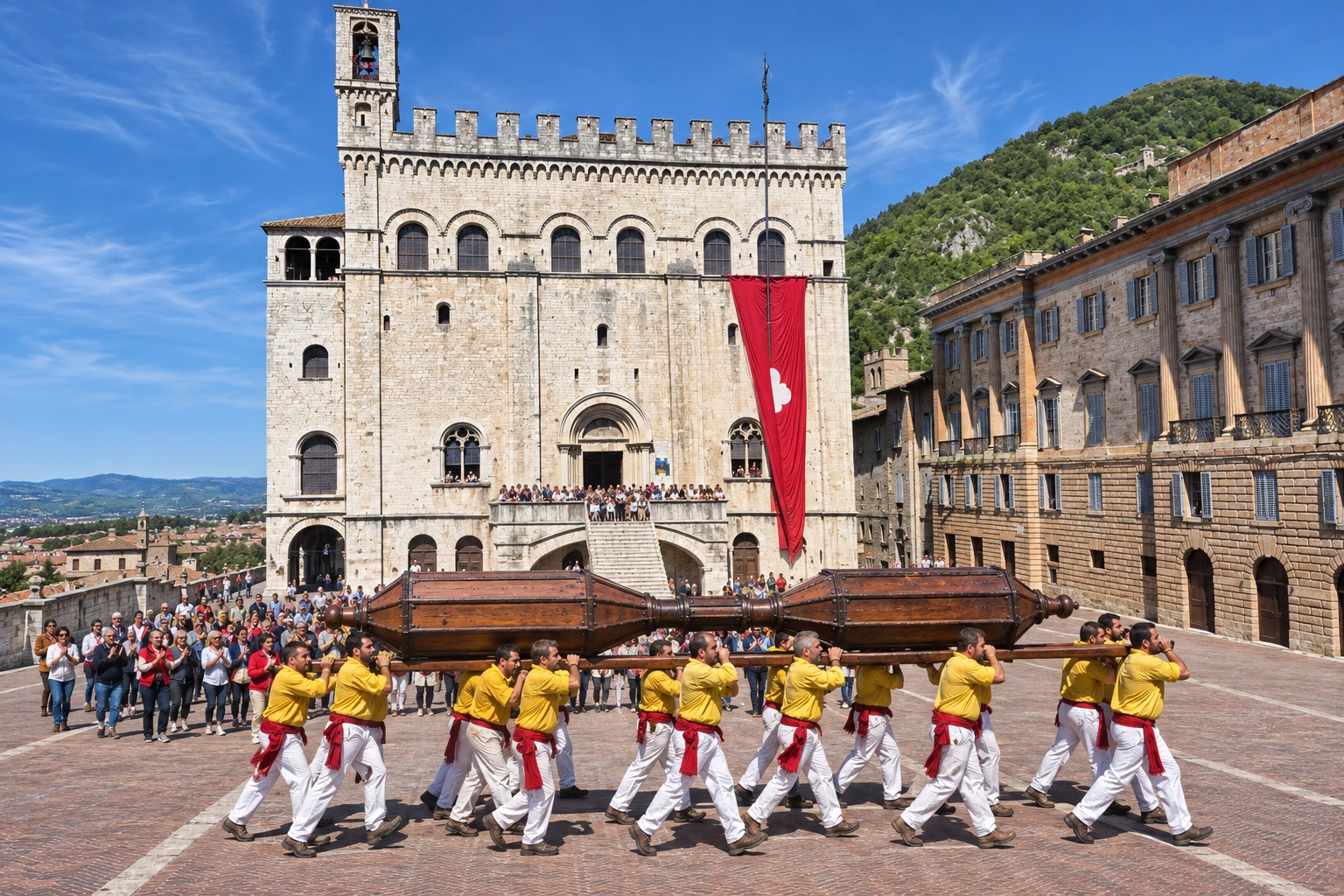
Every year on May 15, the people of Gubbio, a medieval stone town in Umbria, carry the Ceri through the streets and up the mountain in a traditional race. These three enormous wooden structures are topped with statues of Saint Ubaldo, Saint George, and Saint Anthony.

In the photo: Gubbio’s Festa dei Ceri

Illustrative images. The pictures in this guide are illustrations based on the real place, not photographs, and may differ from it.

Get it on Google Play

Click the picture to enlarge it.

Gubbio’s Festa dei Ceri — Úmbria
Gubbio’s Festa dei Ceri
Gubbio’s Festa dei Ceri — Úmbria
Gubbio’s Festa dei Ceri
Gubbio’s Festa dei Ceri — Úmbria
Gubbio’s Festa dei Ceri

Gubbio’s Festa dei Ceri — Úmbria

When

On May 15, the eve of the feast of Saint Ubaldo, Gubbio’s patron saint.

May

Where

Úmbria

Organizer

Official website

Dates, program and tickets

Dates change every year: check this year's date before you travel.

The festival

What the Gubbio’s Festa dei Ceri is

Gubbio is one of Italy’s best-preserved medieval towns, built of gray stone on the slopes of Mount Ingino in northern Umbria. At the summit stands the Basilica of Sant’Ubaldo, named for the town’s bishop and patron saint, who died in 1160. Devotion to him gave rise to the Festa dei Ceri, which has been celebrated for nearly a thousand years.

The Ceri are three large wooden structures, each about five meters tall and weighing nearly 300 kilograms. Each is topped with a statue of a saint associated with one of the town’s historic guilds: Saint Ubaldo for the stonemasons, Saint George for the merchants, and Saint Anthony the Abbot for the farmers. The Ceri are kept in the basilica and brought down to town on the first Sunday in May.

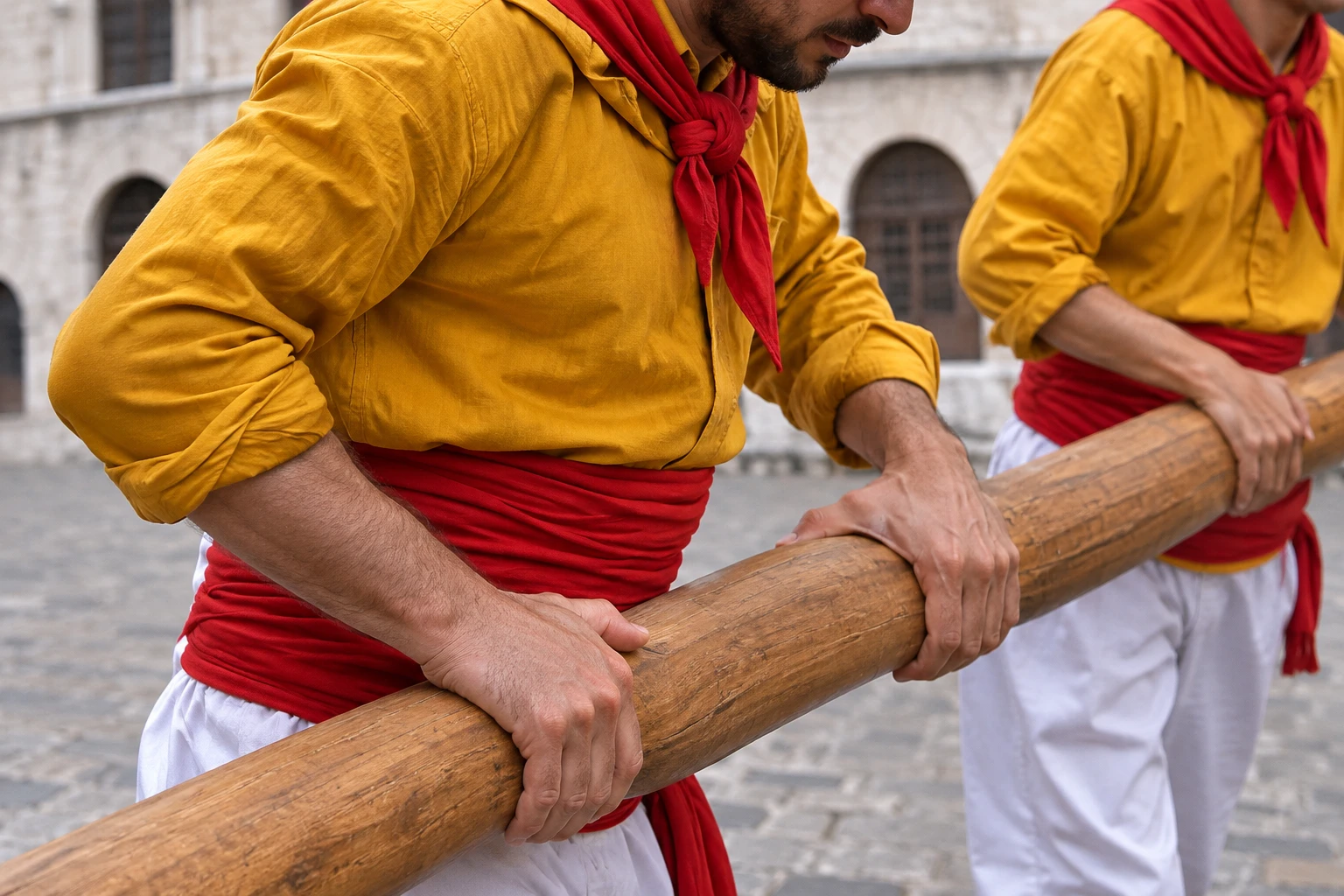
On May 15, after Mass for the bearers, known as ceraioli, the Ceri are raised in the town hall square and carried through the streets. In the afternoon, after the procession with the statue of Saint Ubaldo and the bishop’s blessing, the race begins. The bearers, in teams dressed in yellow, blue, and black, take turns carrying each Cero on their shoulders as they run through town and then up the steep slope to the basilica, where the Ceri are stored once again.

The whole town takes part, wearing the colors of the three saints. The festivities continue in May, when teenagers race with the medium-sized Ceri. In June, children carry the small Ceri.

It’s worth the trip to see one of Italy’s oldest and most moving festivals and to explore Gubbio, its medieval palaces, and Mount Ingino.

Share: WhatsApp

What not to miss

The raising of the Ceri in Piazza Grande. The race through the streets and up to the Basilica of Sant’Ubaldo. The procession with the saint’s statue. The descent of the Ceri into town on the first Sunday in May.

How to enjoy it

Get to Piazza Grande early to see the Ceri being raised. If you’d rather see them arrive at the basilica, find a spot on Mount Ingino before the race.

Plan ahead

The festival always takes place on May 15, no matter which day of the week it falls on. Book your accommodations in advance.

May

Around the same time

Your questions

Questions about Gubbio’s Festa dei Ceri

When is Gubbio’s Festa dei Ceri?

Always on May 15, the eve of the feast of Saint Ubaldo, the town’s patron saint.

What are the Ceri?

They’re three large wooden structures, each about five meters tall, topped with statues of Saint Ubaldo, Saint George, and Saint Anthony the Abbot. The bearers carry them on their shoulders during the race.

Where does the Ceri race end?

At the Basilica of Sant’Ubaldo, at the summit of Mount Ingino, where the Ceri are kept for the rest of the year.

Festivals and events in Italy

Other festivals

Historic Carnival of Ivrea February/March
Popular festival · Piemonte

Historic Carnival of Ivrea

In the weeks leading up to Lent, with the Battle of the Oranges running from Sunday through Shrove Tuesday.

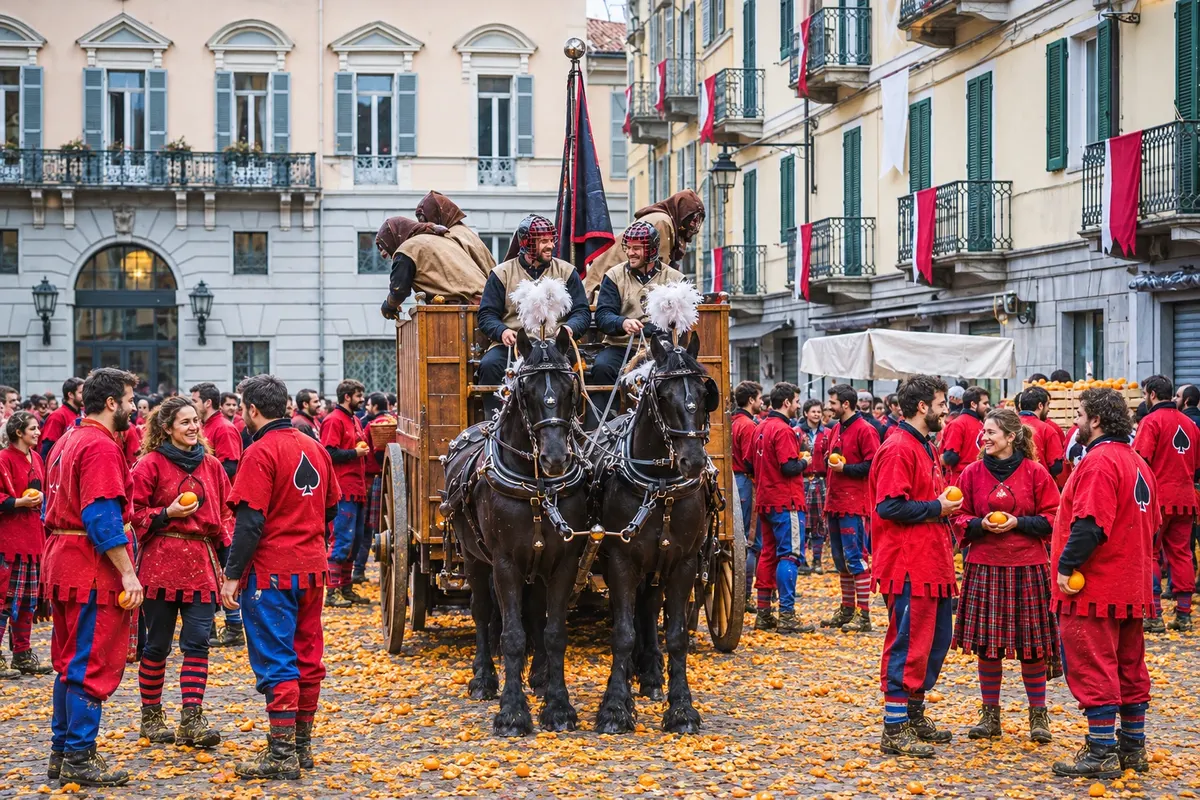
In Ivrea, in Piedmont, the carnival commemorates the medieval town’s revolt against its tyrant. It features historical processions, the Miller, who is the heroine of the carnival, and the famous Battle of the Oranges, in which teams on foot trade volleys of oranges with riders in horse-drawn carts in the town squares.

See the full calendar

Beyond the guide