The festival
What the Historic Carnival of Ivrea is
Ivrea is a town in northern Piedmont, on the banks of the Dora Baltea River, between Turin and the Aosta Valley. Its carnival is considered one of the oldest in Italy, and it is unlike any other: instead of confetti, oranges fly through the streets.
The carnival tells the story, part legend and part fact, of a popular uprising in the Middle Ages. According to tradition, a young miller named Violetta refused to submit to the town’s tyrant and killed him, sparking the rebellion that freed Ivrea. Each year, a young woman from Ivrea is chosen to be the Vezzosa Mugnaia, the Miller. Her identity is kept secret until Saturday night during the carnival, when she appears on the balcony of the town hall.
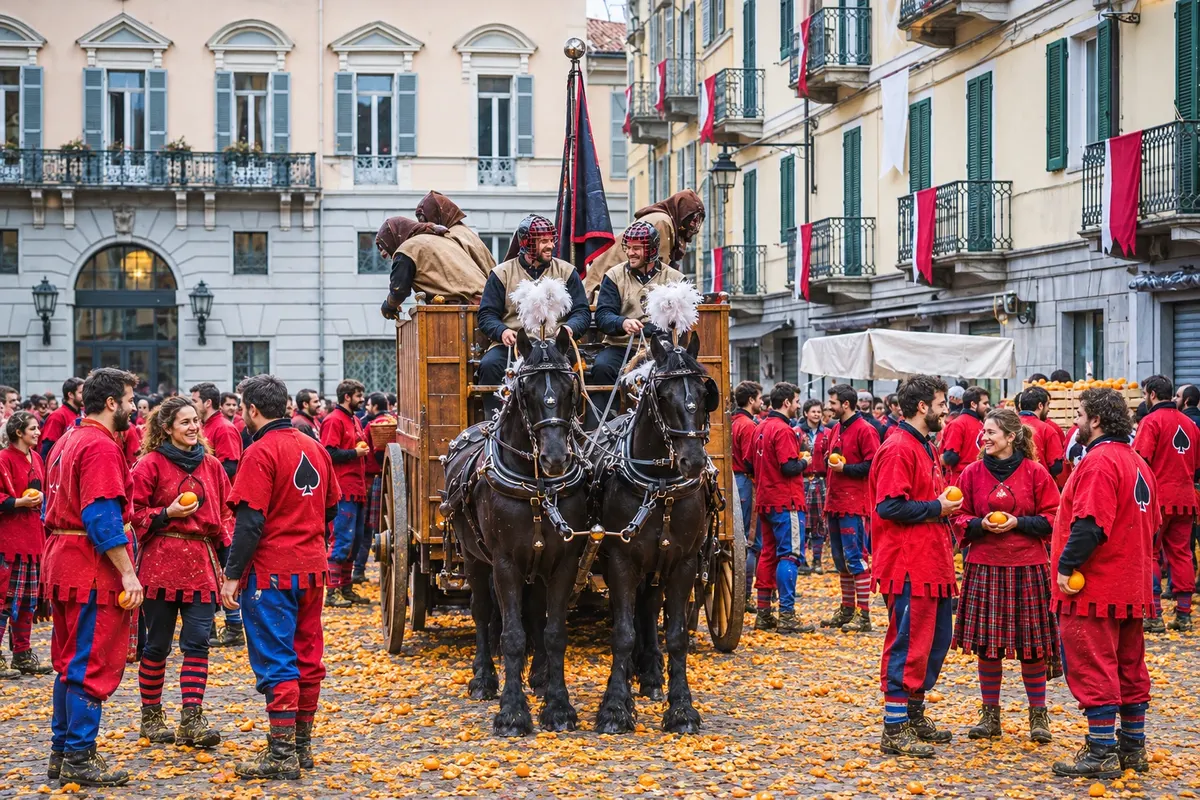
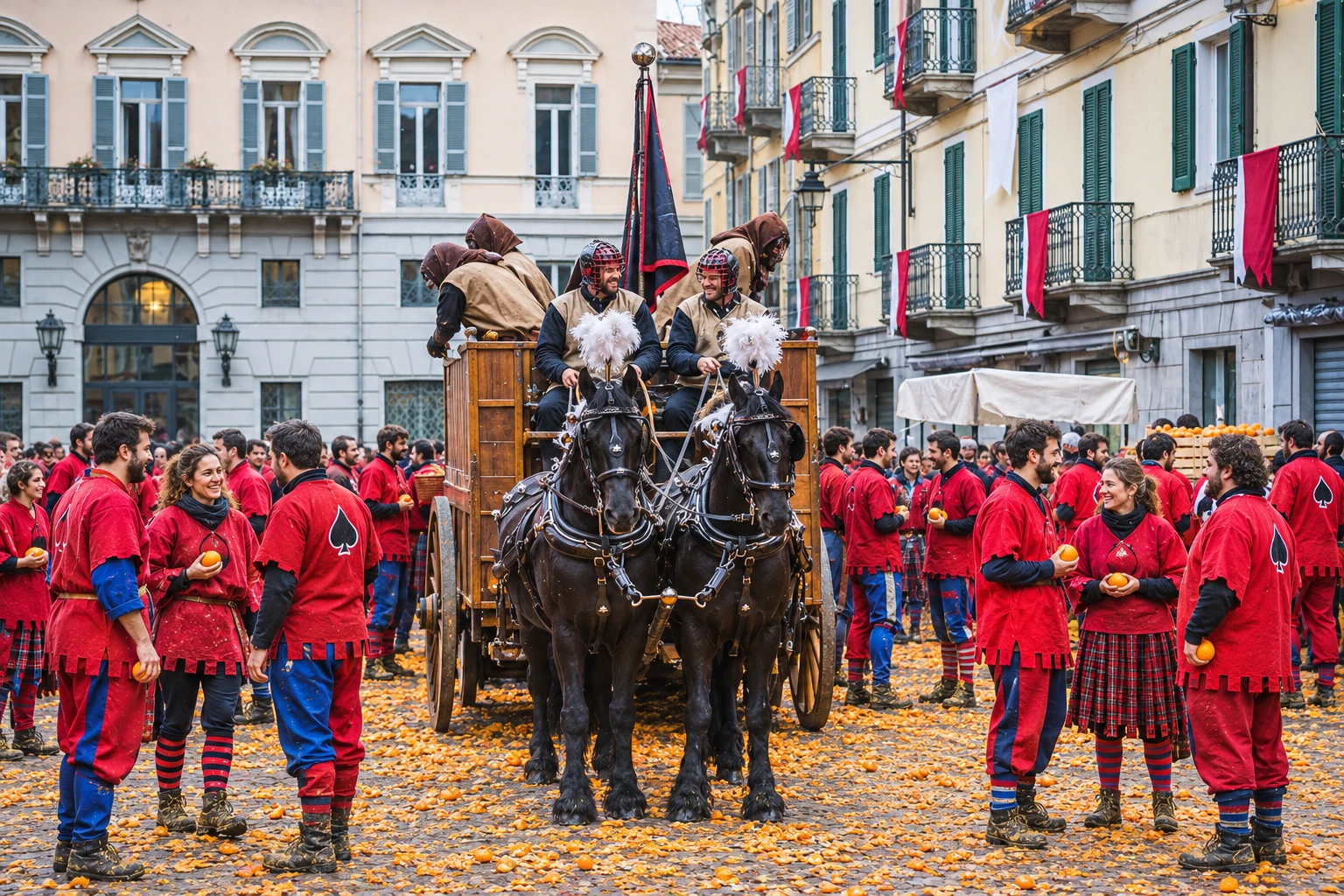
The Battle of the Oranges takes place on Sunday, Monday, and Shrove Tuesday. In the squares of the town center, nine teams of orange throwers on foot, representing the townspeople, face off against horse-drawn carts representing the tyrant’s soldiers. The two sides throw oranges at each other. The battle is intense, and those who just want to watch wear a red Phrygian cap to show that they support the revolt and should not be targeted.
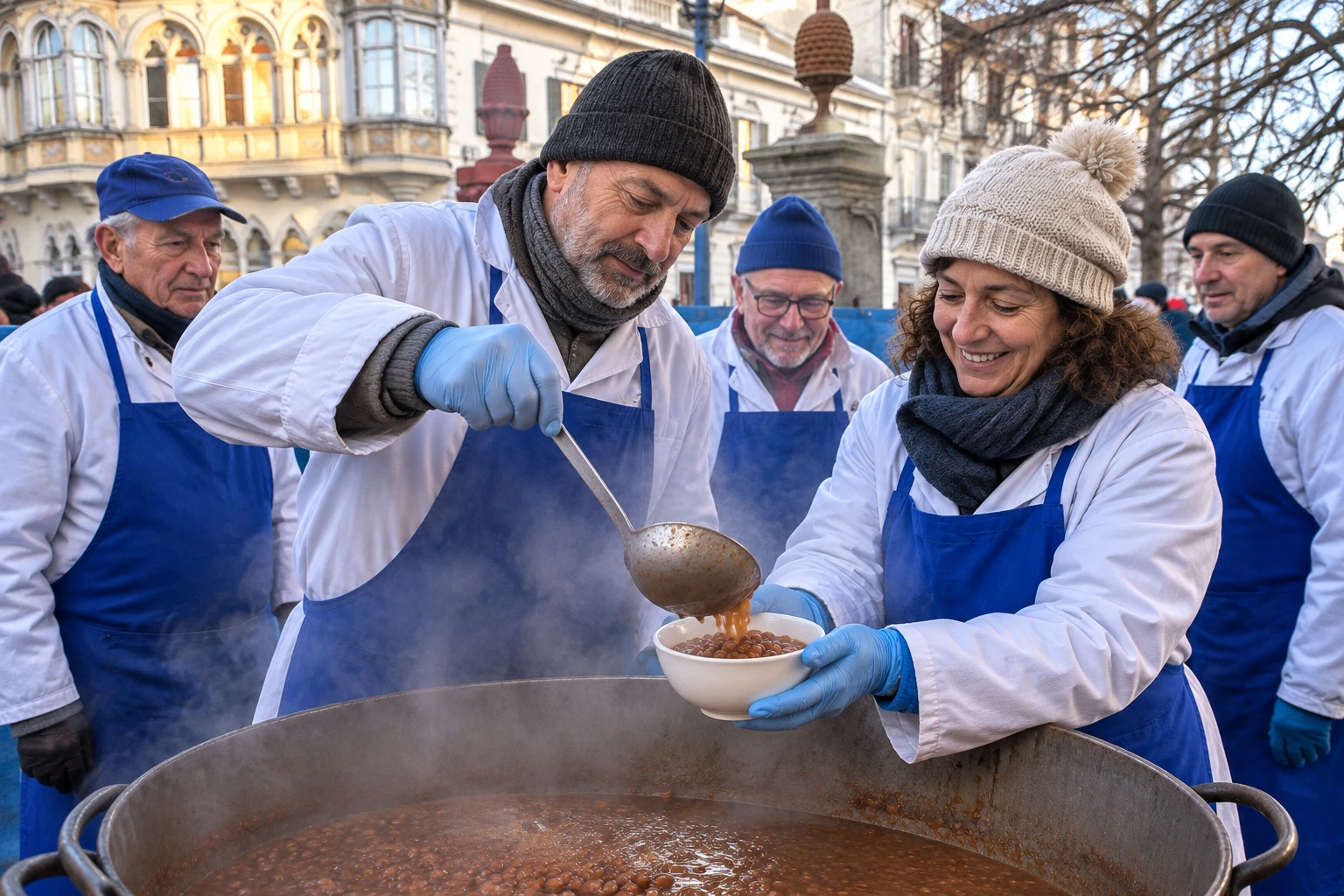
Beyond the battle, the carnival features a historical procession with the general, officers on horseback, and carnival officials. There are also fifes and drums, feijoada served in the neighborhoods, and a series of ceremonies that begin weeks earlier.
It’s worth the trip to see a tradition unlike any other in the world, one that involves the whole town, and to explore the center of Ivrea and the Canavese region.


 Brazil
 Antarctica
 Argentina
 Bolivia
 Chile
 Colombia
 Ecuador
 Guyana
 French Guiana
 Falkland Islands (Malvinas)
 Paraguay
 Peru
 Suriname
 Uruguay
 Venezuela
 Germany
 Austria
 Belgium
 Croatia
 Denmark
 Slovakia
 Slovenia
 Spain
 Finland
 France
 Greece
 the Netherlands
 Hungary
 Ireland
 Iceland
 Luxembourg
 Norway
 Poland
 Portugal
 the United Kingdom
 the Czech Republic
 Sweden
 Switzerland
 Turkey
 Bermuda
 Canada
 the United States
 Greenland
 Mexico
 Saint Pierre and Miquelon
 the Dominican Republic
 Japan
 South Africa
 Egypt
 Australia
 Fiji
 New Zealand
 Papua New Guinea



 January/February/March