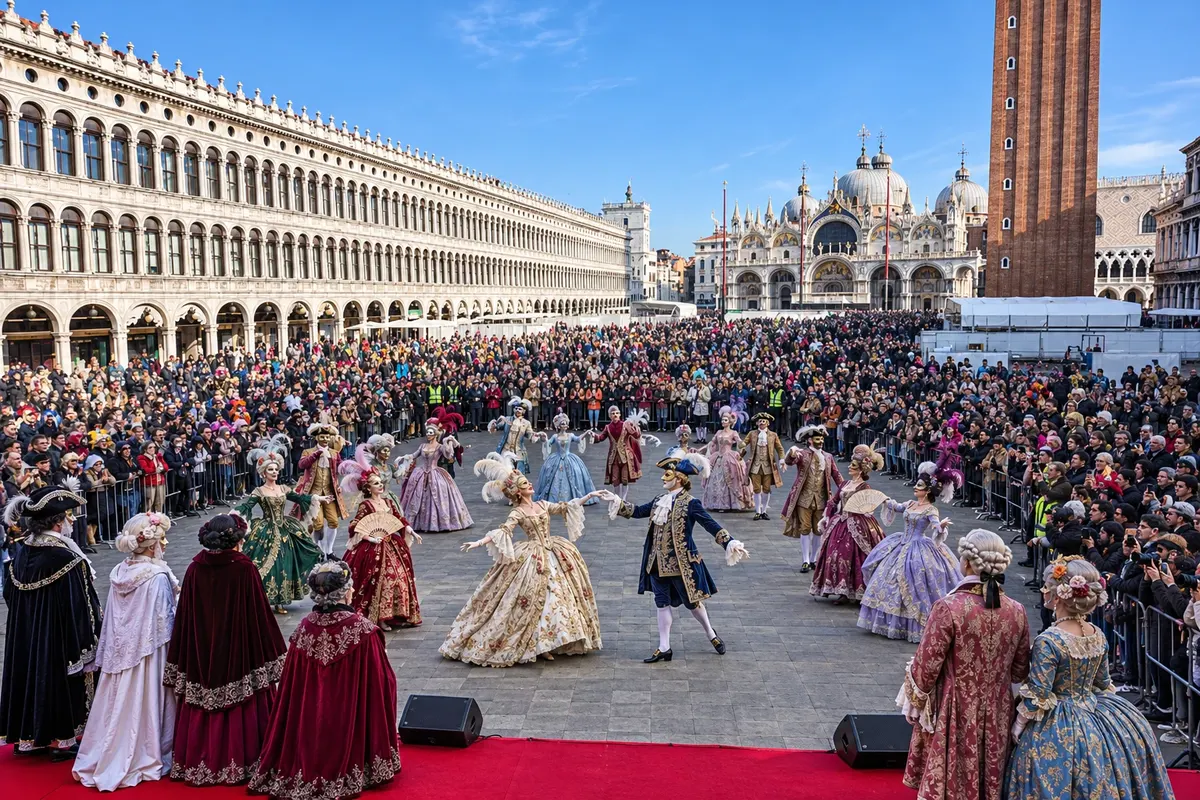
Dish · Florence
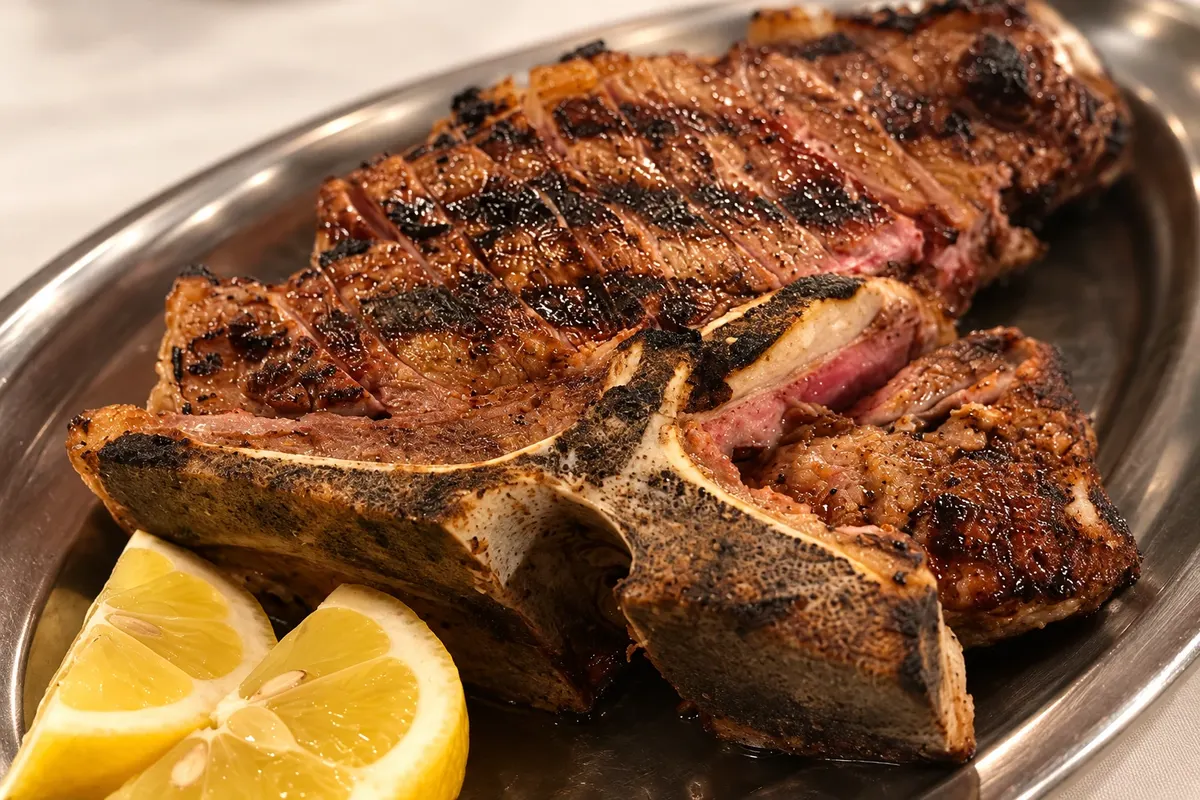
Bistecca alla fiorentina
Thick T-bone beef steak, grilled over embers and served rare, seasoned only with salt and olive oil. It’s named after Florence and is usually ordered to share.

 Search
 Brazil
 Antarctica
 Argentina
 Bolivia
 Chile
 Colombia
 Ecuador
 Guyana
 French Guiana
 Falkland Islands (Malvinas)
 Paraguay
 Peru
 Suriname
 Uruguay
 Venezuela
 Germany
 Austria
 Belgium
 Croatia
 Denmark
 Slovakia
 Slovenia
 Spain
 Finland
 France
 Greece
 the Netherlands
 Hungary
 Ireland
 IcelandItaly
 Luxembourg
 Norway
 Poland
 Portugal
 the United Kingdom
 the Czech Republic
 Sweden
 Switzerland
 Turkey
 Bermuda
 Canada
 the United States
 Greenland
 Mexico
 Saint Pierre and Miquelon
 the Dominican Republic
 JapanTurkey
 South Africa
 Egypt
 Australia
 Fiji
 New Zealand
 Papua New Guinea
Religious festival · Florence
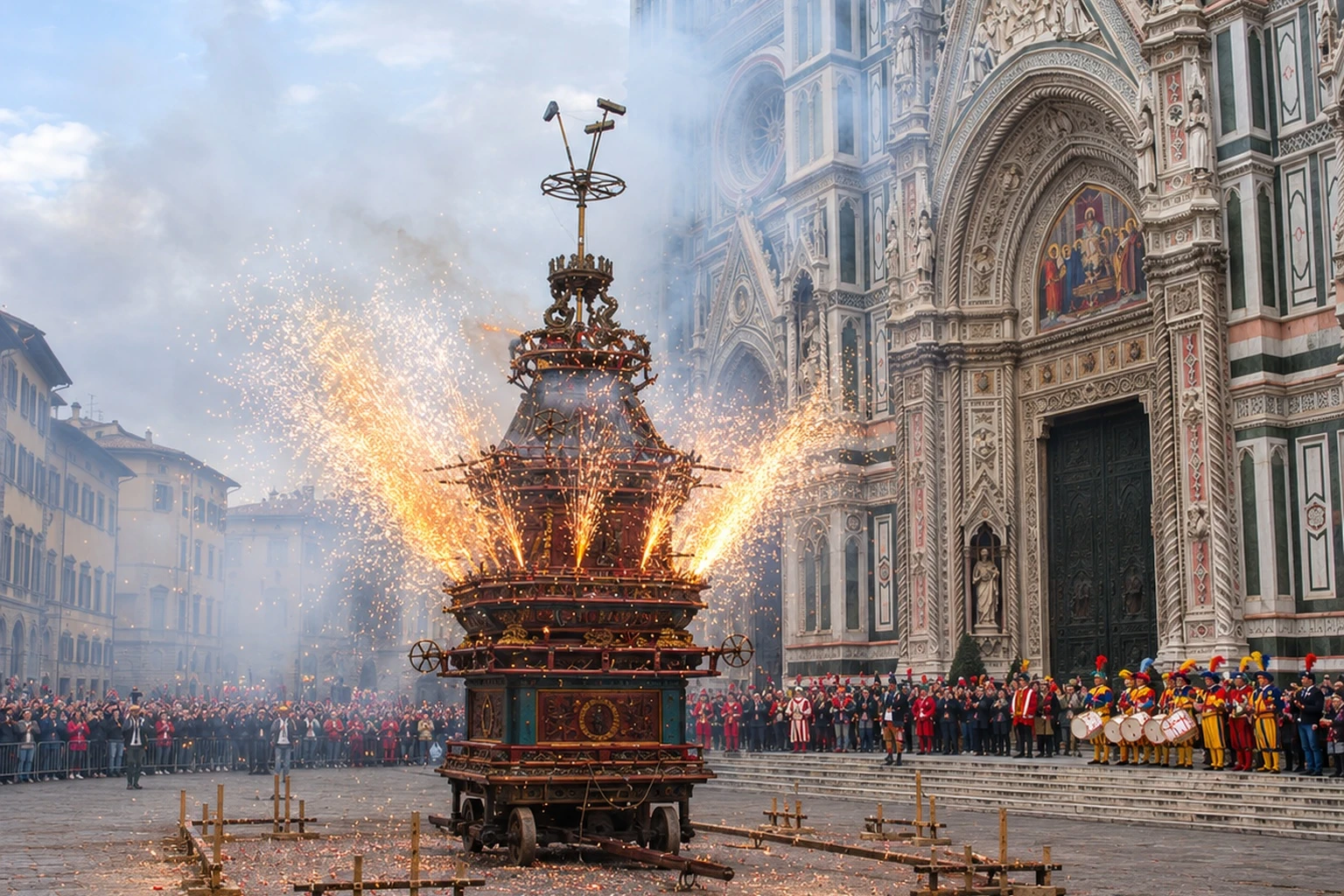
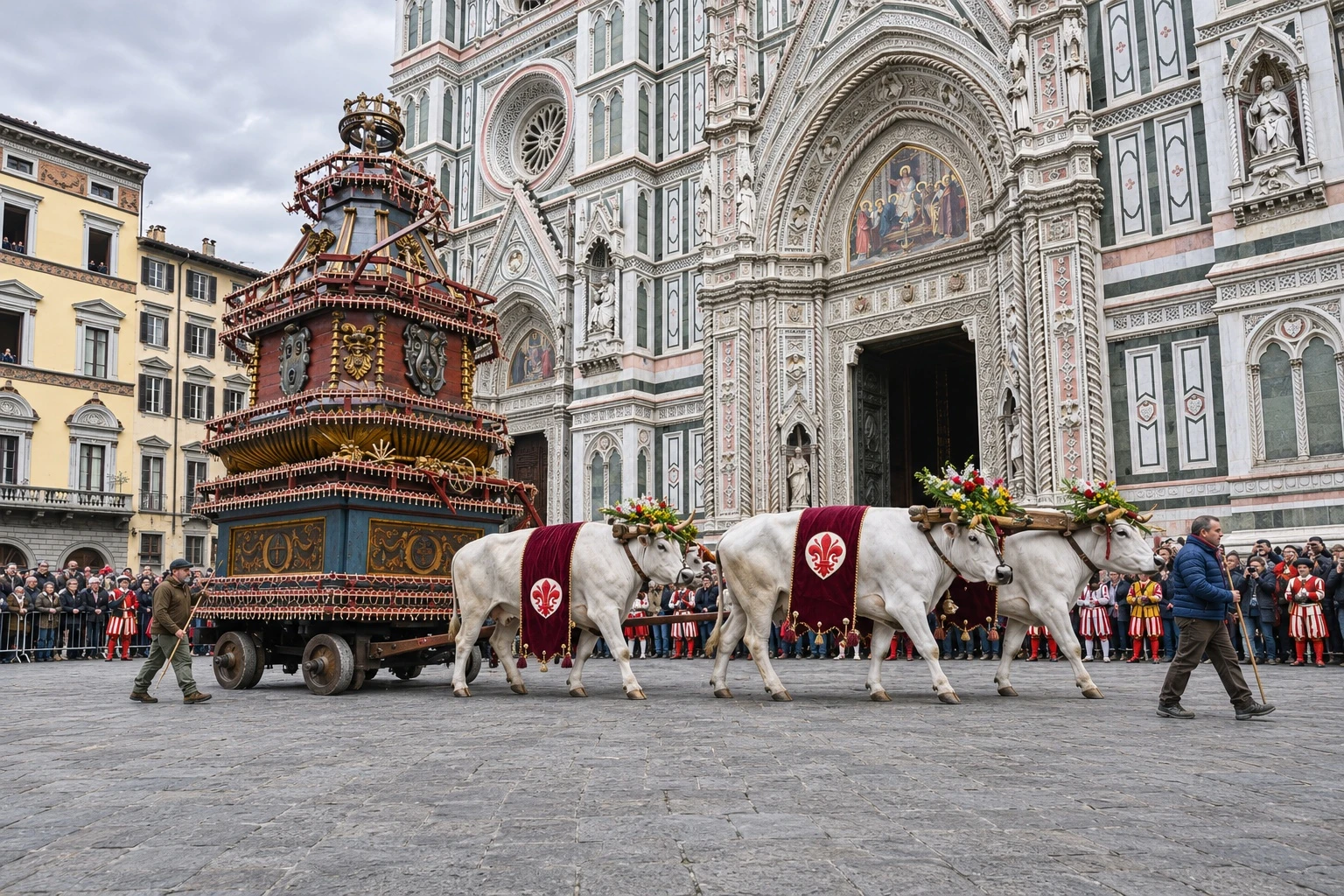
On Easter morning, a tall, ornate cart called the Brindellone is brought to the square in front of Florence Cathedral. During Mass, a mechanical dove is lit at the altar and travels along a wire to the cart, setting off a fireworks display in a tradition that dates back nine centuries.
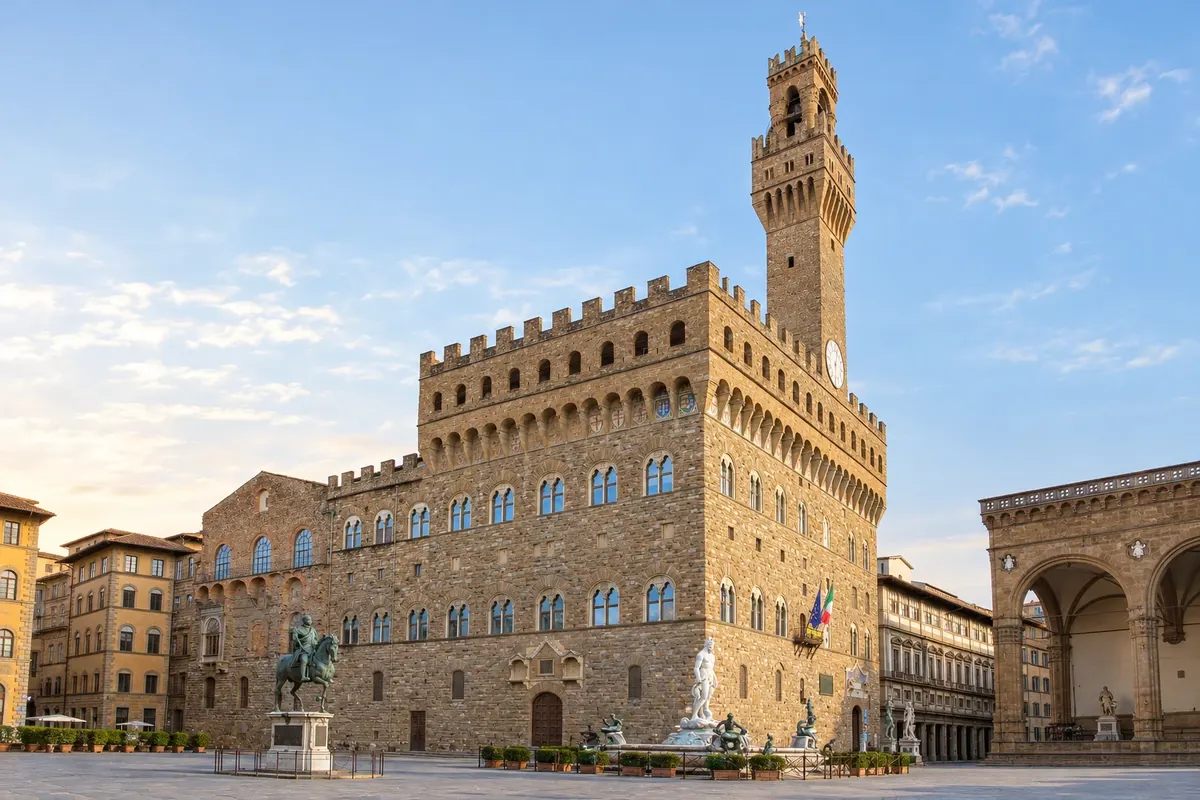
In the photo: Florence
Illustrative images. The pictures in this guide are illustrations based on the real place, not photographs, and may differ from it.

Click the picture to enlarge it.
Scoppio del Carro — Florence
On Easter Sunday morning.
March/April
Dates change every year: check this year's date before you travel.
The festival
The Scoppio del Carro, or Explosion of the Cart, is Florence’s Easter celebration, bringing together faith and civic pride. Tradition traces it to the Crusades: Pazzino de' Pazzi, a Florentine said to have been the first to scale the walls of Jerusalem in 1099, received three chips of stone from the Holy Sepulchre as a gift. The stones were used to light the new Easter fire, which was shared with the city’s residents. The stones are still kept in the Church of Santi Apostoli.
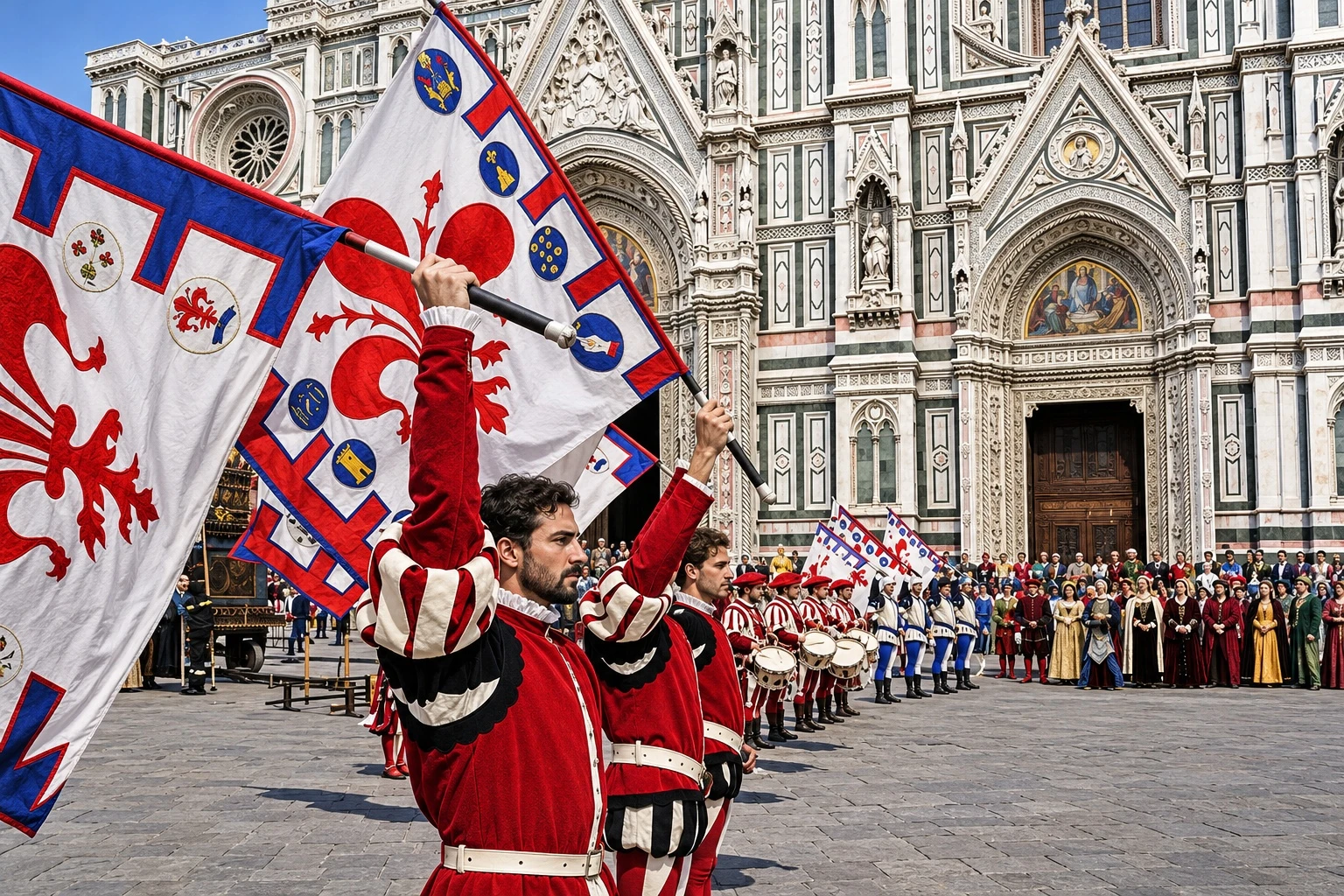
On Easter Sunday morning, the cart, known to Florentines as the Brindellone, leaves its storehouse on Via il Prato. A three-story wooden tower covered in coats of arms and symbols of the city, it is drawn by white oxen in festive trappings and accompanied by a procession in costumes from the days of the Florentine Republic. The evening before, the sacred fire is lit in the cathedral forecourt using the stones from the Holy Sepulchre.
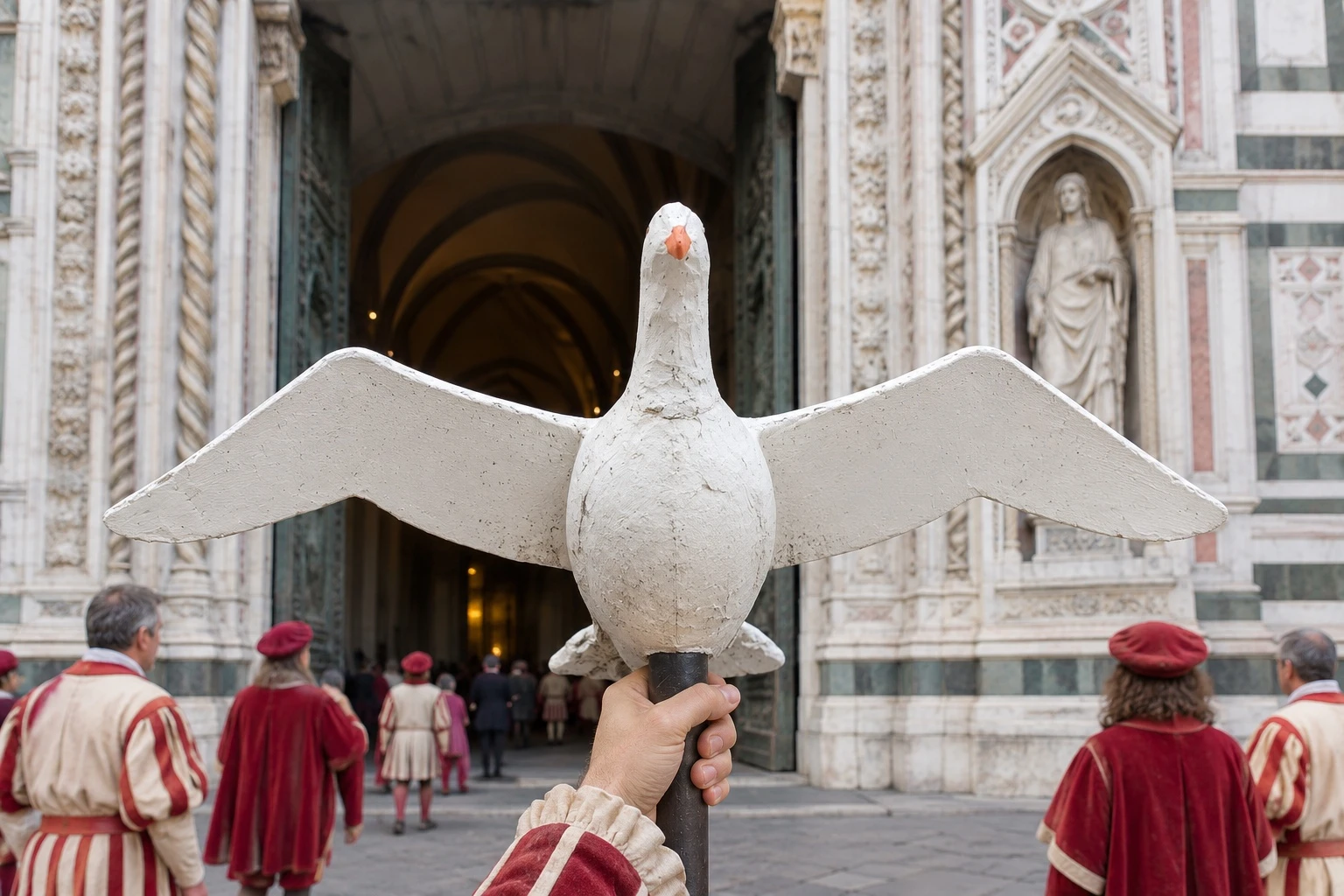
The cart stops between the Duomo and the Baptistery. During Mass, as the Gloria is sung, the sacred fire is used to light the colombina, a mechanical dove that travels along a wire from the altar to the cart and sets off the fireworks. For a few minutes, the Brindellone erupts in a display of rockets, color, and smoke. According to tradition, if the dove makes it to the cart and back to the altar without a hitch, a good year lies ahead.
That same morning, before the Scoppio, a draw determines the semifinal matchups for Calcio Storico, another Florentine tradition.
It’s worth making the trip to spend Easter in Florence and see the celebration that Florentines look forward to all year, right in front of the Cathedral of Santa Maria del Fiore.
The procession with the ox-drawn cart from Via il Prato to the cathedral. The flight of the colombina from inside the Duomo to the cart. The fireworks display on the Brindellone in the square. The lighting of the sacred fire in the cathedral forecourt the night before.
Get to Piazza del Duomo early for a close look at the cart: the square fills up hours before the event. The fireworks are loud, so if you’re with young children, you may prefer to watch from farther away. Afterward, take some time over Easter to explore the churches and museums in the city center.
The date varies with Easter. Book your accommodations early: Easter week is high season in Florence.
In the city
Flavors of Italy
Thick T-bone beef steak, grilled over embers and served rare, seasoned only with salt and olive oil. It’s named after Florence and is usually ordered to share.
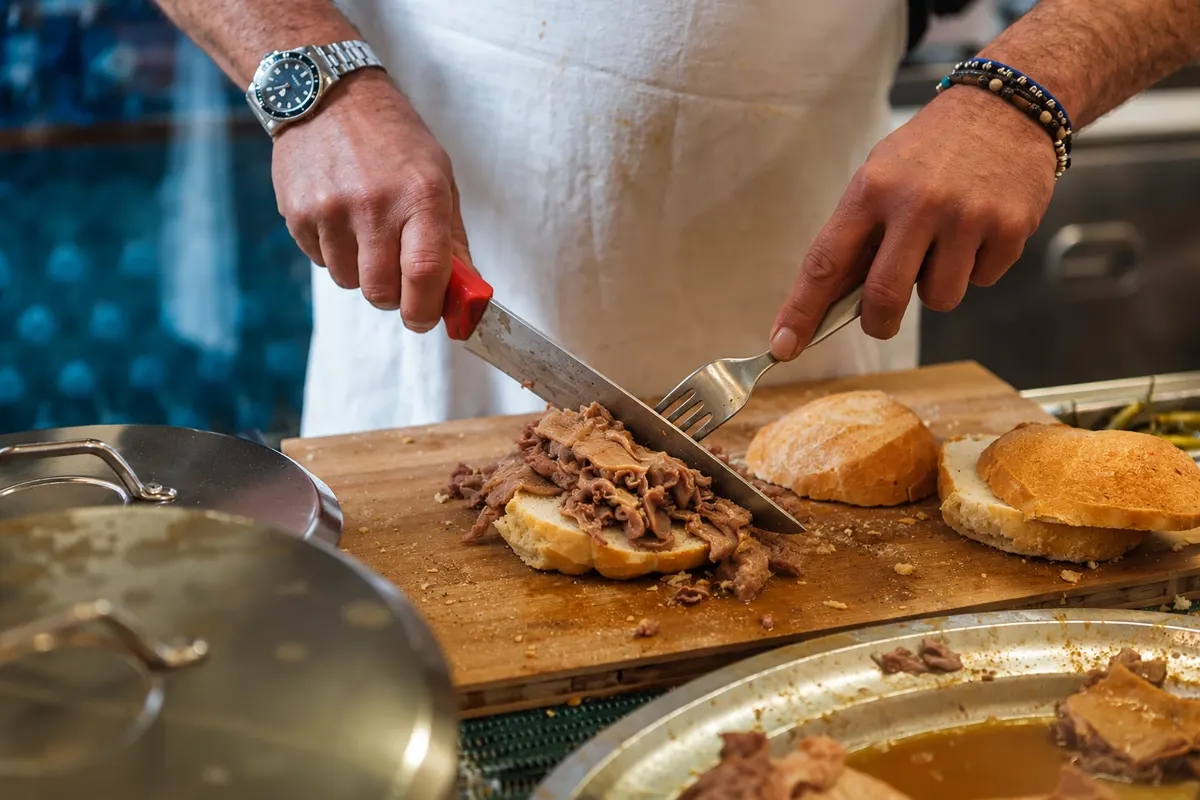
Lampredotto sandwich — the cow’s fourth stomach, slowly cooked in broth and served on a round roll with a green or spicy sauce. It’s Florence’s most typical street food, sold at trippai stalls.
March/April
Your questions
On Easter Sunday morning, in the square in front of Florence Cathedral. The date varies with Easter.
It’s the tall, ornate wooden cart brought to the square, loaded with fireworks that go off when the mechanical dove reaches it.
It dates back to the Crusades: the stones Pazzino de' Pazzi brought back from the Holy Sepulchre were used to light the new Easter fire in Florence.
Festivals and events in Italy
 May
May 1–4. The main procession takes place on May 1.
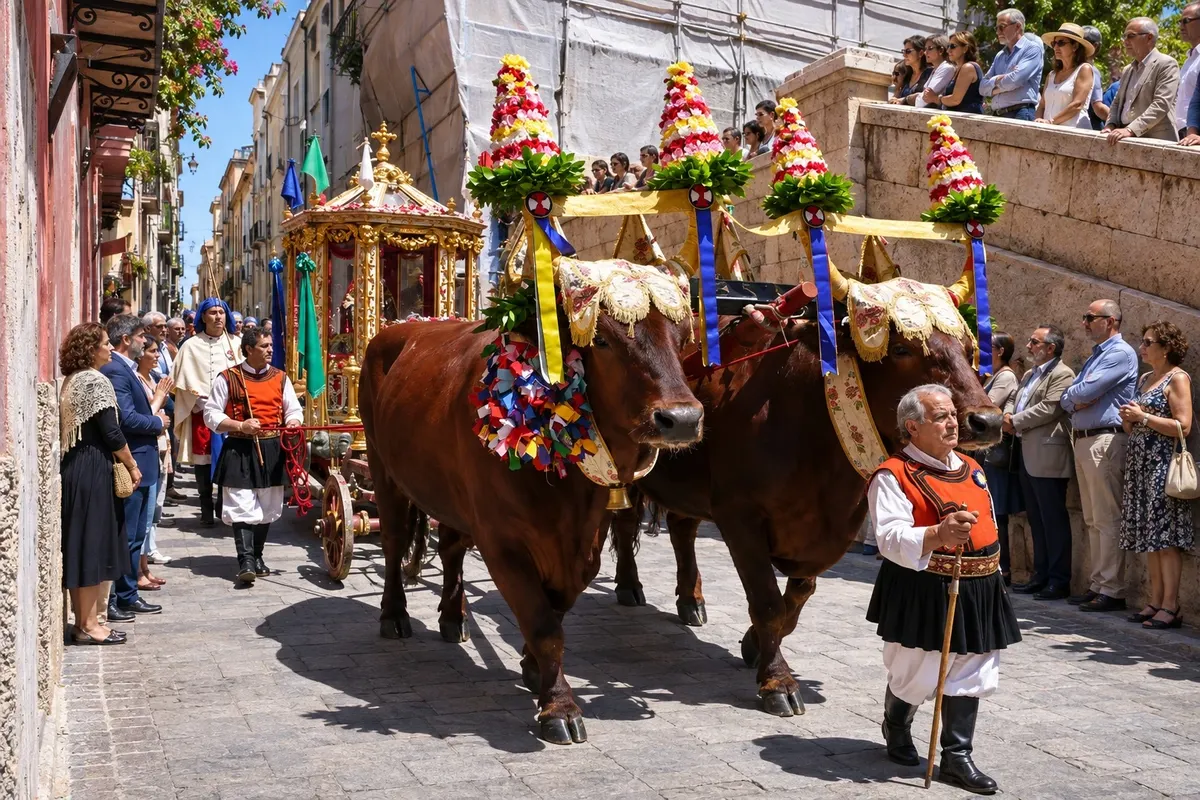
On May 1, Cagliari fulfills a vow it made during the plague of the 17th century. The statue of Sant'Efisio sets out in an ox-drawn carriage, accompanied by decorated carts, riders on horseback, and groups from across Sardinia wearing their traditional dress. The statue then continues on pilgrimage to Nora.
 May
Throughout May, with the races on the last weekend of the month.
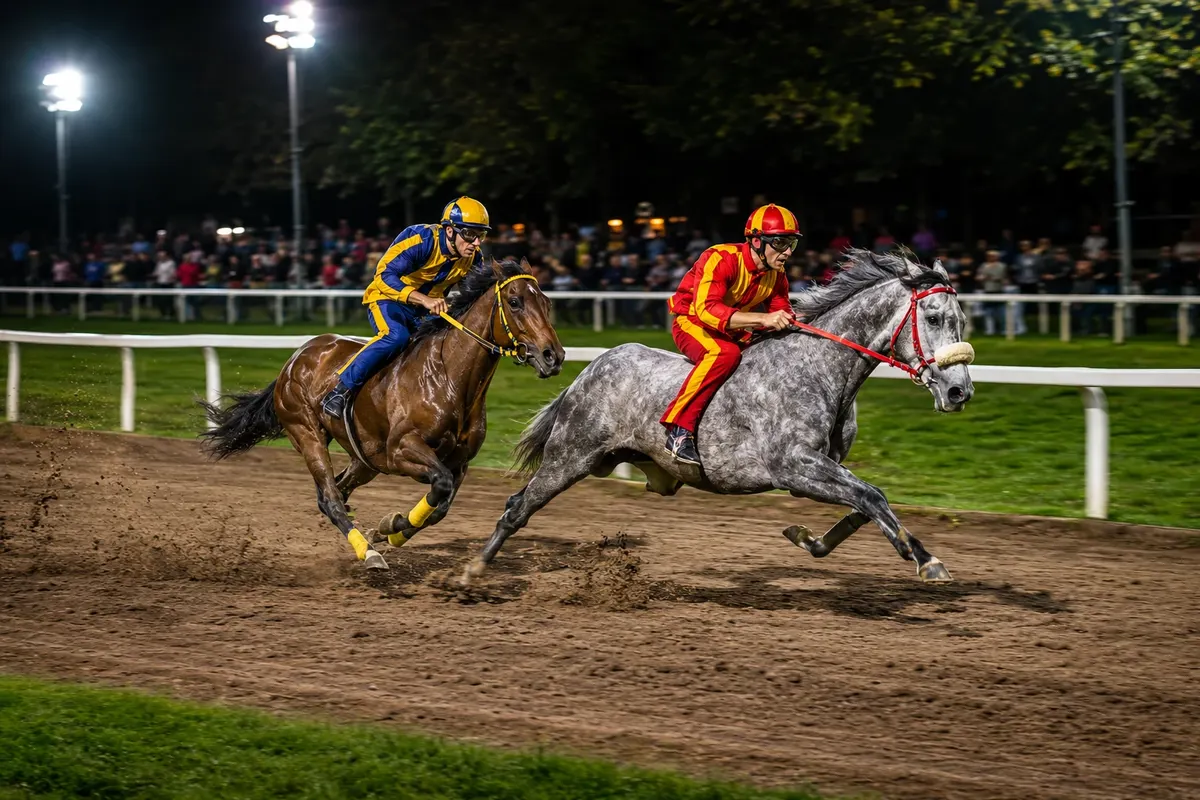
In May, Ferrara’s eight districts, known as contrade, fill the city with Renaissance processions, flag-throwing displays and competitions. The festivities culminate in races in Piazza Ariostea on the last weekend of the month, part of a palio that the city describes as the oldest in the world.
 June
In June. The final is on June 24, the feast day of St. John, Florence’s patron saint.
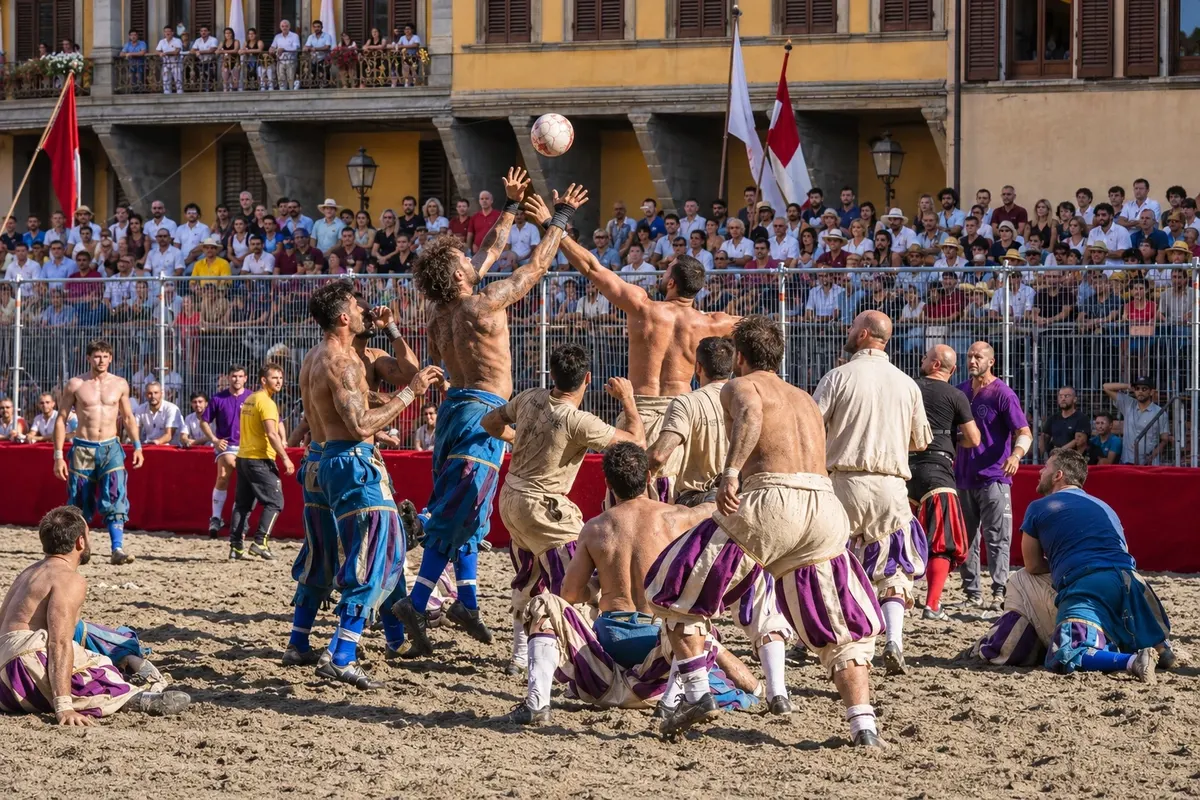
In June, Piazza Santa Croce in Florence becomes a sand arena for Calcio Storico, a Renaissance ball game played by the city’s four historic districts. The final takes place on the feast day of St. John, the city’s patron saint, and the celebrations end with fireworks that night.
 June/July/August/September
June through September, with evening performances.
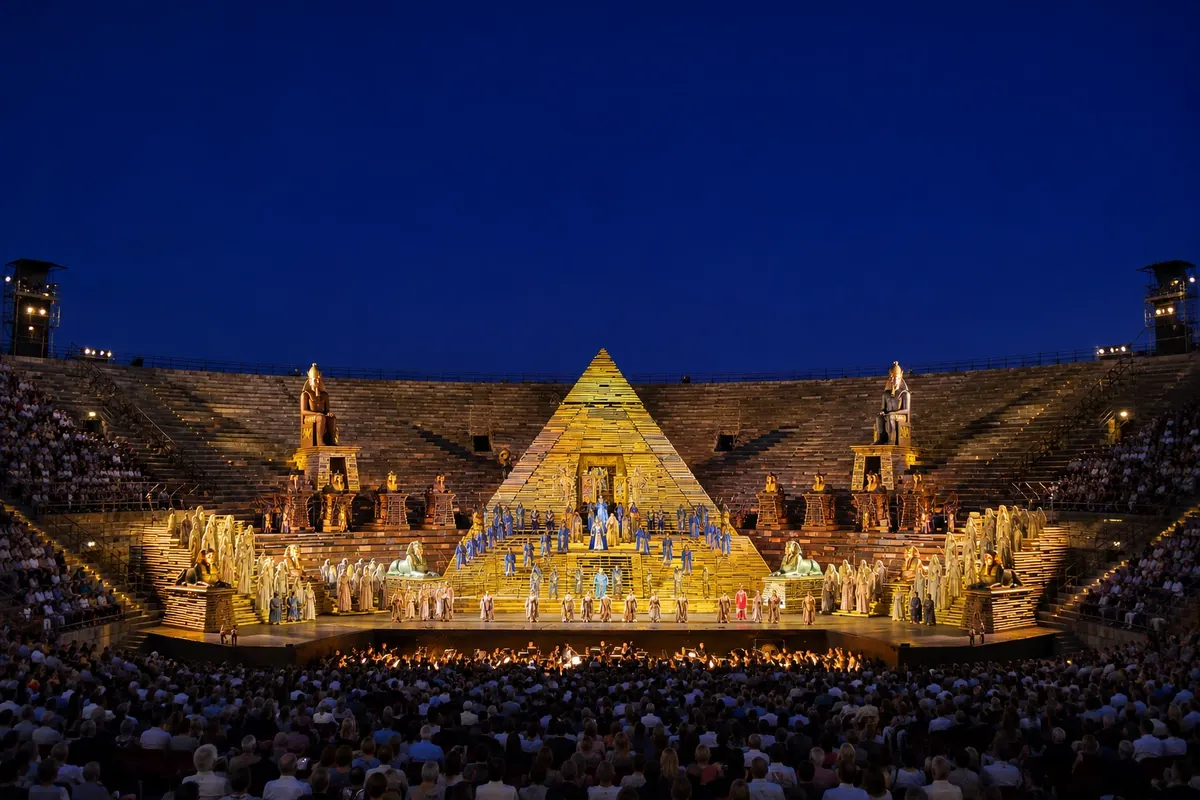
Every summer, Verona’s Roman amphitheater hosts a season of open-air opera. Aida, the opera that opened the festival in 1913, is a mainstay of the program.
 July
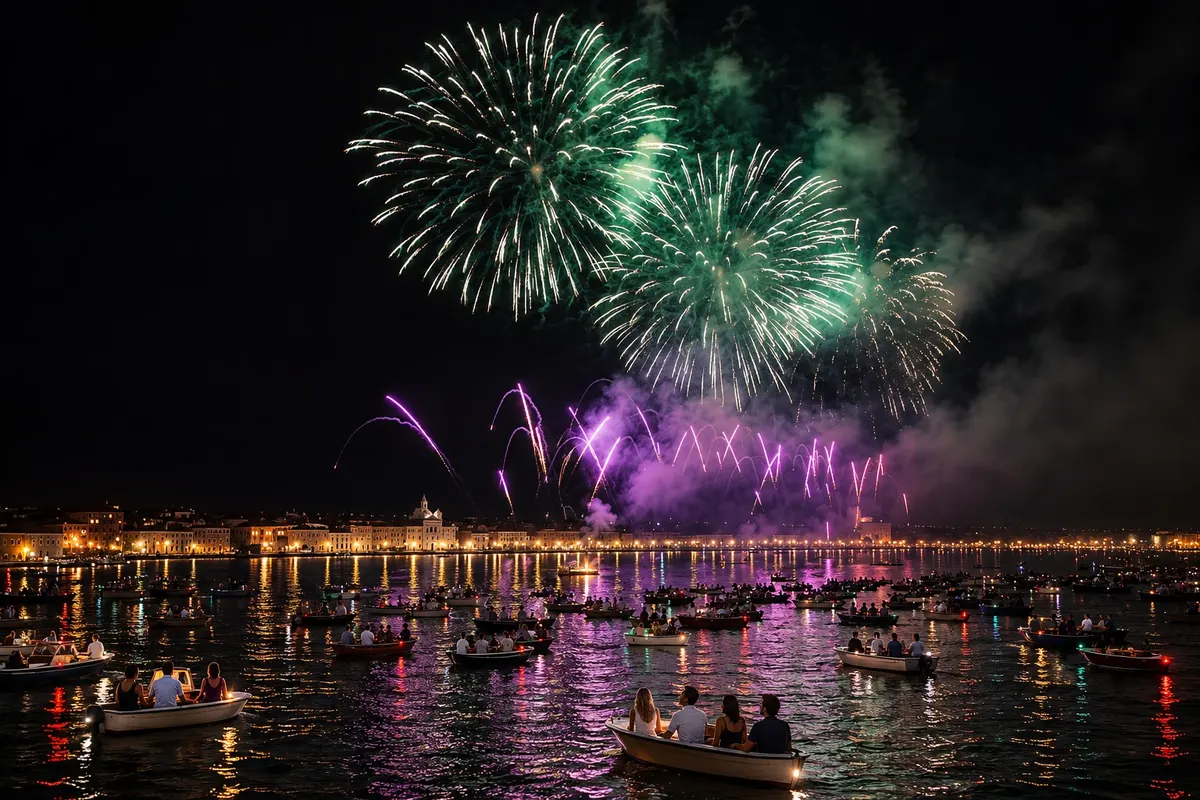
The third weekend in July: the fireworks are on Saturday night, and the religious celebration takes place on Sunday.
On the third weekend in July, Venice gives thanks for the end of the plague in 1577. A bridge of boats spans the Giudecca Canal to the Church of the Redeemer, residents dine aboard decorated boats in St. Mark’s Basin, and a grand fireworks display lights up the lagoon on Saturday night.
 July
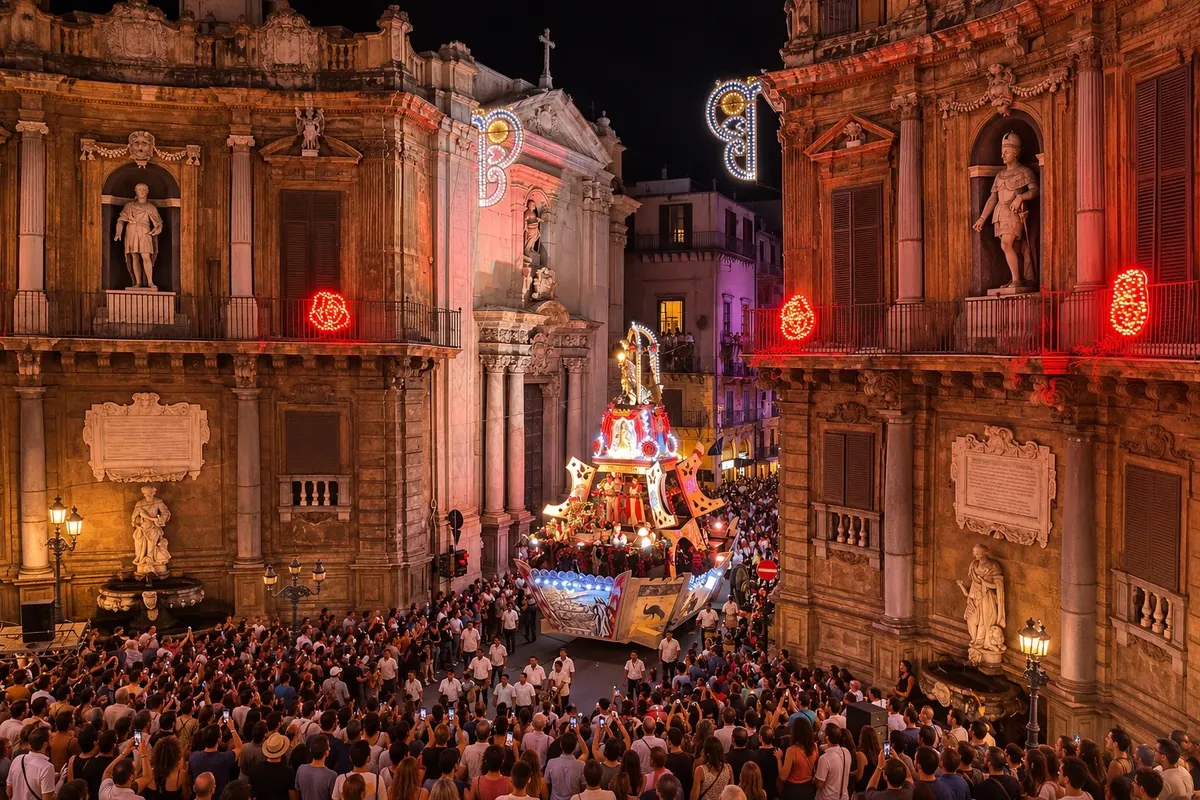
July 10–15. The main procession takes place on the night of July 14.
On the night of July 14, Palermo honors Saint Rosalia, known as the Santuzza, whom tradition credits with ending the plague. A triumphal float carries her statue along the Cassaro, the city’s oldest street, amid crowds, music, and performances. The night ends with fireworks over the sea.
Beyond the guide