The festival
What is Seville April Fair
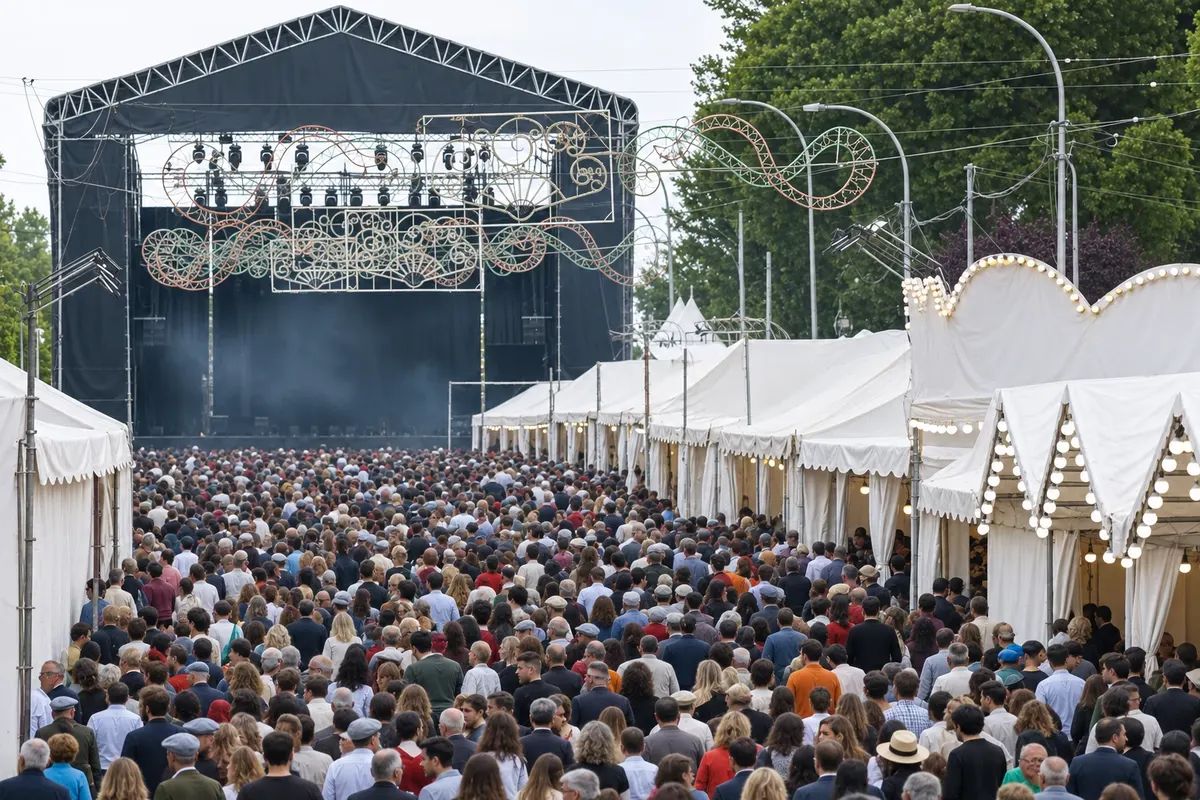
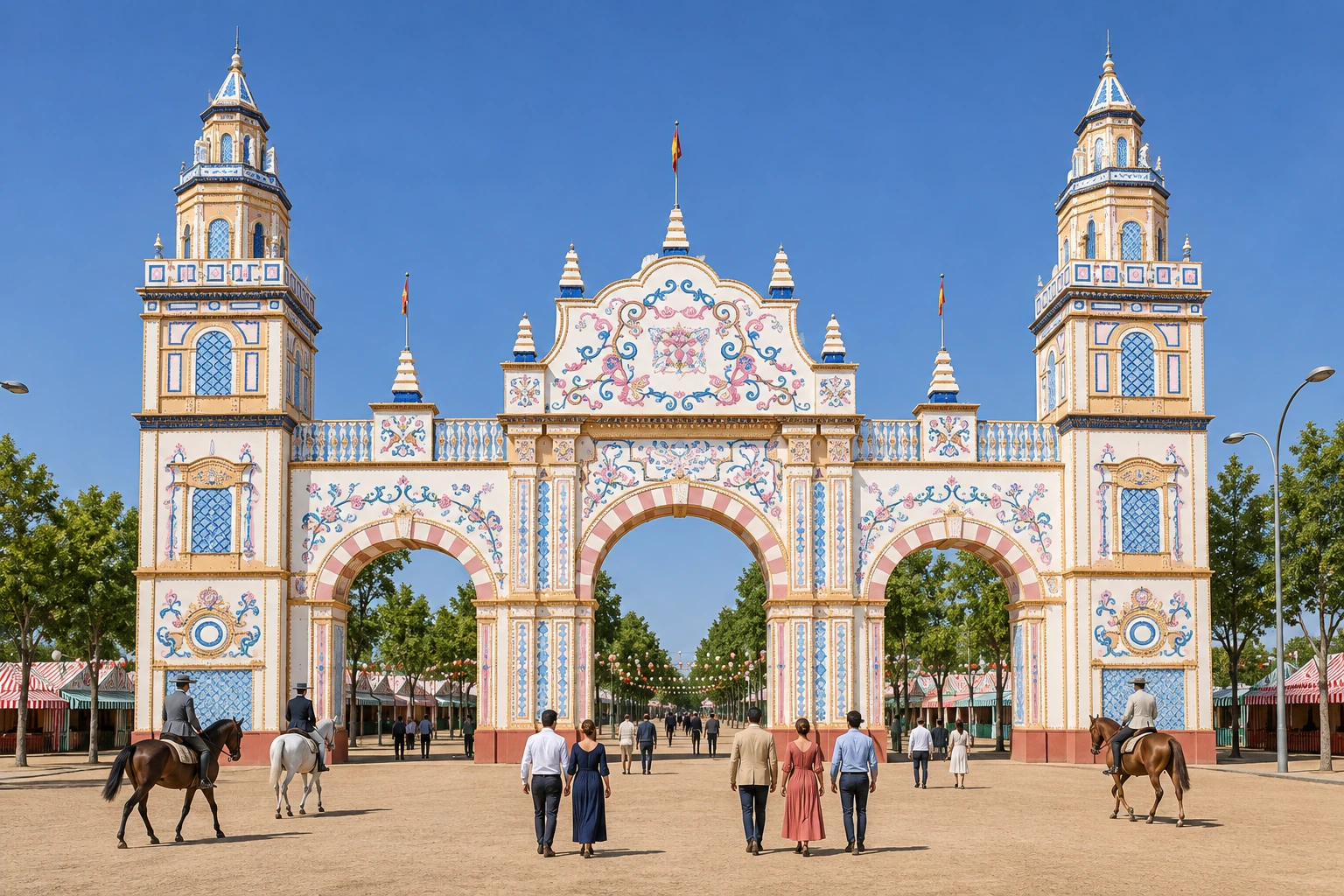
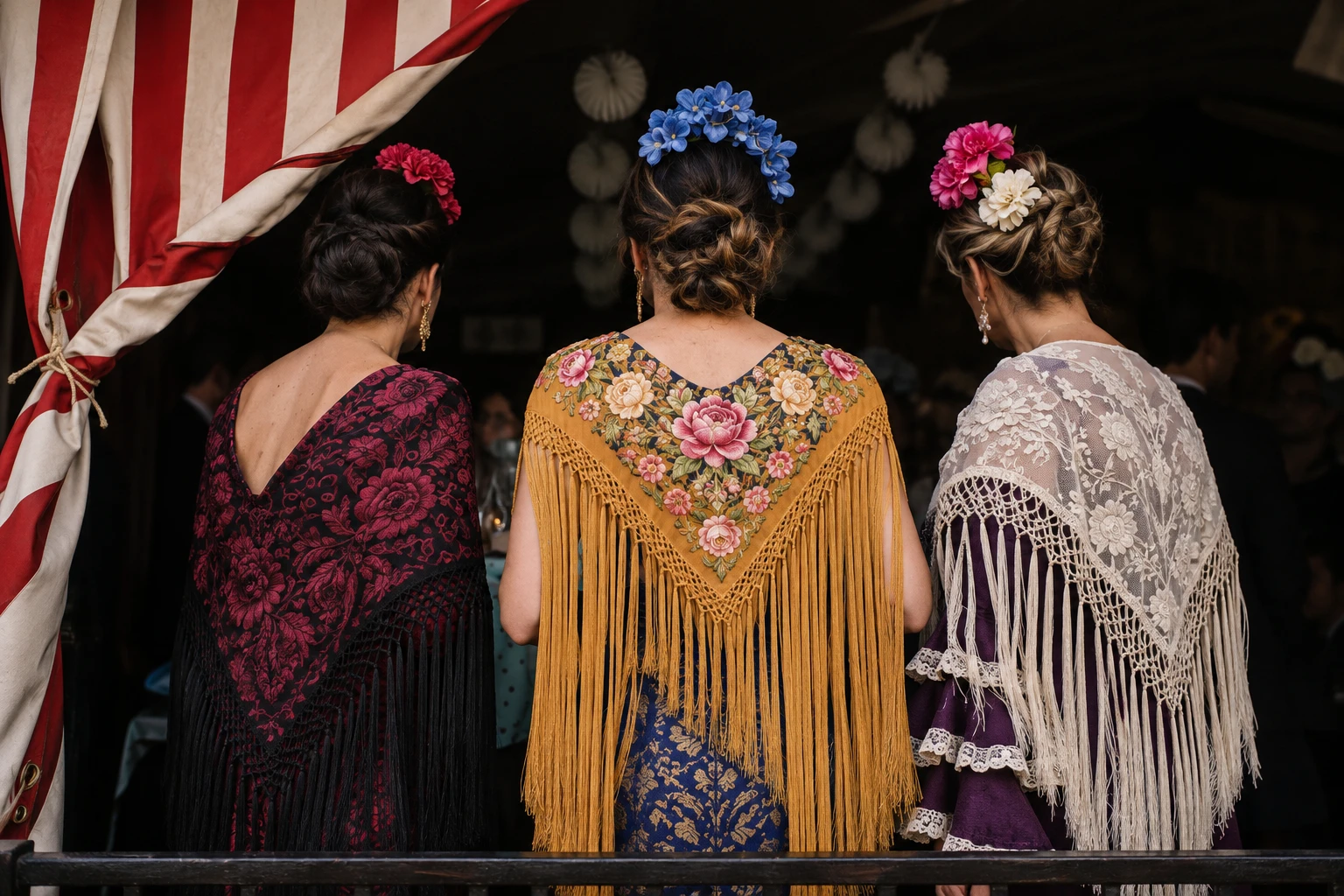
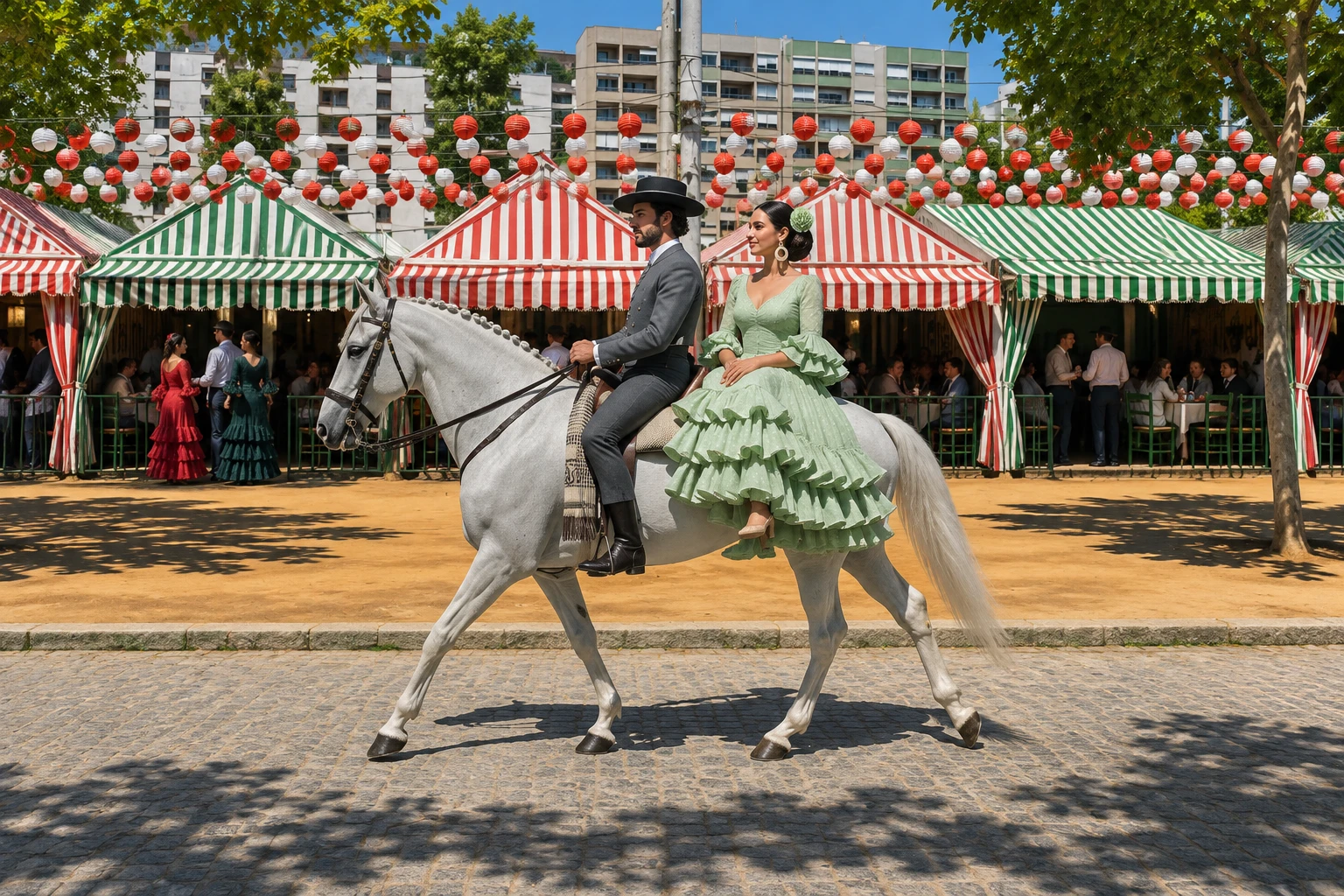
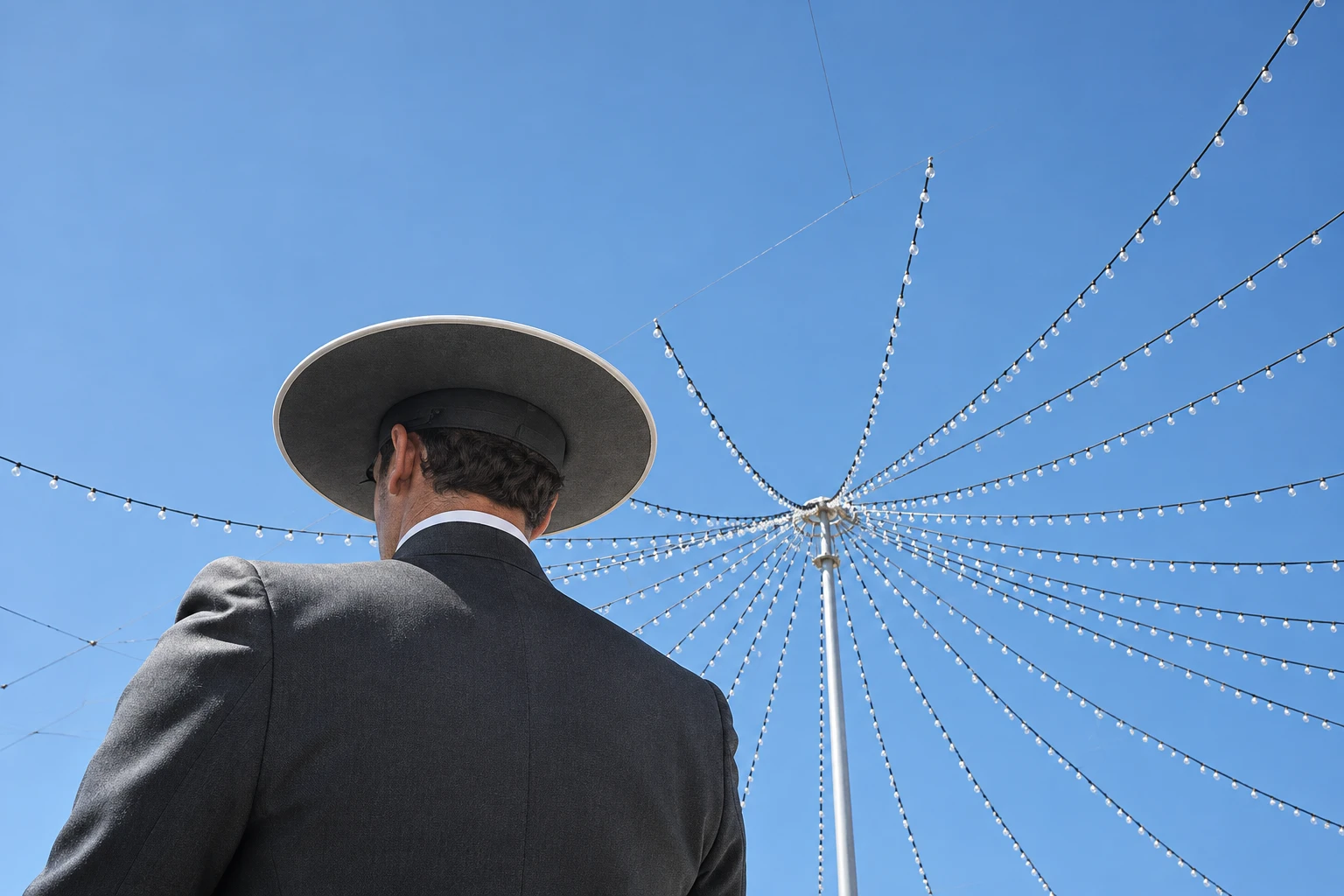
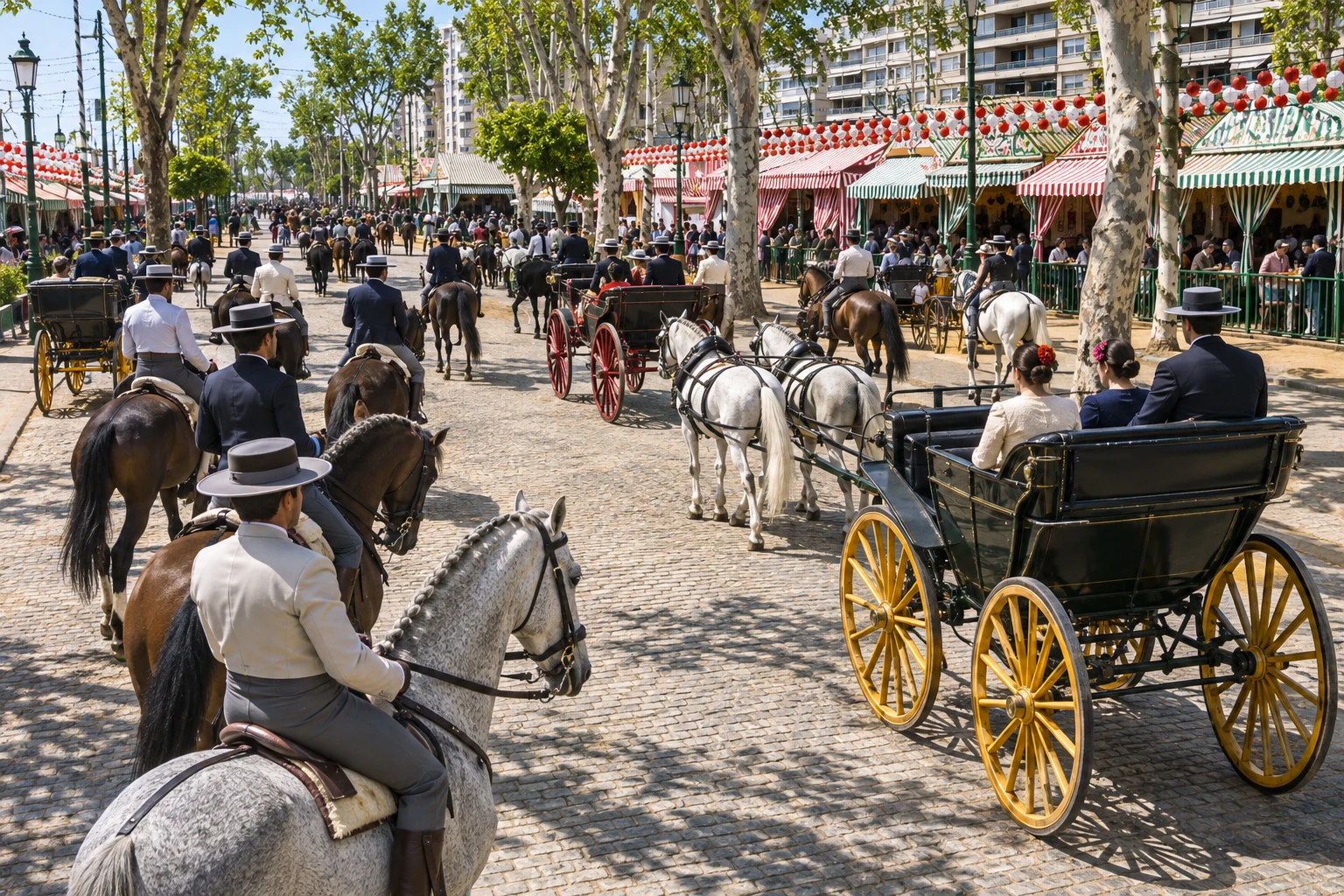
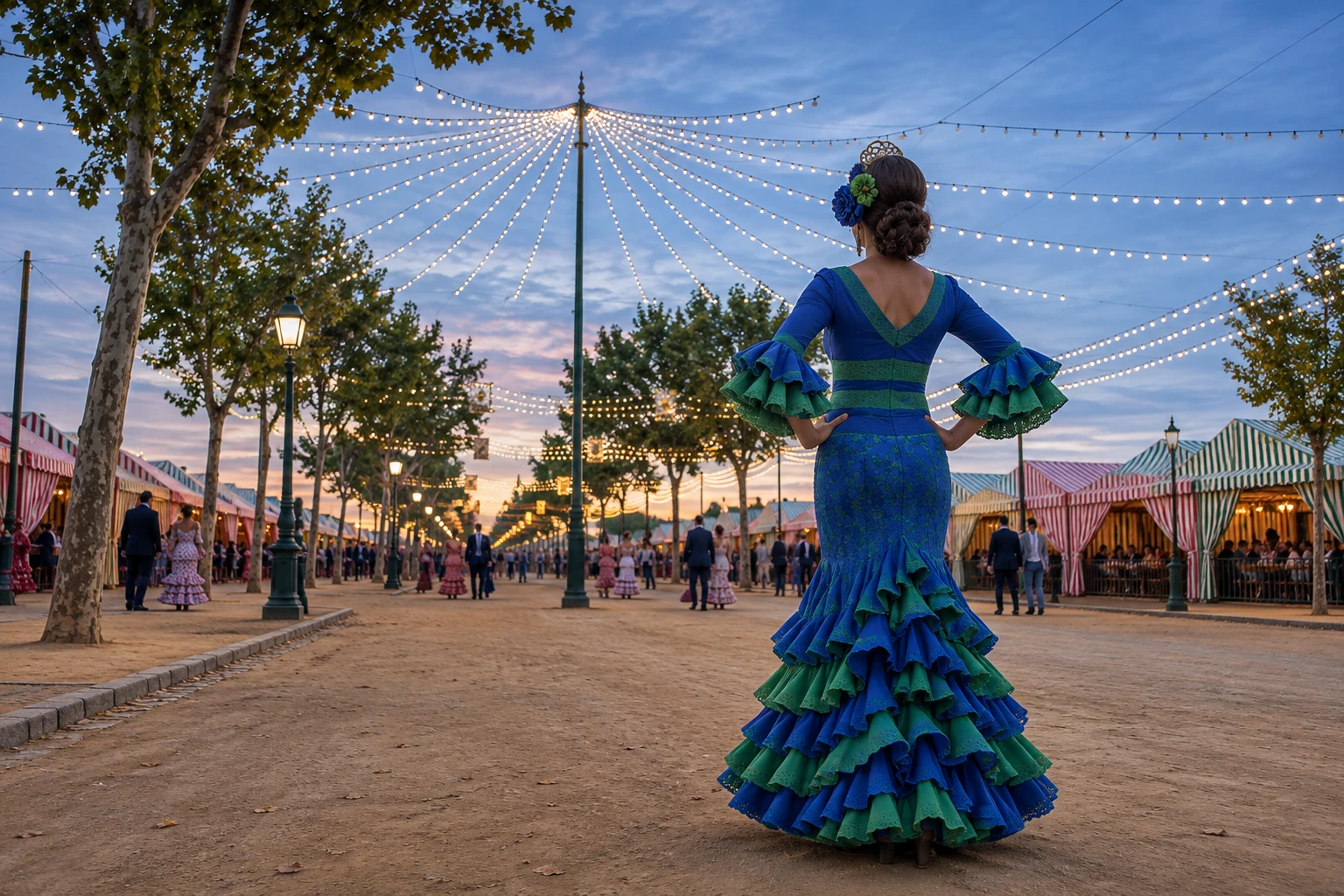
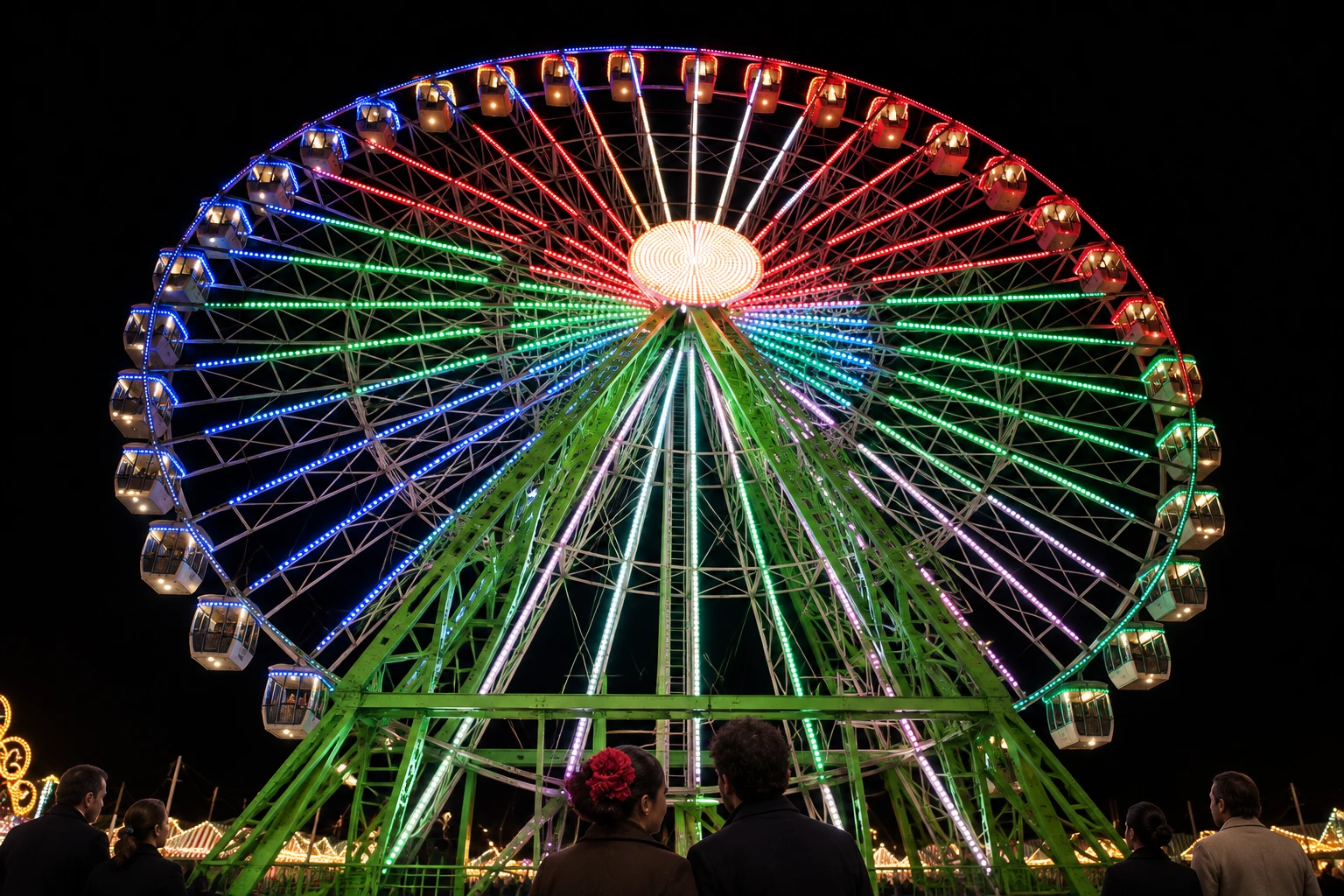
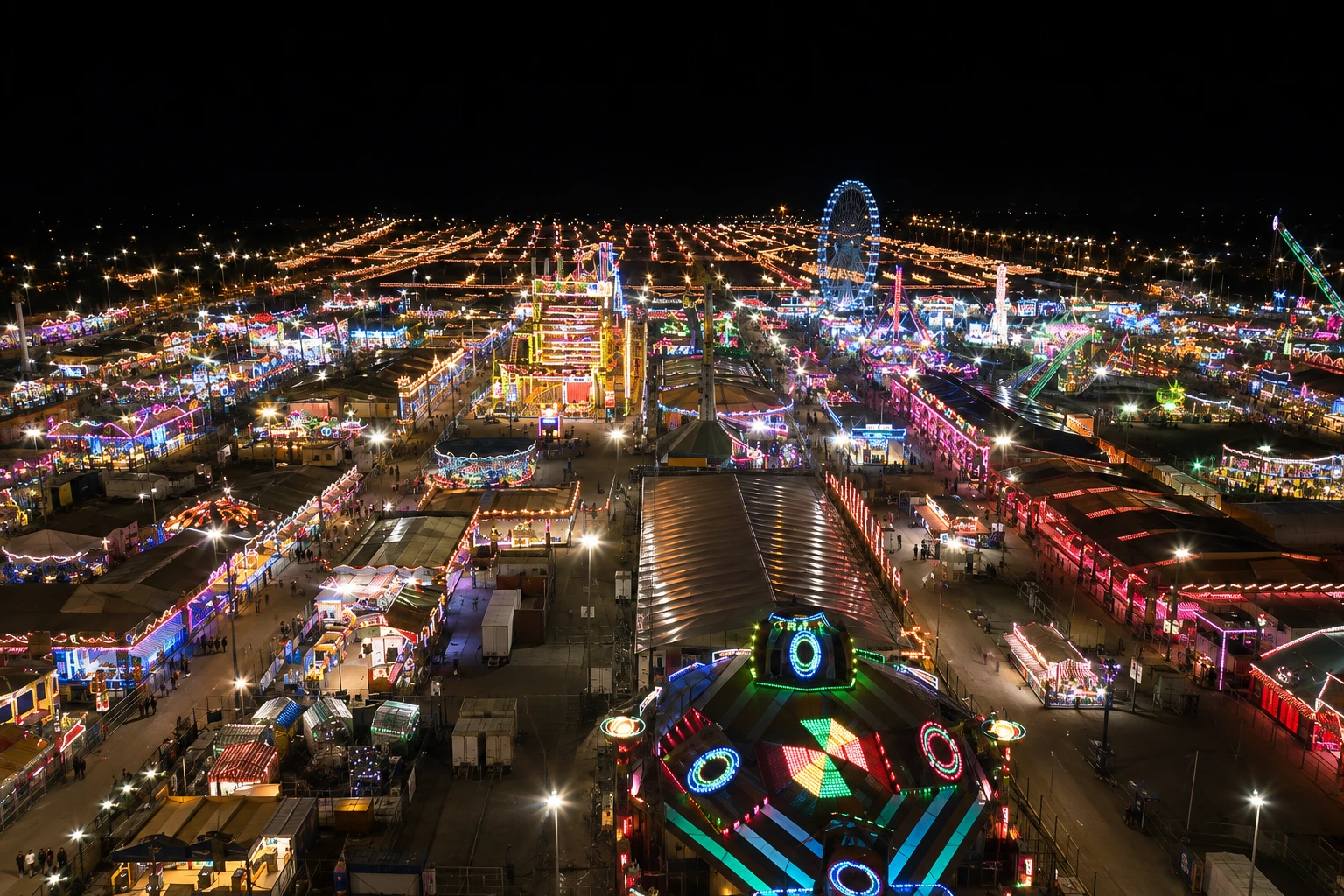
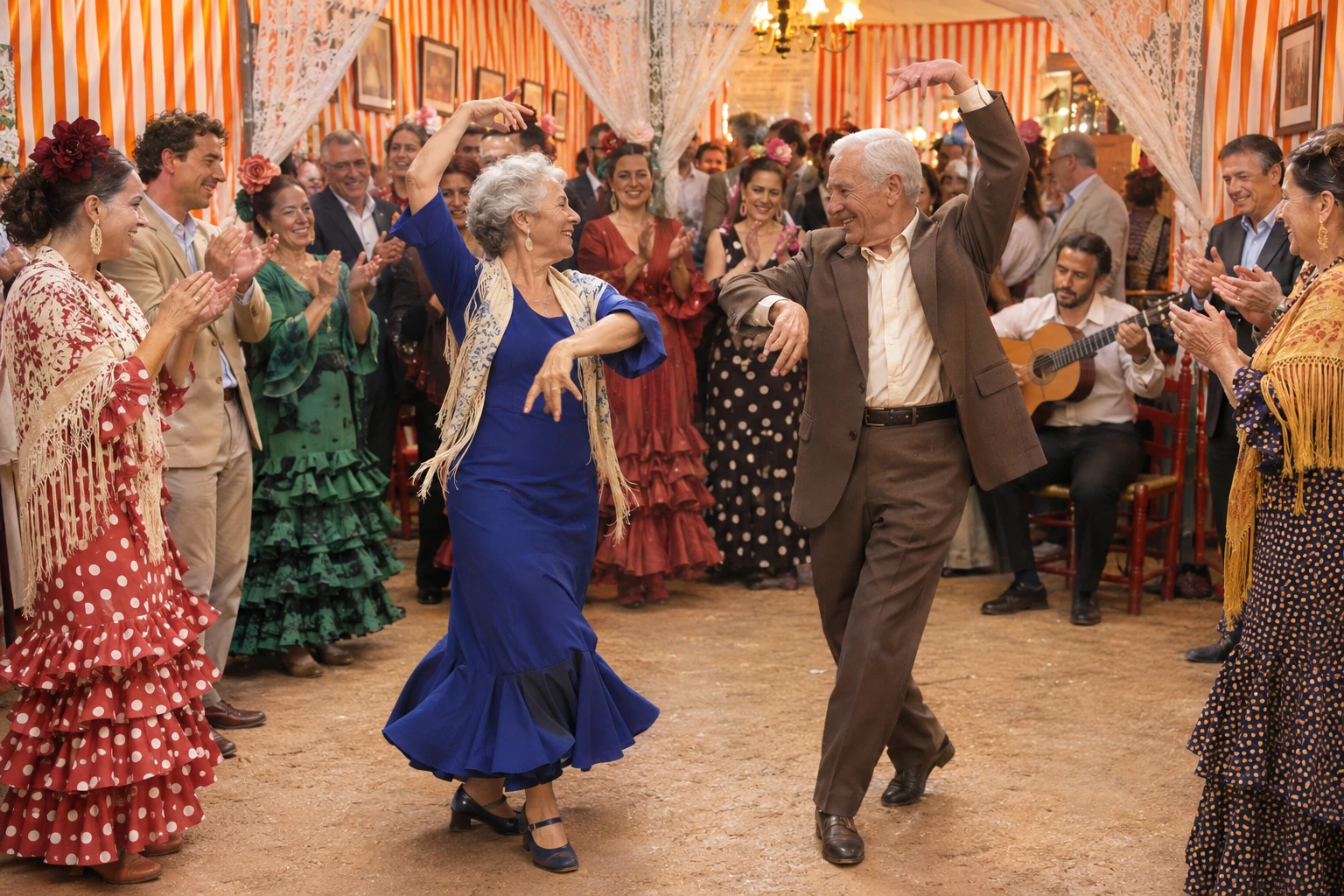
The Feria de Abril is Seville’s big spring festival. One or two weeks after Holy Week, the city sets up, on the other side of the river in the Los Remedios neighborhood, a temporary town of yellow dirt streets called the Real de la Feria, with hundreds of casetas—small striped tents decorated with paper lanterns, the farolillos. For about a week, locals and visitors spend day and night there, eating, drinking, talking and dancing sevillanas, with women dressed in flamenca outfits and many men in short suits and wide-brimmed hats.
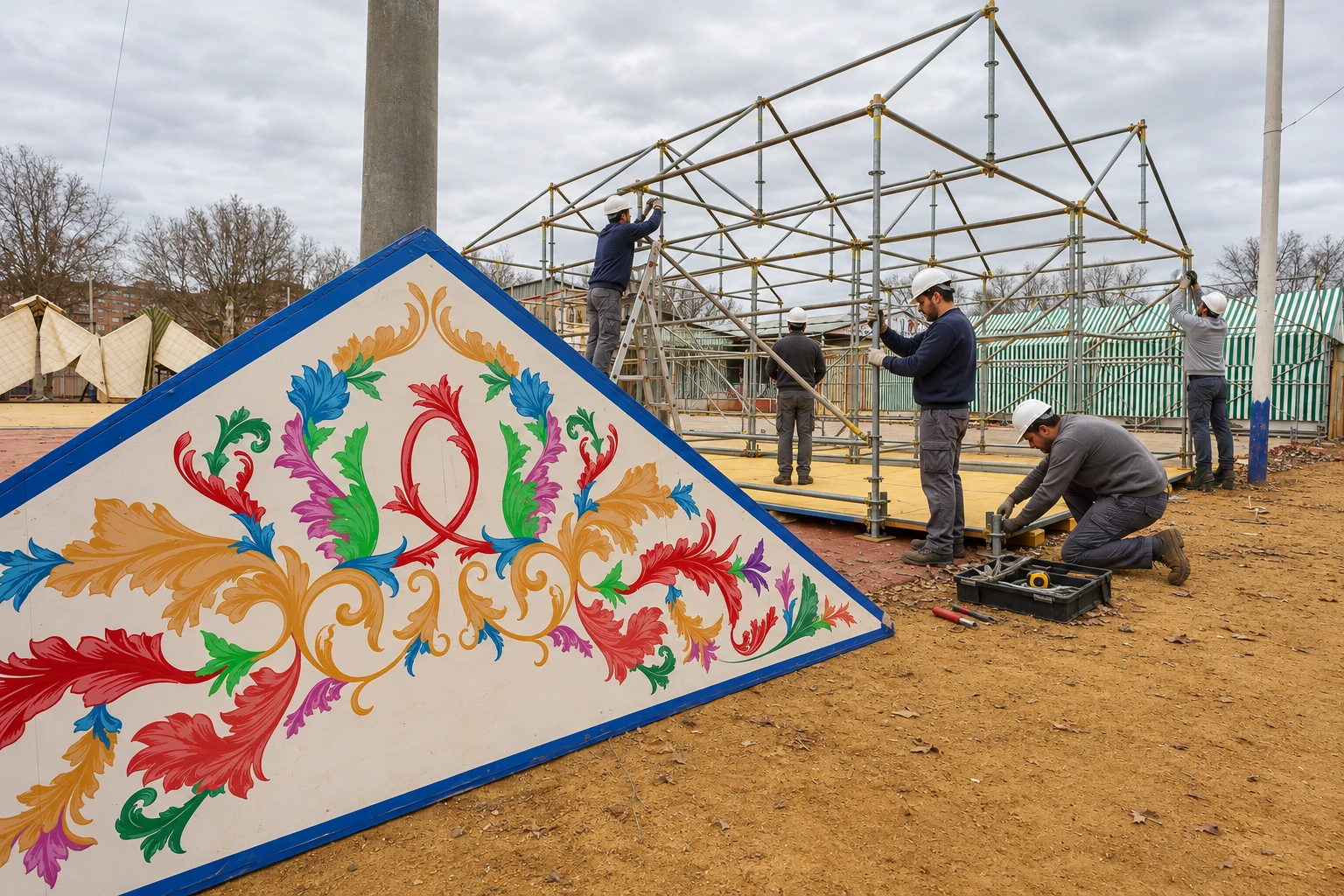
The event began in 1847 as a cattle fair, proposed to the city council by two councilors, José María Ybarra and Narciso Bonaplata, at the Prado de San Sebastián near the center. Over time, livestock trade became less important and the festivities moved to the foreground, with family, friends, company and association casetas. Since 1973 the Real has been in its current grounds between Los Remedios and Tablada, and it is assembled and dismantled every year.
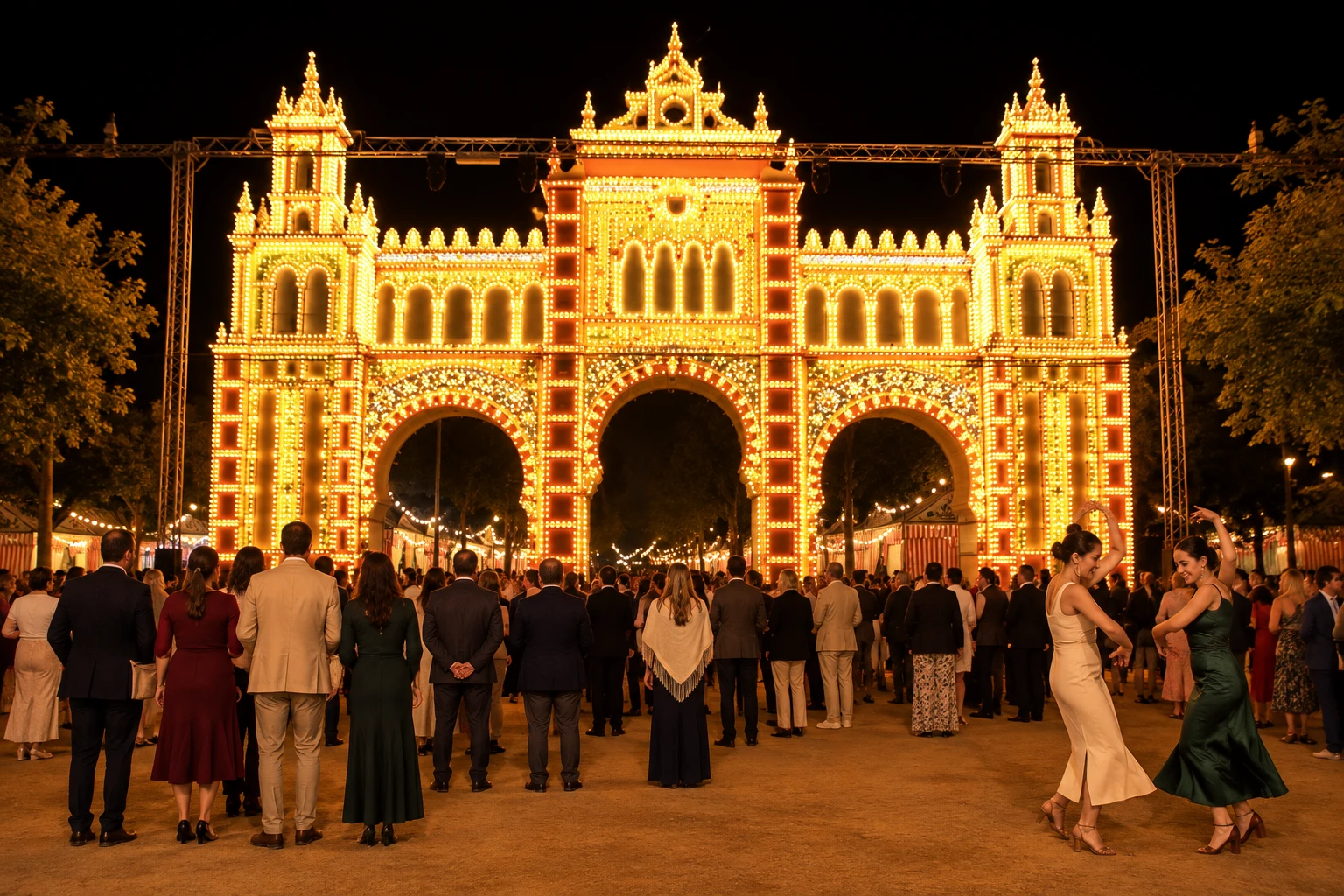
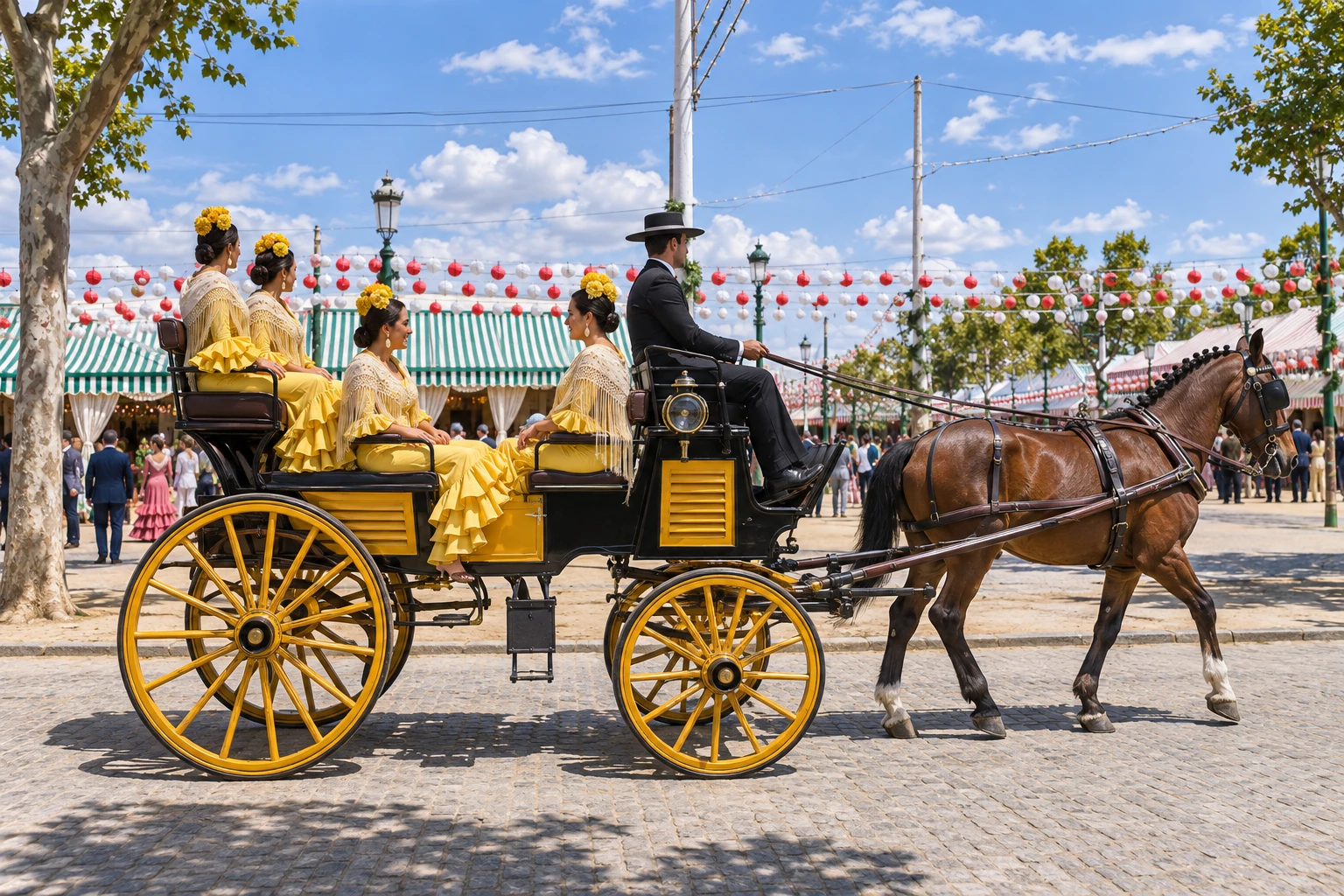
Everything starts on the noche del pescaíto, when caseta owners dine on fried fish with their guests. At midnight comes the alumbrao, the lighting of the lights on the portada, the large entrance gate whose design changes each year, and of the streets of the Real. From then on, each day follows two rhythms. From late morning to late afternoon the parade of horses and carriages fills the streets of the Real: riders with amazonas side-saddled, carriages pulled by decorated horses, and people moving from caseta to caseta. At night the music rises inside the casetas, sevillanas are danced in circles and the activity continues late into the night.
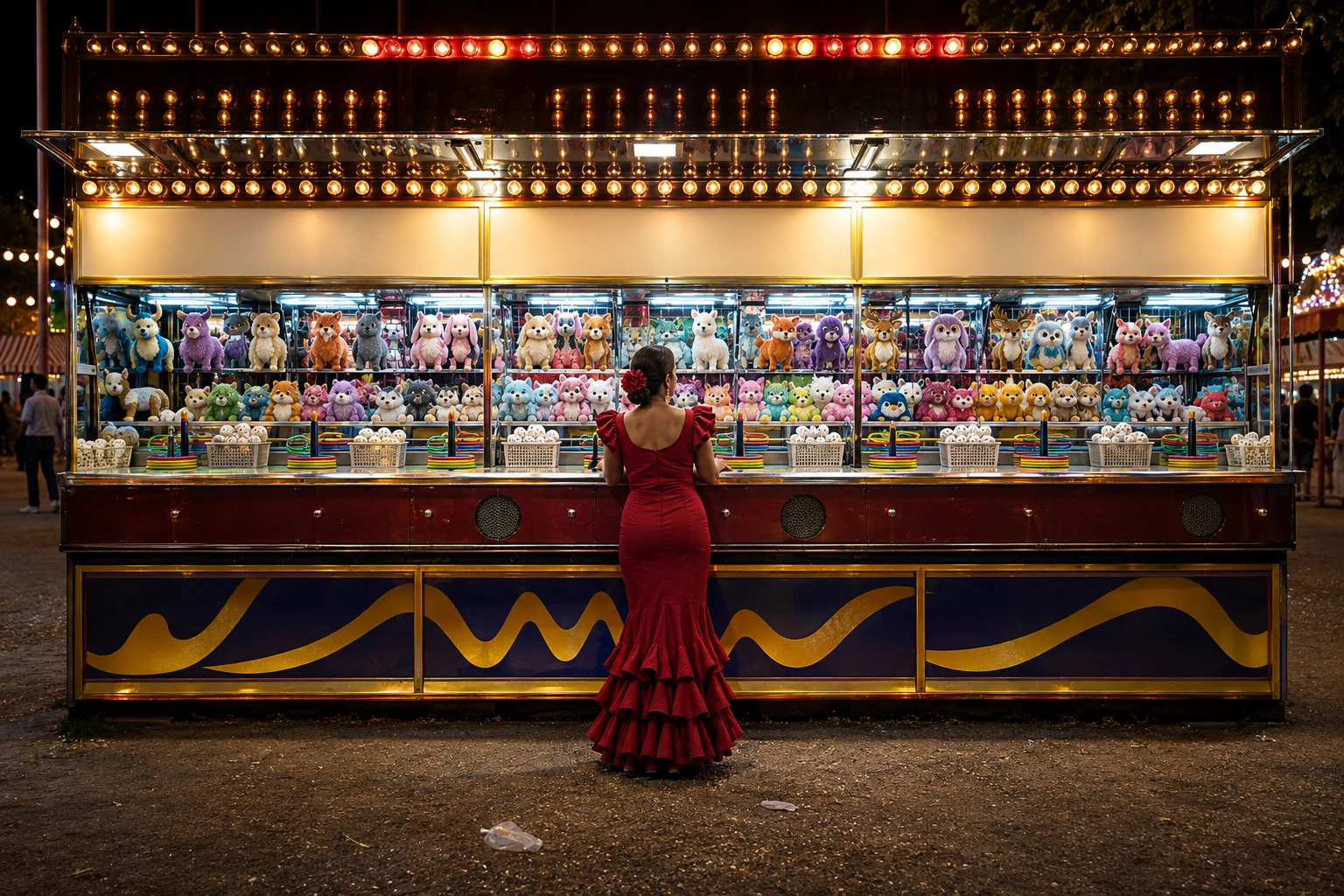
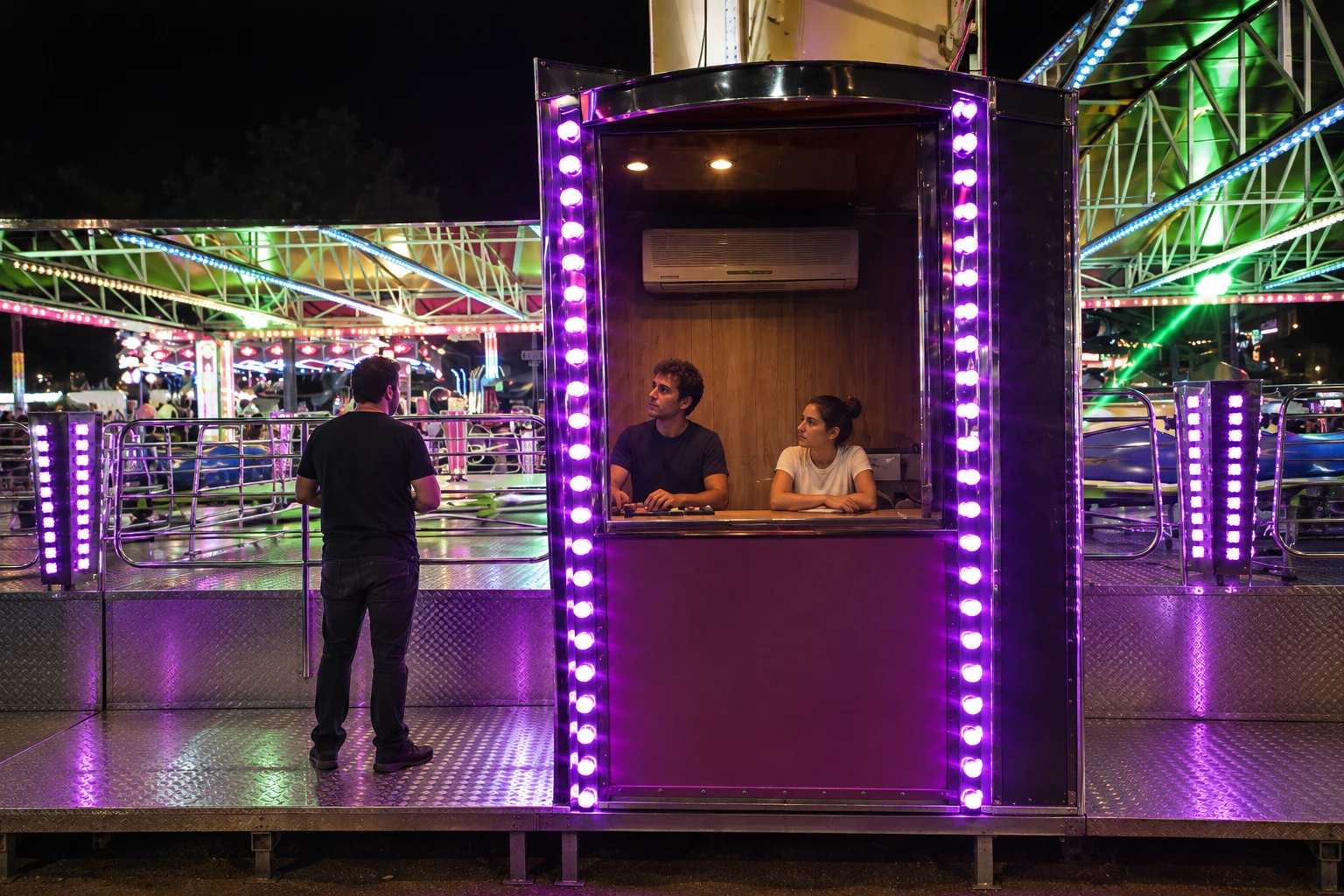
Most casetas are private and only admit members and guests; for visitors without local acquaintances there are public casetas open to everyone, such as those run by the municipal districts and the Caseta de Sevilla. Beside the Real is the Calle del Infierno, the amusement park with rides, stalls and circus shows, nicknamed for its noise and lights. The last night ends with fireworks over the Guadalquivir at midnight, and the turning off of the portada lights closes the fair until the next year.
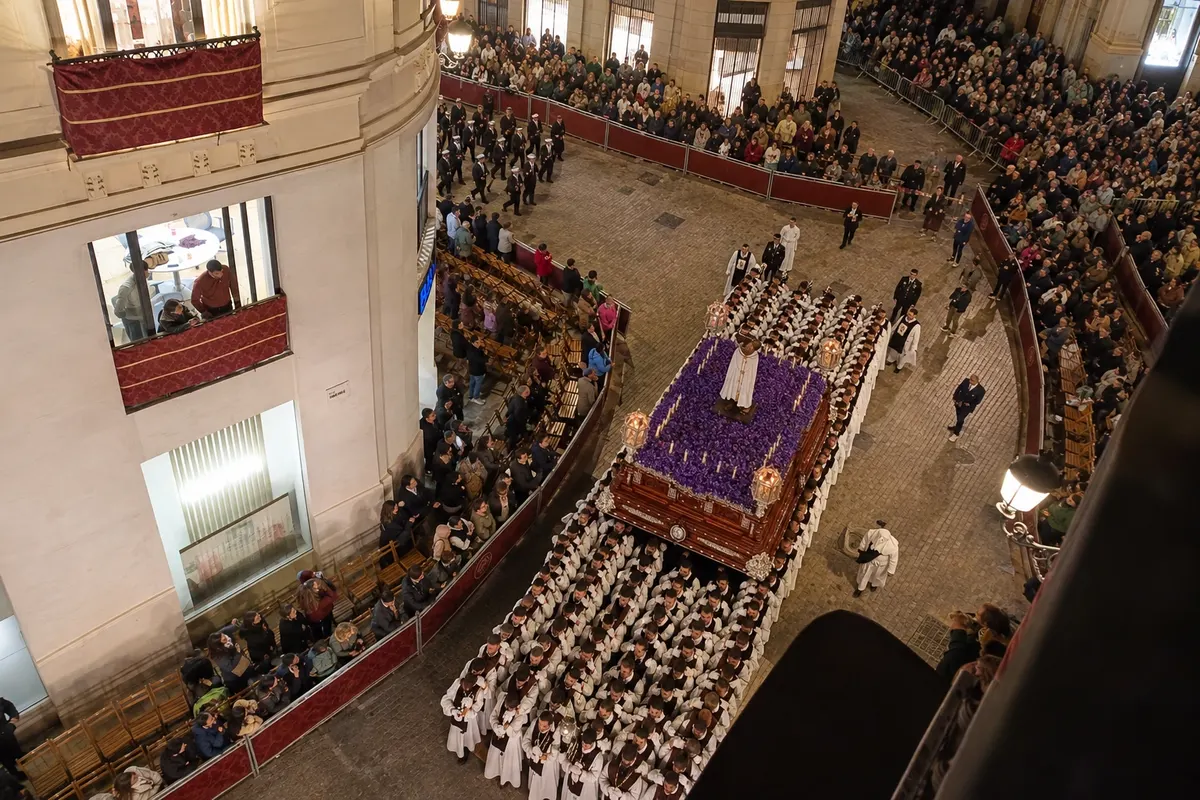
The fair is the highlight of the Fiestas de Primavera, which begin with Holy Week, and it shows a side of Seville life made of gatherings, festive dress and dancing. For visitors, it’s worth walking through the Real by day to see the horses and costumes, returning at night to see the lights, and using the week to explore the historic center and the Triana neighborhood nearby.
What to eat
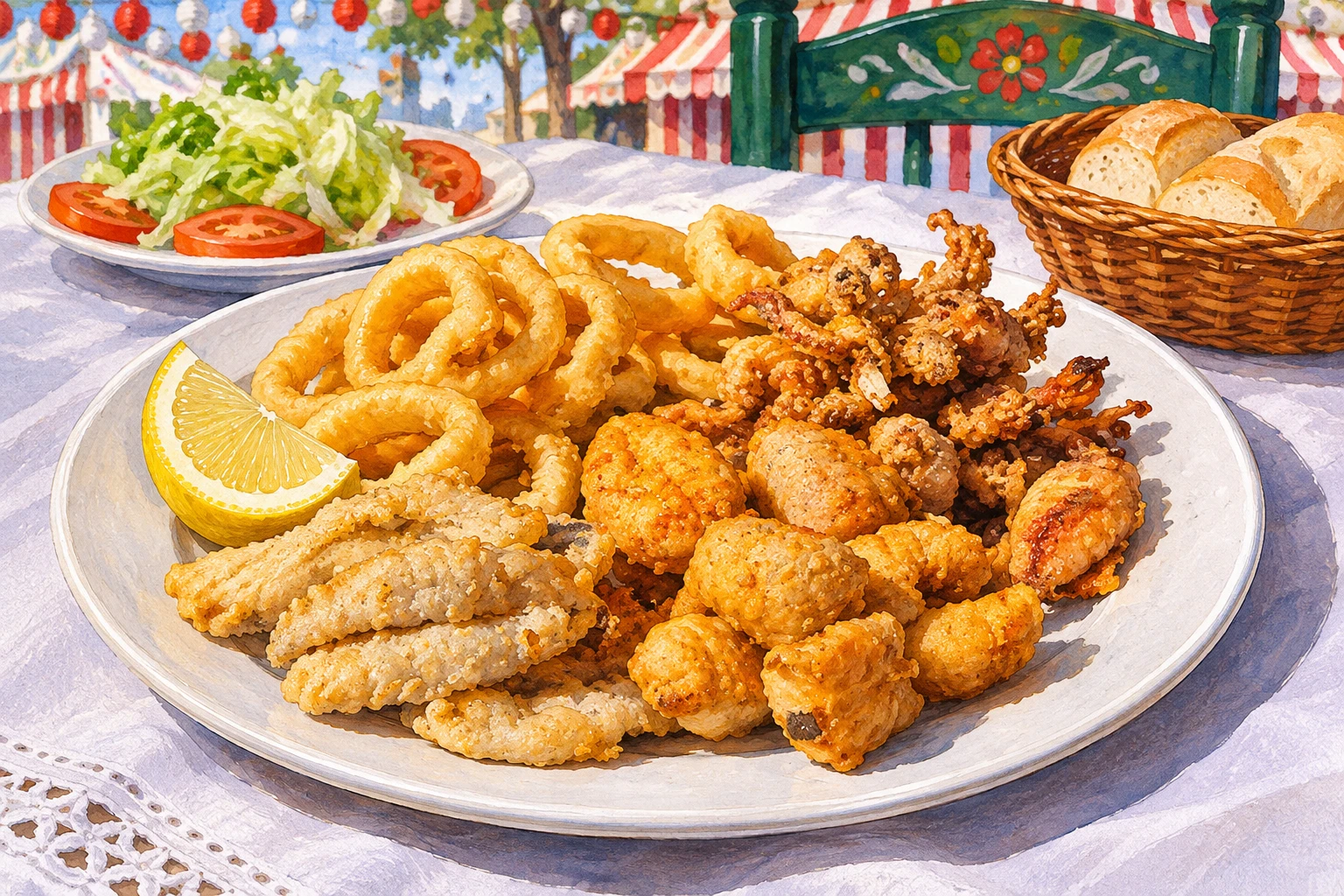
The pescaíto frito, fried fish and seafood, opens the fair on the first night and appears throughout the week. In the casetas you’ll find jamón, cheeses, tortilla de patata, shrimp and prawns, montaditos and other small dishes to share. For drinks, the tradition is rebujito, a mix of manzanilla—the dry wine from Sanlúcar de Barrameda—with lemon soda and ice, served in pitchers, and also fino wine.


 Brazil
 Argentina
 Bolivia
 Chile
 Colombia
 Ecuador
 Guyana
 French Guiana
 Falkland Islands (Malvinas)
 Paraguay
 Peru
 Suriname
 Uruguay
 Venezuela
 Germany
 Austria
 Belgium
 Croatia
 Denmark
 Finland
 France
 Greece
 the Netherlands
 Hungary
 Ireland
 Iceland
 Italy
 Luxembourg
 Norway
 Poland
 Portugal
 the United Kingdom
 the Czech Republic
 Sweden
 Switzerland
 Turkey
 Canada
 the United States
 Mexico
 the Dominican Republic
 South Africa
 Australia
 Fiji
 New Zealand
 Papua New Guinea

 March/April