Salmorejo cordobés
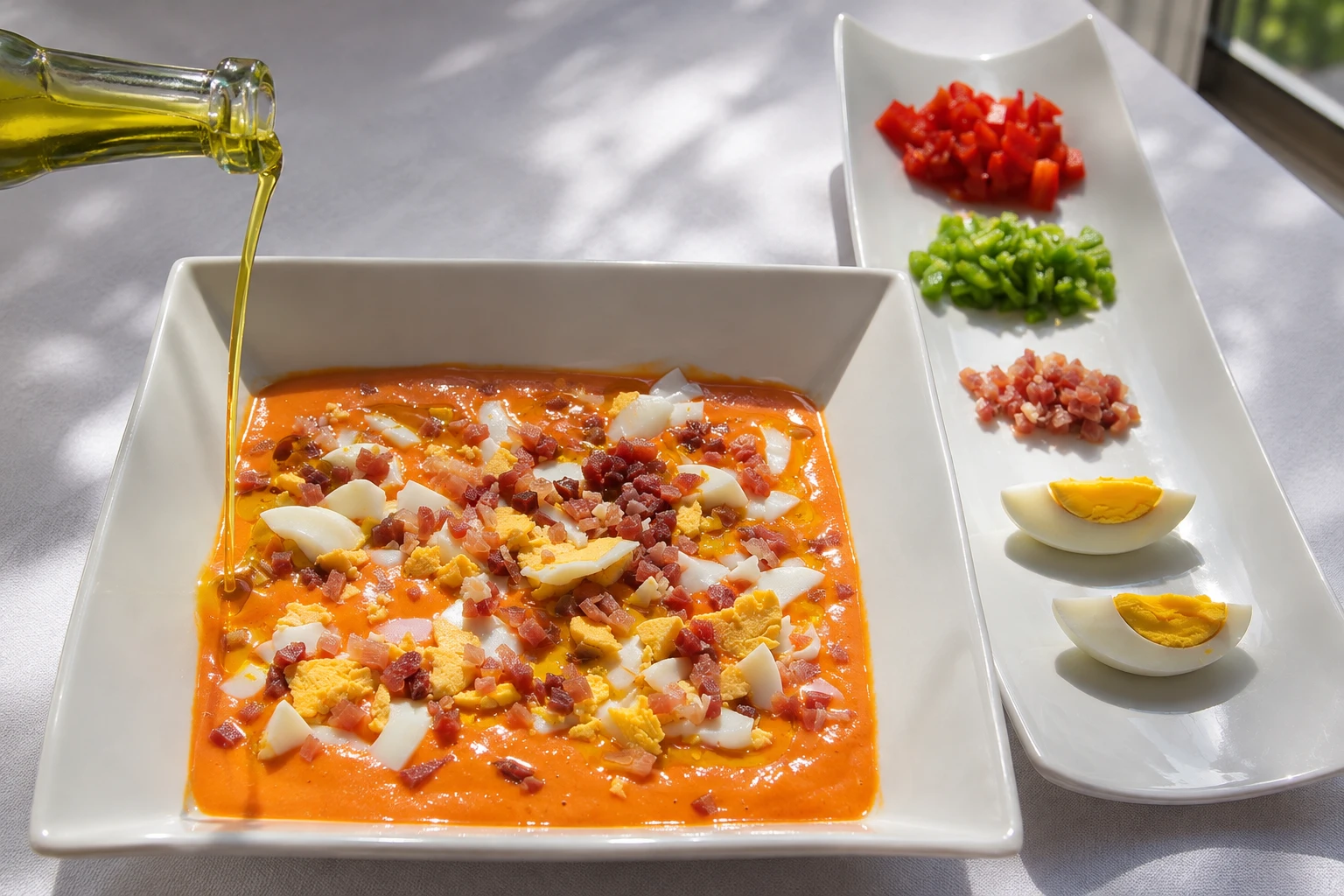
Cold, thick cream of tomato, bread, garlic, olive oil and salt, served with chopped hard‑boiled egg and ham on top. It is Córdoba’s signature dish, with its own gastronomic brotherhood and studies by the city’s university.
Culture · Córdoba
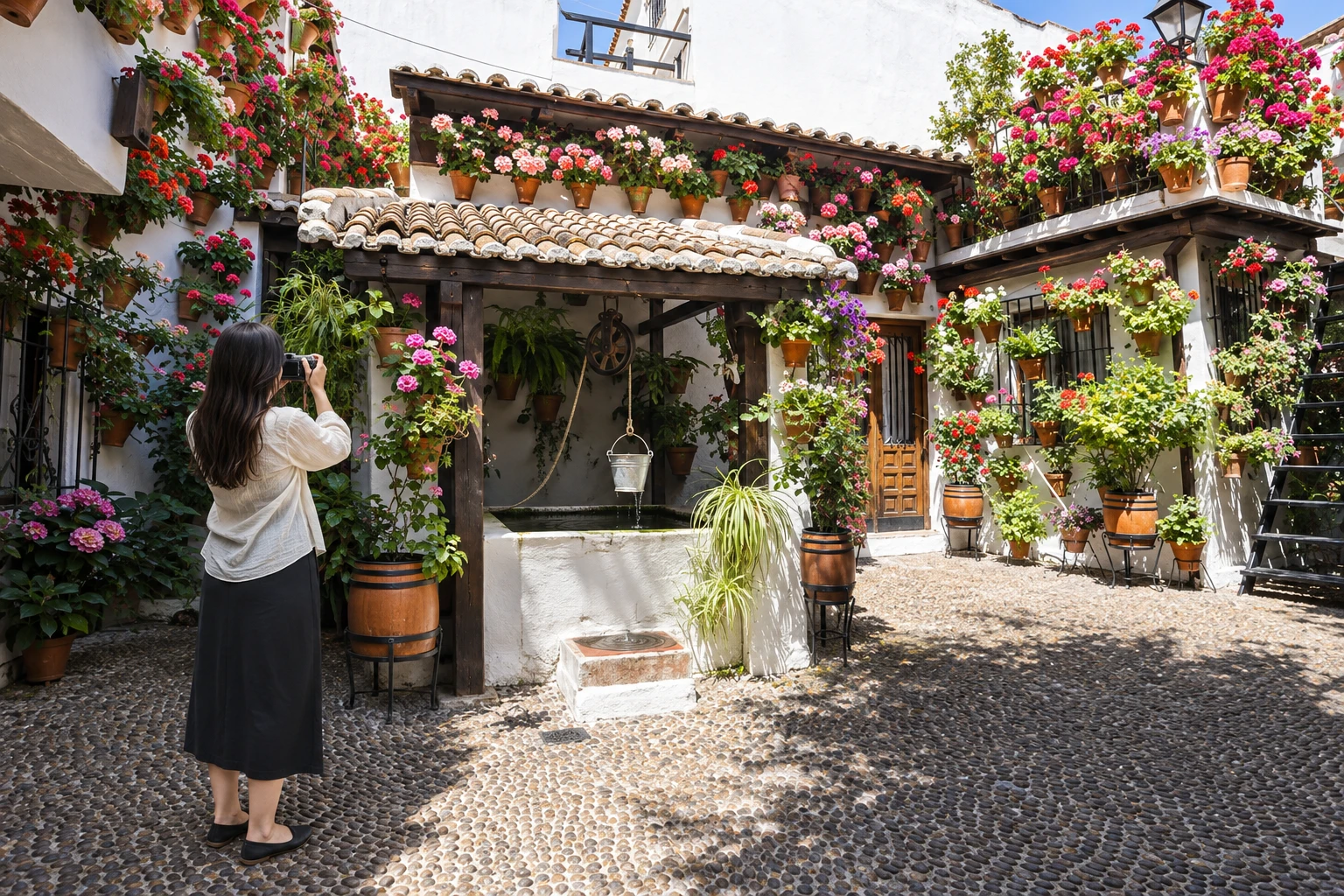
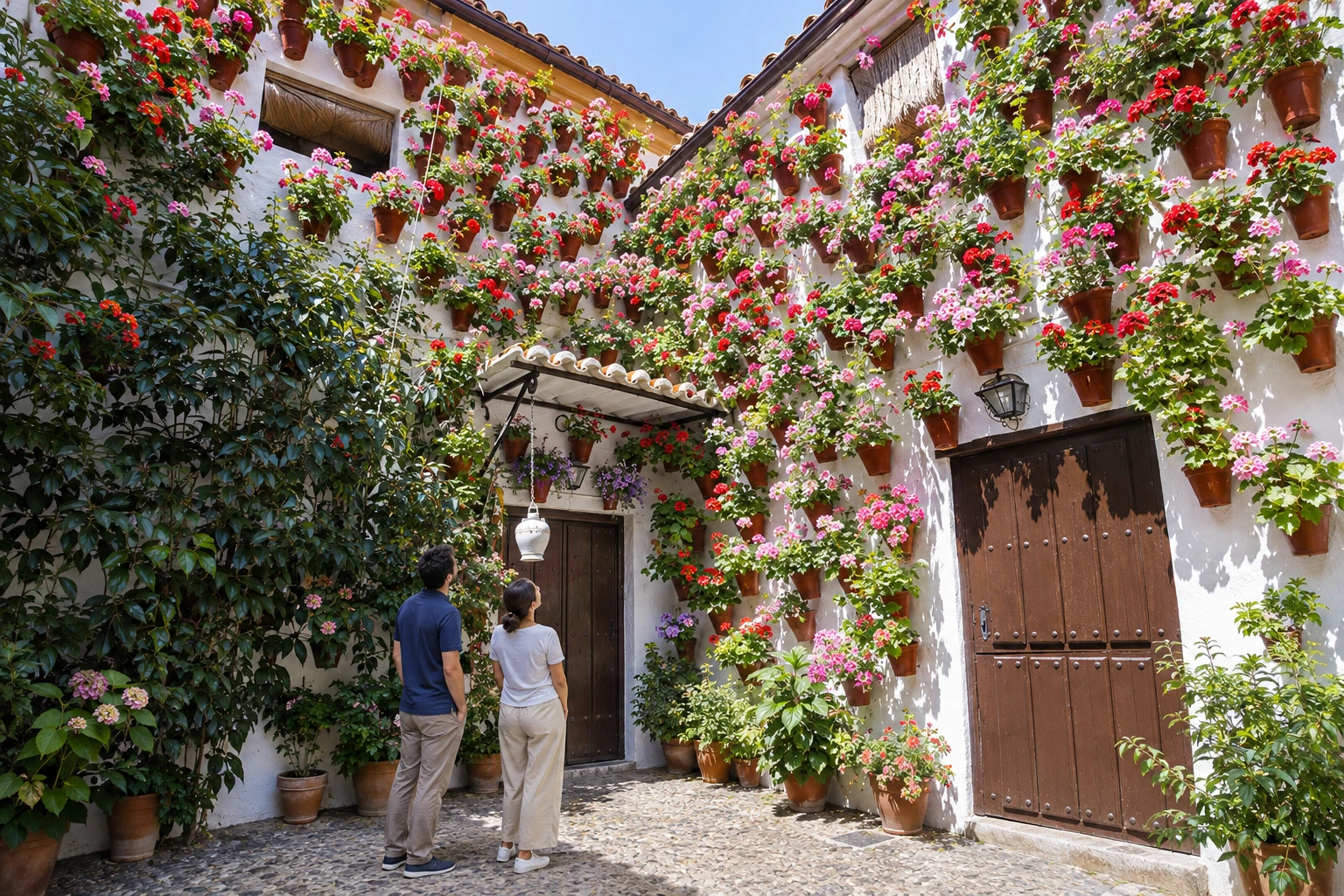
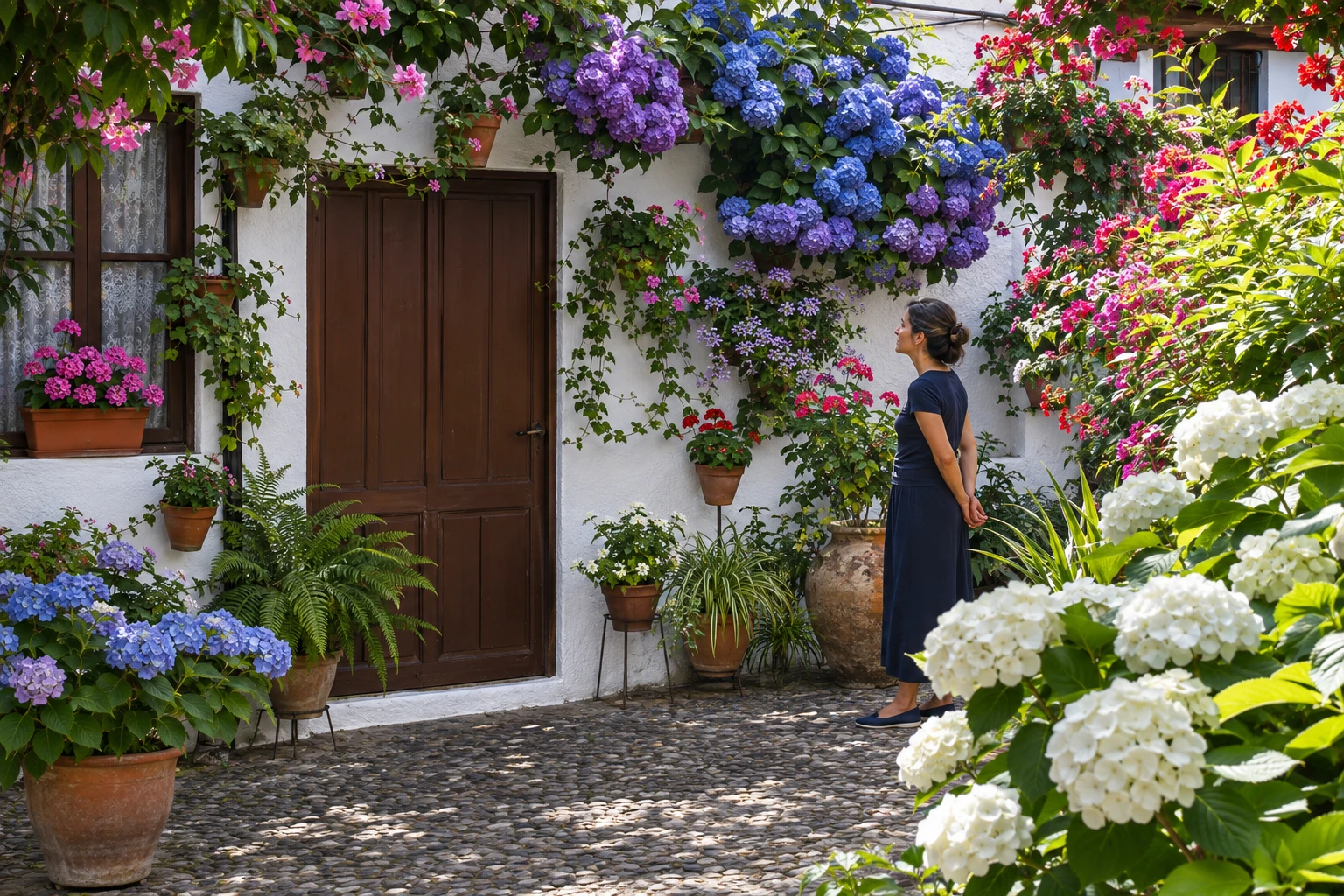
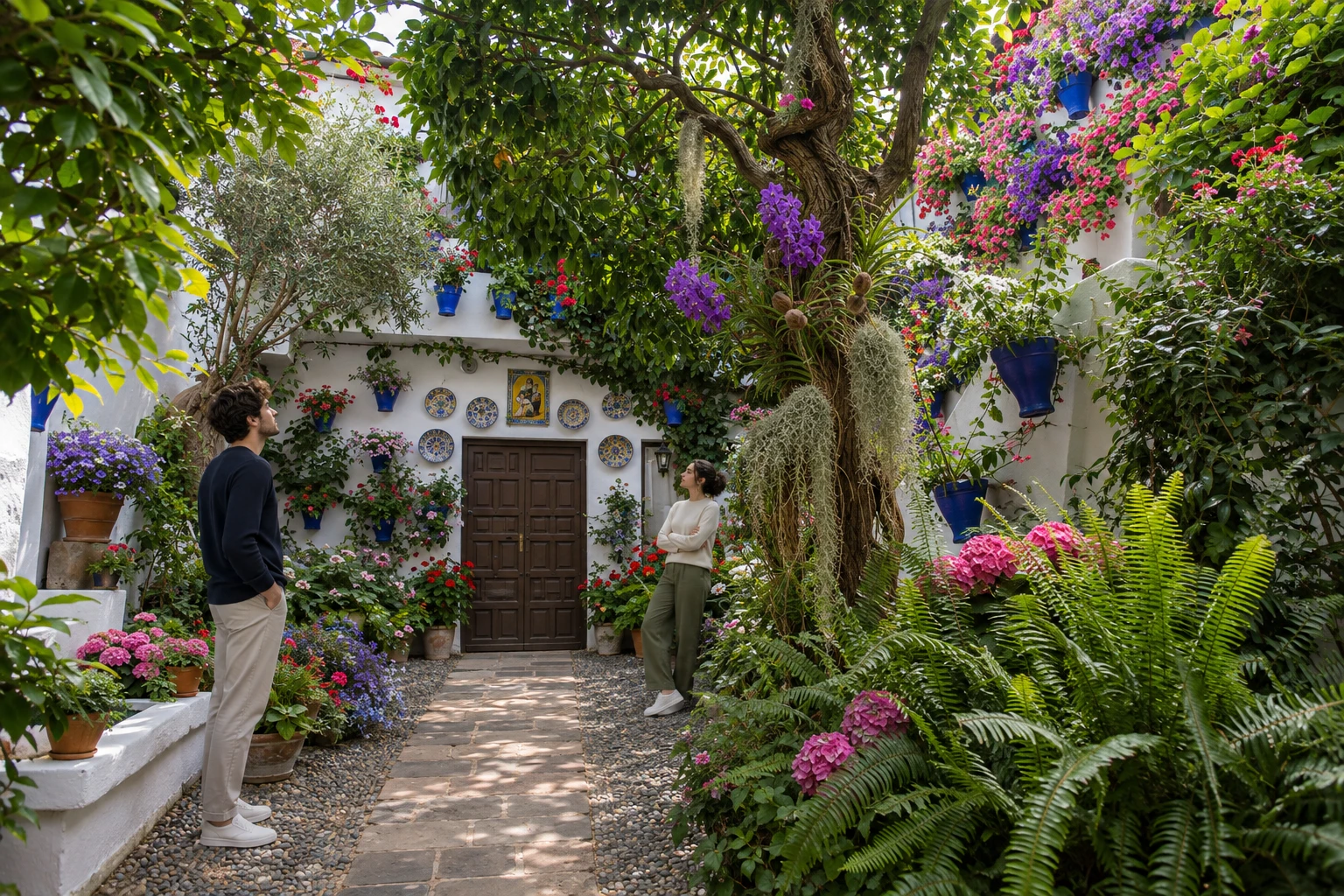
In May, residents of Córdoba in Andalusia open the patios of their homes—filled with pots of flowers—to the public in a municipal contest that has existed since 1921 and is on UNESCO’s list of intangible heritage; it takes place during the month of the Cruces de Mayo, the flowered balconies and the city fair.
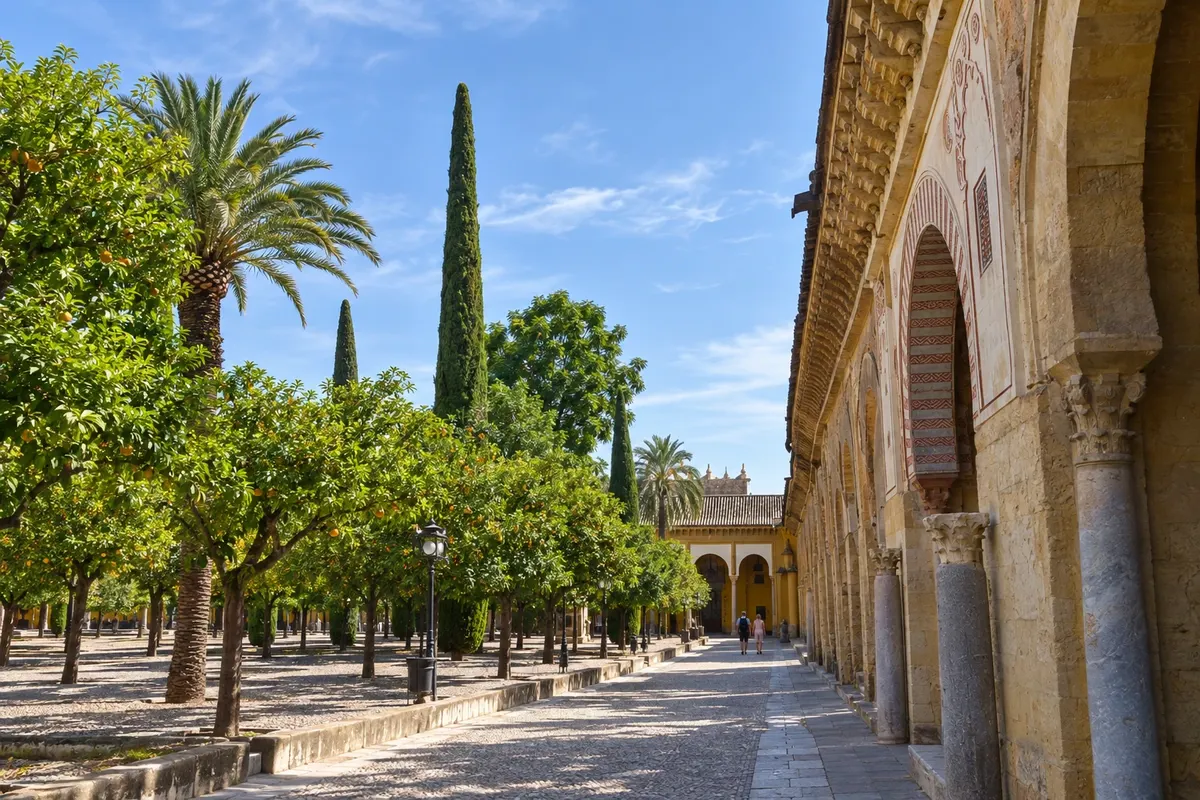
In the photo: Córdoba
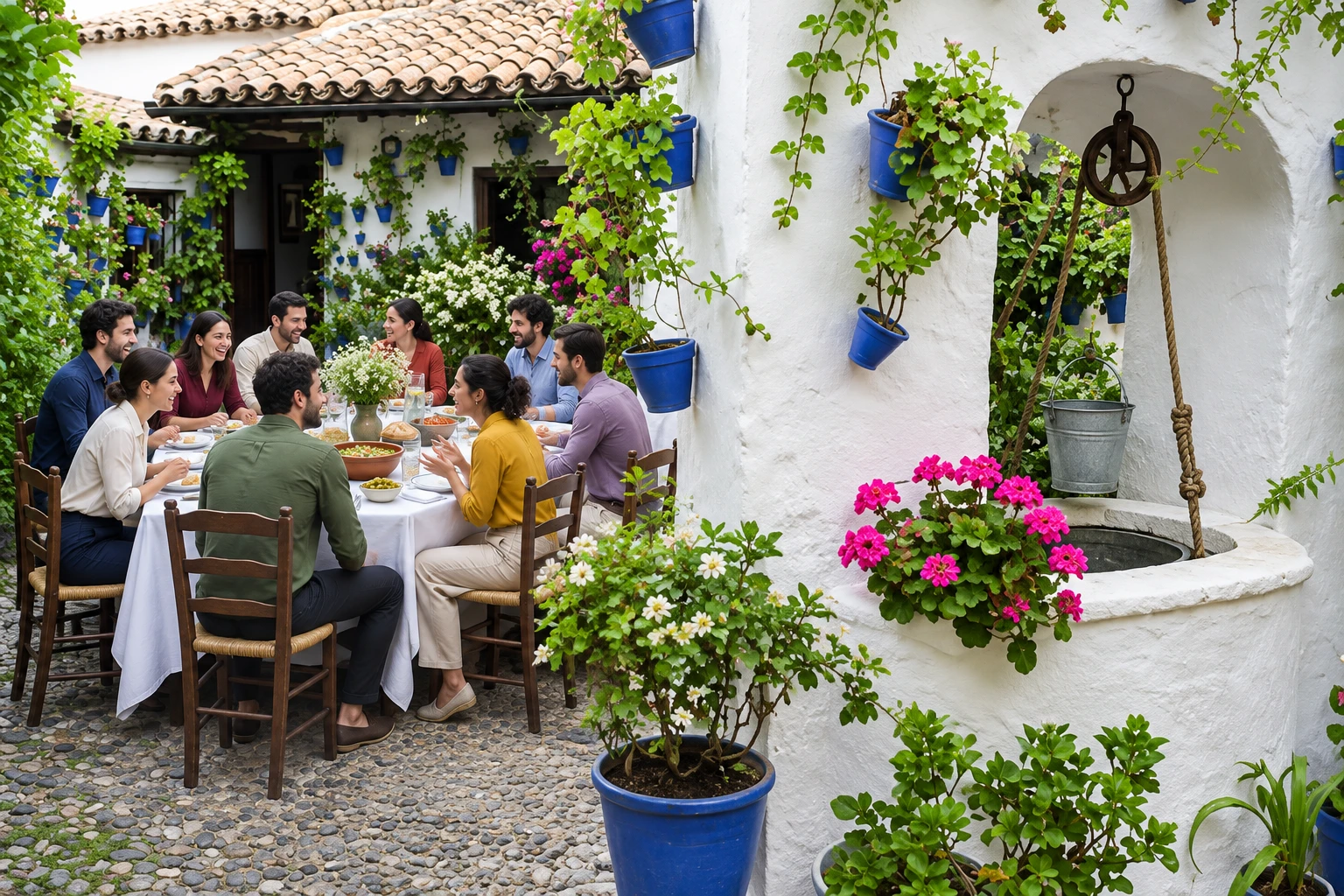
Illustrative images. The pictures in this guide are illustrations based on the real place, not photographs, and may differ from it.
Click a photo to enlarge it.
Festival of the Patios of Córdoba — Córdoba
In the first weeks of May, for about two weeks, after the Cruces de Mayo at the start of the month; the dates are set each year by the city council.
May
Dates change every year: check this year's date before you travel.
The festival
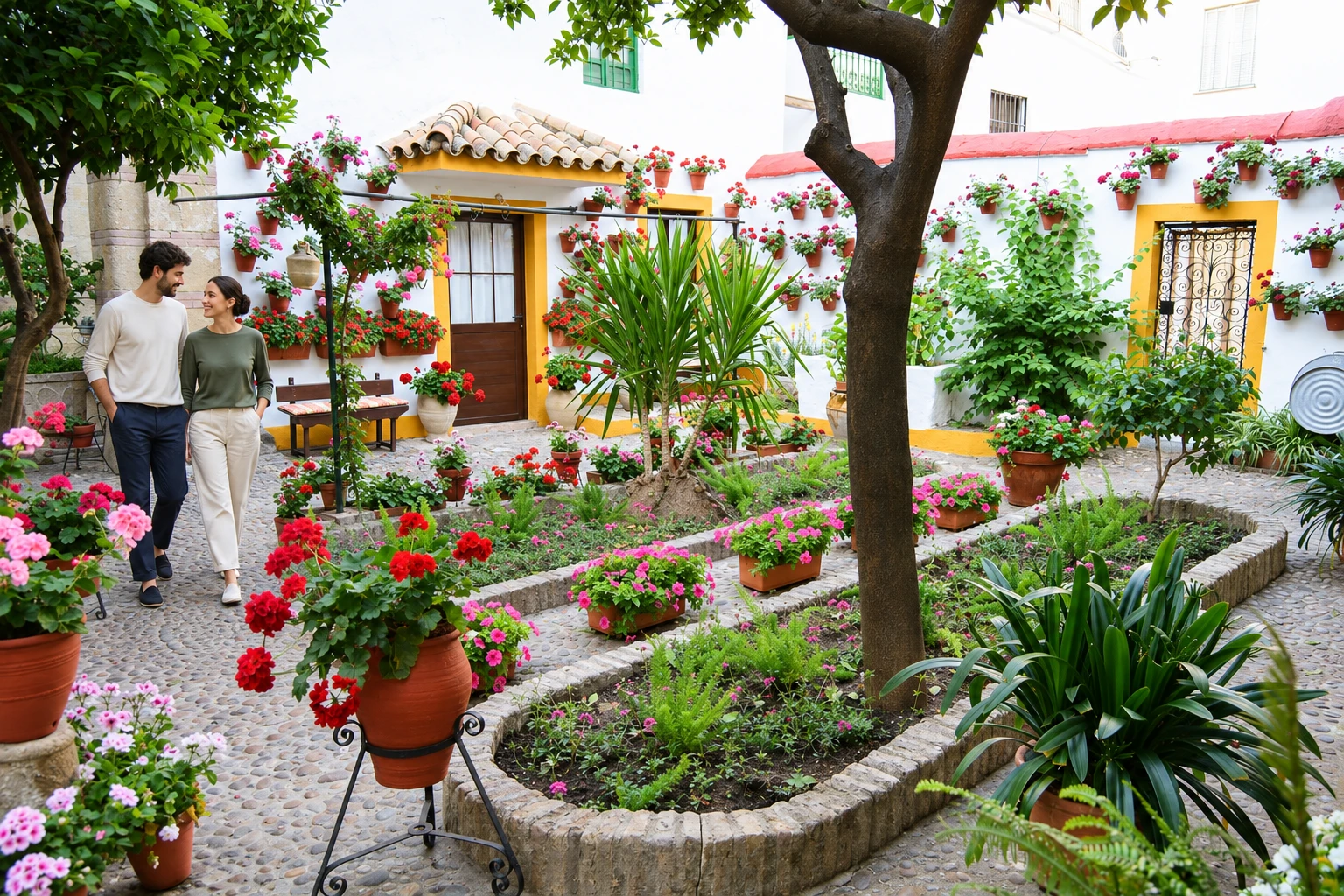
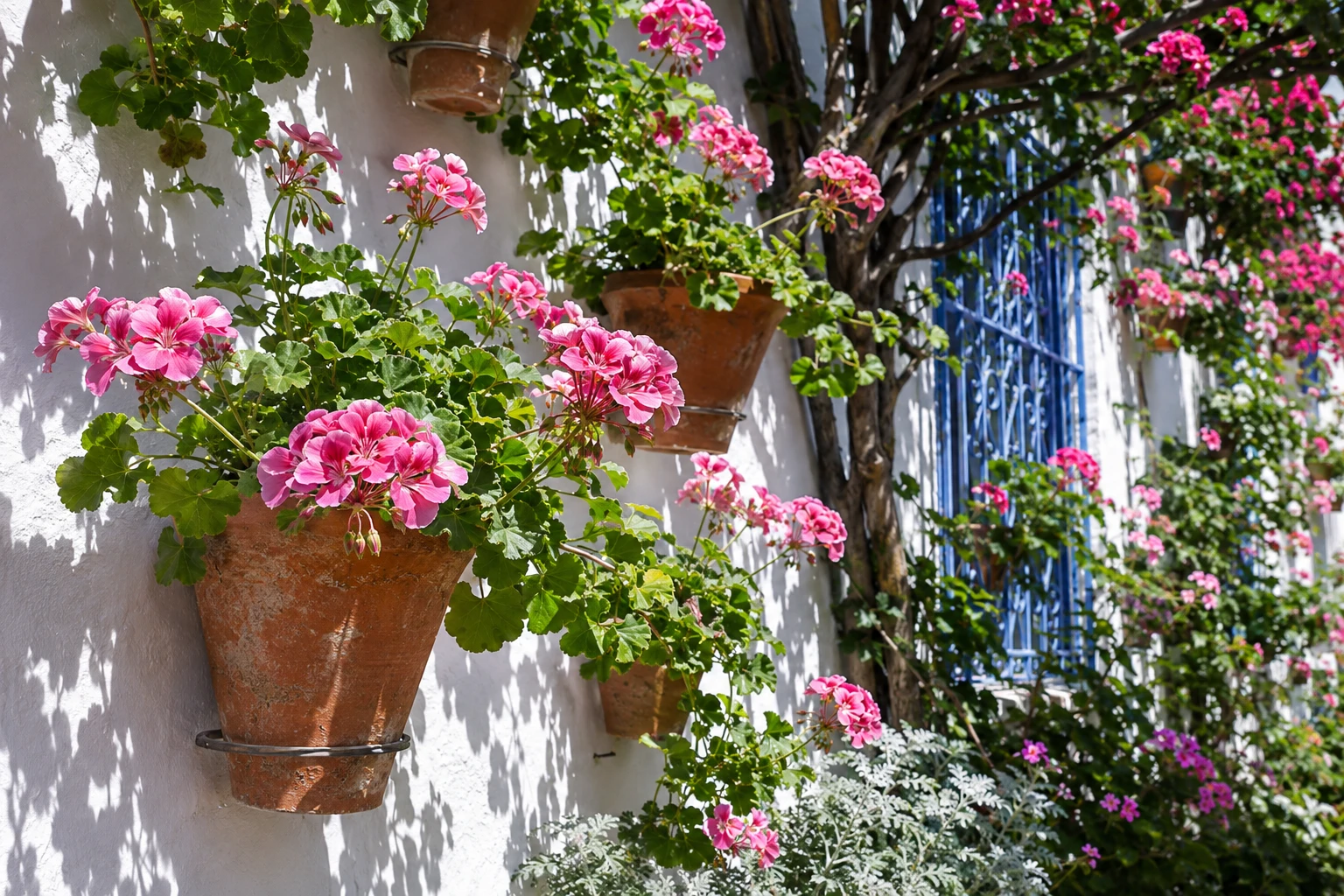
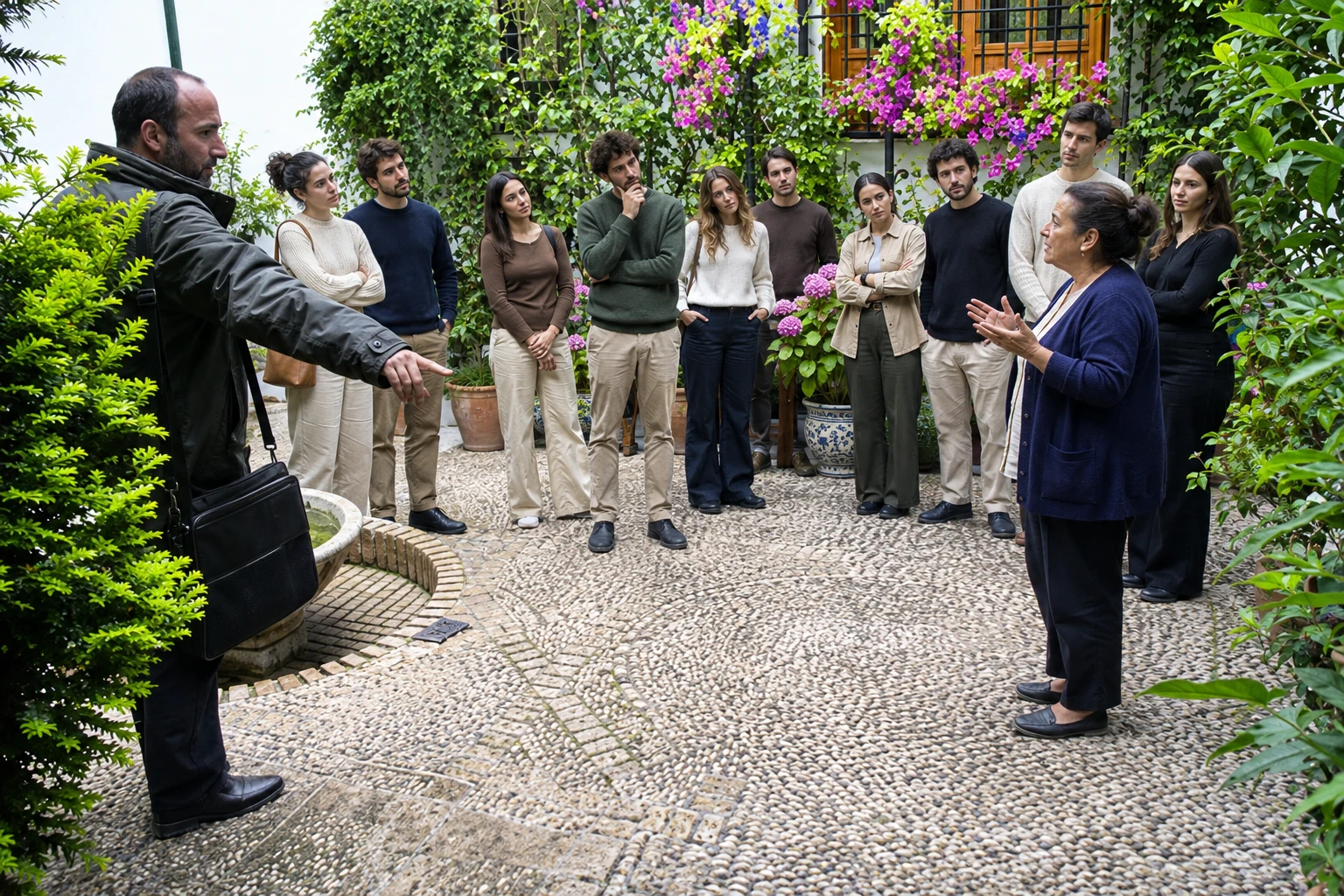
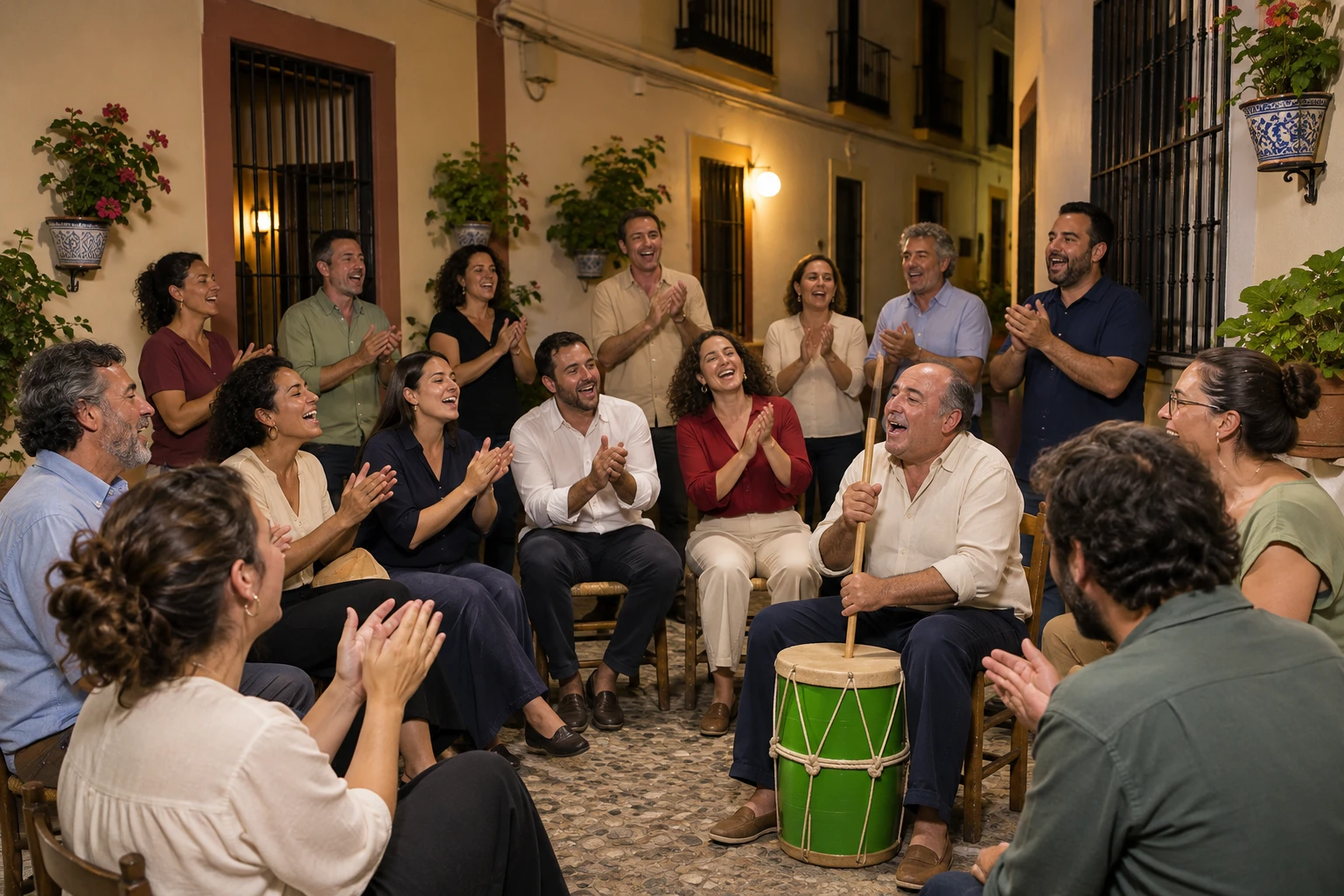
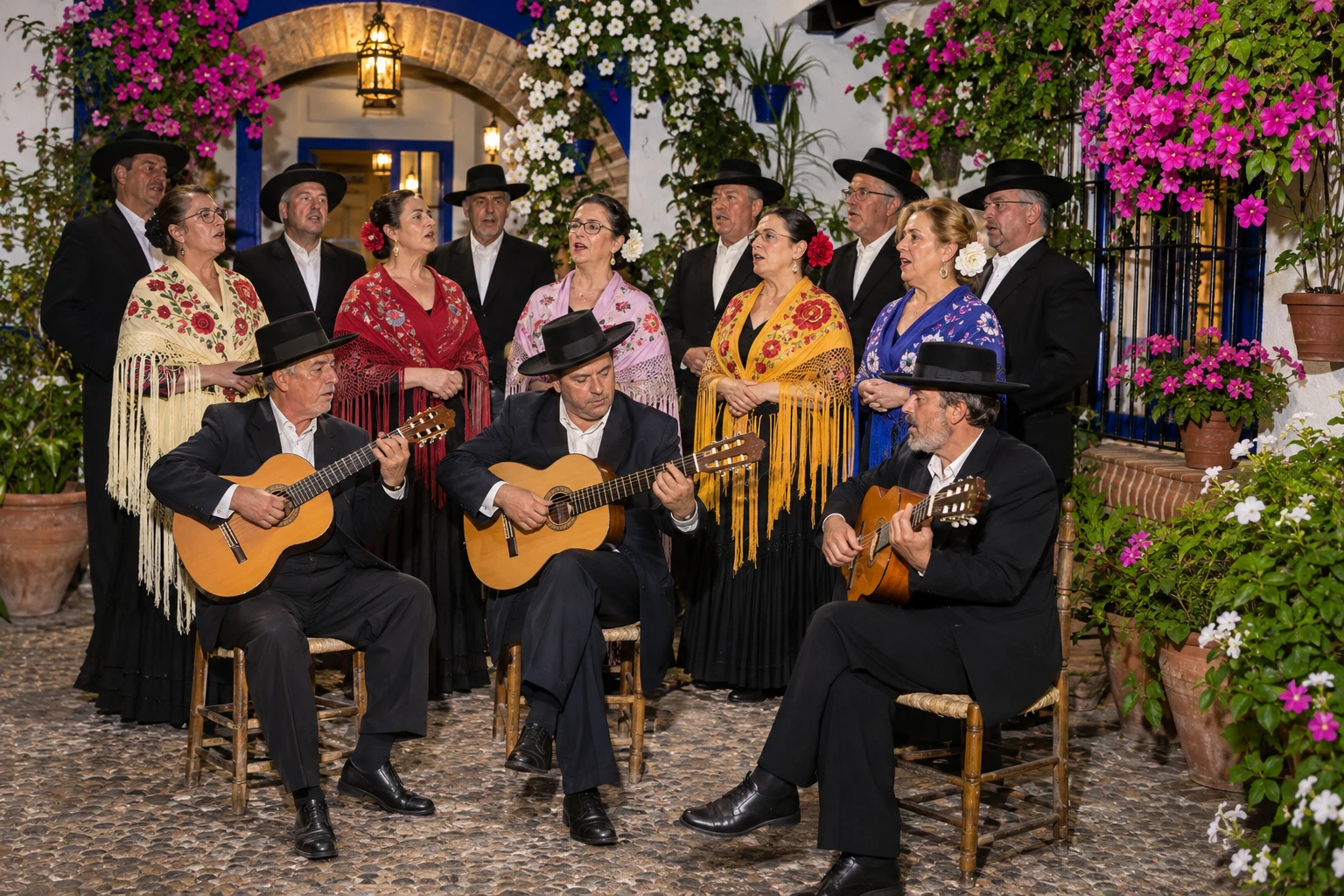
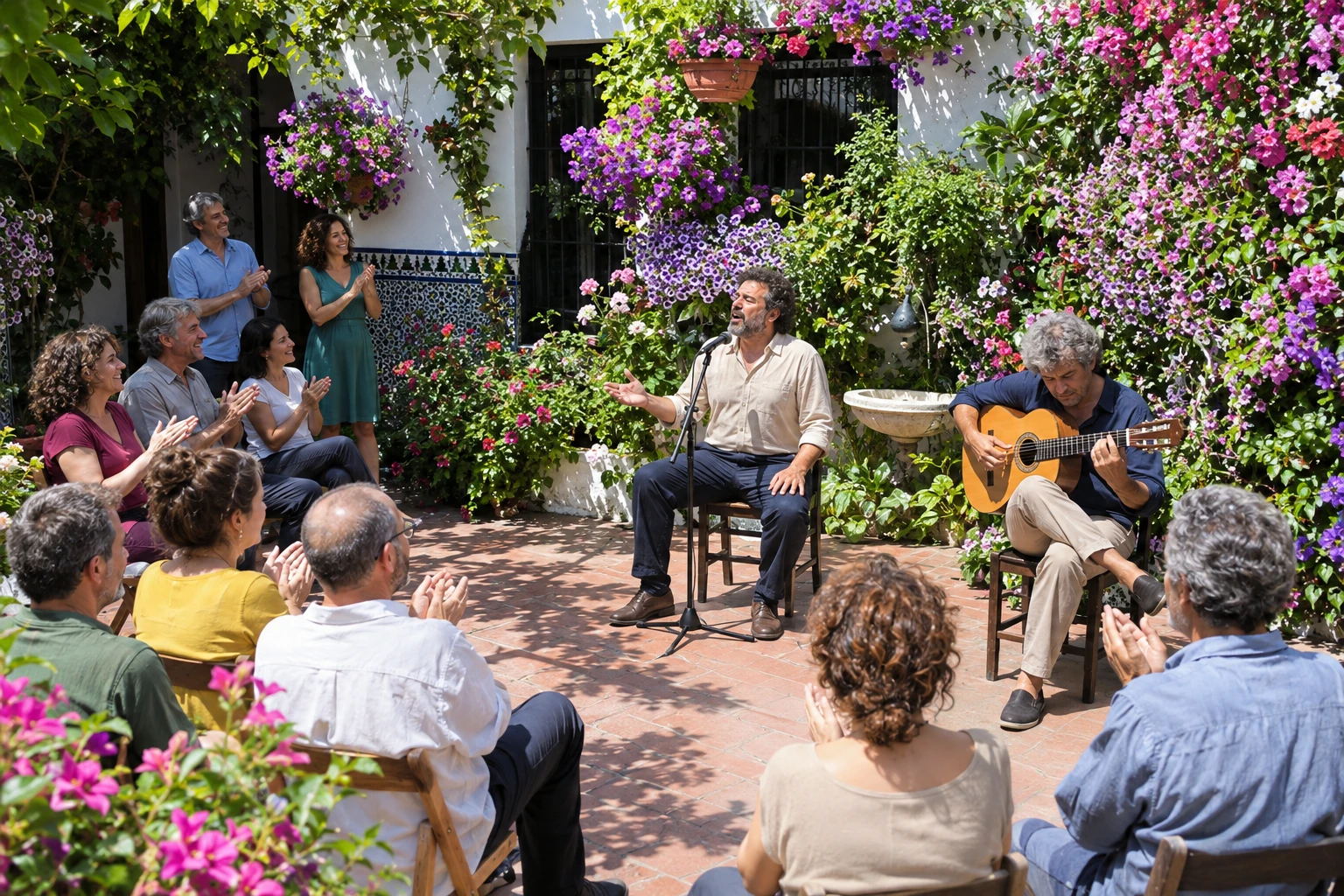
In May, Córdoba blooms indoors. For about two weeks, dozens of residents of the old neighborhoods open the doors to their patios—the inner courtyards that bring light and air into the houses—so visitors can enter and see walls covered in pots of geraniums, carnations and other flowers, flowerbeds, wells, fountains and the city’s typical pebble floors. Since 2012 the festival has been on UNESCO’s list of intangible heritage.
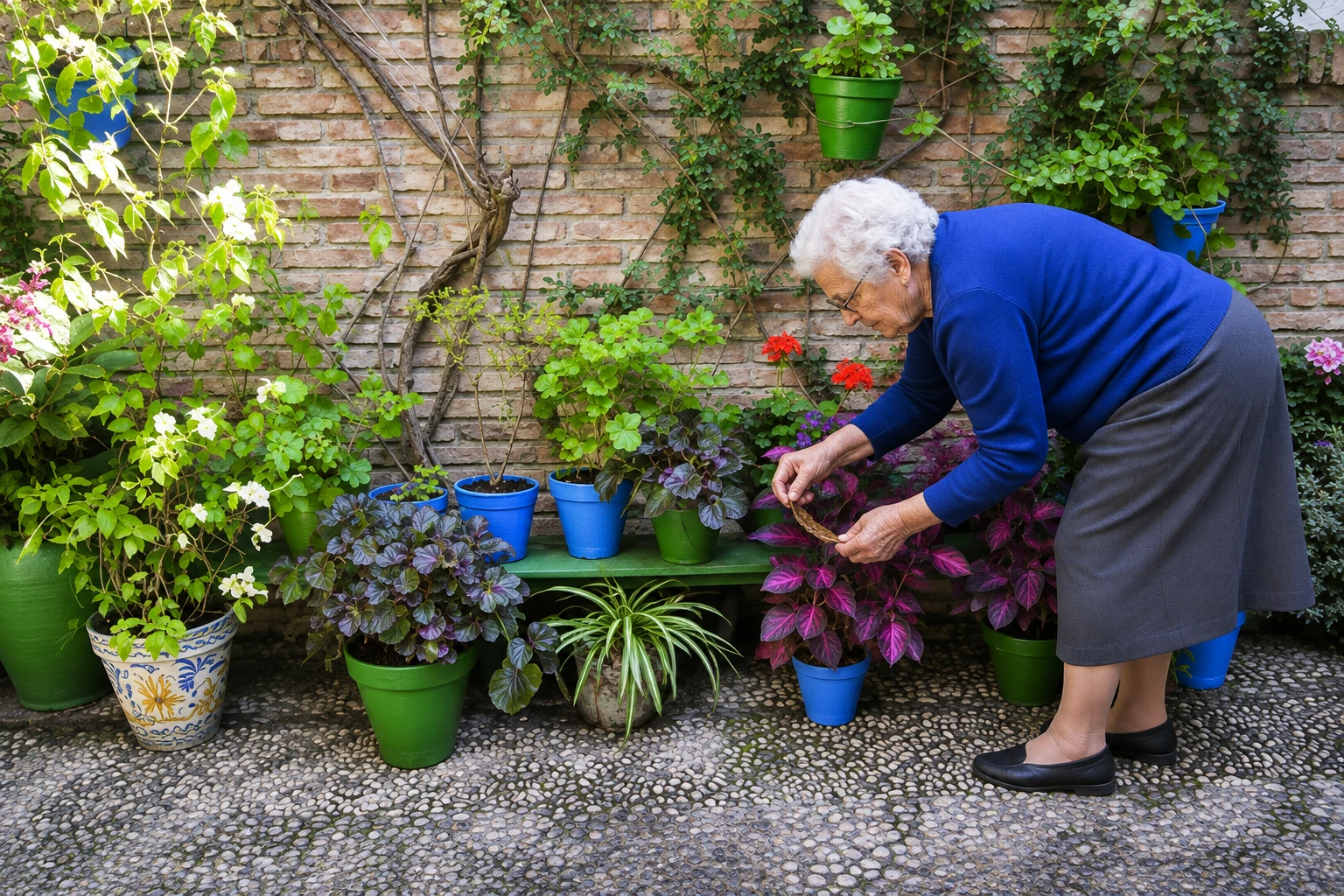
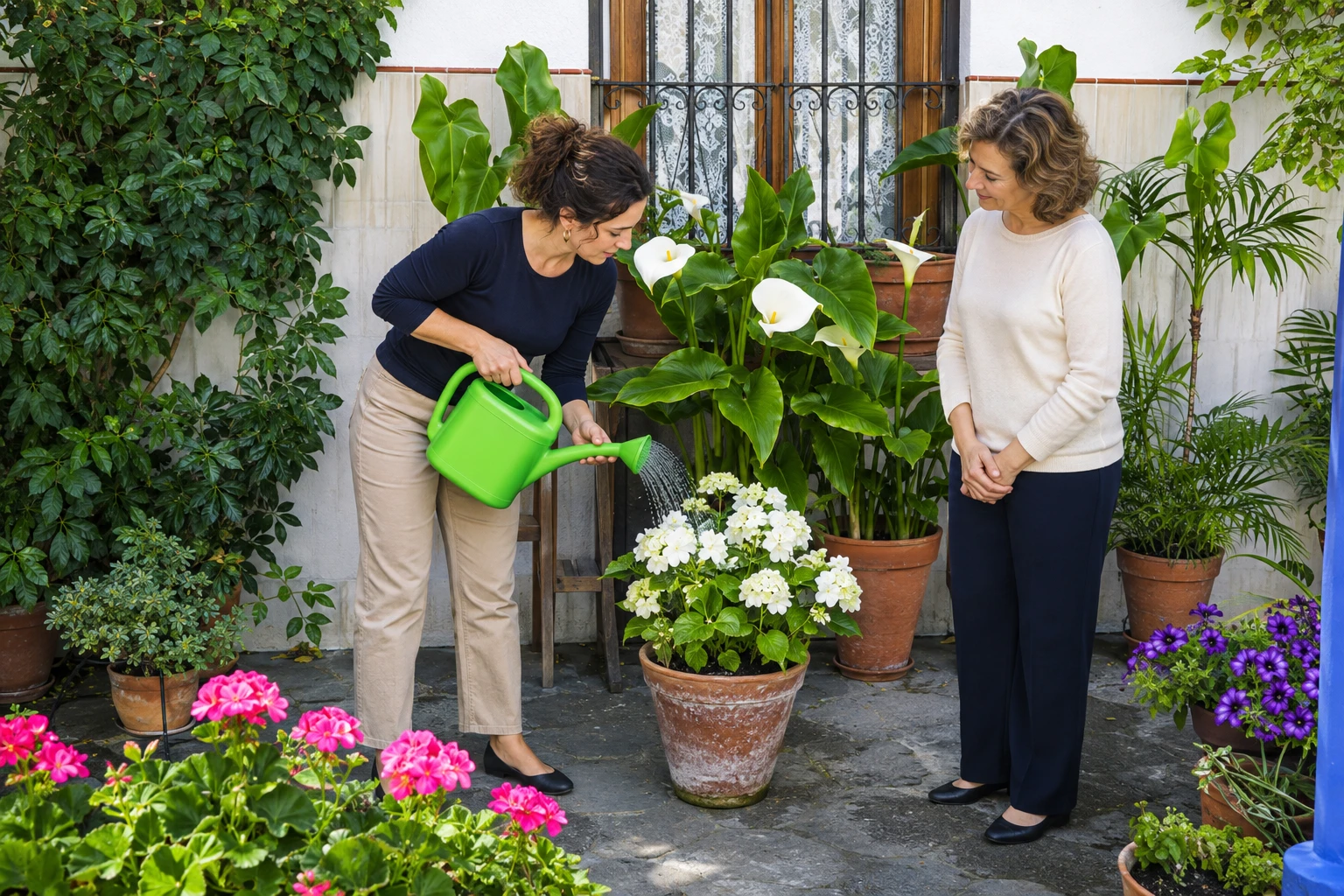
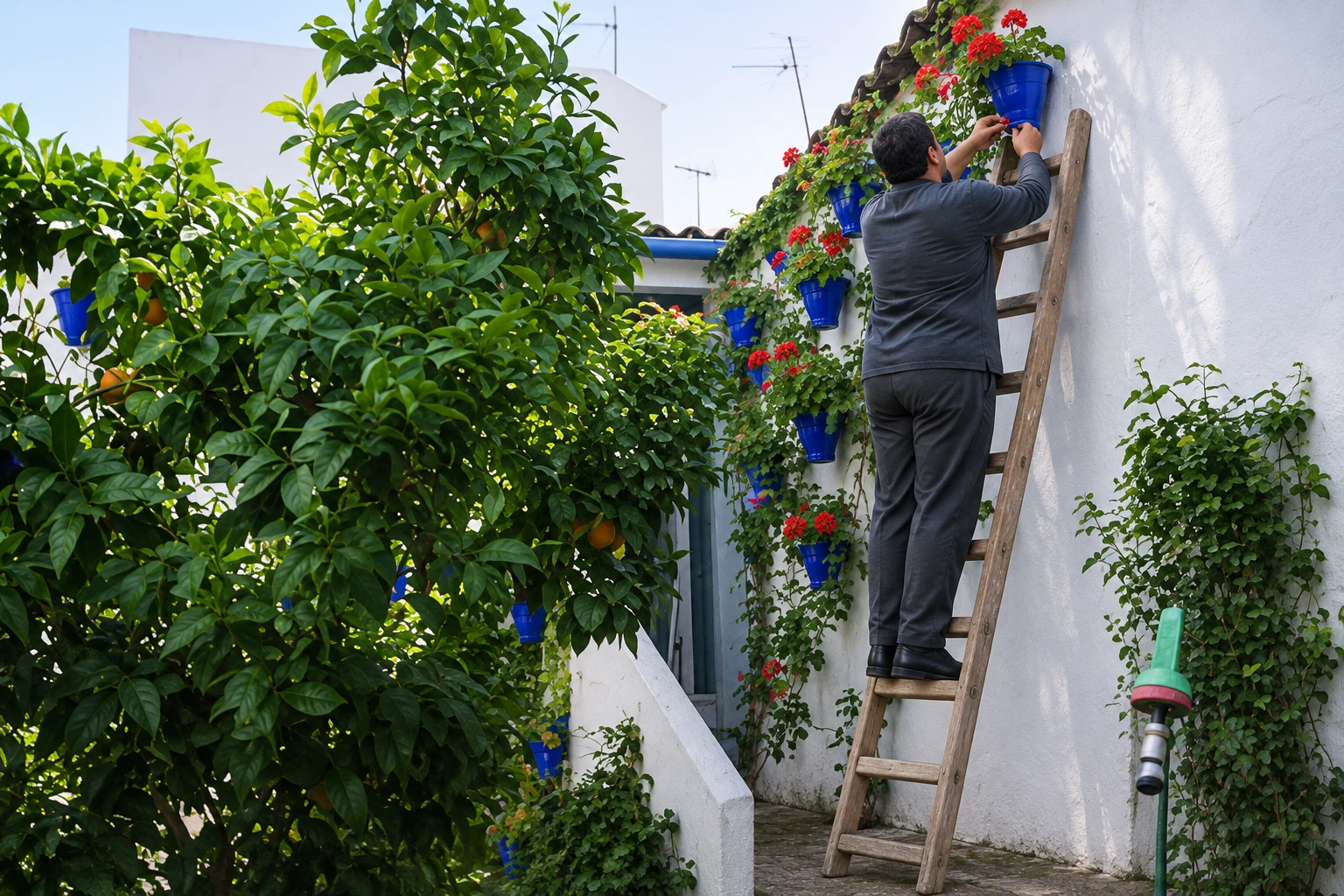
The patio is an inheritance from Roman and Arab houses and for centuries was the center of family life and neighborly coexistence in the old houses shared by several families. The first municipal contest to award the best-kept patios was held in 1921, and over time the festival attracted visitors from everywhere. The contest rules value seasonal flowers, the conservation of the architecture and the work of the caretakers, who water and arrange the pots every day—often using long poles to reach those high up.
The contest patios are divided into two categories: those of older architecture, built up to the mid-20th century that preserve the original structure, and those of modern or renovated architecture. They are spread across neighborhoods such as San Basilio, in the Alcázar Viejo, Santa Marina, San Lorenzo, San Agustín, Santiago, San Pedro, the Judería and the Ajerquía, and the town hall publishes a map with walking routes. Entrance is free, visits are short and in lines, and owners usually welcome visitors at the doors.
The festival is part of the Mayo Cordobés, the city’s month of festivities. It begins with the Cruces de Mayo, when associations and brotherhoods set up large crosses covered with flowers in squares and patios, with music and stalls, and with the Battle of the Flowers, a parade of flowered floats. At the same time, the contest for railings and balconies fills the streets of the historic center with cascades of flowers at the windows. At the end of the month, the Feria de Nuestra Señora de la Salud closes the season with casetas, music and lights.
For visitors, the Festival of the Patios is a chance to enter inhabited houses and see a living Córdoba custom outside the monuments. The visit pairs well with the Mezquita-Catedral, the Alcázar de los Reyes Cristianos and the Roman bridge, and with the Palacio de Viana, a palace that gathers several patios and can be visited year-round.
The patios of the San Basilio neighborhood in the Alcázar Viejo, among the most famous in the contest. A route through the neighborhoods of Santa Marina and San Lorenzo, with patios of old houses and Ferdinand-era churches. Caretakers watering pots high on the walls with their poles. The flowered railings and balconies of the historic center, which also compete in a contest. The Cruces de Mayo, at the beginning of the month, mounted in squares and patios. The Battle of the Flowers, the parade of flowered floats in early May. The Palacio de Viana and its patios. A pause in a traditional taberna between one patio and another.
Download or pick up the official patios map, with routes by neighborhood, and choose one or two routes per day on foot, because the streets are narrow and many patios are close to each other. Patios open in two shifts, morning and afternoon, with a break in the middle of the day; hours vary and are published by the town hall. Weekends and holidays are the busiest days, with lines at the doors of the best-known houses; on weekdays, right at opening, visits are usually calmer. Remember these are inhabited houses: enter quietly, do not touch the plants, and follow the owners’ instructions. May already has warm days in Córdoba; bring water, a hat and comfortable shoes.
Córdoba tabernas are a must-stop between patios. On the table, salmorejo, a cold cream of tomato, bread and olive oil topped with egg and ham; flamenquín, a breaded and fried roll of meat; and rabo de toro are among the most typical dishes. To drink, the fino wine of Montilla-Moriles, from the same province, served very cold.

May is one of the busiest months in Córdoba, and the festival weekends fill hotels in the old city; book in advance. Some agencies organize guided visits along patio routes with small groups, which require reservation. Check the town hall website for the year’s dates, opening hours and the routes map.
In the city
Flavors of Spain
May
Your questions
In the first half of May, for about two weeks. Exact dates and opening hours are published each year by the Córdoba town hall.
In the patios of the municipal contest there is no entrance fee: just arrive at the door at opening time and wait your turn. Guided visits organized by agencies are paid separately.
San Basilio, in the Alcázar Viejo, Santa Marina, San Lorenzo, San Agustín and the Judería are among the most visited. The official town hall map organizes the patios into walking routes.
They are large crosses covered with flowers set up by associations in squares and patios at the start of May, with music and stalls. They open the city’s month of festivities, before the patios.
Festivals and events in Spain
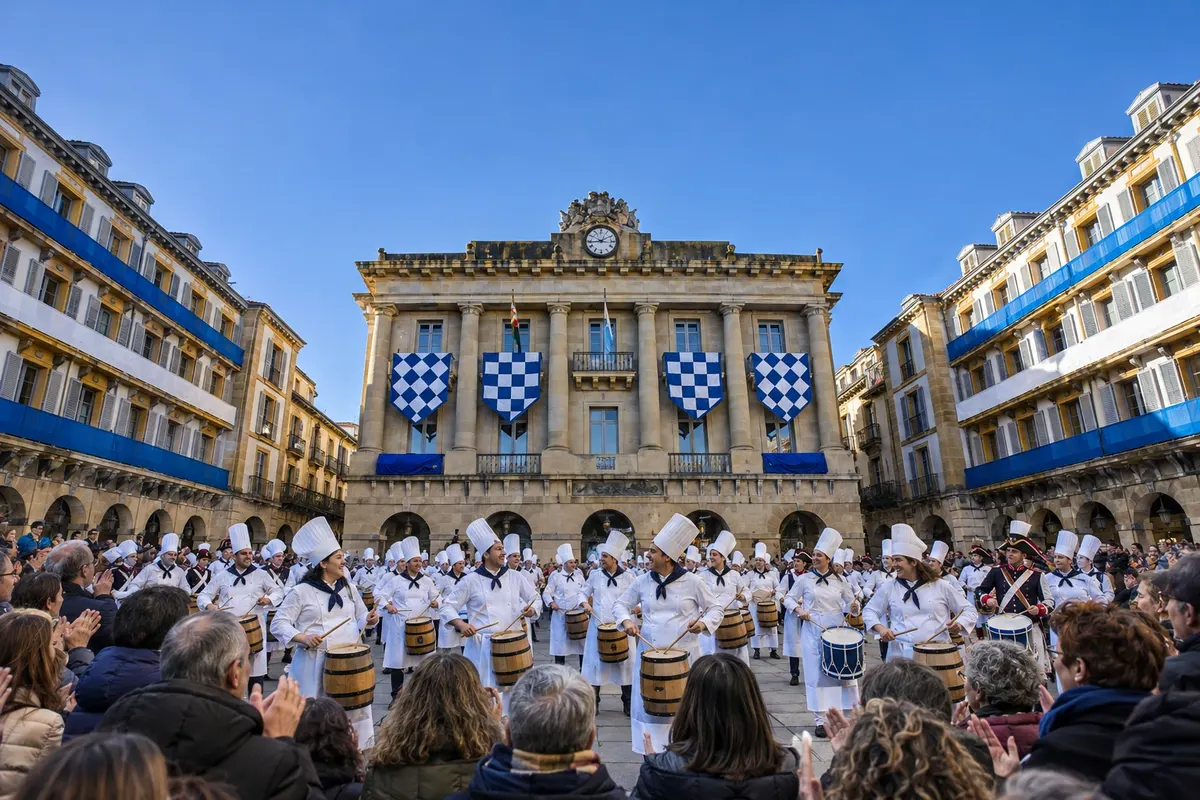
JanuaryOn January 20, the feast day of Saint Sebastian, the city's patron: the celebration begins at midnight between January 19 and 20 and ends at the following midnight.
For 24 hours on January 20, San Sebastián, in the Basque Country, honors its patron saint to the sound of drums and barrels: uniformed companies parade through the city playing the marches of Raimundo Sarriegi, from the raising of the flag in Plaza de la Constitución until the lowering in the same square.
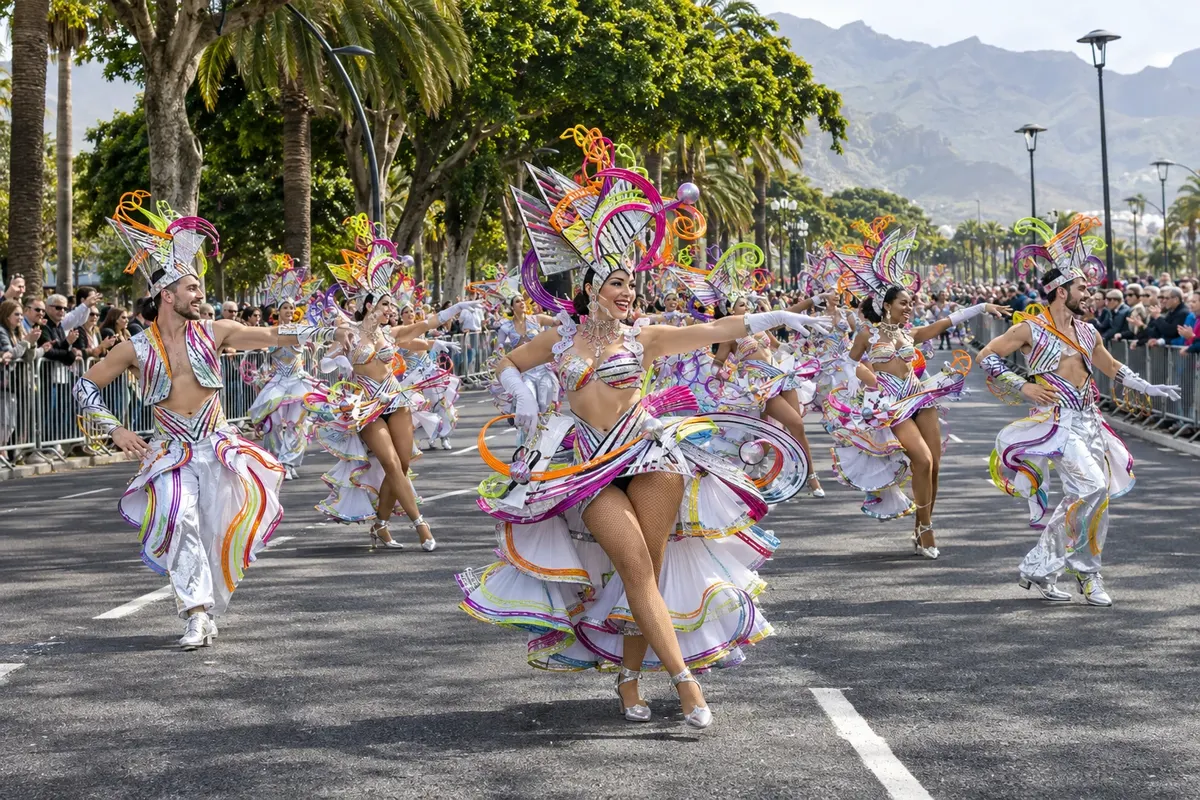
February/MarchAt the end of winter, between February and March, following the movable Carnival calendar: the contests and the queen’s gala take place in the preceding weeks, and the streets celebrate from the opening cavalcade until the weekend after Ash Wednesday.
The capital of Tenerife’s Carnival, in the Canary Islands, with a monumental fantasy queen, murgas, comparsas and rondallas, the big Coso parade on Carnival Tuesday and balls that fill the squares and avenues of the center until dawn.
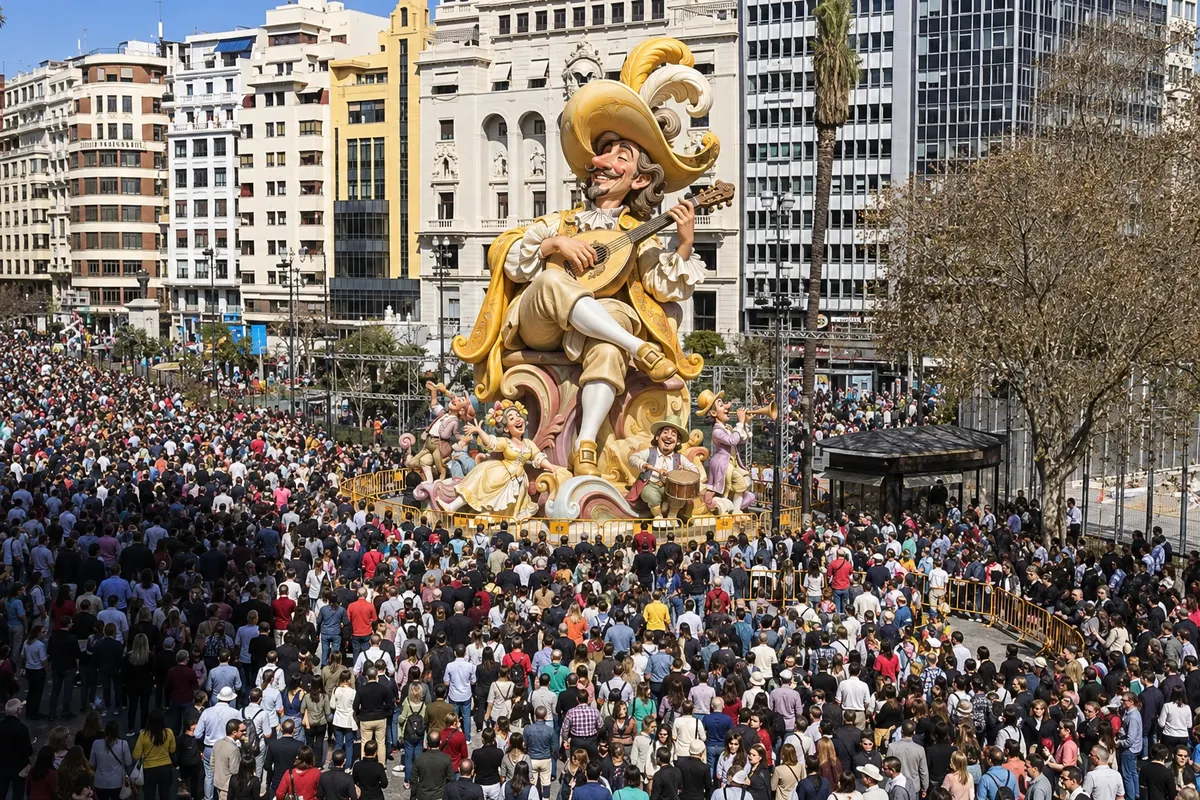
MarchFrom March 1 to 19, with the main days from March 15 to 19; the official opening, the Crida, is on the last Sunday of February.
Valencia’s festival, Intangible Cultural Heritage of Humanity by UNESCO, in which hundreds of satirical monuments of wood, cardboard and cork are erected in the streets, visited for days and burned on the night of March 19 amid fireworks, music and flowers.
March/AprilIn the week before Easter, from Palm Sunday to Resurrection, in March or April.
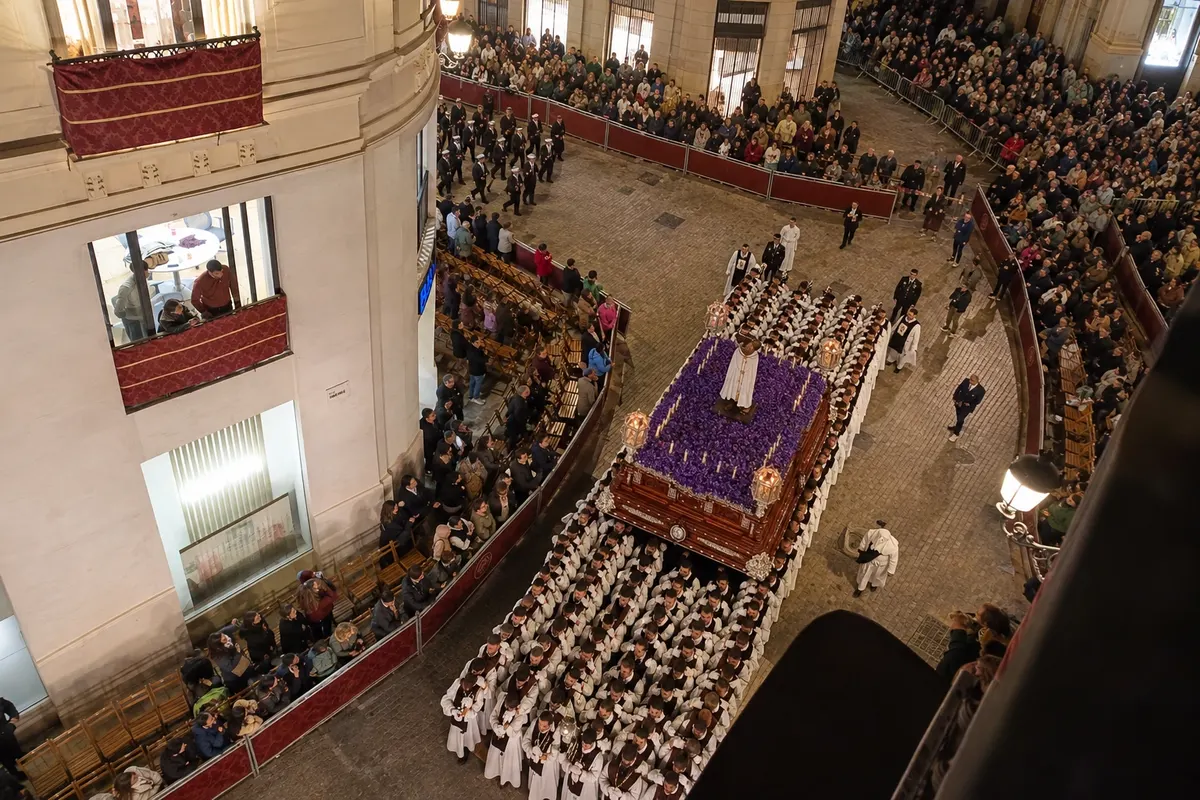
During Málaga’s Holy Week on the Costa del Sol, the brotherhoods carry enormous floats through the city center, borne on the shoulders of hundreds of porters, accompanied by marching bands, daytime and nighttime processions, and moments unique to the city, such as the Legion’s landing at the port on Holy Thursday.
March/AprilFrom Palm Sunday to Easter Sunday, in March or April depending on the date of Easter; smaller processions begin on the previous Friday, Friday of Sorrows.
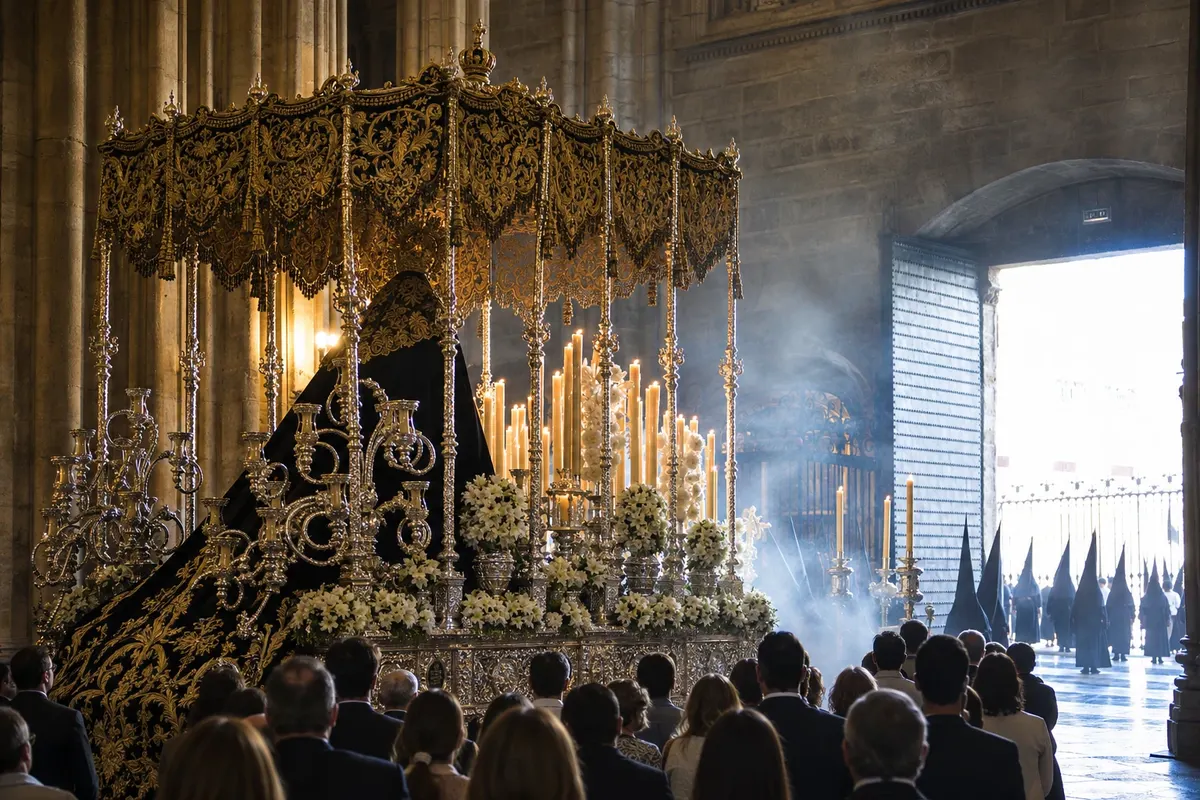
During Holy Week, the brotherhoods of Seville, the capital of Andalusia, carry images of Christ and the Virgin through the streets on gilded floats carried by costaleros and followed by long lines of penitents, on routes that pass by the cathedral day and night, until the early hours of Good Friday.