Málaga

Religious festival · Málaga

Málaga Holy Week

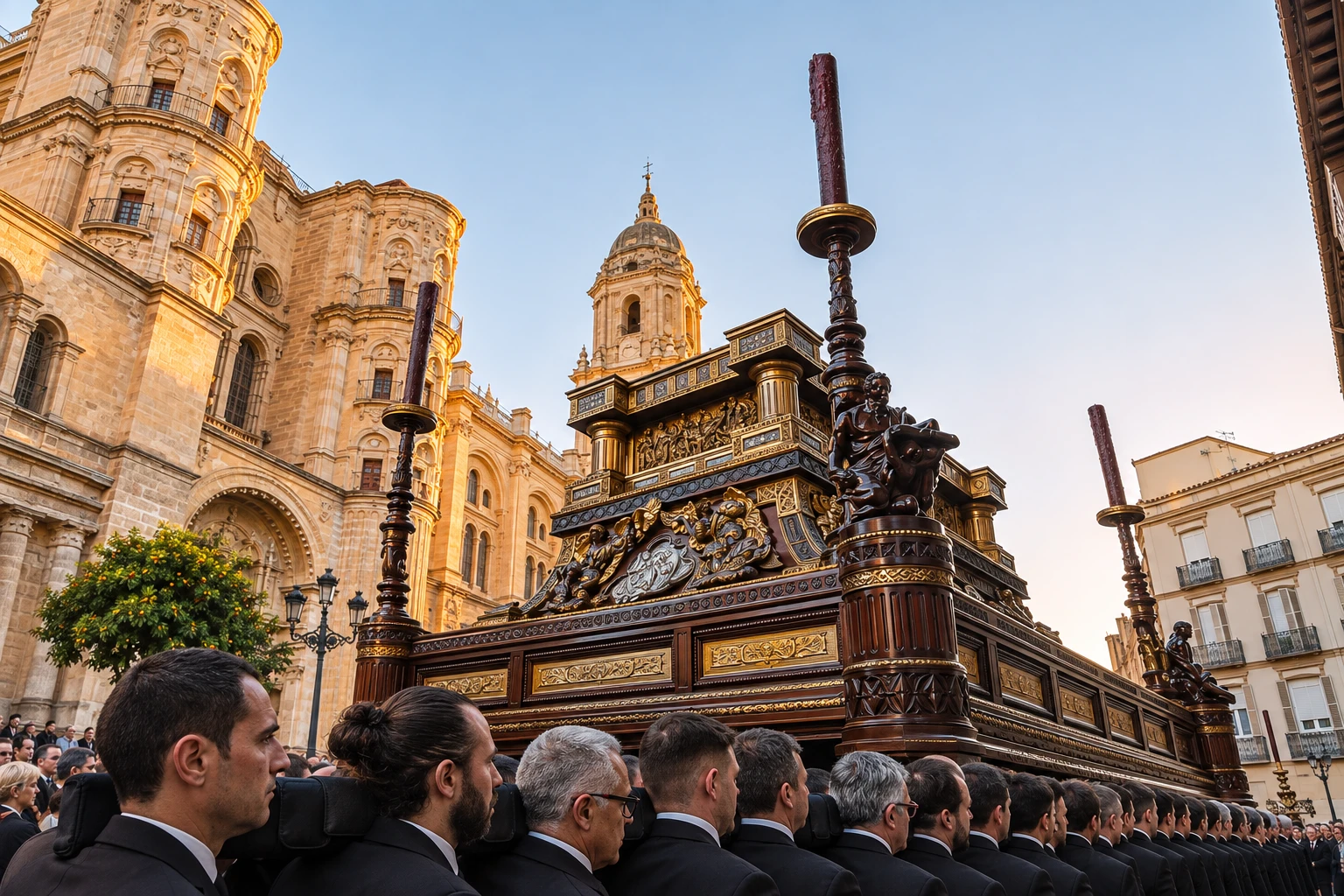
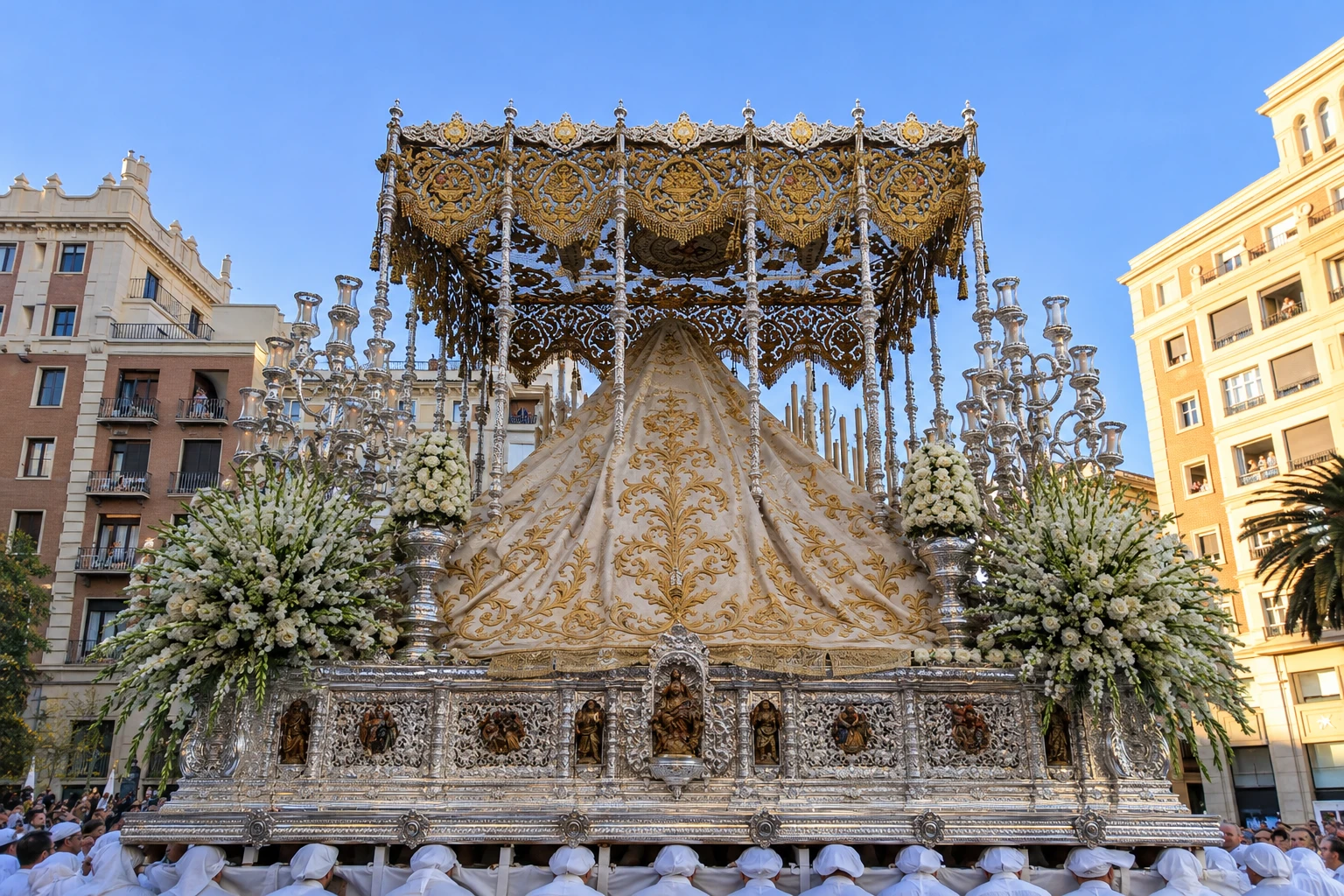
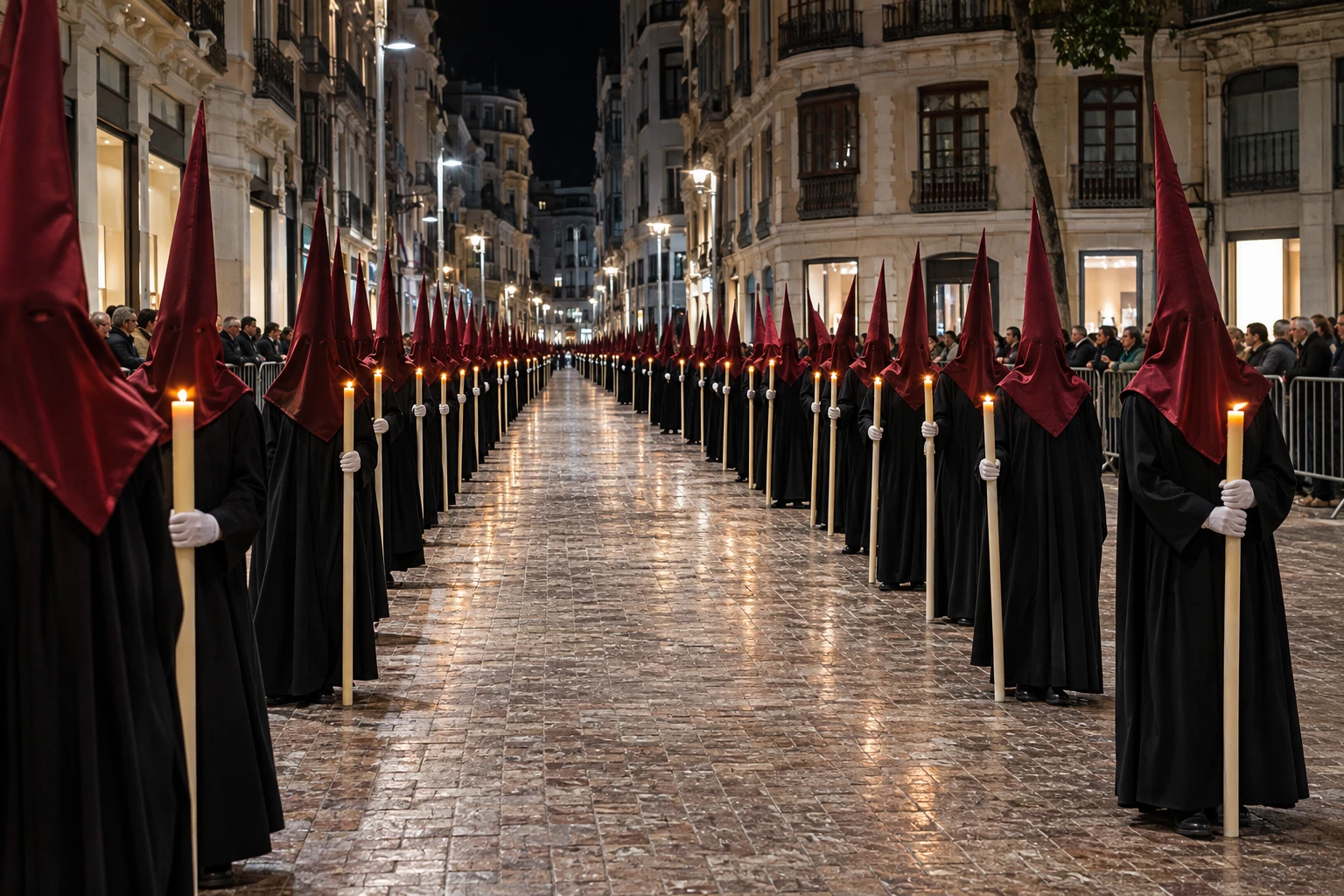
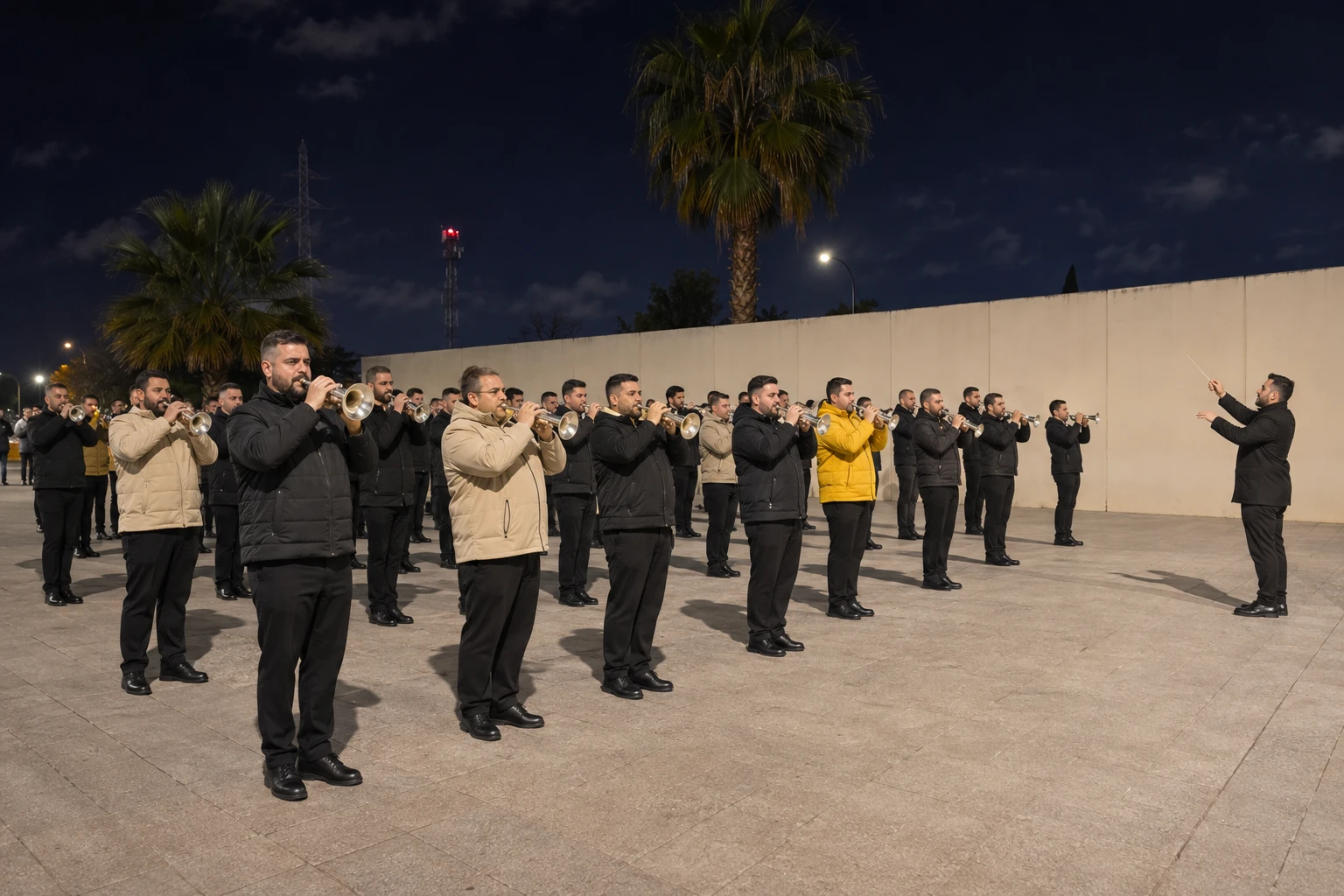
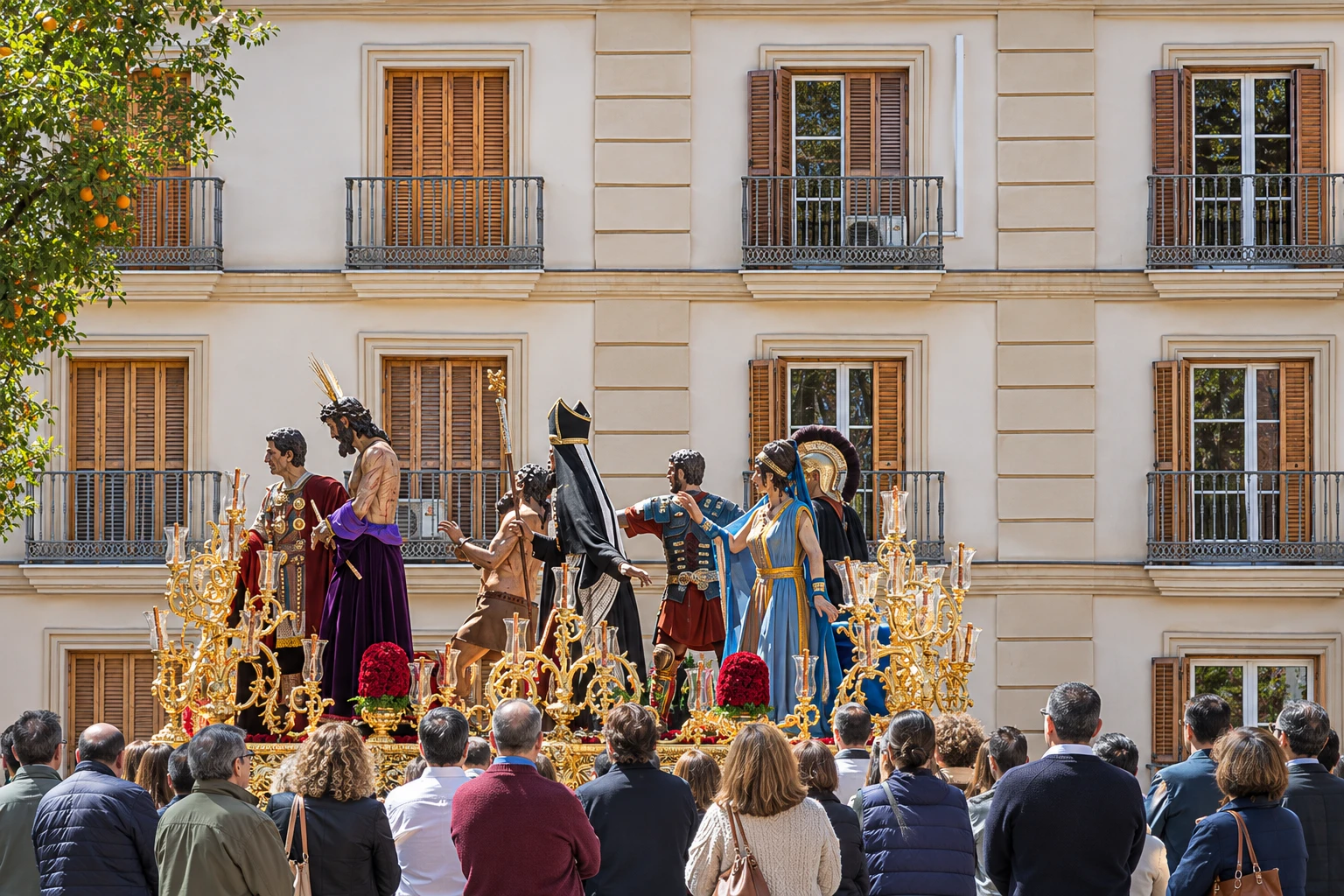
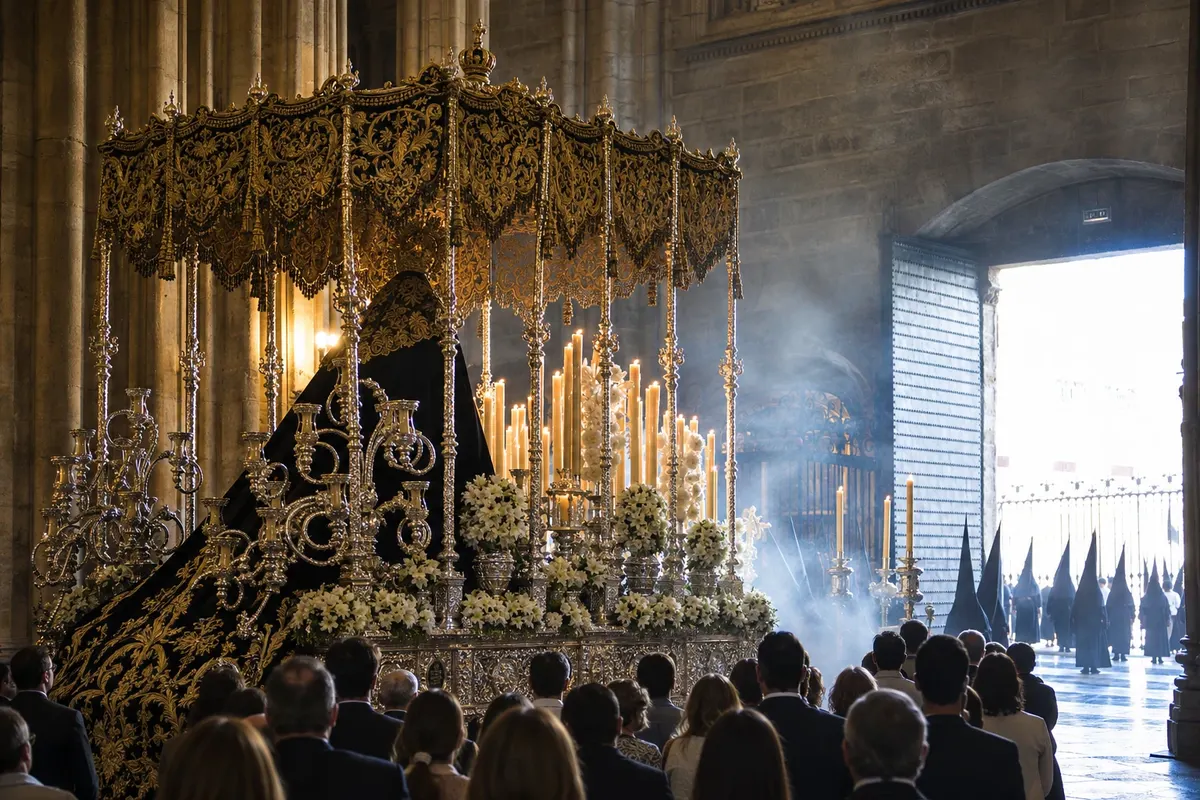
During Málaga’s Holy Week on the Costa del Sol, the brotherhoods carry enormous floats through the city center, borne on the shoulders of hundreds of porters, accompanied by marching bands, daytime and nighttime processions, and moments unique to the city, such as the Legion’s landing at the port on Holy Thursday.

In the photo: Málaga

Illustrative images. The pictures in this guide are illustrations based on the real place, not photographs, and may differ from it.

Get it on Google Play

Click a photo to enlarge it.

Málaga Holy Week — Málaga
Málaga Holy Week
Málaga Holy Week — Málaga
Málaga Holy Week
Málaga Holy Week — Málaga
Málaga Holy Week
Málaga Holy Week — Málaga
Málaga Holy Week

Málaga Holy Week — Málaga

When

In the week before Easter, from Palm Sunday to Resurrection, in March or April.

March/April

Where

Calle Marqués de Larios

Málaga

Andaluzia

Dates change every year: check this year's date before you travel.

The festival

What is Málaga Holy Week

Málaga’s Holy Week is one of Andalusia’s major religious festivals and was declared a festival of international tourist interest in 1980. Throughout the week, from Palm Sunday to Resurrection, the city’s brotherhoods — with roots reaching back to the late 15th century — process through the streets of the center with their images of Christ and Our Lady. What sets Málaga apart are the size of the platforms, here called tronos, and the way they are carried, in full view of the public, in an atmosphere that is both devout and highly participatory, which locals often call the Week of Passion.

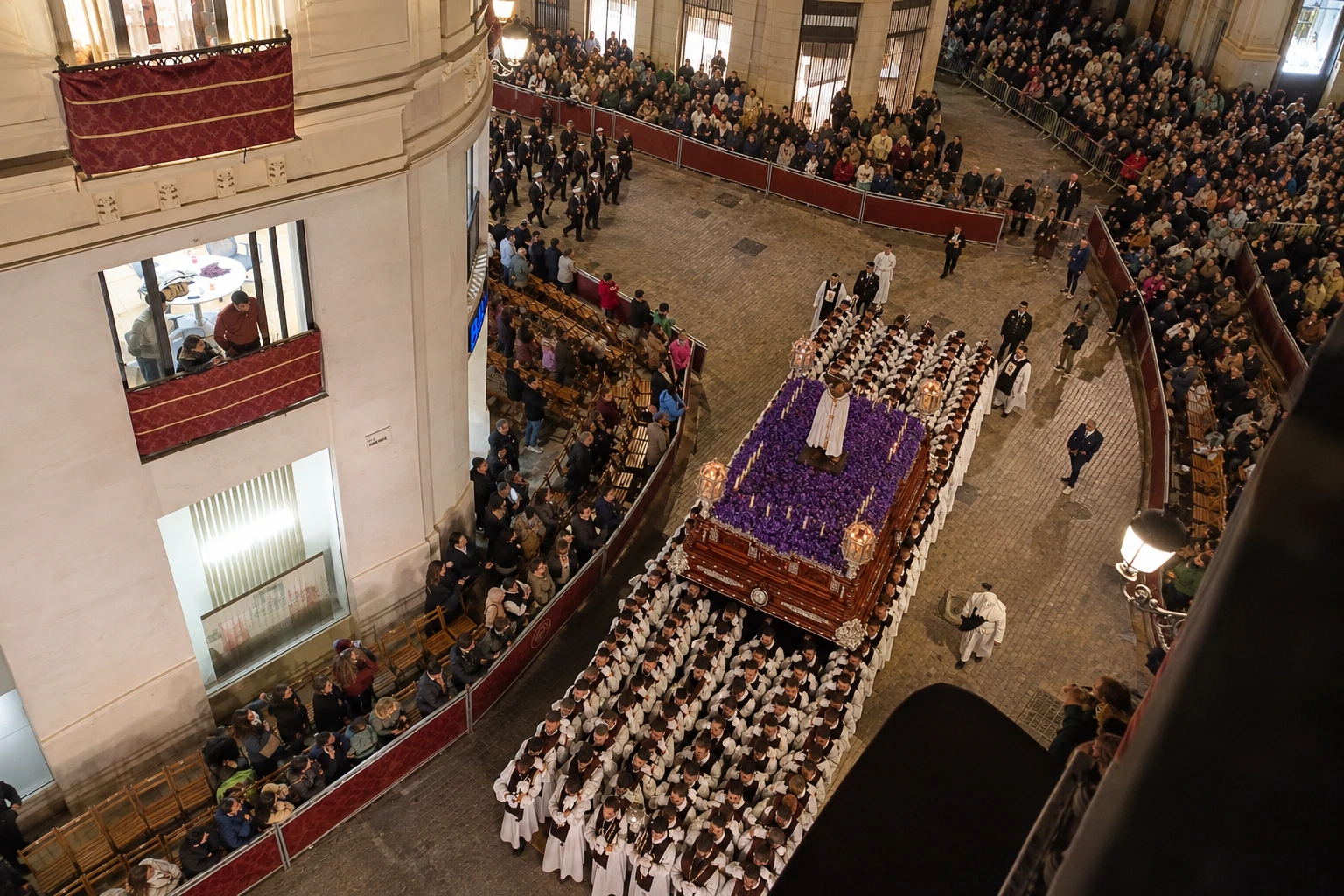
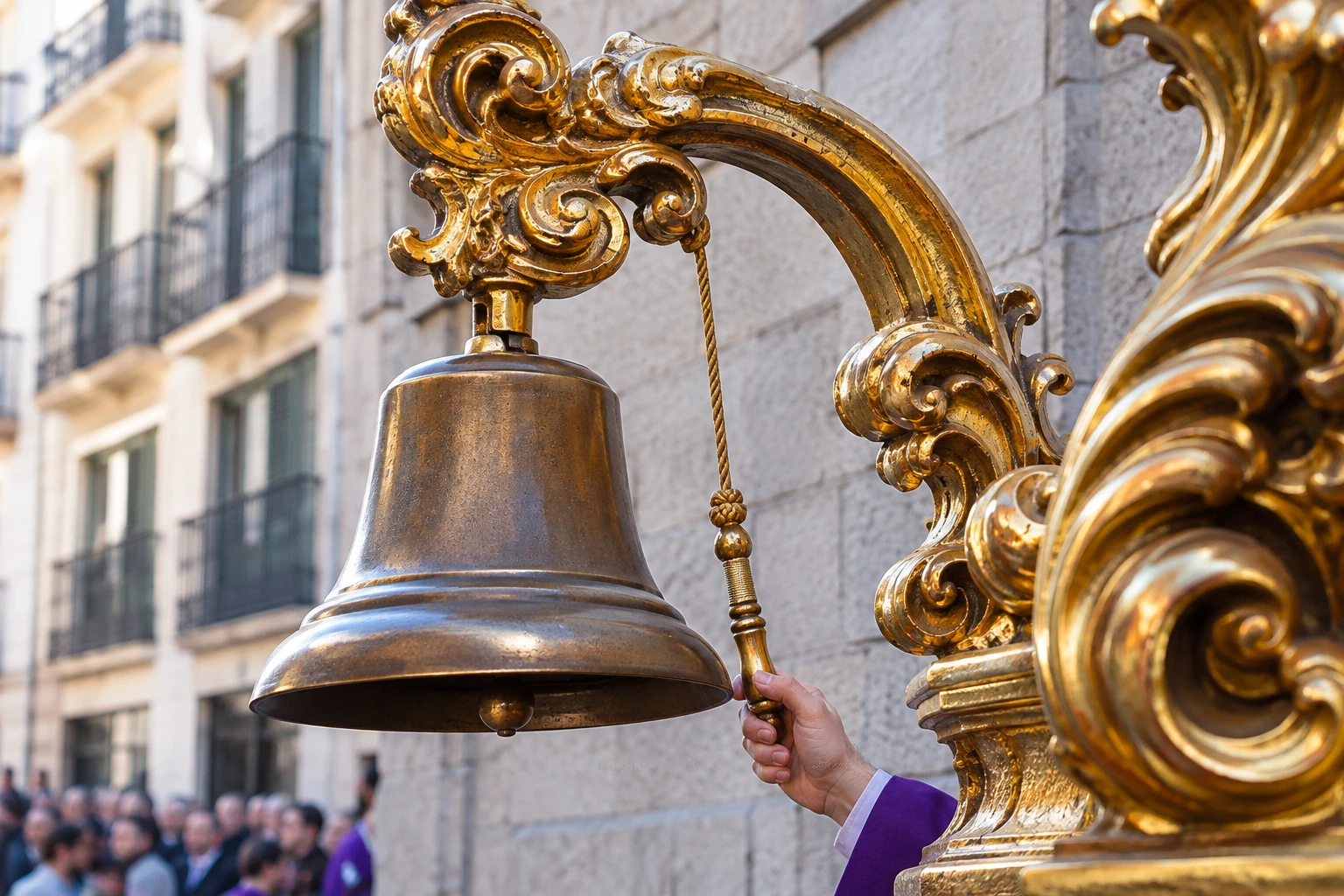
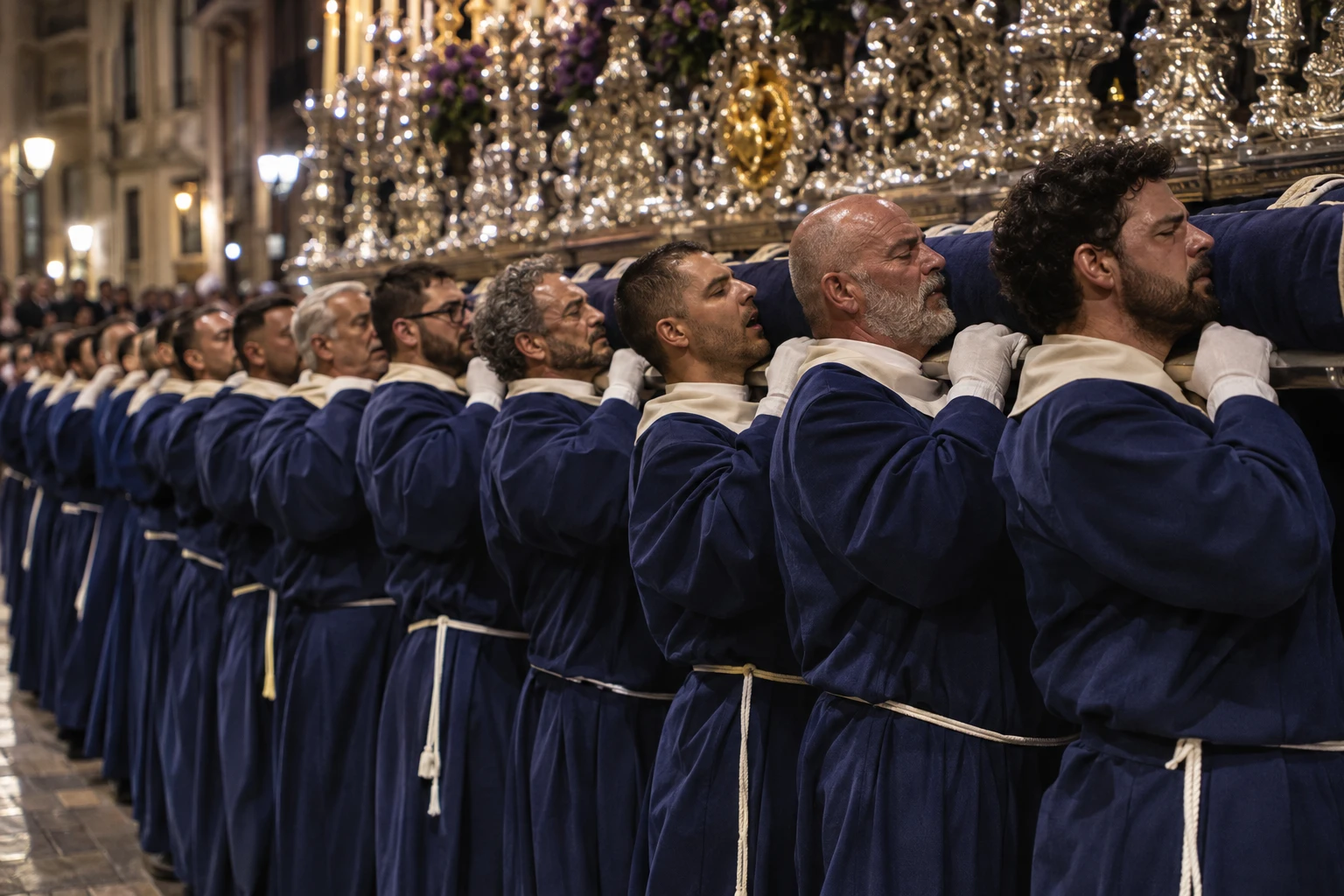
The tronos of Málaga are among the largest in Spain: carved and gilded wooden platforms, with silver, candles and flowers, that raise the images well above the crowd’s heads. Instead of hiding underneath, as in Seville, the porters — the men of the trono — carry the weight on their shoulders, on the poles that protrude from the sides of the structure, and walk in groups of dozens or hundreds, guided by the bell sounded by the trono steward. At some moments the trono is lifted high on the arms, by sheer strength, while the band plays and the crowd applauds.

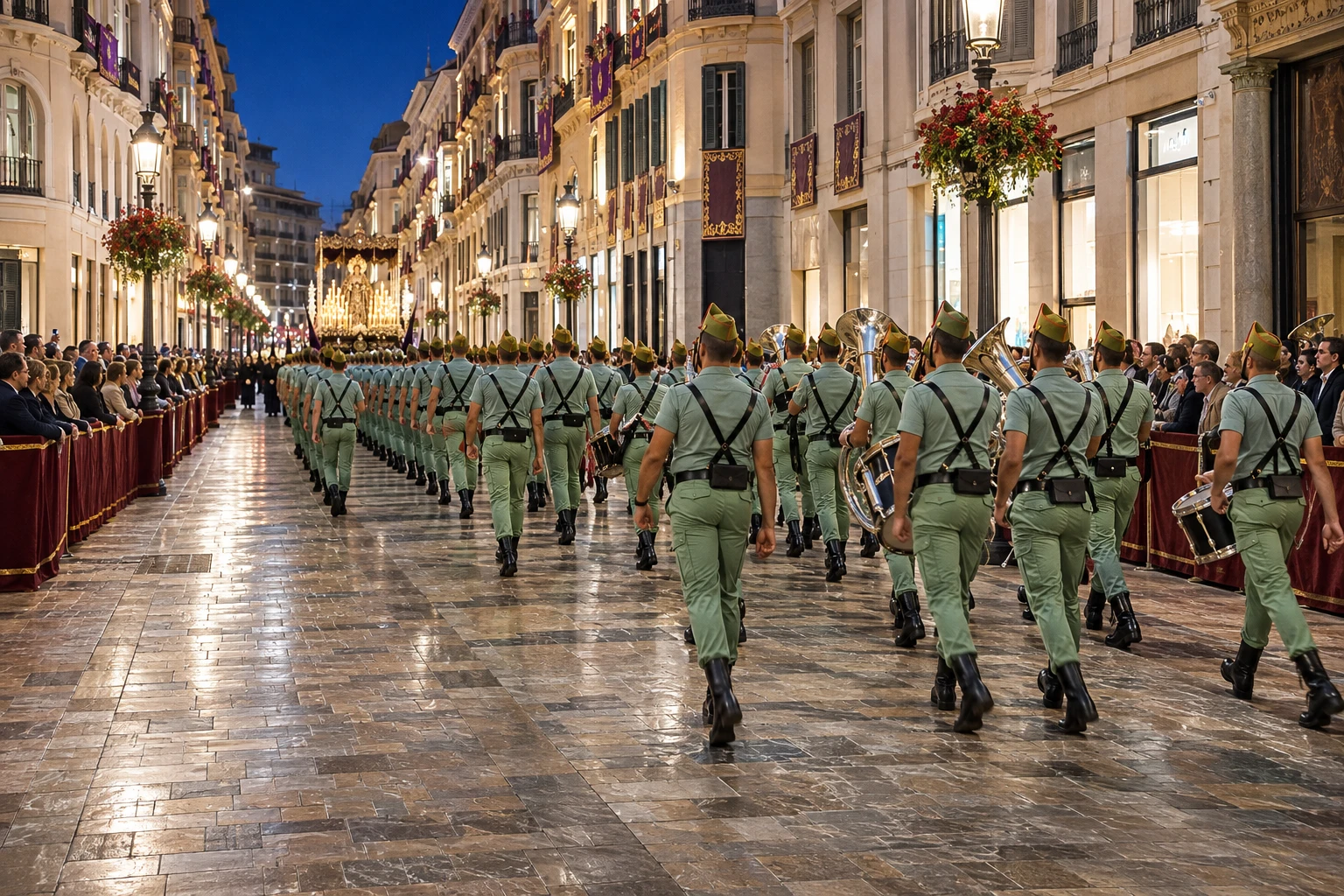
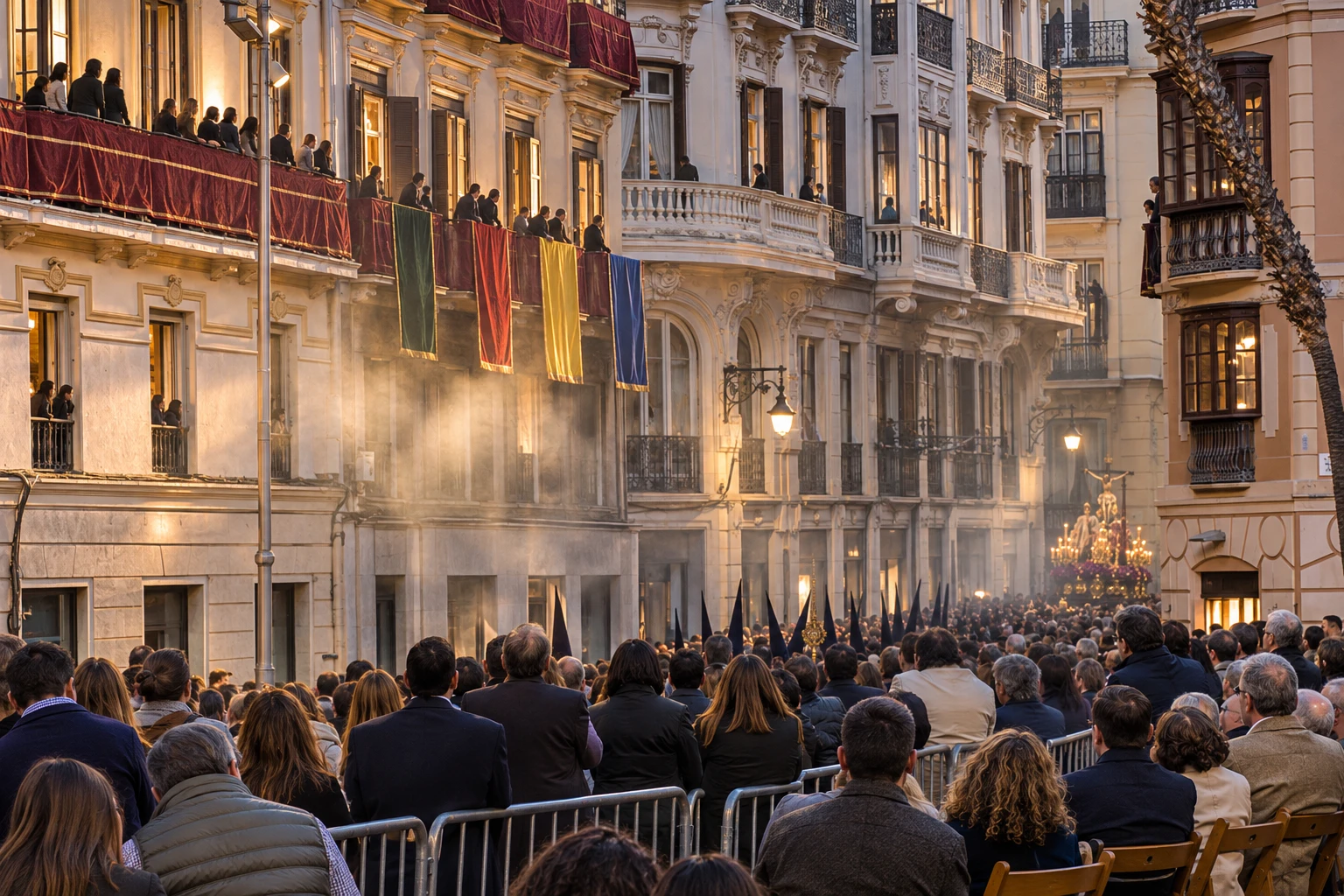
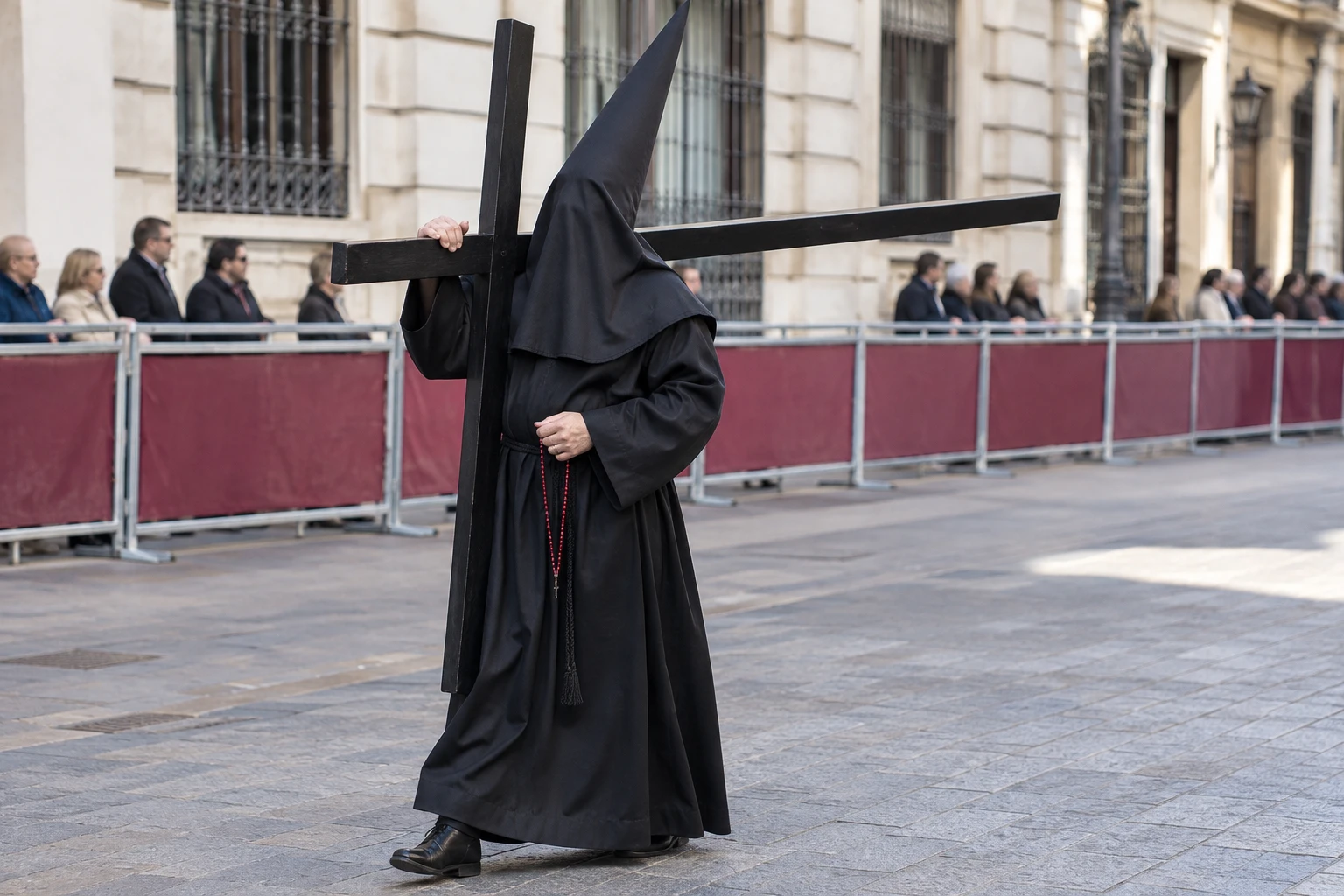
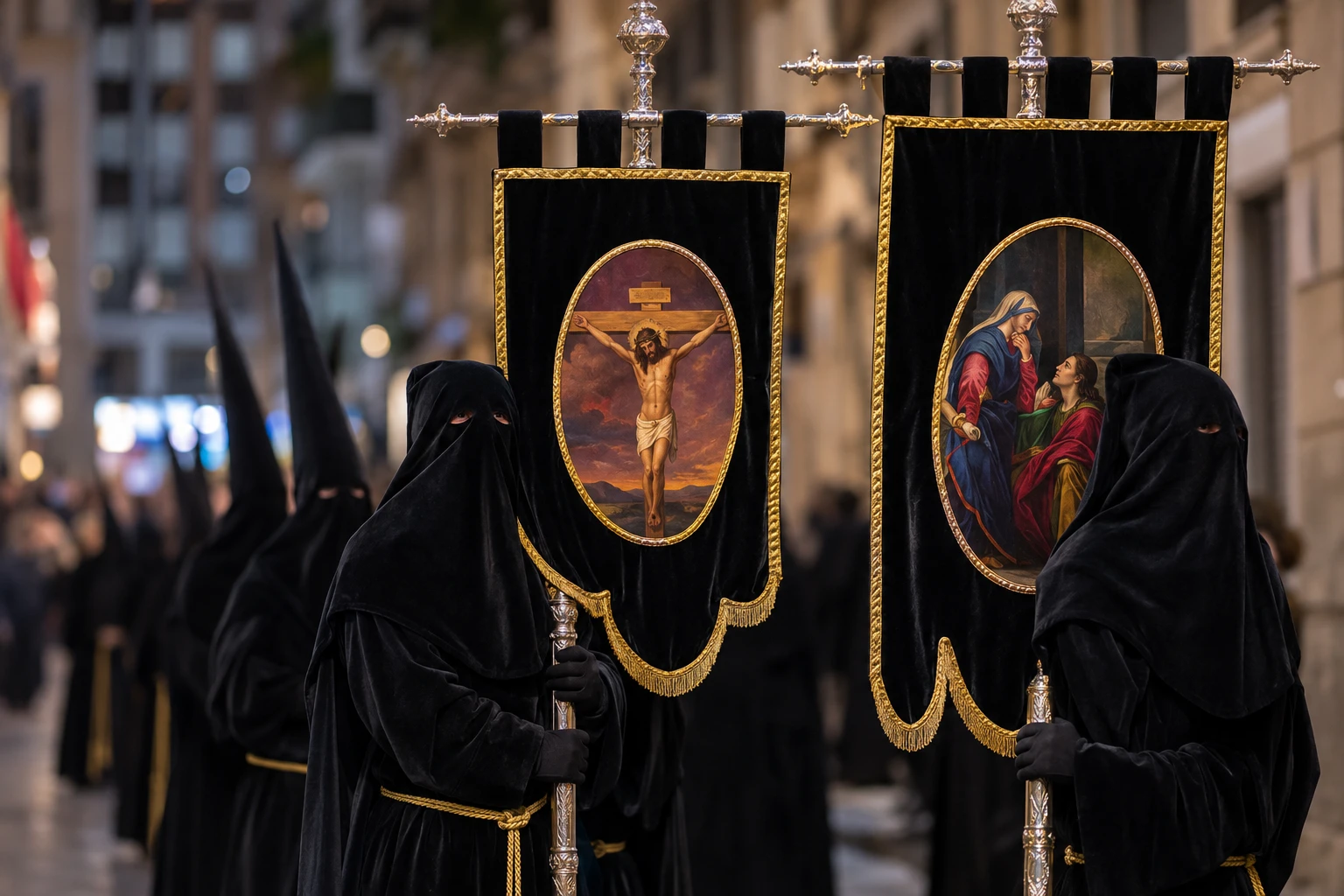
Each procession generally has two tronos, one of Christ and one of the Virgin, accompanied by penitents in tunics and hoods, who carry candles and insignia, and by people who walk barefoot or follow the trono fulfilling vows. All brotherhoods follow the official route, starting at Plaza de la Constitución, where the main stand is located, going down Calle Marqués de Larios, circling the Alameda Principal and Plaza de la Marina, and ascending Calle Molina Lario to the cathedral, with grandstands set up along the way. From balconies, residents throw rose petals onto the images, and the scent of incense and flowers accompanies the processions. A local tradition is the military and civil escorts for some images, in dress uniform.

Holy Thursday is the most anticipated day. In the morning, the Legion disembarks at the port and marches in parade to the church of Santo Domingo, where the Cristo de la Buena Muerte, known as Cristo de Mena, is kept; the legionnaires carry it through the streets while singing their hymn. At night, the image and trono of the brotherhood take part in one of the week’s most crowded processions. On Holy Wednesday, the Jesús El Rico brotherhood frees a prisoner, a privilege granted by the crown in the 18th century and renewed every year with government authorization. On Holy Monday the Cautivo, called Señor de Málaga, parades — one of the city’s most popular devotions. On Easter morning a single procession, that of the Resurrected, brings together delegations from all the brotherhoods.

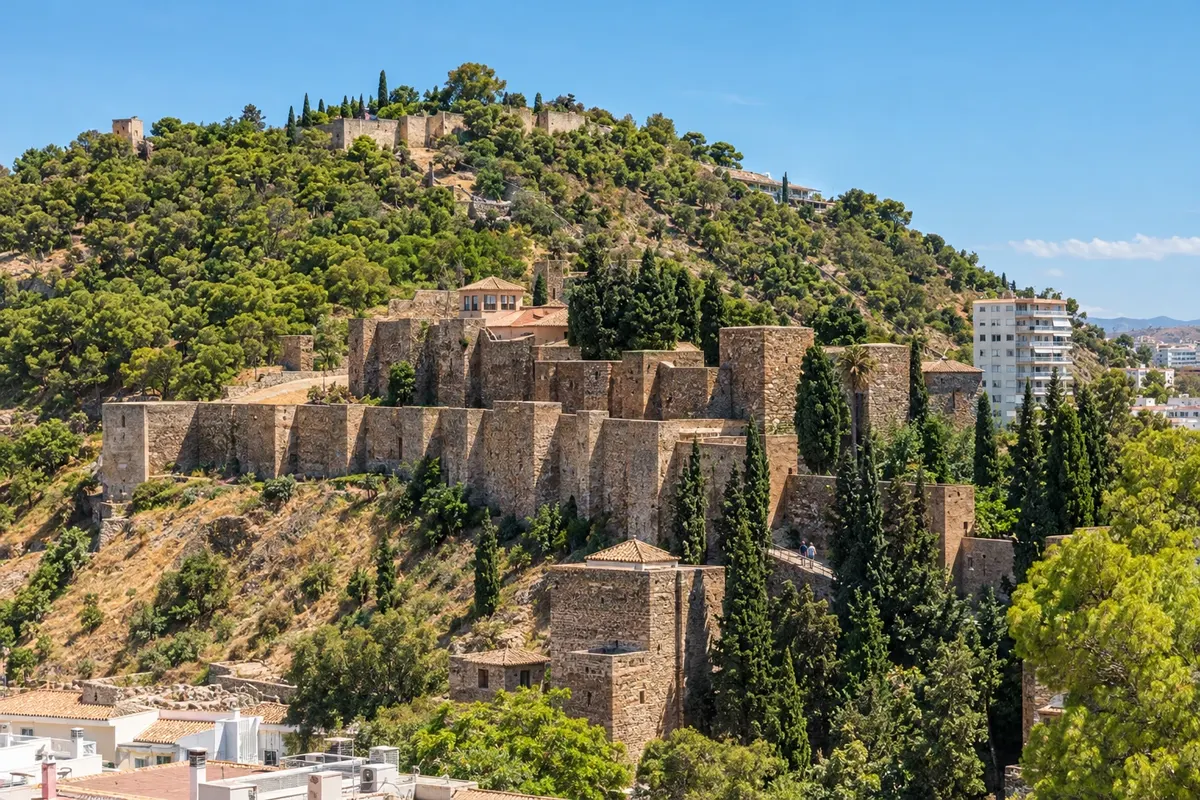
The processions pass through the historic center, between the cathedral, the Alcazaba and the Roman Theatre, and through the neighborhoods where the brotherhoods originated, such as El Perchel and La Trinidad, on the other side of the Guadalmedina River. Each return to the brotherhood’s house, when the trono is brought back, usually gathers neighbors late at night. For visitors, it is a large-scale Holy Week lived outdoors, with the mild spring weather of the Costa del Sol.


Share: WhatsApp

What not to miss

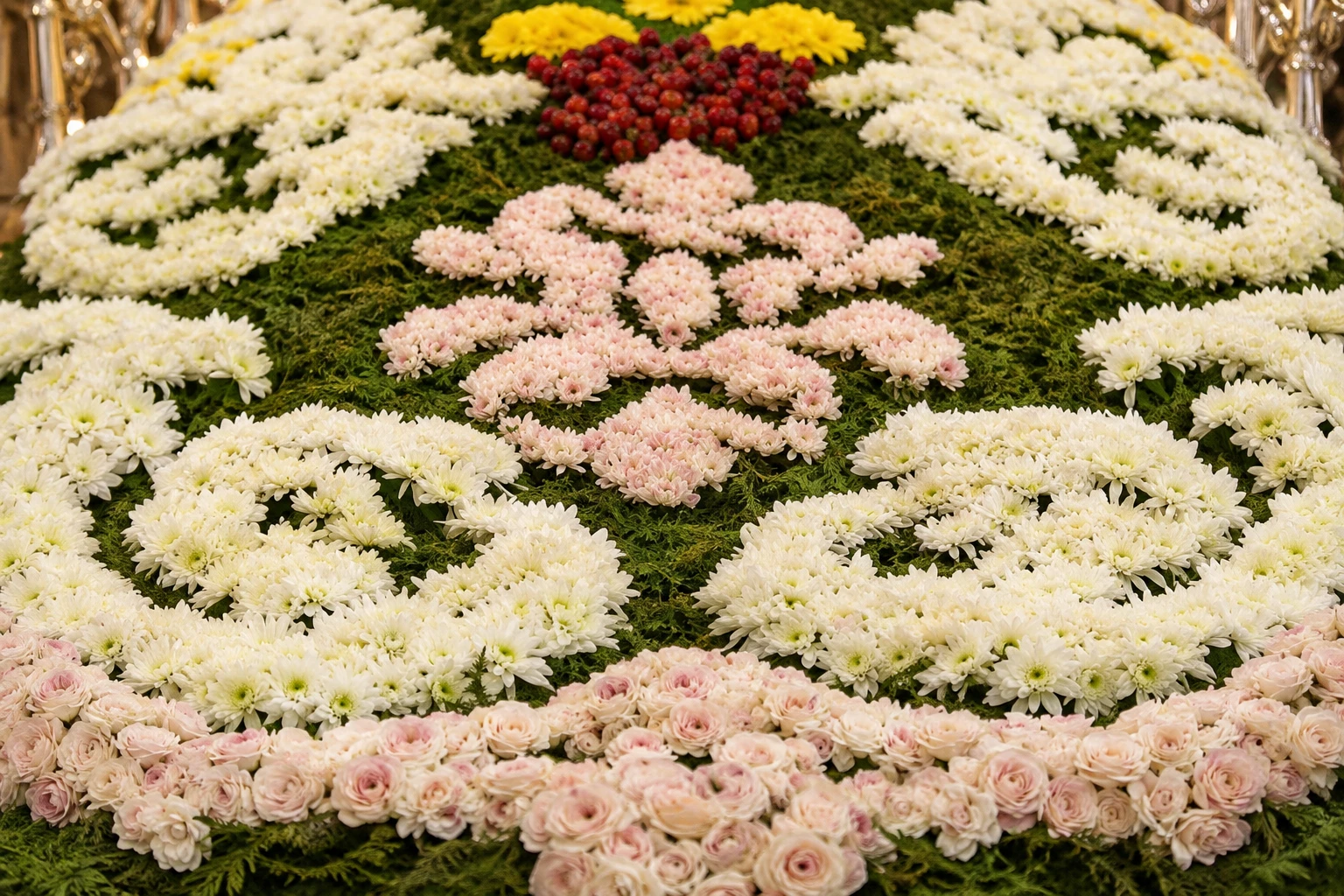
The Legion’s landing at the port and the transfer of the Cristo de Mena on the morning of Holy Thursday, and the Cristo de Mena procession on the night of the same day. The freeing of the prisoner by the Jesús El Rico brotherhood on Holy Wednesday. A trono passing along Calle Marqués de Larios with the grandstands full. A momento a pulso, when the men of the trono lift the float with their arms. The departures and returns in the El Perchel and La Trinidad neighborhoods, closer to local life. The departure of the Cautivo, the Señor de Málaga, on Holy Monday, and the Virgen de las Penas with her vegetal mantle. Rose petals thrown from balconies onto the tronos. The Resurrected procession on Easter morning, which closes the week.

How to enjoy it

Each brotherhood has its own schedules and routes, published by the brotherhoods’ association and on local apps; plan your day from those timetables. On the official route there are grandstands and seats that require a ticket; outside of that, you can follow the processions standing on the sidewalk. To see the Legion’s landing, arrive at the port very early; the transfer and procession of the Cristo de Mena draw large crowds. Central streets are closed and cut by the processions for hours; allow extra time to cross the city and prefer walking. Neighborhoods such as El Perchel, La Trinidad and Victoria let you see the tronos up close with fewer people than in the center. During moments of prayer, be silent and wait for the procession to pass before crossing the street. Spring usually brings warm days and cool nights; bring a light jacket.

What to eat

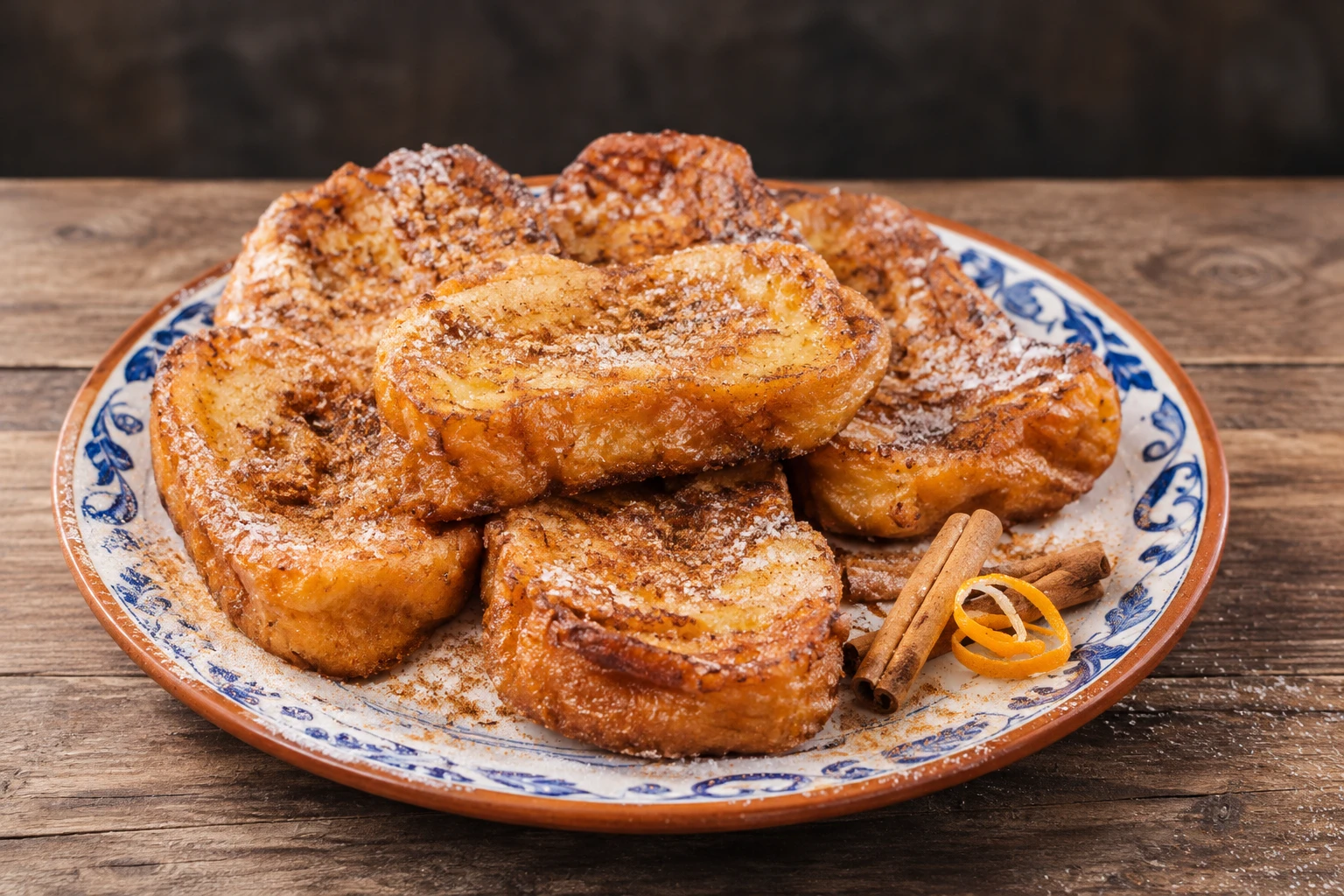
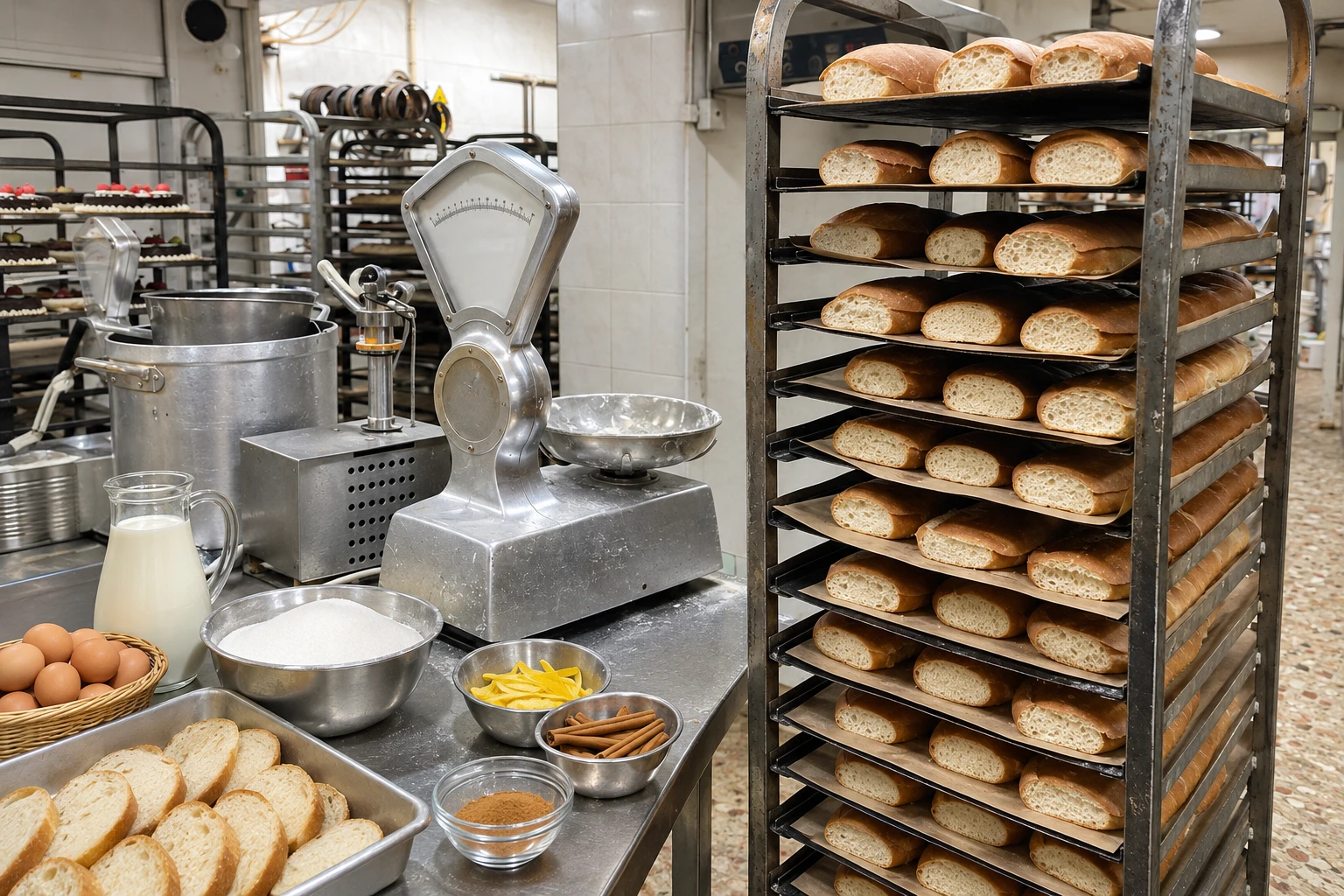
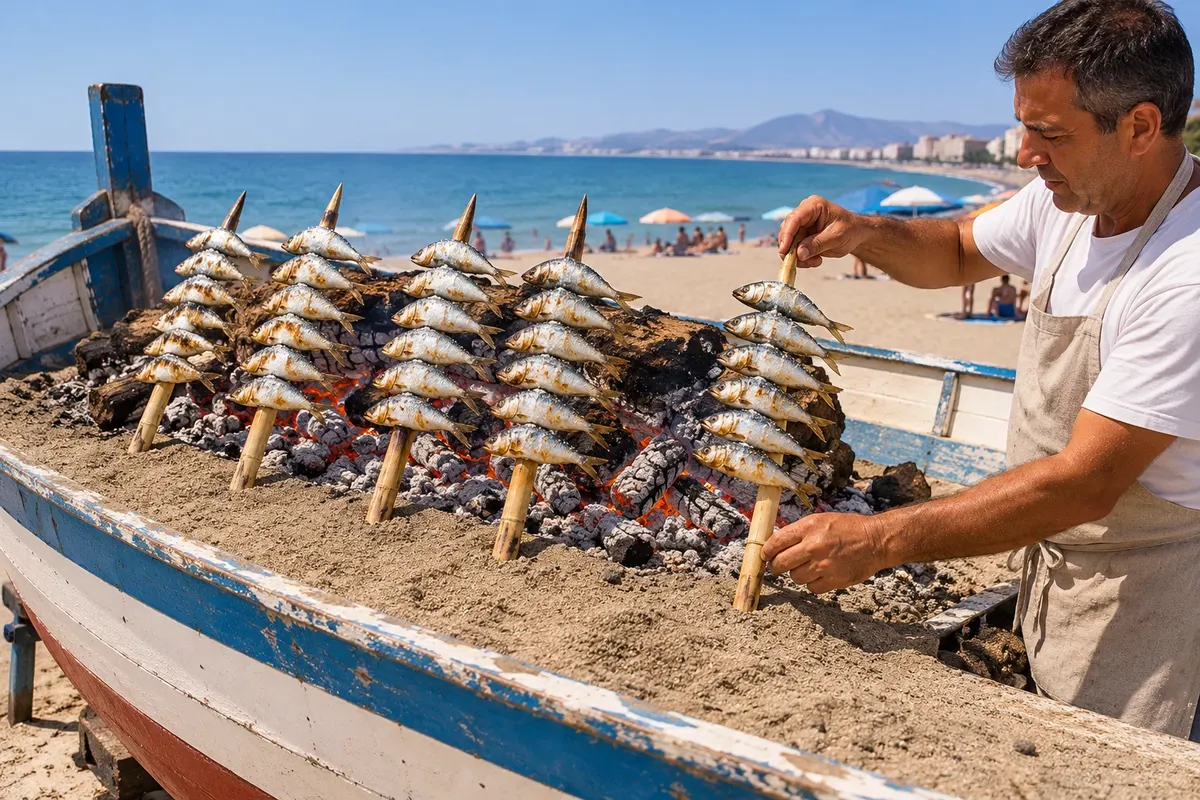
At Holy Week, Málaga’s pastry shops and bakeries prepare torrijas — day-old bread soaked in milk with cinnamon, fried and covered with honey or sugar. On meat-abstinence days, there are dishes such as potaje de vigilia, a chickpea stew with cod and spinach, and cabbage stews. A local tradition is limones cascarúos, large peeled lemons eaten with salt or sugar. Between processions, center taverns offer snacks and the city’s typical fried fish, such as boquerones.

Plan ahead

Accommodation in central Málaga usually sells out early during Holy Week; it’s worth booking in advance or staying in nearby neighborhoods and towns on the Costa del Sol served by the cercanías train. Seats on the stands along the official route are sold in advance. Check the brotherhoods’ association website for the year’s program, with schedules and routes.

In the city

Make the most of Málaga

Flavors of Spain

To try in Málaga

Discover other flavors of Spain

March/April

Around the same time

Carnival of Santa Cruz de Tenerife February/March
Popular festival · Santa Cruz de Tenerife

Carnival of Santa Cruz de Tenerife

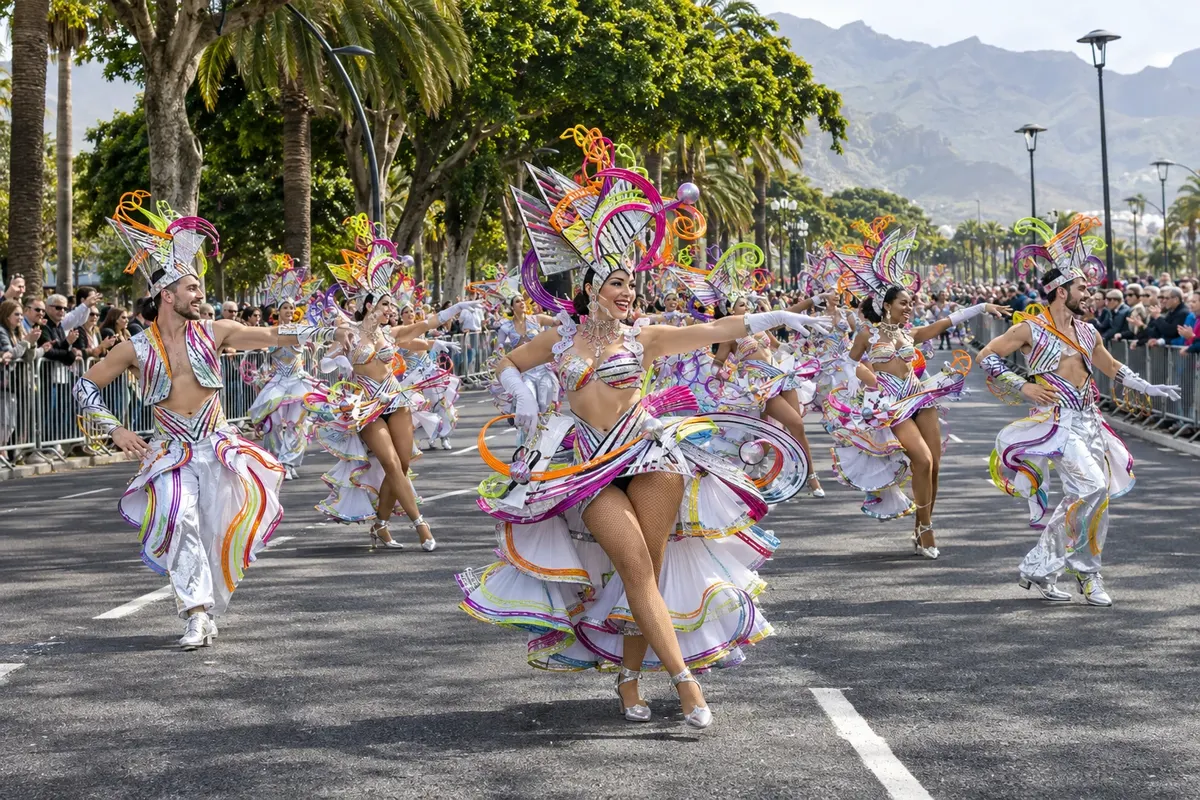
At the end of winter, between February and March, following the movable Carnival calendar: the contests and the queen’s gala take place in the preceding weeks, and the streets celebrate from the opening cavalcade until the weekend after Ash Wednesday.

The capital of Tenerife’s Carnival, in the Canary Islands, with a monumental fantasy queen, murgas, comparsas and rondallas, the big Coso parade on Carnival Tuesday and balls that fill the squares and avenues of the center until dawn.

Holy Week in Seville March/April
Religious festival · Seville

Holy Week in Seville

From Palm Sunday to Easter Sunday, in March or April depending on the date of Easter; smaller processions begin on the previous Friday, Friday of Sorrows.

During Holy Week, the brotherhoods of Seville, the capital of Andalusia, carry images of Christ and the Virgin through the streets on gilded floats carried by costaleros and followed by long lines of penitents, on routes that pass by the cathedral day and night, until the early hours of Good Friday.

Your questions

Questions about Málaga Holy Week

On what dates does Málaga’s Holy Week fall?

In the week before Easter, from Palm Sunday to Resurrection, between March and April. The processions take place every day, in the afternoon and at night.

What is the Legion’s landing in Málaga?

On the morning of Maundy Thursday, legionnaires arrive by boat at the port and march to the church of Cristo de Mena, which they carry in procession through the streets. In the evening, they escort the procession of that image.

What is the difference between Málaga’s tronos and Seville’s pasos?

Málaga’s tronos are larger and carried on the shoulders by men who are visible at the side poles. In Seville, the costaleros are hidden underneath the platform.

Where can you see the processions in Málaga?

On the official route, which links Plaza de la Constitución to the cathedral via Calle Marqués de Larios and Alameda Principal with paid grandstands, or at any point along the neighborhood itineraries, where you can watch up close from the street.

Festivals and events in Spain

Other festivals

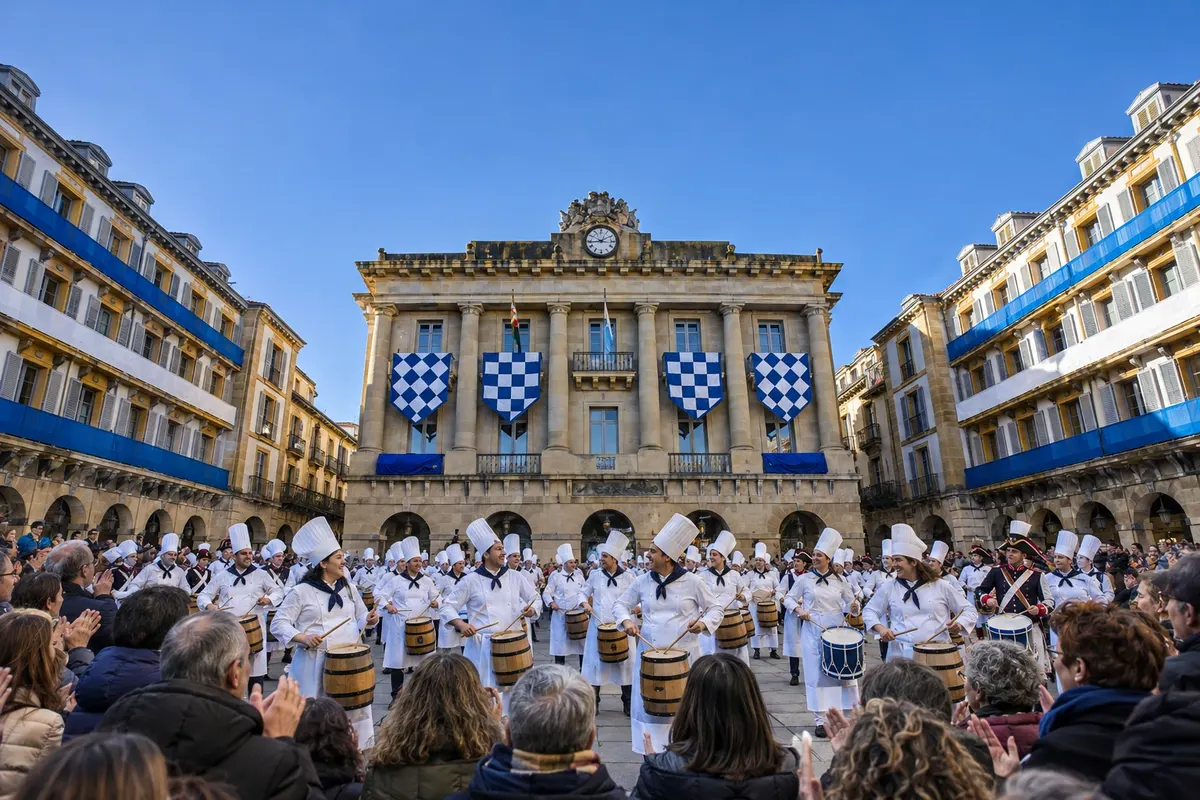
Tamborrada of San Sebastián January
Popular festival · San Sebastián

Tamborrada of San Sebastián

On January 20, the feast day of Saint Sebastian, the city's patron: the celebration begins at midnight between January 19 and 20 and ends at the following midnight.

For 24 hours on January 20, San Sebastián, in the Basque Country, honors its patron saint to the sound of drums and barrels: uniformed companies parade through the city playing the marches of Raimundo Sarriegi, from the raising of the flag in Plaza de la Constitución until the lowering in the same square.

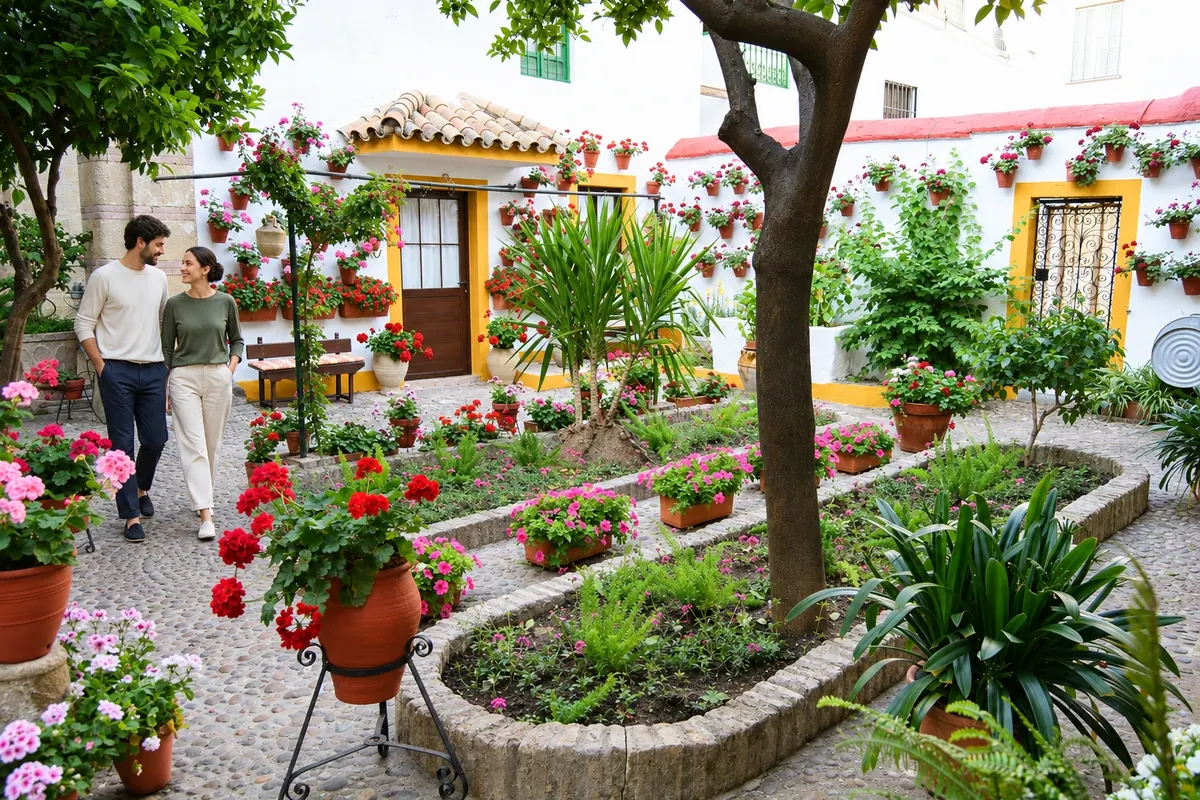
Festival of the Patios of Córdoba May
Culture · Córdoba

Festival of the Patios of Córdoba

In the first weeks of May, for about two weeks, after the Cruces de Mayo at the start of the month; the dates are set each year by the city council.

In May, residents of Córdoba in Andalusia open the patios of their homes—filled with pots of flowers—to the public in a municipal contest that has existed since 1921 and is on UNESCO’s list of intangible heritage; it takes place during the month of the Cruces de Mayo, the flowered balconies and the city fair.

See the full calendar