

 Brazil
 Antarctica
 Argentina
 Bolivia
 Chile
 Colombia
 Ecuador
 Guyana
 French Guiana
 Falkland Islands (Malvinas)
 Paraguay
 Peru
 Suriname
 Uruguay
 Venezuela
 Germany
 Austria
 Belgium
 Croatia
 Denmark
 Slovakia
 Spain
 Finland
 France
 Greece
 the Netherlands
 Hungary
 Ireland
 Iceland
 Italy
 Luxembourg
 Norway
 Poland
 Portugal
 the United Kingdom
 the Czech Republic
 Sweden
 Switzerland
 Turkey
 Bermuda
 Canada
 the United States
 Greenland
 Mexico
 Saint Pierre and Miquelon
 the Dominican Republic
 Japan
 South Africa
 Egypt
 Australia
 Fiji
 New Zealand
 Papua New Guinea
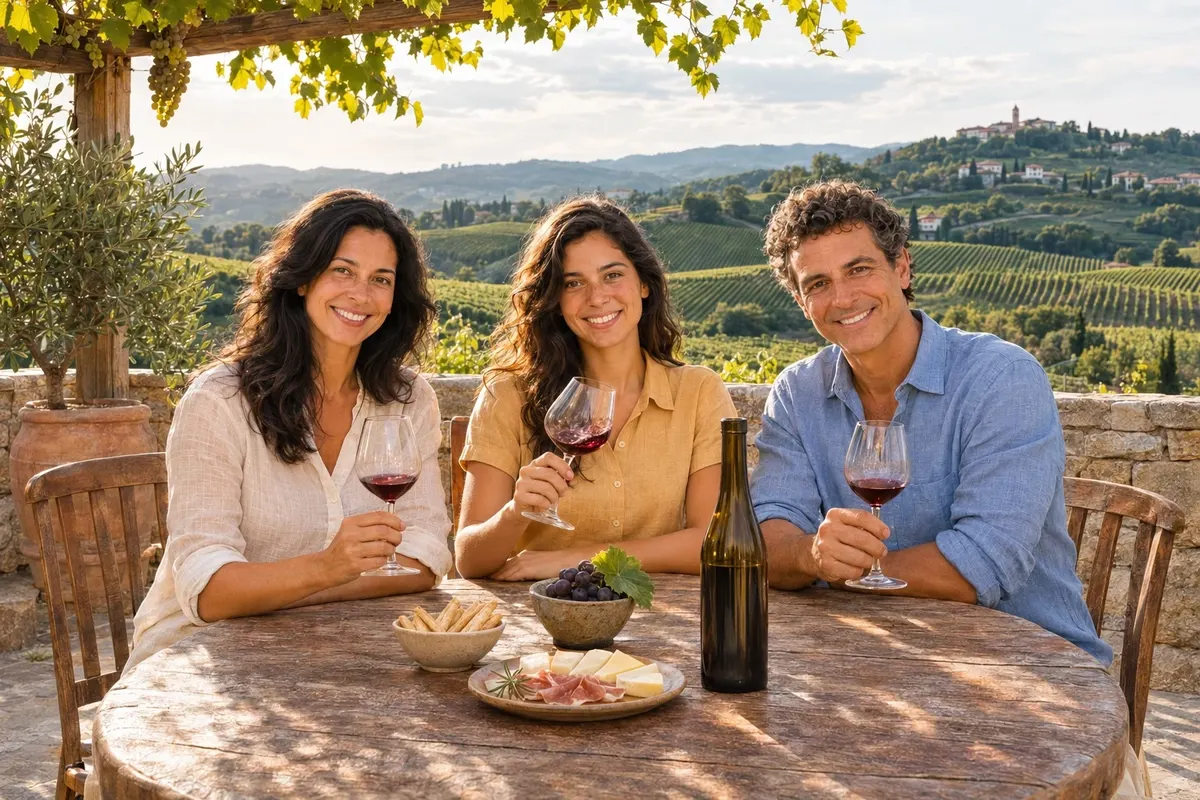
Illustrative images. The pictures in this guide are illustrations based on the real place, not photographs, and may differ from it.


Wine and drinks
Sparkling wines in Slovenia
Explore Slovenian penina and compare in the glass the effects of fermentation and cellar aging time.
Penina is a word to remember before opening the wine list in Slovenia. That’s how you find Slovenian sparkling wine, whether to toast with a glass, accompany a meal, or learn about a winery’s work. The term identifies the wine type. To know if it’s dry, rosé, or made by the traditional method, read the rest of the label.
A good way to discover your preferred style is to taste two sparkling wines that have something in common. Keeping the sweetness level similar, for example, makes it easier to notice how one recalls fresh fruit and the other brings bread-like notes. That small comparison already gives you plenty to talk about during the visit.
How to read the label of a penina
Start with the color and the sweetness indication. White and rosé describe appearance, while brut indicates a dry style. A rosé penina can be as dry as a white one. If the menu shows only the bottle name, ask for those two details before choosing a glass for the table.
Grape variety is another clue, when it appears. Some wines blend more than one grape, and a bottle without a prominent vintage may combine wines from different years. At a tasting, ask what the producer aimed to preserve from one lot to another. Sometimes the intention is precisely to achieve a recognizable style in each new release.
Where the bubbles come from
In sparkling wines made with a second fermentation, the starting point is an already finished wine called the base wine. Yeasts transform sugar and release carbon dioxide. Because the fermentation happens in a closed container, the gas dissolves in the liquid. When you open the bottle, the pressure drops and the bubbles appear in the glass.
In the traditional method, that second fermentation takes place in the bottle itself. The time spent on the lees can bring aromas that recall bread dough. In another method, the second fermentation occurs in a pressurized tank before bottling. Asking where it took place helps you understand the equipment you see on a visit and the wine that will be served afterward.
What to observe during the tasting
After the initial foam subsides, bring the glass to your nose and take a small sip. Notice the acidity that makes your mouth water and the sensation of the bubbles on your tongue. If you return to the same wine a few minutes later, the aroma may be more noticeable. You don’t need to vigorously swirl the glass to make that comparison.
If there is food, try a sip before and another after the first bite. A piece of cheese changes the perception of freshness and texture, even with the same wine in the same glass. If you plan to take a bottle to dinner, tell the host which dish it will accompany and ask for a suggestion among the sparkling wines tasted.
How to find the experience you want
In the description of a visit, look for the word penina and check how many of the wines served will be sparkling. A general tasting may include only one glass among several still wines. To observe the production stages, ask whether the tour goes into the production area or if the discussion happens at a table with the bottles.
If your goal is simply to discover a Slovenian sparkling wine during the trip, a glass with a meal also works. Ask which bottle is open and note the full name if you want to find it again. For a visit with a tasting, arrange your return to lodging in advance.
Frequently asked questions
What does penina mean on a Slovenian wine list?
It means sparkling wine. The word alone doesn’t indicate the grape, the method, or the sweetness. Look for those details in the wine description or ask the server for help.
Can a penina brut be rosé?
Yes. Brut indicates the level of sweetness, and rosé describes the color. To compare a white and a rosé, choose two with similar sweetness and observe the differences in aroma and texture.
Do you need to travel during harvest to taste sparkling wine?
No. The harvest (vindima) is the time of grape picking. To taste a finished penina, look for a tasting scheduled during your trip and check the winery’s availability.

Beyond the guide


