Belokranjska povitica
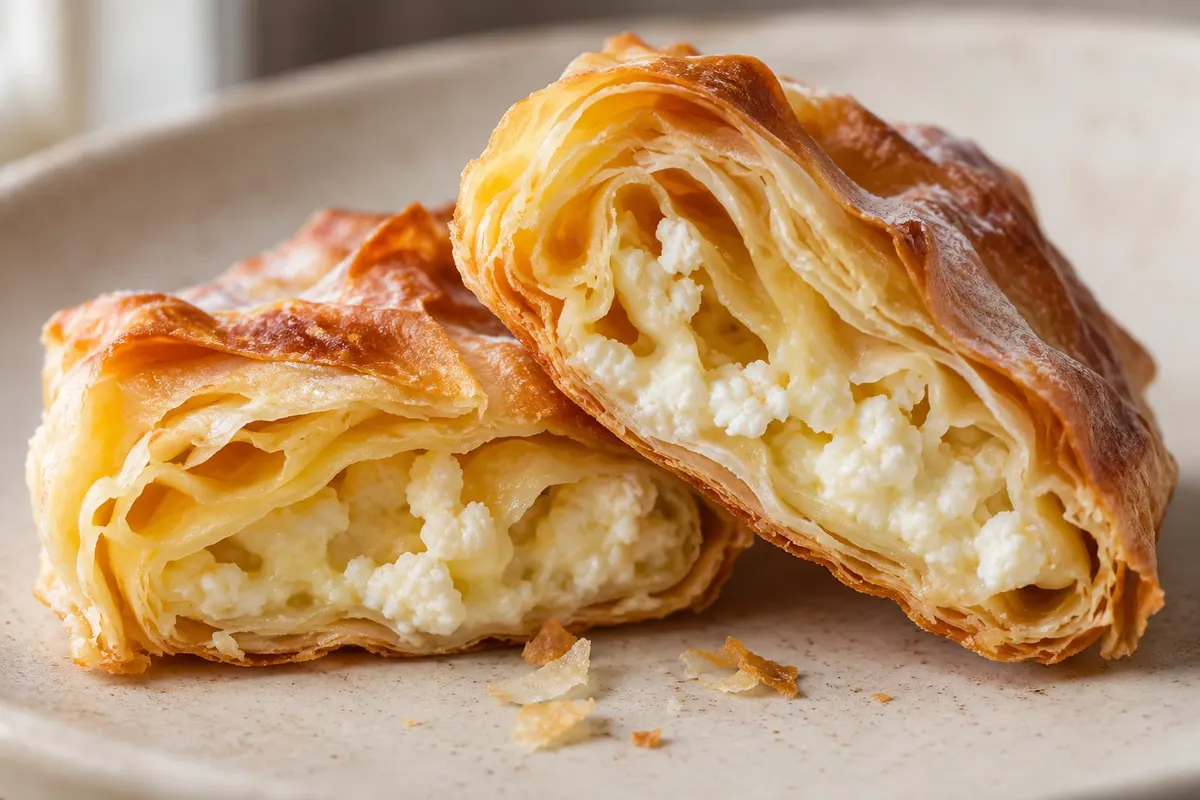
A long, slender roll of hand-stretched dough filled with curd cheese, eggs, and cream, baked until golden and crisp, and served in round slices. It’s savory, not sweet, and is one of White Carniola’s specialties.
Antarctica
Culture · Črnomelj
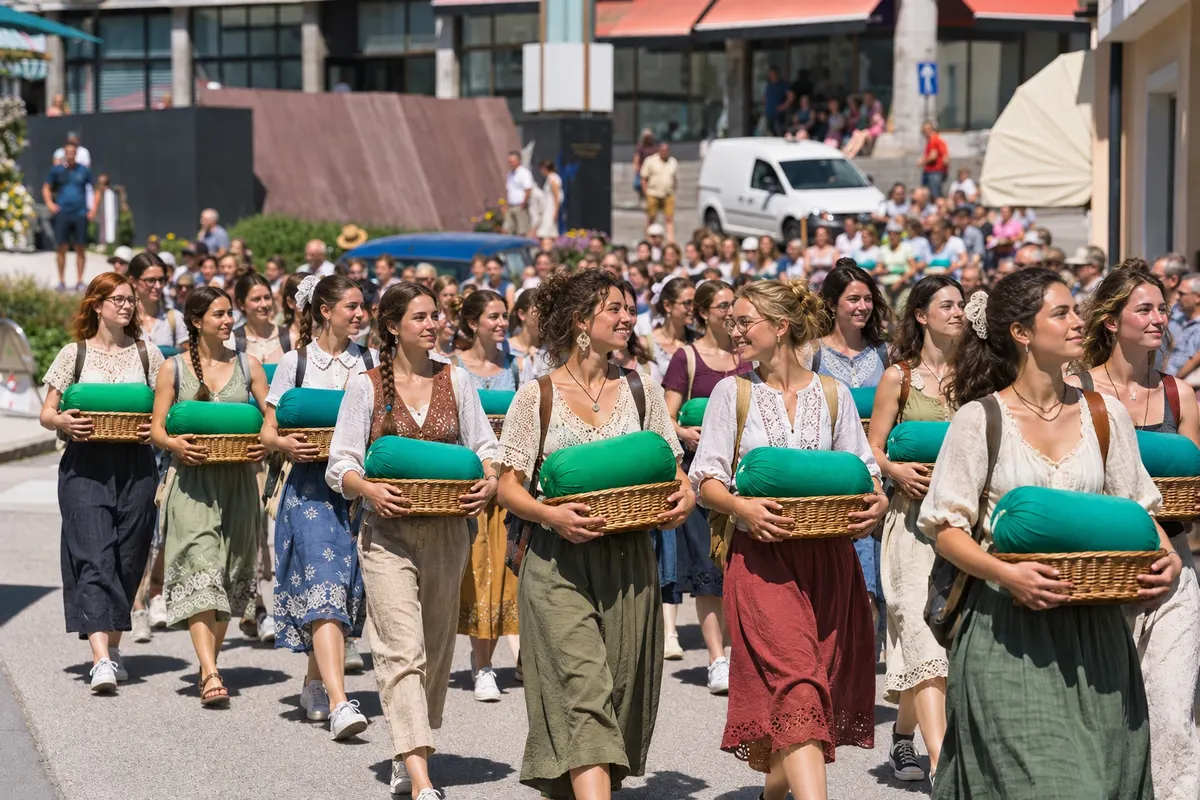
In June, Črnomelj, the main town in Bela Krajina, becomes the capital of Slovenian folklore. Jurjevanje, the country’s oldest folklore festival, brings together dance and music groups from across Slovenia and abroad and showcases the region’s dances, songs, and customs.
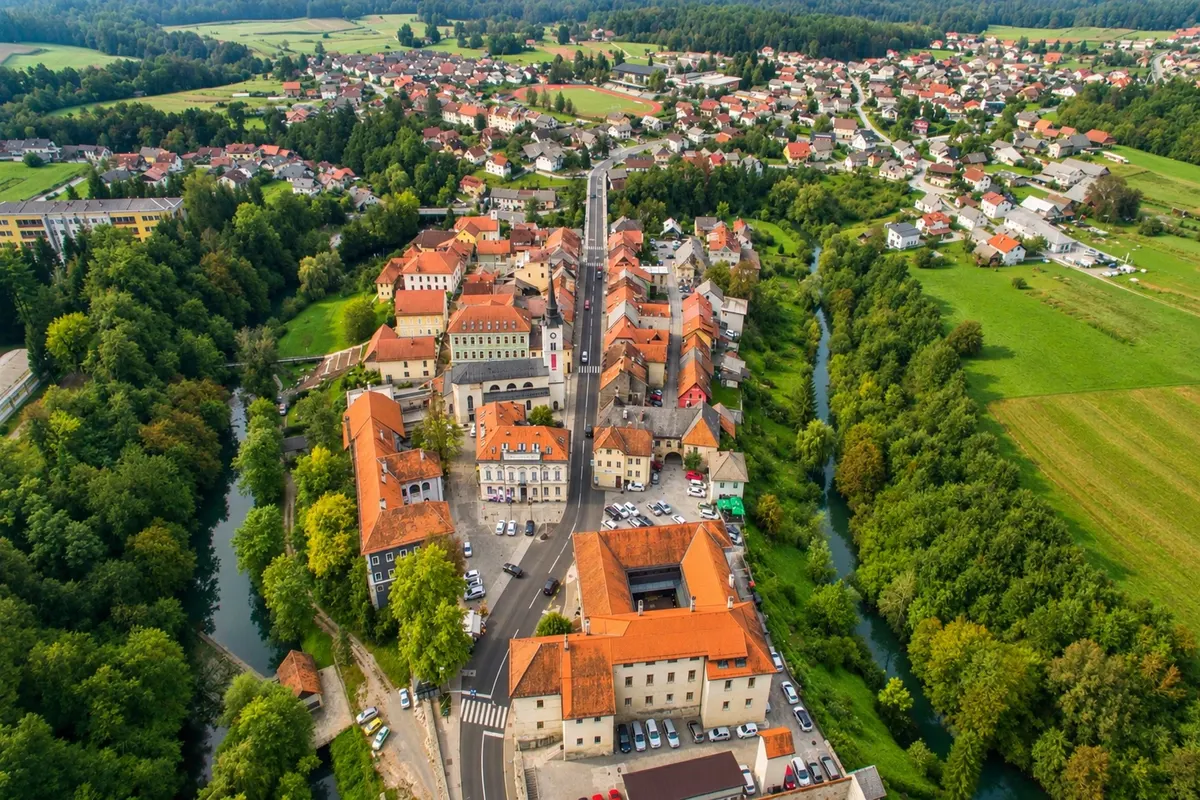
In the photo: Črnomelj
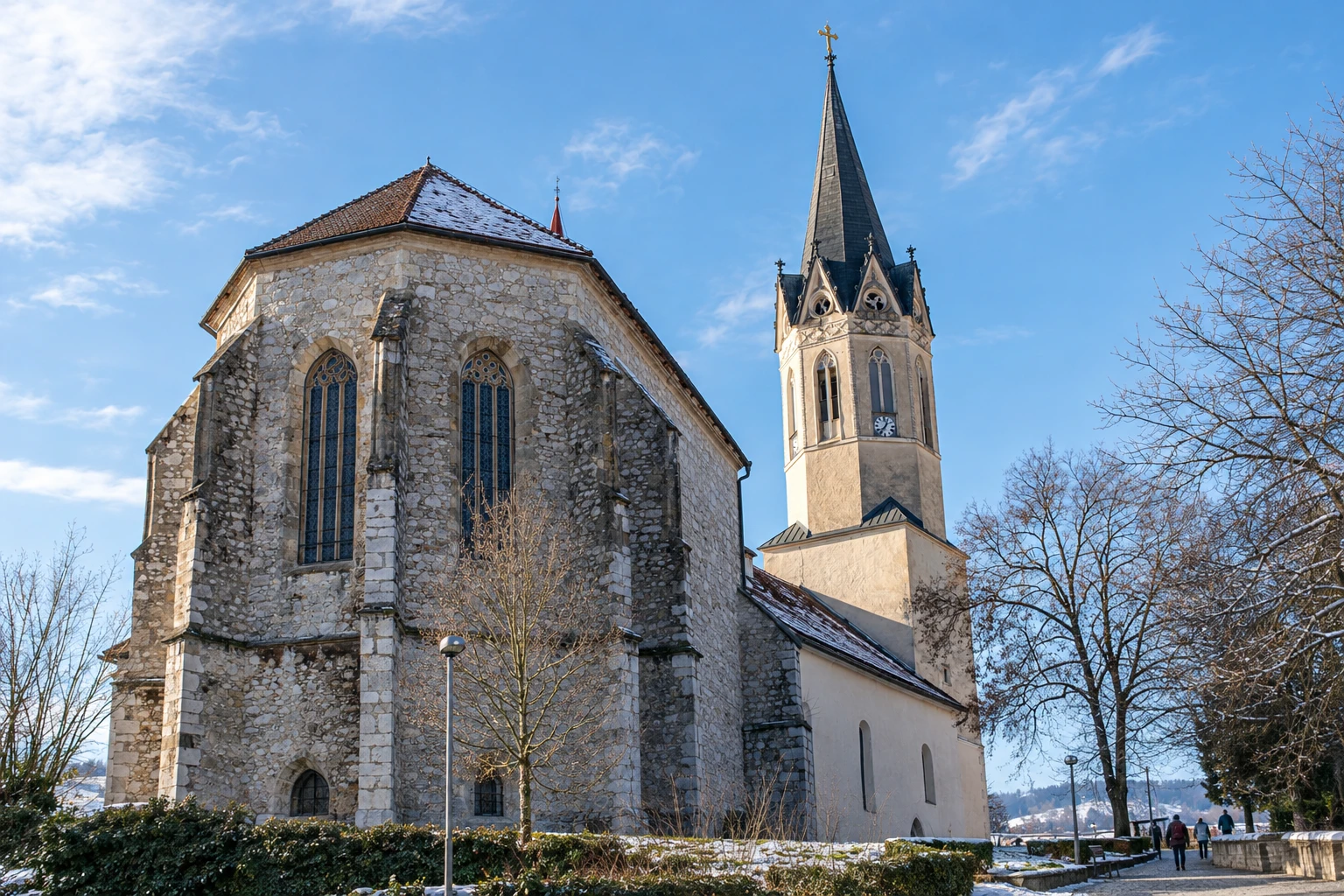
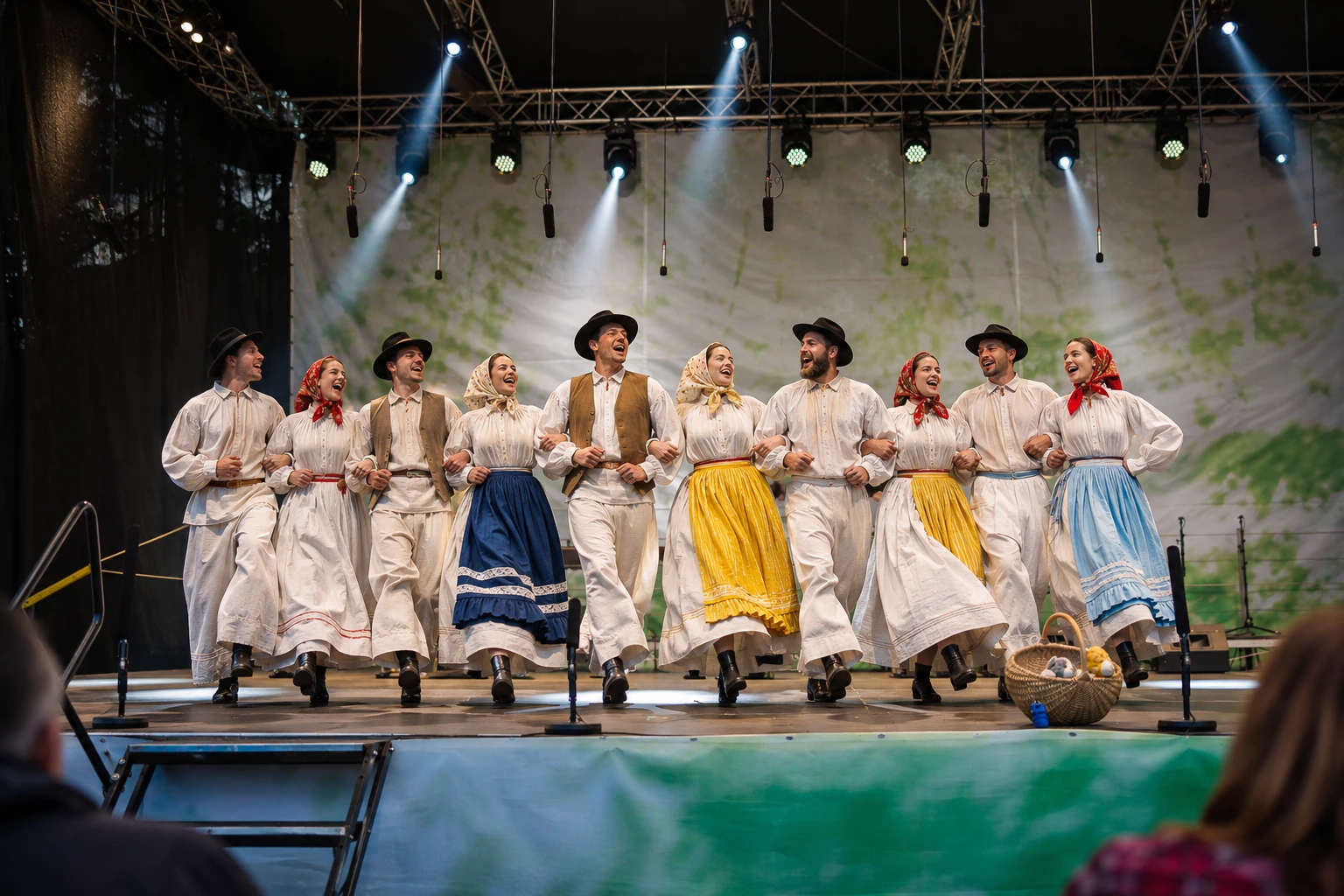
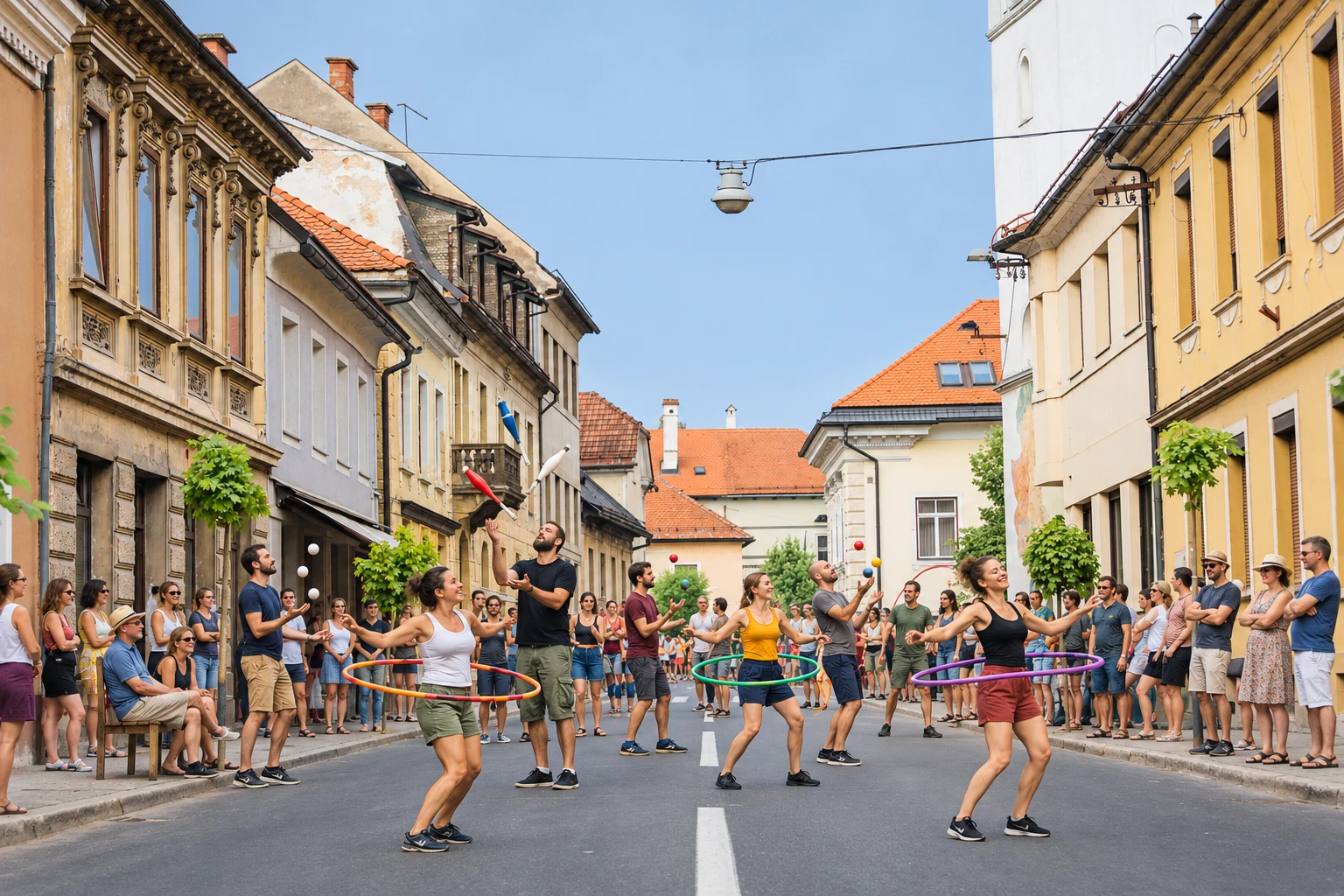
Illustrative images. The pictures in this guide are illustrations based on the real place, not photographs, and may differ from it.
Click the picture to enlarge it.
Jurjevanje in Bela Krajina — Črnomelj
In the second half of June.
June
Dates change every year: check this year's date before you travel.
The festival
Bela Krajina, also known as White Carniola, lies in the southeastern corner of Slovenia, on the border with Croatia. It is a land of white birches, vineyards on low hills, and the Kolpa River, whose waters are warm in summer. Its main town, Črnomelj, has a small historic center on a bend in the Lahinja River. This is where Jurjevanje takes place every June.
The festival takes its name from the feast day of Saint George, known as Jurij in Slovenian, and from Zeleni Jurij, or Green George. In local tradition, Green George was a young man covered in leaves and branches who went from village to village announcing the arrival of spring to the accompaniment of song and dance. Črnomelj was already hosting gatherings devoted to the folk songs and dances of Bela Krajina in the 1930s. The festival in its present form began in 1964 and is considered the oldest folklore festival in Slovenia.
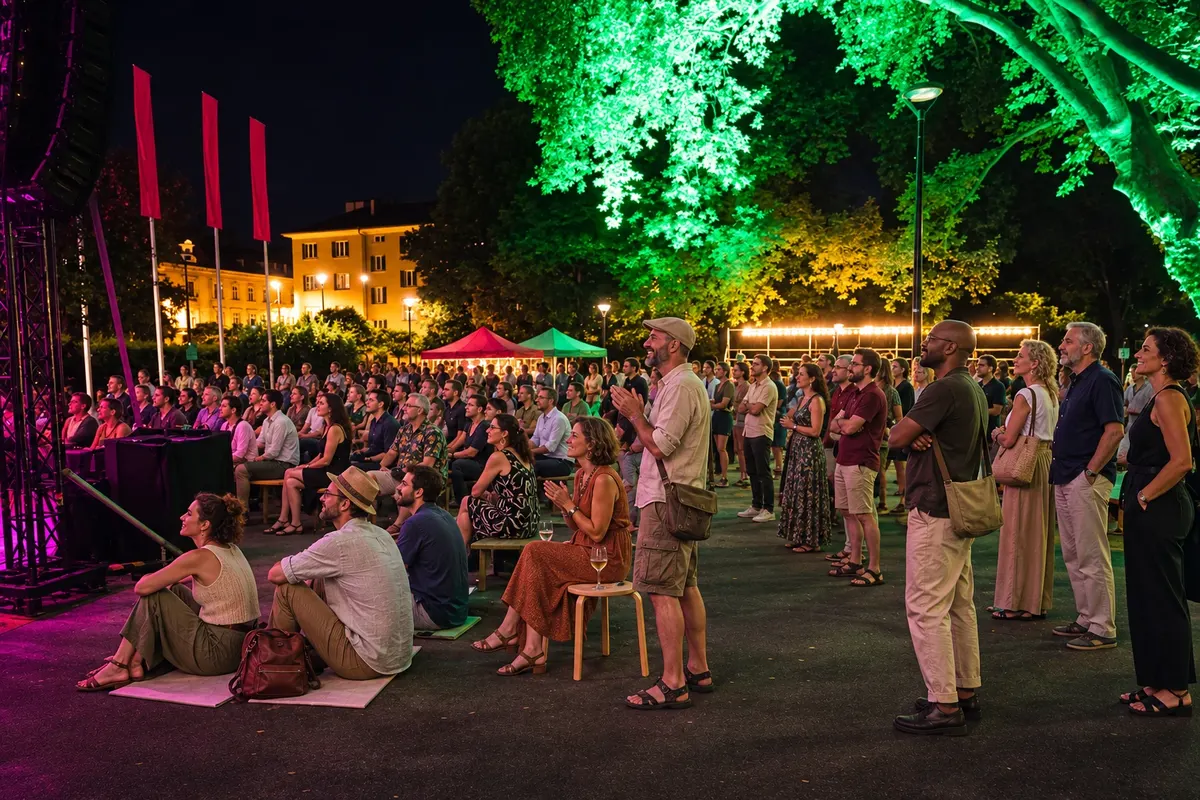
During the festival, folk groups from several regions of Slovenia and guest groups from other countries perform on the outdoor stage in Jurjevanjska draga, a wooded valley beside the town, and in the streets and squares of the historic center. The program includes performances by children’s groups, dance and craft workshops, and stalls serving food from Bela Krajina. The festival is part of CIOFF, the international council for folklore festivals.
If you live in Slovenia, the festival is a chance to experience Bela Krajina’s circle dances, embroidered white linen costumes, and songs firsthand. These are rarely seen or heard elsewhere in the country, and you can combine the festivities with a few days by the Kolpa.
It’s worth making the trip in early summer: the festival coincides with the swimming season on the Kolpa, and Črnomelj is close to Metlika, the region’s wineries, and the villages of Bela Krajina with their churches and traditional houses.

The performances on the outdoor stage in Jurjevanjska draga. The circle dances and white linen costumes of Bela Krajina.
Check the program on the festival website and choose which evenings to see performances in Jurjevanjska draga. Set aside a day for the Kolpa River, which has swimming spots in Vinica, Adlešiči, and other villages in the region. Stay in Črnomelj or Metlika, or at a farm stay in Bela Krajina.
Belokranjska pogača, the region’s round bread topped with caraway seeds and coarse salt; belokranjska povitica, a savory roll made with stretched dough and filled with curd cheese; and wines from Bela Krajina, such as Metliška črnina.
Dates and program details are posted on the Jurjevanje website and the Bela Krajina tourism website. If you’re driving, take the highway from Ljubljana to Novo mesto, then continue on regional roads. There is also train service between Ljubljana and Črnomelj.
In the city
Flavors of Slovenia
June
May/JuneFor about two weeks, from late May to early June, during the flowering season of Bohinj’s meadows.
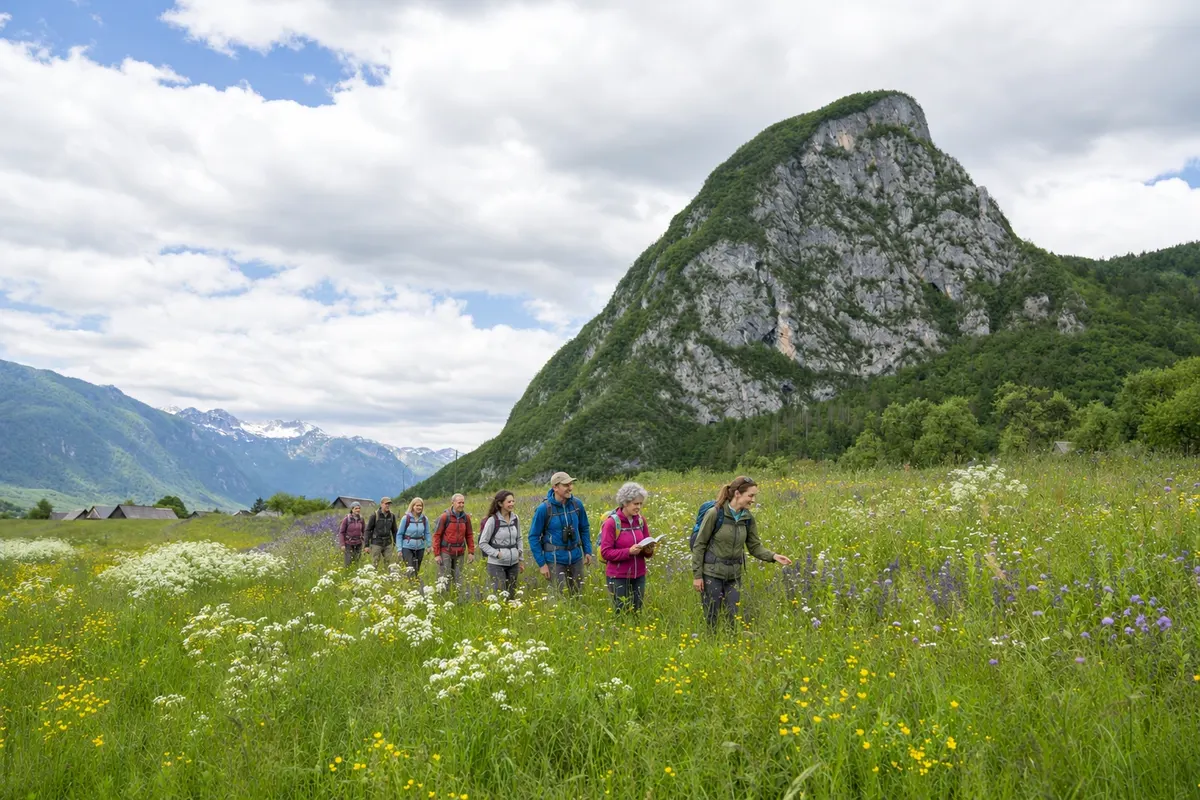
In late spring, Bohinj, in the heart of Triglav National Park, devotes two weeks to the flowers of the Julian Alps, with guided botanical walks, exhibitions, workshops, and restaurant menus featuring wild plants from the valley.
JuneOn the third weekend of June, from Friday to Sunday.
On the third weekend of June, Idrija, the former mining town in western Slovenia, celebrates bobbin lace with exhibitions, fashion shows, workshops and the national contest for young lacemakers in the main square.
June/JulyFor a few days in June or July; dates vary each year.
Founded in 1960, the Ljubljana Jazz Festival is the oldest continuously running jazz festival in Europe: for a few days at the start of summer it brings together Slovenian and international musicians at Cankarjev dom and at the Križanke outdoor theatre.
Your questions
It’s Slovenia’s oldest folklore festival. Held in Črnomelj, in Bela Krajina, since 1964, it features dance and music groups from Slovenia and abroad.
Every year in the second half of June. The dates are posted on the festival website.
Zeleni Jurij is Green George, a figure from Bela Krajina folklore: a young man covered in leaves and branches who announced the arrival of spring in the villages to the accompaniment of song and dance. The festival is named after him.
Festivals and events in Slovenia
June/July/August/SeptemberDuring the summer, from June or July until the beginning of September.
Created in 1953, the Ljubljana Festival fills the capital’s summer with opera, ballet, symphony concerts, theater and folk music, in the Križanke courtyard, the former monastery remodeled by Jože Plečnik, and at Kongresni trg square.
June/JulyFor about nine days, beginning in late June and ending in early July.
At the start of summer, the Lent neighborhood, the old bank of the Drava in Maribor, and the central squares host Slovenia’s largest outdoor festival, with concerts on downtown stages, folklore, street theatre, and children’s programming.
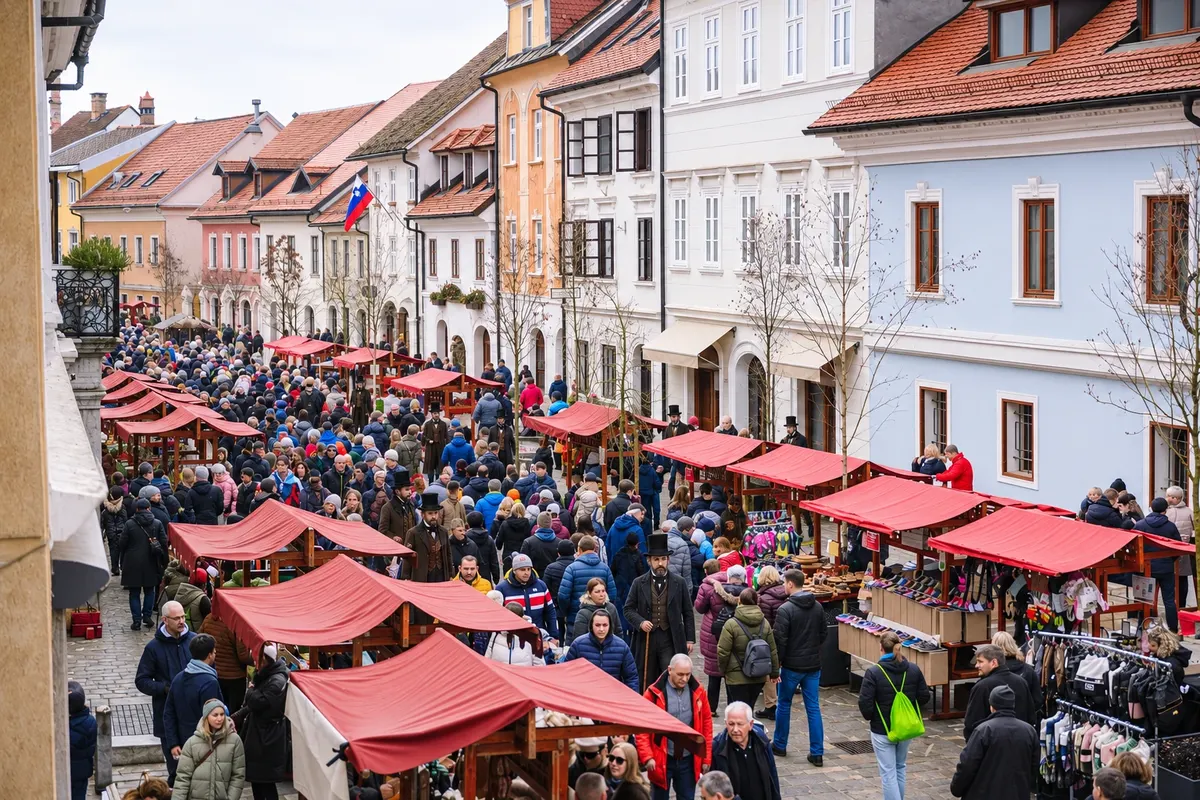
FebruaryFebruary 8, Slovenia’s national cultural holiday, with cultural events in the week leading up to it.
On February 8, Slovenian Culture Day, Kranj returns to the 19th century to honor France Prešeren, Slovenia’s national poet. The old town fills with craft stalls, barrel organ players, people in period dress, poetry readings, and street food.
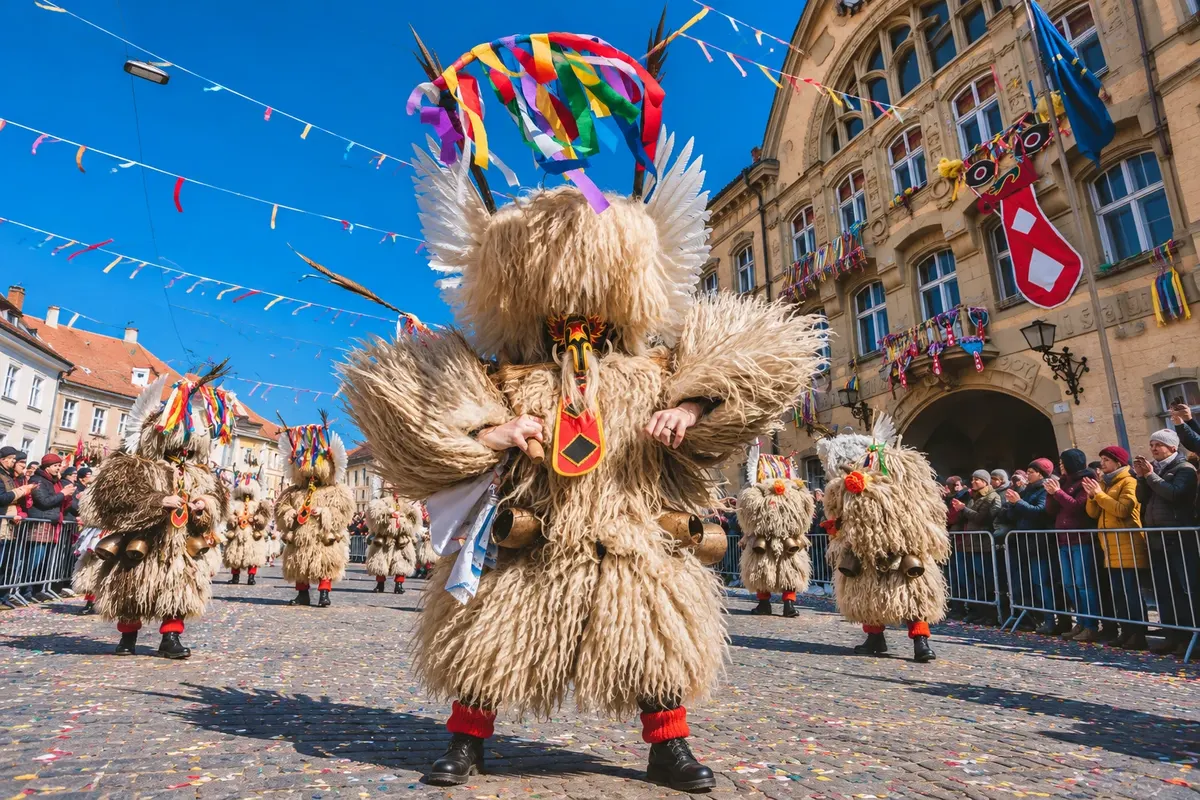
February/MarchOn the days before Lent, in February or March depending on the date of Easter, ending on Shrove Tuesday. The duration varies according to the program.
Slovenia’s largest carnival takes over Ptuj’s old town: the kurenti, figures dressed in sheepskins with horned or feathered masks and large bells at the waist, parade alongside other traditional regional characters to drive away winter.
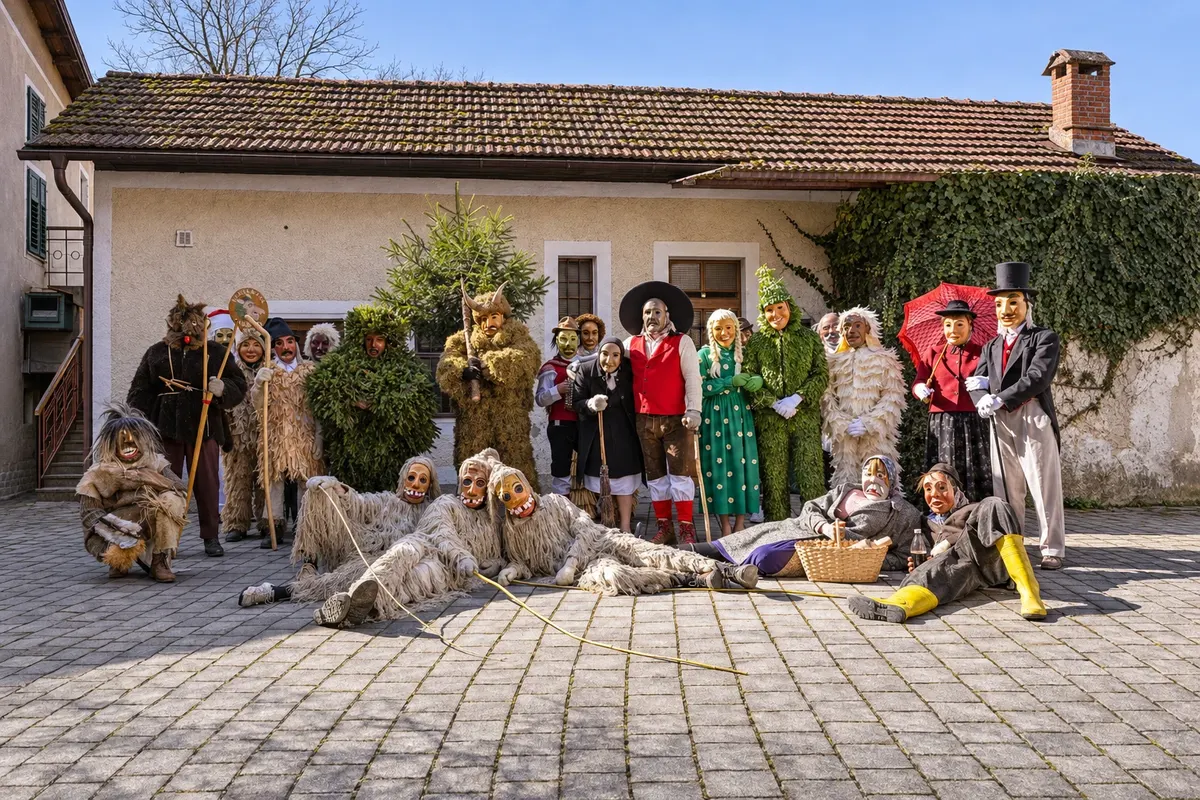
February/MarchOn the Sunday and Tuesday of Carnival, which fall between early February and early March according to the Easter calendar; the laufarji begin to appear in the streets on the preceding Sundays.
In Cerkno, in the hills of western Slovenia, the laufarji—figures wearing carved wooden masks—parade through town at Carnival and stage the trial and execution of the Pust, the moss-covered figure who carries the year’s misfortunes.
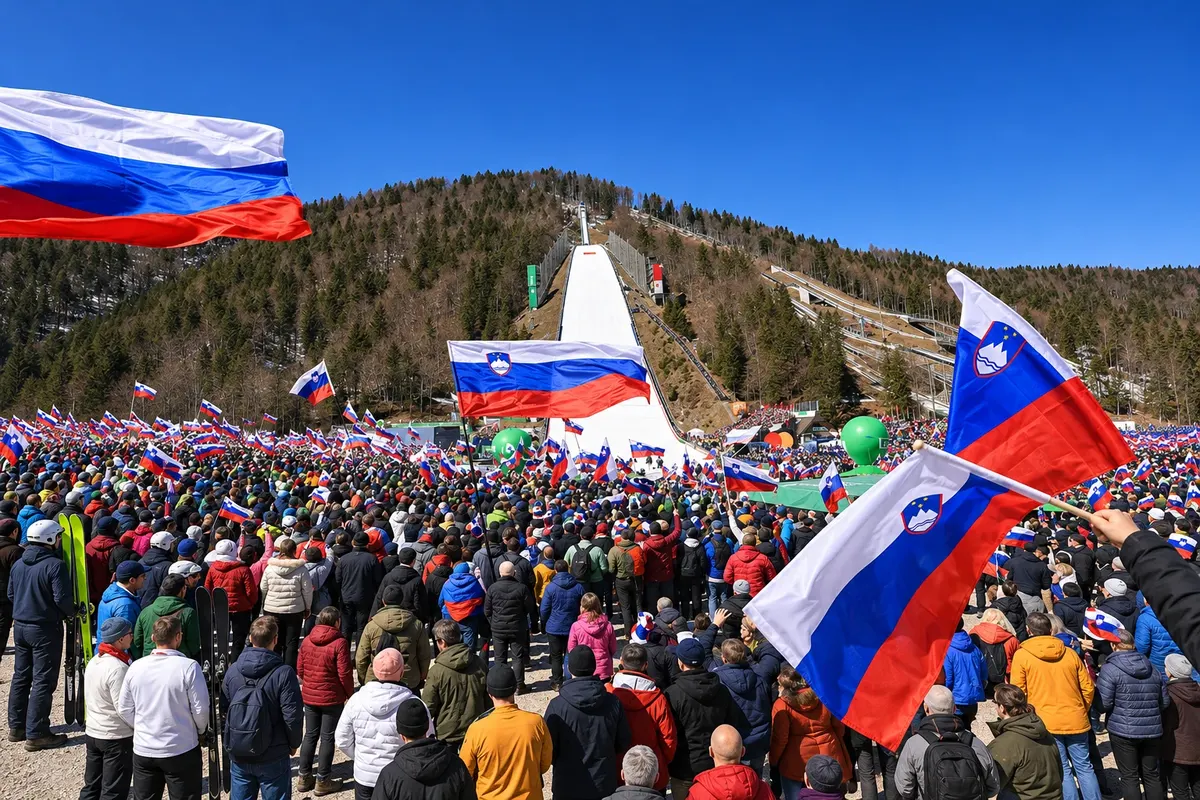
MarchIn March, from Thursday to Sunday, at the event that closes the Ski Jumping World Cup season.
Every March, the Planica valley, near Kranjska Gora, hosts the final stage of the Ski Jumping World Cup, held on the Gorišek Brothers’ flying hill, one of the largest in the world.
Beyond the guide