Dish · Idrija
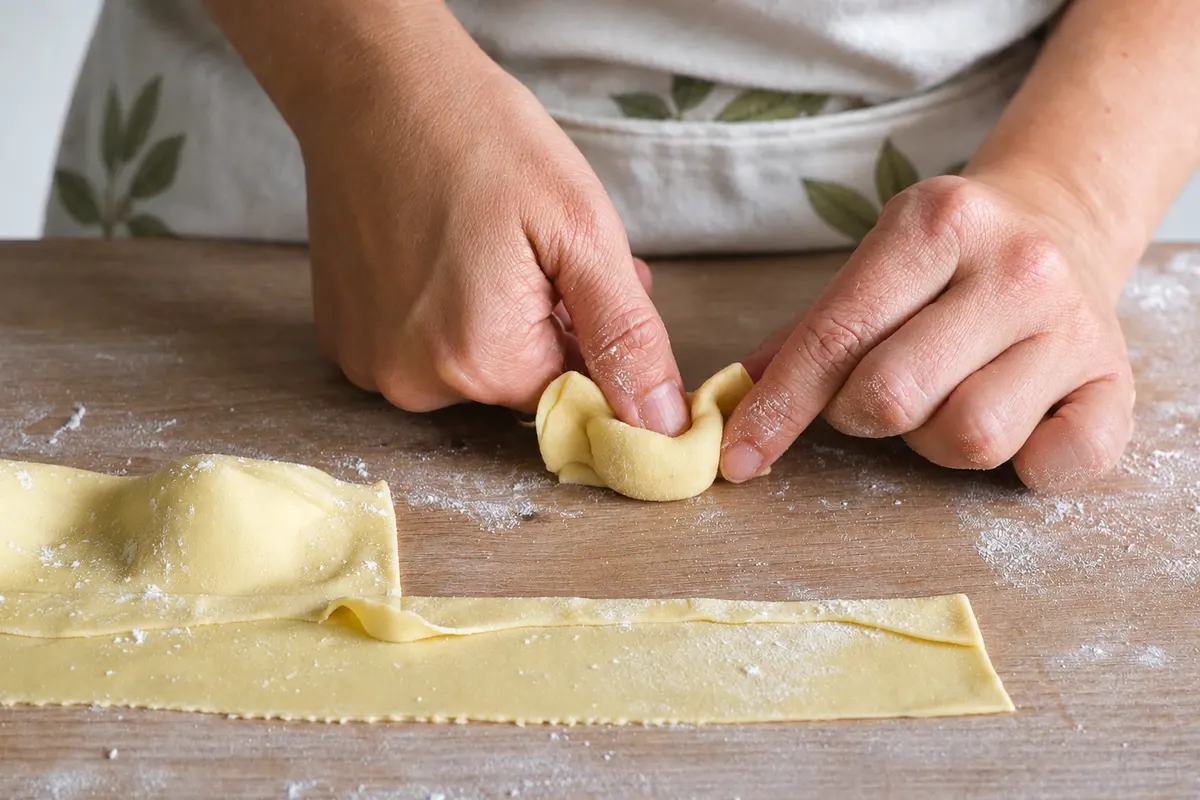
Idrijski žlikrofi
Small dumplings filled with potato, onion, bacon, and herbs, shaped like a little hat, from the old mining town of Idrija. The traditional accompaniment is bakalca, a lamb stew with vegetables.

 Search
 Brazil
 Argentina
 Bolivia
 Chile
 Colombia
 Ecuador
 Guyana
 French Guiana
 Falkland Islands (Malvinas)
 Paraguay
 Peru
 Suriname
 Uruguay
 Venezuela
 Germany
 Austria
 Belgium
 Croatia
 Denmark
 SlovakiaSlovenia
 Spain
 Finland
 France
 Greece
 the Netherlands
 Hungary
 Ireland
 Iceland
 Italy
 Luxembourg
 Norway
 Poland
 Portugal
 the United Kingdom
 the Czech Republic
 Sweden
 Switzerland
 Turkey
 Canada
 the United States
 Mexico
 the Dominican RepublicTurkey
 South Africa
 Australia
 Fiji
 New Zealand
 Papua New Guinea
Culture · Idrija
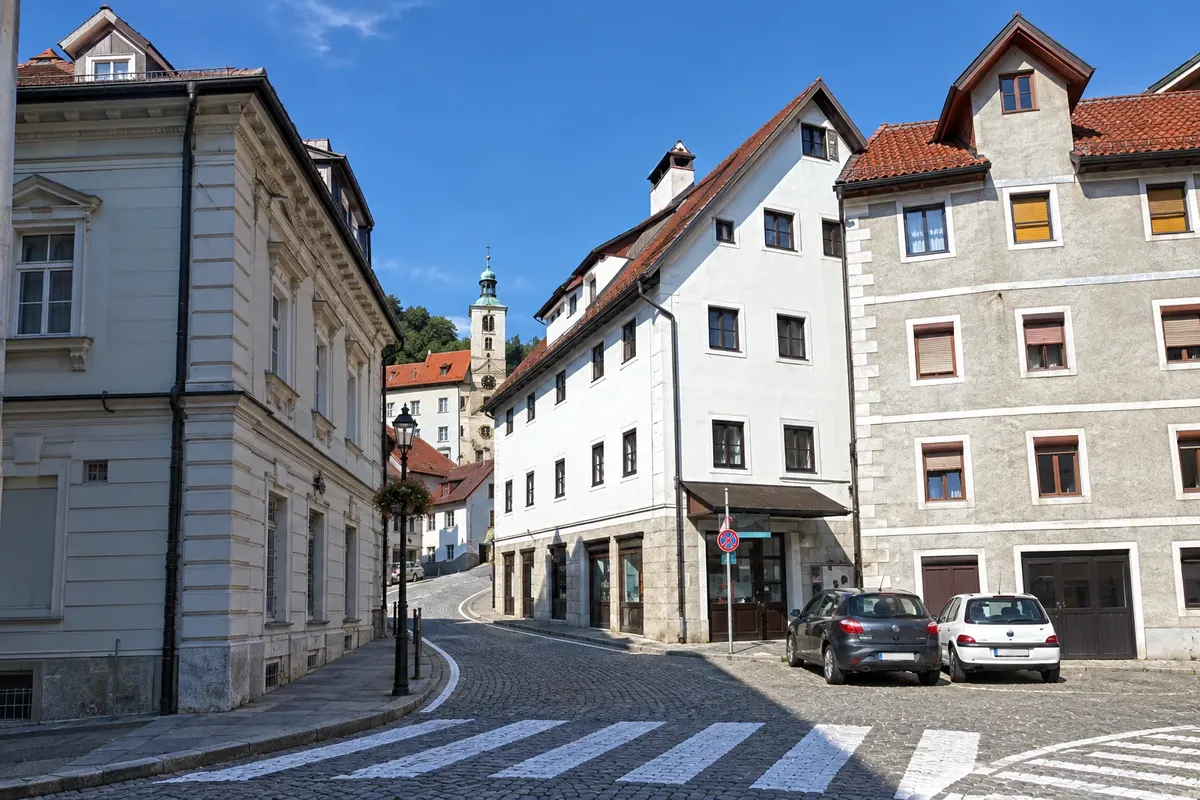
On the third weekend of June, Idrija, the former mining town in western Slovenia, celebrates bobbin lace with exhibitions, fashion shows, workshops and the national contest for young lacemakers in the main square.
In the photo: Idrija
Illustrative images. The pictures in this guide are illustrations based on the real place, not photographs, and may differ from it.

Click a photo to enlarge it.
Idrija Lace Festival — Idrija
On the third weekend of June, from Friday to Sunday.
June
Dates change every year: check this year's date before you travel.
The festival
Idrija is known for two traditions: the mercury mine, worked for five centuries and now listed as a UNESCO World Heritage Site, and bobbin lace, made in the town since the 17th century. While men worked in the mine, many women made lace to supplement family income, and the technique, passed down through generations, developed into a distinctive style known as Idrija lace.
The town has had a lace school since 1876 that has never ceased operating and is considered the oldest continuously operating lace school in the world. Idrija lace has protected geographical indication, and the Slovenian bobbin-lace technique has been inscribed by UNESCO as intangible cultural heritage.
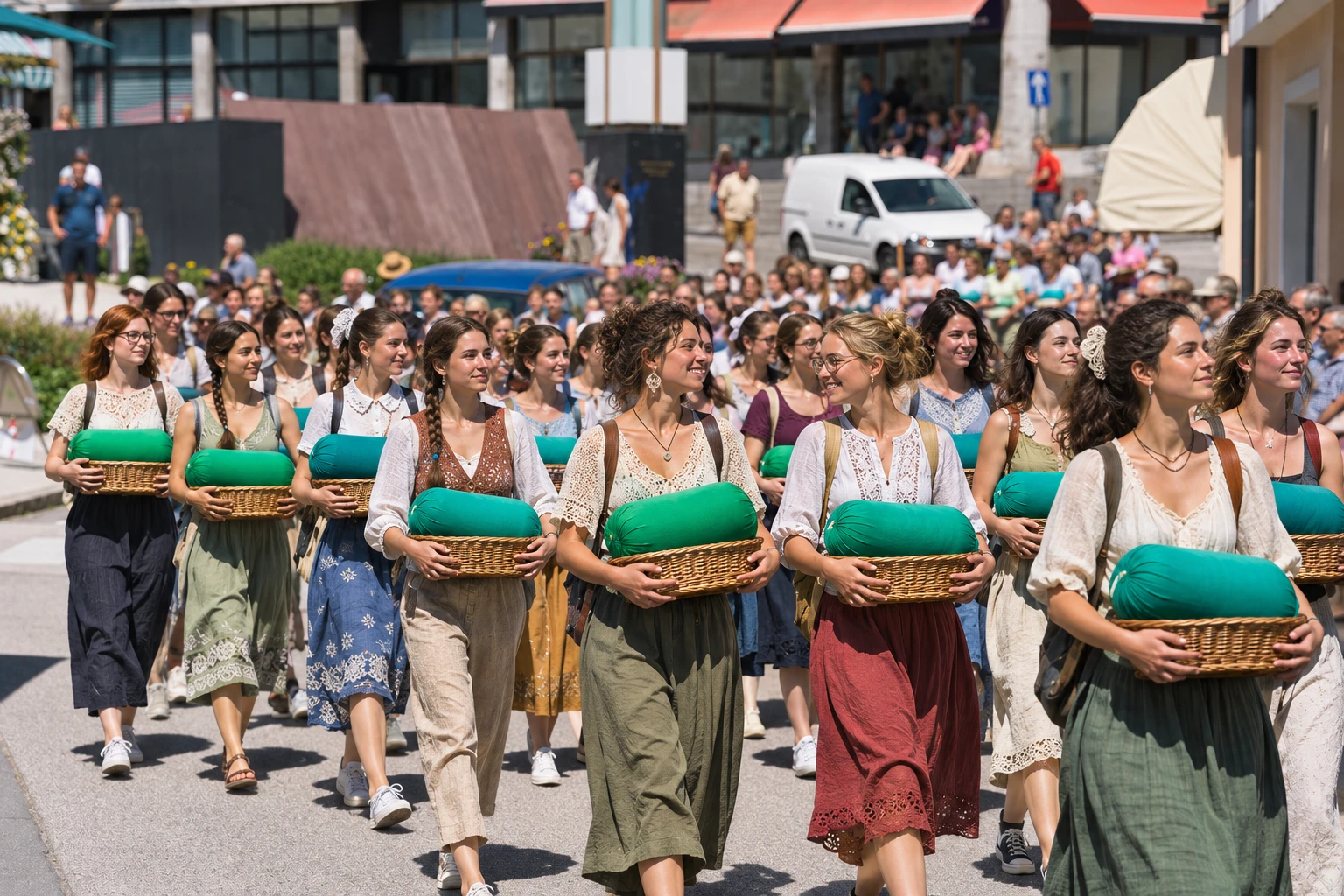
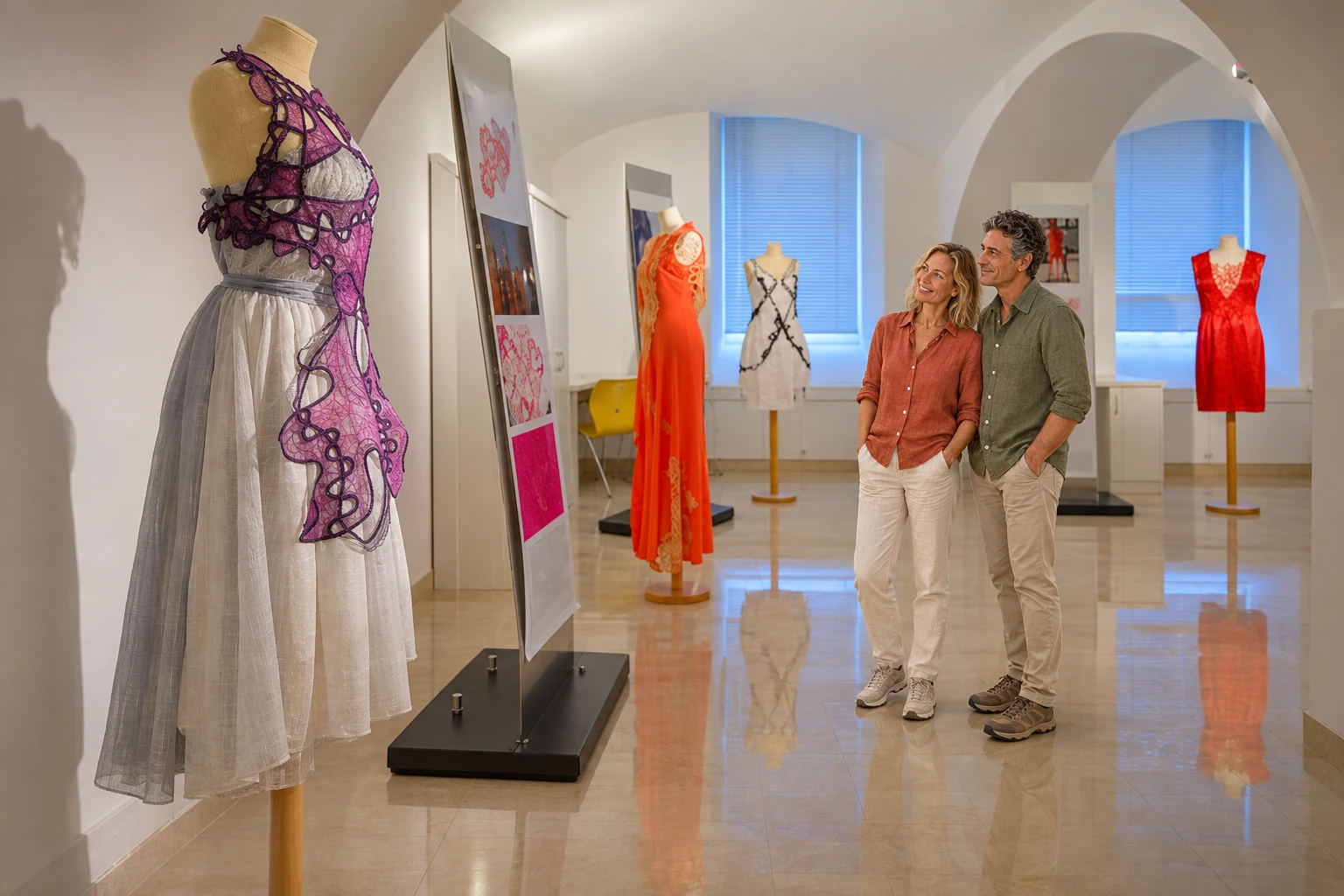
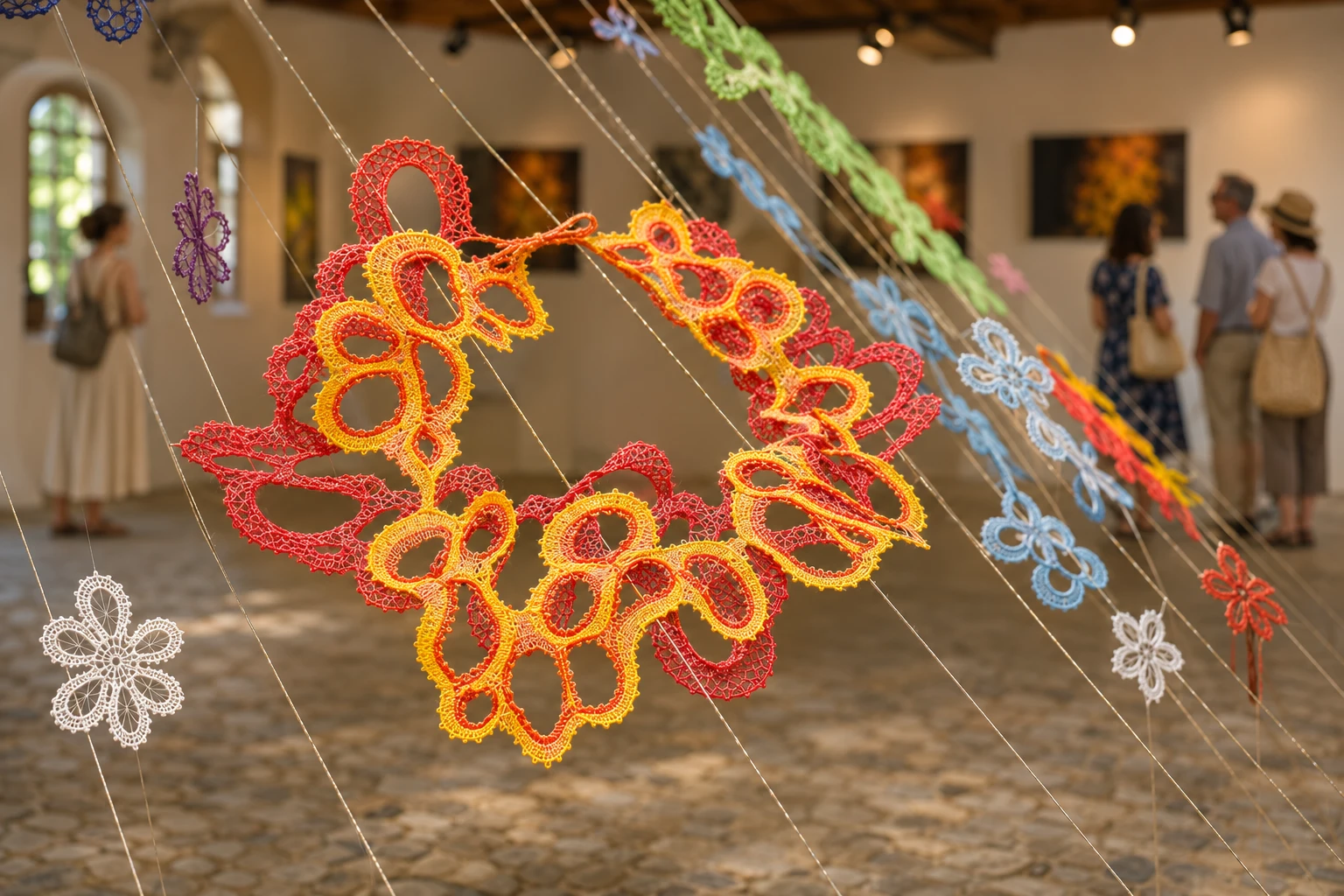
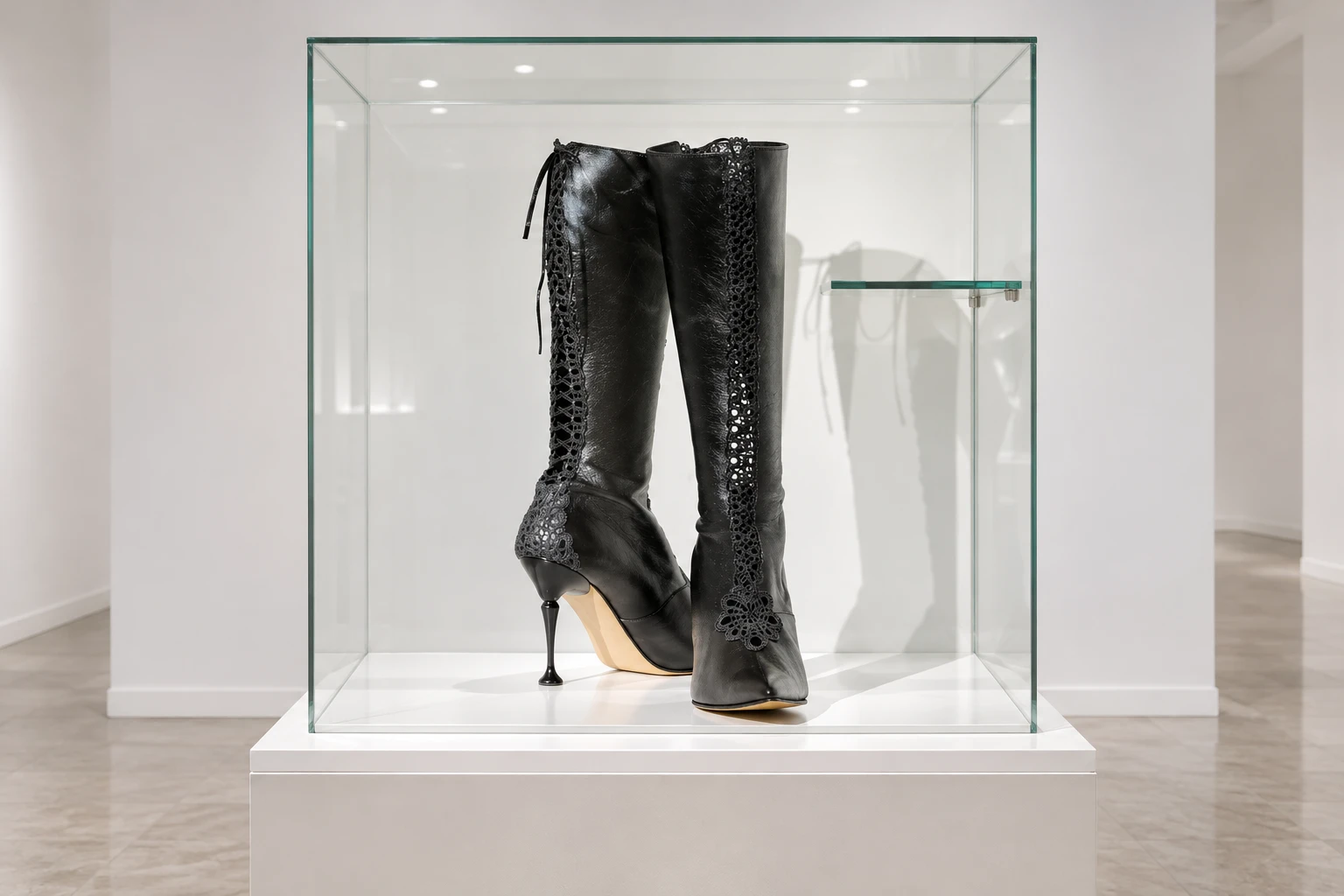
The lace festival has taken place in Idrija since 1953 and, with some interruptions, became an annual event. For three days the town centre hosts exhibitions of Slovenian and international lace, fashion shows featuring lace garments, lectures, beginner workshops and a lacemakers’ fair, along with concerts and children’s programming.
The most anticipated moment is the national bobbin-lace contest for children and youth on Sunday in the main square: dozens of girls and boys work simultaneously on lace pillows, with bobbins clicking, in front of the public.
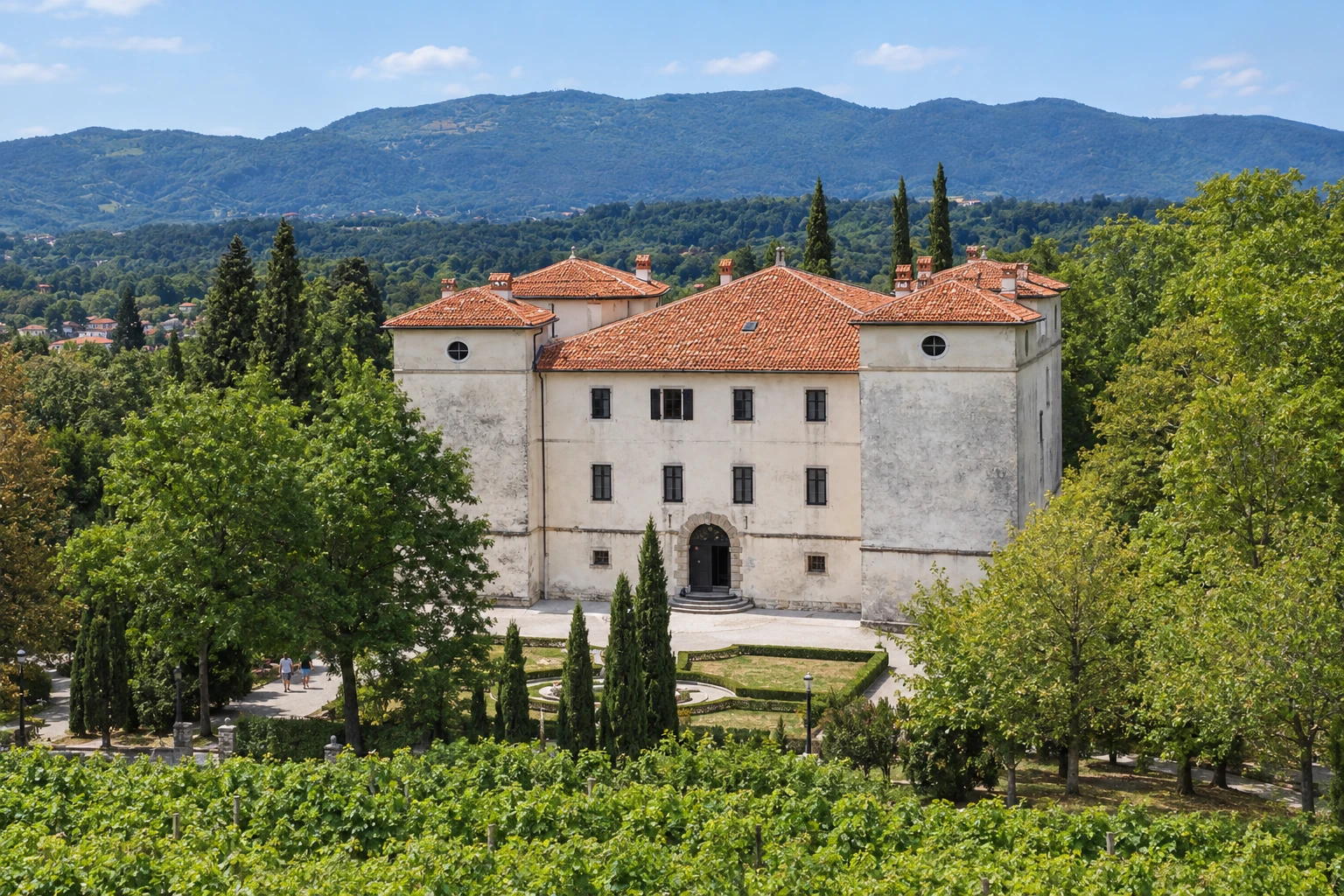
It’s worth the trip to see a delicate craft still alive in the town’s daily life and to get to know Idrija, with the mine, Gewerkenegg Castle and the žlikrofi, on an early-summer weekend.
The national contest for young lacemakers, on Sunday in the main square. Exhibitions of Idrija and international lace. Fashion shows featuring lace garments. A workshop to learn the first bobbin stitches. The visit to the Antonijev rov mine and to Gewerkenegg Castle, where the town museum displays the history of lace.
Saturday and Sunday concentrate the programme, with the contest on Sunday. Idrija’s centre is small and walkable. The town has no train: there are buses from Ljubljana, and by car the trip takes just over an hour. Book the mine visit in advance because it is guided and runs on set times.
Idrija’s žlikrofi, small boiled pastries filled with potato and served with meat sauce or with butter and cracklings, are a local specialty.
Check the official website for the year’s programme. Idrija has limited accommodation, which fills up on the festival weekend: book ahead or stay in Ljubljana and visit on a day trip.
In the city
Flavors of Slovenia
June
 May/June
For about two weeks, from late May to early June, during the flowering season of Bohinj’s meadows.
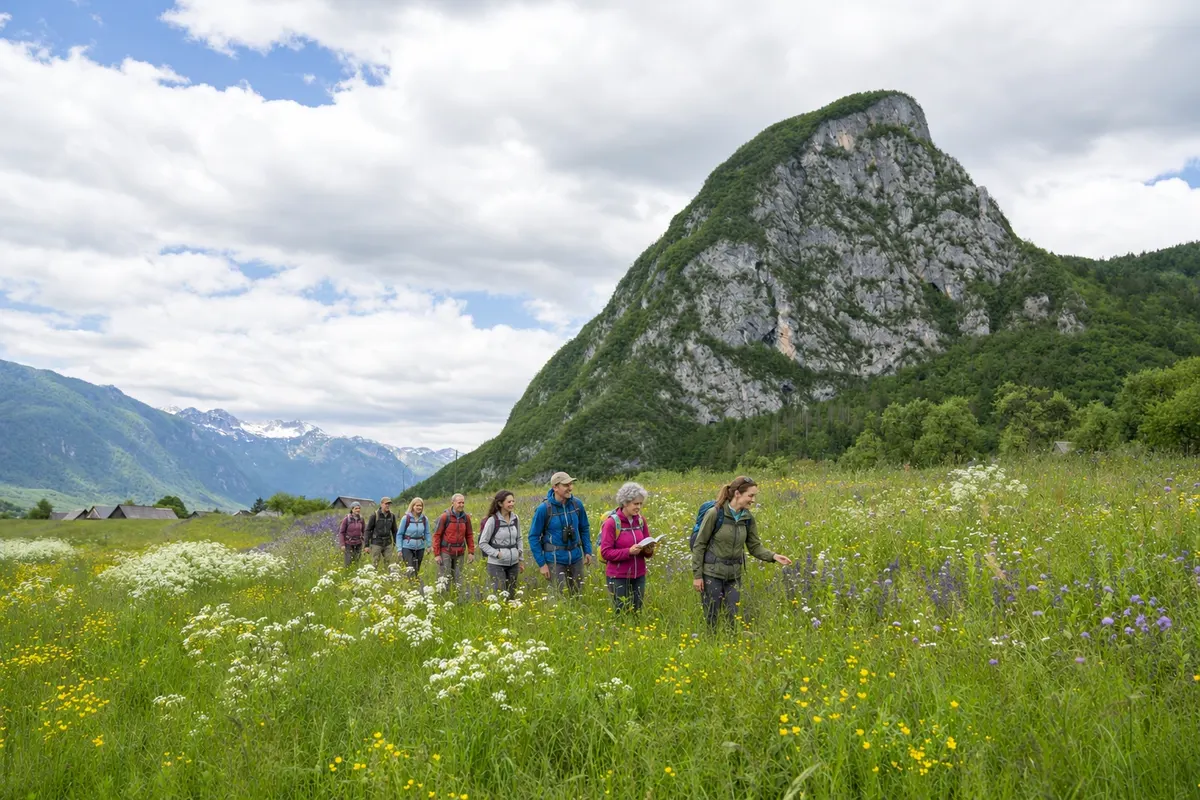
In late spring, Bohinj, in the heart of Triglav National Park, devotes two weeks to the flowers of the Julian Alps, with guided botanical walks, exhibitions, workshops, and restaurant menus featuring wild plants from the valley.
 June/July
For a few days in June or July; dates vary each year.
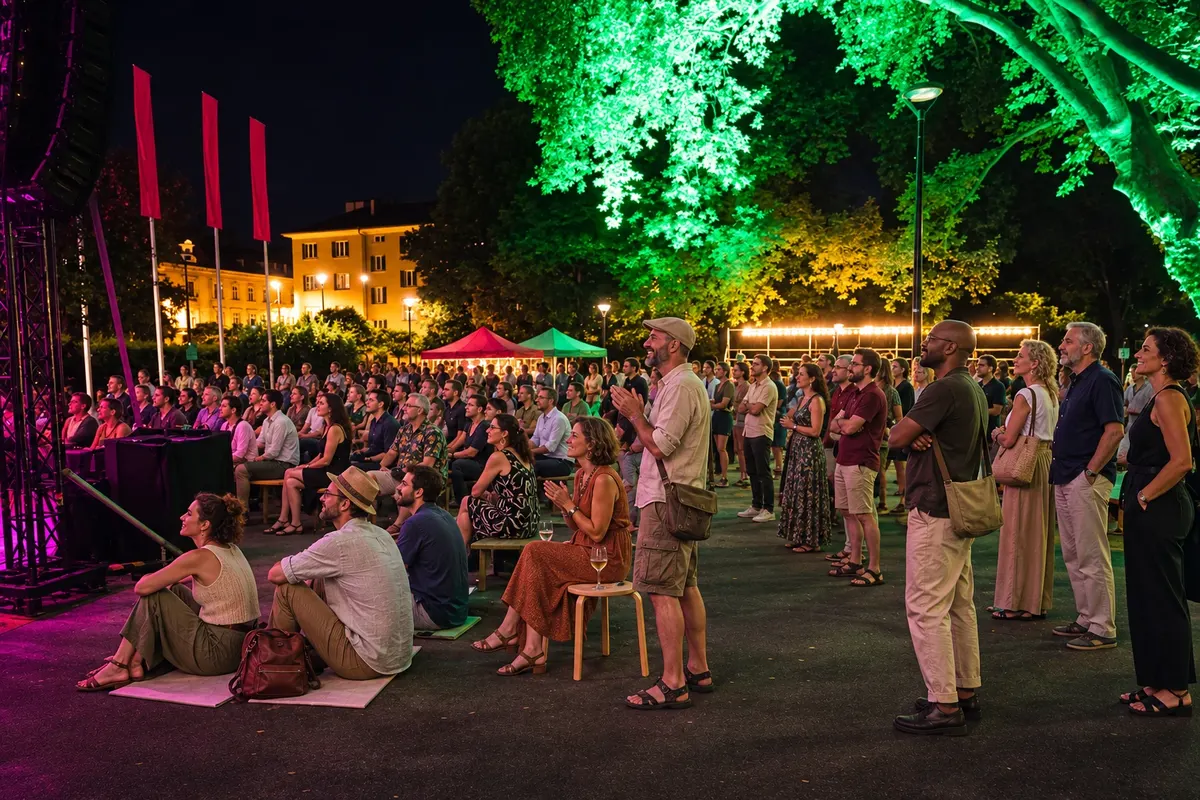
Founded in 1960, the Ljubljana Jazz Festival is the oldest continuously running jazz festival in Europe: for a few days at the start of summer it brings together Slovenian and international musicians at Cankarjev dom and at the Križanke outdoor theatre.
 June/July/August/September
During the summer, from June or July until the beginning of September.
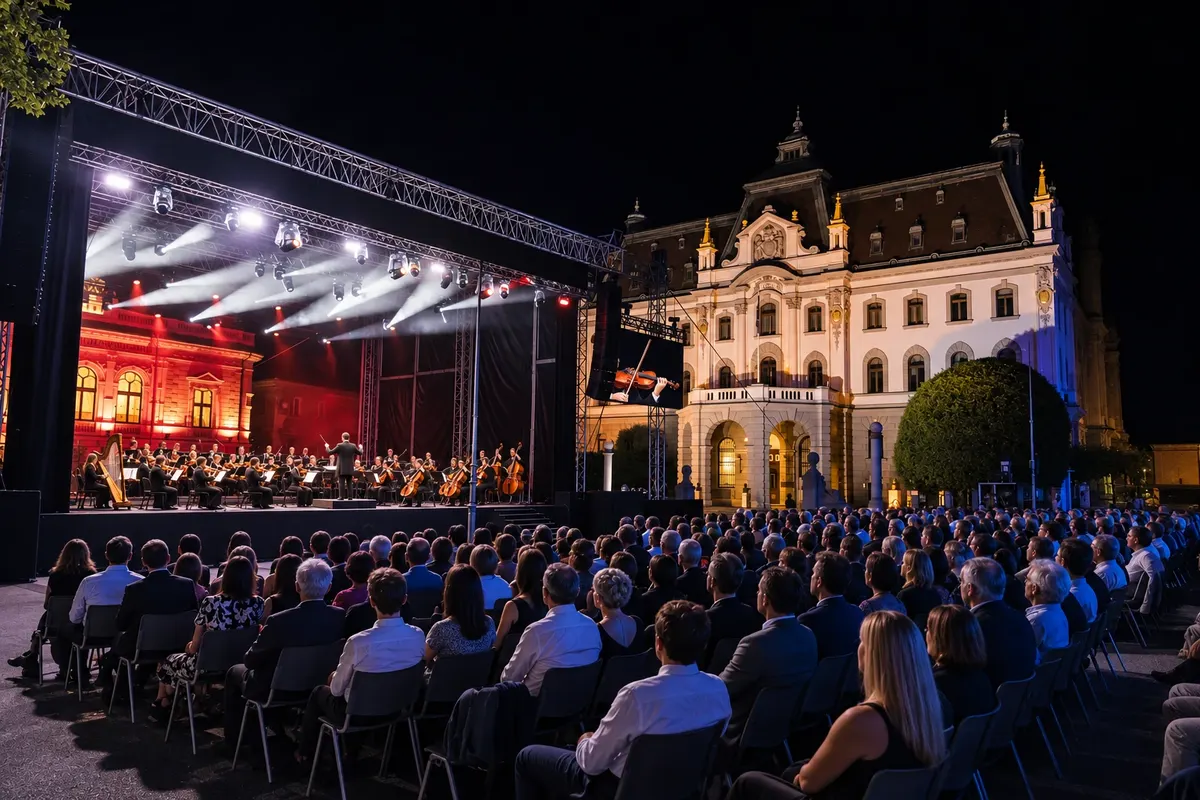
Created in 1953, the Ljubljana Festival fills the capital’s summer with opera, ballet, symphony concerts, theater and folk music, in the Križanke courtyard, the former monastery remodeled by Jože Plečnik, and at Kongresni trg square.
Your questions
On the third weekend of June, from Friday to Sunday.
It is the bobbin lace made in Idrija since the 17th century, with its own style and protected geographical indication. The Slovenian bobbin-lace technique is on UNESCO’s intangible heritage list.
Yes. The festival offers workshops for beginners, and the town’s lace school runs courses throughout the year.
Festivals and events in Slovenia
 June/July
For about nine days, beginning in late June and ending in early July.
At the start of summer, the Lent neighborhood, the old bank of the Drava in Maribor, and the central squares host Slovenia’s largest outdoor festival, with concerts on downtown stages, folklore, street theatre, and children’s programming.
 February/March
On the days before Lent, in February or March depending on the date of Easter, ending on Shrove Tuesday. The duration varies according to the program.
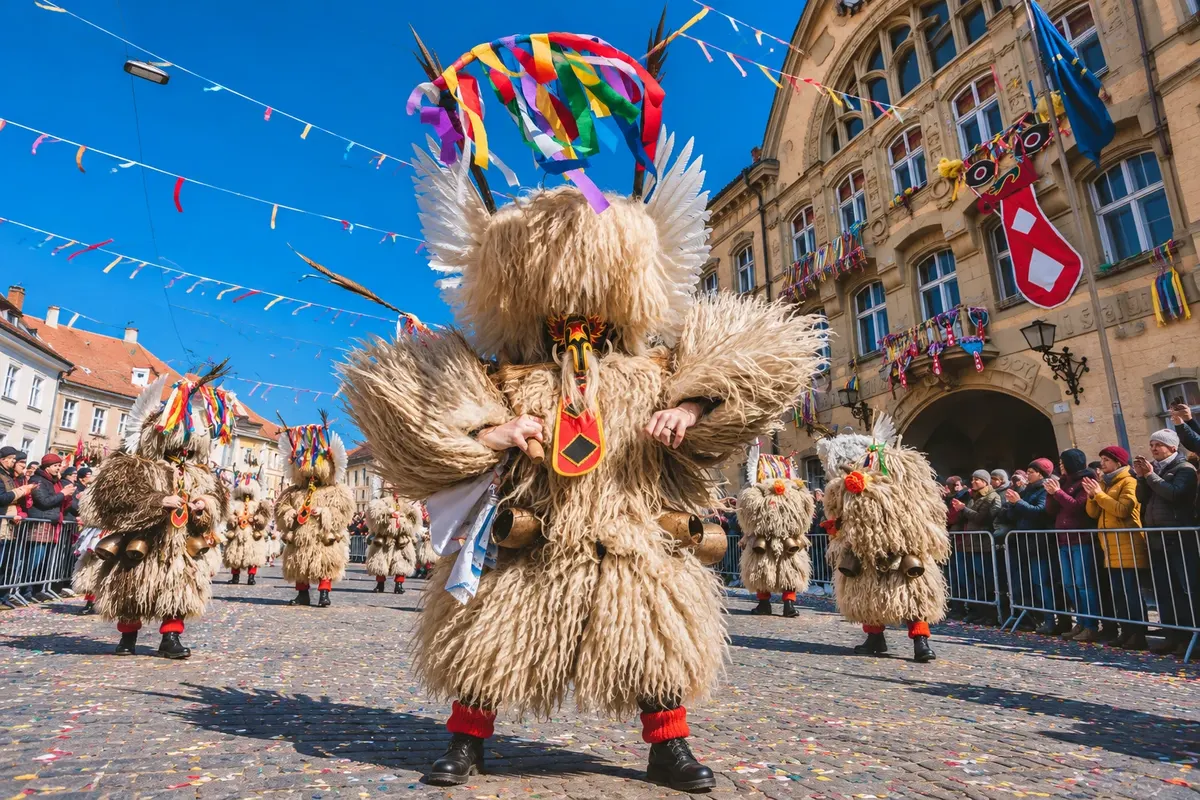
Slovenia’s largest carnival takes over Ptuj’s old town: the kurenti, figures dressed in sheepskins with horned or feathered masks and large bells at the waist, parade alongside other traditional regional characters to drive away winter.
 February/March
On the Sunday and Tuesday of Carnival, which fall between early February and early March according to the Easter calendar; the laufarji begin to appear in the streets on the preceding Sundays.
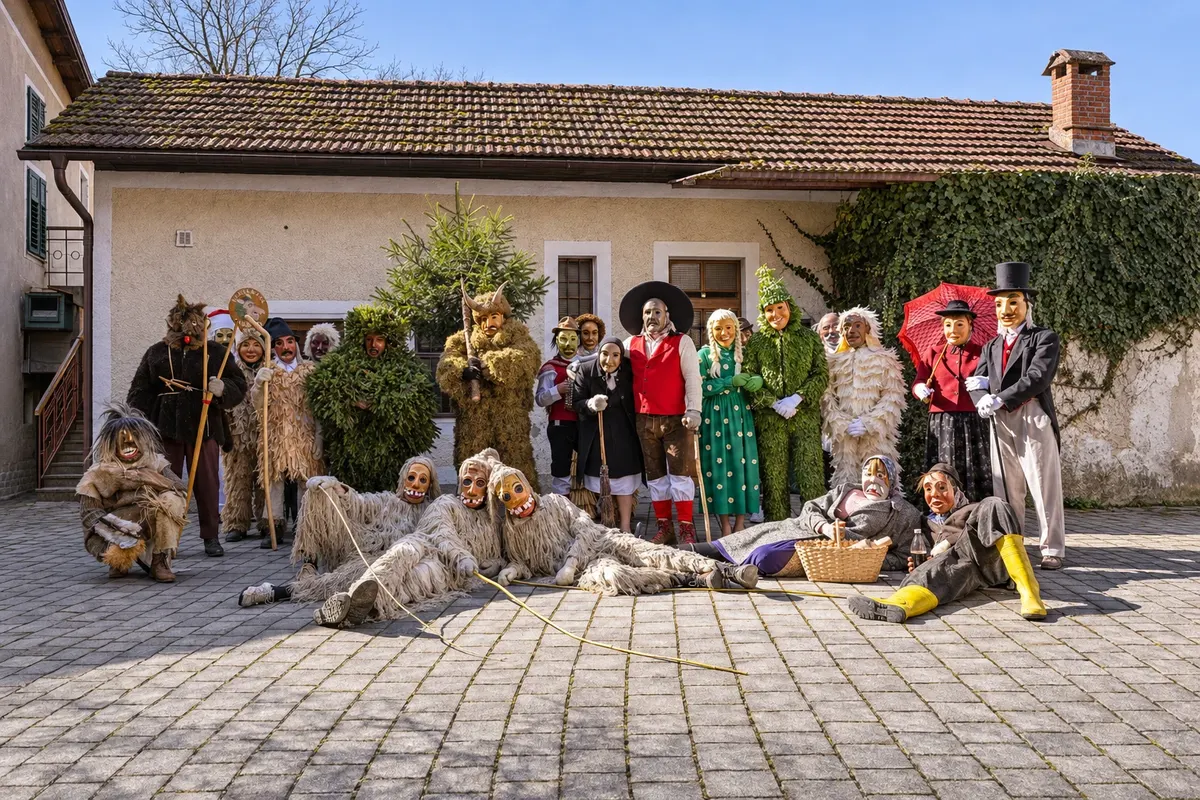
In Cerkno, in the hills of western Slovenia, the laufarji—figures wearing carved wooden masks—parade through town at Carnival and stage the trial and execution of the Pust, the moss-covered figure who carries the year’s misfortunes.
 March
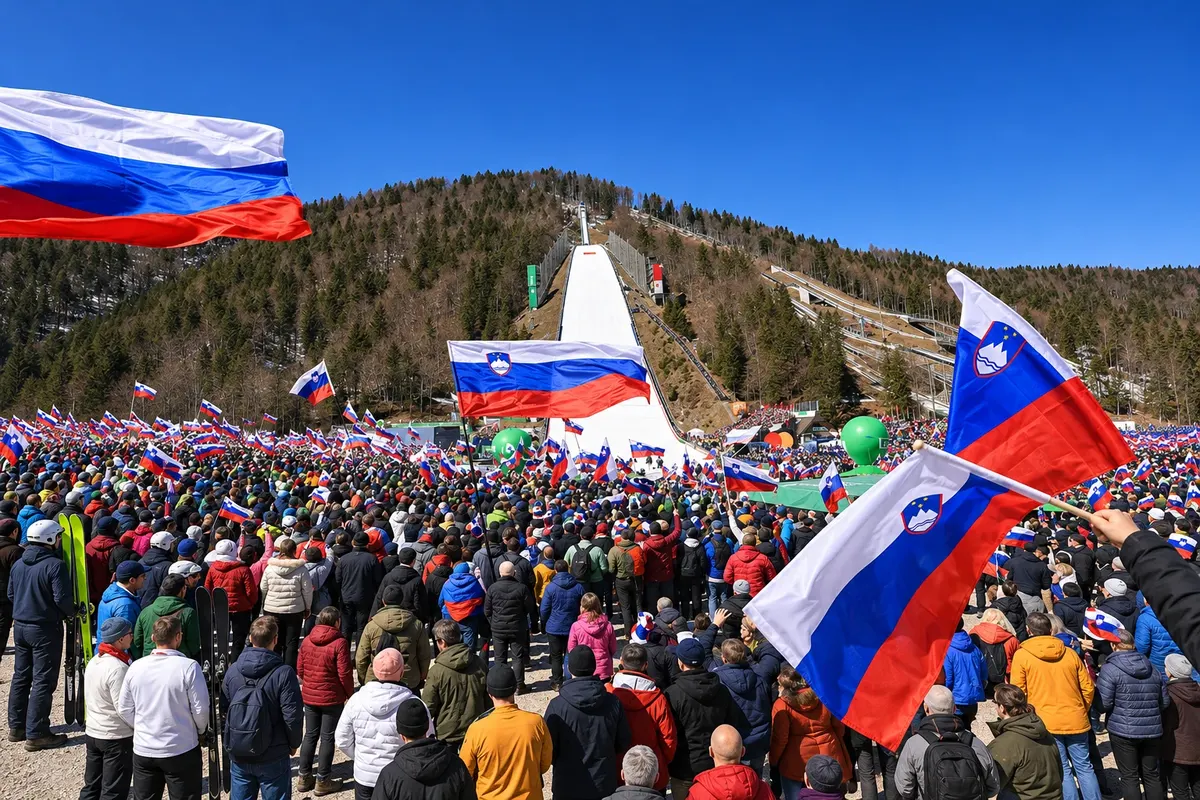
In March, from Thursday to Sunday, at the event that closes the Ski Jumping World Cup season.
Every March, the Planica valley, near Kranjska Gora, hosts the final stage of the Ski Jumping World Cup, held on the Gorišek Brothers’ flying hill, one of the largest in the world.
 April
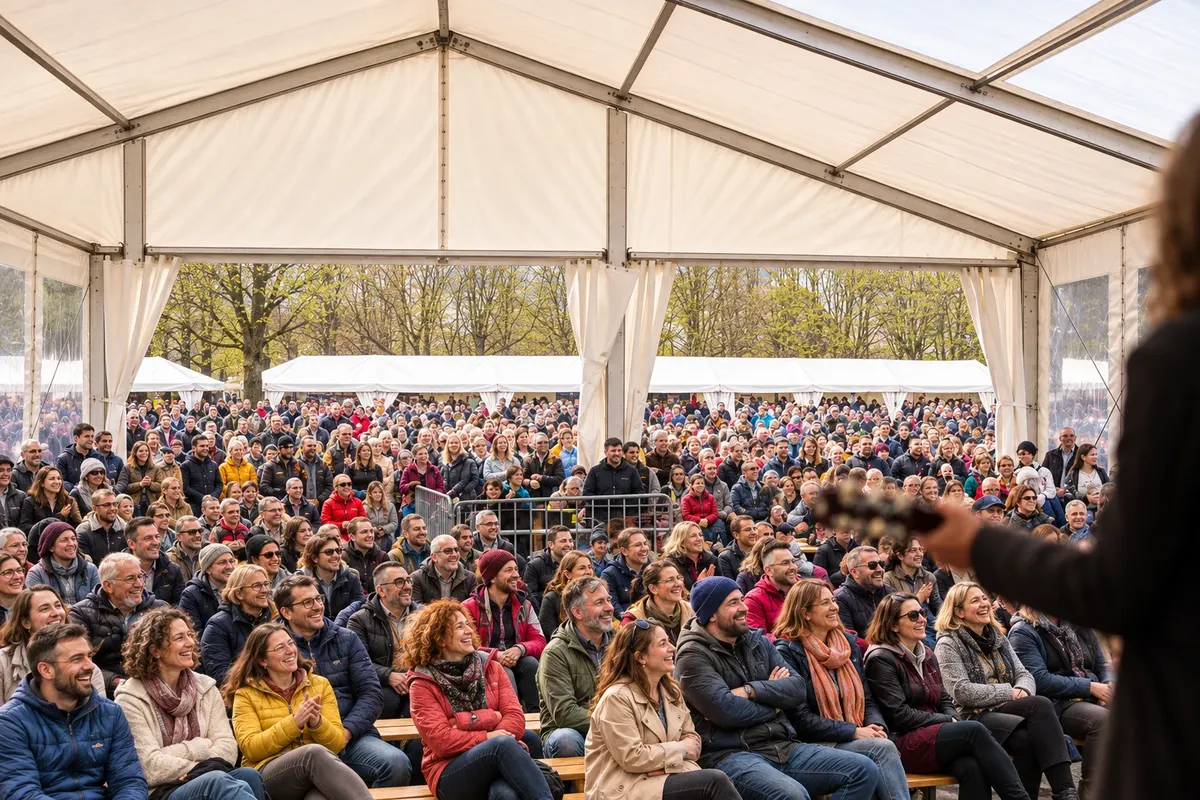
On a weekend in April, usually after Easter and before the May 1 public holiday.
For a weekend in April, the old town of Radovljica, near Bled, turns into a large chocolate showcase, with producers from across the country, tastings, workshops and demonstrations at Linhartov trg square and the town manor.
 July
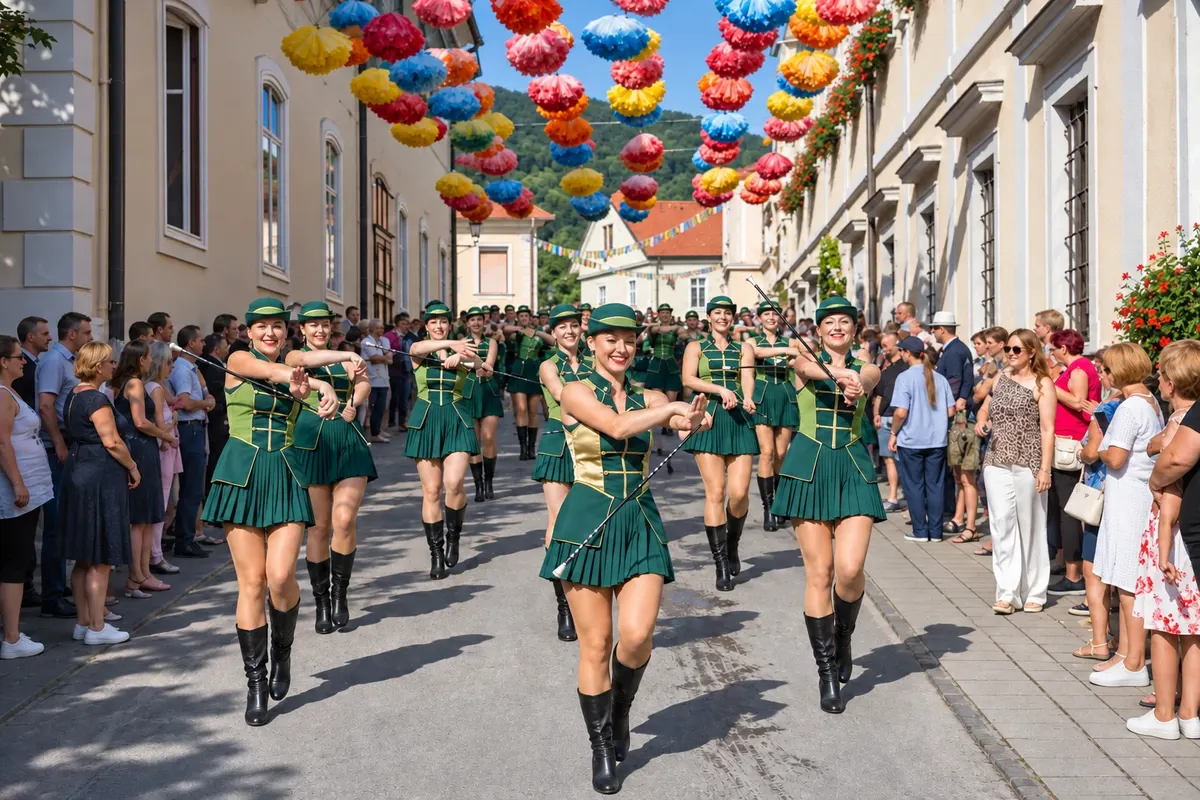
On a weekend in mid-July, usually from Thursday or Friday to Sunday.
Since 1964, the small town of Laško, on the banks of the Savinja River, celebrates its beer and its flowers in July, with concerts on several stages in the town center, a parade of decorated floats, marching bands and fireworks over the river.