Rodovia Transpantaneira
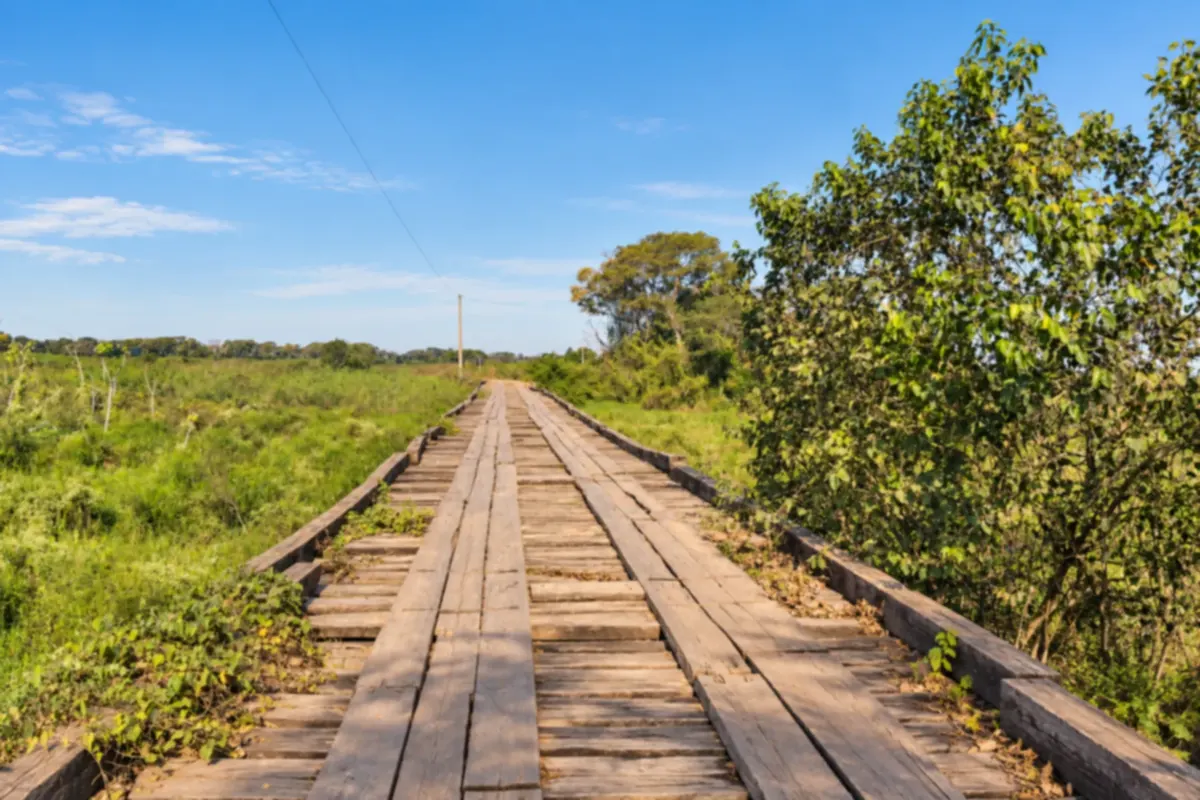
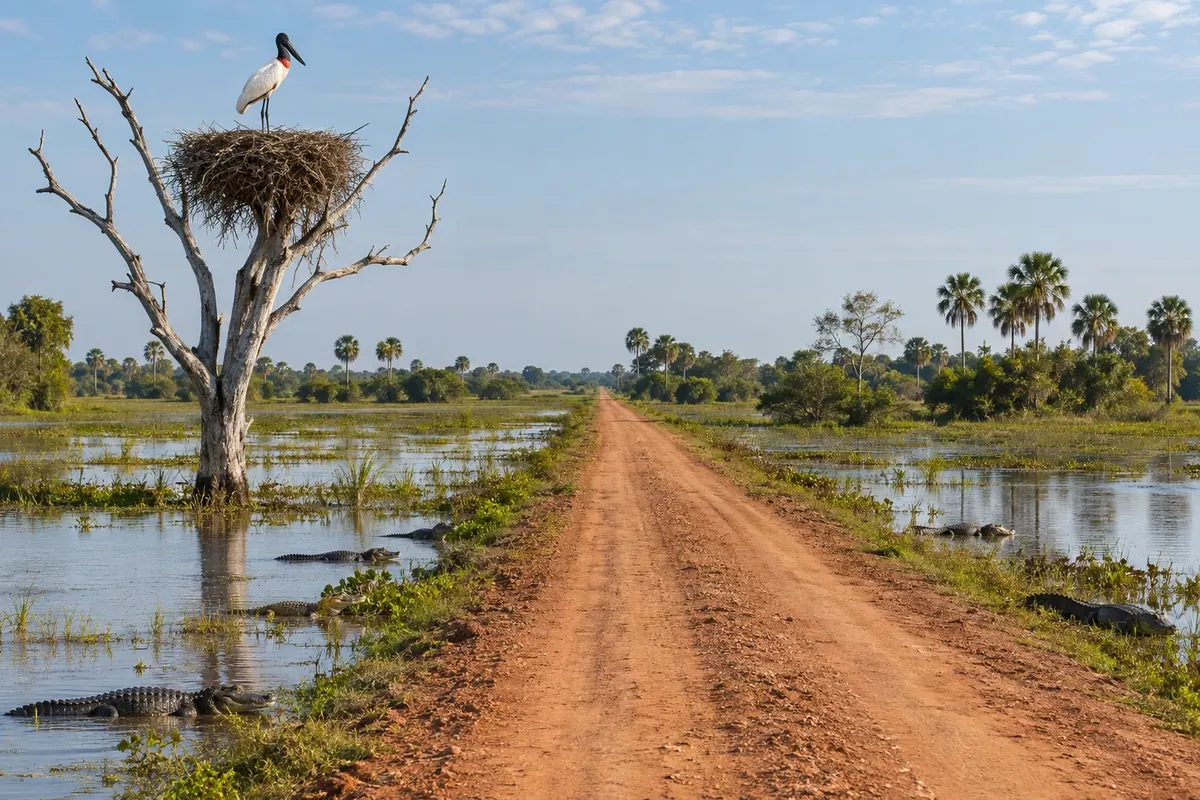
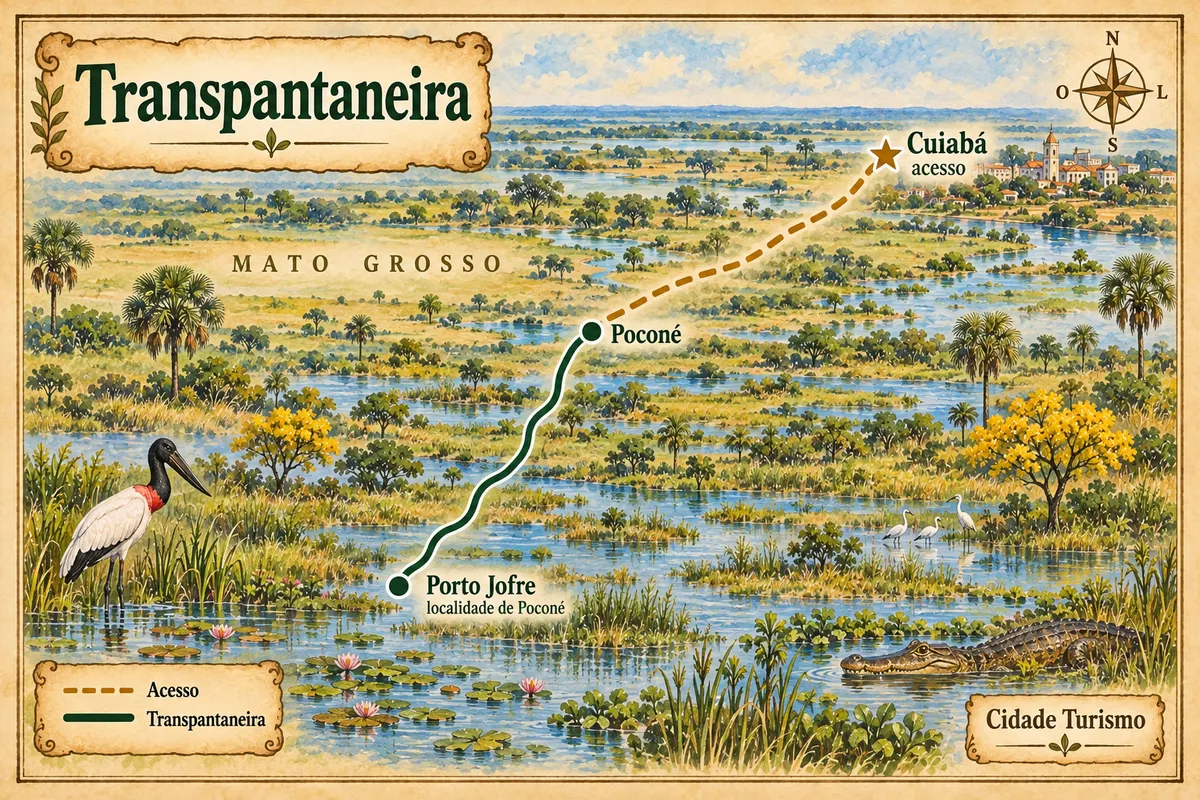
About 145 km of dirt road with dozens of bridges linking Poconé to Porto Jofre. Each bridge is an improvised viewpoint over bays full of wildlife.
Discover Rodovia Transpantaneira
Antarctica
Mato Grosso · Brazil
In the destination Pantanal.
Illustrative images. The pictures in this guide are illustrations based on the real place, not photographs, and may differ from it.
The city
Poconé is the starting point for driving the Transpantaneira and exploring the Pantanal's landscapes. The road runs through floodplains and native vegetation to the Porto Jofre area.
Poconé is the town where pavement ends and the Northern Pantanal begins. It is in Mato Grosso, about 100 km from Cuiabá, and the Transpantaneira starts here—the roughly 145 km dirt road with more than 120 bridges that ends in Porto Jofre on the Cuiabá River. Almost every traveler passes through here on the way to a pantanal lodge or the jaguar-spotting boats, and it is in town that what the road does not offer is solved: fuel, grocery store, pharmacy and ATM.
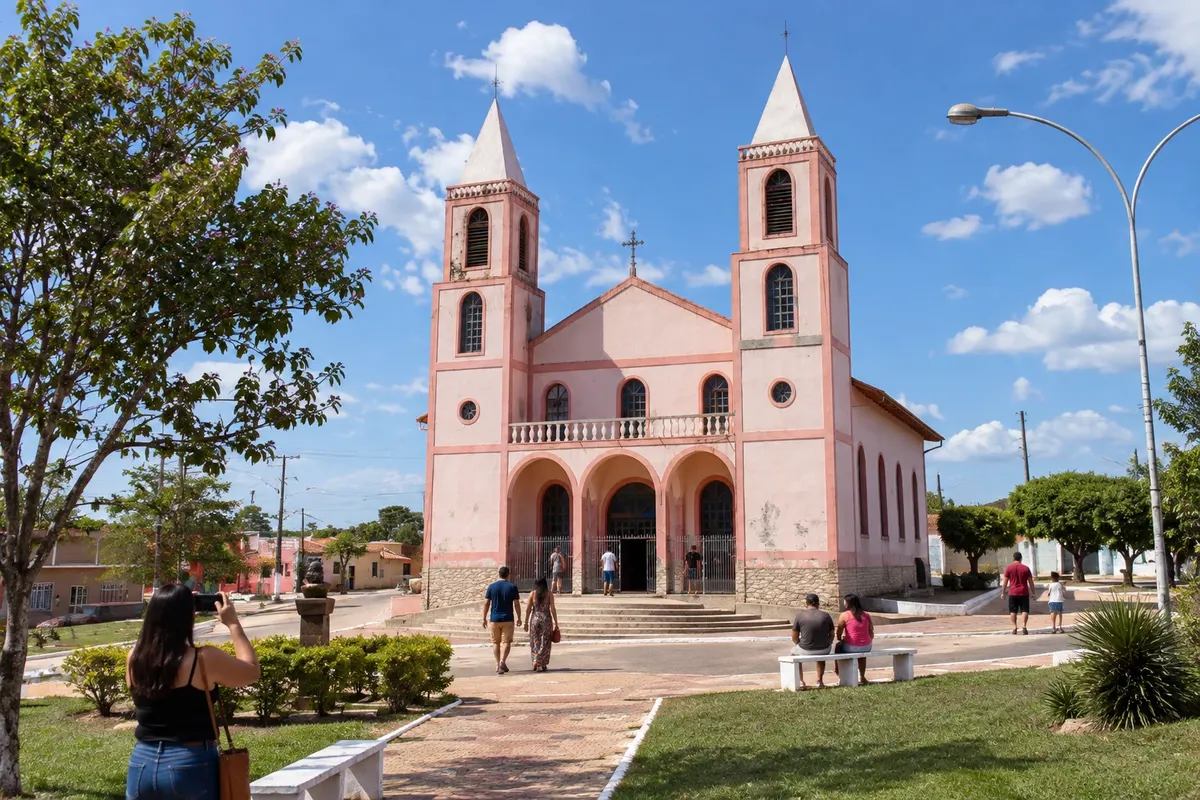
The town was born from gold. The Beripoconé mines, named for an indigenous people of the region, were discovered in 1777 and the settlement was founded in 1781. When the gold ran out, cattle ranching replaced mining. The center is small, with the Nossa Senhora do Rosário Mother Church, with two towers, in the main square. The best-known celebration is the Cavalhada, a mounted re-enactment of battles between Moors and Christians, part of the São Benedito festivities and usually held in June.
What interests visitors is, however, outside the urban perimeter, within the large municipality. There are three directions. The first is the Transpantaneira: the gateway marks the start of the dirt stretch, the first lodge is near km 10, and most accommodations are concentrated in the first 65 km. The second is Porto Jofre at the end of the road, also in Poconé, from where boats depart to navigate the rivers of the Encontro das Águas State Park. The third is Porto Cercado, on the edge of the Cuiabá River, reached by another road, MT-370, where the Sesc Pantanal hotel is located.
The year divides into dry and wet seasons. From May to September it barely rains: July averages 7 mm of rain, mornings around 18 °C and afternoons around 30 °C. Water levels fall, roads firm up and animals gather around lagoons and rivers, which makes wildlife viewing easier. The jaguar season in Porto Jofre runs from June to October. In August and September the heat increases, with highs near 34 °C, the air becomes very dry and there can be smoke from fires. From November to March it rains a lot—over 200 mm in January— the plain floods and stretches of the Transpantaneira may slow down or become submerged; in return the landscape is green, there are many birds and there is less traffic.
The town itself can be seen in one or two hours. Travel time should be spent on the road: one day allows you to see the start of the Transpantaneira; two or three, with an overnight at a lodge, include safari, horseback ride, boat and night spotlighting; to try to see a jaguar in Porto Jofre, plan at least one more night at the end of the road. The jaguar, like any wild animal, may not appear: booking more than one boat outing increases the chances.
Cuiabá, where the airport is located, is the arrival gateway and has its own itinerary; Chapada dos Guimarães and Nobres, on the other side of the capital, are often combined in the same trip.
30 places to stay in Poconé.
6 places to eat in Poconé.
Poconé highlights and titles
The local experience
About 145 km of dirt road with dozens of bridges linking Poconé to Porto Jofre. Each bridge is an improvised viewpoint over bays full of wildlife.
Discover Rodovia Transpantaneira
The end point of the Transpantaneira and a world-renowned base for spotting wild jaguars from boats on the Cuiabá River. In the dry season, jaguar sightings on the riverbank are almost routine.
Created in 2004, it protects about 109,000 hectares of Pantanal, mostly in the municipality, at the confluence of rivers such as the Cuiabá and the São Lourenço. It is home to a large population of jaguars, seen on boat trips.
Discover Parque Estadual Encontro das Águas
Matriz in the central square of Poconé, with a façade of two towers and a prominent presence in the city's religious life. The visit allows you to observe its architecture and the devotion to Nossa Senhora do Rosário.
Discover Igreja Matriz Nossa Senhora do Rosário
To choose before you go
Where each tour starts, how long it takes, how it is done, what is included and the price range.
This is the outing for those with only one day who sleep in Poconé or Cuiabá. The Transpantaneira is MT-060, which runs from Poconé to Porto Jofre for about 145 km, with more than 120 bridges. Only the first kilometres after the town are paved; the gateway marks the start of the dirt section, and from there the road runs on an embankment, with water on both sides for much of the year. You don’t need to go far. The lagoons and corixos, the natural channels that connect the bays to the rivers, lie beside the road, and each bridge serves as a viewing point. It’s common to see caimans, capybaras, jabirus, herons and roseate spoonbills; with luck you may spot deer, anteaters and anacondas. Most lodges are within the first 65 km, and many accept guests for lunch or day use with a reservation, which makes a good turnaround point. The road is a protected area, the Estrada Parque Transpantaneira, entirely within the municipality. Drive slowly, stop only where there is space off the road and do not feed the animals. The right pace is the morning’s. Leave Poconé at first light, stop at the bridges and return after lunch; in the midday heat animals move into the shade. Activity picks up again late in the afternoon, but it’s not advisable to return after dark, because there is no lighting and animals cross the road.
Stops: Transpantaneira (MT-060), Transpantaneira gateway, Wooden bridges, Poconé.
Includes: Lunch and day use at lodges, vehicle with driver and guide are paid separately. Poconé charges a municipal tourism fee; ask your lodge or agency about the current rate. Check the updated table.
Tip: Refuel in Poconé: there are no stations on the road, and cell signal disappears in several stretches. Bring water, snacks, a hat, insect repellent and binoculars. Slow down at bridges and at the approach lanes beside them. During the high-water season check with your lodge about road conditions before you set out.
Best time: From May to September, in the dry season, the road is firm and animals gather near the water. From November to March some sections of the road can be flooded.
In the Northern Pantanal excursions take place within the lodges. These are ranches along the Transpantaneira that provide lodging, meals and organize outings with their own guides; outside them there are no restaurants or shops on the road. For that reason the most common base is not the town but one of these lodges, with rates that include meals and some activities. The activity menu repeats from one lodge to another. The photo safari goes out in an open truck or jeep across the ranch fields, early morning or late afternoon. The horseback ride uses the Pantanal horse to enter flooded areas where a vehicle cannot go. The boat or canoe trip runs rivers and channels, often at sunrise or sunset. Walks lead to observation towers. At night, spotlighting searches with a headlamp for the eyes of caimans, foxes and other nocturnal animals. Those who do not stay overnight can do day use at some places. The first lodge on the road is about 10 km from Poconé and receives day visitors for lunch, trails and an observation tower; guided outings are hired separately. The jaguar can appear anywhere in the Pantanal, but the recommended place to look for it is Porto Jofre, at the end of the road. At the lodges the animals commonly seen include caimans, capybaras, deer, jabirus and macaws, including the hyacinth macaw.
Stops: Transpantaneira (MT-060), Pousada Piuval, Observation tower, Lagoons and ranch fields.
Includes: At lodgings, rates usually include meals and some excursions; for day use, generally lunch and use of leisure facilities, with guided outings charged separately. Check each lodge’s current price table.
Tip: Book in advance, especially from July to September, when lodges fill up. Bring long pants and closed shoes for the horseback ride, a long-sleeve shirt, insect repellent and a light jacket for spotlighting. Arrange transfer with the lodge from Poconé or Cuiabá if you are not driving.
Best time: From May to September for safaris and horseback rides on dry fields. From November to March, more outings are done by boat.
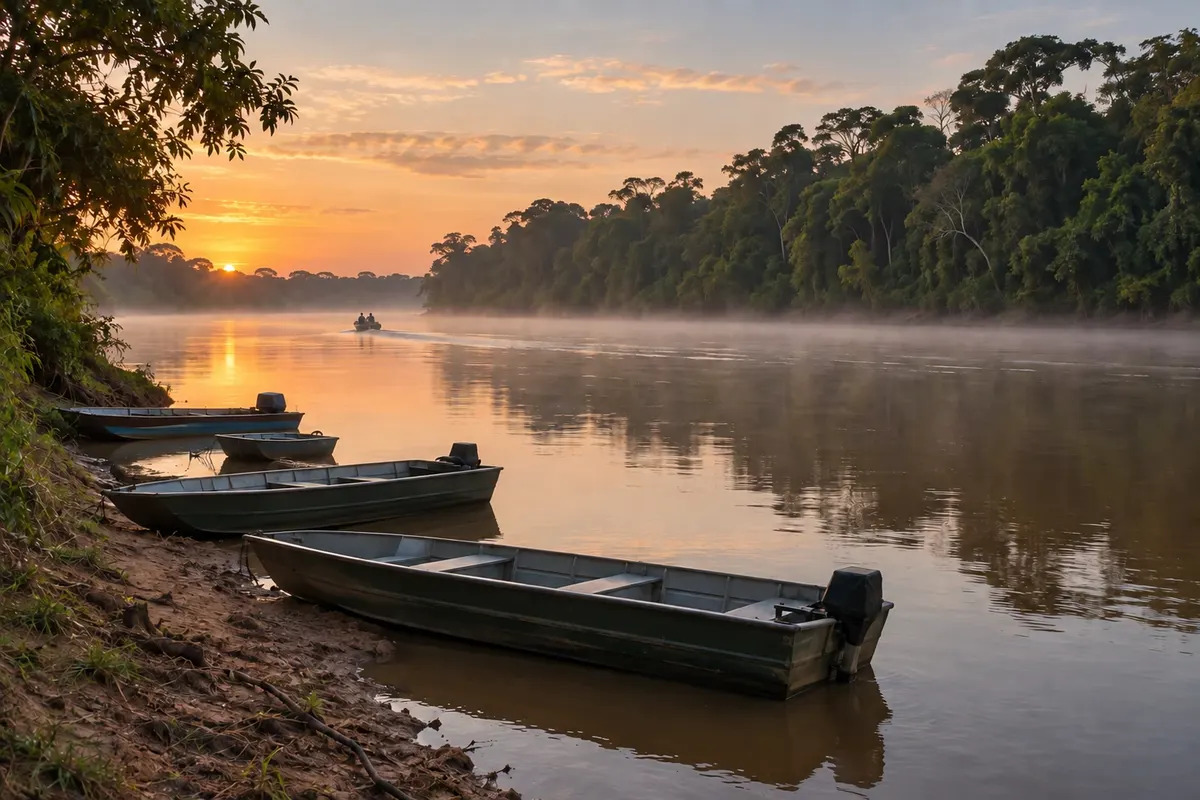
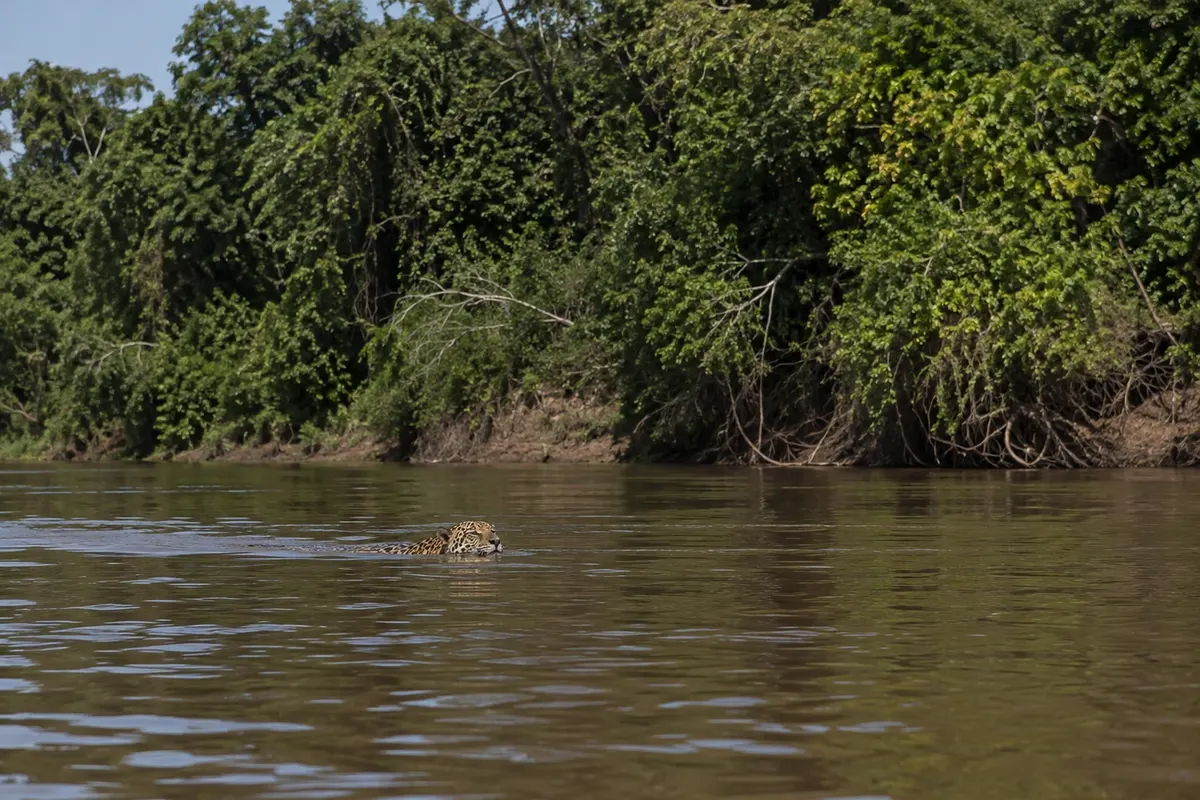
Porto Jofre is the terminus of the Transpantaneira, about 145 km from the city, on the bank of the Cuiabá River. It lies in the municipality of Poconé; on the opposite bank the state is Mato Grosso do Sul, and the road does not continue. The place is a small settlement of hotels, lodges, campsites and boatmen. Excursions run in small boats with a pilot and guide along the Cuiabá, Três Irmãos, São Lourenço and Piquiri rivers and the channels of the Encontro das Águas State Park, which protects about 109,000 hectares of the Pantanal. In the dry season, when waters are low, jaguars tend to walk the riverbanks and beaches where they hunt caimans and capybaras, and it is from the water that they are seen. On the way you may encounter giant otters, capybaras, caimans and many birds. The season runs from June to October, and the most sought-after months are July, August and September. Even then, sightings depend on luck and hours of navigation: those who stay more than one night and take several outings have a better chance than those who come for a single trip. When an animal is located, it is common for several boats to gather at the same spot; prefer operators who keep their distance from the animal. From Poconé to Porto Jofre it is 3 to 4 hours on dirt roads in the dry season, not counting stops. A same-day round trip with an early-morning departure is possible but tiring. The sensible option is to stay overnight in Porto Jofre or in a lodge on the final stretch of the road.
Stops: Porto Jofre, Encontro das Águas State Park, Cuiabá River, Três Irmãos River, São Lourenço River, Piquiri River, Transpantaneira (MT-060).
Includes: The boat with pilot and guide is charged per outing or per day, and at lodges in Porto Jofre it is usually paid separately from the nightly rate. Transfer from Poconé or Cuiabá is not included. Check the current rates with the lodge or operator.
Tip: Book accommodation and a boat months in advance for July through September. Boats do not have bathrooms: bring a hat, sunscreen, water, a rain poncho and a warm layer for the early-morning return. Fill the tank in Poconé and confirm the condition of the bridges with your lodge.
Best time: Jaguar season: June to October. From November to April the road can flood and animals spread out.
Porto Cercado is the other Poconé exit to the Pantanal. Instead of the Transpantaneira, you take the MT-370, the Porto Cercado Park Road, which ends on the bank of the Cuiabá River, a little over 40 km from the town and about 145 km from Cuiabá. It’s a much shorter route than Porto Jofre’s, so it suits those with limited time. At the end of the road is the Sesc Pantanal hotel, neighbor to a large private reserve, the RPPN Sesc Pantanal. The unit organizes boat tours on the Cuiabá River with its own guides: the dawn departure to hear the forest wake up; navigation along the Corixo do Moquém, a tributary with caimans, birds, monkeys and iguanas, popular at late afternoon; and night-time river spotlighting. There are also guided horseback rides and van safaris along the park road. Tours are designed for guests and operate by prior reservation. Non-guests should ask in advance if there is availability. The tour changes with the season: in the flood season the Cuiabá River and the corixo fill and boat routes are different; in the dry season the water lowers and animals come closer to the banks.
Stops: Porto Cercado Park Road (MT-370), Porto Cercado, Cuiabá River, Corixo do Moquém, RPPN Sesc Pantanal.
Includes: Sesc Pantanal tours are charged separately from accommodation or sold in a package. Transport to Porto Cercado is not included. Check the current rates with the unit.
Tip: Confirm tour reservations before setting out. Bring insect repellent, a hat, and closed shoes. Dawn and late-afternoon departures are the most productive; at midday the heat is intense.
Best time: From May to September, in the dry season. From November to March the river rises and boat routes change.
The stop in town is usually brief, between refueling the car and making last-minute purchases, but it’s worth stretching your legs in the centre. The Mother Church Nossa Senhora do Rosário stands on the main square, with a two-tower façade, and is the centre of religious life in Poconé, a town that dates back to the gold period: the mines were discovered in 1777 and the settlement was founded in 1781. The centre is where you’ll find a market, a pharmacy and an ATM, which do not exist along the Transpantaneira. Poconé preserves traditions that passing visitors rarely see: cururu and siriri (regional music and dance), the viola de cocho, and above all the Cavalhada. In that event, horsemen reenact battles between Christians and Moors, a festival of Portuguese origin incorporated into the celebrations of São Benedito. It usually happens in June; if you travel that month check the date and book accommodation in advance. For those arriving from Cuiabá late in the day, staying overnight in town and entering the Transpantaneira at dawn is a good choice: it avoids driving at night on the dirt road and lets you take advantage of the early morning hours when the animals are most active.
Stops: Mother Church Nossa Senhora do Rosário, Central square, Poconé town centre.
Includes: There is no fee to visit the square. The church opens according to the parish’s schedule of services.
Tip: Take advantage of the stop to refuel, withdraw cash, and buy water and snacks for the road. In the middle of the day the heat is strong.
Best time: All year. The Cavalhada usually takes place in June, during the festivities of São Benedito.

Day by day
Suggestions to plan the trip. Change the order of the days according to the weather and tour availability.
Leave Cuiabá while it’s still dark, or sleep in Poconé the night before: it’s about 100 km of paved road. In town, refuel, buy water and stop by the square at the Matriz Church. Enter the Transpantaneira as dawn breaks. After the gateway the road becomes dirt, and the lagoons beside the track already show caimans, capybaras, herons and jabirus. Go slowly, stopping at the bridges. For midday, book a day use at a pousada near the start of the road, such as the one near km 10: lunch, observation tower and, if there’s space, an afternoon safari or horseback ride. Start the return with plenty of time to reach the paved road before dark. The road has no lighting, and animals cross the track at dusk.
Arrive in Poconé in the morning, refuel and make last-minute purchases. Enter the Transpantaneira without hurry, stopping at the bridges, and reach your pousada in time for lunch. Most are located in the first 65 km. In the afternoon, take the first guided tour: an open-truck safari or a horseback ride across the fields. After dinner, go out for a night spotlighting tour, which searches with a spotlight for nocturnal animals. On a moonless night, far from any city, the sky is part of the experience.
Wake before sunrise for the boat or canoe departure, when birds are most active, or climb the pousada’s observation tower. After coffee, take a guided walk or the excursion you missed. Have lunch at the pousada and return to Poconé via the same road, stopping again at the bridges. Those with flights from Cuiabá should allow at least an hour and a half of paved driving after reaching the city, plus the dirt-road time.
Leave Cuiabá early, refuel in Poconé and enter the Transpantaneira. Do the first half of the road calmly, stopping at the bridges, and sleep at a pousada along the way. In the afternoon, a safari or horseback ride; at night, spotlighting. Splitting the road into two days avoids arriving in Porto Jofre tired and lets you see the ranchland Pantanal, different from the river Pantanal.
Head early to Porto Jofre, at the end of the road, about 145 km from Poconé. The final stretch is the most isolated, with no cell signal; tell your lodging your expected arrival time. After lunch, take the first boat outing on the rivers of the Encontro das Águas State Park. Trips last four to five hours, and the guide travels the banks where jaguars tend to appear in the dry season. Return with the sunset on the Cuiabá River.
Go out by boat again at dawn: a second departure increases your chances of sightings and usually yields otters, caimans and many birds even when the jaguar doesn’t appear. Return to the port in the late morning, have lunch and hit the road. It’s 3 to 4 hours to Poconé in the dry season, plus about an hour and a half on paved road to Cuiabá. Don’t book a flight for the same night unless you leave plenty of margin; if possible, sleep in Poconé or Cuiabá and travel the next day.
Best time to go
The seasons shown are the most usual ones; nature doesn't always follow the calendar.
Rainiest month · Floodplain
The month with the most rain, about 245 mm on average, with lows near 24 °C and highs near 31 °C. The floodplain is inundated, and stretches of the Transpantaneira can become slow or submerged: confirm with your pousada before leaving Poconé. More tours are done by boat, there are many birds in the fields and little traffic. Bring a raincoat and insect repellent.
Flood · Boat trips
Rain remains heavy, around 208 mm on average, with temperatures between about 24 °C and 31 °C. The small channels and bays are full, and the boat reaches areas that are dry in the dry season. Mammals spread out and are harder to see. The dirt road requires a high-clearance vehicle and up-to-date information from the pousada.
Flood · Rain decreasing
Still wet, with about 185 mm of rain on average and highs near 31 °C. Fields remain flooded and green, with many water birds. The Transpantaneira may have mud holes and detours; travel by day and without hurry. Lodge occupancy is low.
End of rains · Waters falling
Rain drops to about 91 mm on average, with lows near 23 °C and highs near 31 °C. Water begins to drain and the road dries out, though some sections remain wet. It’s a good month for birdwatching and for visitors who prefer quiet lodges; mammals begin returning near the lagoons.
Start of the dry season · Road firming
The dry season begins: about 39 mm of rain on average, mornings near 21 °C and afternoons near 30 °C. The Transpantaneira becomes firmer, and the lagoons beside the road concentrate caimans and birds. Visitor numbers grow gradually. Good month for safari and horseback riding, with pleasant temperatures.
Dry season · Cavalhada · Jaguar season begins
Almost no rain, about 11 mm on average, with mornings near 19 °C and afternoons near 30 °C. Cold fronts can lower temperatures for a few days: bring warm clothing for the boat and night spotlighting. The jaguar season begins in Porto Jofre. In town, the Cavalhada usually takes place this month during the São Benedito festivities.
Driest month · High season
The driest month, with about 7 mm of rain on average, lows near 18 °C and highs near 30 °C. The road is firm and animals gather near the water. It’s high season along the Transpantaneira: pousadas, boats at Porto Jofre and transfers should be booked well in advance.
Dry · Peak demand for Porto Jofre
Dry, with about 11 mm of rain on average, and warmer: highs near 32 °C. Rivers are low, and jaguars are often seen on the riverbanks at Porto Jofre. The air becomes very dry and there can be smoke from fires, which reduces visibility. Drink plenty of water and use sunscreen.
End of the dry season · Very hot
Heat reaches its peak, with afternoons near 34 °C, and rain returns in showers toward the end of the month, about 51 mm on average. The lagoons are at their lowest level, full of caimans and birds. It’s still season in Porto Jofre. Do excursions early and late in the afternoon and rest during the middle of the day.
First rains · End of jaguar season
The rains return, about 115 mm on average, with highs near 34 °C and warm nights. The landscape greens up and visitor numbers fall. Jaguar viewing in Porto Jofre continues until the end of the month, depending on river levels. The road starts to have wet sections after showers.
Return of the waters · Little traffic
It rains frequently, about 175 mm on average, with temperatures roughly between 24 °C and 32 °C. Water rises gradually, the fields green up and it’s nesting and chick season for birds. Lodgings are quieter. Check the condition of the Transpantaneira before going beyond the first kilometers.
Heavy rain · Year-end holidays
Hot and rainy, with about 206 mm on average and highs near 32 °C. The plain begins to flood, and the road can have slow sections. Boat tours gain prominence. In the week around New Year some pousadas fill up: book in advance and arrange transfer from Poconé or Cuiabá.
Plan the journey
Poconé does not have an airport with regular flights. The gateway is Marechal Rondon Airport, which serves Cuiabá, about 100 km from town, with flights from several Brazilian cities. International travelers usually arrive with a connection in another Brazilian city; check connections for your travel dates.
From the airport you continue by rental car, transfers arranged with the pousada, or by bus from Cuiabá’s bus station. Since the drive to Poconé takes about an hour and a half and there is still a dirt road afterward, flights that arrive in the afternoon may require a night in Cuiabá or Poconé before entering the Transpantaneira.
Operators in Porto Jofre also offer charter flights from Cuiabá to a landing strip near the end of the road, for those who want to avoid the hours on dirt roads.
By bus: There are regular buses between the Cuiabá Bus Terminal and the Poconé Bus Terminal, departing throughout the day from morning to early evening. The trip takes about 2 to 3 hours, depending on the service. Check schedules with the bus company before traveling.
The bus ends in town. There is no regular line along the Transpantaneira or to Porto Cercado: from there you need a transfer arranged with the lodge, a taxi, or a car. Tell your accommodation your arrival time, because a vehicle is not always available immediately.
The route is all paved: about 11 km on BR-070 and 89 km on MT-060, totaling around 100 km in roughly an hour and a half.
In Poconé the MT-060 continues as the Transpantaneira. Only the first kilometers are paved; after the gateway there are about 145 km of dirt and more than 120 bridges to Porto Jofre, done in 3 to 4 hours in the dry season, not counting stops. From Cuiabá to Porto Jofre it’s about 245 km.
In the dry season, from May to September, a regular car can make the road with care. In the flood season, the track can have mud holes and water crossings, and only high-clearance or four-wheel-drive vehicles pass; at that time, call the pousada a few days in advance to check conditions.
Refuel in Cuiabá and top up the tank in Poconé: there is no gas station on the Transpantaneira. Travel by day, slowly, and reduce speed to the minimum on the bridges.
If you don’t want to drive on dirt roads, hire a transfer. Lodges along the Transpantaneira and hotels in Porto Jofre usually recommend or operate transport from Cuiabá airport, from the Poconé bus station, or between lodgings. There are also agencies that sell the complete route Cuiabá, Poconé, Porto Jofre and return, with or without the boat tours.
Because tours take place from the lodges with their own vehicles and guides, having a car during your stay makes little difference. The transfer should be requested in advance with the reservation, providing the flight number and time.
The town is small and the center can be walked. For everything else distances are large: the first pousada on the Transpantaneira is about 10 km away, Porto Cercado a little over 40 km via MT-370 and Porto Jofre about 145 km.
Poconé is the last place with a gas station, market, pharmacy and ATM before the road. Cell signal drops shortly after the town and disappears for much of the route: download maps, note the kilometer marker and a reference point for your pousada, and agree an arrival time.
The municipality charges a tourism fee for visitors to the tourist areas. Ask the pousada or agency whether it’s included in your package and how it is paid.
Cuiabá is about 100 km away. Barão de Melgaço and Cáceres, other entrances to the Mato Grosso Pantanal, are reached by different roads and require their own itinerary.
Get your questions answered
Yes. Porto Jofre is a locality in the municipality of Poconé, at the end of the Transpantaneira, about 145 km from the town by dirt road, on the bank of the Rio Cuiabá. On the opposite bank of the river is already Mato Grosso do Sul.
About 3 to 4 hours in the dry season, not counting stops to watch wildlife, which usually double that time. In the flood season, with mudholes and flooded stretches, the trip takes longer and may require a four-wheel-drive vehicle. From Cuiabá, add roughly an hour and a half of paved road.
To see the Pantanal, stay at a lodge: excursions take place from the lodges at dawn, late afternoon and at night, and daily rates often include meals. The town is useful for an arrival or departure night, for those landing late in Cuiabá or who want to start the drive at first light.
You can visit the start of the road. There are about 100 km of paved road to Poconé; leaving at dawn you can cross the first bridges in the morning, have lunch at a lodge with day use and return before dark. Going to Porto Jofre and back in the same day is possible but very tiring.
No. The bus from Cuiabá ends at Poconé bus station, and there is no regular line along the Transpantaneira. To reach the lodges and Porto Jofre you need a transfer arranged with the accommodation, an agency or by car.
Yes. The municipality has a Sustainable Tourism Fee, established by municipal law, charged to visitors of tourist areas such as the Transpantaneira. Residents, children, seniors and people with disabilities are among those exempt. Ask your lodge or agency if the fee is already included in the package, what the current table is and where to pay.
It usually takes place in June, as part of the festivities of São Benedito. Horsemen reenact the battles between Christians and Moors, in a tradition of Portuguese origin. The date changes each year: check the festival calendar before booking your trip.
Porto Cercado is on the bank of the Rio Cuiabá, in the municipality of Poconé, a little over 40 km from the town via the MT-370, the Estrada Parque Porto Cercado, and about 145 km from Cuiabá. It is home to the Sesc Pantanal hotel, which organizes boat tours by reservation.
No. The Transpantaneira ends at the Rio Cuiabá in Porto Jofre, and there is no bridge or road on the opposite side. To drive to the Mato Grosso do Sul Pantanal you must return to Poconé and Cuiabá and go around via the highways, a long trip.
Rarely. In June and July mornings are around 18 °C or 19 °C and afternoons around 30 °C. When a cold front arrives from the south, temperatures drop for a few days: bring a jacket. From September to November the heat is strong, with highs near 34 °C.
Brazilian routes
From Poconé to Porto Jofre through the Pantanal, with Cuiabá as the arrival point for the trip.
Beyond the guide