Convent
Convento da Penha
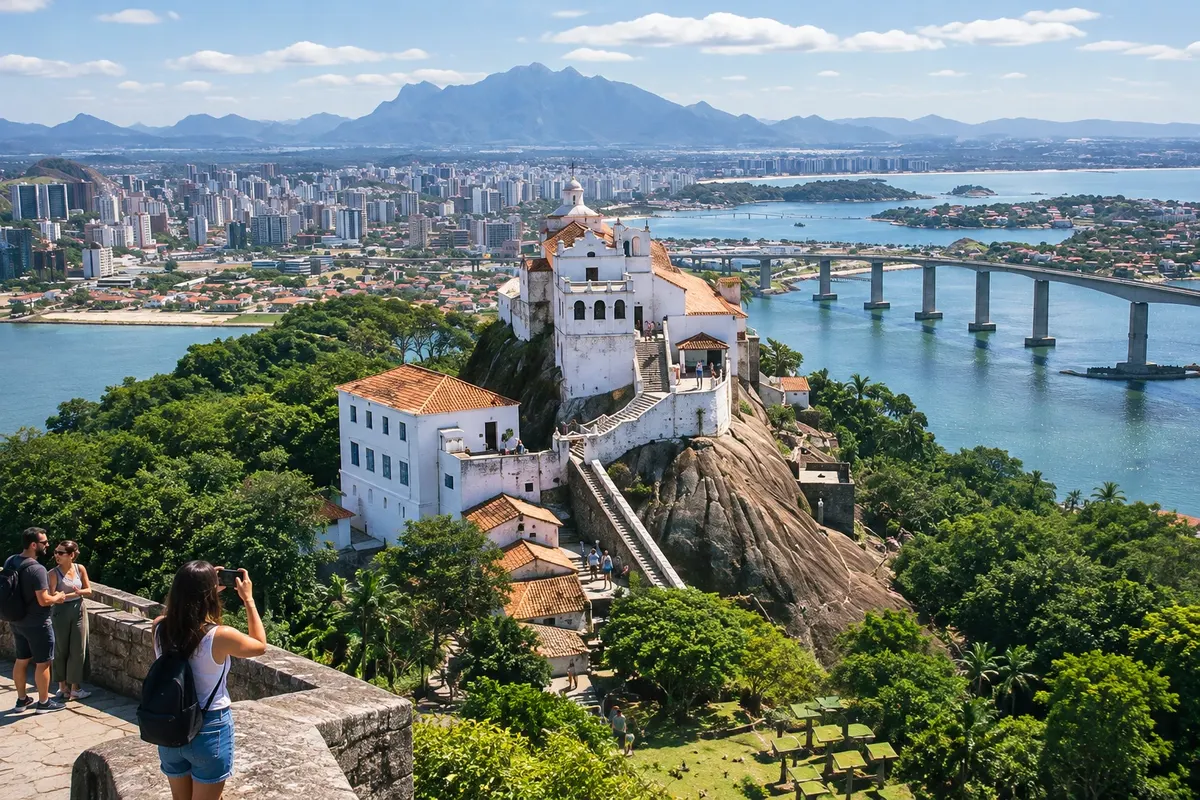
The Convento da Penha is located on an elevation in Vila Velha and is one of the main religious monuments of Espírito Santo.

 Search
Brazil
 Antarctica
 Argentina
 Bolivia
 Chile
 Colombia
 Ecuador
 Guyana
 French Guiana
 Falkland Islands (Malvinas)
 Paraguay
 Peru
 Suriname
 Uruguay
 Venezuela
 Germany
 Austria
 Belgium
 Croatia
 Denmark
 Slovakia
 Slovenia
 Spain
 Finland
 France
 Greece
 the Netherlands
 Hungary
 Ireland
 Iceland
 Italy
 Luxembourg
 Norway
 Poland
 Portugal
 the United Kingdom
 the Czech Republic
 Sweden
 Switzerland
 Turkey
 Bermuda
 Canada
 the United States
 Greenland
 Mexico
 Saint Pierre and Miquelon
 the Dominican Republic
 JapanTurkey
 South Africa
 Egypt
 Australia
 Fiji
 New Zealand
 Papua New Guinea
Espírito Santo · Brazil
In the state of Espírito Santo.
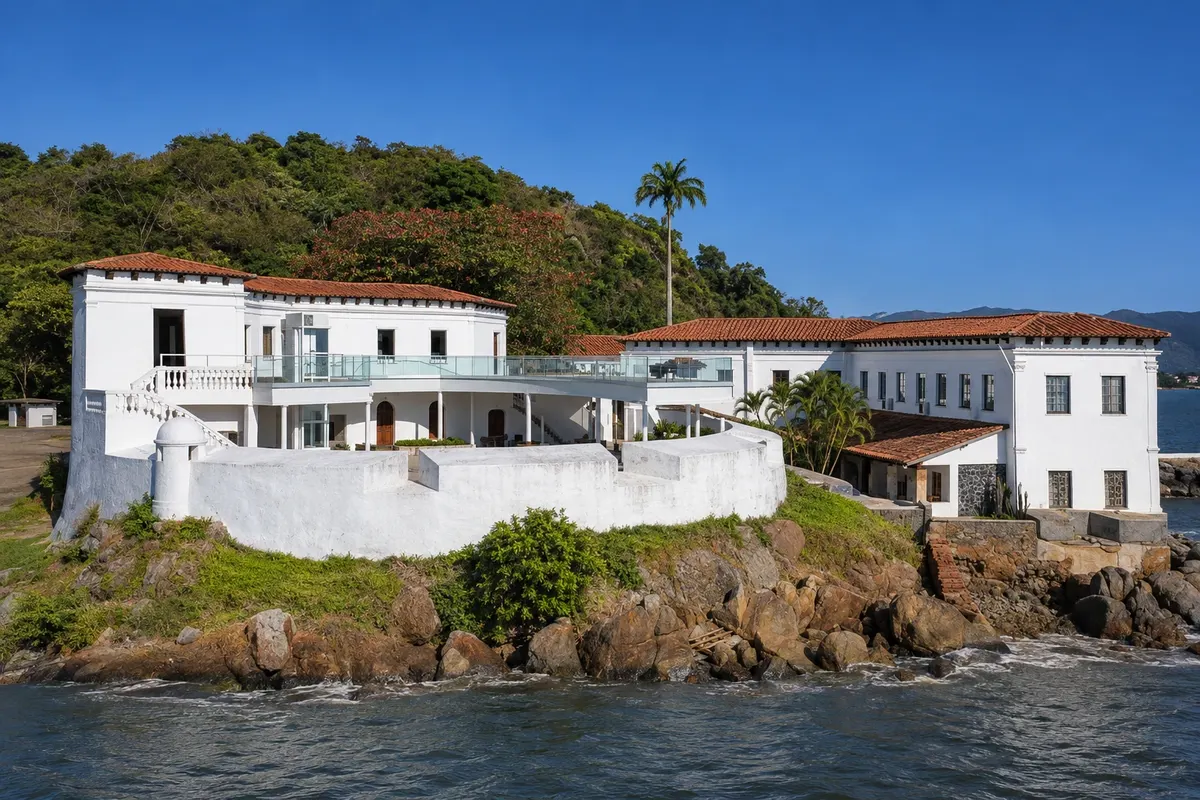
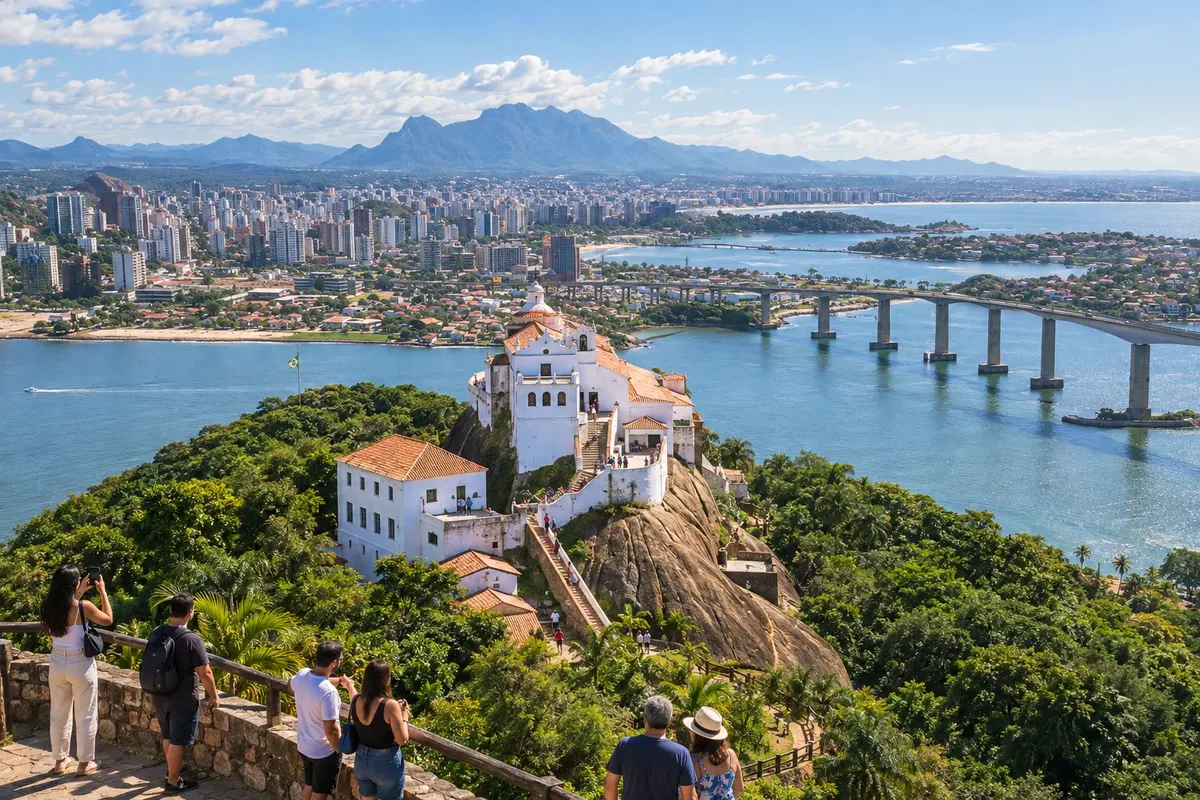
In the photo: Convento da Penha, Vila Velha - ES
Illustrative images. The pictures in this guide are illustrations based on the real place, not photographs, and may differ from it.
The city
Vila Velha brings together religious heritage, urban beaches and views of the bay. The Convento da Penha is a city landmark, accompanied by Praia da Costa, Farol de Santa Luzia and Morro do Moreno. History and landscape can occupy different days of the trip.
Vila Velha lies on the south shore of Vitória Bay, facing the capital of Espírito Santo, about a 20-minute drive across the Terceira Ponte. It is the oldest city in the state: on May 23, 1535 the Portuguese donatary Vasco Fernandes Coutinho landed at the Prainha and founded Vila do Espírito Santo there, which was the seat of the captaincy until the capital moved to Vitória. Today it is the state’s second most populous city, with a long seafront lined with buildings facing the open sea.
Visitors find two cities in one. The first is the historic core, concentrated at the Prainha, at the foot of the Convento da Penha hill. The white convent, atop a 154-meter cliff, is the best-known sanctuary in Espírito Santo and a viewpoint over the whole region: from up there you can see the Terceira Ponte, the bay and Vitória. Below are the Church of Nossa Senhora do Rosário, erected from a 1535 chapel, the Forte São Francisco Xavier da Barra, located within an Army barracks, and the Casa da Memória, which preserves an electric tram.
The second is the beach city. Praia da Costa, the most popular, generally has calm water, a wide promenade and a bike path; at the northern tip, the small Praia da Sereia is sheltered among rocks, near the Farol de Santa Luzia and the Morro do Moreno. To the south, the sand continues through Itapuã and Itaparica, where the sea is more open and the waves stronger, down to Barra do Jucu, an old fishing village at the mouth of the Rio Jucu, home to congo, lace makers and surfers. At the municipality’s southern extreme is Ponta da Fruta.
There are also activities that don’t depend on sunshine: the Garoto chocolate factory museum in the Glória neighborhood, with guided and scheduled visits, and the Parque Cultural Casa do Governador, a sculpture park in the former official residence on Praia da Costa.
The climate is warm year-round. From December to March daytime highs reach about 27 °C or 28 °C, with downpours; this is the high season for the beaches. November and December are the wettest months. From June to September it rains little, highs stay near 24 °C and nights are cool. The event that most stirs the city is the Festa da Penha, which usually begins on Easter Sunday and draws crowds on pilgrimages up to the convent.
One day is enough for the convent, the Prainha and Praia da Costa. With two or three days you can include the lighthouse, Morro do Moreno, the chocolate museum, a boat trip and Barra do Jucu. Vitória, on the other side of the bridge, and Guarapari, south along the Rodovia do Sol, have their own pages.
39 places to stay in Vila Velha.
19 places to eat in Vila Velha.
Vila Velha highlights and titles
The local experience
The Convento da Penha is located on an elevation in Vila Velha and is one of the main religious monuments of Espírito Santo.
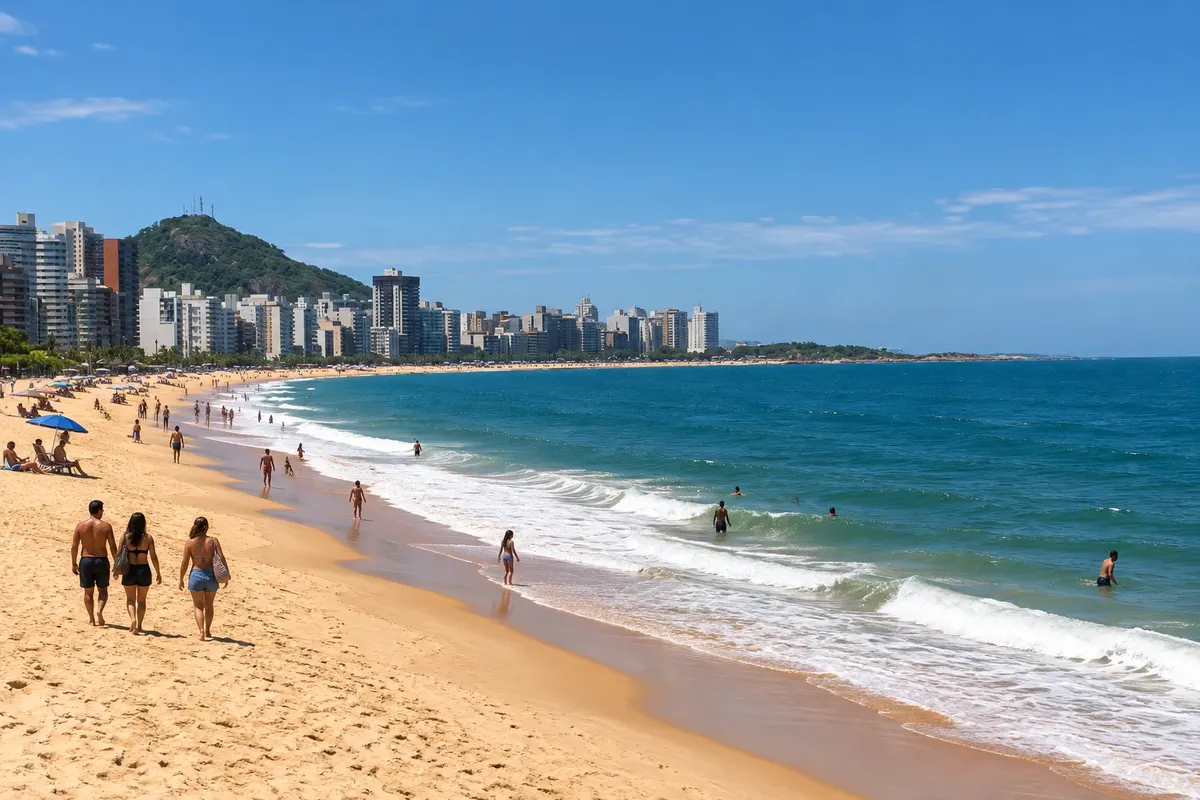
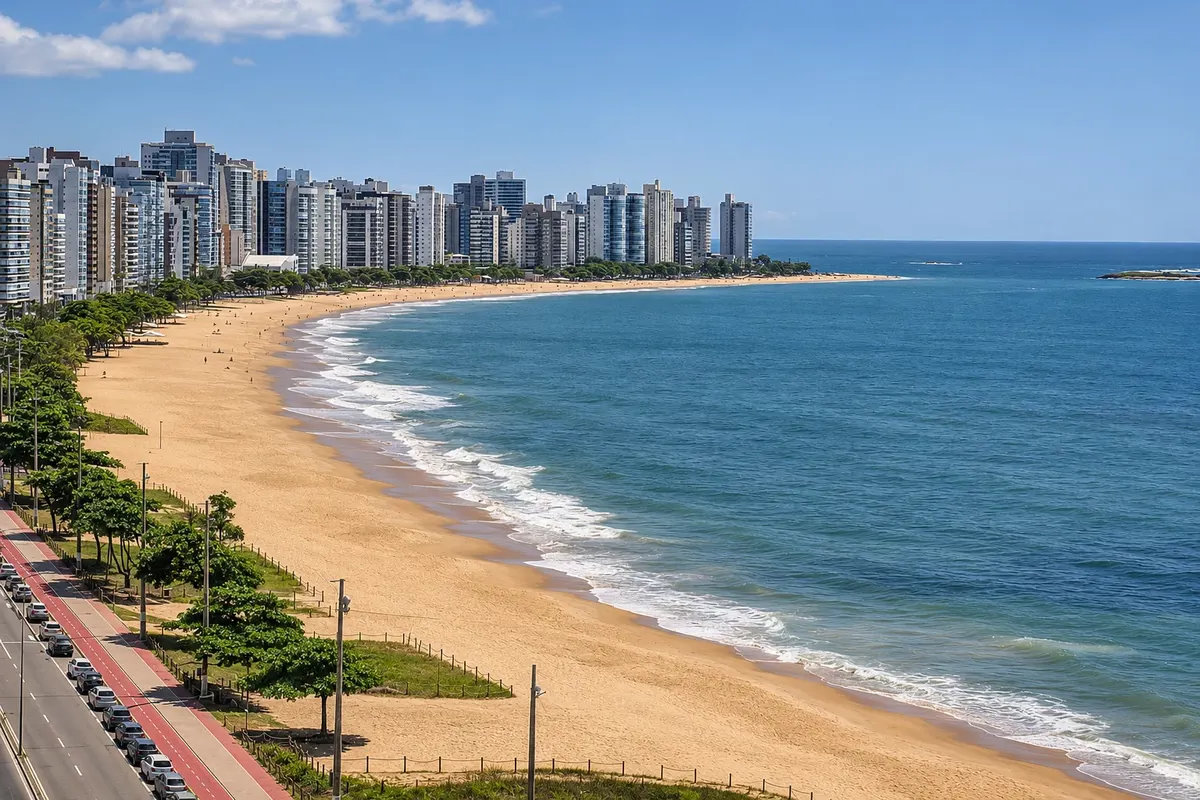
Praia da Costa is one of the main stretches of Vila Velha's urban coastline, fronted by a lively waterfront.
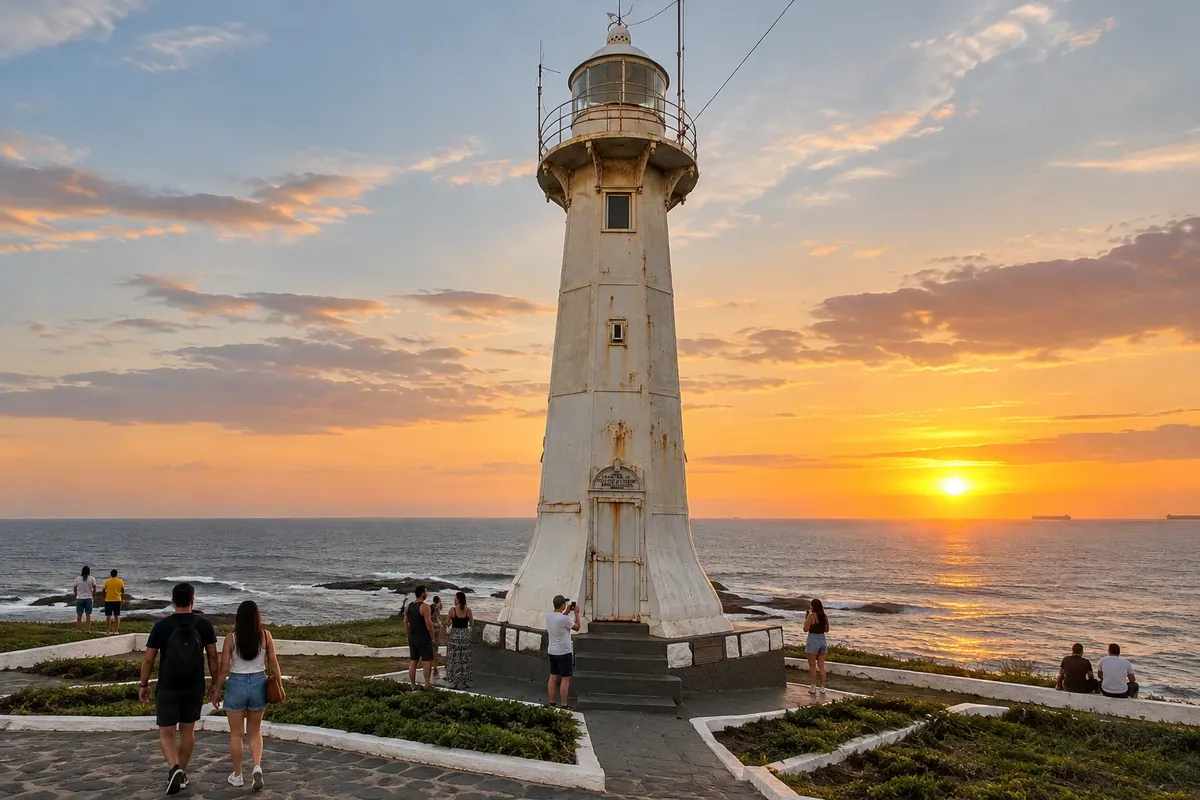
The Farol de Santa Luzia stands at the entrance to the bay in Vila Velha and is part of the heritage related to navigation.
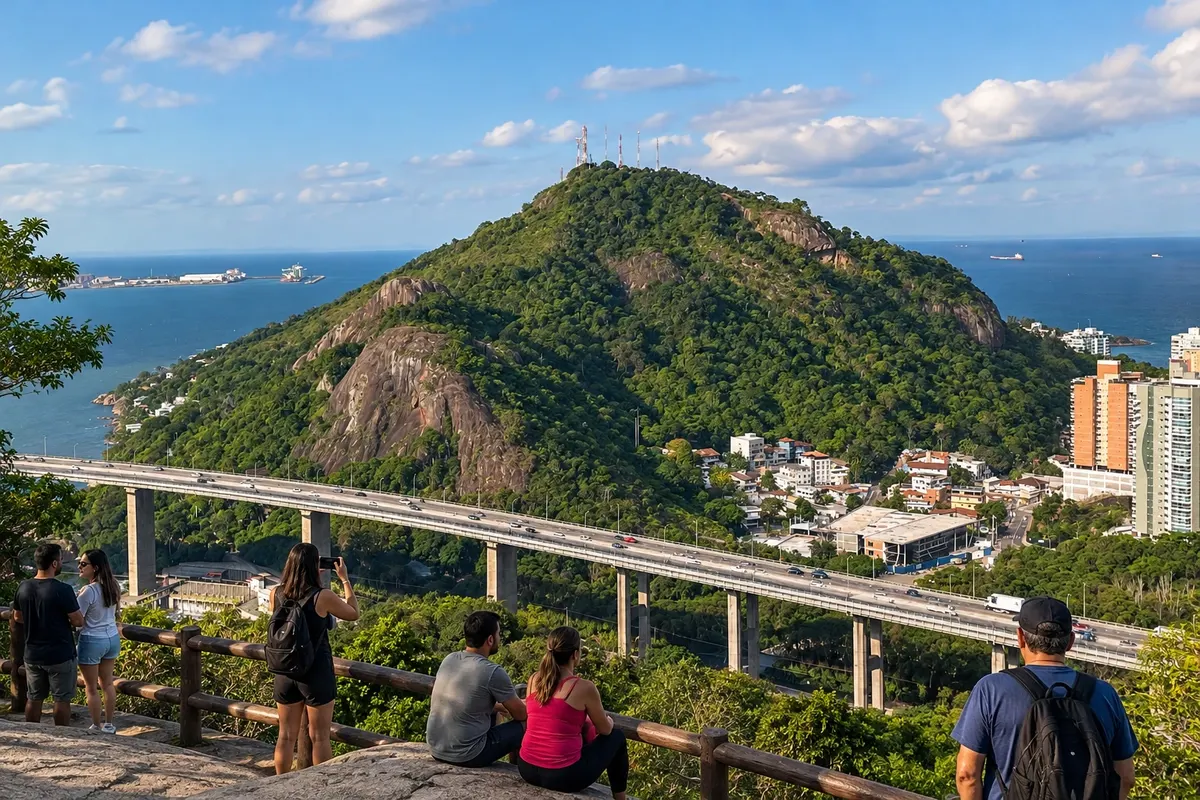
Morro do Moreno is an elevation in Vila Velha, sought after for its views of the city and the bay.
Fortification on Piratininga Beach, at the entrance to Vitória Bay, inside the area of the 38th Infantry Battalion of the Army. It operates as a cultural center, with a collection about military history and the history of Espírito Santo, and has a view of the channel and of Vitória.
Discover Fort São Francisco Xavier da Barra
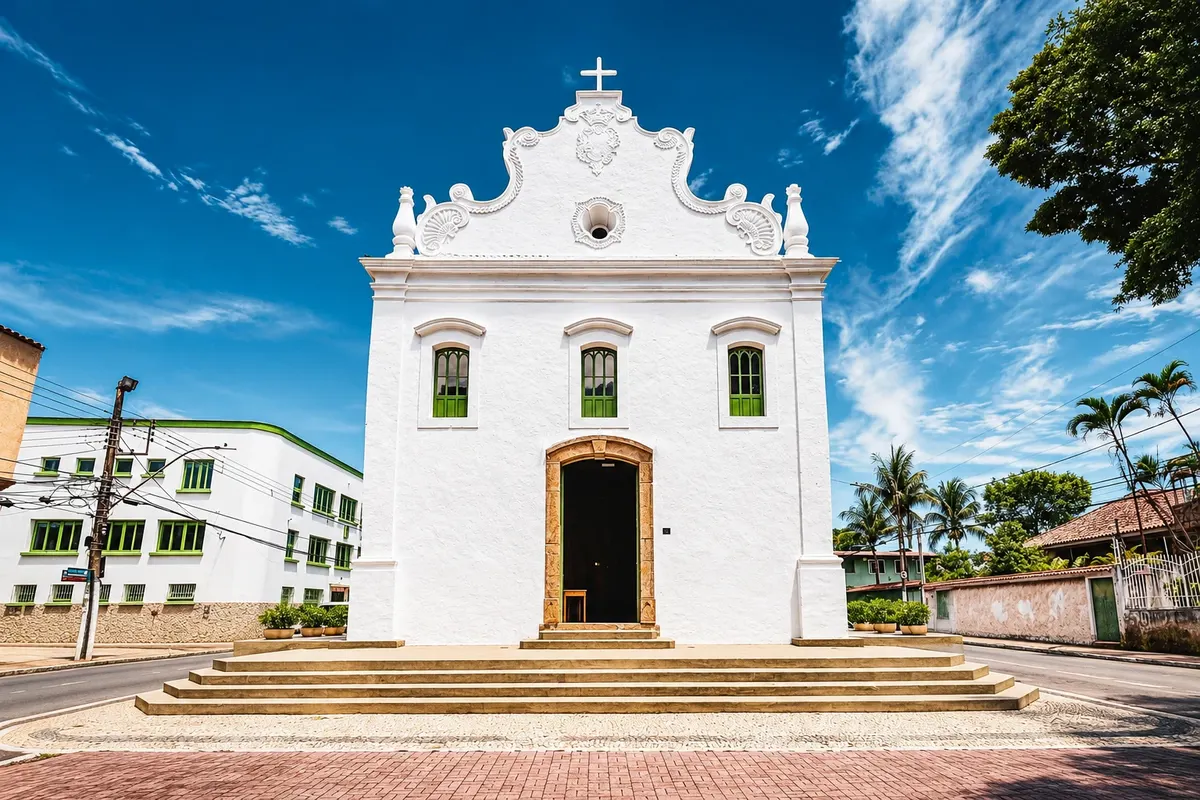
16th-century church in the Prainha Historic Site, in Vila Velha, considered the oldest church still in use in Brazil. Small, with a simple white façade, it was listed by Iphan and restored inside and out, with altars and high-relief ornaments.
Discover Church of Our Lady of the Rosary
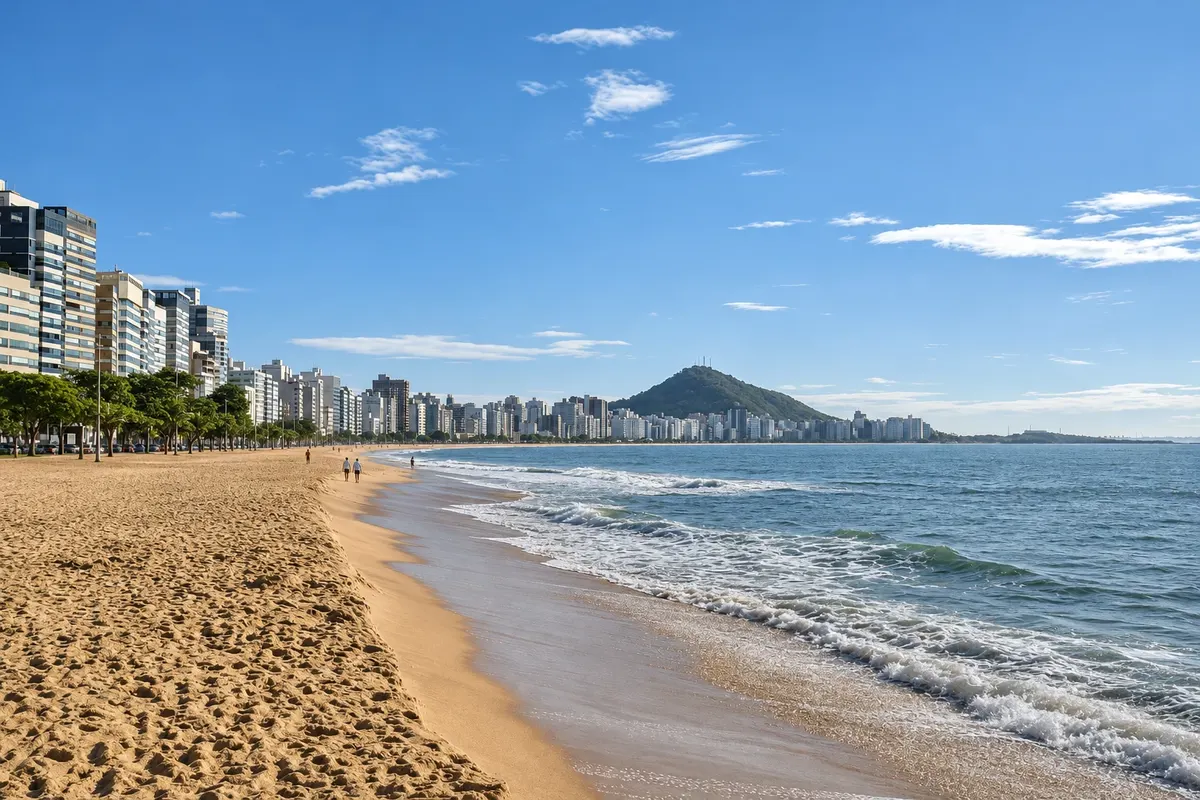
Urban beach in Vila Velha that continues Praia da Costa to the south, with beachfront buildings, a boardwalk and a bike path. It has a wide sand strip, open sea and a neighborhood atmosphere, with the Itapuã fishing colony nearby.
One of Vila Velha’s most extensive beaches, with kilometers of sand in a straight line, a boardwalk, bike lane and kiosks. Open sea with waves, south of Itapuã, on the city’s urban waterfront.
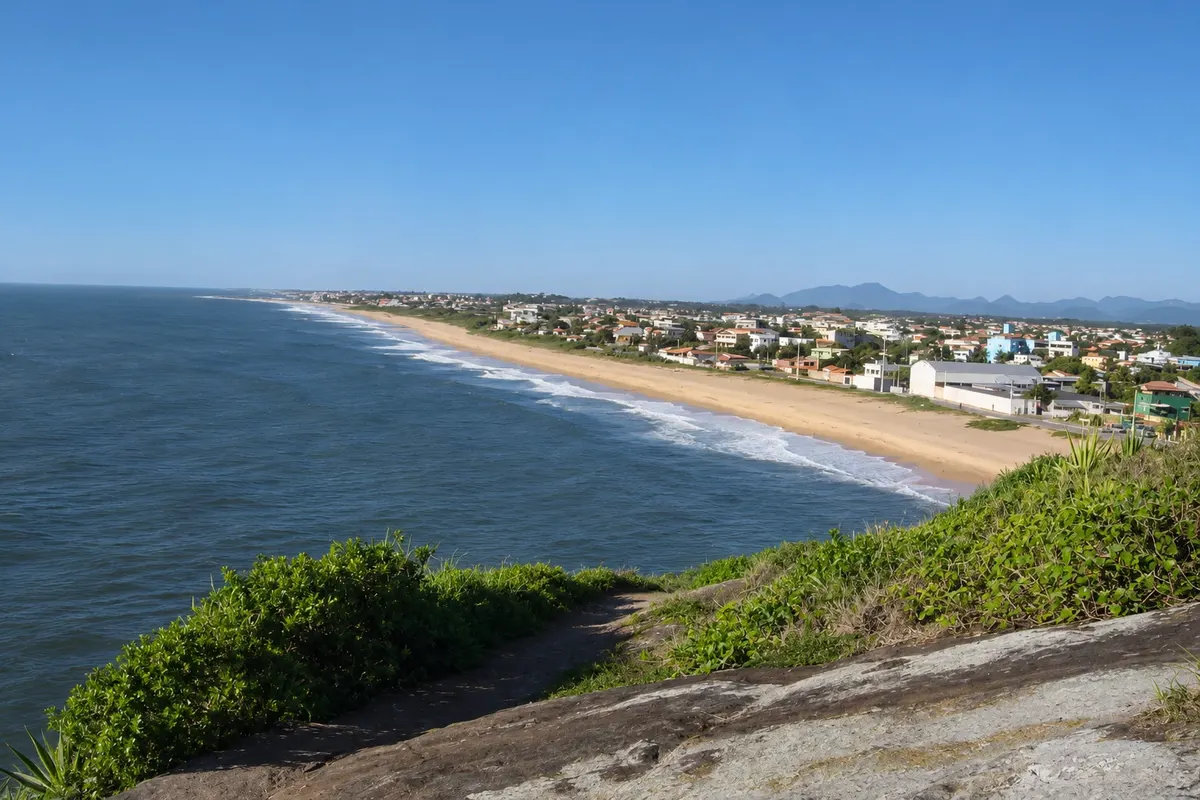
Open-sea beach by the mouth of the Jucu River, in the south of Vila Velha, in a former fishing village known for congo bands and bobbin-lace makers. It has streets of low houses, bars and the Jacarenema Municipal Natural Park beside it.
To choose before you go
Where each tour starts, how long it takes, how it is done, what is included and the price range.
The Convento da Penha sits atop a 154-meter cliff, covered in native forest, above Prainha. The story begins in the 16th century with the Spanish friar Pedro Palácios, who arrived in Vila Velha in 1558 and built a small hermitage there. The complex, including the hill and surrounding vegetation, is protected by Iphan, Brazil’s heritage agency, and still functions as a Franciscan friary and the Sanctuary of Nossa Senhora da Penha, the patroness of Espírito Santo. The visit starts at the gate, at the lower part. From there there are three ways to go up. On foot, via the Ladeira da Penitência, a very steep trail through the forest, taking about 40 minutes. By van or tourist train, which run up and down to the Campinho, the square below the convent. Or by private car, allowed only on certain days and times. In any case, the final stretch is a staircase. At the top, the first thing that grabs you is the view: the Third Bridge, the bay, Vitória’s buildings, Praia da Costa and Morro do Moreno. Inside you’ll find the small chapel with dark carved and gilded woodwork and the panel of Nossa Senhora das Alegrias, brought from Europe in the 16th century, and the Room of Miracles, where devotees leave photos and objects in thanks. The convent holds masses every day, in the chapel and at the Campinho. It is a place of prayer: speak quietly, and avoid beachwear.
Stops: Convento da Penha, Ladeira da Penitência, Campinho do Convento, Sala dos Milagres, Capela do Convento.
Includes: There is no admission fee at the convent. The van and the little tourist train are paid separately, for the ascent and descent; check the current price list at the entrance.
Tip: Go up early, before the heat and before groups arrive. Check with the convent which days cars are allowed to drive up: on weekends access is often restricted to vans. Those who walk up should bring water and wear sneakers.
Best time: All year. From June to September there is less rain and the view is usually clearer. During the week of the Festa da Penha, starting at Easter, the hill receives large crowds.
Prainha is Vila Velha’s historic site, at the foot of the convent hill. It was there that Vasco Fernandes Coutinho’s expedition landed in 1535: the place offered shelter among hills, fresh water, and a good position to watch the bay entrance. Start at the Church of Nossa Senhora do Rosário. It originated from a chapel built in the year of the Portuguese arrival and was completed with the Jesuits in 1551, which makes it one of the oldest churches in Brazil, protected by Iphan since 1950. It is small, with a white façade, and remains in use. Nossa Senhora do Rosário is the city’s patron saint. In Parque da Prainha, facing the bay, is the Marco Zero da Colonização do Espírito Santo, an open-air circular work 10 meters in diameter that recounts the arrival of the caravel, the indigenous peoples, the local fishermen, and Father Pedro Palácios. Nearby, the Casa da Memória de Vila Velha occupies a 19th-century building with photographs and objects from the city’s formation, and houses Bonde 42, the last example of the electric trams that ran in Vila Velha starting in 1912. The tour ends at Forte São Francisco Xavier da Barra, within the 38th Infantry Battalion, a few minutes’ walk from the church. The visible structure dates to the 18th century; the cultural center has rooms about the history of Espírito Santo and the Army and offers a view of the channel through which ships enter the port. Because it is in a military area, visits require scheduling. Prainha square has bars and restaurants.
Stops: Church of Nossa Senhora do Rosário, Parque da Prainha, Marco Zero da Colonização, Casa da Memória de Vila Velha, Forte São Francisco Xavier da Barra.
Includes: Self-guided route. Confirm opening days and any entrance fees with each site; the fort receives visitors by appointment.
Tip: Do the convent in the morning and Prainha after lunch. The church usually opens for visits on weekdays and the Casa da Memória is open Tuesday through Sunday; book the fort before you go.
Best time: All year. Weekdays have more sites open.
Praia da Costa is Vila Velha’s most sought-after city beach. It is extensive, with generally calm sea, a wide boardwalk, a bike lane, volleyball nets, kiosks, and chair and umbrella rentals. Many buildings and most of the city’s hotels face it. Walking north, the sand ends at Praia da Sereia, a cove about 450 meters long squeezed between rocks. The water there is still and clear, good for children, and it’s common to see outrigger canoes, swimmers, and stand-up paddleboards. The beach has kiosks and hosts a project that facilitates sea bathing for people with disabilities or reduced mobility. From there you continue to the Farol de Santa Luzia, on the rocky point that marks the entrance to Vitória Bay. The century-old tower is 12 meters tall, and its light reaches 63 km; the lighthouse still guides ships entering the port. Visitors find a deck facing the sea, a small exhibition of sailor’s knots, and a view of the coast. The site is open Tuesday through Sunday and on holidays during the day; the last group enters in the mid-afternoon. Morro do Moreno is next door: if you have the energy you can link the trail on the same day.
Stops: Praia da Costa, Praia da Sereia, Farol de Santa Luzia.
Includes: There is no entrance fee for the beaches or the lighthouse. Rental of chairs and umbrellas and what you buy at the kiosks are your responsibility.
Tip: Go to the beach early and leave the lighthouse for after lunch, before midafternoon; it is closed on Mondays. Tours and schools need to schedule visits to the lighthouse.
Best time: December to March for sea bathing, with the beach busier. From May to September it rains little and the waterfront is quiet.
At Praia da Costa, the state governor’s official residence opened its gardens to the public as the Parque Cultural Casa do Governador. It covers 93,000 square meters of green area, treated like an open-air art gallery. The heart of the visit is the Sculpture Grove: more than 30 works, including sculptures, installations and site-specific pieces by artists from Espírito Santo and other Brazilian states, scattered across lawns and among the trees. Part of the collection is permanent and part is rotated from time to time. The Galeria Gabinete, in an indoor area, hosts temporary exhibitions. The route is free to explore, along easy paths. On some days, the park educators lead guided visits through the grove and the gallery, without the need to book: just be there at the scheduled time. On certain Sundays the park holds festivals with music and workshops, which require advance ticket pickup. The park is open Tuesday through Sunday during daylight hours and closed on Mondays. The last entry is about one hour before closing.
Stops: Parque Cultural Casa do Governador, Sculpture Grove, Galeria Gabinete.
Includes: There is no admission fee. The ticket is picked up online, on the park’s channel, or at the reception. Guided visits are also free.
Tip: Pick up your ticket before you go and confirm the days with guided visits. Combine it with the Farol de Santa Luzia, also on Praia da Costa.
Best time: All year. In the dry months, from May to September, the outdoor walk is more rewarding.
Morro do Moreno is the Atlantic Forest–covered hill that closes Praia da Costa to the north, next to the Convento da Penha, at the mouth of Vitória’s bay. It can be seen across the water by those crossing the Terceira Ponte. The summit is about 184 meters above sea level. The main trail starts from the Praia da Costa side. The climb is easy to moderate and takes around half an hour, not counting stops. From the top, you can see the convent, the Terceira Ponte, the bay, Vitória and the whole Vila Velha shoreline stretching south. At the base of the hill, among the rocks near the lighthouse, is Praia Secreta, a small beach with calm, clear water. It’s reached by a short trail. There are no kiosks or facilities. There is more than one path on the hill, and not all are signed. Go up in daylight, stay on the main trail and ask locals if any section is closed.
Stops: Morro do Moreno, Praia Secreta.
Includes: Self-guided walk, no entrance fee.
Tip: Start early, wearing sneakers, bring water and sunscreen, and descend before late afternoon. Take a snack if you plan to continue to Praia Secreta and carry your trash back with you.
Best time: From May to September, with less rain and milder heat.
Garoto was founded in Vila Velha and still has its factory in the Glória neighborhood, a little away from the beaches. The company started by producing candies sold on the street by boys, which is where the name came from. Today it is one of the world’s large chocolate factories. What you visit is the museum, a guided tour of about 40 minutes. The visit shows the journey from cocoa to the factory, the types of cocoa and the history of chocolate, and then the brand’s trajectory: old packaging, discontinued products, machines and advertising posters. The company calls the program Chocotour and also offers an experience that pairs chocolate and coffee. Visits operate by prior reservation only, made through the factory’s own channel, Monday through Saturday. Entrance to the production line is not always part of the itinerary: check the reservation to see what is available on the date. There are dress rules, since it is an industrial area: closed shoes without heels, and no shorts, short skirts or dresses, tank tops or swimwear. If you come straight from the beach you need to change clothes beforehand. The shop, next to the museum, sells the brand’s product line, including new releases.
Stops: Garoto Museum, Factory shop.
Includes: The visit is paid and includes the guided tour of the museum. Check the current rates when booking; purchases at the shop are extra.
Tip: Book in advance, especially during Brazil’s school holidays in January and July. Wear long pants or long shorts and closed shoes, and arrive a few minutes before the scheduled time.
Best time: All year round. It’s a good option for a rainy day.
The sea around Vila Velha is full of small islands, and the boat is the way to see them up close. The most complete tour leaves in the morning from the Fishermen’s Pier at Prainha and lasts about three hours. The motorboat leaves the bay with views of the Convento da Penha and skirts Morro do Moreno, with views of Praia Secreta and the fortifications at the channel entrance. Then it heads to open sea, to the Arquipélago de Itatiaia, off Praia de Itapuã, with a stop for a swim. The route usually also includes Ilha da Baleia and Praia Bananal. Landings are made in the water, close to the attractions. The Arquipélago de Itatiaia has seven islands, about 800 meters from Praia de Itapuã, and serves as a nursery for seabirds, especially terns and herons. Closer to the sand, about 300 meters away, Ilha Pituã has natural pools and native vegetation. Those who prefer a shorter trip can go directly to Itapuã: licensed boatmen run crossings to Ilha Pituã and the Itatiaia islands from the beach itself. Barbecues and fires are not allowed on the islands. Everything depends on wind and sea conditions.
Stops: Prainha, Ilhas Itatiaia, Ilha da Baleia, Praia Bananal, Morro do Moreno seen from the sea.
Includes: Usually includes the boat, the skipper and a stop for a swim. Check the current price list and the day’s itinerary with the operator.
Tip: Book the day before and confirm departure in the morning. Bring sunscreen, water, a snack and a bag for your trash.
Best time: From December to March, when the water is warmer. At other times of year, prefer mornings with little wind.
From Praia da Costa to the south, the sand continues almost without interruption through Itapuã and Itaparica. The boundaries between the three beaches are defined more by neighborhoods than by the landscape, and an avenue with a promenade and bike lane runs along the whole stretch. It’s what locals do in the early morning and late afternoon: walk, run or cycle facing the sea. Itapuã has a wide beach used for footvolley, volleyball and soccer, and a fishing colony that recalls the neighborhood’s origins. From there you can see Ilha Pituã and the Itatiaia Islands, and boats to them depart from the beach. Itaparica, at about 3.5 km, is the longest. The sea is open with strong waves, attracting surfers, bodyboarders and kitesurfers. Kiosks are spread along the entire stretch. For swimming, favor sections with lifeguards and observe the flags; the state’s bathing water reports indicate suitable points. Walking all of Itaparica takes about an hour each way. By bicycle, you can go from Praia da Costa to the end of Itaparica and return in a morning, with stops for coconut water.
Stops: Praia da Costa, Itapuã Beach, Itaparica Beach.
Includes: Self-guided outing. Bike rental, when available, and purchases at the kiosks are paid separately.
Tip: In summer, leave before midmorning or in the late afternoon because of the heat. Bring water and sunscreen; there is almost no shade on the promenade.
Best time: All year. From May to September the weather is drier and the sun is less intense.
In the south of Vila Velha, where the Jucu River meets the sea, Barra do Jucu keeps the feel of a fishing village, with streets of low houses, bars and studios, despite the large city around it. The beach faces the open sea and has good waves; it is a well-known spot for surfing and bodyboarding. The sand stretches on both sides of the river mouth. On the river side is the Jacarenema Municipal Natural Park, a protected area of restinga and mangrove, open during the day. The Madalena Bridge, over the Jucu, is the neighborhood’s walking and cycling route. Beside it stands the Congo Monument, a tribute to the village’s strongest cultural expression and to masters Alcides and Honório. The capixaba congo is drum music and casacas, a wooden instrument scraped with a stick, and Barra do Jucu is considered one of the birthplaces of this tradition. In December they plant the mast of São Benedito, with a procession through the streets. The village also preserves bobbin lace: the lace makers teach the craft to younger women and sell pieces in studios. In the main square, the Church of Nossa Senhora da Glória is the first stop of the Passos de Anchieta, an annual walk that follows the coast to the town of Anchieta; it is open on weekend mornings. Fish and seafood are the natural lunch choices in the neighborhood’s restaurants.
Stops: Barra do Jucu Beach, Madalena Bridge, Congo Monument, Jacarenema Municipal Natural Park, Church of Nossa Senhora da Glória.
Includes: Self‑guided outing. Meals and purchases at the studios are paid separately.
Tip: Go on Saturday or Sunday morning to find the church open and more activity in the studios. Ask in the village whether a congo performance is scheduled that week.
Best time: All year. São Benedito’s mast festivities take place in December; confirm the dates.
Day by day
Suggestions to plan the trip. Change the order of the days according to the weather and tour availability.
Start early at the Convento da Penha. Go up by van, or on foot via Ladeira da Penitência if you prefer the walk, and allow time for the view, the chapel and the Sala dos Milagres. Descend to Prainha: Igreja de Nossa Senhora do Rosário, the Marco Zero in Parque da Prainha and, if it’s open, the Casa da Memória with the Bonde 42. Have lunch in the square. In the afternoon, head to Praia da Costa. Stop by the Farol de Santa Luzia before mid-afternoon and end the day at Praia da Sereia or on the seaside promenade. If you booked the Garoto museum, you can swap the lighthouse for the factory visit; check the scheduled time before planning the day.
Morning at the Convento da Penha, climbing up early. After that, walk around Prainha: the Igreja de Nossa Senhora do Rosário, the Marco Zero, the Casa da Memória and, by appointment, the Forte São Francisco Xavier da Barra. Have lunch at the square in Prainha and visit the Garoto factory in the Glória neighborhood at your scheduled time. Wear long pants and closed-toe shoes. Late in the afternoon, return to the waterfront for a walk along the Praia da Costa promenade.
Climb Morro do Moreno early via the trail that starts at Praia da Costa: about a half-hour ascent and views over the bay, the bridge and the convent. On the way down, swim at Praia da Sereia. After lunch, visit the Farol de Santa Luzia and the Parque Cultural Casa do Governador, with its sculpture grove. Both close on Mondays and stop admitting visitors in the mid-afternoon. Save the rest of the day for the sand at Praia da Costa. If the morning dawns with calm seas and little wind, swap the morning for the speedboat tour that departs from Prainha.
Spend the morning at Convento da Penha and the afternoon at Prainha: Igreja de Nossa Senhora do Rosário, Parque da Prainha, Casa da Memória and the fort, if the visit is scheduled. Stay until late afternoon in the square among the bars and restaurants. If you want to see Vitória, you can cross the bay by boat via the aquaviário, which has a station at Prainha.
In the morning, take the speedboat tour of the islands from Píer dos Pescadores, or hike Morro do Moreno with the descent to Praia Secreta, depending on the wind. Have lunch at Praia da Costa. In the afternoon, visit Farol de Santa Luzia and Parque Cultural Casa do Governador, then swim at Praia da Sereia. If it rains, use this day for the scheduled visit to the Garoto museum.
Start with a walk or a bike ride along the Itapuã and Itaparica waterfront early, before the heat. Then head to Barra do Jucu. See the beach and the surfers, cross the Ponte da Madalena to the Monumento ao Congo and walk along the riverbank next to Parque de Jacarenema. Visit a bobbin-lace workshop and have fish for lunch in the village. With a car and time, continue to Ponta da Fruta at the southern tip of the municipality, where the Igreja Nossa Senhora dos Navegantes, atop a hill, has a lookout over the beaches.
Best time to go
The seasons shown are the most usual ones; nature doesn't always follow the calendar.
Summer and high season
Night lows around 24 °C and highs of 27 °C, with rain showers. This is the peak beach season: Praia da Costa and Praia da Sereia fill early, and parking near the waterfront becomes difficult. Book accommodation in advance, schedule your Garoto visit early, and climb the convent in the first hours of the morning.
Carnival · Warmest month
Minimums of 24 °C and maximums of 28 °C; it usually rains less than in January. The sea is warm. During Carnival, in February or early March depending on the year, the waterfront gets very crowded. The lighthouse and the sculpture park remain good midday activities.
End of summer
Minimums of 24 °C and maximums of 28 °C. Showers become more frequent again, but the water stays warm and the waterfront empties after Carnival. A good month for the beach on weekdays. In years with an early Easter, the Festa da Penha may begin still in March.
Festa da Penha (movable date, starts at Easter)
Minimums of 23 °C and maximums of 26 °C, with rain decreasing. The Festa da Penha, in honor of Espírito Santo’s patron saint, usually starts on Easter Sunday and lasts nine days, with masses, the Romaria dos Homens, which comes on foot from Vitória, the Romaria das Mulheres and the maritime procession. Prainha and the accesses to the convent get crowded: book early or avoid that week.
May 23, city anniversary
Minimums of 22 °C and maximums of 25 °C. The driest season begins. On the 23rd the city celebrates the arrival of the colonizers at Prainha, in 1535. The beaches become quiet and the seawater cools. A good month for the Morro do Moreno trail and for cycling along the waterfront.
Driest month
Minimums of 21 °C and maximums of 24 °C. It’s the month with the least rain, with many clear-sky days: the view from the convent and Morro do Moreno is often at its best. Swimming in the sea requires determination. Prainha, the lighthouse, the sculpture park and Barra do Jucu are the season’s highlights.
Winter · School holidays in Brazil
Minimums of 20 °C and maximums of 24 °C: it’s the coolest period, with little rain. Brazil’s school holidays bring more visitors: schedule the Garoto museum and arrive early at the lighthouse. Good days for walking along the waterfront at midday without the heat of summer.
Winter · Stable weather
Minimums of 20 °C and maximums of 24 °C, with dry weather most days. Empty beaches and more accommodation availability. Confirm boat tours the day before. A recommended season for historical tours and for Barra do Jucu.
Spring
Minimums of 21 °C and maximums of 24 °C. It still rains little, days get longer and crowds remain low outside holidays. You can combine a morning at the beach with the lighthouse and the sculpture park in the afternoon.
October 7, patron saint’s day
Lows of 22 °C and highs of 25 °C. Rains return throughout the month. On the 7th the city celebrates Nossa Senhora do Rosário at the church in Prainha. The sea begins to warm up. Check the forecast before booking the speedboat or the Morro do Moreno hike.
Rainiest month
Lows of 22 °C and highs of 26 °C, with the highest annual rainfall. Have covered alternatives: the Garoto museum (by appointment), the Casa da Memória and the fort’s cultural center. After heavy rain, avoid the Morro do Moreno trails. Between showers, the beach can still be enjoyable.
New Year’s Eve on the waterfront · São Benedito mast in Barra do Jucu
Lows of 23 °C and highs of 27 °C, with rain on many days. High season starts after Christmas. New Year’s Eve features fireworks on the waterfront and draws crowds to the beaches; book months in advance. In Barra do Jucu, congo bands take part in the raising of the São Benedito mast; confirm dates.
Plan the journey
Vila Velha has no airport. You arrive via Vitória Airport (VIX), in the capital, which receives flights from Brazil’s main cities. International travelers connect through a Brazilian international airport; check the route before booking.
The airport is in the northern part of Vitória, and Vila Velha is on the other side of the bay. The route crosses the capital and the Third Bridge. Taxi, rideshare and prearranged transfer are the simplest options with luggage. There are also metropolitan bus lines, part of the Transcol system, that pass the airport and continue to Vila Velha; payment is made with the system card, sold at machines and terminals.
At peak times, crossing the bridge is slow. Allow extra time to return to the airport.
Many long‑distance buses serving the region arrive at the Vitória Bus Station, in the capital. From there you continue to Vila Velha by metropolitan bus, taxi or ride‑share, a short trip.
Vila Velha has its own bus station next to the Itaparica Terminal, served by some lines. Check with the company which station the bus uses, because Vila Velha’s station is closer to the beaches of Itaparica and Itapuã.
Between Vitória and Vila Velha the metropolitan buses run all day across the Terceira Ponte and the other bay bridges. Confirm routes and boarding points before you leave.
From Vitória, the direct route is the Terceira Ponte, which descends into Vila Velha near Praia da Costa and the Convento da Penha: about 20 minutes outside peak hours.
Those coming via BR-101 or BR-262, from inland areas or other states, reach Greater Vitória through Viana and Cariacica, municipalities neighboring Vila Velha.
To the south, the Rodovia do Sol (ES-060) leaves Vila Velha, passes Barra do Jucu and Ponta da Fruta and follows the coast to Guarapari, which has its own page.
Parking along the Praia da Costa waterfront is difficult in summer and on weekends. At the Convento da Penha, car access is restricted on several days: leave your car at the lower area and go up by van.
Vitória Bay has a public passenger boat service, the aquaviário. One of the stations is at Prainha, in Vila Velha, next to the historic site and at the foot of Convento da Penha hill. The others are in Vitória, at Praça do Papa and the bus station, and at Porto de Santana, in Cariacica.
For those staying in Vitória, it’s a pleasant way to reach the convent and Prainha without facing the bridge.
Trips follow a timetable of departures throughout the day. Check the schedule before you leave and confirm how ticket payment is made.
The main sites are in two nearby clusters: Prainha, with the convent, the church and the fort, and Praia da Costa, with Praia da Sereia, the lighthouse, the sculpture park and Morro do Moreno. Within each cluster you walk; between them it’s a few minutes by car or rideshare.
The Praia da Costa–Itaparica waterfront can be walked or cycled along the promenade and bike path. The Garoto factory, in the Glória neighborhood, is farther away, and Barra do Jucu and Ponta da Fruta, in the south of the municipality, require a car, rideshare or bus.
Metropolitan buses cover the entire city and connect Vila Velha to Vitória. Taxis and rideshares work well and make a car unnecessary for visiting. Renting a car gives freedom to go south and extend to Guarapari, but expect difficulty parking along the waterfront.
Get your questions answered
Start with Convento da Penha and Praia da Costa. On a longer trip, include Farol de Santa Luzia and Morro do Moreno, splitting activities according to travel times and visiting conditions.
We suggest three days to alternate the main outings without rush. In one day, choose a single area and avoid excessive travel; two days already allow a more comfortable distribution.
To combine distant points, a car or hired transport makes it easier. In urban stretches, walking can be a good choice. Confirm local options and the return before leaving.
Check the weather forecast, access conditions, and local guidance. Adjust the route to the group's pace and respect restricted areas, signage, and visitation rules.
Yes, especially for spaces with reservations, entry control or religious programming. Check availability for your dates and avoid relying on a single outing.
The visit starts at the entrance, at Prainha. From there you can walk up the Ladeira da Penitência, a steep path that takes about 40 minutes, or take a paid van or little train. By car, the ascent is only allowed on certain days and times; on weekends it is usually restricted. The final section up to the chapel is a staircase. There is no entrance fee to the convent.
The date varies: the festival usually begins on Easter Sunday and lasts nine days, between March and April depending on the year. The busiest times are the Romaria dos Homens, which departs from Vitória Cathedral and walks about 14 km to Prainha, the Romaria das Mulheres, and the closing mass. Check the year’s program before you travel.
You can visit the factory museum on a guided tour of about 40 minutes and the shop. The visit is paid, runs Monday through Saturday, and requires prior booking through the company’s channel. Entry to the production line is not always offered. There are dress rules: closed shoes, no shorts, short skirts, tank tops, or swimwear.
It is open Tuesday through Sunday and on holidays during the day, with the last group admitted in the mid-afternoon; it is closed on Mondays. There is no entrance fee. Schools and tour groups must book in advance. The site has a sea-facing deck, a 12-meter tower, and a small exhibition of sailor’s knots.
Praia da Costa, with generally calm water, and Praia da Sereia, a sheltered cove between rocks with still water, popular with families and children. Itapuã, Itaparica and Barra do Jucu face the open sea and have stronger waves, better for surfing and walking. At any beach, check the bathing water report and observe the lifeguard flags.
Praia da Costa is the most practical base: it concentrates hotels, is close to the convent, Prainha, the lighthouse and Morro do Moreno, and has a promenade and restaurants. Itapuã and Itaparica have long shorelines, rougher seas and are near the city bus station. Barra do Jucu suits those who want surfing and a village atmosphere, farther from the historic sites.
The two cities face each other, connected by the Terceira Ponte, and you can visit one from the other. Vila Velha has beaches on the open sea, the Convento da Penha and the historic site of Prainha. Vitória, the capital, has its own page with museums, parks and bay beaches. If you want the beach at your doorstep, you’ll likely prefer Vila Velha.
By metropolitan bus across the Terceira Ponte, by taxi or ride-hailing app—about 20 minutes outside peak hours—or by boat on the aquaviário, which links Vitória stations to Prainha, next to the historic site. Check the boat schedule before you leave.
The ascent via the main trail from Praia da Costa takes about half an hour, not counting stops. It is considered easy to moderate. Bring water, wear sneakers, hike in daylight and stay on the main path, because there are unmarked secondary trails.
Visit the Garoto chocolate factory museum by appointment, the Casa da Memória at Prainha via Bonde 42, the Church of Our Lady of the Rosary, and the cultural center of Forte São Francisco Xavier da Barra, which also requires booking. The convent welcomes visitors in rain, but the view is obscured.
It is a traditional musical expression from Espírito Santo, played by bands with drums and casacas, a wooden instrument scraped with a stick. Barra do Jucu, in the south of Vila Velha, is one of the places where the tradition is strongest: there is a Monument to the Congo next to the Madalena Bridge and, in December, the planting of the Saint Benedict mast.
Yes. From Prainha there are speedboat tours of about three hours that round Morro do Moreno and go to the Itatiaia Islands, with a stop for swimming. From Itapuã Beach, licensed boatmen take you to Ilha Pituã and the Itatiaia islands. Departures depend on wind and sea conditions; book the day before.
Beyond the guide