

 Antarctica
 Argentina
 Bolivia
 Chile
 Colombia
 Ecuador
 Guyana
 French Guiana
 Falkland Islands (Malvinas)
 Paraguay
 Peru
 Suriname
 Uruguay
 Venezuela
 Germany
 Austria
 Belgium
 Croatia
 Denmark
 Slovakia
 Slovenia
 Spain
 Finland
 France
 Greece
 the Netherlands
 Hungary
 Ireland
 Iceland
 Italy
 Luxembourg
 Norway
 Poland
 Portugal
 the United Kingdom
 the Czech Republic
 Sweden
 Switzerland
 Turkey
 Bermuda
 Canada
 the United States
 Greenland
 Mexico
 Saint Pierre and Miquelon
 the Dominican Republic
 Japan
 South Africa
 Egypt
 Australia
 Fiji
 New Zealand
 Papua New Guinea
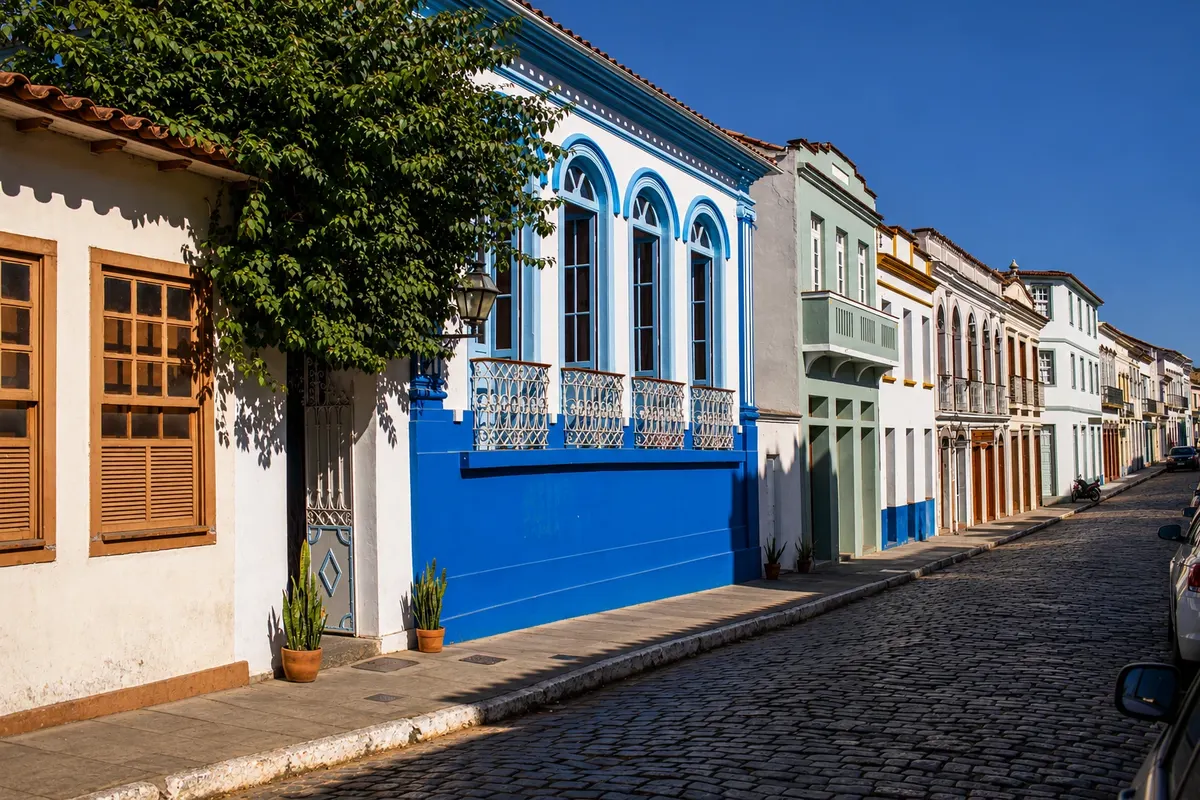
Historic center · São João del-Rei, MG
Historic Center of São João del-Rei
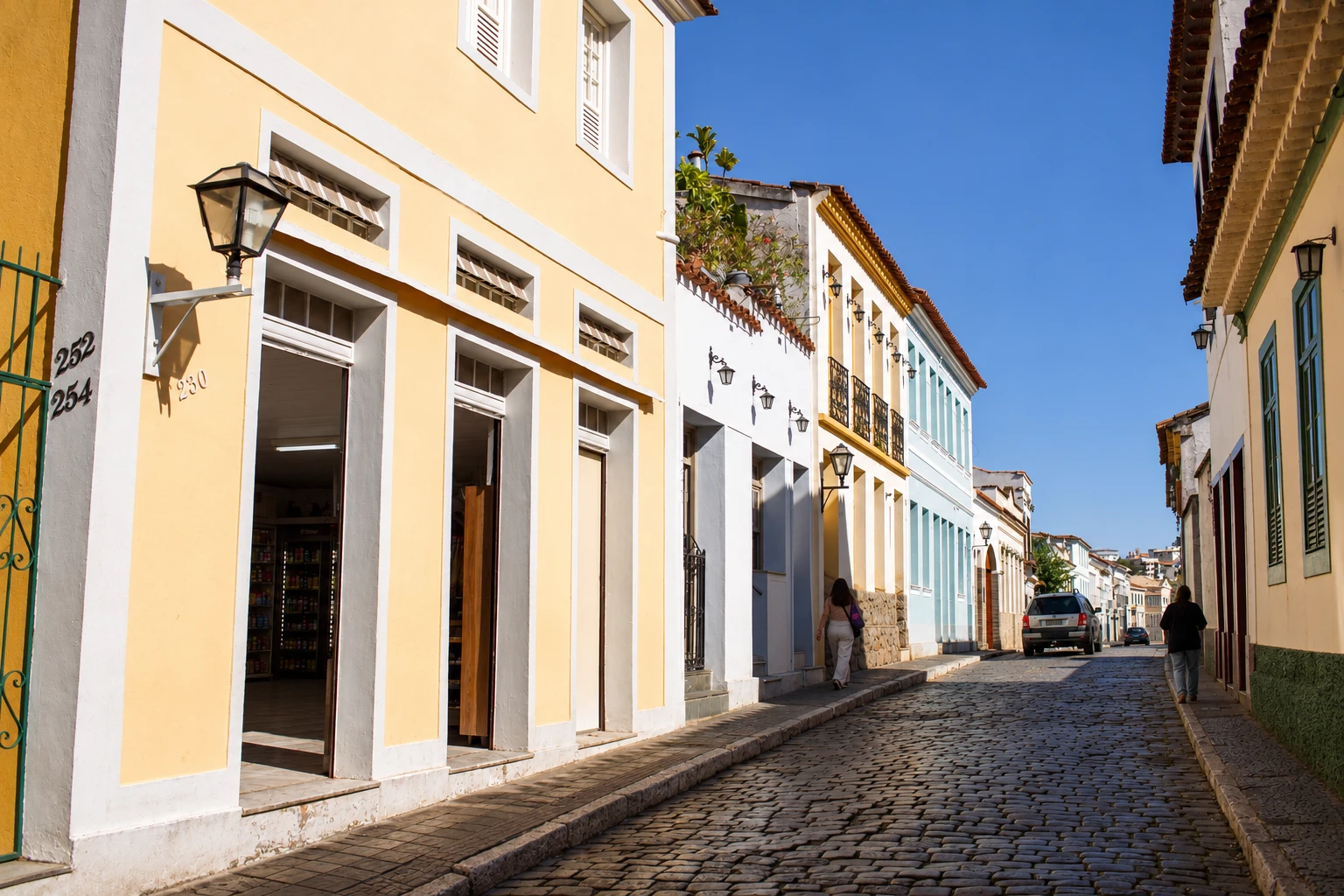
Ensemble listed by Iphan in 1938, crossed by the Lenheiro Brook and connected by colonial stone bridges. It brings together Baroque churches, colonial townhouses and eclectic 19th-century mansions, with about 700 protected properties.
In the photo: Houses and stone street in the historic center of São João del-Rei.
Illustrative images. The pictures in this guide are illustrations based on the real place, not photographs, and may differ from it.


A look at the place
Historic Center of São João del-Rei in pictures
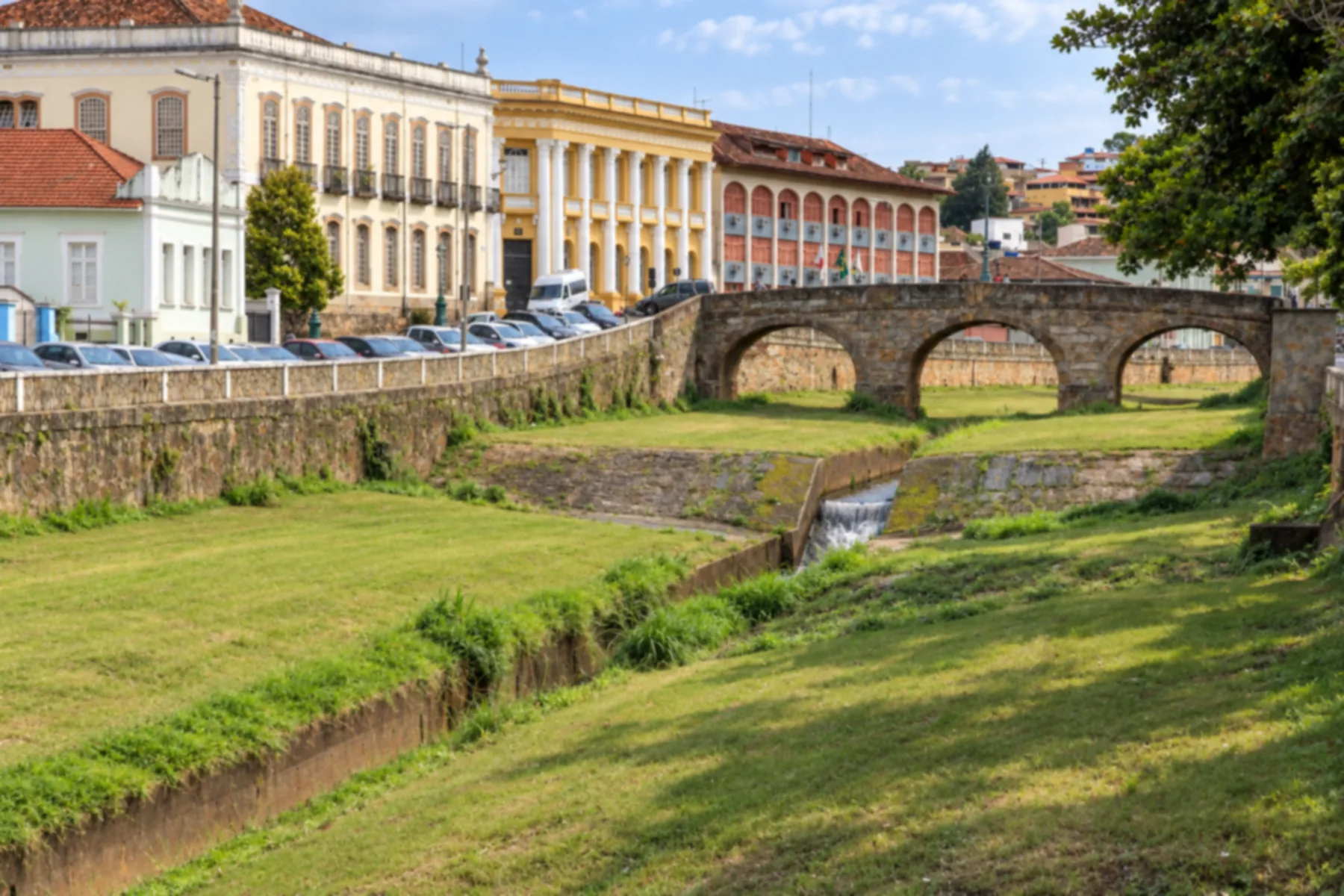
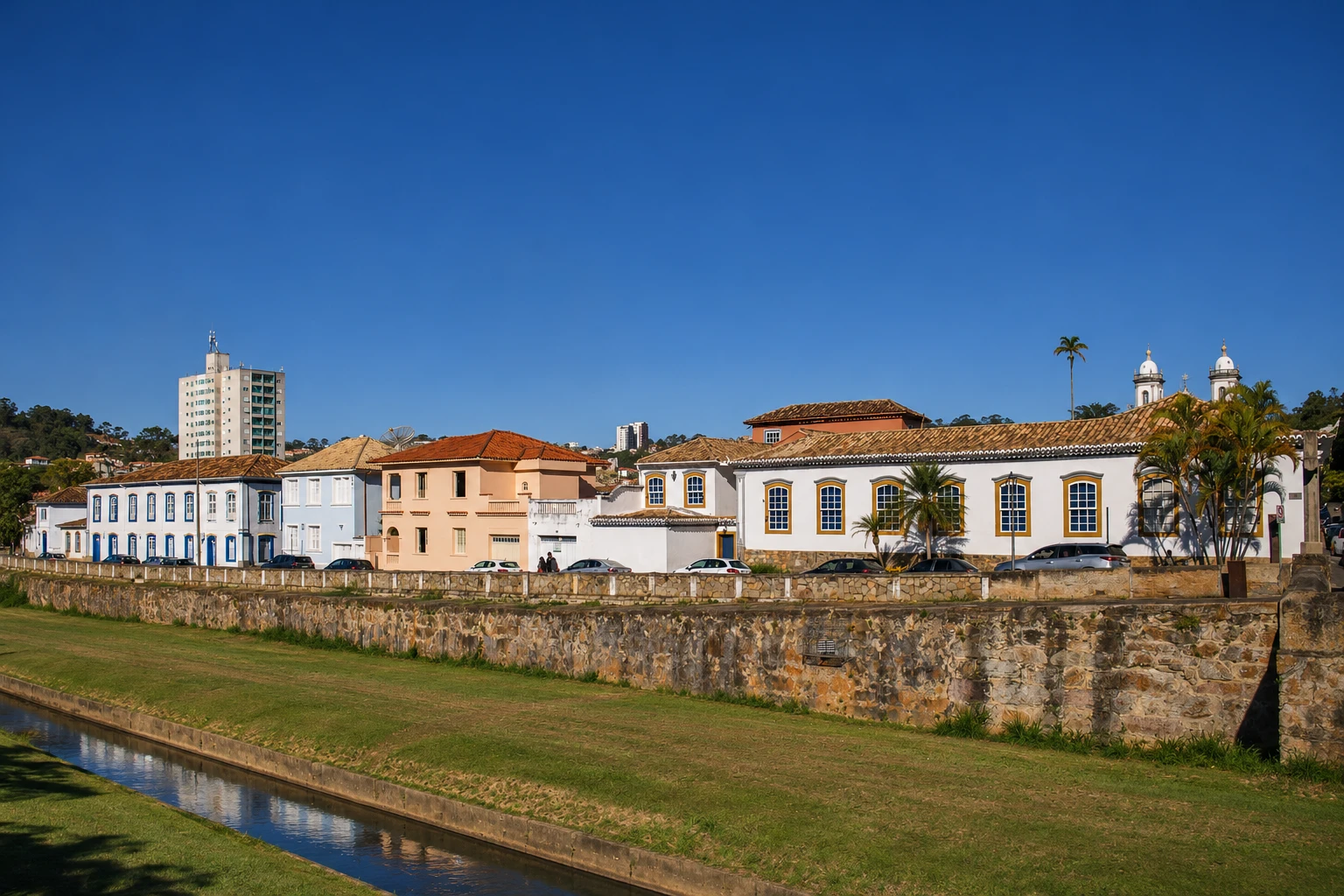
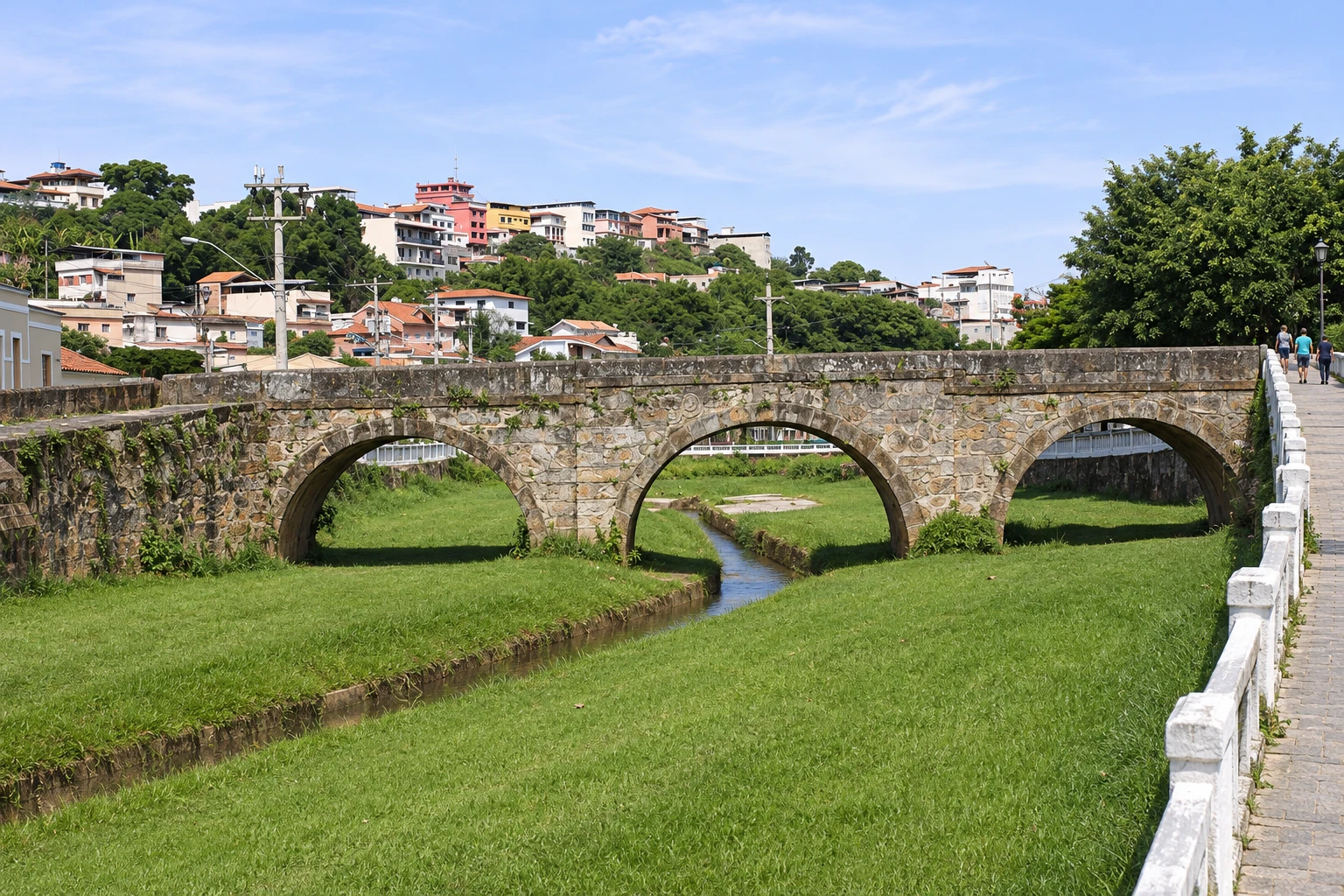
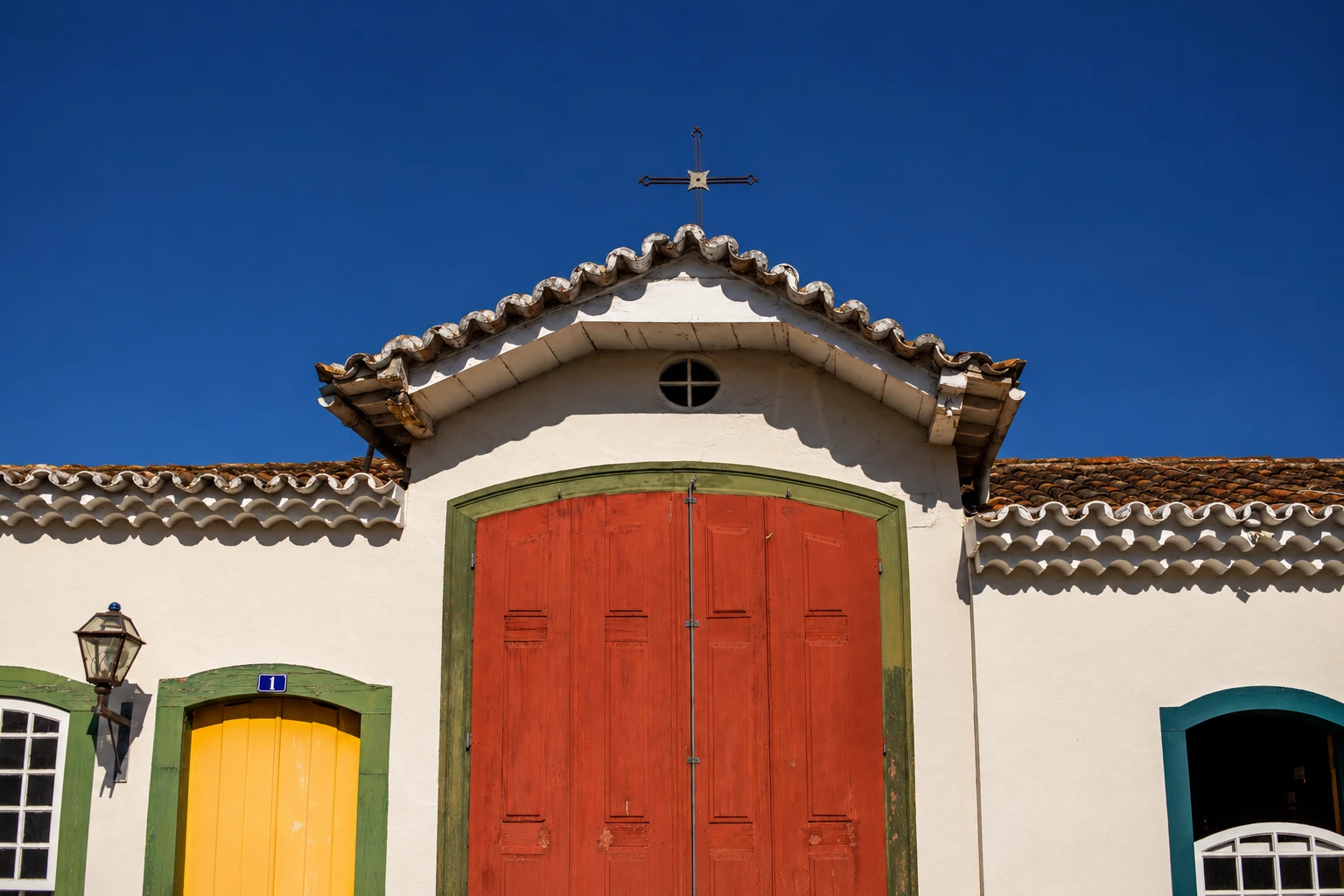
These pictures are illustrations based on the real place, not photographs. They may differ from the place.
Click the picture to enlarge it.
Discover
About Historic Center of São João del-Rei
The Historic Center of São João del-Rei is one of the most extensive urban ensembles among the historic towns of Minas Gerais. Listed by Iphan in 1938, it has about 700 protected properties, including churches, bridges, fountains, townhouses and mansions, in a city that has never ceased to be an active regional center.
The center is crossed by the Lenheiro Brook, and its two banks are linked by stone bridges built between the late 18th and early 19th centuries, such as the Ponte da Cadeia and the Ponte do Rosário. Along the brook and on the streets that climb the slopes, colonial houses coexist with eclectic buildings from the 19th and early 20th centuries.
Baroque churches punctuate the walk: São Francisco de Assis, with a façade of curved lines; Nossa Senhora do Carmo; the Pilar Cathedral; and the churches of Rosário and Mercês. The bells of these churches preserve their own set of ringing patterns to announce masses, festivals and deaths, recognized as intangible heritage.
The center is best explored on foot, without hurry, alternating between churches, squares and museums: the Regional Museum, in a 19th-century townhouse; the Museum of Sacred Art; and the Railway Museum, at the station where the steam train to Tiradentes departs. The Rosário and Tamandaré squares are good stopping points.
During Holy Week and religious festivals, the streets host processions accompanied by the city’s orchestras, a musical tradition dating from the colonial period.
Before you go
Practical information
Cidade Turismo reviews its information regularly, but something may have changed. Check with the place before planning your trip.
How much time to set aside
A full day to walk the streets, enter the main churches and visit one or two museums; two days to include the train ride to Tiradentes.
Best time
From April to September, the drier season, good for walking. At Holy Week, between March and April, the town becomes crowded because of the celebrations. Churches and museums often close on some weekdays; plan your itinerary in advance.
How to get there
The historic center occupies both banks of the Lenheiro Brook, in downtown São João del-Rei, about 190 km from Belo Horizonte. The bus station and the railway station are close to the center; from there you walk. By car, park and walk, because the old streets are narrow.
Tip
Start at the Ponte da Cadeia and follow the brook to the São Francisco de Assis Church; then go up to the Pilar Cathedral and the Museum of Sacred Art. Wear comfortable shoes for the stone streets.
Get your questions answered
Frequently asked questions about Historic Center of São João del-Rei
What to do in the historic center of São João del-Rei?
Walk the stone bridges over the Lenheiro Brook, visit the Baroque churches of São Francisco de Assis, Carmo and Pilar, and see the Regional Museum, the Museum of Sacred Art and the Railway Museum.
When was the historic center of São João del-Rei listed?
In 1938, by Iphan. The ensemble has about 700 protected properties.
How many days to stay in São João del-Rei?
A full day covers the historic center; with two days you can include the steam train trip to Tiradentes.
What is the bell language of São João del-Rei?
A set of bell rings from the churches that announce masses, festivals and deaths, maintained by the city’s bell ringers and recognized as intangible heritage.
Beyond the guide


