

 Antarctica
 Argentina
 Bolivia
 Chile
 Colombia
 Ecuador
 Guyana
 French Guiana
 Falkland Islands (Malvinas)
 Paraguay
 Peru
 Suriname
 Uruguay
 Venezuela
 Germany
 Austria
 Belgium
 Croatia
 Denmark
 Slovakia
 Slovenia
 Spain
 Finland
 France
 Greece
 the Netherlands
 Hungary
 Ireland
 Iceland
 Italy
 Luxembourg
 Norway
 Poland
 Portugal
 the United Kingdom
 the Czech Republic
 Sweden
 Switzerland
 Turkey
 Bermuda
 Canada
 the United States
 Greenland
 Mexico
 Saint Pierre and Miquelon
 the Dominican Republic
 Japan
 South Africa
 Egypt
 Australia
 Fiji
 New Zealand
 Papua New Guinea
Church · Sabará, MG
Church of Our Lady of the Rosary of the Blacks
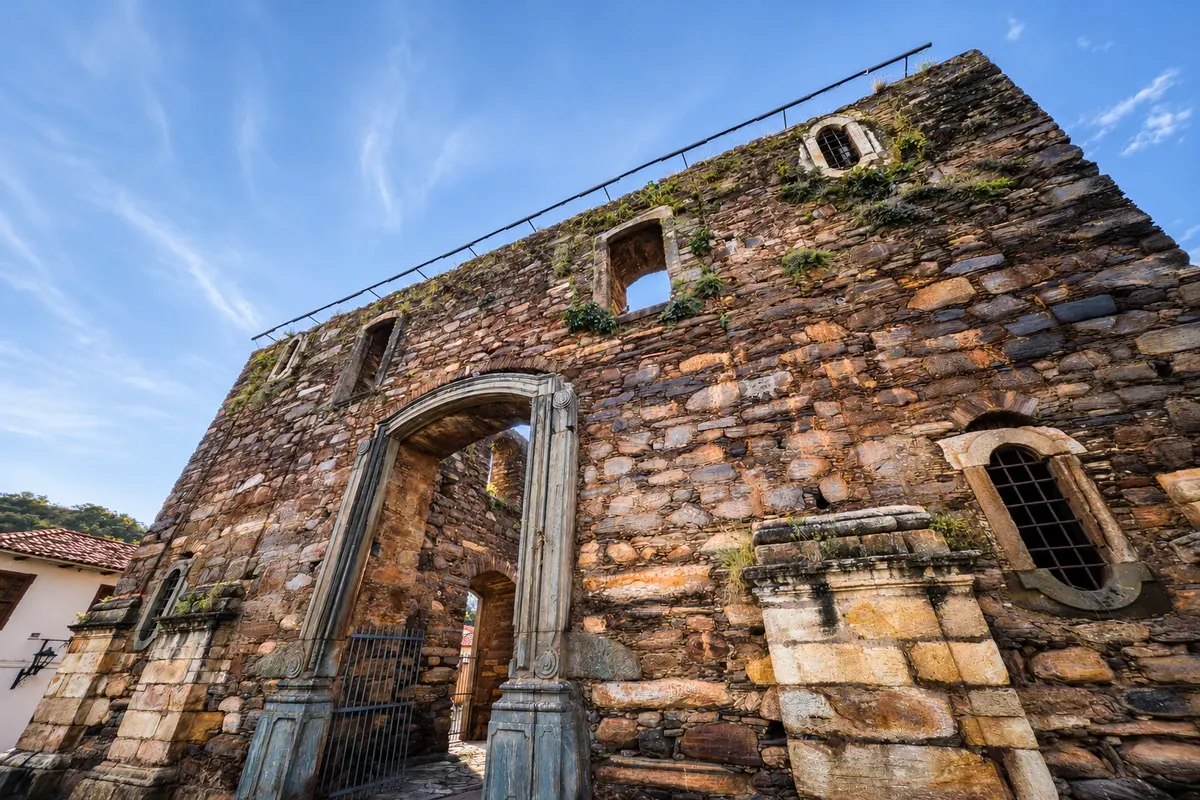
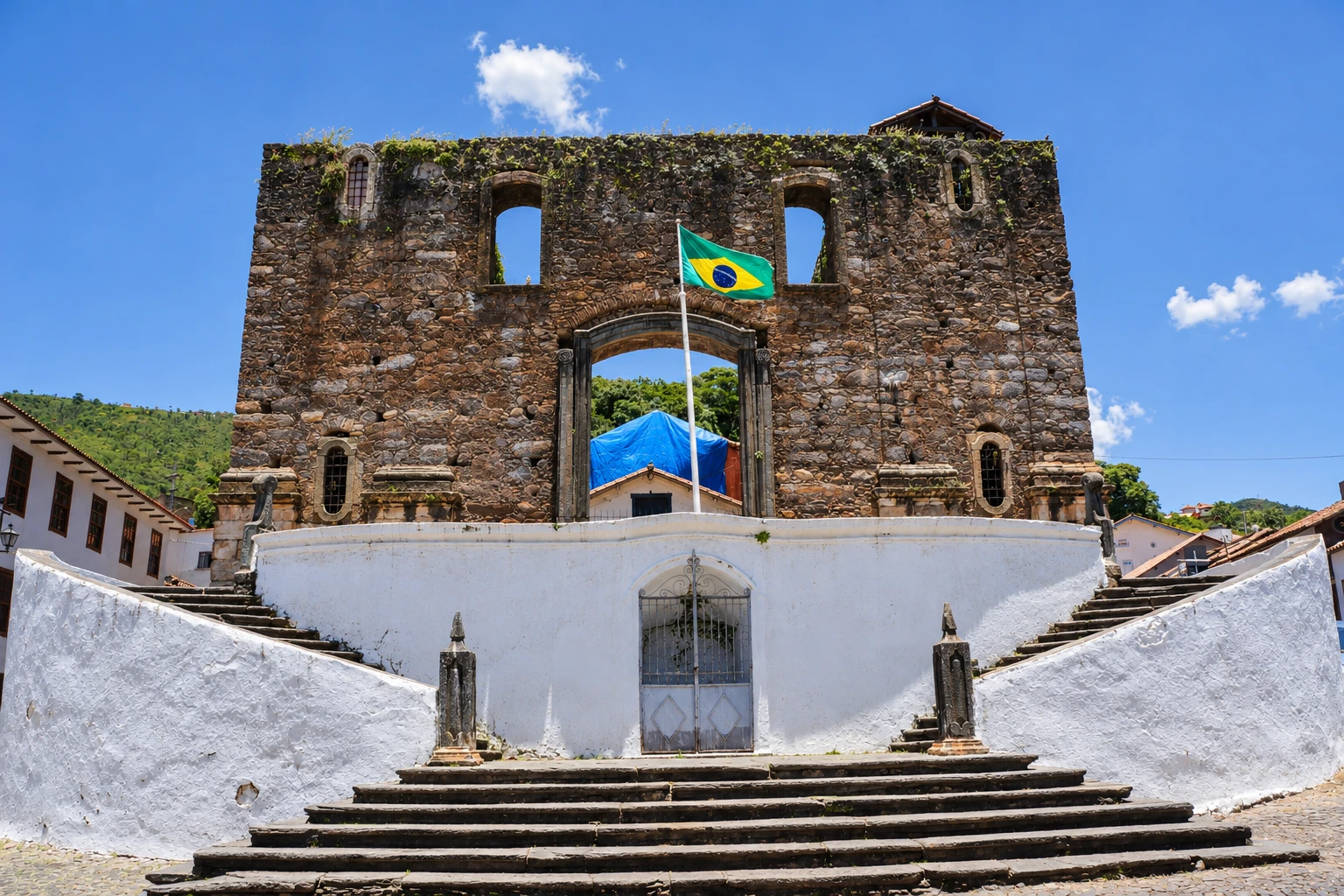
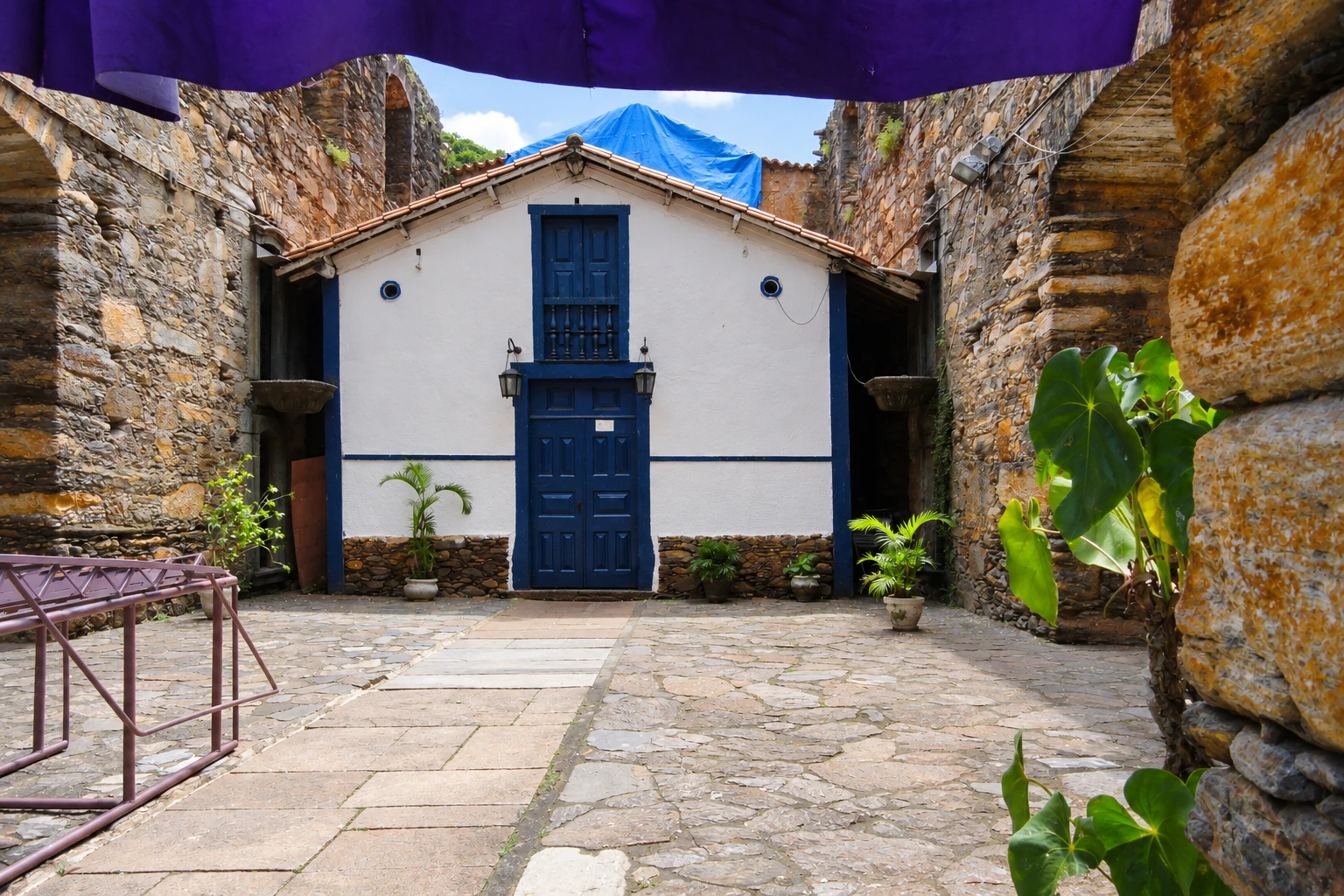
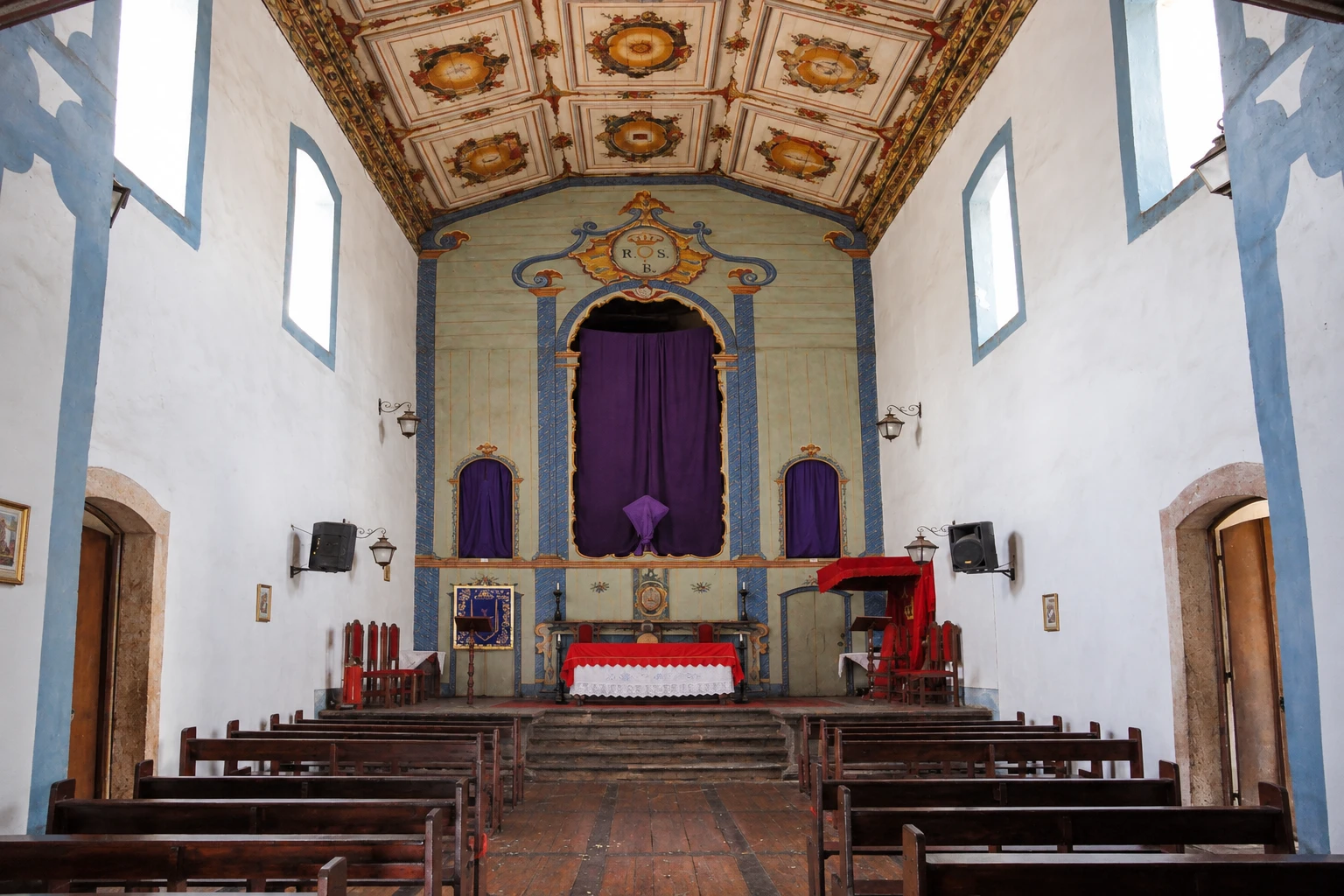
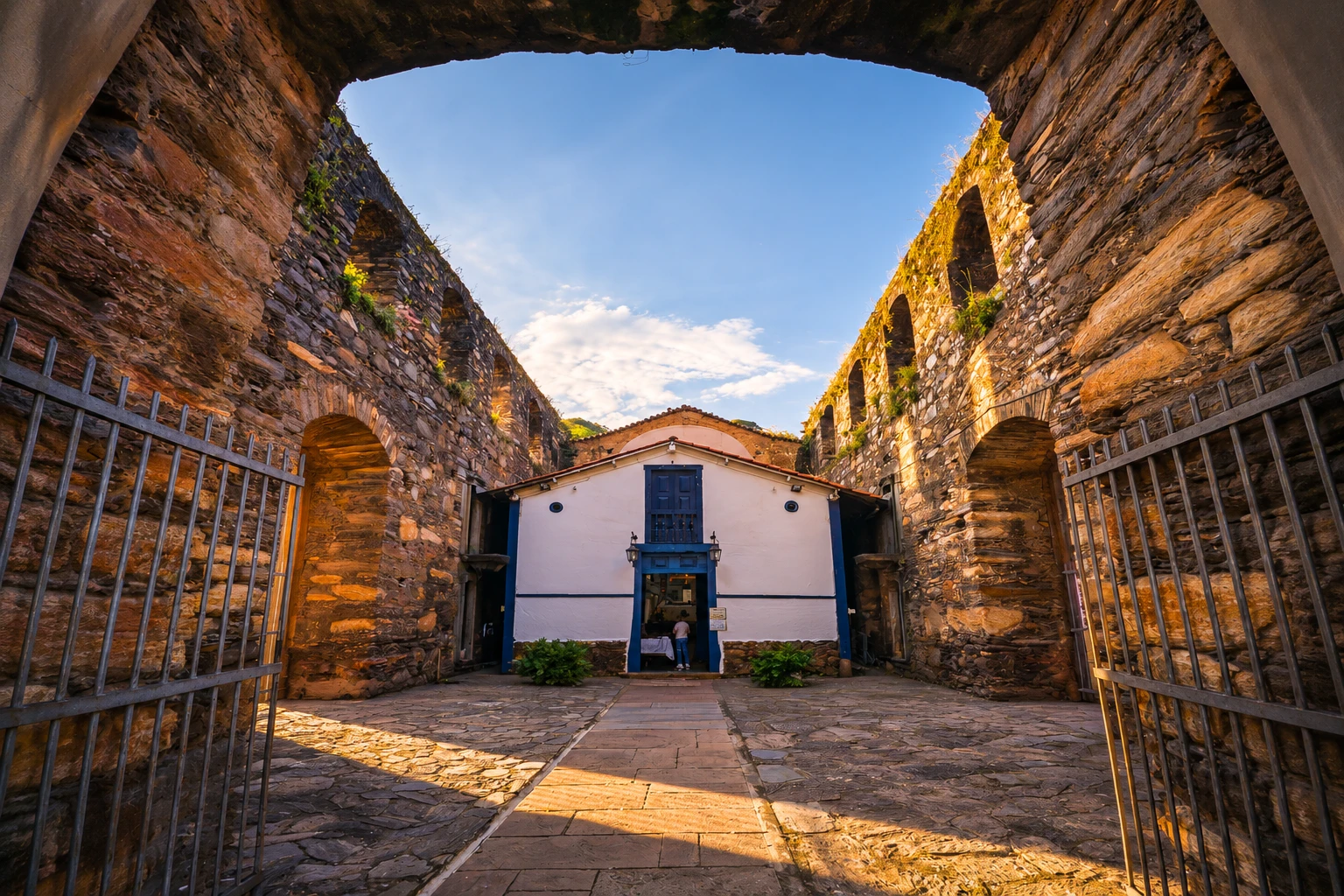
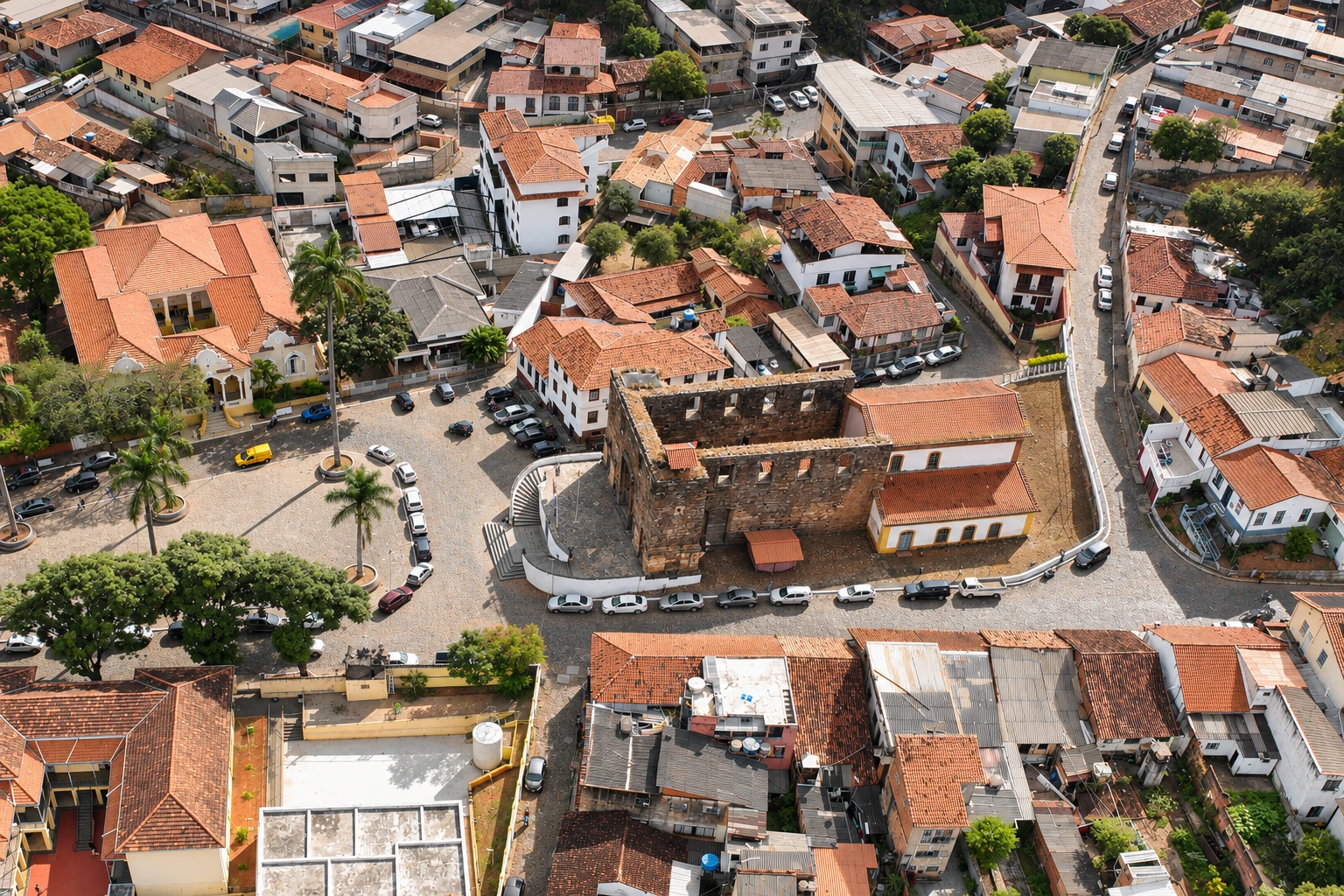
Stone church begun in 1767 by the Black Brotherhood of the Rosary of Sabará and never finished. Inside the roofless stone walls sits the small rammed-earth chapel from 1713, which would have been demolished when the work was completed. Listed by Iphan.
In the photo: Unfinished portal and stone walls of the Church of the Rosary of the Black Brotherhood in Sabará.
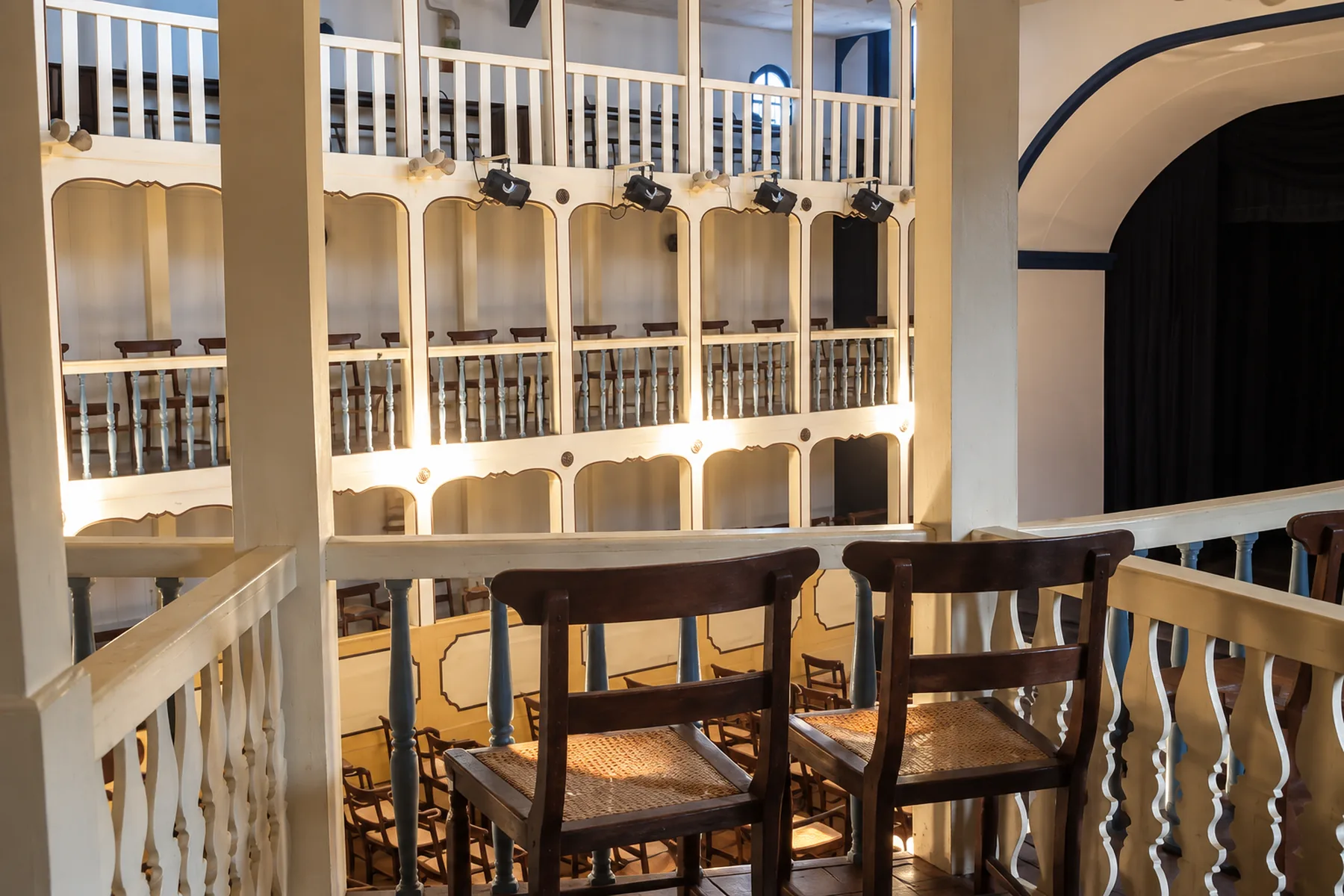
Illustrative images. The pictures in this guide are illustrations based on the real place, not photographs, and may differ from it.


A look at the place
Church of Our Lady of the Rosary of the Blacks in pictures
These pictures are illustrations based on the real place, not photographs. They may differ from the place.
Click the picture to enlarge it.
Discover
About Church of Our Lady of the Rosary of the Blacks
The Church of Our Lady of the Rosary of the Black Brotherhood is one of the most unusual buildings in Sabará’s historic center: a large stone church that was never completed and that houses, within its walls, a much older small chapel.
The Brotherhood of Our Lady of the Rosary of the Blacks, made up of enslaved and freed Black people, was founded in 1713, a few years after the settlement began, and built a rammed‑earth chapel the same year as a temporary structure. In 1767 construction began on the definitive stone church around that chapel, which was to be dismantled once the new temple was finished.
Construction was stopped and restarted several times, almost always for lack of funds, and work continued into the second half of the 19th century. After the abolition of slavery, the community that supported the brotherhood dispersed, resources ran out, and the church remained unfinished. The complex is listed by Iphan.
On a visit, the thick stone walls and the rough door and window openings show how a temple of this size was built in Minas Gerais in the 18th century, during the transition from clay and wood to stone masonry with lime. In the middle of this unfinished structure stands the rammed‑earth chapel, which gives a sense of the brotherhood’s original temple.
The church is a few steps from other downtown attractions, such as the Mother Church of Our Lady of the Conception, the Church of Our Lady of Mount Carmel, the Municipal Theater, and the Gold Museum.
Before you go
Practical information
Cidade Turismo reviews its information regularly, but something may have changed. Check with the place before planning your trip.
How much time to set aside
20 to 40 minutes to walk between the stone walls and see the chapel.
Best time
During daytime, with light to see the stone walls and the chapel interior. From April to September Sabará has less rain. The church is not always open; check opening hours before you go.
How to get there
The church is in Sabará’s historic center, on Rua Mestre Arcanjo, a few minutes’ walk from the Gold Museum and the Church of Mount Carmel. Sabará is about 20 km from Belo Horizonte.
Tip
Notice the contrast between the small, low rammed‑earth chapel and the stone walls that surround it: it’s a snapshot of a work stopped halfway. Combine the visit with the Gold Museum, which explains the area’s historical wealth.
Get your questions answered
Frequently asked questions about Church of Our Lady of the Rosary of the Blacks
Why was the Rosary Church of Sabará left unfinished?
Construction, started in 1767 by the Black Brotherhood of the Rosary, stopped several times due to lack of funds. After the abolition of slavery, the community that sustained it dispersed and the church was never completed.
What is inside the Church of the Rosary of the Blacks?
The rammed‑earth chapel from 1713, the brotherhood’s first chapel. It was supposed to be demolished when the stone church was finished, but it still stands amid the unfinished walls.
Is the Rosary Church of Sabará a listed heritage site?
Yes, the complex is listed by Iphan.
Where is the Church of the Rosary of the Blacks in Sabará?
In the historic center, on Rua Mestre Arcanjo, near the Gold Museum and the churches of Mount Carmel and the Mother Church.
Beyond the guide


