

 Antarctica
 Argentina
 Bolivia
 Chile
 Colombia
 Ecuador
 Guyana
 French Guiana
 Falkland Islands (Malvinas)
 Paraguay
 Peru
 Suriname
 Uruguay
 Venezuela
 Germany
 Austria
 Belgium
 Croatia
 Denmark
 Slovakia
 Slovenia
 Spain
 Finland
 France
 Greece
 the Netherlands
 Hungary
 Ireland
 Iceland
 Italy
 Luxembourg
 Norway
 Poland
 Portugal
 the United Kingdom
 the Czech Republic
 Sweden
 Switzerland
 Turkey
 Bermuda
 Canada
 the United States
 Greenland
 Mexico
 Saint Pierre and Miquelon
 the Dominican Republic
 Japan
 South Africa
 Egypt
 Australia
 Fiji
 New Zealand
 Papua New Guinea
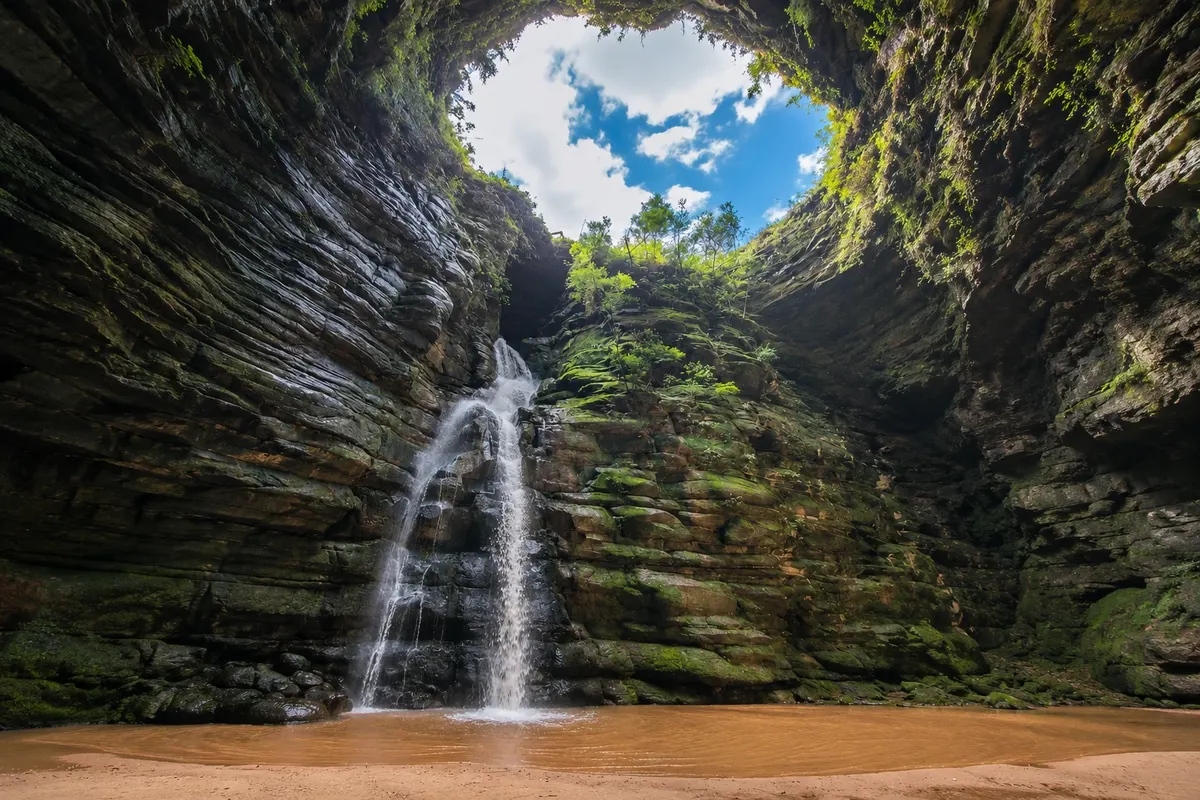
Waterfall · Ponta Grossa, PR
Buraco do Padre
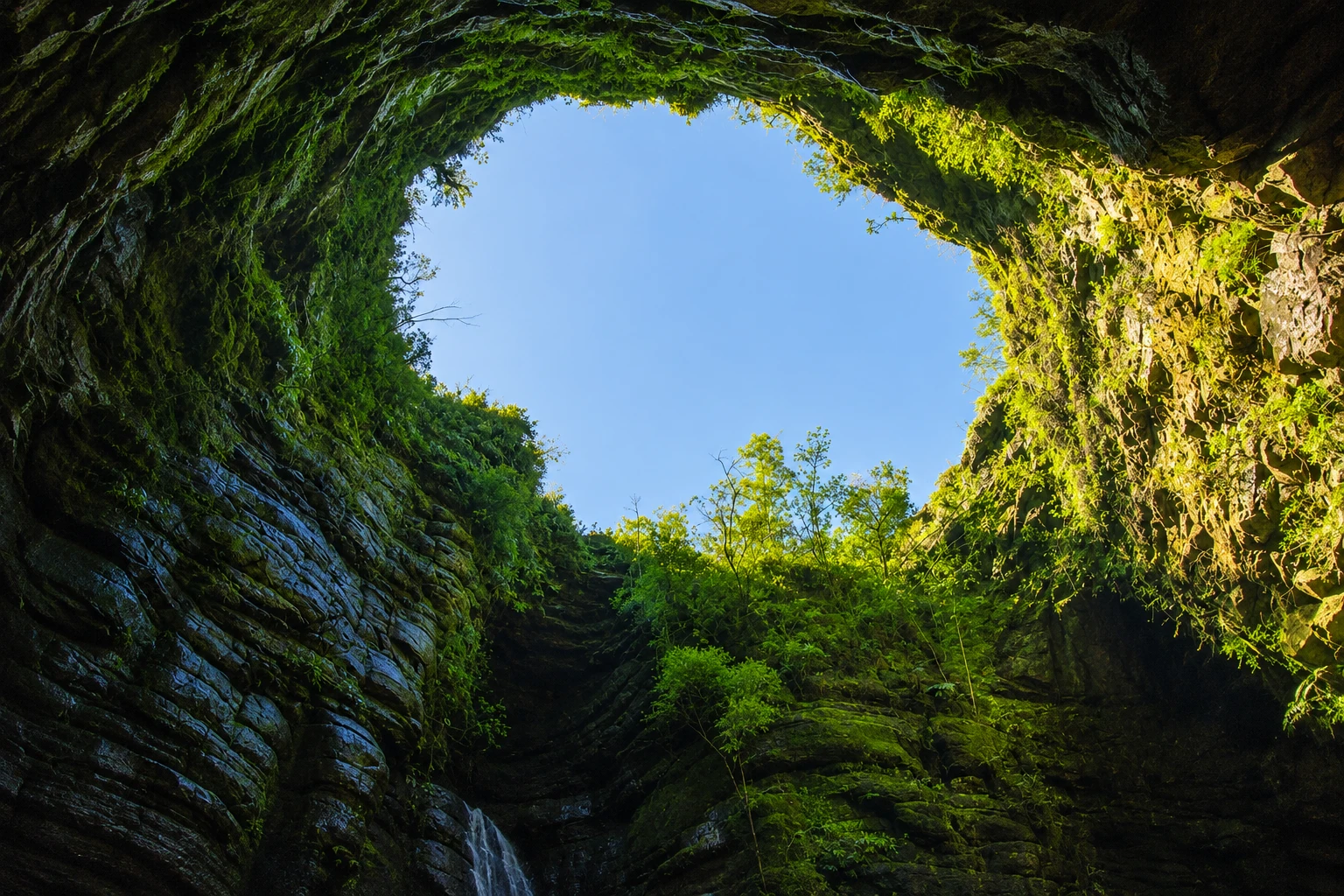
A sandstone cavern about 40 meters deep in the Itaiacoca district, inside Parque Nacional dos Campos Gerais, where a waterfall of roughly 30 meters falls through an opening at the top. Nearby is the Fenda da Freira.
In the photo: Waterfall and the cavern opening of Buraco do Padre, seen from inside.
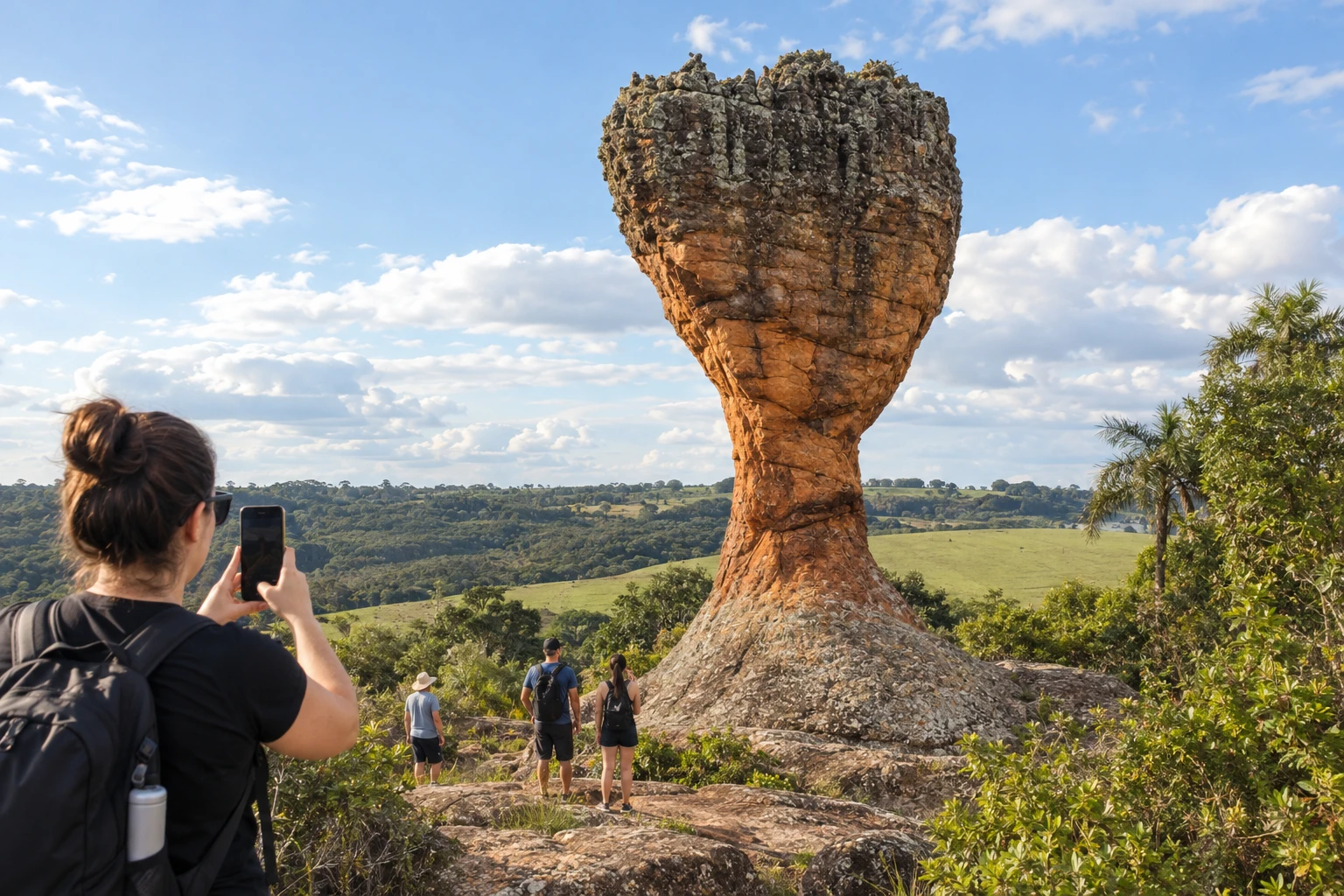
Illustrative images. The pictures in this guide are illustrations based on the real place, not photographs, and may differ from it.


A look at the place
Buraco do Padre in pictures
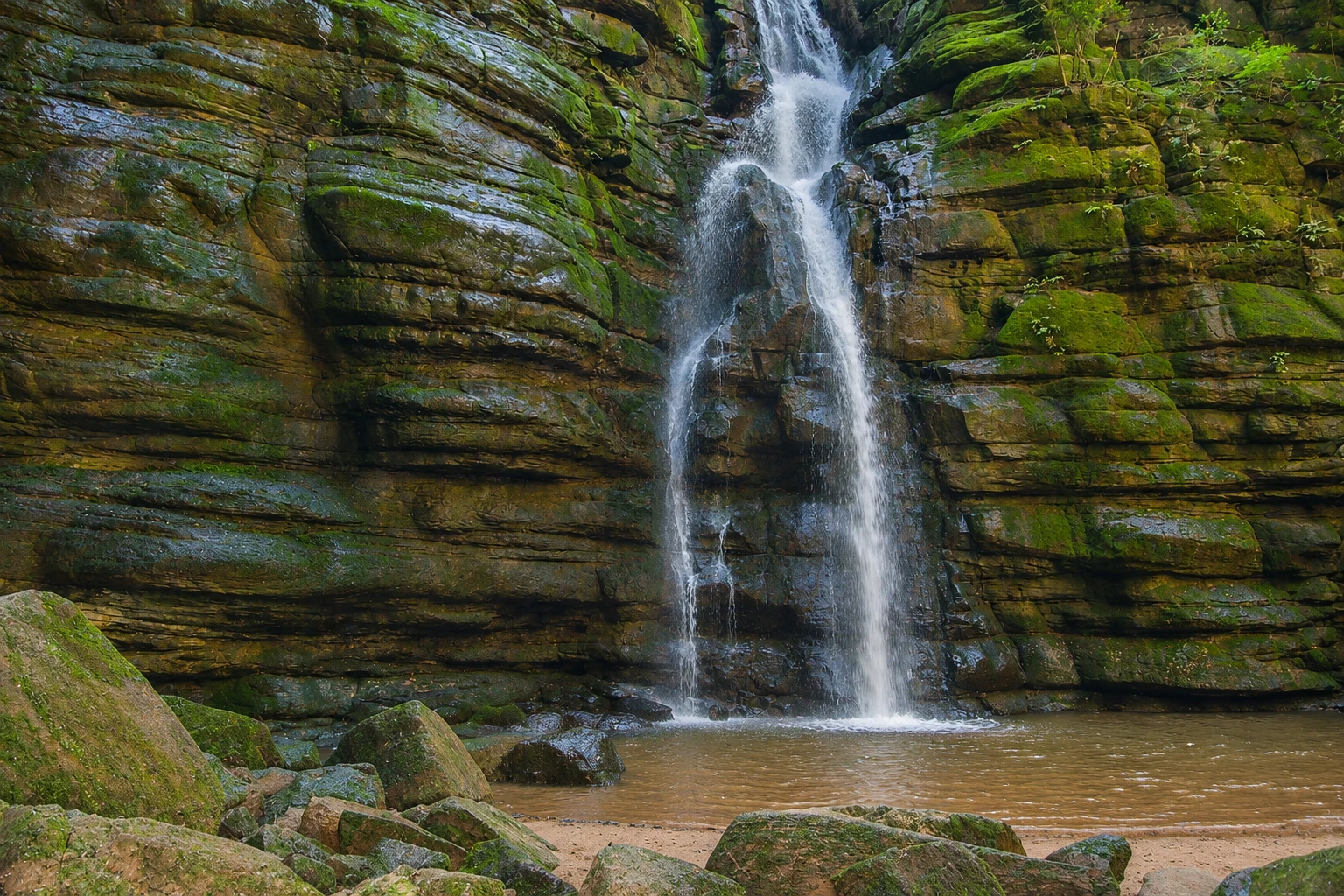
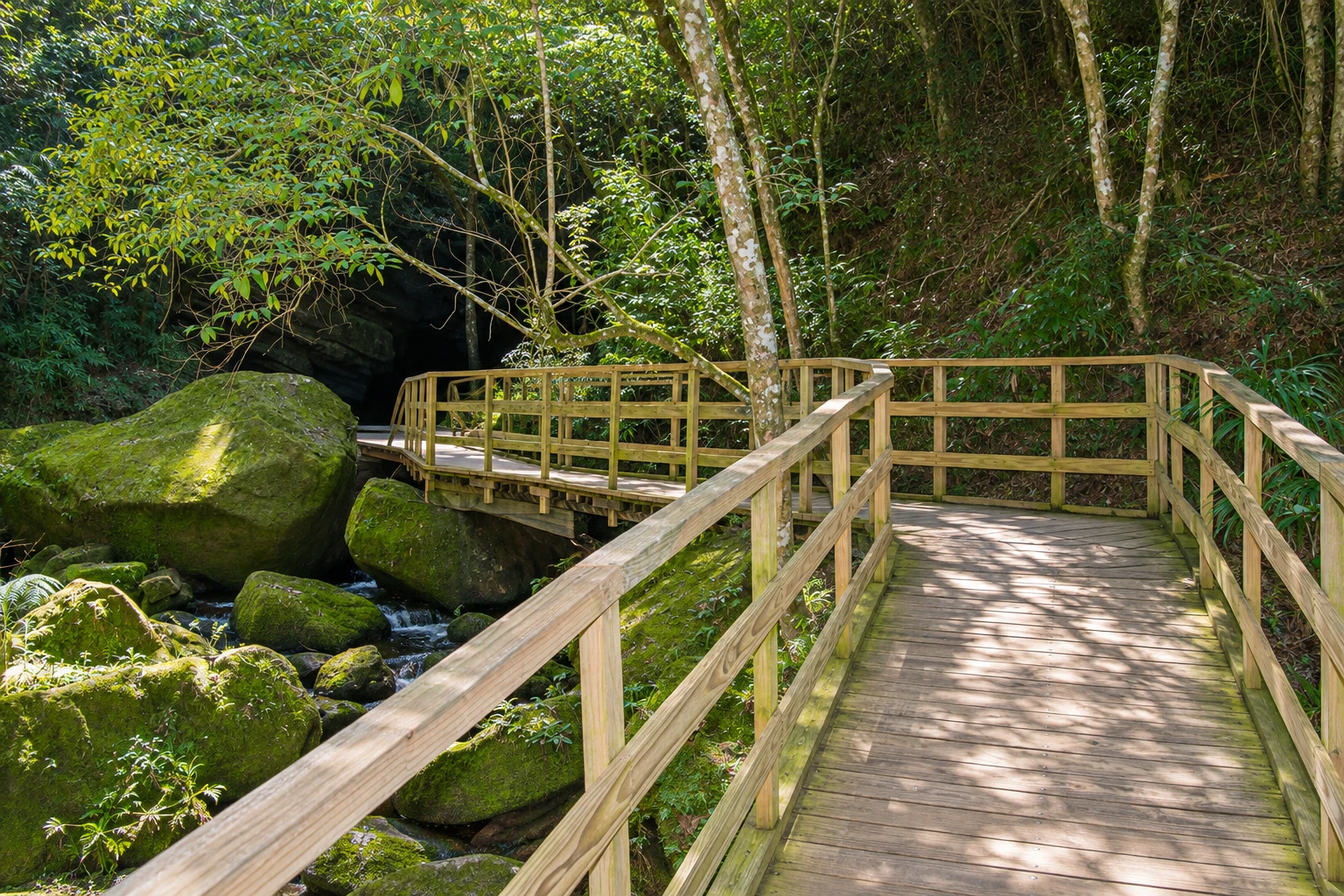
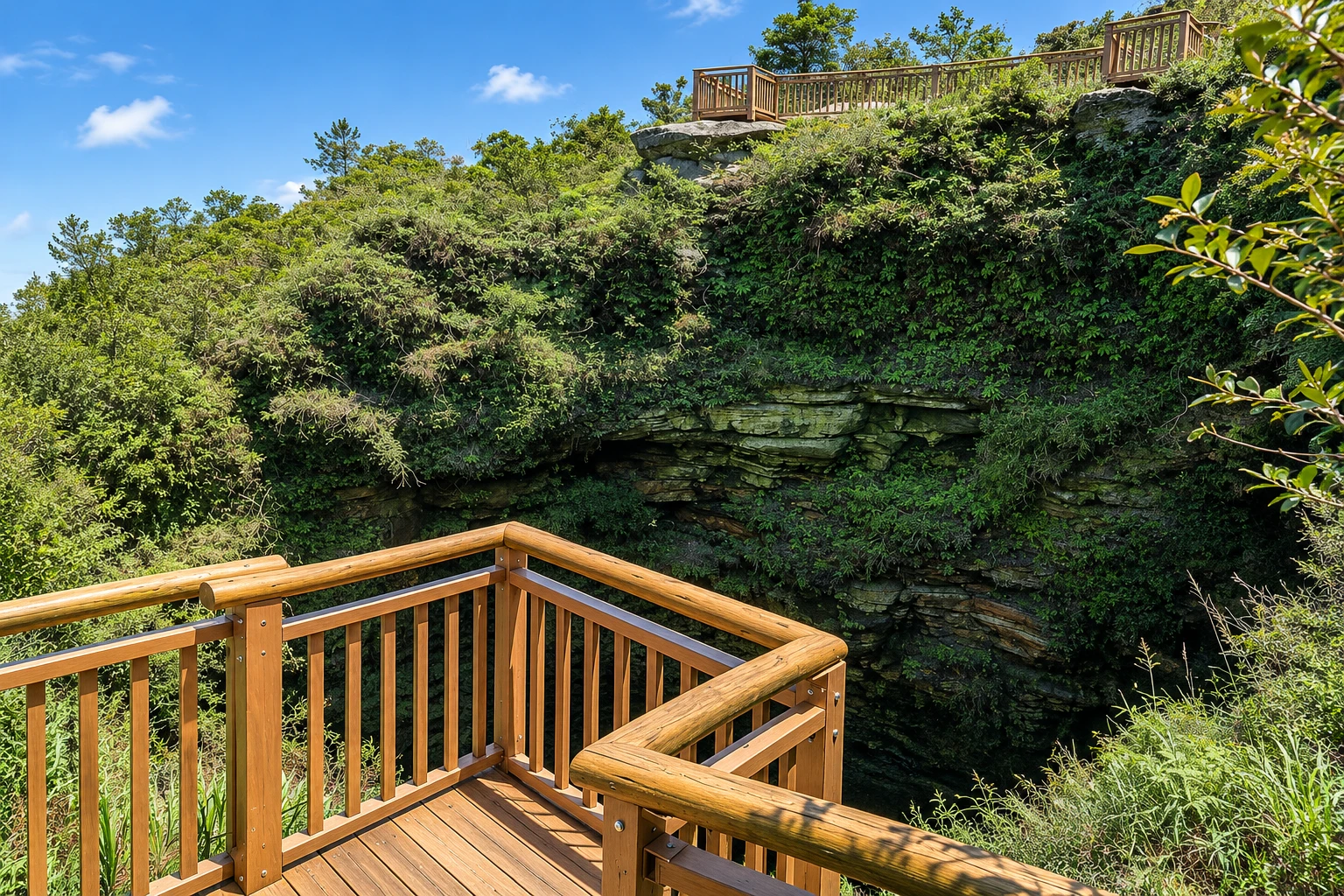
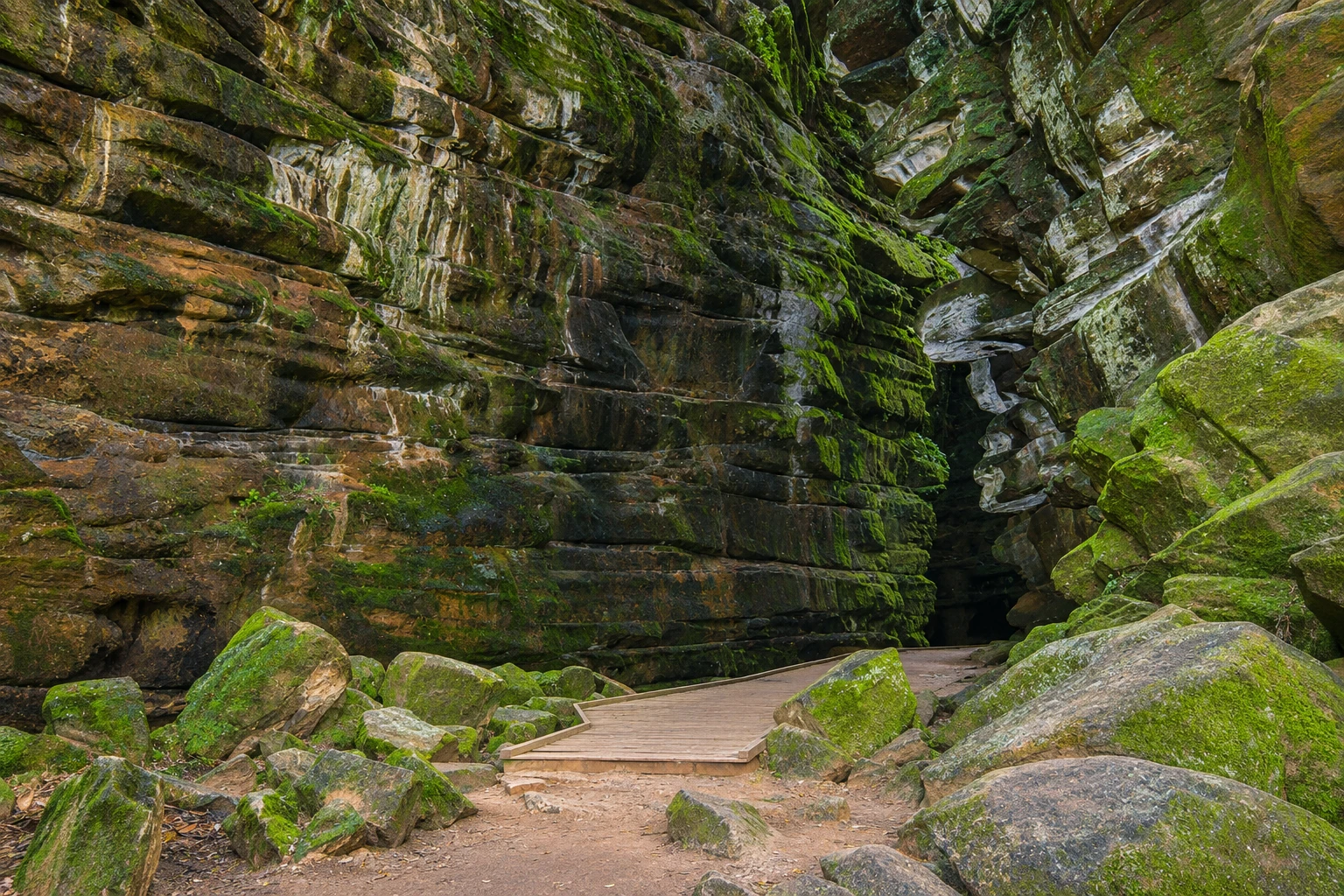
These pictures are illustrations based on the real place, not photographs. They may differ from the place.
Click the picture to enlarge it.
Discover
About Buraco do Padre
Buraco do Padre is a sandstone cavern, a large open cavity in the rock, located in the Itaiacoca district of Ponta Grossa, within the area of Parque Nacional dos Campos Gerais. It is about 40 meters deep and roughly 30 meters wide, and through an opening at the top a waterfall of approximately 30 meters falls, forming a shallow pool at the bottom.
The name comes from local tradition: drovers and rural people who passed through the region saw Jesuit priests using the cavern as a refuge for meditation and prayer. The entrance to the interior is via the bed of the Rio Quebra-Pedra, between damp walls covered in moss, and the light that comes in through the top opening changes throughout the day.
The trail to the interior of the cavern is about 750 meters from the boarding point, with a gravel path and wooden ramps in the final stretch. Inside, you can walk around the pool and get close to the waterfall. Swallow-like birds that nest on the cavern walls make sounds that echo within.
A fork in the trail climbs to the top, with two wooden viewpoints that show the cavern from above, and continues to the Fenda da Freira, a narrow passage between two sandstone walls where in places only one person can pass at a time. In the same complex is Poço Encantado, a natural pool.
The area is privately owned, with reception facilities and an entrance fee, and visits follow the property’s rules. Buraco do Padre pairs well with Cachoeira da Mariquinha, also in Itaiacoca, and with Parque Estadual de Vila Velha across the city.
Before you go
Practical information
Cidade Turismo reviews its information regularly, but something may have changed. Check with the place before planning your trip.
How much time to set aside
About two hours to reach the cavern; three to four hours if you include the top, the Fenda da Freira and Poço Encantado.
Best time
All year. From October to March the waterfall usually has more water and the warm weather invites swimming at Poço Encantado; in winter, from June to August, the water is cold and the waterfall can be weaker.
How to get there
It is in the Itaiacoca district, about 30 km from downtown Ponta Grossa, with part of the route on a dirt road. Go by car, following signs from the city; there is no regular public transport to the entrance.
Tip
Wear footwear that can get wet, because the cavern entrance is via the riverbed. After heavy rain the trail becomes slippery and the river rises: follow the instructions of the site staff.
Get your questions answered
Frequently asked questions about Buraco do Padre
Where is Buraco do Padre?
In the Itaiacoca district of Ponta Grossa, in the Campos Gerais of Paraná, about 30 km from the city center, within the area of Parque Nacional dos Campos Gerais.
What is the trail to Buraco do Padre like?
About 750 meters to the interior of the cavern, with a gravel path and wooden ramps at the end; the entrance is through the riverbed. Another trail climbs to the top viewpoints and to the Fenda da Freira.
Can you swim at Buraco do Padre?
The pool under the waterfall is shallow and you can walk through it. For swimming, Poço Encantado in the same complex is the natural pool for the area. Follow the administration’s rules.
Is there a fee for Buraco do Padre?
Yes. The area is privately owned, with reception facilities, and entrance is paid on the property.
Why is it called Buraco do Padre?
According to local tradition, drovers and rural people saw Jesuit priests using the cavern as a refuge for meditation and prayer.
Beyond the guide


