
park · Belterra, PA
Floresta Nacional do Tapajós
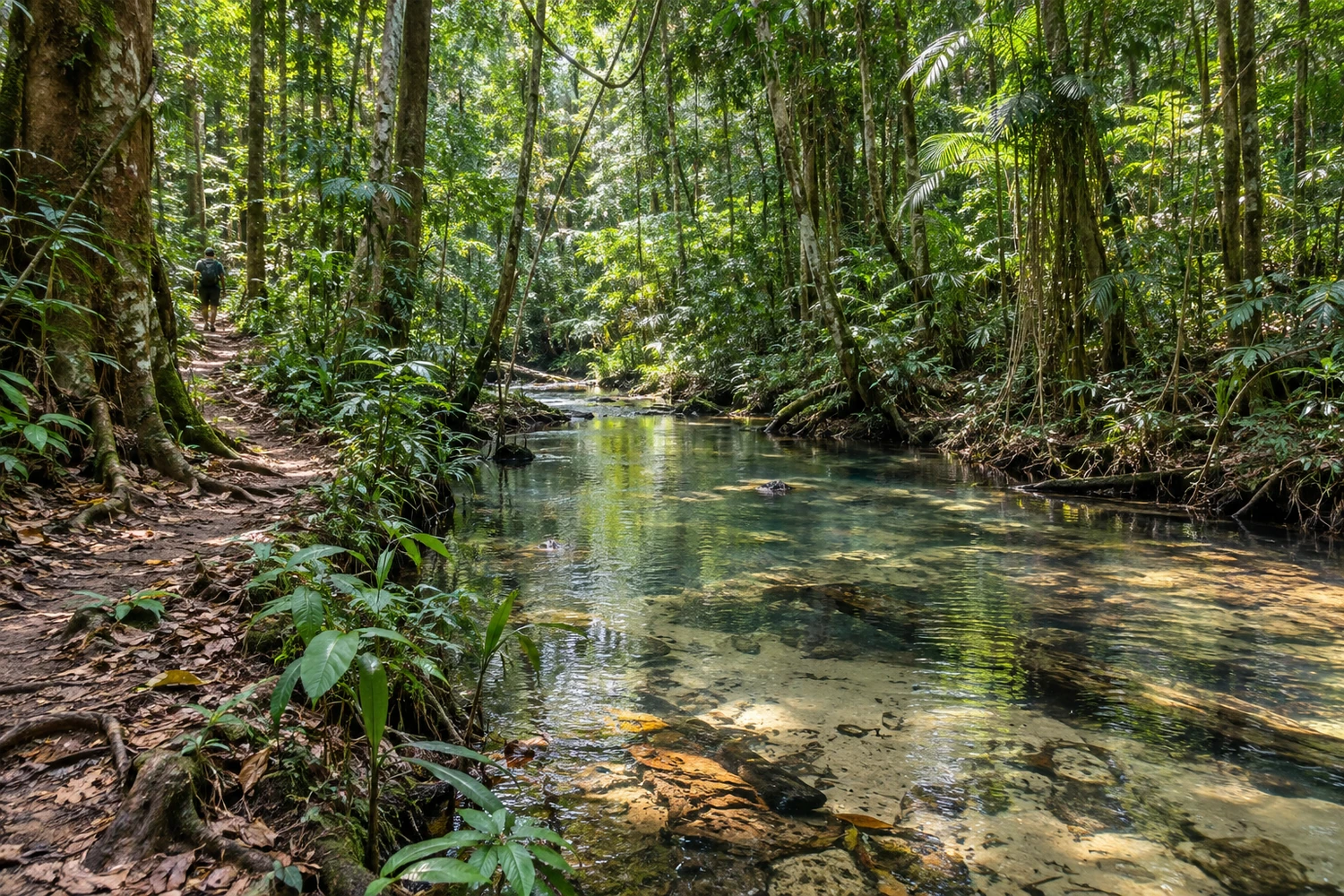
A conservation area with trails among giant trees, igarapés (creeks) and communities such as Maguari and Jamaraquá. Visits are guided by local residents.
Illustrative images. The pictures in this guide are illustrations based on the real place, not photographs, and may differ from it.
Discover
About Floresta Nacional do Tapajós
The Floresta Nacional do Tapajós, or Flona do Tapajós, is a federal conservation area created in 1974 and managed by ICMBio. It stretches along the right bank of the Tapajós River, between Belterra, Aveiro, Placas and Rurópolis, in western Pará, and includes upland forest, igarapés (creeks), igapós (flooded forests) and river beaches.
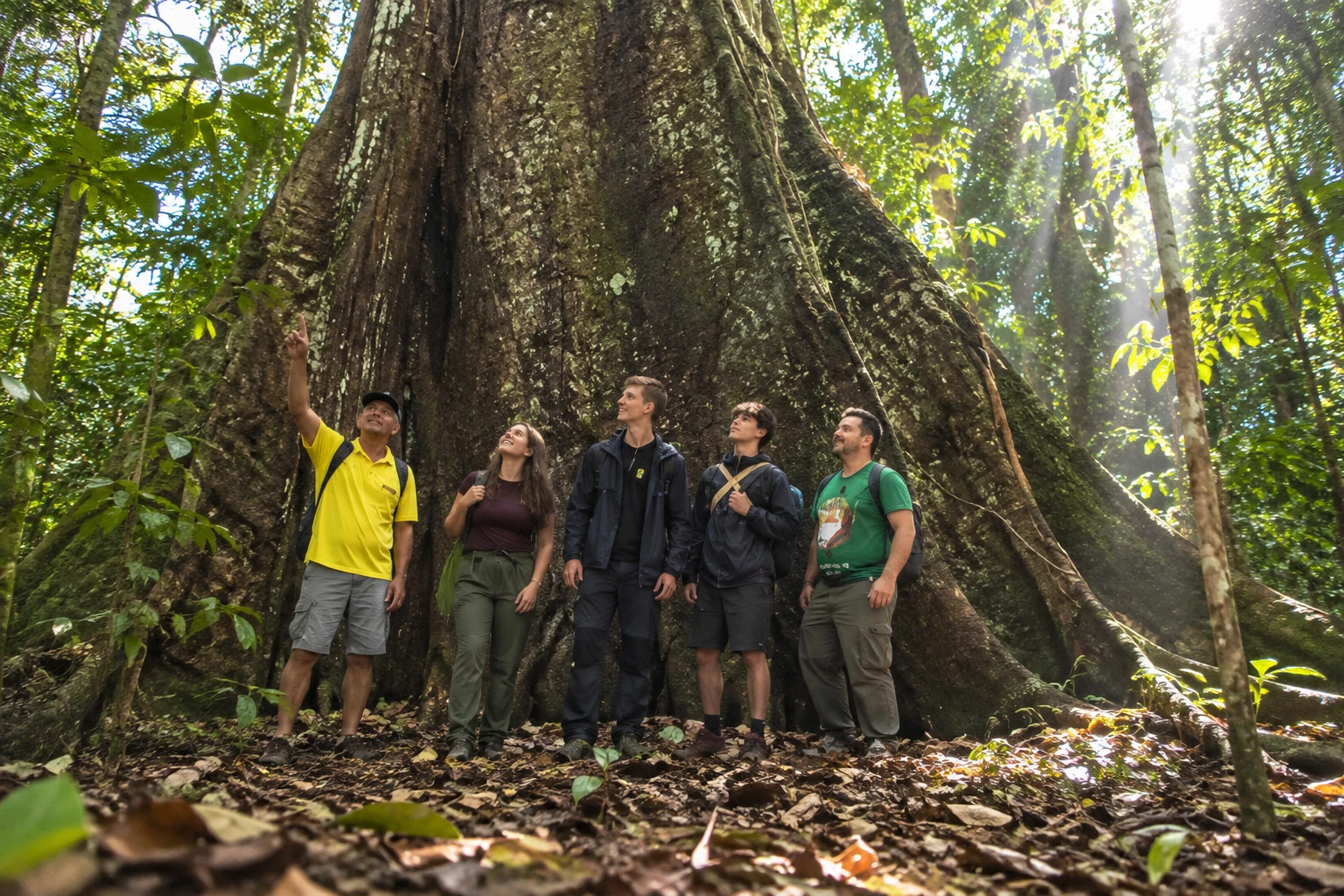
Dozens of traditional riverside and Indigenous communities live inside the forest. Several of them welcome visitors in a community-based tourism model: residents trained as guides lead groups along the trails, and families serve home-cooked lunches and sell crafts, such as jewelry made from forest seeds.
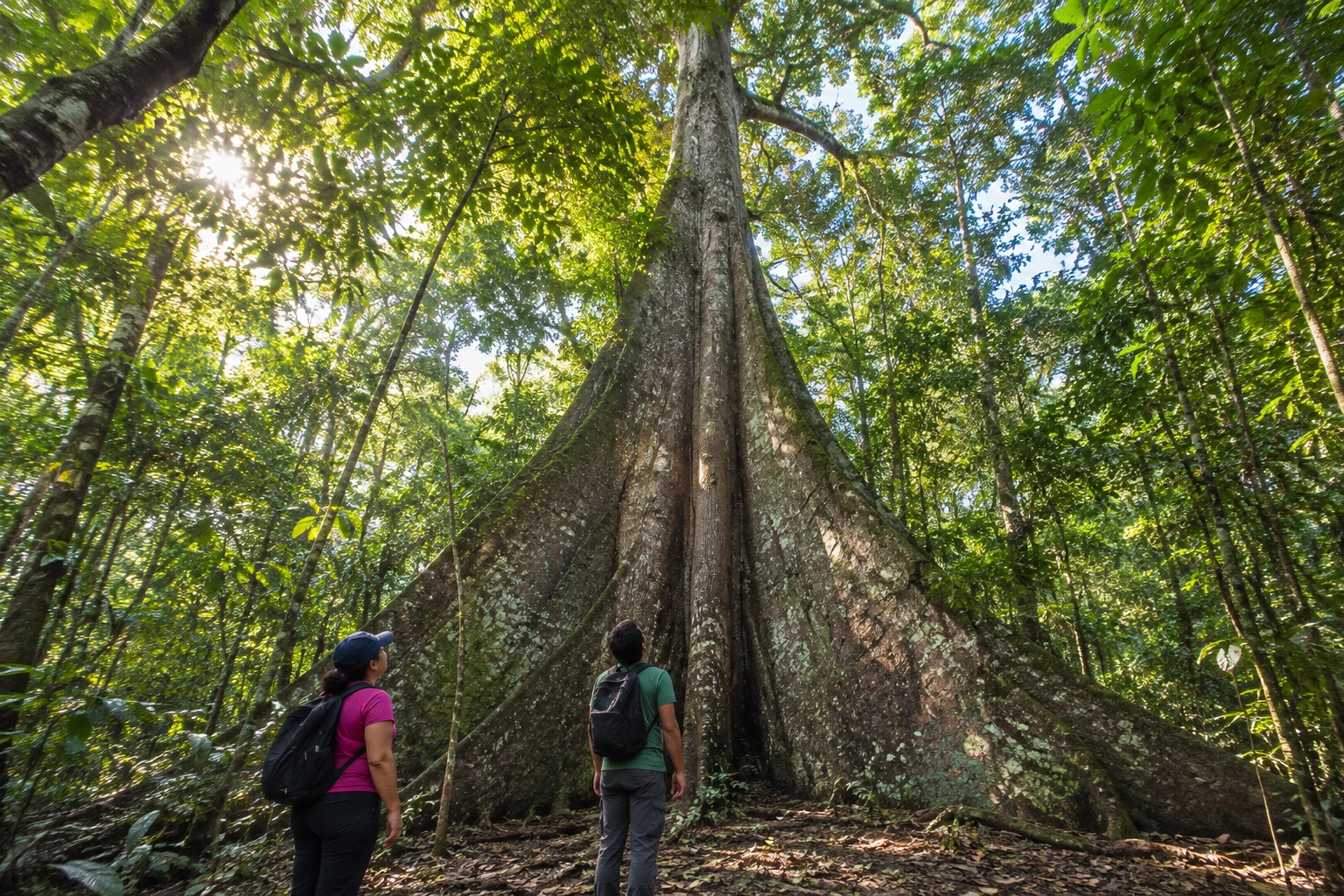
The most popular communities are Jamaraquá and Maguari. In Jamaraquá, the trail passes huge trees, rubber trees and plants used as medicine, and usually ends with a swim and a canoe ride on the creek. In Maguari, the destination is a giant kapok tree that locals call Vovozona ("Big Granny"), one of the most famous trees in the region.
The hikes are long, with high heat and humidity, and call for good fitness, especially the one to the kapok tree. There are no accessibility features on the trails. If you do not want to walk much, you can stay in the community, talk with residents and enjoy the river.
Before you go
Practical information
How much time to set aside
A full day is ideal for a guided hike, lunch in the community and a swim in the creek or the river; if you want to take it slow, you can sleep in a hammock in the community.
Best time
You can visit year-round. In the dry season, in the second half of the year, the trails are firmer and the Tapajós beaches appear; at high water, the water enters the forest and canoe trips come into their own. Start early, before the strongest heat.
How to get there
The communities of Jamaraquá and Maguari are in Belterra, on the banks of the Tapajós River. From Santarém, the route is along the BR-163 highway and then a dirt road, by car or regular bus; from Alter do Chão, you can also get there by speedboat on the river. Many agencies in Santarém and Alter do Chão sell the trip with transportation included.
Tip
Bring water, insect repellent, sunscreen and shoes that can get wet, and arrange your guide in advance with the community or an agency. On arrival, visitors register at the ICMBio base.
Official website
A look at the place
Floresta Nacional do Tapajós in pictures
These pictures are illustrations based on the real place, not photographs. They may differ from the place.
Click the picture to enlarge it.
Get your questions answered
Frequently asked questions about Floresta Nacional do Tapajós
Is there an entrance fee for the Flona do Tapajós?
Entry to the forest is free. Local guide services, meals and lodging in the communities are paid separately.
Do I need a guide to visit the Flona do Tapajós?
Yes, the trails are done with guides from the communities themselves. On arrival, visitors register at the ICMBio base; large groups need to request authorization in advance.
How do I get to the Flona do Tapajós from Alter do Chão?
By speedboat on the Tapajós River or by land, via the BR-163 and a dirt road to the communities. Many agencies in Alter do Chão and Santarém sell the trip with transportation.
Is the trail to the giant kapok tree difficult?
It is a long walk in the heat and humidity of the forest and calls for good fitness. Leave early and bring plenty of water.
Can you stay overnight in the Flona do Tapajós?
Yes. Some communities, such as Maguari and Jamaraquá, welcome visitors to sleep in hammocks or simple pousadas (guesthouses), with home-cooked meals.