
village · Aveiro, PA
Fordlândia
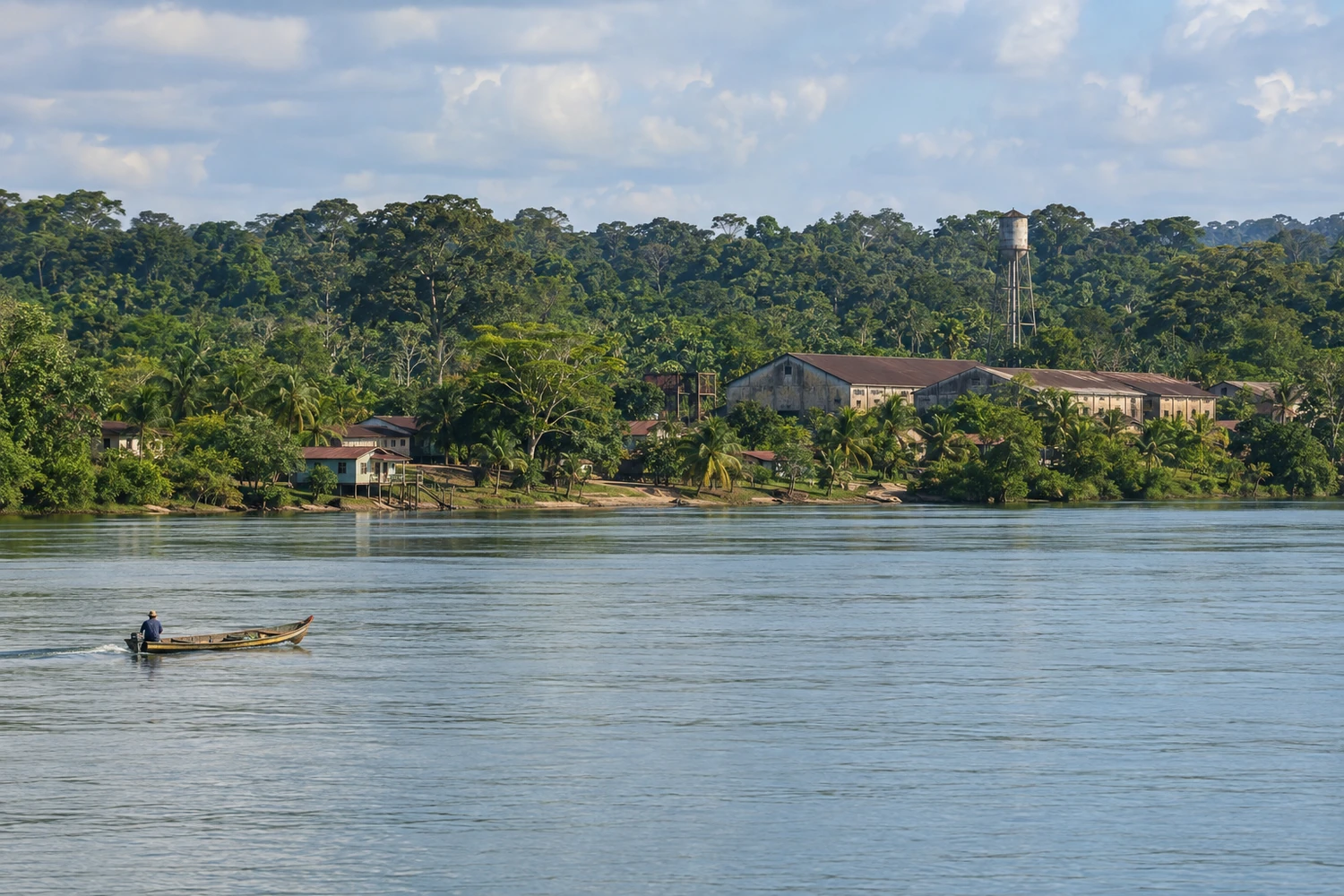
Created in the late 1920s by Henry Ford's company to produce rubber, the village was abandoned by the company in 1945, after the rubber plantations failed. Still inhabited, it preserves American-style houses and industrial structures on the banks of the Tapajós River.
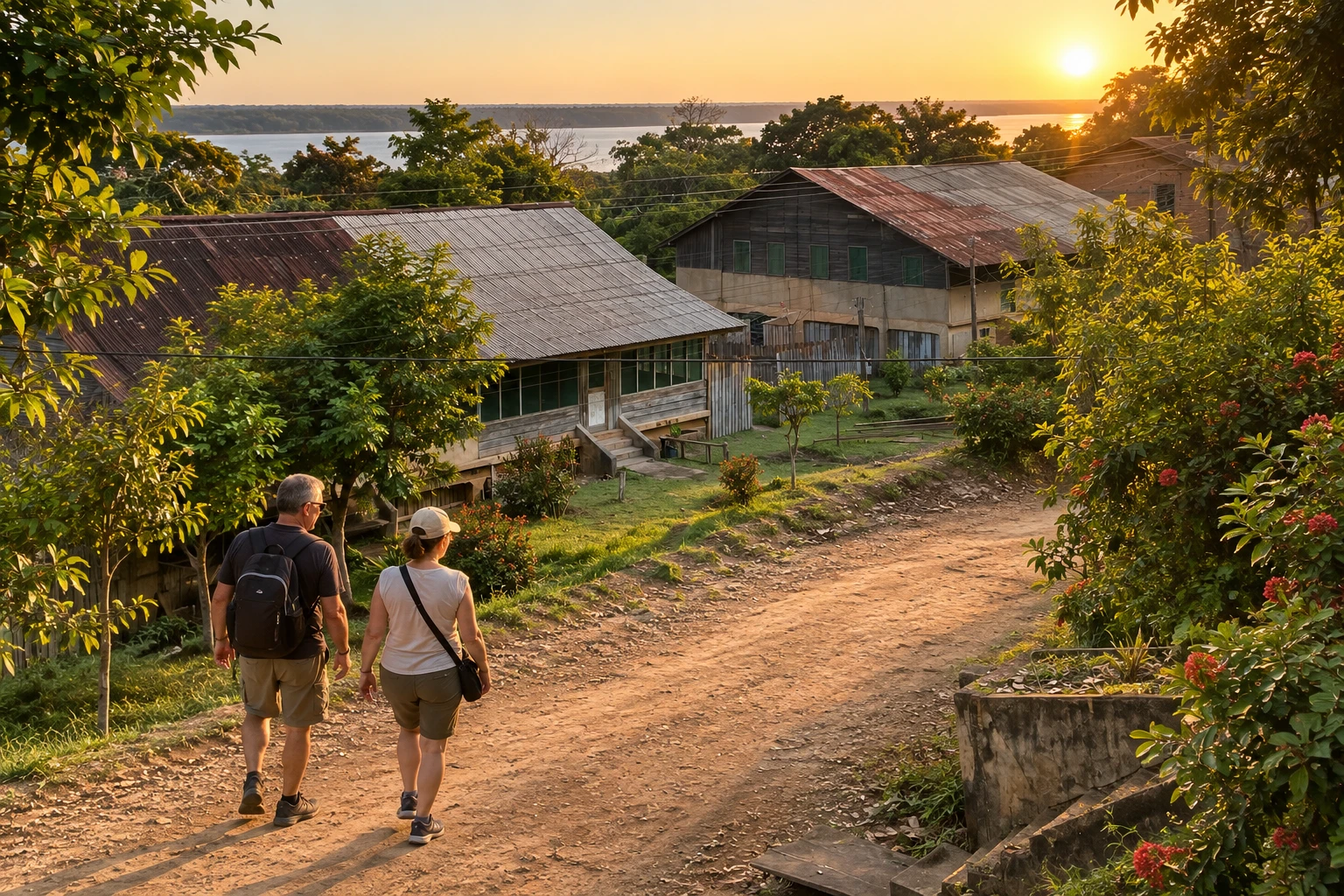
Illustrative images. The pictures in this guide are illustrations based on the real place, not photographs, and may differ from it.
Discover
About Fordlândia
Fordlândia is a village on the banks of the Tapajós River, in western Pará, that is now a district of the municipality of Aveiro. It was born in the late 1920s, when Henry Ford's company acquired a huge tract of land in the region to plant rubber trees and produce its own rubber for the automobile industry.
The company built a planned town there, with American-style wooden houses, a hospital, a school, a sawmill, industrial buildings and a large water tower. The rubber plantations, however, suffered from disease and never came close to the expected output. In 1934 the main production was moved to Belterra, closer to Santarém, and in 1945 the company sold the land to the Brazilian government.
The village was never empty. Descendants of former workers and newer residents live in some of the old houses, alongside more recent buildings. As you visit, you walk along dirt streets shaded by mango trees and see the porch-fronted houses of the old managers' quarter, the industrial buildings with their rows of windows and the water tower rising above the trees. The school founded in the company's time still operates under another name.
The visit is relaxed and done on foot, but tourist facilities are basic and some of the buildings are in ruins, so do not go into abandoned structures. It is a destination for anyone interested in history who enjoys boat trips through the Amazon.
Before you go
Practical information
How much time to set aside
A few hours are enough to explore the village on foot, but the trip there usually takes the whole day.
Best time
In the less rainy season, in the second half of the year, the dirt streets are easier to walk; go in the morning or late afternoon, when it is less hot.
How to get there
Fordlândia is on the right bank of the Tapajós River, in the municipality of Aveiro, in western Pará. The most common access is by boat on the Tapajós from Santarém; there is also a dirt road connection to the Trans-Amazonian Highway.
Tip
Confirm boat departure days and times for the Tapajós in Santarém before planning your itinerary, and bring water and sunscreen for the walk.
A look at the place
Fordlândia in pictures
These pictures are illustrations based on the real place, not photographs. They may differ from the place.
Click the picture to enlarge it.
Get your questions answered
Frequently asked questions about Fordlândia
What is Fordlândia?
It is a village in the municipality of Aveiro, in Pará, created in the late 1920s by Henry Ford's company to produce rubber. It still preserves houses, industrial buildings and the water tower from that era.
Do people still live in Fordlândia?
Yes. The village is home to descendants of former workers and newer residents, who live in some of the old houses.
How do I get to Fordlândia?
The most common route is by boat on the Tapajós River from Santarém. There is also access by a dirt road linked to the Trans-Amazonian Highway.
Why did Henry Ford's project fail?
The rubber plantations suffered from disease and output fell far short of expectations. The company moved production to Belterra and, in 1945, sold the land to the Brazilian government.
Did Henry Ford ever visit Fordlândia?
No. The industrialist ran the project from the United States and never visited the village.