Thermas dos Laranjais
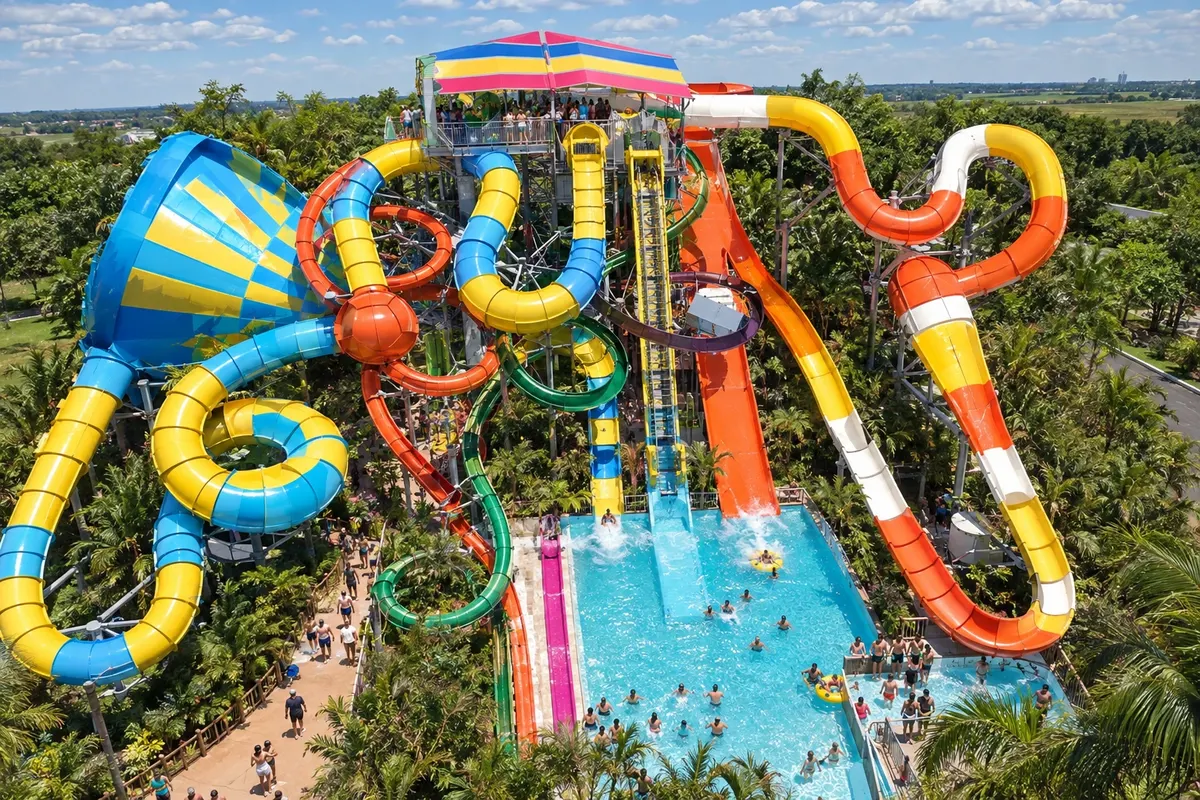
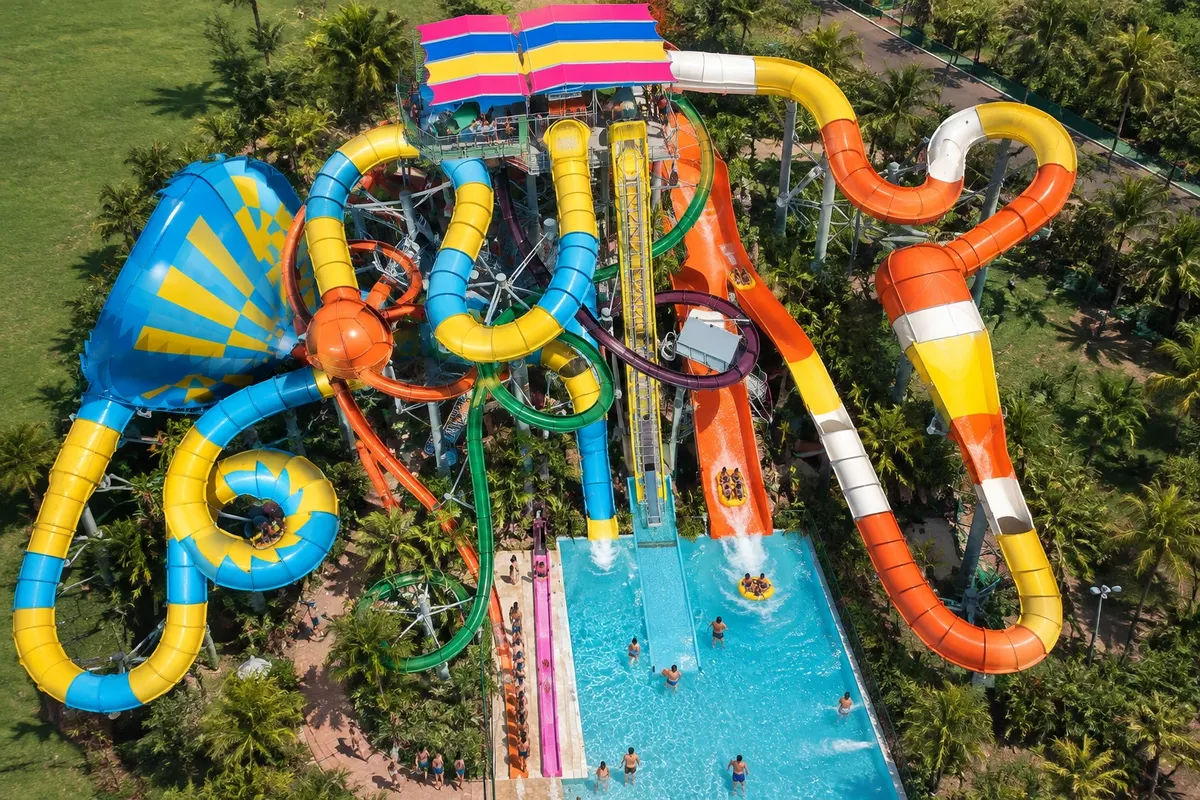
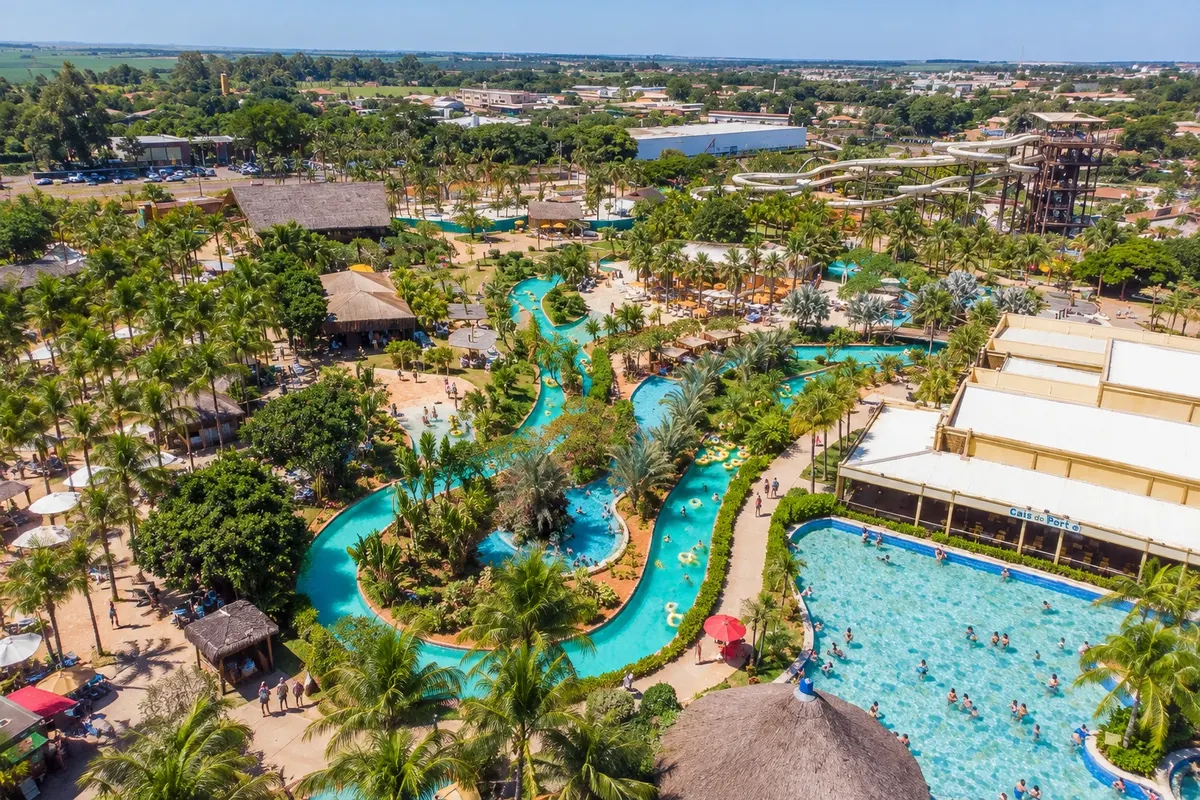
Thermas dos Laranjais is a water park in Olímpia and one of the city's leisure landmarks. The program brings together different water attractions, allowing you to plan a day of fun according to the group's profile.
Antarctica
São Paulo · Brazil
In the destination Águas Sertanejas.
In the photo: Thermas dos Laranjais, Olímpia (SP)
Illustrative images. The pictures in this guide are illustrations based on the real place, not photographs, and may differ from it.
The city
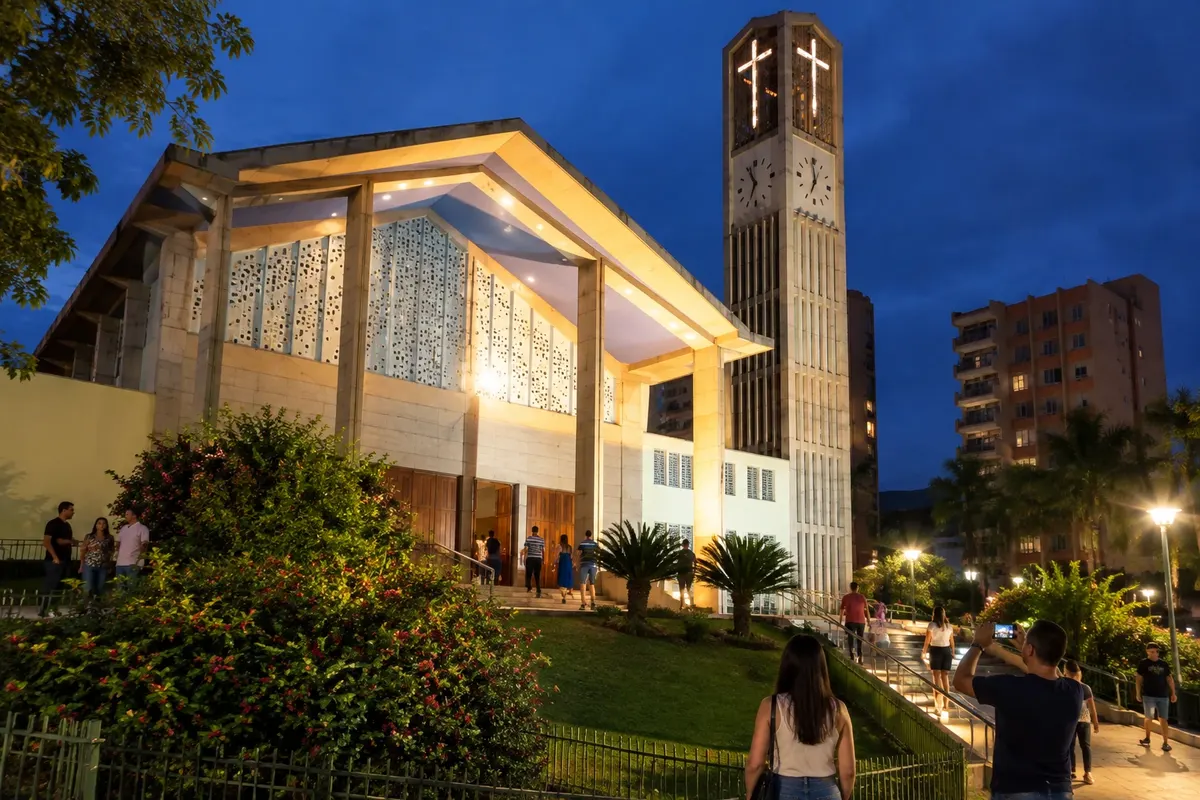
Olímpia combines water parks with a cultural circuit in the town centre. Thermas dos Laranjais is one of the trip's highlights, while the Museu de História e Arqueologia Maria Olímpia and the Museu de Arte Sacra e Diversidade Religiosa showcase other aspects of the town. The Matriz de São João Batista rounds out the visit.
Olímpia is in the northwest of the state of São Paulo, about 430 km from the capital and 50 km from São José do Rio Preto, on the Guarani Aquifer, one of the largest underground freshwater reserves on the planet. The hot water found underground in the 1980s changed the course of a city once known for oranges and sugarcane: two large water parks, a network of resorts and a whole avenue of nighttime attractions grew around it.
The settlement began in the early 20th century, when Scottish engineer Robert John Reid, hired to survey the lands of Sertão dos Olhos D’Água, persuaded the owners to found a village there. The name honors Maria Olímpia, the engineer’s goddaughter. Coffee enriched the town in the following decades and left mansions, the railway station and the iron bridge that still mark Downtown.
Olímpia’s other identity is folklore. A local teacher, José Sant’anna, brought his school research to the streets in the 1960s, and the gathering became the Folklore Festival, which every August brings dance groups and folk performances from several states to the Recinto do Folclore. By federal law, Olímpia is the National Capital of Folklore.
To orient yourself, think of three areas. Avenida Aurora Forti Neves and Avenida do Folclore form the axis of Thermas dos Laranjais, with hotels, restaurants and the covered attractions that stay open until night: wax museum, ice bar, virtual reality park, snow park. In another area is the Hot Beach complex, with the water park, Vila Guarani and, nearby, Vale dos Dinossauros. Downtown, around Praça Rui Barbosa and the São João Batista Mother Church, is the historic part, where you can walk between museums, the old station and buildings from the coffee era. Outside the urban area, the districts of Baguaçu and Ribeiro dos Santos and the rural neighborhoods preserve chapels, fishing ponds and an artisanal cheese dairy.
The climate is warm year-round. From October to March it’s very hot, with highs near 30 °C and showers, almost always in the afternoon; January is the rainiest month. From May to August it rarely rains, daytime temperatures are around 26 °C and nights and mornings are cool, around 16 °C, which pairs well with hot pools. July, December and January are the busiest months because of school vacations in Brazil; August has the festival.
On a first visit, don’t skip a full day at one of the water parks, an evening on Avenida Aurora Forti Neves and a few hours in Downtown, with the Ruy Ohtake bandstand, the Mother Church and the Cultural Station. With more time you can add the second park, the Catavento Museum Hub, the Recinto do Folclore and the rural area.
109 places to stay in Olympia.
30 places to eat in Olympia.
Olympia highlights and titles
The local experience
Thermas dos Laranjais is a water park in Olímpia and one of the city's leisure landmarks. The program brings together different water attractions, allowing you to plan a day of fun according to the group's profile.
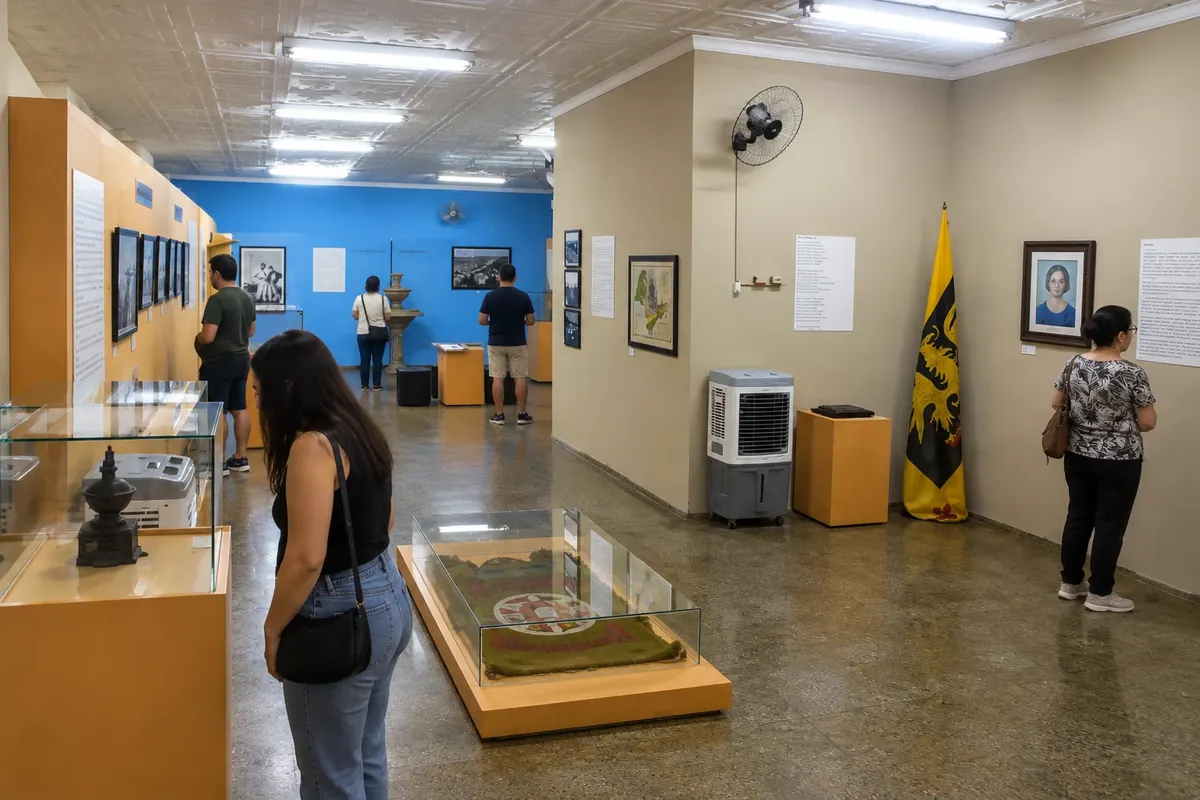
The Museu de História e Arqueologia Maria Olímpia is located in the Casa da Cultura in downtown Olímpia. The collection presents aspects of the municipality's formation and figures connected to local history.
Explore Museu de História e Arqueologia Maria Olímpia
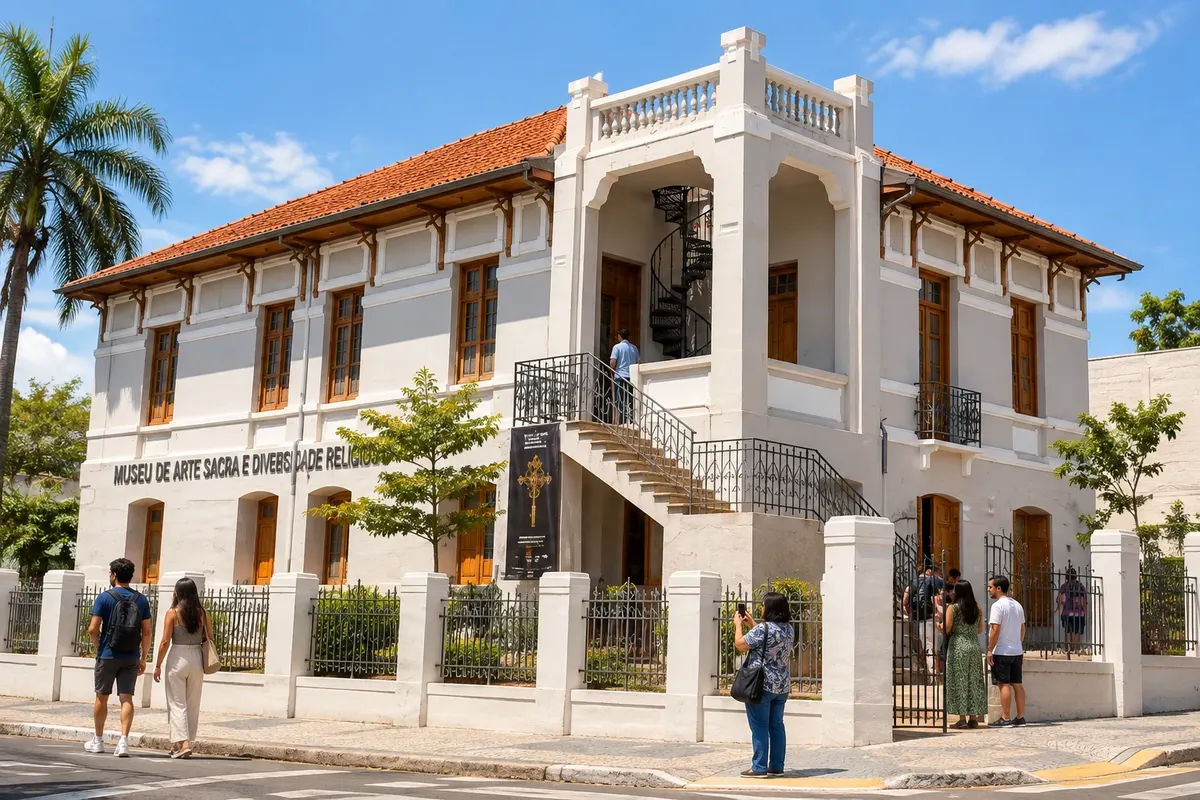
The Museu de Arte Sacra e Diversidade Religiosa occupies the Palacete Giosuè Tonanni, a historic building in downtown Olímpia. The visit allows you to see the property and works related to devotion and artistic production.
Explore Museu de Arte Sacra e Diversidade Religiosa
The Igreja Matriz de São João Batista is part of the religious and cultural circuit in downtown Olímpia. Its surroundings allow for a pause in the urban itinerary, close to other spaces linked to the city's history.
Explore Igreja Matriz de São João Batista
Hot water park in Olímpia, with an artificial sandy beach and coconut palms, wave pool, lazy river, slide tower and a full children's area. Designed for families with kids.
To choose before you go
Where each tour starts, how long it takes, how it is done, what is included and the price range.
Thermas dos Laranjais is the park that made Olímpia a travel destination. It has more than 50 attractions, and most pools use circulating warm water, between 26 °C and 38 °C. The park is open every day, from morning until late afternoon. The day is fuller when it's divided. Those who like water slides go first to the more extreme attractions while lines are shorter: Lendário has five lanes, two for rafts and three capsule slides where the floor opens at 28 meters high, and there is also a water roller coaster and a surf pool. For these attractions the minimum height is 1.20 meters. After lunch, the pace usually slows toward the wave beaches, the lazy river and the warmer pools. There are dedicated children’s areas; until age 6 a float or life jacket is mandatory. The park also maintains a zoo and a petting farm, which close a little earlier than the pools, with enclosures for macaws and waterfowl open only part of the morning and afternoon. Some rules prevent surprises at the entrance. Only swimwear made of appropriate fabric is allowed, such as one-piece swimsuits, bikinis, speedos and lycra, nylon or tactel shorts. The park operates in rain as long as there is no risk to visitors, and it does not refund tickets because of the weather. Consumption is paid with the park card, and lockers, without keys, are rented separately. Those who only accompany their family pay the same entrance fee.
Stops: Thermas dos Laranjais, Wave pool, Surf pool, Lazy river, Lendário water slide, Water roller coaster, Zoo and Petting Farm.
Includes: One-day ticket with access to the attractions, the zoo and the petting farm. Food, lockers and transport are paid separately. Children 1 to 6 years old have a special price; half-price applies to children 7 to 12, students, people over 60 and other cases provided by law, with ID.
Tip: Buy the ticket through the park's online shop: the price is lower than at the box office. Bring ID for everyone and proof for half-price tickets. Weekdays outside school holidays have shorter lines.
Best time: All year. From May to August the days are dry and the warm water offsets cool mornings; July, December and January are the busiest months.
R$ 189 to R$ 199 · per person, full price, one-day ticket (lower price in the online shop, higher at the box office) · official priceHot Beach is Olímpia’s second water park and is located in a different part of town, away from Thermas dos Laranjais. It is smaller, with more than 20 attractions, and has a different layout: the center of the park is made up of artificial sandy beaches, like Praia Ibiza, with waves and surrounded by bars. The water is also warm. For those seeking thrills, Irado features four drops from a tall tower, Hot Pipe is a U-shaped slide, and there is a four-lane parallel track for group races. Small children have an area with giant buckets and water play equipment. A zip line called Tirô do Parafuso runs over the park, 280 meters long with a launch 30 meters high; it is not included in the park admission. The park is open every day, including holidays, from morning until late afternoon. Tickets are single-day and valid for the date purchased; pricing is separated into child, half-price, and full-price categories, and rates vary by day. When the park closes, activities continue next door at Vila Guarani, a cluster of shops and restaurants among the complex’s hotels that is also open to non-guests. It operates in the evening with a beer house, pizzeria, ice cream shop, craft store, children’s attractions including a suspended course and a carousel, and a stage with shows and performances. Rides and attractions there are paid separately.
Stops: Hot Beach Olímpia, Praia Ibiza, Irado, Hot Pipe, Tirô do Parafuso, Vila Guarani.
Includes: Single‑day ticket with access to the water park attractions. Zipline, food, locker and the rides in Vila Guarani are paid separately; check the current price list.
Tip: Buy the ticket for the specific date: it is not valid for another day. Arrange your return with a taxi or the ride‑hailing app before leaving Vila Guarani, especially on holiday evenings.
Best time: All year. Heavy showers are more common in the afternoon from November to March.
The downtown is the part of Olímpia that existed before the parks, and it fits into a short walk. Start at Rui Barbosa Square. The bandstand with curved lines is a design by Ruy Ohtake, one of Brazil’s best-known architects, and shares the square with a sculpture of two joined circles. At number 54 stands the neoclassical building of the Mayor’s Office, a former bank that still preserves the original vault in the lobby. The Main Church of Saint John the Baptist, the city’s patron saint, is one of the largest in the state: it seats about 2,000 people. Inside, notable features include the resurrected Christ 7.80 meters above the altar, the suspended crown of thorns, and the images carved in mahogany by the Spanish sculptor Luiz Noguer; the large wall panels are by José Perez. The church is open during the day, outside mass times. Nearby, the Tourist Information Center distributes maps and often hosts an exhibition with items from the city’s folklore collection. On a weekday, continue to Casa da Cultura on São João Street, in the building that was the Municipal Market in the 1940s. It houses the Maria Olímpia Museum of History and Archaeology, with ceramics, funerary urns and utensils of the indigenous peoples found in archaeological sites in the municipality and dated to more than a thousand years, and the Professor Ivo de Souza Municipal Art Gallery, with works by local artists. In the same neighborhood is Altino Arantes Square, commonly called Praça da Fonte: jets of water form a canopy over a walkway that you cross on foot. Next to it stands the complex of the old Beneficência Portuguesa from the 1920s, to be viewed from the outside.
Stops: Rui Barbosa Square, Ruy Ohtake bandstand, Main Church of Saint John the Baptist, Tourist Information Center, Casa da Cultura, Maria Olímpia Museum of History and Archaeology, Praça da Fonte Luminosa.
Includes: Self-guided walk. There is no entrance fee for the church, the museum, the art gallery or the exhibition at the Tourist Information Center.
Tip: The History Museum and the Pinacoteca are open on weekdays during business hours. On other days, do the square, the Matriz and the fountain, and leave the museum visit for late afternoon when the heat eases.
Best time: All year; afternoons are dry and milder for walking from May to August.
This short circuit shows what coffee and the railway left behind in Olímpia, and has the advantage of also working at night, after the parks. ECO, Olímpia’s Cultural Station, occupies the complex of the old railway station from the 1910s, listed by the municipality. Trains ran until 1968; after restoration, the building became a cultural center with exhibitions, a steam locomotive and the memory of the line. Behind it is the Memorial do Bombeiro square. On the same street, see the Pensão do Batata from the outside, pointed out as the town’s first lodging because it stands in front of the station, and the Casa do Coronel, from 1922, built by Geremia Lunardelli, a farmer who once owned 18 million coffee trees and became known as one of Brazil’s coffee kings. Continuing along Rua 9 de Julho you reach the Iron Bridge. It came from England in 1914 for the railway that ran to Nova Granada, served trains crossing the Rio Cachoeirinha and, restored, was reassembled on Avenida dos Olimpienses, where cars now pass. On Rua David de Oliveira, the Museum of Sacred Art and Religious Diversity occupies the Giosué Tonanni mansion, from 1910, also listed. Exhibitions are temporary, many in partnership with the Sacred Art Museum of São Paulo. There is the aroeira cross that marks the town’s founding, planted at the edge of the Ribeirão Olhos D'Água. Finish at the Sanctuary of Our Lady of Aparecida, built where the village’s first cemetery stood and decorated with mural paintings, and at the tile panel on the façade of Santo Seno school, in Praça Mário Garcez Novais, a work by Max Urban that depicts Father José de Anchieta among indigenous people.
Stops: ECO Estação Cultural de Olímpia, Casa do Coronel Geremia Lunardelli, Ponte de Ferro, Museu de Arte Sacra e Diversidade Religiosa, Santuário de Nossa Senhora Aparecida, Painel de azulejos da escola Santo Seno.
Includes: Self-guided walk. There is no admission fee for the Cultural Station or the Sacred Art Museum. Historic houses are viewed from the façade only.
Tip: The Cultural Station and the Sacred Art Museum usually open every day, from morning to evening; check before you go. At the sanctuary, avoid mass times for your visit.
Best time: All year. It’s an option for rainy afternoons, from November to March.
The Folklore Grounds is the home of the festival that gave Olímpia the title of National Folklore Capital. Its full name is Recinto de Exposições e Praça de Atividades Folclóricas e Turísticas Professor José Sant'anna, in honor of the teacher who created the event. It covers about 96,800 square meters, of which 6,500 are built, and it is the city's largest event space. The history explains the place. The festival began at Praça da Matriz in the 1960s, based on the research and exhibitions Sant'anna held with his students. It grew so much that it no longer fit in the square and, in 1986, gained its own venue, built in just over four months. The Folklore Festival takes place in August, on a movable date, and lasts about nine days. Folkloric and parafolkloric groups from several states across the country, from the North to the South, take turns on stage and in parades with dances, music and folk plays, such as bumba meu boi. There is also a violeros pavilion, typical food and handicrafts. There is no entry fee. The city maintains more than a dozen of its own folkloric groups throughout the year. Outside the festival, the grounds host other fairs and events and can be visited during the day, except on setup days. What you see then is the empty structure: useful for those curious about the scale of the festival or already in Vila Hípica, the neighborhood of Orquidário Aguapey.
Stops: Folklore Grounds, Praça de Atividades Folclóricas Professor José Sant'anna.
Includes: There is no entrance fee to the grounds or to the festival. Food, drinks, and crafts are sold separately.
Tip: For the festival, book accommodation in advance and check the year’s program, which changes each edition. Main performances take place at night; arrive early to secure a spot near the stage.
Best time: August, during the Festival do Folclore. At other times of year, a quick visit is possible in any month.
Water parks close in the late afternoon, and that’s when Avenida Aurora Forti Neves fills up. The avenue connects the city center to Thermas dos Laranjais and concentrates the city’s indoor attractions, almost all open into the evening. You don’t need a car: you can walk from one to another on the sidewalk. Coming from the Center, the first are Dreamland Wax Museum, with about 70 figures of personalities from film, music, sport and history in more than 30 scenes, and next door Dreams Ice Bar, a bar built of ice with subzero temperatures, visited in 40-minute sessions with coats and gloves provided. A little further on, Pit Stop da Neve lets children play with real snow. Further along are Orionverso, a virtual reality park with about 20 experiences that usually closes on Mondays, and Radical Play Park, an amusement park that opens only in the late afternoon: there is no entry fee, and each ride is charged separately. On the same avenue you’ll find bowling, an arcade, trampolines and, opposite Thermas, a mall with a food court. The “I Love Olímpia” totem on the Miguel Said Aidar bridge is the photo spot. If you prefer to move around, you can rent a bicycle, electric scooter or tricycle at a shop on the avenue and follow the bike lanes. Pick one or two attractions per night. Each has its own ticket, and there are passes that group attractions from the same set, such as the wax museum, the ice bar and the Vale dos Dinossauros.
Stops: Avenida Aurora Forti Neves, Dreamland Wax Museum, Dreams Ice Bar, Orionverso, Radical Play Park, Pit Stop da Neve, “I Love Olímpia” totem.
Includes: Self-guided visit. Each attraction charges a separate entrance fee; check the current price list and combined passes.
Tip: For the ice bar, wear long pants and closed shoes. During school holidays, buy timed tickets before leaving the hotel. The taxi stand at the bus station is on the avenue itself.
Best time: All year. During the July and December–January holidays the avenue gets busier and some venues extend their hours.

An afternoon program for travelers with children who want a day out of the water. Polo Museu Catavento is located at Espaço Ruy Ohtake and is an extension of Museu Catavento, the state of São Paulo’s science museum in the capital. It brings together interactive exhibits, workshops, and science and technology activities for all ages in a covered space. It is open Wednesday through Monday from early afternoon into the evening, and closes on Tuesdays for maintenance. Tickets are sold on site or online; schools and groups schedule visits in advance. On the same avenue is Praça da Irmanação with Olímpia Antiga, which commemorates the link between the São Paulo town and the Greek city of Olympia, birthplace of the Olympic Games. The ensemble is about 8 meters high and features a statue of Deusa Nikki by artist Romildo Cardozo facing west, an Olympic torch, and four smaller pedestals representing the seasons. The visit is free and quick, and the area has bike lanes. From there, drive to Vale dos Dinossauros on Avenida Governador Adhemar Pereira de Barros, near Hot Beach. The theme park has more than 30 life‑size animatronic dinosaurs that move and make sounds along scenic trails, plus simulators, a 3D cinema, a playground, and a shop. It usually opens daily from morning to early evening, and the visit takes about an hour.
Stops: Polo Museu Catavento, Espaço Ruy Ohtake, Praça da Irmanação with Olímpia Antiga, Monument to Deusa Nikki, Vale dos Dinossauros.
Includes: Polo Museu Catavento and Vale dos Dinossauros charge admission; check each site’s current pricing. There is no entrance fee for the square.
Tip: Start at Vale dos Dinossauros if you want a busy morning: Polo Museu Catavento only opens after lunch. Avoid Tuesday, the day the museum is closed.
Best time: Year‑round. Except for the square, activities are indoors, useful on rainy afternoons from November to March.
Olímpia has no mountains or waterfalls inside the city, but it does offer some shady spots for a morning away from queues and water slides. The Municipal Environmental Education Wood Walter Zucca, in Jardim Glória, has a cycling track, walking paths, an outdoor gym and a playground. Bosque Rivaldo Mussolin, along the extension of Avenida Aurora Forti Neves in Vila São José, has the same facilities and houses Gruta São José: the city built the oratory at residents’ request, preserving and channeling an old water spring, and the neighborhood parish donated the saint’s statue. Visits to both are free. In Vila Hípica, Orquidário Aguapey is a private small farm with a country feel. Visitors walk through a garden of identified trees, an orchard and a mini wood to the greenhouse, where they can closely observe the cultivation of several orchid species. There are also birds and other small animals, which children enjoy. Plants are for sale, and chatting with the owners is part of the visit. It usually opens every day during daylight hours. The three sites are in different neighborhoods. If you don’t want to depend on a car you can rent a bicycle or electric scooter on Avenida Aurora Forti Neves and link the woods via bike lanes; for the more distant orchid nursery, take a taxi or ride‑hail app.
Stops: Bosque Municipal Walter Zucca, Bosque Municipal Rivaldo Mussolin, Gruta São José, Orquidário Aguapey.
Includes: There is no charge to enter the woods or the grotto. At the orchid nursery, ask locally about visits and plant prices; bicycle rental is paid separately.
Tip: Go early: the sun in northwest São Paulo state is strong from midmorning. Bring water, a hat and insect repellent.
Best time: April to September, with cooler mornings and little rain.
The municipality of Olímpia is large, about 800 km², and most of it is sugarcane and orange fields. The city hall organized the countryside into a route, the Rural Circuit, with 21 points: twelve chapels and community churches, four fishing ranches, four places to eat and one cheese factory. Covering all points takes eight to ten hours; it’s sensible to choose one side. The two districts are just over 20 km from the center, on paved roads. In Ribeiro dos Santos is the Church of Saint Anthony of Padua; in Baguaçu, the São José Chapel. Closer to town, the Santa Cruz Chapel, 5 km away, holds a fair in May. The chapels are small and open only for celebrations, usually once a month: the interest is the road, the landscape and the festivals. In June there are Saint Anthony festivities in Ribeiro dos Santos, in Lambari and in Capituva; in July and September, fairs in other neighborhoods; in October, the feast of Our Lady Aparecida at the Romaria Chapel. For lunch, the Assis Chateaubriand Highway, the road to São José do Rio Preto, gathers roadside stalls and diners in the Lambari neighborhood, about 14 km away. The fishing ranches lie between 4 and 8 km from the center and combine fishing lakes, a restaurant and leisure areas; each has its own opening days. The most distinctive experience is the artisanal cheese factory in the Boa Vista neighborhood, 22 km away, which welcomes visitors to learn about production and taste the cheeses, by appointment only.
Stops: Ribeiro dos Santos, Baguaçu, Church of Saint Anthony of Padua, São José Chapel of Baguaçu, Santa Cruz Chapel, Lambari neighborhood, Olímpia fishing ranches, Artisanal cheese factory.
Includes: Self-guided tour. Fishing, meals and the cheese-factory visit are paid separately.
Tip: Ask for the Rural Circuit map at the Tourist Information Center and call the cheese factory and the fishing ranches before you go. After heavy rain, avoid the dirt sections.
Best time: From May to September, during the dry season. Community festivals take place in May, June, July, September and October.
Day by day
Suggestions to plan the trip. Change the order of the days according to the weather and tour availability.
With only one day, pick one water park and stay there until closing. Thermas dos Laranjais is the most complete option: arrive at opening, start with the waterslides, have lunch inside, and save the hotter pools and the lazy river for the afternoon. Those who prefer sandy beaches and a more compact park can choose Hot Beach instead. In the late afternoon, shower and walk along Avenida Aurora Forti Neves. Choose an indoor attraction, such as the wax museum, the ice bar, or the virtual reality park, and have dinner there. If the bus or the road departs later, there’s still time to see downtown lit up: Praça Rui Barbosa, with the bandstand by Ruy Ohtake, the Igreja Matriz de São João Batista and the Estação Cultural, which is often open at night. By taxi or ride app, it’s only a few minutes from the avenue.
Dedicate the first day to Thermas dos Laranjais, from opening to closing. Split the park into two halves: thrill rides and the wave pool in the morning, hot pools, lazy river and the zoo in the afternoon. Small children have their own areas, and the little farm closes before the pools. At night, walk along Avenida Aurora Forti Neves. With kids, the snow park and the wax museum work well; for adults, the ice bar and the virtual reality park. Dine on the avenue and walk back if your lodging is nearby.
In the morning, go to the Recinto do Folclore, in Vila Hípica, to see the festival grounds, and stop by Orquidário Aguapey in the same neighborhood. In August, during the Festival do Folclore, reverse the order and leave the recinto for the evening, when the groups perform. Have lunch downtown and take the Praça Rui Barbosa walk: the bandstand, the Igreja Matriz de São João Batista and the folklore exhibition at the Tourist Information Center. On a weekday, visit the Museu de História e Arqueologia at Casa da Cultura. Mid-afternoon, head to the Estação Cultural, the Ponte de Ferro and the Museu de Arte Sacra e Diversidade Religiosa, which are usually open until the evening. Travelers with children can swap this part for the Polo Museu Catavento, which opens in the afternoon except on Tuesdays.
Start at the larger park. Arrive at opening, store your things in a locker and head straight to the long-line attractions, like the Lendário and the water roller coaster. After lunch, alternate the wave pool, the lazy river and the hotter pools, and set aside half an hour for the zoo. In the evening, choose a light program on Avenida Aurora Forti Neves: an indoor attraction and dinner.
A day off the water, which also serves as a backup if the weather turns. In the morning, walk through downtown: Praça Rui Barbosa, Igreja Matriz de São João Batista, Casa da Cultura on a weekday, and Praça da Fonte. Continue to the Estação Cultural and the Museu de Arte Sacra e Diversidade Religiosa. After lunch, visit the Polo Museu Catavento at Espaço Ruy Ohtake, and see the Monumento à Deusa Nikki on the same avenue. If it’s Tuesday, when the museum is closed, swap this for Vale dos Dinossauros or Orquidário Aguapey. Those traveling by car who prefer the countryside can use the afternoon for part of the Circuito Rural, with a stop at a fishing spot or the farm stands in the Lambari neighborhood.
Spend the last day at Hot Beach. The park is smaller than Thermas and can be enjoyed more leisurely: sandy beaches with waves, the Irado and the Hot Pipe for thrill-seekers, and the kids’ area for little ones. The zip line that crosses the park is paid separately. In the late afternoon, cross over to Vila Guarani next door to dine, watch the evening show and leave the children at the playgrounds. If you’re leaving town the same day, have your bags ready and arrange transport before entering the park.
Best time to go
The seasons shown are the most usual ones; nature doesn't always follow the calendar.
school holidays · rainiest month
Heat and heavy showers, with an average above 250 mm for the month, lows around 22 °C and highs around 29 °C. It’s high season during Brazilian school holidays: the water parks and Avenida Aurora Forti Neves get crowded and lodging requires advance booking. Rain usually falls in the afternoon; parks remain open unless there’s a severe storm. Keep Polo Museu Catavento and the downtown museums as alternatives.
Carnival, in February or March · Hot and humid
Remains hot and humid, with about 184 mm of rain, lows near 21 °C and highs near 29 °C. Carnival, in February or March depending on the year, fills parks and hotels for several days. Outside the holiday, weekdays are among the quietest of the summer. Prefer mornings for outdoor attractions.
End of summer · Holy Week in March or April
Rain continues frequent, around 165 mm, and decreases at the end of the month. Lows near 21 °C and highs near 29 °C. The heat still feels like summer and the warm water makes little difference: the wave pools and water slides are the most sought-after. When Holy Week falls in March, the holiday fills the town.
Start of the dry season · April holidays
Showers become rare, about 62 mm for the month, lows near 20 °C and highs near 28 °C. It’s a good month to combine the park with a walking tour of the Centro. Holy Week, when it falls in April, and the April 21 holiday concentrate visitors; on other days, activity is moderate.
Dry weather · Fest at Santa Cruz Chapel
Dry month, about 41 mm of rain, lows near 17 °C and highs near 26 °C. Nights call for a light jacket on the avenue. In the rural area, the Santa Cruz Chapel holds its fest. With fewer people and steady skies, it’s a good time for the woodlands, the orchidarium and the Rural Circuit.
Feast of Saint John the Baptist, patron saint, on June 24 · Saint Anthony festivals in rural communities
One of the driest months, about 24 mm, lows near 16 °C and highs near 26 °C. Mornings are cool and the hot-water pools become more in demand. The 24th is the patron saint’s day, Saint John the Baptist, with a holiday in town. Ribeiro dos Santos, Lambari and Capituva hold Saint Anthony festivities.
School holidays · Driest month · Neighborhood rural fests
The month with the least rain, about 15 mm, lows near 16 °C and highs near 27 °C. With school holidays, it’s high season: longer lines at the water slides, busy avenue at night and accommodations should be reserved in advance. Arrive at the parks at opening. Rural neighborhoods hold fests.
Olímpia Folklore Festival at the Folklore Grounds · Dry weather
Still dry, about 17 mm, lows near 17 °C and highs near 29 °C; the air gets very dry in the afternoon. This is the month of the Folklore Festival, which for about nine days brings groups from several states to the Folklore Grounds with no entrance fee. During those days the town fills up; for the rest of the month activity is low.
High heat · Neighborhood rural fests
The heat returns strongly, with highs around 31 °C and lows near 19 °C, and the first downpours totaling about 56 mm. There are still many fully sunny days good for the parks. The September 7 holiday increases activity; outside of it, the month is quiet. Some rural communities hold local fairs.
Feast of Nossa Senhora Aparecida · Return of the rains
Hot month, with highs around 31 °C and lows around 21 °C. Rain returns in late-afternoon showers, totaling about 106 mm. The October 12 holiday, Our Lady Aparecida and, in Brazil, Children’s Day, fills the parks; the Romaria Chapel in the rural area holds a feast for the saint.
Opening of Natal Encantado at Praça da Matriz · Holidays
Rains become established, about 157 mm, almost always in the late afternoon, lows near 21 °C and highs near 30 °C. The month’s holidays create long weekends and fill the parks. At the end of November, the city usually kicks off the Natal Encantado program at Praça da Matriz.
Natal Encantado · Holidays and year-end celebrations
Start of summer, with about 222 mm of rain in downpours, lows near 21 °C and highs near 29 °C. Christmas decorations and performances take over Praça da Matriz. With school holidays, the second half of the month is among the busiest of the year and attraction hours change on Christmas and New Year’s: confirm before you go.
Plan the journey
Olímpia does not have an airport with commercial flights. The closest is São José do Rio Preto (SJP), about 50 km away, which receives commercial and charter flights. Travelers from farther away usually fly to São Paulo or Campinas and connect there to Rio Preto.
From the airport, the final stretch is by road, taking about an hour. Options are to rent a car at the airport, arrange a transfer in advance, or take a taxi or app ride from Rio Preto. The bus to Olímpia departs from São José do Rio Preto’s bus station, not the airport.
Ribeirão Preto Airport (RAO) is an alternative, about 135 km from Olímpia, roughly a two‑hour drive. São Paulo and Campinas airports are more than 400 km away by road.
Routes change from season to season: confirm with the airline before buying and arrange transport to Olímpia before you board.
Olímpia’s bus station is on Avenida Aurora Forti Neves, the same avenue with the nighttime attractions, with a taxi stand at the door. From there you can reach the hotels along the Thermas dos Laranjais axis and downtown in a few minutes.
The city recommends the companies Andorinha, Danúbio Azul, Expresso Itamarati, Rápido D’Oeste, Gontijo, Karitur Turismo and Luxor to reach the town. The most frequent connection is with São José do Rio Preto, in about an hour; travelers from other regions usually change buses there. From São Paulo there is a direct line, a trip of 7 to 9 hours.
Service offerings and schedules change: check with the company before traveling and buy tickets in advance during the July school holidays, December–January and long weekends.
Olímpia is 429 km from São Paulo, 50 km from São José do Rio Preto, 49 km from Barretos and 135 km from Ribeirão Preto. From more distant cities, approximate road distances are: Uberlândia, 285 km; Londrina, 450 km; Goiânia, 580 km; Curitiba, 680 km; Belo Horizonte, 760 km; Brasília, 780 km; Rio de Janeiro, 920 km.
From São Paulo, the usual route follows Rodovia dos Bandeirantes and Washington Luís and, in the final stretch, Armando de Sales Oliveira (SP‑322), which passes through Olímpia; the trip takes five to six hours, with tolls. From São José do Rio Preto you come via Assis Chateaubriand (SP‑425).
Within the city, the water parks and most hotels have private parking; check each one’s terms. For the rural area, some access roads are unpaved.
You don’t need a car for most activities. Avenida Aurora Forti Neves can be walked end to end, as can the downtown area. Between zones — that is, from the Thermas dos Laranjais axis to downtown, to the Hot Beach complex or the Polo Museu Catavento — rides are short.
The city lists two ride‑hailing services that serve the area, GP Car and Decar; it’s worth downloading one before you arrive, because the major networks’ apps hardly operate there. There are taxi stands at the bus station, Praça Rui Barbosa and Avenida Deputado Waldemar Lopes Ferraz. Some hotels and parks offer their own shuttles.
On Avenida Aurora Forti Neves you can rent bicycles, electric scooters and tricycles, a way to connect the avenue to the woods via the bike lanes.
A personal or rental car makes a difference for the Rural Circuit and for nearby towns such as Barretos, 49 km away, São José do Rio Preto, 50 km, and Guaraci, 33 km, on the banks of the Rio Grande.
Your questions
Prioritize Thermas dos Laranjais and Museu de História e Arqueologia Maria Olímpia. With more time, include Museu de Arte Sacra e Diversidade Religiosa and Igreja Matriz de São João Batista, distributing visits according to travel between sites.
We suggest two to three days to do the outings with breaks. On a short visit, reduce the number of transfers.
A car makes it easier to combine different areas. If you prefer to travel without a car, confirm local transport and the return from the outings before you leave.
One alternative is to use Aeroporto de São José do Rio Preto - Professor Eribelto Manoel Reino, in São José do Rio Preto, and arrange the land leg to your accommodation. Check flights for your travel dates.
Check the conditions and the operation of each tour. Rearrange visits, allow time for rest, and avoid keeping an outdoor program when conditions are unsuitable.
Because of the Folklore Festival, created in the 1960s by professor José Sant'anna based on the research he did with his students. The event grew, began to gather groups from all over Brazil and gained its own venue, the Recinto do Folclore. The title National Capital of Folklore was given to the city by federal law. Besides the festival, Olímpia maintains more than a dozen folkloric groups throughout the year.
The festival takes place in August on a movable date and lasts about nine days. Performances are held at the Recinto do Folclore, on Avenida Menina Moça, featuring dance groups and folk performances from various states, violeiro musicians, typical food and crafts. There is no admission charge. Because the city fills up, book accommodation in advance and check the year’s schedule before traveling.
Avenida Aurora Forti Neves concentrates attractions that stay open into the evening: wax museum, ice bar, virtual reality park, snow park, amusement park, bowling and arcade games. At the Hot Beach complex, Vila Guarani has restaurants, shops, rides and shows. Downtown, Estação Cultural and the Museum of Sacred Art and Religious Diversity usually stay open until early evening, and the Polo Museu Catavento operates from afternoon into the night, except on Tuesdays.
The water parks operate in rain as long as there is no risk to visitors, and the water is warm; Thermas dos Laranjais does not refund tickets because of weather. If you prefer an indoor option, choices include the Polo Museu Catavento, Estação Cultural, Museum of Sacred Art, Museum of History and Archaeology on a weekday, and the attractions on Avenida Aurora Forti Neves like the wax museum and the virtual reality park. In summer, rain usually falls in the afternoon: use the mornings for outdoor activities.
Quite a lot in downtown: Praça Rui Barbosa with Ruy Ohtake’s bandstand, the São João Batista Mother Church, the folklore exhibition at the Tourist Service Center, Estação Cultural, the Museum of Sacred Art and Religious Diversity, the Museum of History and Archaeology, Praça da Fonte and the Iron Bridge. Outside downtown, the municipal groves, Gruta São José, the Monument to the Goddess Nikki and the Recinto do Folclore. During the Folklore Festival in August, there is also no admission charge.
Yes, two smaller ones, outside the central area. Dolce Dulce is a water park aimed at families with children. Praia do Mirante is a club with an artificial sandy beach and saltwater, with calm waves; it usually opens on Saturdays, Sundays and holidays. Both charge admission and have their own schedules: check the days before you go.
From the Guarani Aquifer, the large underground freshwater reservoir beneath which the city sits. Hot water was found underground in the 1980s and gave rise to the parks. At Thermas dos Laranjais, most pools use circulating water between 26 °C and 38 °C; not all attractions are heated, and on a cool day it’s worth asking which ones are warmer.
The park accepts one-piece suits, bikinis, men’s brief swimwear (sunga), and swim trunks and shorts made of water-appropriate fabric such as lycra, nylon, tactel and dry fit. For extreme attractions the minimum height is 1.20 meters, and children up to 6 years old must use a float or life jacket. Swimming goggles for diving are only allowed in the semi-Olympic pool. The park does not require a medical exam.
Yes. Avenida Aurora Forti Neves and downtown are walkable, and rides between areas of the city are short. The city lists two local apps, GP Car and Decar, in addition to taxi stands at the bus station and Praça Rui Barbosa. Download one of the local apps before arriving. A car is only really necessary for the rural area and neighboring towns.
Yes, both are less than an hour by road: Barretos is 49 km and São José do Rio Preto is 50 km away. Barretos is part of the same tourist destination as Olímpia and makes a good day trip; Rio Preto is the region’s largest city, with the airport and main bus station for connections. Go by car, rented or your own, or by regular bus—check the return schedule beforehand.
Within the municipality there are four fishing farms a few kilometers from downtown, with fishing lakes, a restaurant and a leisure area; each has its own days of operation. For river fishing, Olímpia is a base for towns along the Rio Grande, on the border with Minas Gerais: the closest is Guaraci, 33 km away, with a small beach and a public boat ramp. Icém is 60 km away and Colômbia 87 km. Confirm current fishing regulations for the season before you go.
There are three each week, offering fruits and vegetables, food, crafts and local trade: one on Sunday morning and two in the late afternoon/early evening, on Tuesday and Thursday. Each takes place in a different part of town; ask for that day’s address at the Tourist Information Center or at your accommodation.
Beyond the guide