

 Brazil
 Antarctica
 Argentina
 Bolivia
 Chile
 Colombia
 Ecuador
 Guyana
 French Guiana
 Falkland Islands (Malvinas)
 Paraguay
 Peru
 Suriname
 Uruguay
 Venezuela
 Germany
 Austria
 Croatia
 Denmark
 Slovakia
 Slovenia
 Spain
 Finland
 France
 Greece
 the Netherlands
 Hungary
 Ireland
 Iceland
 Italy
 Luxembourg
 Norway
 Poland
 Portugal
 the United Kingdom
 the Czech Republic
 Sweden
 Switzerland
 Turkey
 Bermuda
 Canada
 the United States
 Greenland
 Mexico
 Saint Pierre and Miquelon
 the Dominican Republic
 Japan
 South Africa
 Egypt
 Australia
 Fiji
 New Zealand
 Papua New Guinea
Illustrative images. The pictures in this guide are illustrations based on the real place, not photographs, and may differ from it.

Ways to travel
Nautical and fishing
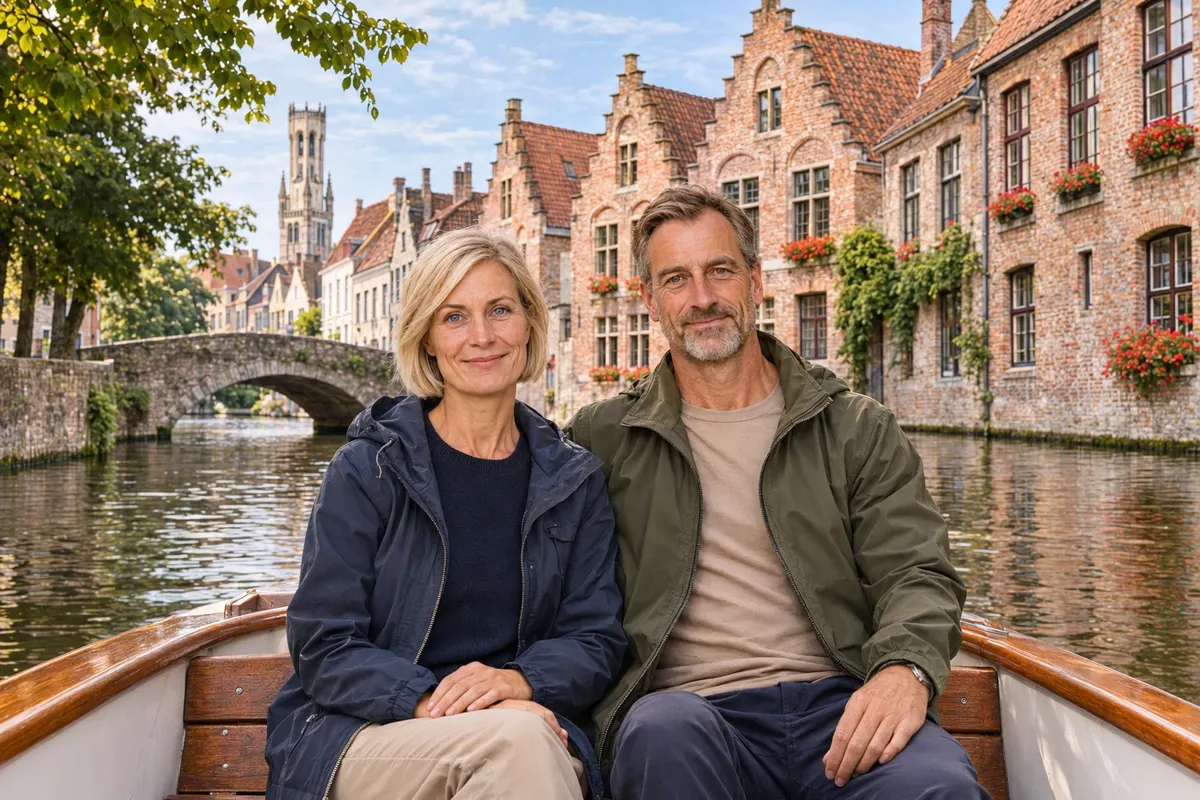
In Bruges, the boat passes under the bridges of the city centre. On the way to Damme, your view follows two rows of poplars. In Ghent and Brussels, the quays tell the story of the cities.
From the top of a bridge in Bruges, you can follow a boat for a few moments before it disappears around a bend. From the boat, the same bridge frames the next row of houses. It’s this change of viewpoint that makes the Belgian canals an attraction in themselves. In Ghent you can arrive by water at the site of the former fish market. In Brussels, the canal opens up a view of the capital along its quays.
Where to go in Belgium
Pick a region or type what you are looking for to see the cities and who offers each activity.
- Bruxelas BX
- Gante OV
- Bruges WV
- Damme WV
There is also a cruise that disembarks in another town. The paddle steamer sails between Bruges and Damme along a tree-lined canal. To decide where to board, start with a simple choice. If you want to return to the center to continue visiting on foot, you’ll find a loop in Bruges. If you want to make the trip to Damme part of your journey, allow time for the crossing and the return.
Bruges between Jan van Eyck Square and the beguinage
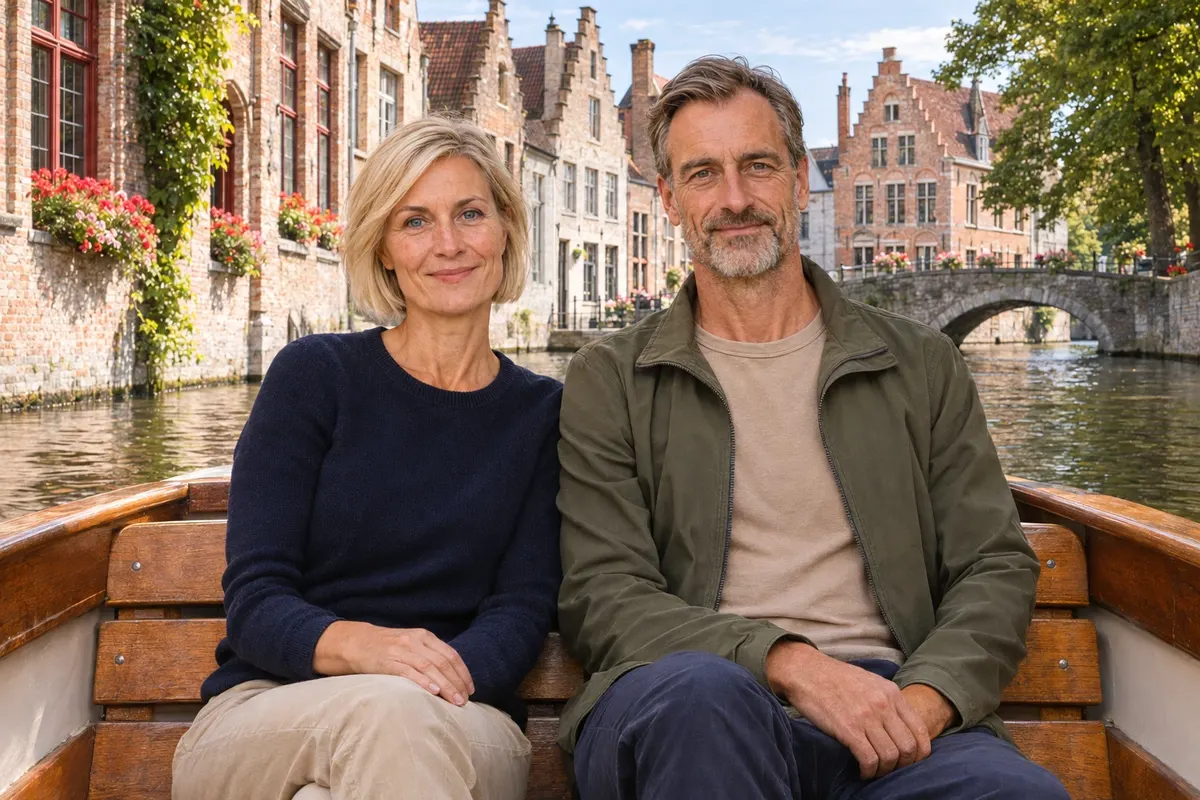
The historic centre circuit follows the canals between Jan van Eyck Square, in the old port district, and the beguinage, a complex where a community of women known as beguines once lived. These are two reference points to understand the extent of the trip. Boarding takes place at the quays along the route and the boat returns to the departure point. If you plan to visit the beguinage interior, you can walk there after disembarking.
The succession of bridges gives the trip its rhythm. From a narrow stretch, where attention focuses on the windows by the water, the boat reaches an opening from which you can see the belfry tower above the roofs. Near the beguinage, look for the swans close to the bank. There are several boarding points in the centre and all follow the same circuit. It pays to choose the quay that lies on the day’s walking route.
Ghent where the Lieve meets the Lys
In Ghent, it’s worth following on the map the moment when the Lieve canal meets the Lys river. The old fish market sits at that confluence. Seen from land, it is a building of the historic centre. When the boat approaches, you also perceive the market’s position in relation to the two waterways. Right behind it stands the Castle of the Counts.
Another section of the heritage route runs between the Graslei and Korenlei quays. Instead of choosing one bank to walk along, those on board see the two rows of facades, with the old guild houses facing the river. To revisit one afterwards, look for an easily recognisable landmark on foot, such as St. Michael’s Bridge. From the top of the bridge, the same quays appear almost in full.
The wheeled boat between Bruges and Damme
The Damse Vaart offers a landscape very different from the canals of Bruges’s centre. Along the canal, rows of poplars line low, open fields. Between the trees you glimpse stretches of countryside that disappear from view from the city streets. The wheeled boat Lamme Goedzak links to Damme, and you can make the trip in either direction during the navigation season.
In Bruges, departures for Damme are from the Noorweegse Kaai. In Damme, the quay is next to the centre, which makes it possible to combine the boat with a walk through the town. To go and return by water, first choose how long you want to stay on land and check which return departure matches that plan. Those who buy a one-way ticket are free to return by other means, provided they have planned that transfer.
Brussels from the Quai des Péniches
In Brussels, the Quai des Péniches is the departure point for guided canal tours. The capital presents itself through another sequence of references. Instead of moving from square to square, you follow the line of the quay, see how the bridges connect neighbourhoods on both banks and recognise the streets that reach the water. Some routes continue to the outskirts of the city.
Choose the departure by the route description. If you have limited time in the capital, it’s useful to know how far the boat goes and at which quay it finishes. If you want to hear the history of the places, the language of the commentary is as important as the itinerary. If the plan is to gather family or friends, check whether the departure accepts individual reservations or is organised for closed groups.
How to combine boat and walking
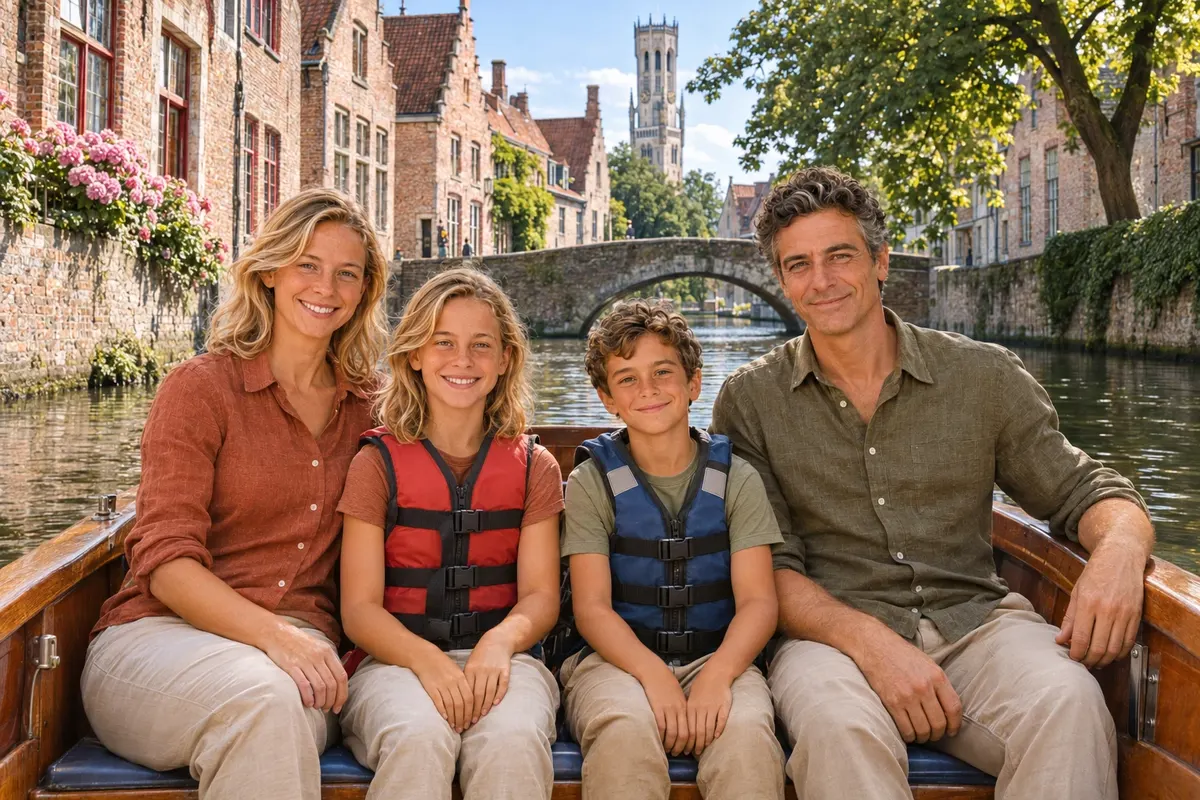
The Bruges circuit lasts about half an hour on the water. That is enough time for a child to look for swans and see a bridge from below, or for someone who likes architecture to pick a façade to examine later. Allow extra time for the queue and the walk to the quay, especially if another visit is scheduled. In Ghent, it makes sense to leave the return along the quays for after the onboard commentary.
For those with difficulty with steps, it’s important to know how to get from the street to the boat. A flat promenade along the canal may end in a staircase to the boarding point. Ask about both transfers, from the bank to the quay and from the quay to the seat. If the trip involves a wheelchair or stroller, also confirm whether the equipment can go on board or must stay on land and where it can be collected.
When to embark on the Belgian canals
Schedules vary by city and route. In Bruges, the centre boats are open and heavy rain can interrupt navigation. A layer of clothing that protects from the wind is practical for anyone who will spend part of the day seated by the water. In unstable weather, it’s worth having a walk nearby that can be done before or after the boat, depending on conditions at the quay.
On the crossing to Damme, the date deserves attention even before leaving for the quay. The wheeled boat has its own season and may operate on fewer days of the week near the end of it. In Brussels, check the programme of the guided tour you intend to take. A departure scheduled for a given group or date does not guarantee there will be boarding at the same location the next day.
Frequently asked questions
Where to do nautical tourism in Belgium?
Bruges and Ghent have trips along the canals of the historic centre. The Damse Vaart links Bruges to Damme through a landscape of fields and poplars. In Brussels, there are guided canal tours departing from the Quai des Péniches.
Does the Bruges city centre boat go to Damme?
They are separate departures. The Bruges city centre circuit follows the historic canals and ends where it began. The boat that goes to Damme departs from the Noorweegse Kaai, in another part of the city.
Which trip pairs well with a visit to Ghent’s old fish market?
Look for a heritage route that passes the confluence of the Lieve and the Lys. After the navigation, it is possible to return on foot to the old market area and see the entrance of the building up close.
Can you take a boat to Damme and stay in the town?
Yes. The paddle steamer connects the two towns and allows buying a one-way ticket. To return by boat after visiting Damme, check the timetable for both directions before choosing your departure.
Do those boat trips include fishing?
The four routes are sightseeing and relaxation cruises. Ghent’s old fish market appears on the itinerary as part of the city’s heritage. A trip for the purpose of fishing requires separate planning.
More in Ways to travel
Beyond the guide


