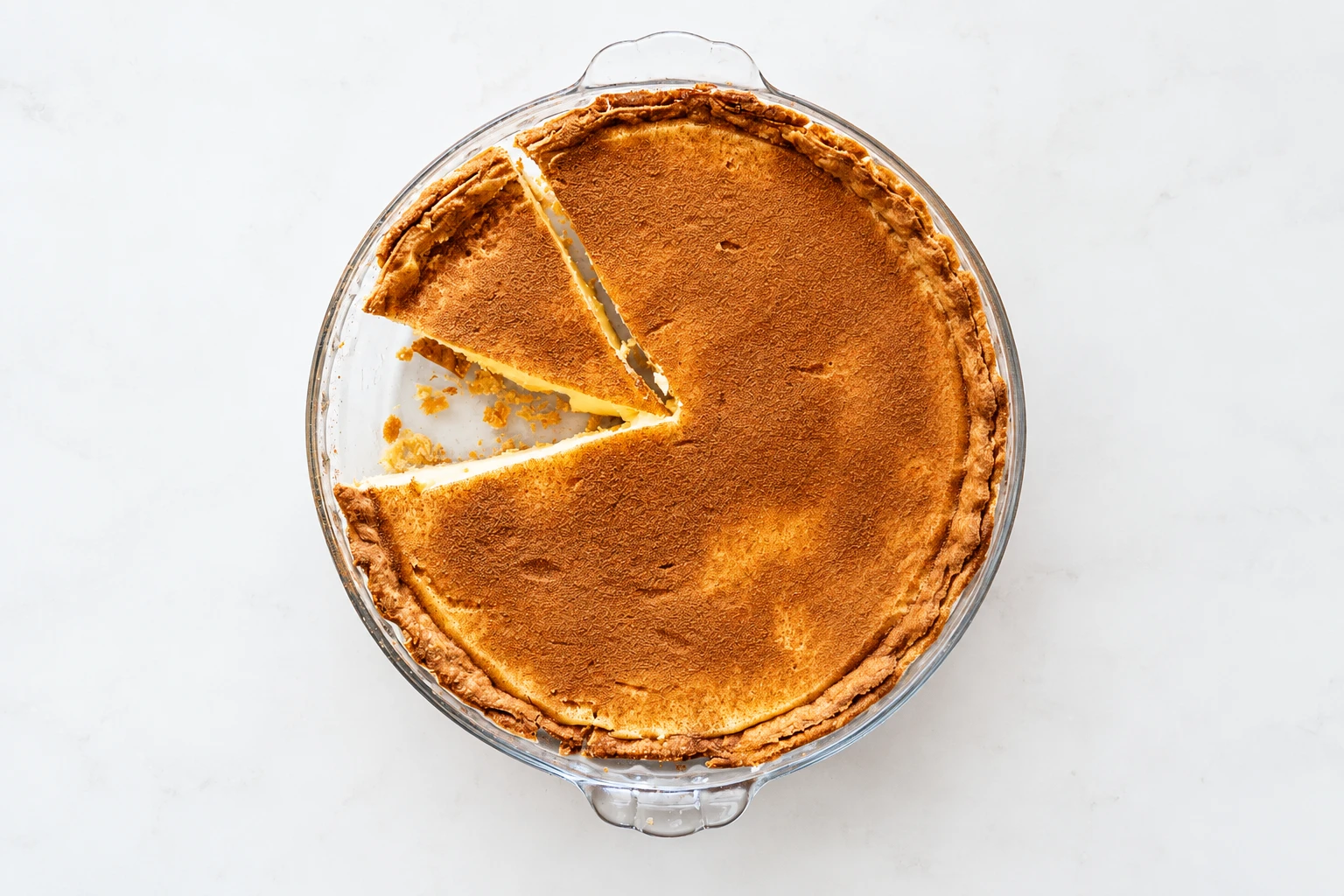
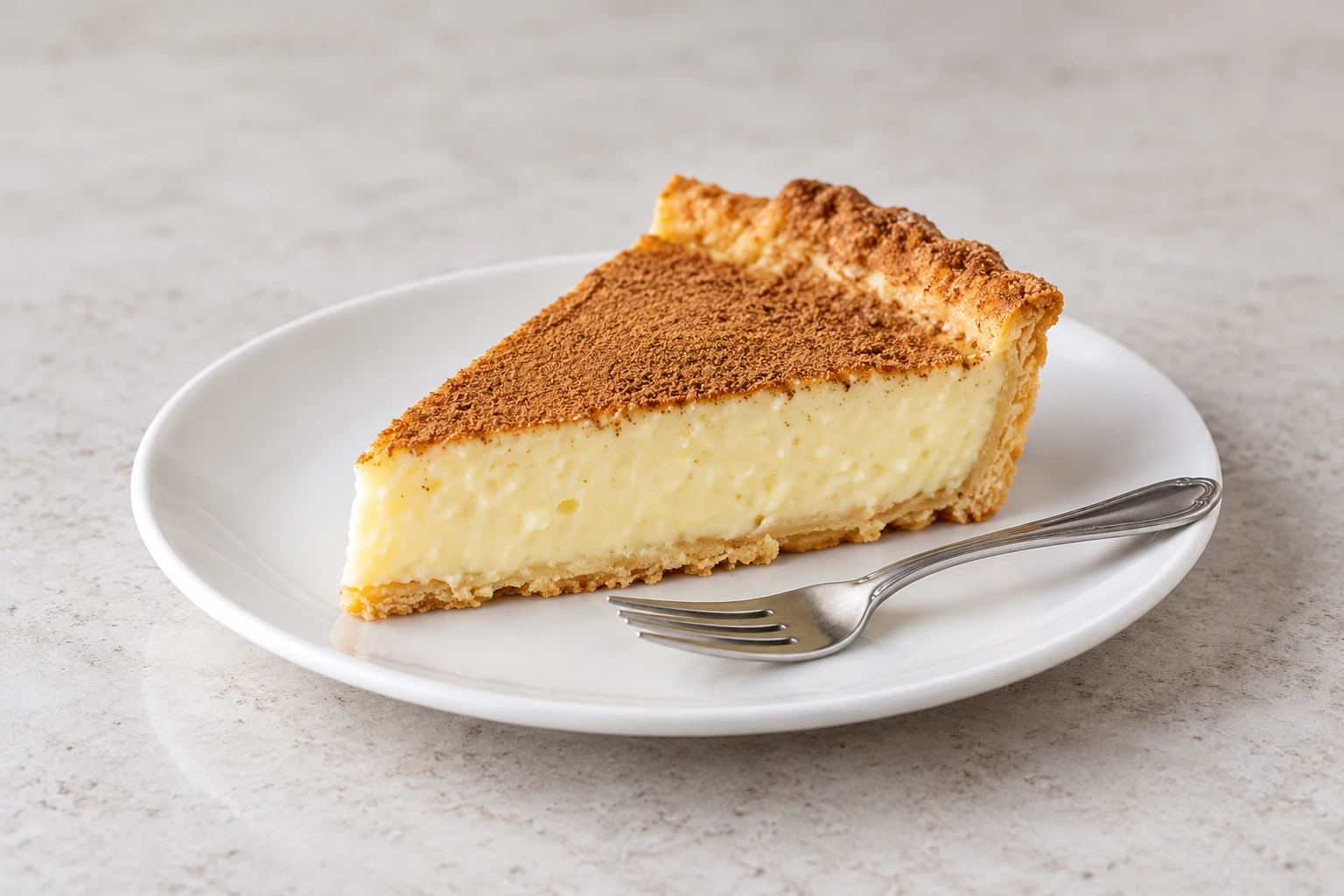
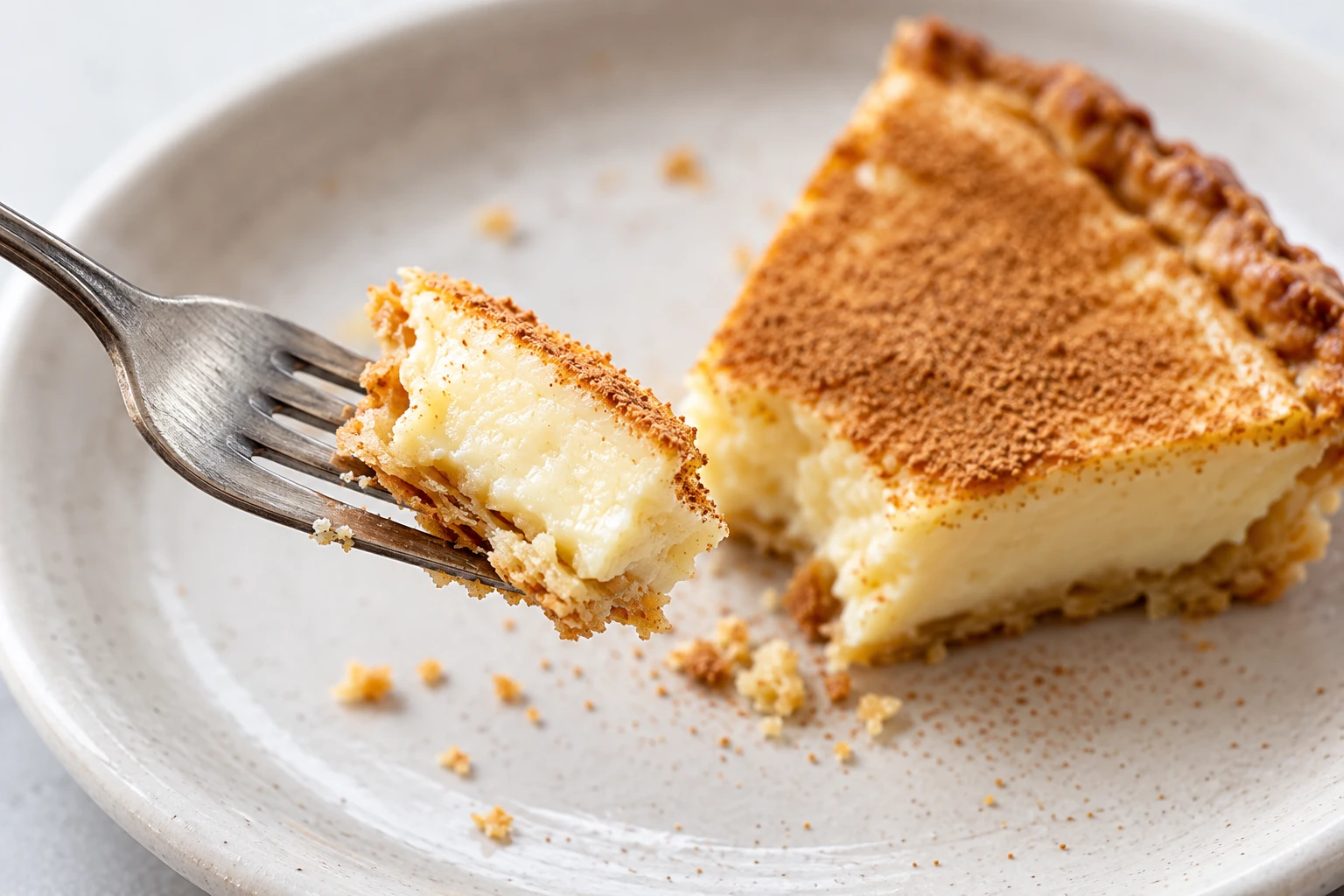
Melktert means milk tart in Afrikaans. It consists of a shortcrust or flaky pastry base with a filling of milk and eggs, thickened with flour or starch and scented with cinnamon, sometimes with cardamom. After baking or setting, it is topped with a sprinkle of ground cinnamon. The result is lighter and milkier than other cream tarts.
The South African English Dictionary records the word in the country’s texts from the late 19th century: a 1891 cookbook already listed the milk tart as a specialty of Dutch origin, and citations from the 1930s to the 1990s show it at fetes, train menus and tea tables. In 1971, a Cape Town newspaper praised the melktert made by Cape Malay confectioners, with cardamom and cinnamon.
The origin is debated. The most repeated story links the dessert to the tarts that Dutch settlers brought to the Cape. A history dissertation at the University of Pretoria, based on cookbooks mostly written by women, concluded that the belief in a solely Afrikaans origin does not fully hold: the tart had several roots and was adopted and adapted by women from different cultures, until it became a national treasure, regardless of who makes it.
That is why melktert represents the whole country rather than a single town. It appears at church fetes, charity sales, bakeries and supermarkets in all provinces, and the country celebrates National Melktert Day in February.


 Brazil
 Argentina
 Bolivia
 Chile
 Colombia
 Ecuador
 Guyana
 French Guiana
 Falkland Islands (Malvinas)
 Paraguay
 Peru
 Suriname
 Uruguay
 Venezuela
 Germany
 Austria
 Belgium
 Croatia
 Denmark
 Spain
 Finland
 France
 Greece
 the Netherlands
 Hungary
 Ireland
 Iceland
 Italy
 Luxembourg
 Norway
 Poland
 Portugal
 the United Kingdom
 the Czech Republic
 Sweden
 Switzerland
 Turkey
 Canada
 the United States
 Mexico
 the Dominican Republic
 Australia
 Fiji
 New Zealand
 Papua New Guinea