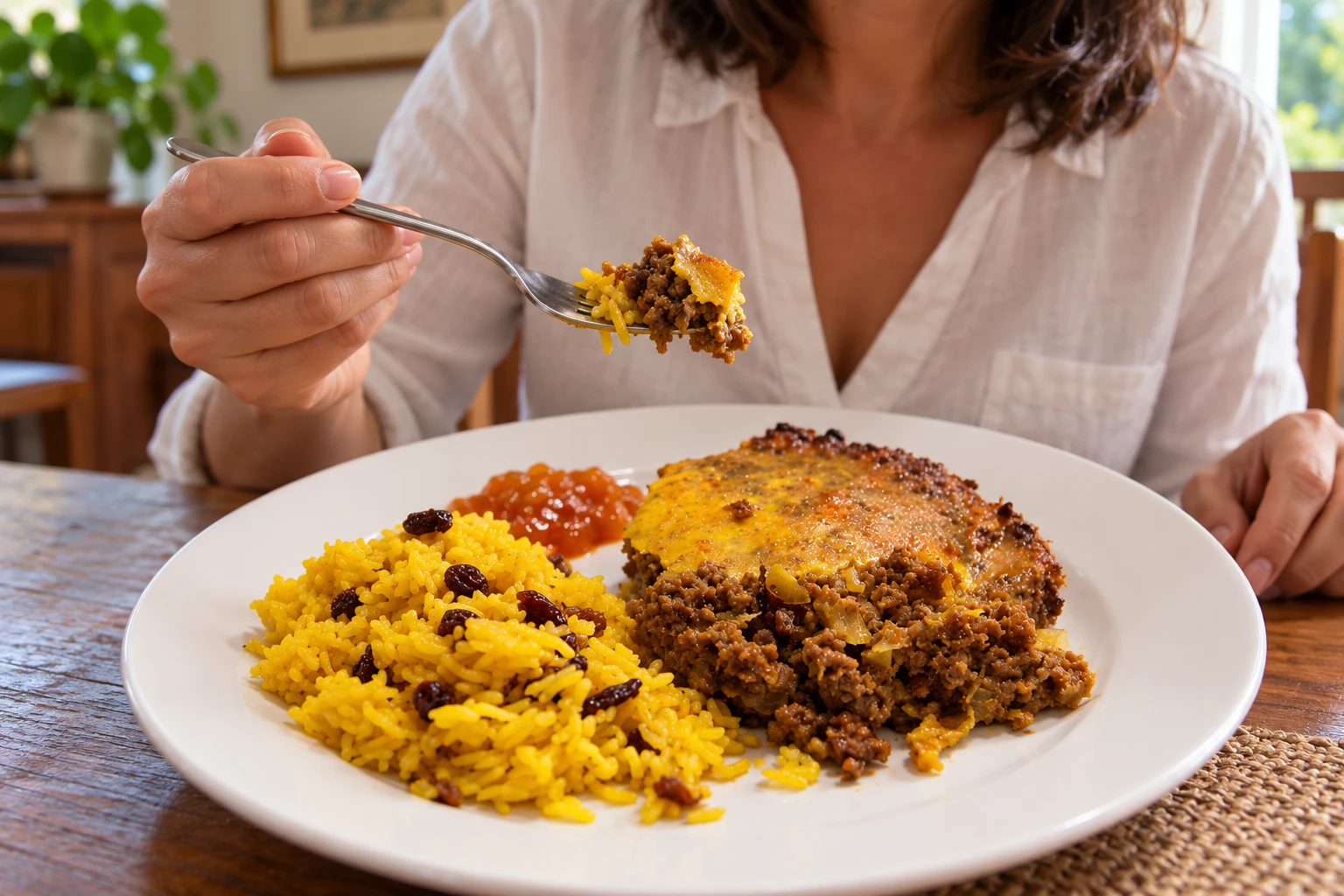
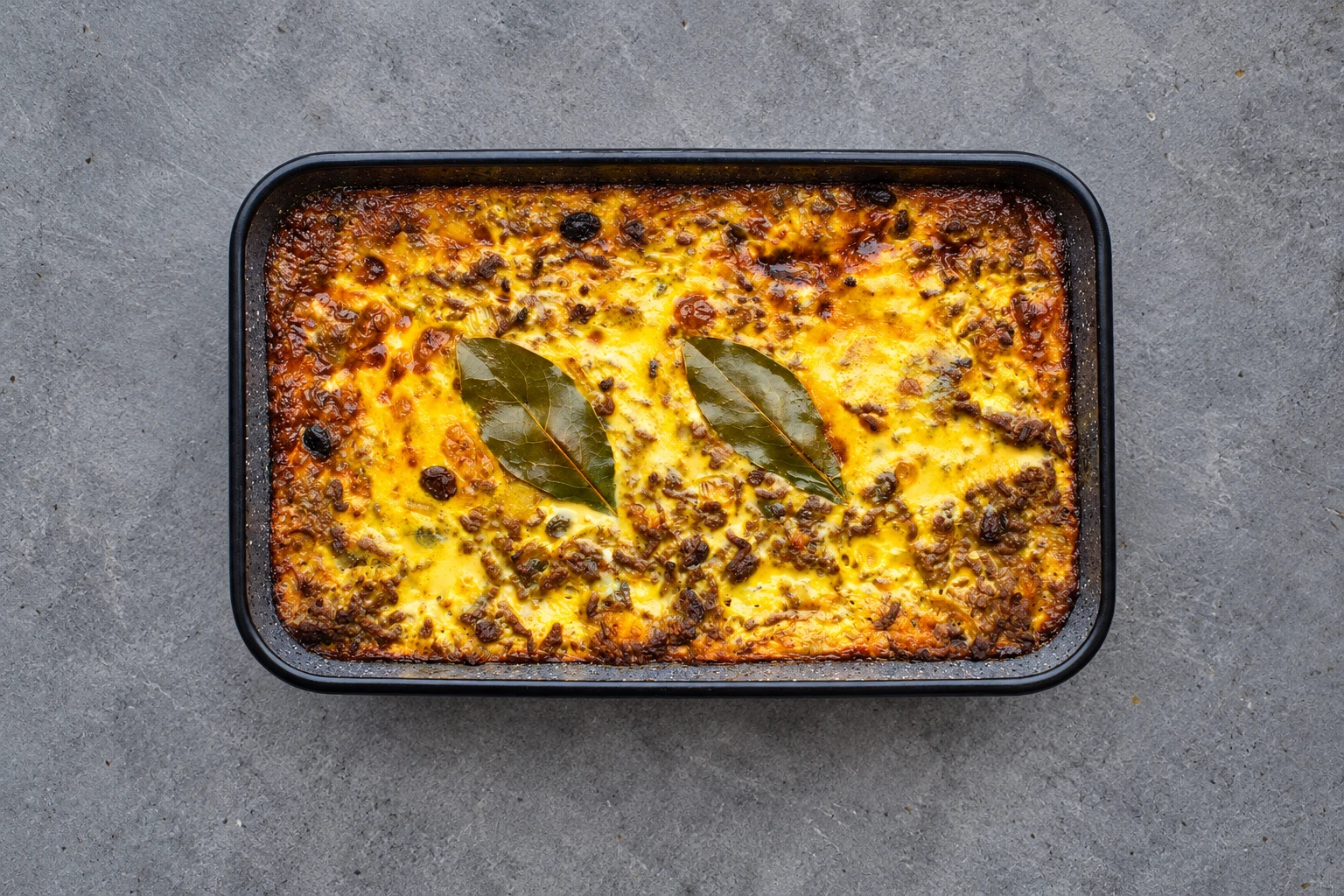
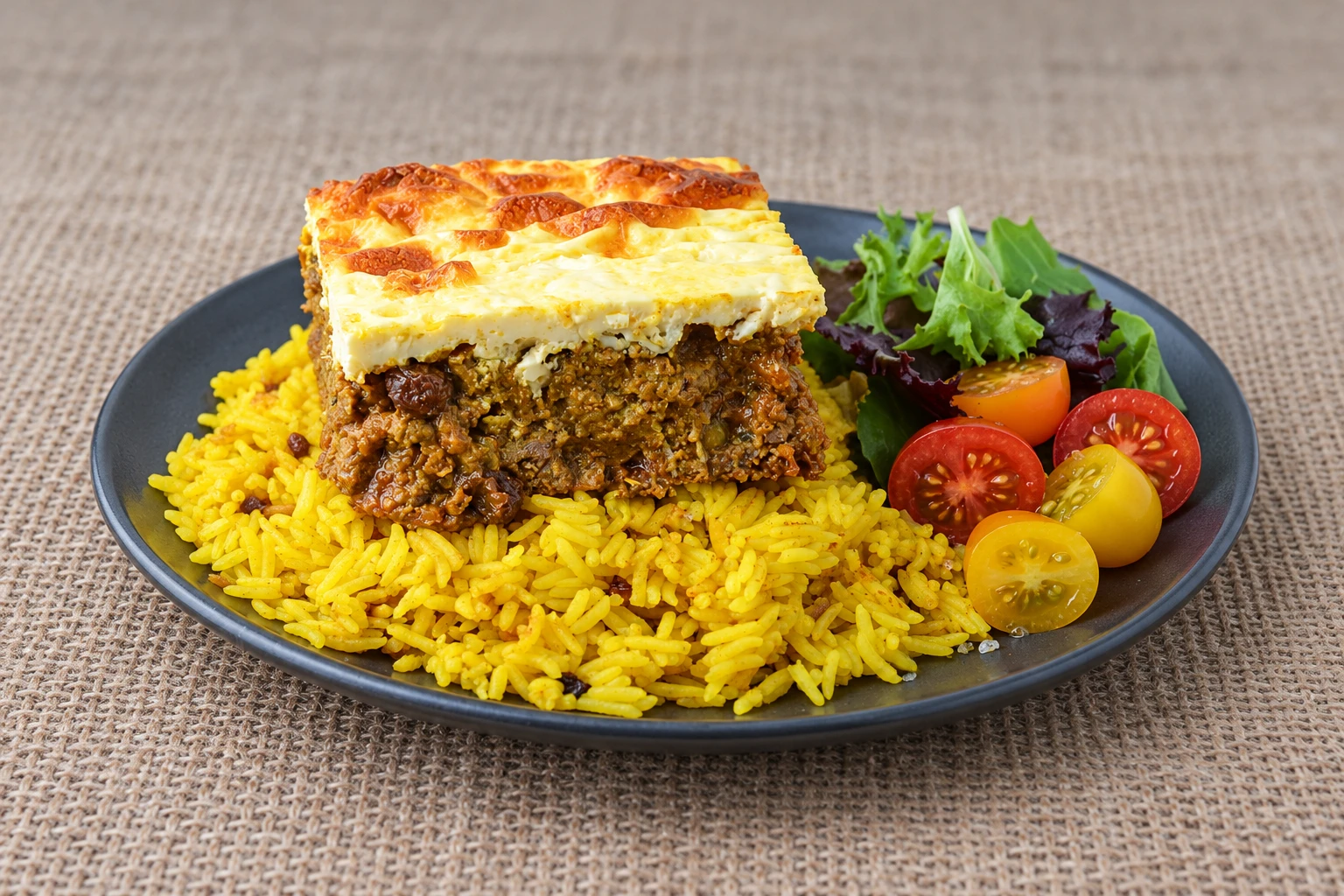
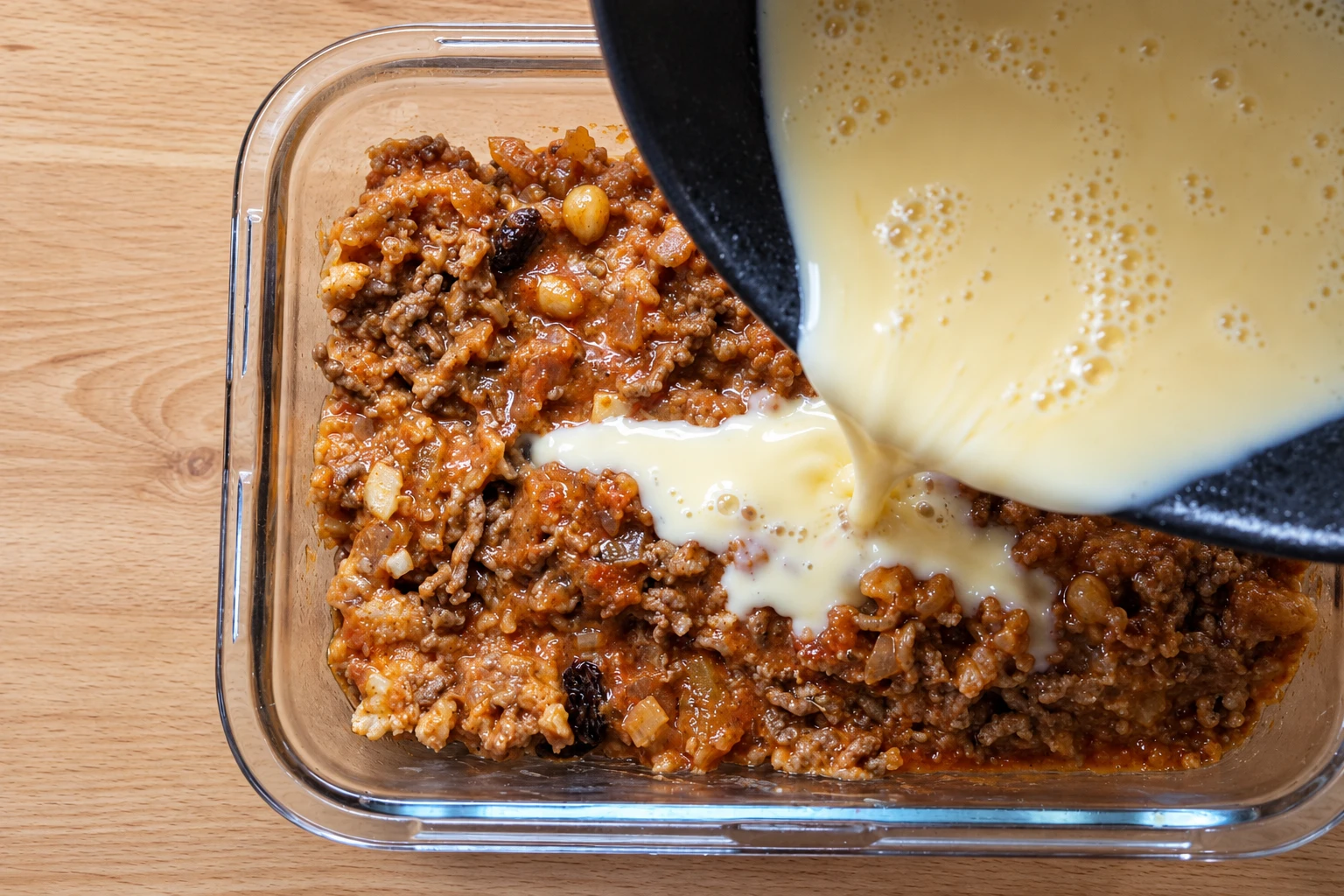
Bobotie is a baked dish of minced meat, usually beef or lamb, seasoned with curry powder, turmeric, cumin, coriander and clove, mixed with sautéed onion, bread soaked in milk, raisins and a little chutney or apricot jam. The mixture is placed in a baking dish, topped with milk beaten with eggs and bay leaves, and baked until the topping sets and browns.
It is a dish of Cape Malay cuisine, developed in Cape Town by the descendants of people enslaved and brought from Indonesia, India, Madagascar and other parts of Asia and Africa by the Dutch East India Company from the 17th century. Many were Muslim, and the name Malay stuck because Malay was the common language of many of them. By the late 18th century the community was already living in Bo-Kaap, the neighborhood of colorful houses on the slope of Signal Hill, where the tradition is maintained.
The origin of the dish and the name is debated. One hypothesis links bobotie to the Indonesian bobotok; another links it to the Malay word boemboe, the name for curry spices. The Dictionary of South African English records the dish in the Cape from at least 1870, in spellings such as babootie and bobotie. The recipe was taken inland by settlers who left the Cape in the 19th century, and today bobotie is made across the country; there are milder versions in Afrikaner households.
The result blends sweet, salty and tangy flavors, with aromatic seasoning and little heat. There are variations with fish, lamb and with vegetables instead of meat.


 Brazil
 Argentina
 Bolivia
 Chile
 Colombia
 Ecuador
 Guyana
 French Guiana
 Falkland Islands (Malvinas)
 Paraguay
 Peru
 Suriname
 Uruguay
 Venezuela
 Germany
 Austria
 Belgium
 Croatia
 Denmark
 Spain
 Finland
 France
 Greece
 the Netherlands
 Hungary
 Ireland
 Iceland
 Italy
 Luxembourg
 Norway
 Poland
 Portugal
 the United Kingdom
 the Czech Republic
 Sweden
 Switzerland
 Turkey
 the United States
 Mexico
 the Dominican Republic
 Australia
 Fiji
 New Zealand