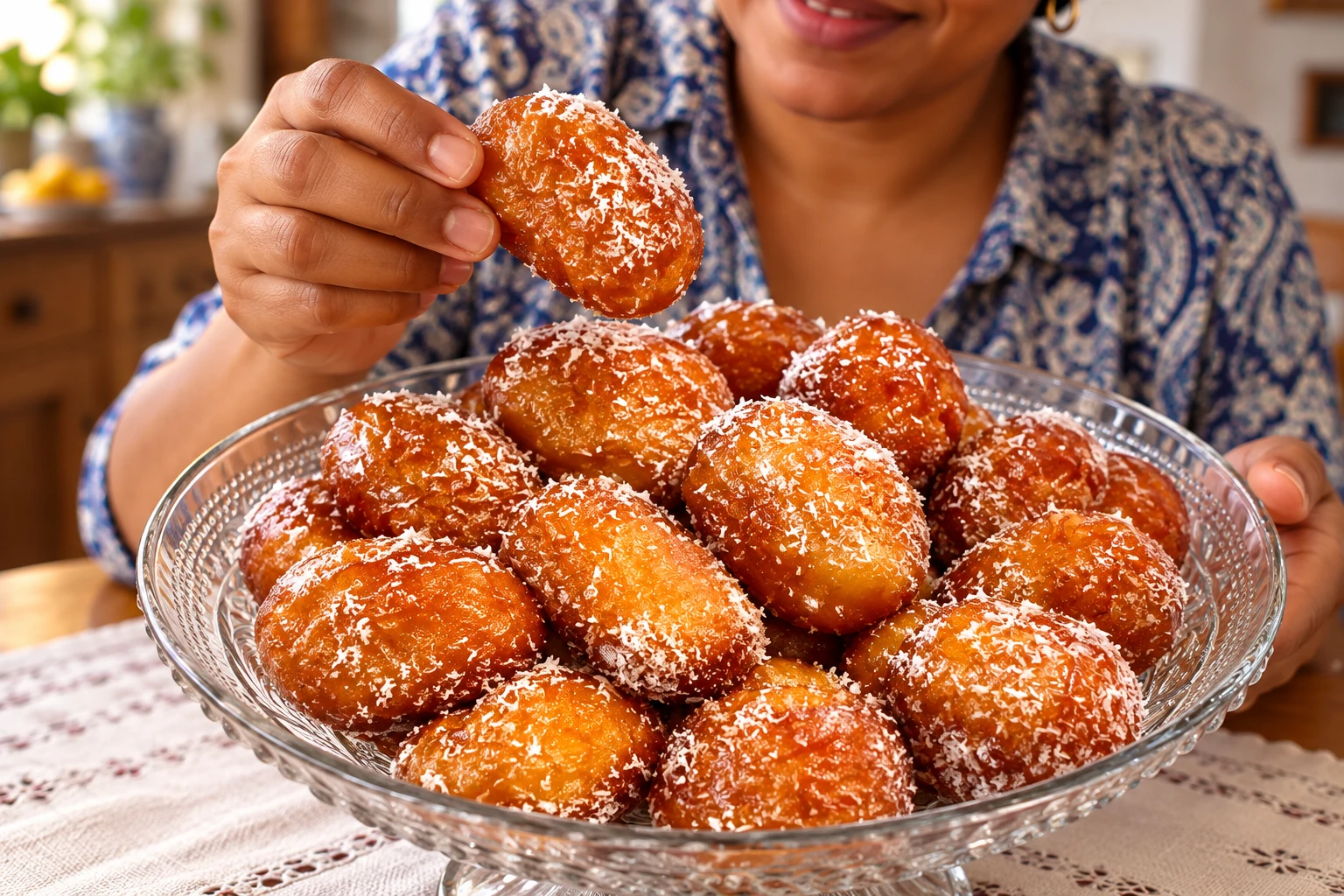
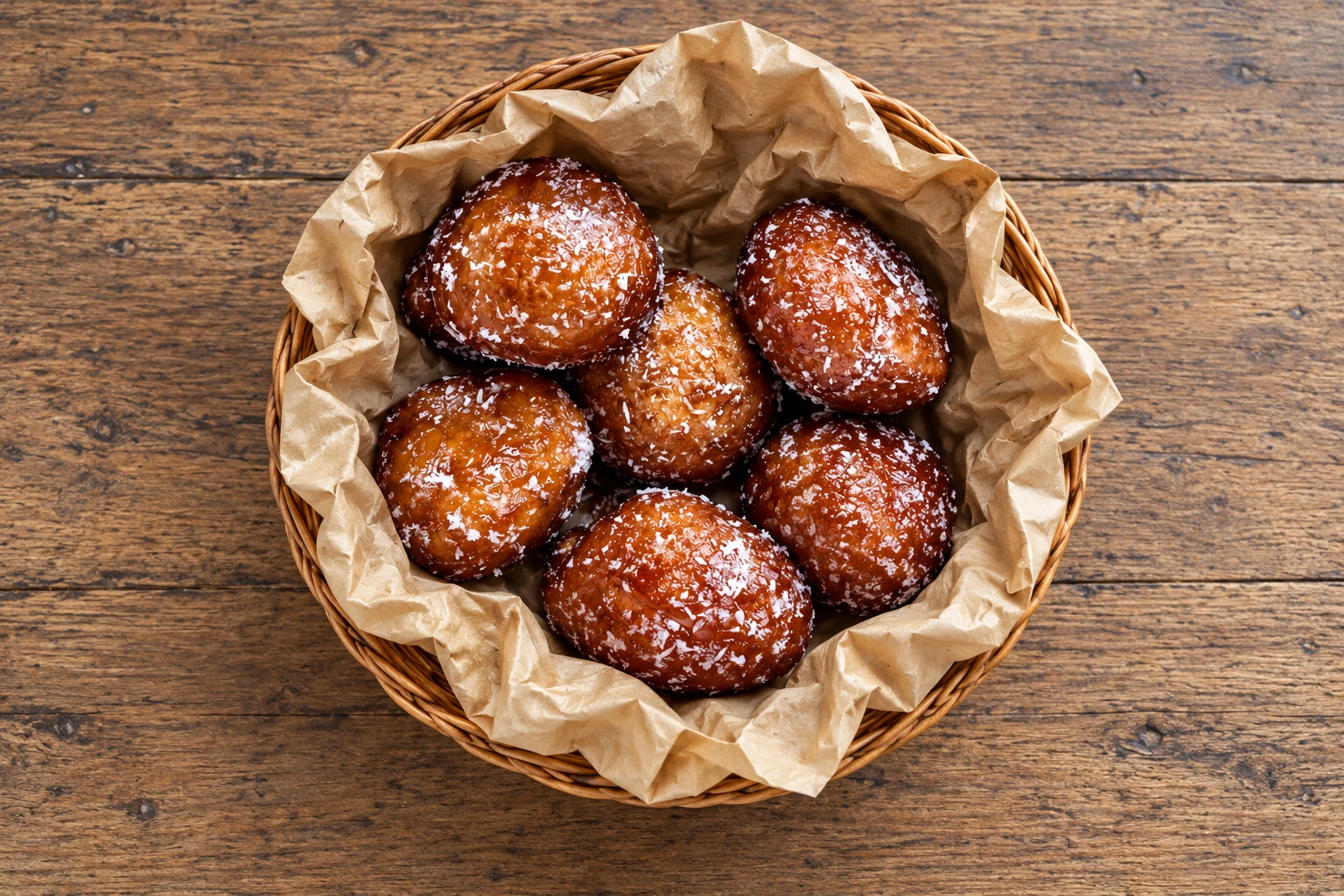
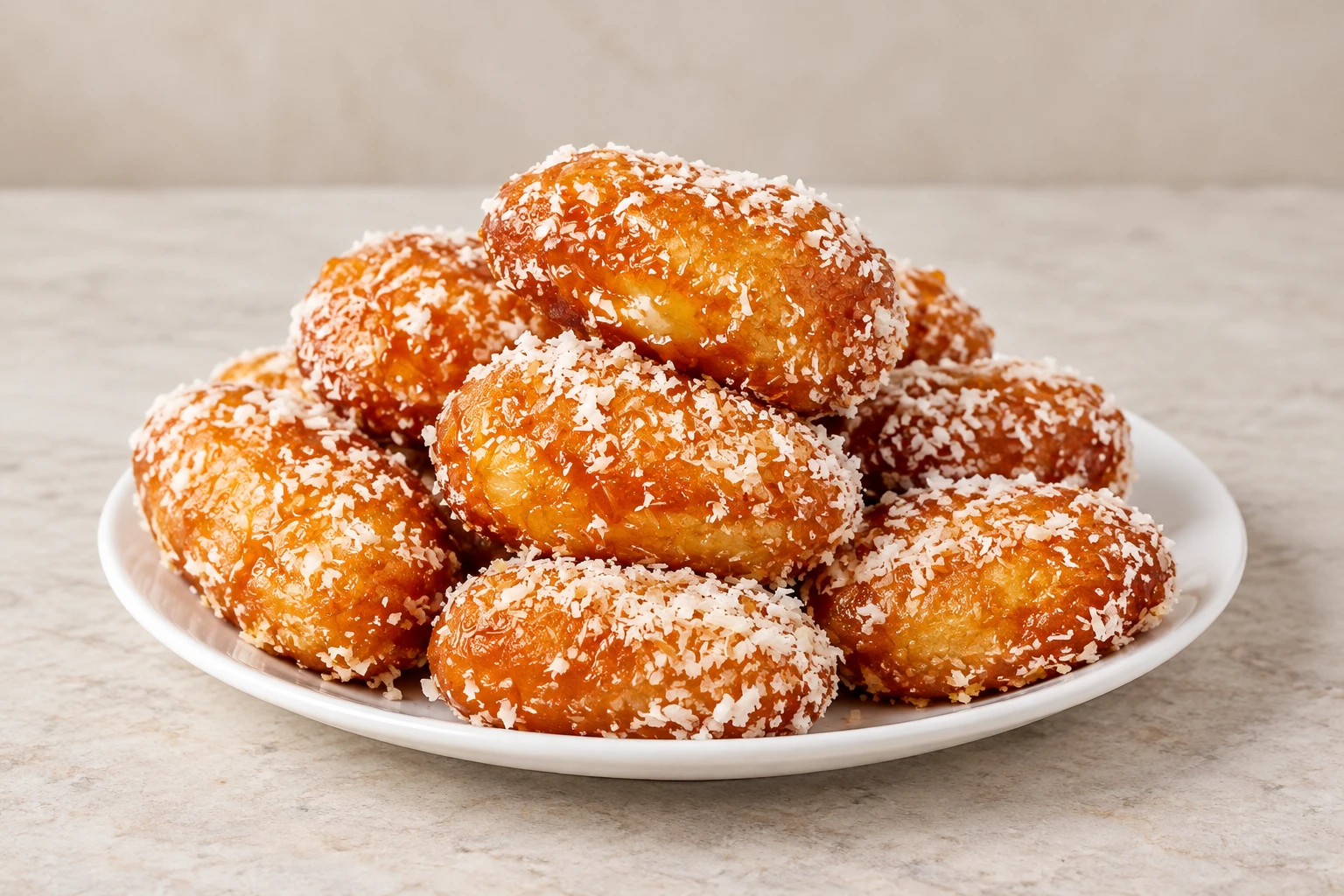
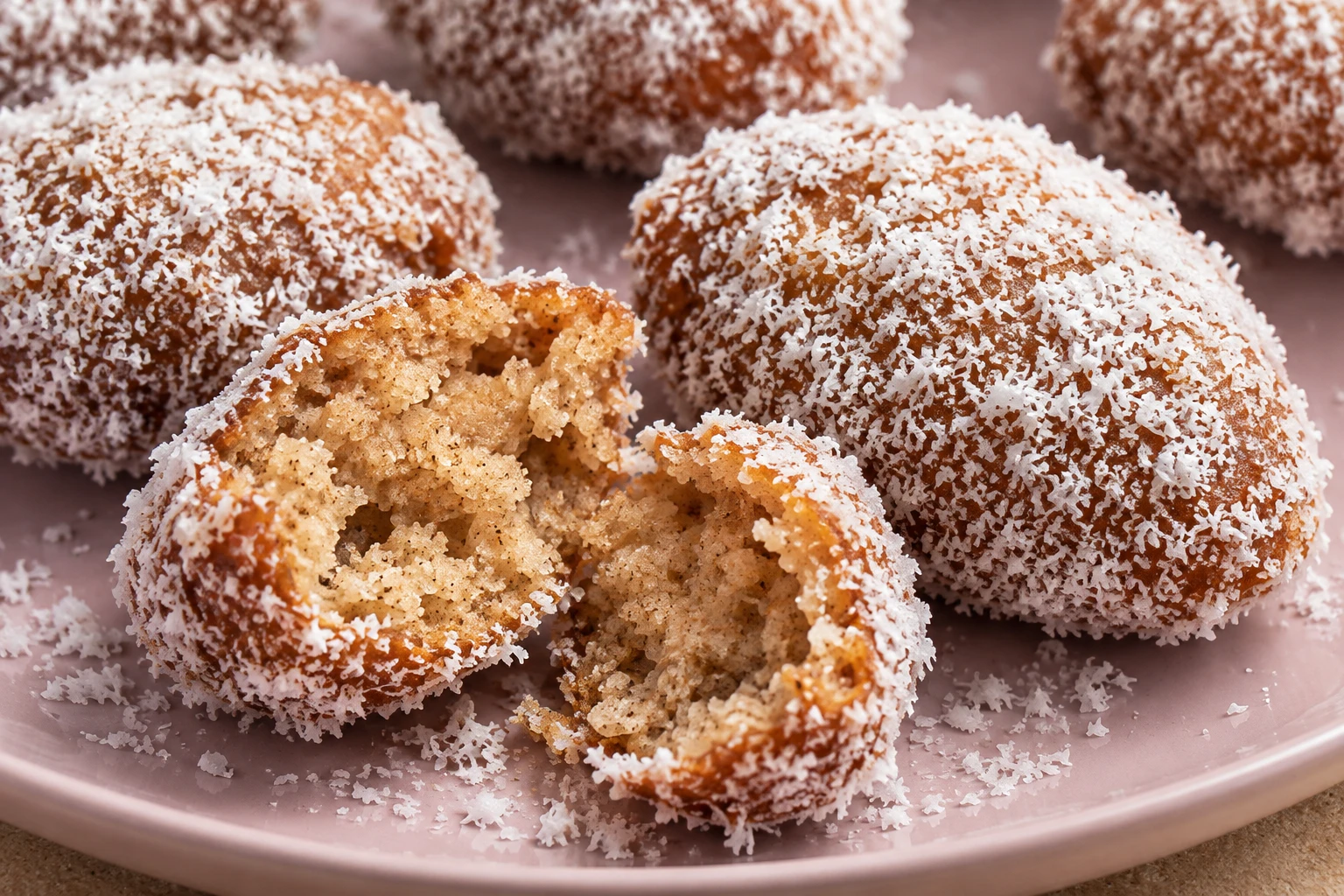
Koe'sister is an oval wheat-flour dumpling, fried, with a soft and slightly elastic texture similar to cake. The dough includes spices: cinnamon, cardamom, dried ginger, fennel and, in family recipes, dried ground tangerine peel. After frying, the dumpling is dipped in hot sugar syrup and rolled in grated coconut.
It is a sweet from the Cape Malay, or Cape Muslim, cuisine, created in Cape Town by descendants of people enslaved and brought from Asia and Africa by the Dutch East India Company. It should not be confused with the koeksister of Afrikaner tradition, a braided crisp pastry soaked in cold syrup and very sweet.
Koe'sister is the Sunday breakfast. In many families, women prepare the dough on Saturday, fry early on Sunday, and children deliver orders to neighbors so the household can eat the dumplings with tea or coffee first thing in the morning. Selling homemade koe'sisters helped many families supplement their income. In Bo-Kaap and other neighborhoods, people sell the dumplings at their doorsteps and in small shops.
The origin of the name is unknown. The book Bo-Kaap Kitchen, with recipes from the neighborhood cooks, records the explanation that the word might recall the low conversation of the girls who gathered to cook, but this is oral tradition. Since 2019, Cape Town celebrates World Koe'sister Day on the first Sunday of September.


 Brazil
 Argentina
 Bolivia
 Chile
 Colombia
 Ecuador
 Guyana
 French Guiana
 Falkland Islands (Malvinas)
 Paraguay
 Peru
 Suriname
 Uruguay
 Venezuela
 Germany
 Austria
 Belgium
 Croatia
 Denmark
 Spain
 Finland
 France
 Greece
 the Netherlands
 Hungary
 Ireland
 Iceland
 Italy
 Luxembourg
 Norway
 Poland
 Portugal
 the United Kingdom
 the Czech Republic
 Sweden
 Switzerland
 Turkey
 the United States
 Mexico
 the Dominican Republic
 Australia
 Fiji
 New Zealand