
Dish · Cabo Oriental
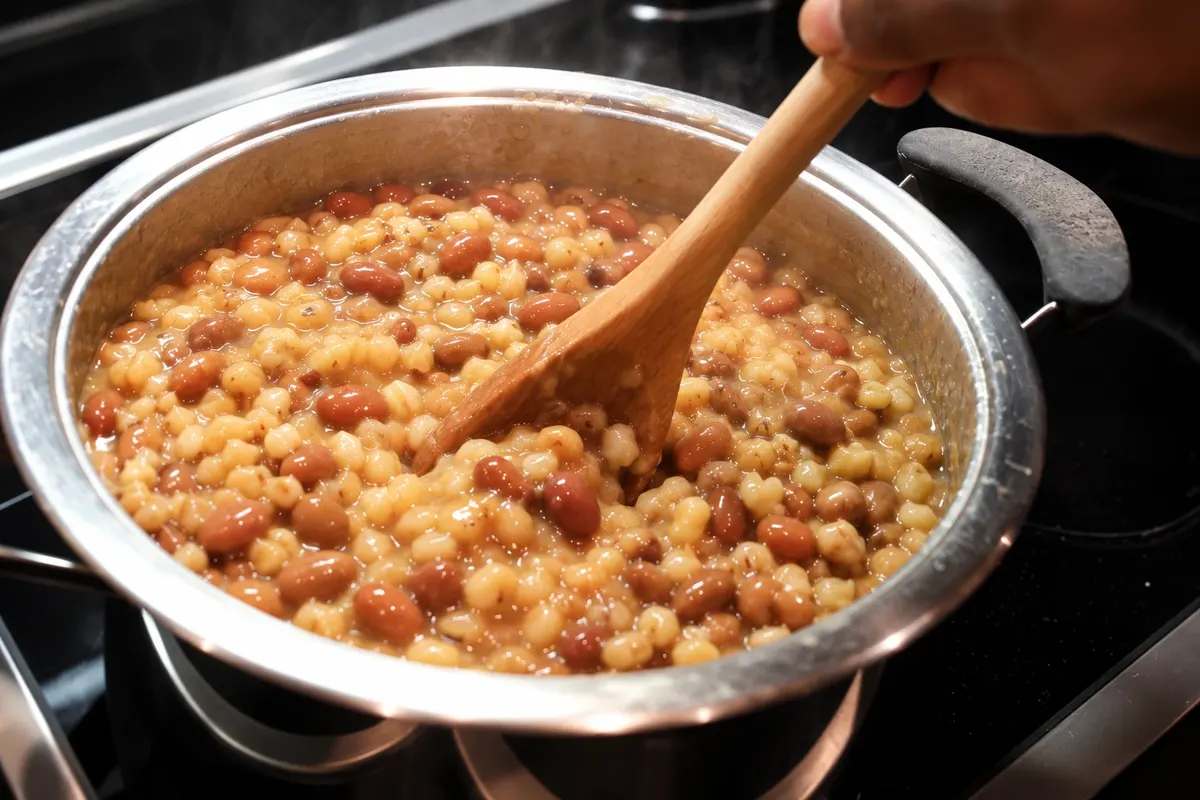
Umngqusho
Cracked white maize (samp) slow-cooked with beans until creamy, seasoned with onion and butter or fat. It is the everyday dish of the Xhosa of the Eastern Cape and was Nelson Mandela's favorite.

 Search
 Brazil
 Argentina
 Bolivia
 Chile
 Colombia
 Ecuador
 Guyana
 French Guiana
 Falkland Islands (Malvinas)
 Paraguay
 Peru
 Suriname
 Uruguay
 Venezuela
 Germany
 Austria
 Belgium
 Croatia
 Denmark
 Spain
 Finland
 France
 Greece
 the Netherlands
 Hungary
 Ireland
 Iceland
 Italy
 Luxembourg
 Norway
 Poland
 Portugal
 the United Kingdom
 the Czech Republic
 Sweden
 Switzerland
 Turkey
 the United States
 Mexico
 the Dominican RepublicTurkeySouth Africa
 Australia
 Fiji
 New Zealand
Flavors · Cabo Ocidental
Stew of mutton or lamb with waterblommetjie flowers, an aquatic plant native to the Western Cape, onion, potato and sorrel. It is a winter dish, made in the short season when the flowers are harvested from the province's lakes and marshes.
Traditional dish from Cabo Ocidental
Also known as: waterblommetjie bredie, wateruintjiebredie, wateruintjie bredie
Illustrative images. The pictures in this guide are illustrations based on the real place, not photographs, and may differ from it.

Click a photo to enlarge it.

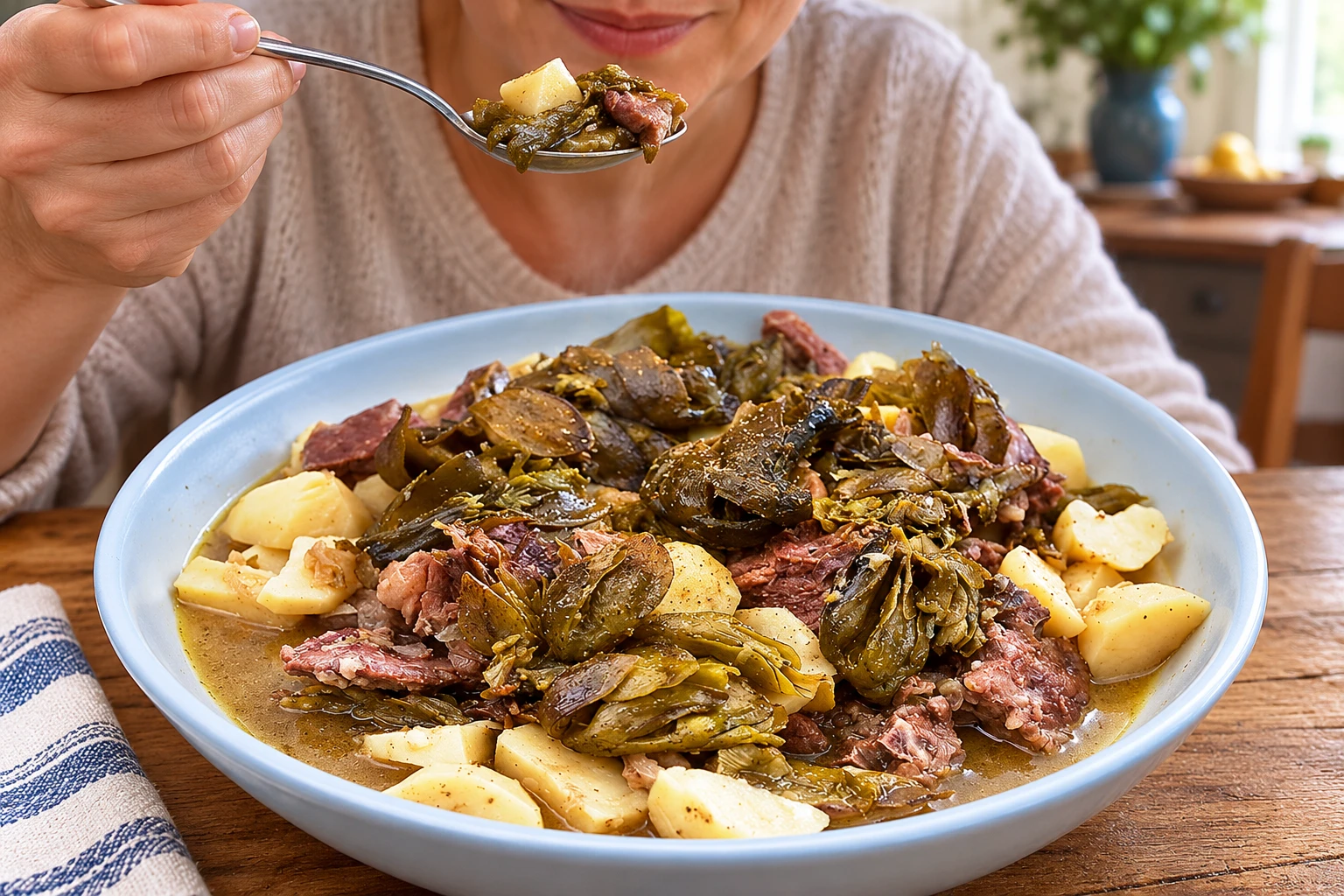
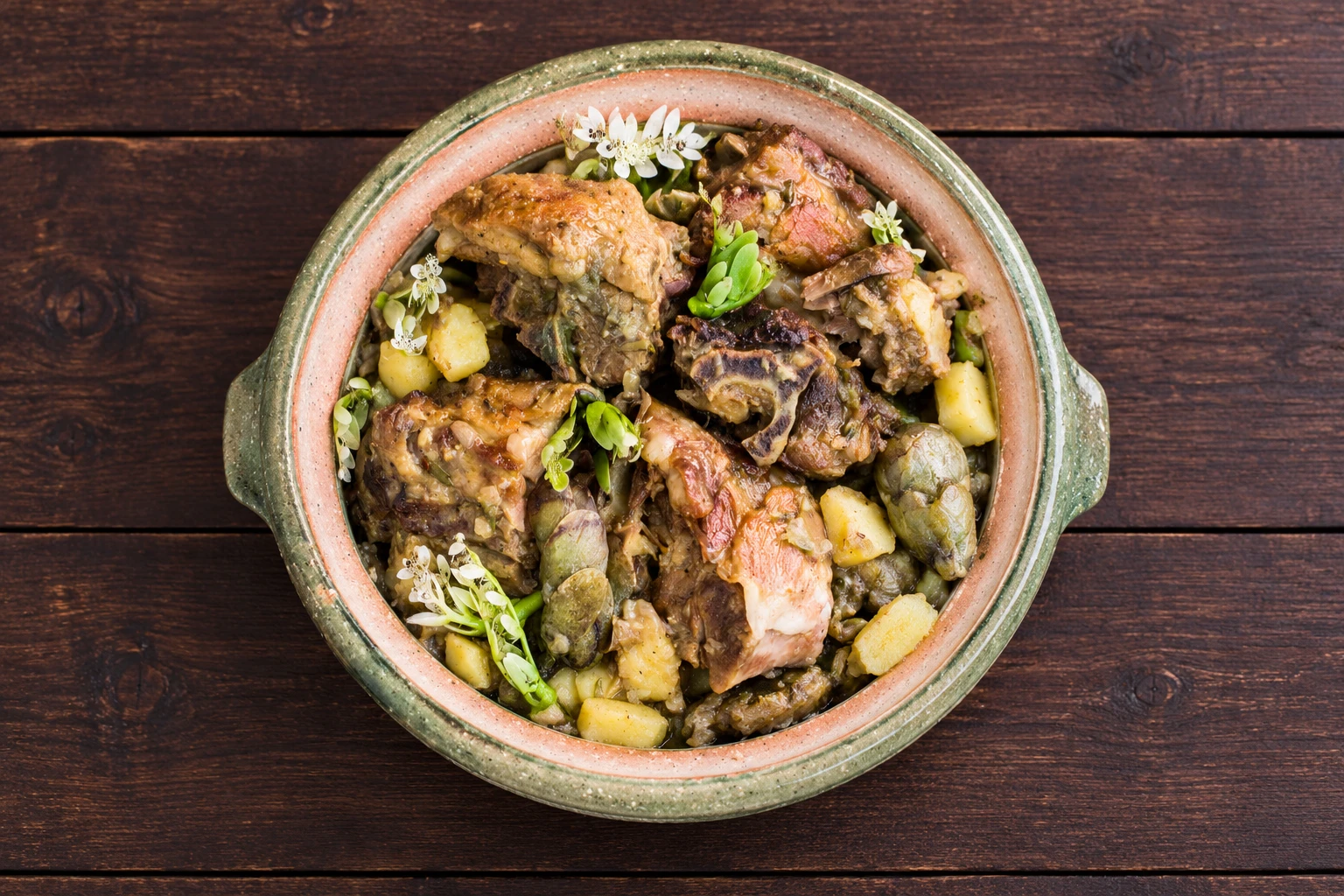
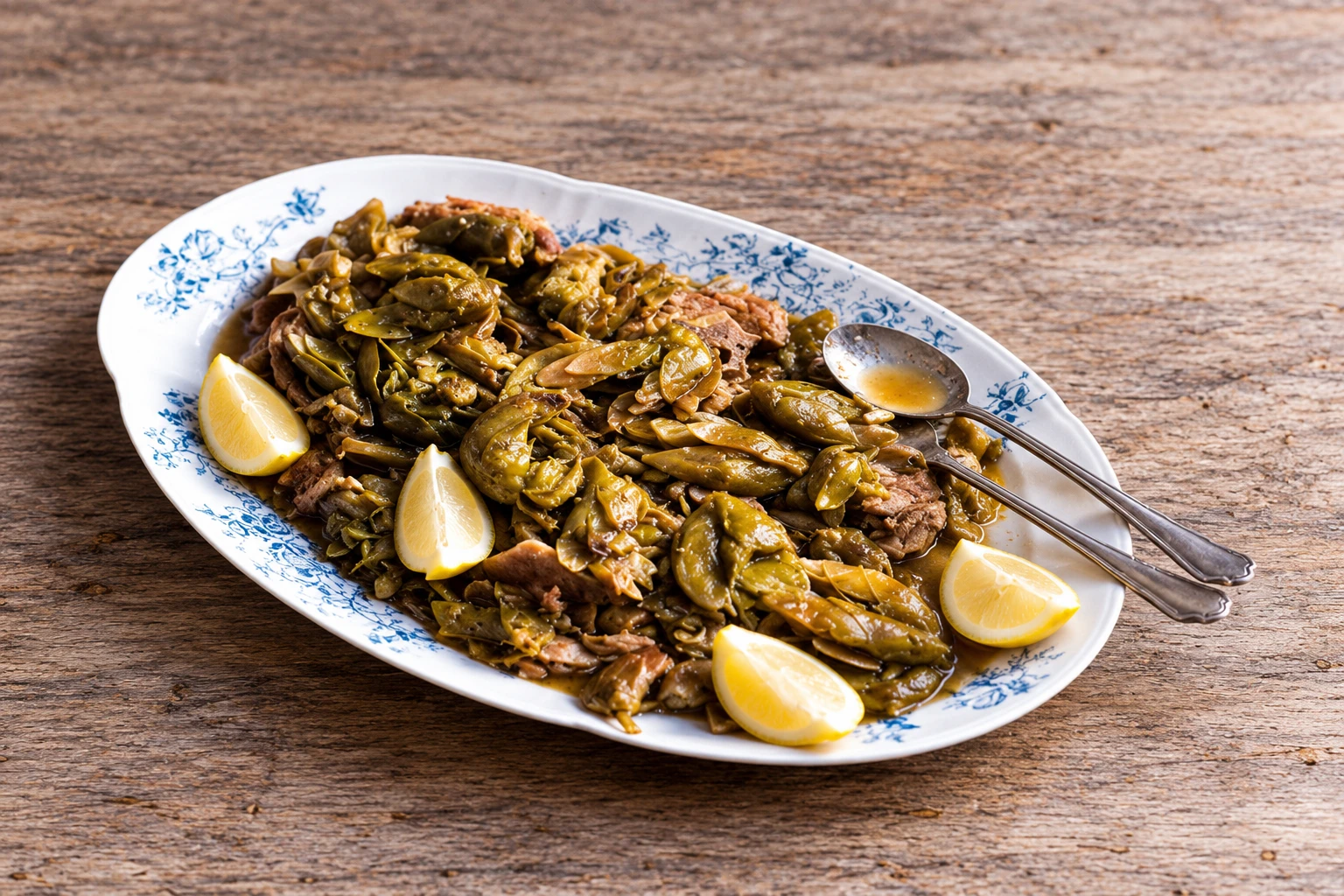
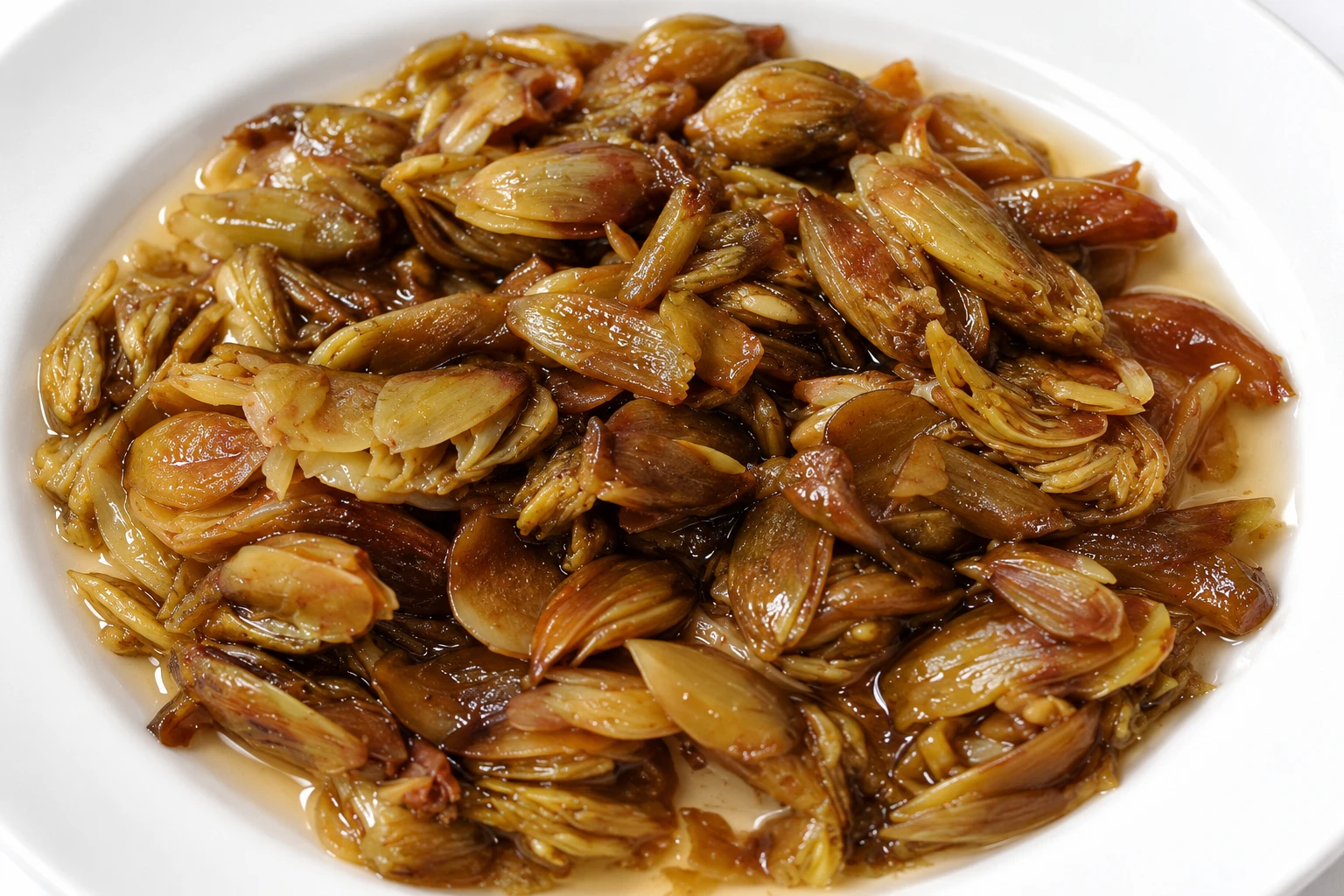
Waterblommetjiebredie — Cabo Ocidental, South Africa
Bredie is the Afrikaans word for stew, and waterblommetjie means little water flower. Waterblommetjiebredie is a stew of mutton or lamb, slowly cooked with onion, potato and the flowers and buds of Aponogeton distachyos, an aquatic plant native to the Cape. The flowers serve the role of a green vegetable.
To add acidity, the traditional recipe uses suring, the region's wild sorrel; many households use lemon, vinegar or white wine.
The plant grows in shallow lakes and marshes that fill with the Western Cape's winter rains and dry out in summer. The fragrant white flowers appear in winter and spring, and can only be harvested while the plant is in bloom, generally from June to mid-October depending on the year. That's why the dish is seasonal: fresh flowers appear at the province's fairs and markets in winter, and out of season preserved or frozen flowers are used.
The recipe appears in Cape cookbooks from the mid-20th century. In the Boland area around Paarl, wineries and restaurants put the dish on their menus in August, and there is an annual waterblommetjie festival in early September.
The flavour of the flowers is mild and is often compared to green bean or asparagus, with a slight tang. The stew is served with rice, usually in a deep dish, with the cooking broth.
Mutton or lamb, waterblommetjie flowers and buds (Aponogeton distachyos), onion, potato and suring (wild sorrel) or another acid such as lemon, vinegar or white wine; salt and pepper.
Hot, in a deep dish, with white rice and the stew broth. It is a main course for winter lunch or dinner.
Winter and spring, generally from June to mid-October, during the fresh-flower season.
Your questions
It is Aponogeton distachyos, an aquatic plant native to the Cape, which grows in shallow lakes and marshes filled by the winter rains. The flowers and buds are edible.
In winter and spring, generally from June to mid-October, when fresh flowers are harvested. Out of season, preserved or frozen flowers are available.
A mild mutton stew, with the flowers acting as the green vegetable and a tangy note from the sorrel or lemon.
Flavors of South Africa
Cracked white maize (samp) slow-cooked with beans until creamy, seasoned with onion and butter or fat. It is the everyday dish of the Xhosa of the Eastern Cape and was Nelson Mandela's favorite.
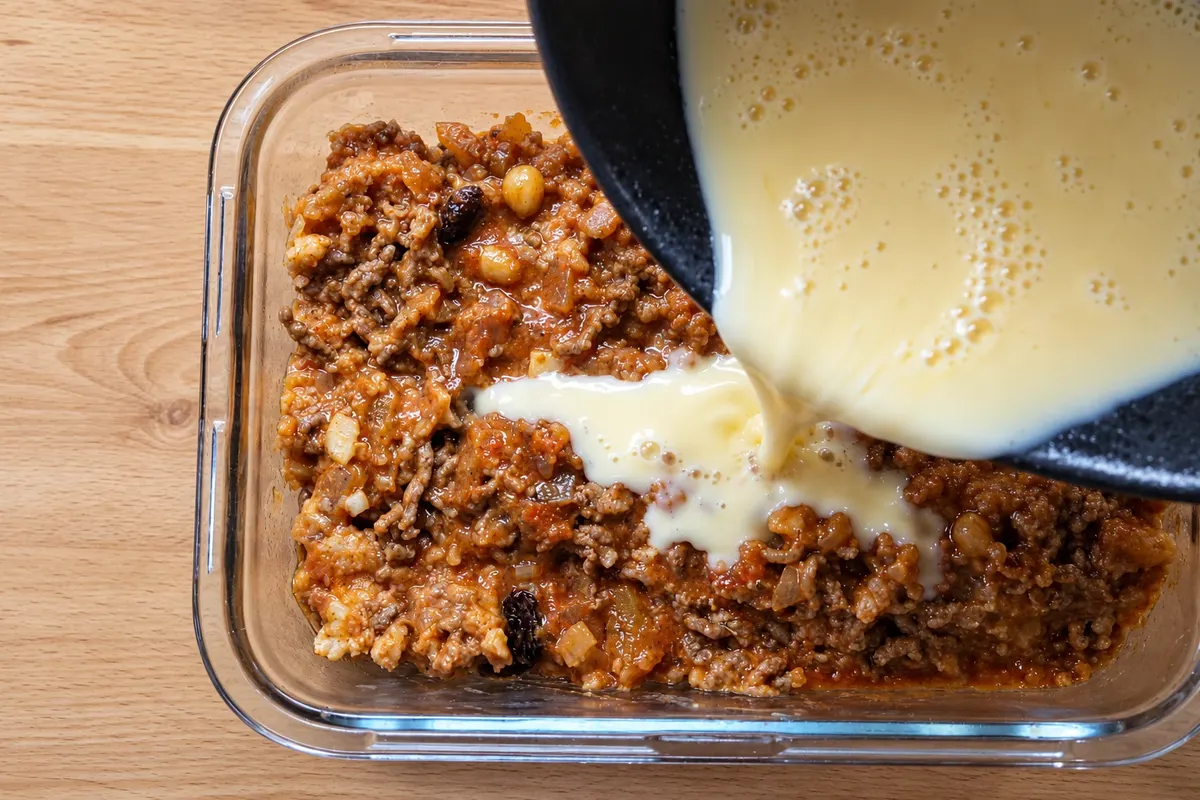
Minced meat seasoned with curry and spices, mixed with bread soaked in milk and dried fruit and baked under a milk-and-egg topping. It is a well-known dish of Cape Malay cuisine from Cape Town, served with yellow rice and chutney.

A long roll filled with fries, meat, fish, or chicken, salad and sauce, cut into pieces for sharing. It originated in a fried-fish shop in Athlone, in the Cape Flats, and is Cape Town’s sandwich.
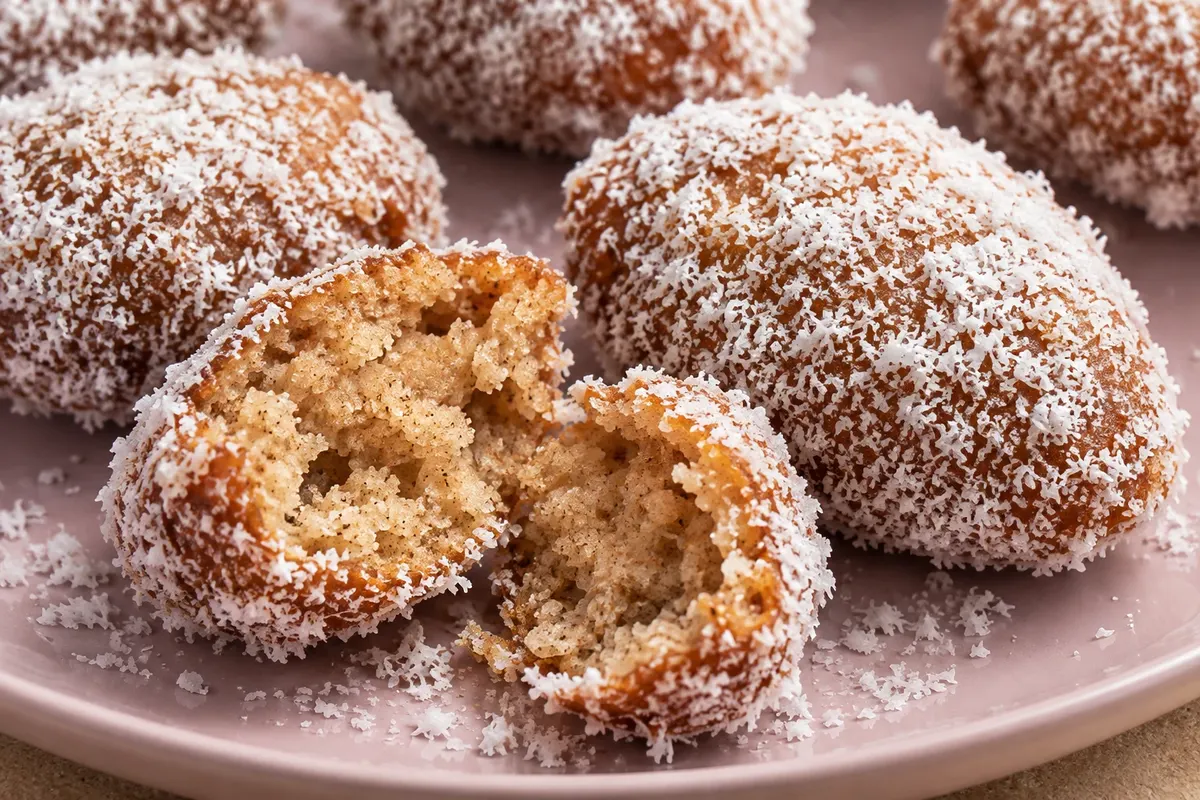
Fried dumpling with a soft dough, seasoned with cinnamon, cardamom, ginger, fennel and tangerine peel, dipped in hot syrup and coated in coconut. It is the Sunday breakfast of Cape Malay families in Cape Town.
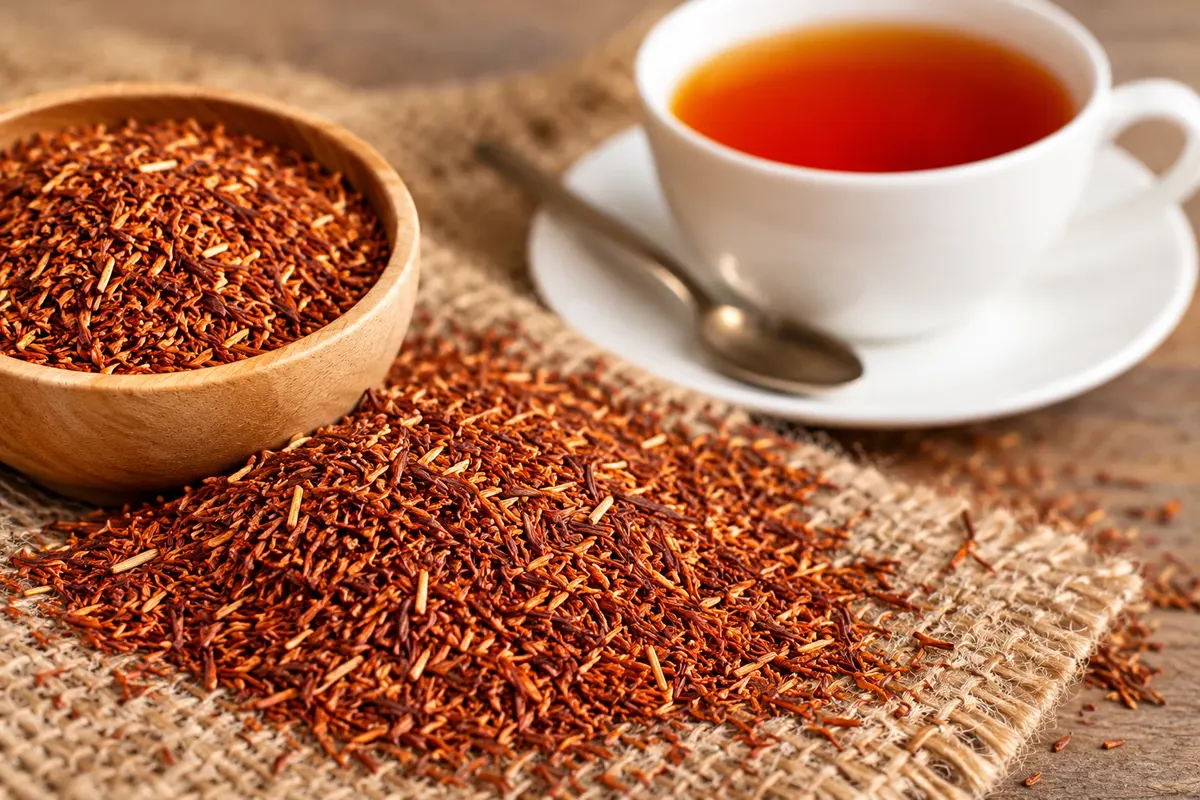
A hot amber-colored beverage made from the oxidized leaves of a shrub that only grows in the Cederberg mountains and surrounding areas. Clanwilliam, at the foot of the range, is the center of cultivation and processing, and the name rooibos has a protected geographical indication.
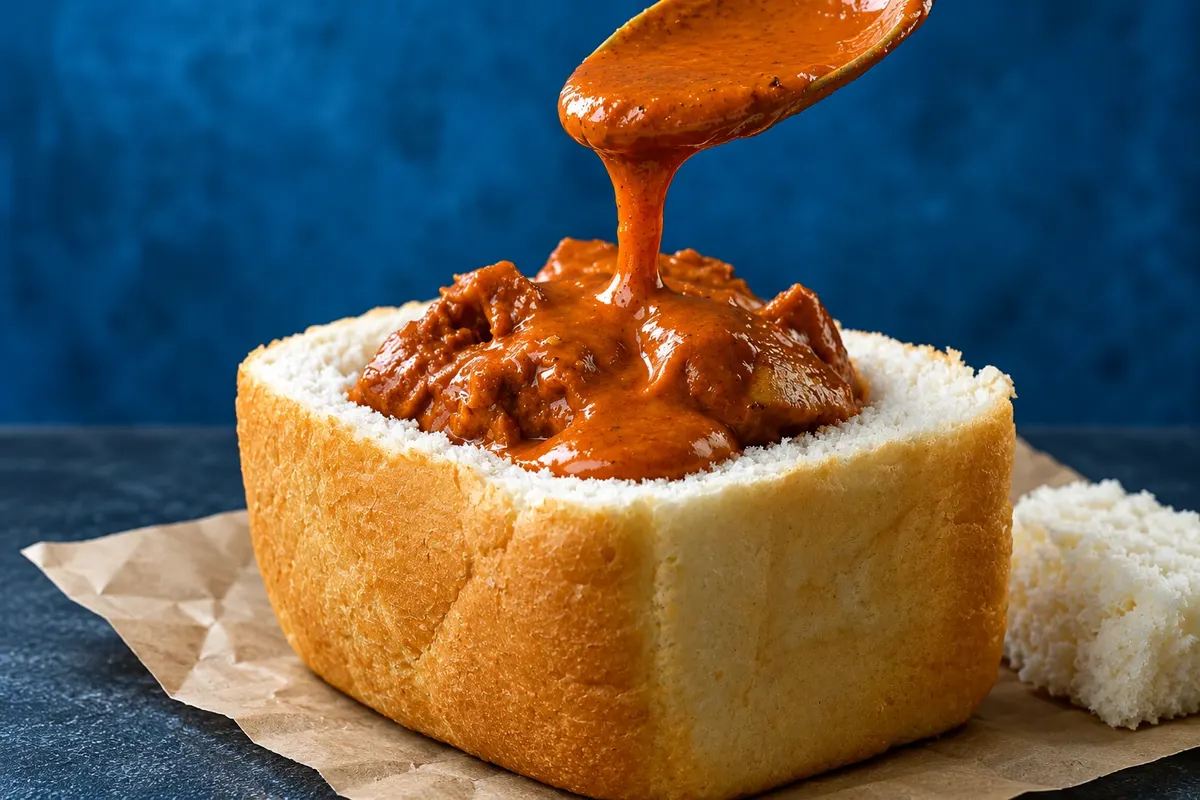
Curry served inside a sliced loaf of white bread cut into a quarter or half and hollowed out, with the removed crumb placed on top. Created by Durban’s community of Indian origin, it’s the dish the city uses to introduce itself.

A quarter loaf of sliced white bread hollowed out and layered with fillings: fries, sausages, mortadella, a burger, cheese, achar and sauces. It’s the street food of Johannesburg’s townships, like Soweto, and of the whole Gauteng province.
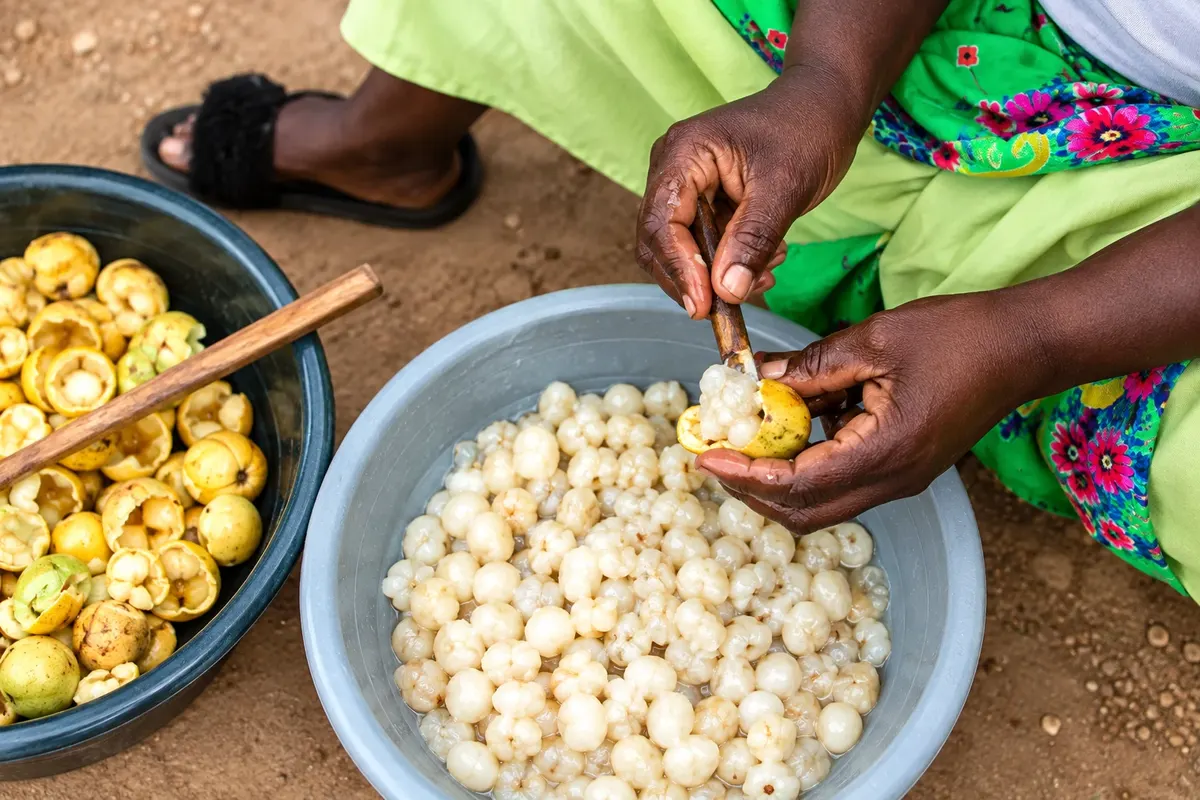
Homemade fermented drink made from the juice of marula fruits, from January to March. In Limpopo, the season opens with the festival of the first fruits, and Phalaborwa hosts the annual marula festival where the drink made by local cooperatives is served.
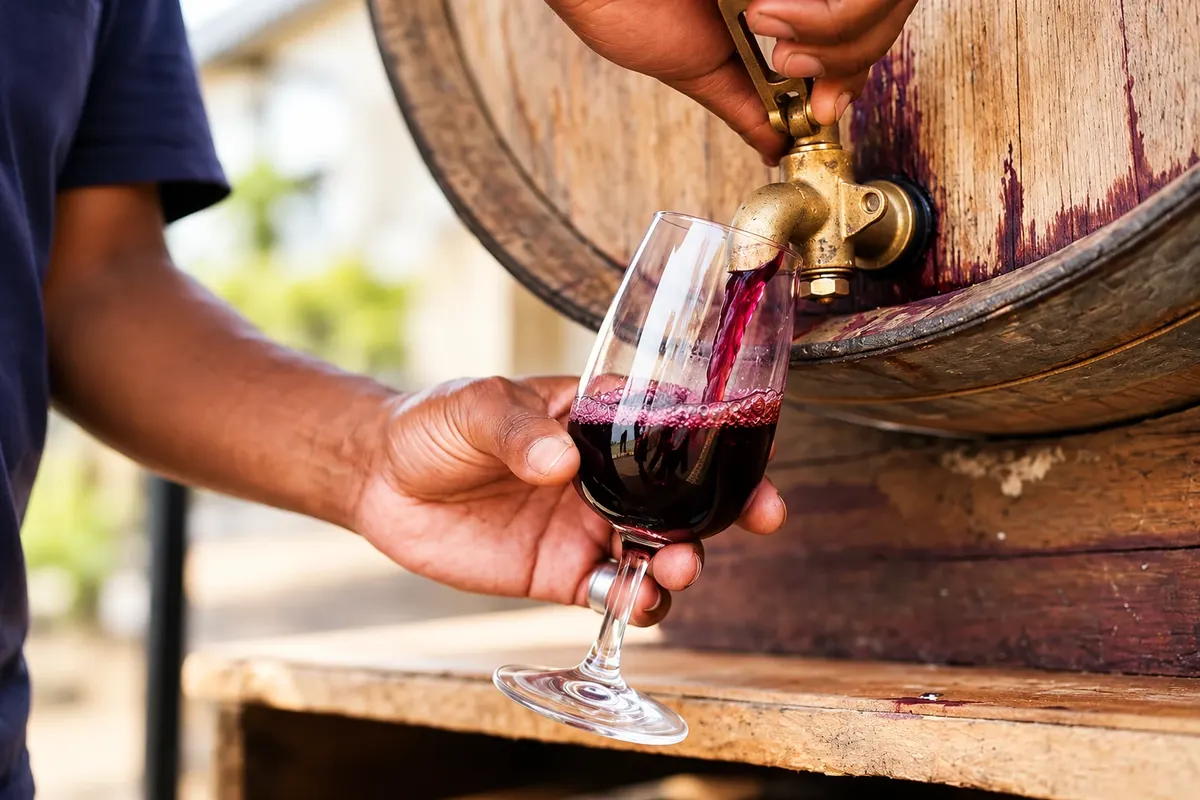
Pinotage red wine, a grape variety created in Stellenbosch, South Africa, from crossing Pinot Noir with Cinsaut (which in the Cape was called Hermitage). It has a dark color, aromas of red and dark fruits, and soft tannins.