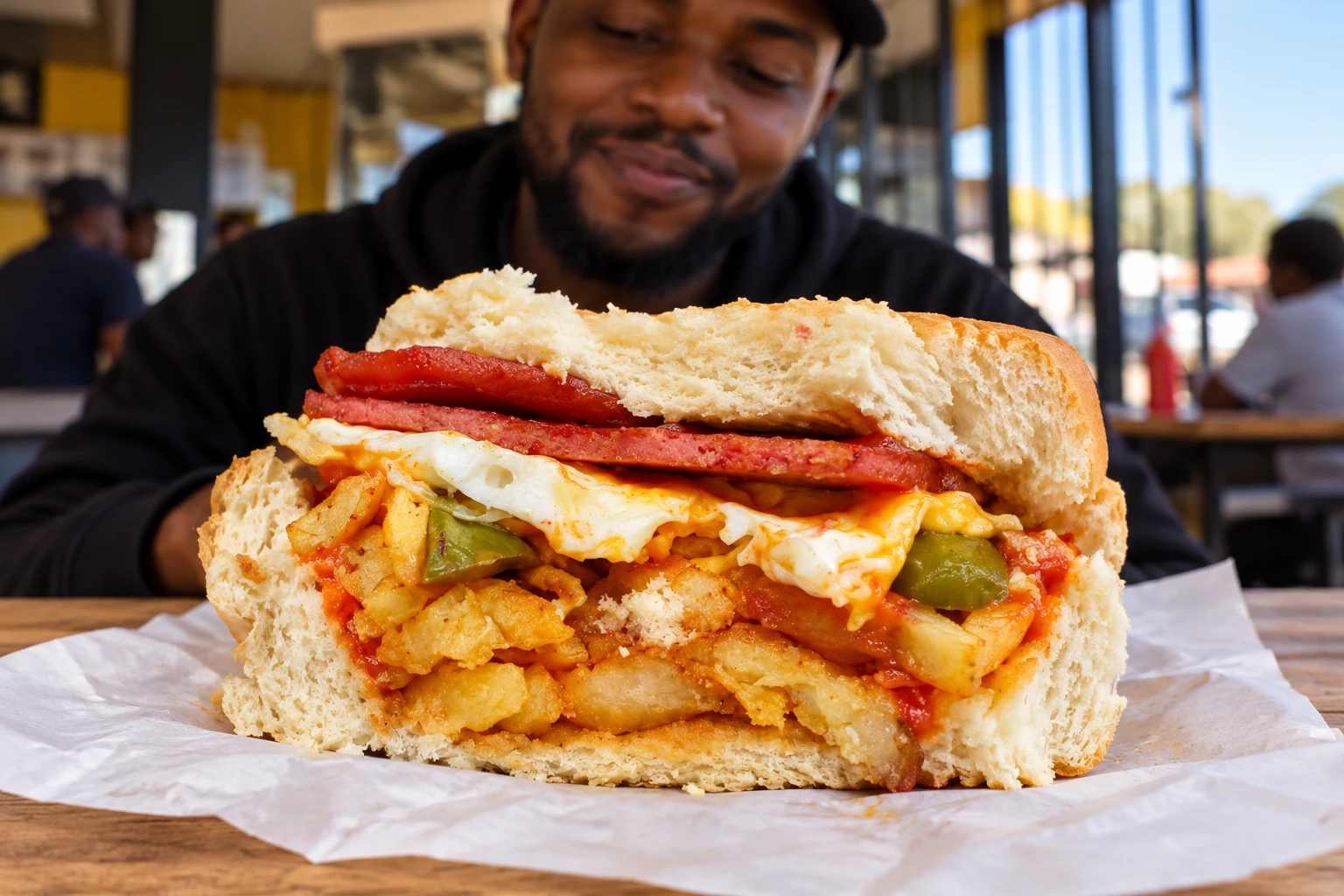
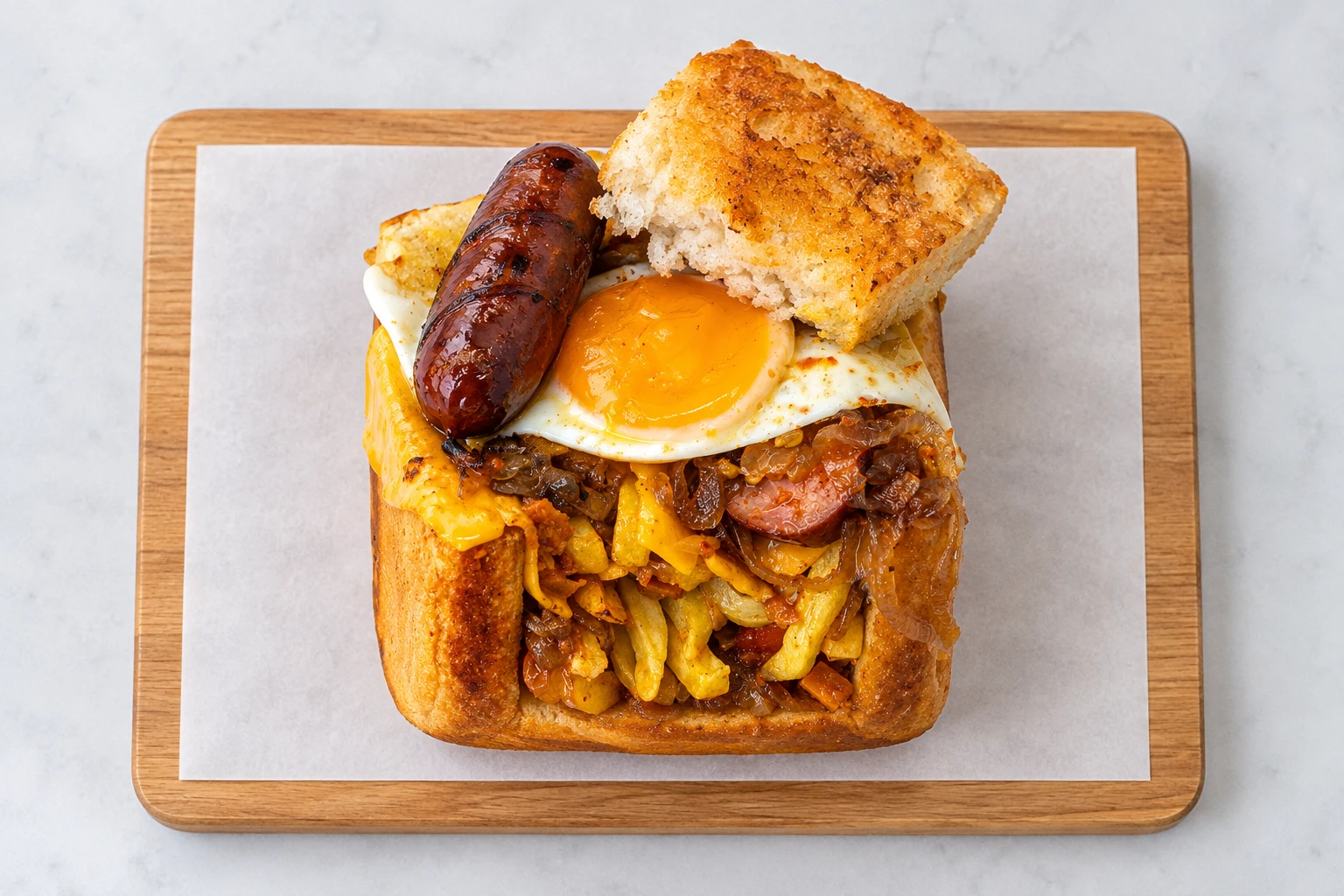
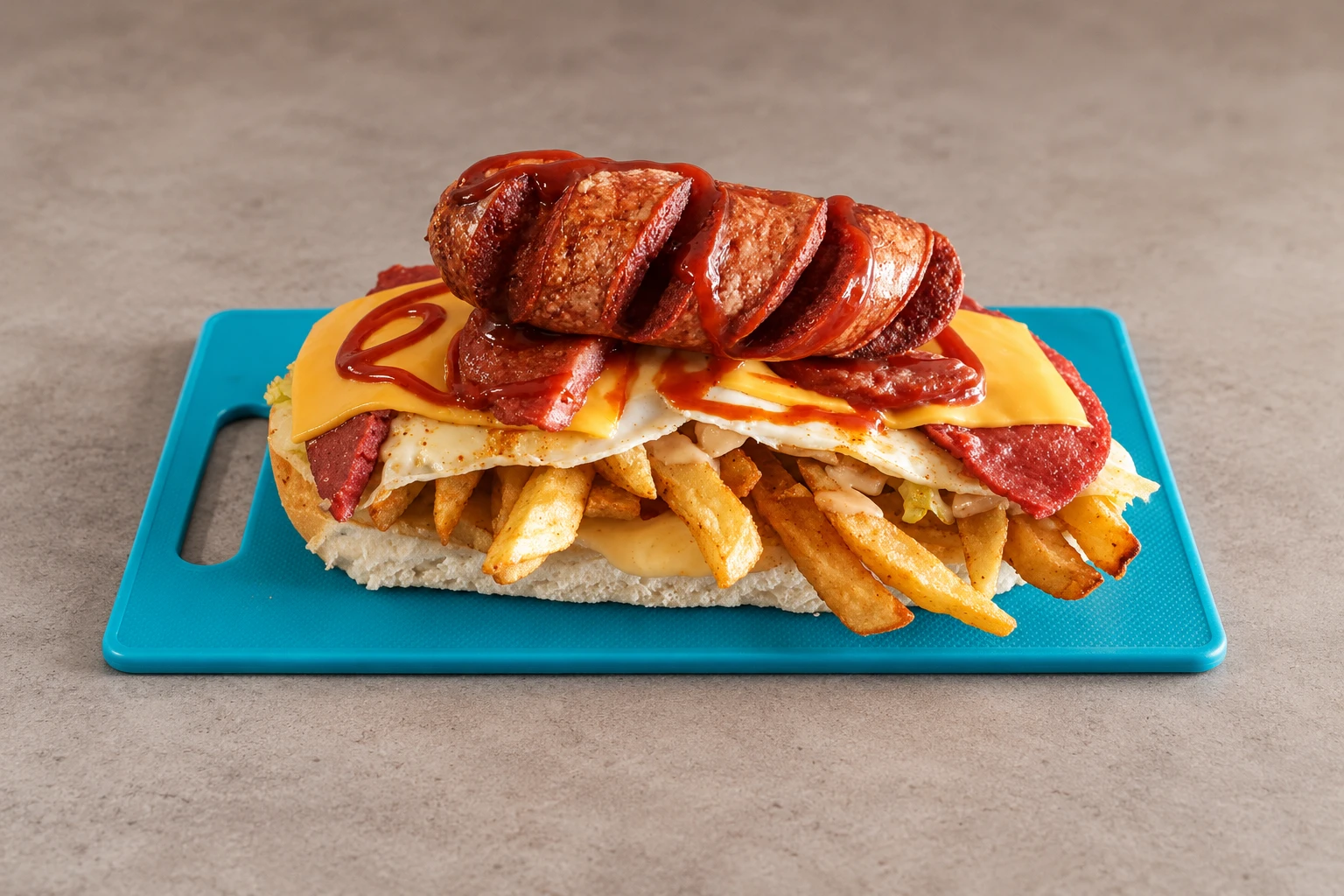
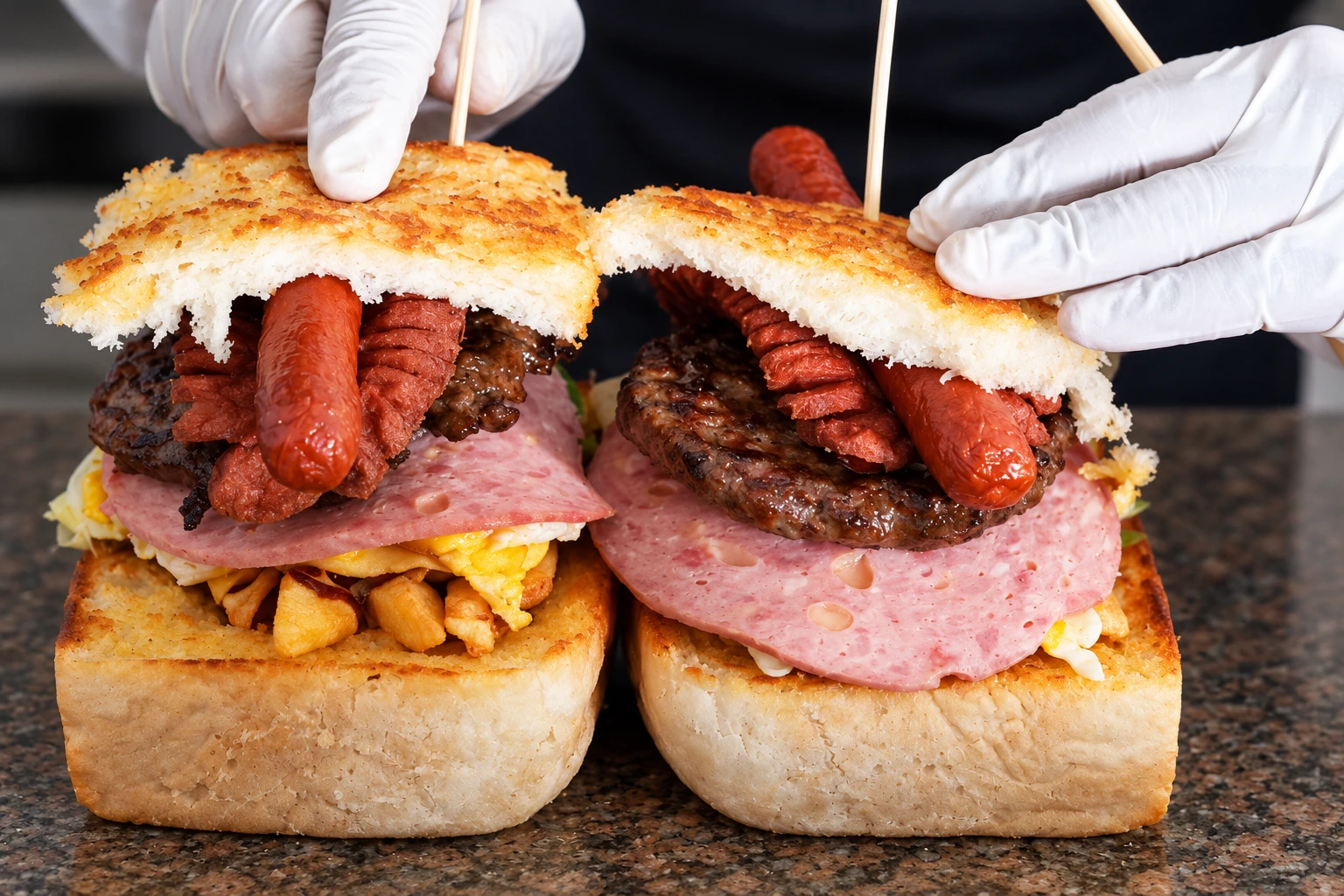
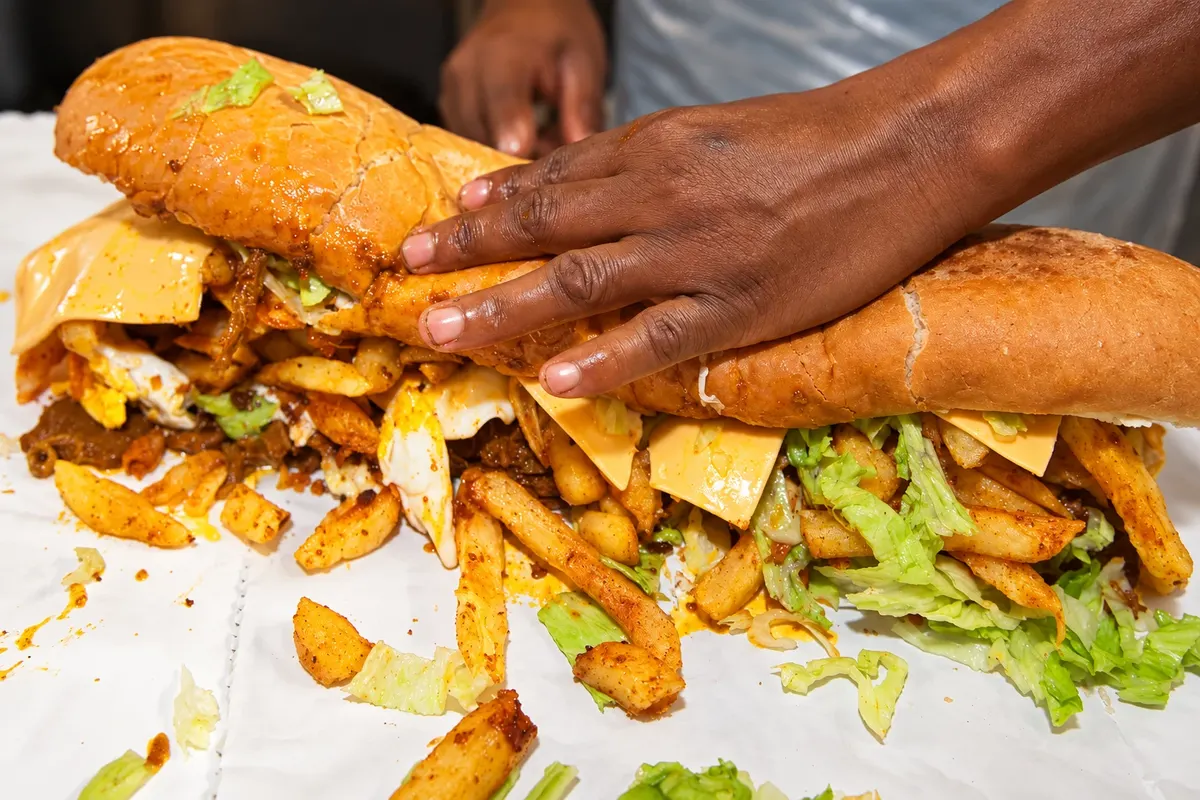
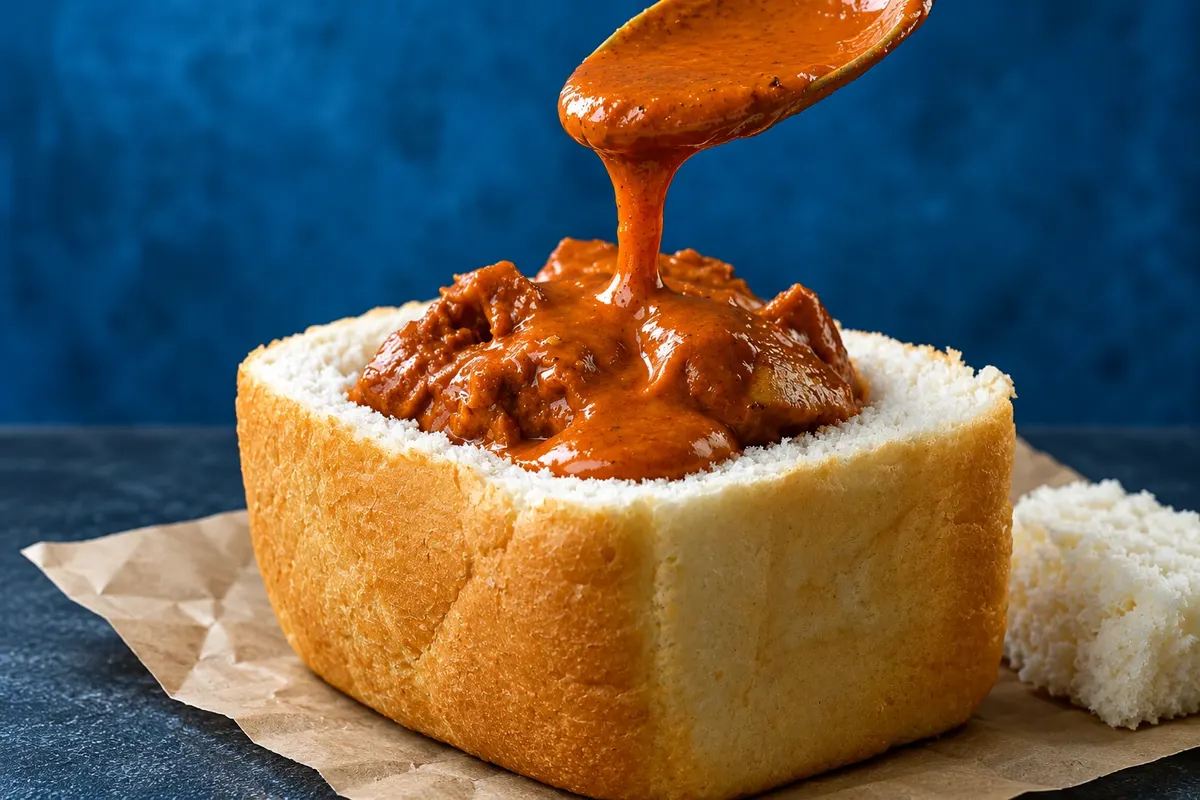
Kota comes from quarter, the English word for a quarter: the base is a quarter of a white loaf of sliced bread, hollowed out. Inside go layers of filling. The classic version has slap chips, the thick fries, mortadella (polony), thick sausages called russians or vienas, sometimes a burger, cheese, achar, the spicy Indian-origin pickle, and tomato, barbecue or sweet chili sauces. In parts of Soweto, the kota may include ground beef with mashed potato.
It’s the street food of the townships, the neighborhoods created for the Black population during segregation, and it is sold in small neighborhood shops, spaza shops, and in eateries, usually in a clear plastic bag. Cheap and filling, it became part of Soweto life, the large township southwest of central Johannesburg. Gauteng’s tourism body presents it as Johannesburg’s answer to Cape Town’s gatsby, and Soweto holds an annual kota festival.
The origin is not documented. The organizer of the Soweto festival says the kota began in Orlando East, in Soweto, around 1959, under the name township sandwich or township burger, as an inexpensive way to make a burger. Others see a relationship with Durban’s bunny chow, also served in hollowed bread. According to a Johannesburg chef, the first kotas used cheap cuts of meat, and today’s version spread through the townships from the 1990s onward.
You eat it with your hands, holding the bread, which softens and warms from the chips and fried items. In some places the kota is also called spatlo.


 Brazil
 Argentina
 Bolivia
 Chile
 Colombia
 Ecuador
 Guyana
 French Guiana
 Falkland Islands (Malvinas)
 Paraguay
 Peru
 Suriname
 Uruguay
 Venezuela
 Germany
 Austria
 Belgium
 Croatia
 Denmark
 Spain
 Finland
 France
 Greece
 the Netherlands
 Hungary
 Ireland
 Iceland
 Italy
 Luxembourg
 Norway
 Poland
 Portugal
 the United Kingdom
 the Czech Republic
 Sweden
 Switzerland
 Turkey
 the United States
 Mexico
 the Dominican Republic
 Australia
 Fiji
 New Zealand