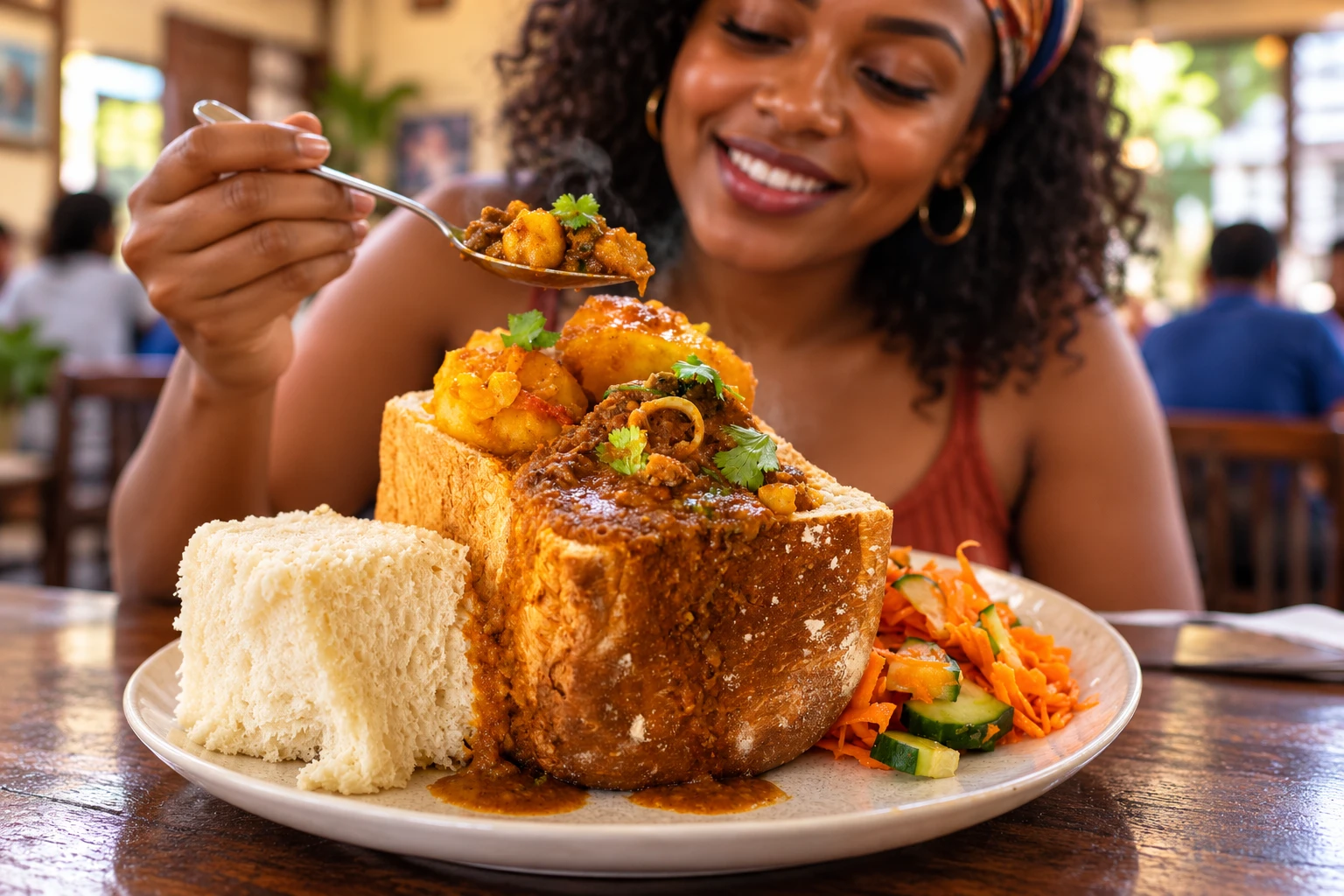
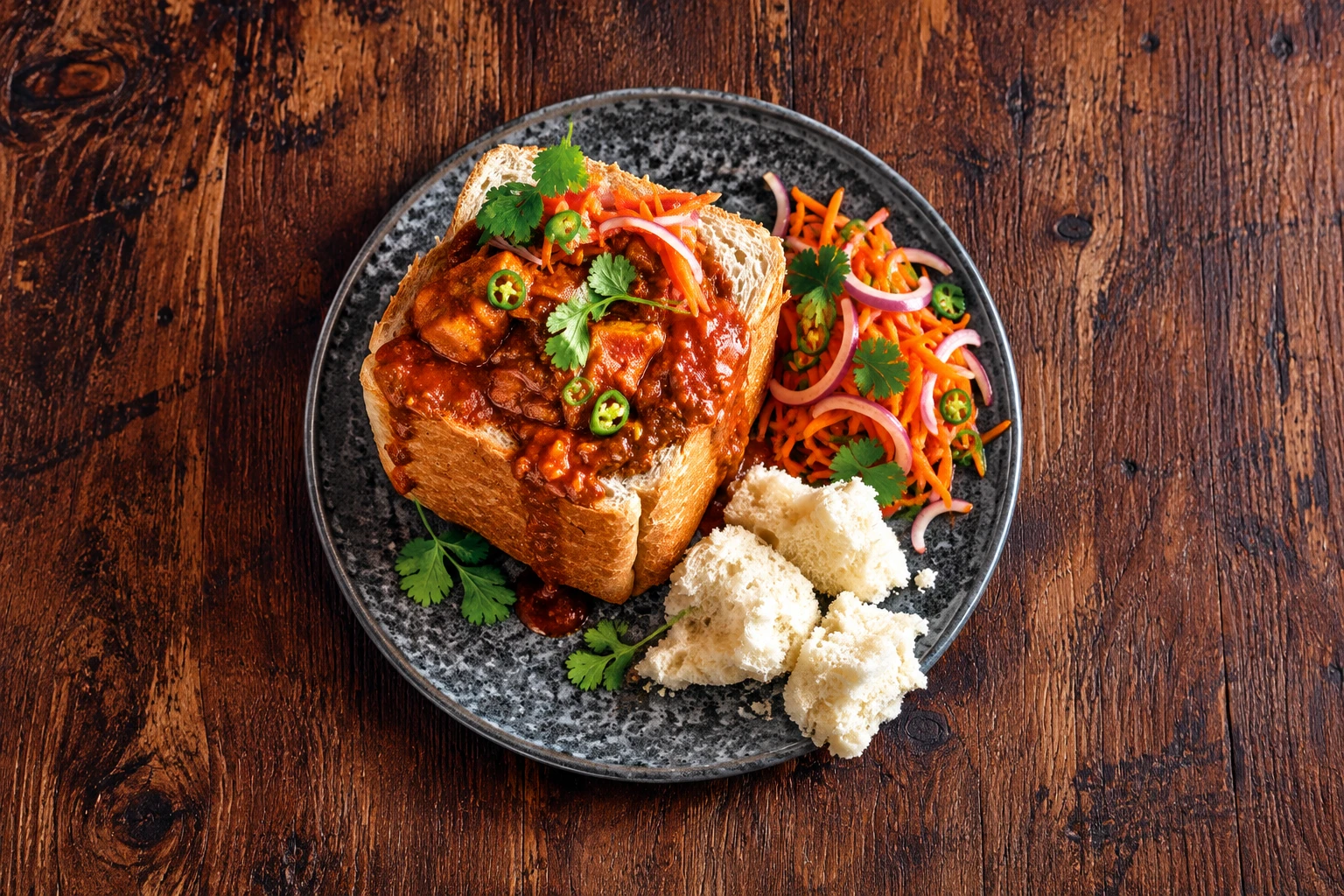
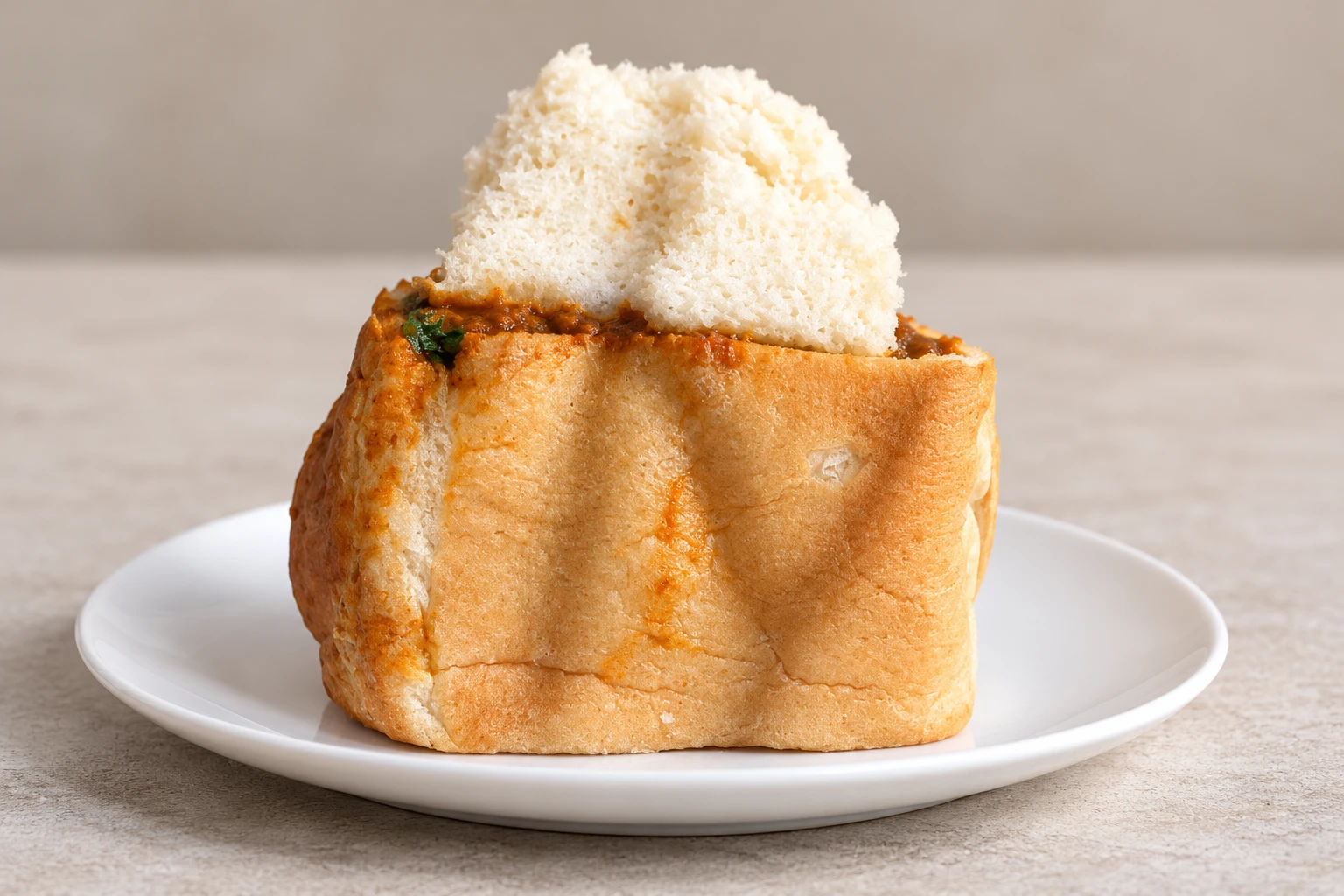
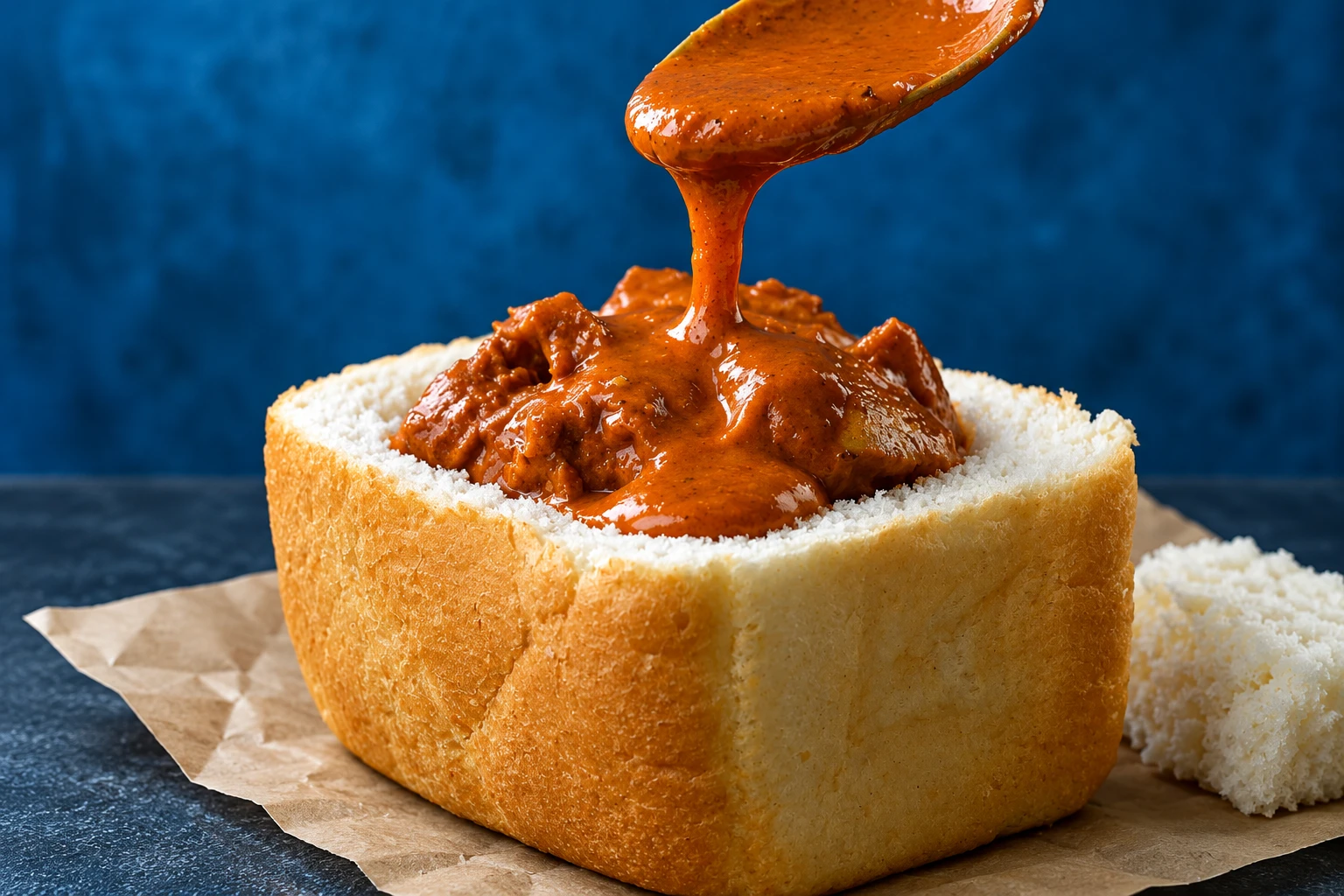
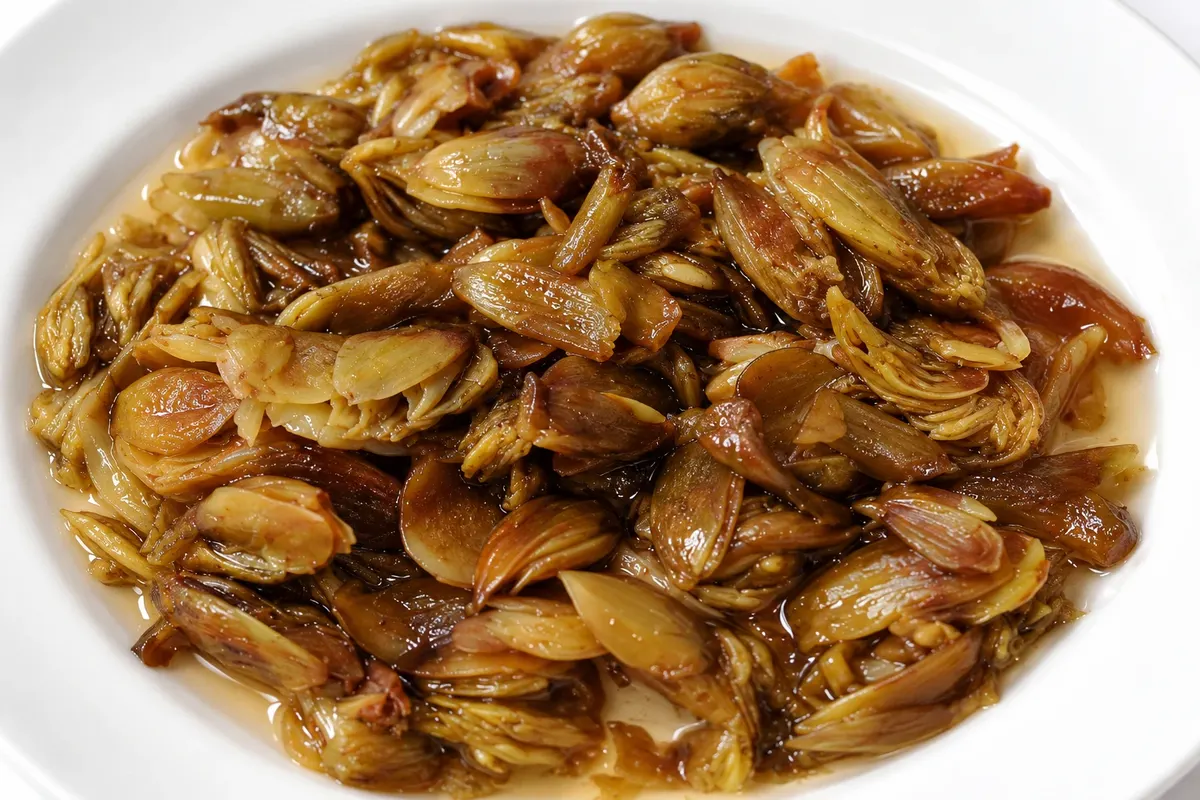
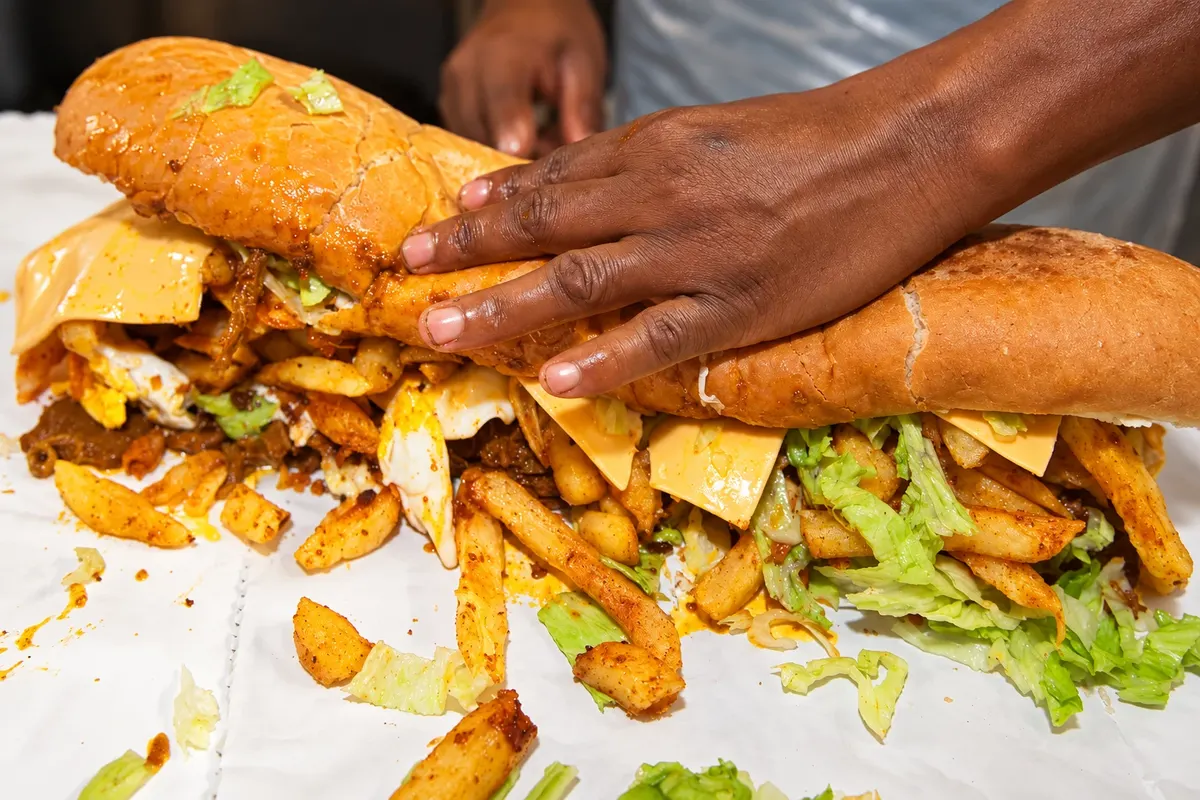
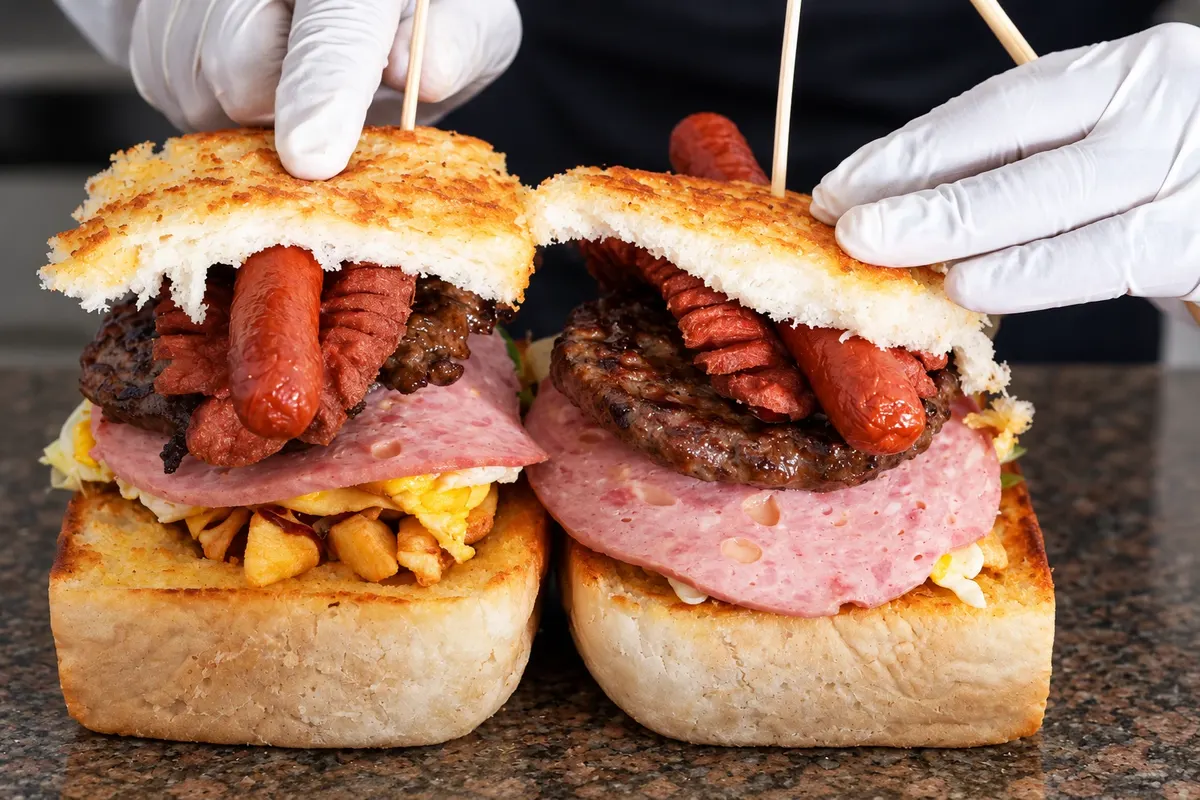
The bunny chow, or simply bunny, is a white loaf of sandwich bread cut into a quarter or a half, hollowed out and filled with curry. The crumb that’s removed is placed back on top as a lid and used as a scoop for the sauce. You order by size and filling: a quarter mutton, for example, is a quarter loaf with lamb curry.
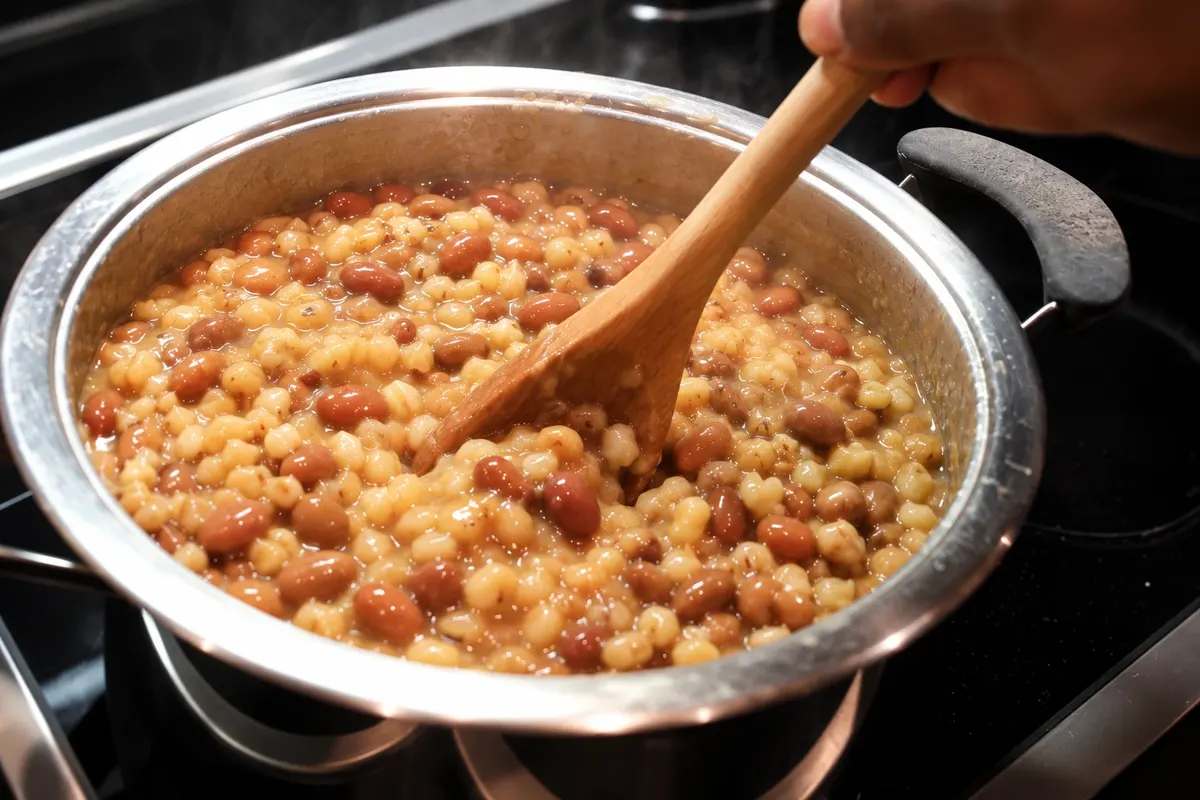
Durban curry is made with oil, lots of tomato, fresh chili and curry leaves—redder and spicier than many Indian curries. The traditional filling is lamb, but there are chicken, bean and vegetable bunnies, always with potato. According to the city’s cooks, the earliest ones were bean.
Durban’s Indian-origin community formed from the 19th century onward with laborers brought to the Natal sugarcane plantations and merchants who came later. There are several versions of the bunny chow’s origin. The most repeated links the name to the banias, the Indian merchants who sold curry in downtown shops; others mention packed bread meals for the Indian caddies at the city’s golf course, or takeaway food sold to people who couldn’t enter restaurants during apartheid. Linguist Rajend Mesthrie and other researchers think the dish emerged after World War II.
Durban’s tourism board treats the bunny chow as a city emblem, and the province even holds an annual best-bunny contest. It’s eaten with the hands, tearing the sides of the bread to get the curry, and served with a small salad of grated carrot, cucumber and tomato.


 Brazil
 Argentina
 Bolivia
 Chile
 Colombia
 Ecuador
 Guyana
 French Guiana
 Falkland Islands (Malvinas)
 Paraguay
 Peru
 Suriname
 Uruguay
 Venezuela
 Germany
 Austria
 Belgium
 Croatia
 Denmark
 Spain
 Finland
 France
 Greece
 the Netherlands
 Hungary
 Ireland
 Iceland
 Italy
 Luxembourg
 Norway
 Poland
 Portugal
 the United Kingdom
 the Czech Republic
 Sweden
 Switzerland
 Turkey
 the United States
 Mexico
 the Dominican Republic
 Australia
 Fiji
 New Zealand