3 cities

 South Africa
 Brazil
 Argentina
 Bolivia
 Chile
 Colombia
 Ecuador
 Guyana
 French Guiana
 Falkland Islands (Malvinas)
 Paraguay
 Peru
 Suriname
 Uruguay
 Venezuela
 Germany
 Austria
 Belgium
 Croatia
 Denmark
 Spain
 Finland
 France
 Greece
 the Netherlands
 Hungary
 Ireland
 Iceland
 Italy
 Luxembourg
 Norway
 Poland
 Portugal
 the United Kingdom
 the Czech Republic
 Sweden
 Switzerland
 Turkey
 Mexico
 the Dominican RepublicSouth Africa
 Fiji
Province · Cidade do Cabo e Cabo Ocidental
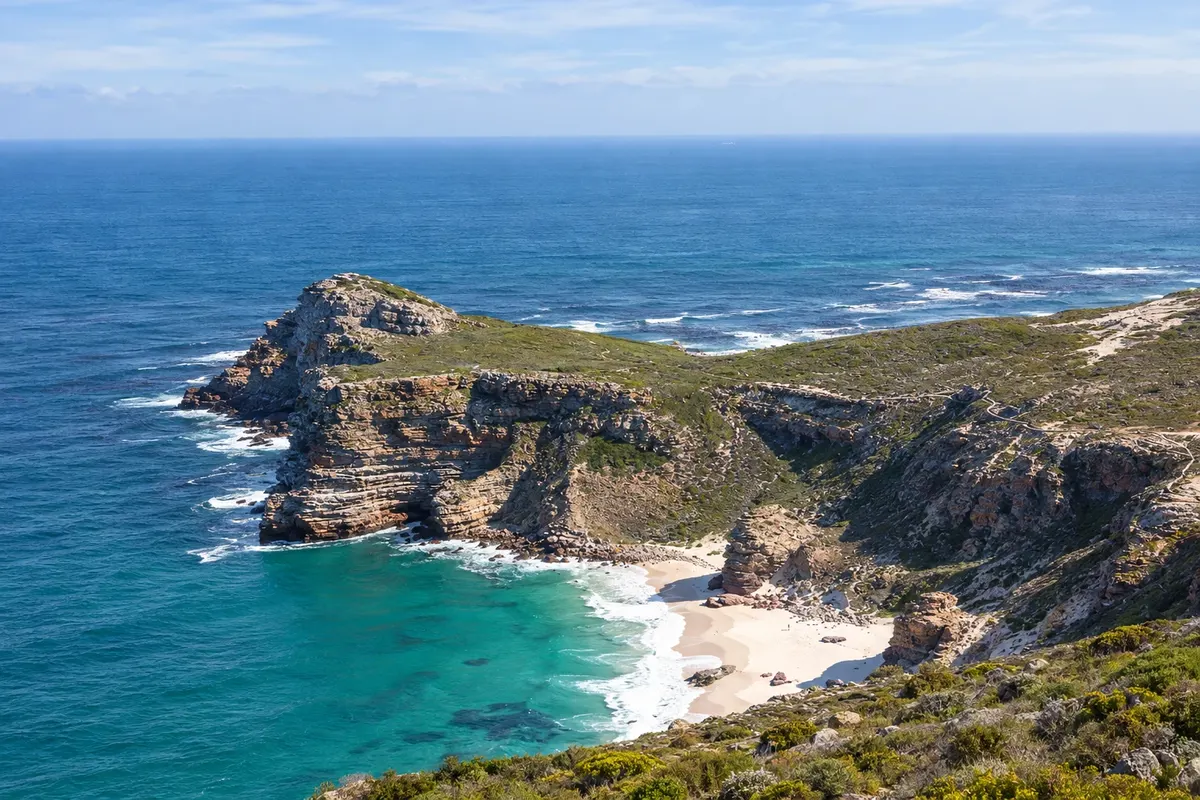
The Western Cape: Cape Town and Table Mountain, the Cape of Good Hope, the vineyards of Stellenbosch and Franschhoek, the whales of Hermanus and the Garden Route.
In the photo: Dias Beach and Cape of Good Hope
Illustrative images. The pictures in this guide are illustrations based on the real place, not photographs, and may differ from it.

The province
The Western Cape occupies the southwest of South Africa, where the Atlantic Ocean meets the Indian. It has a Mediterranean-like climate, with dry summers and rainy winters, mountains that drop to the sea, vineyards and a unique vegetation called fynbos, part of the Cape Floristic Region, a World Heritage Site. It is the most visited province by first-time visitors to the country.
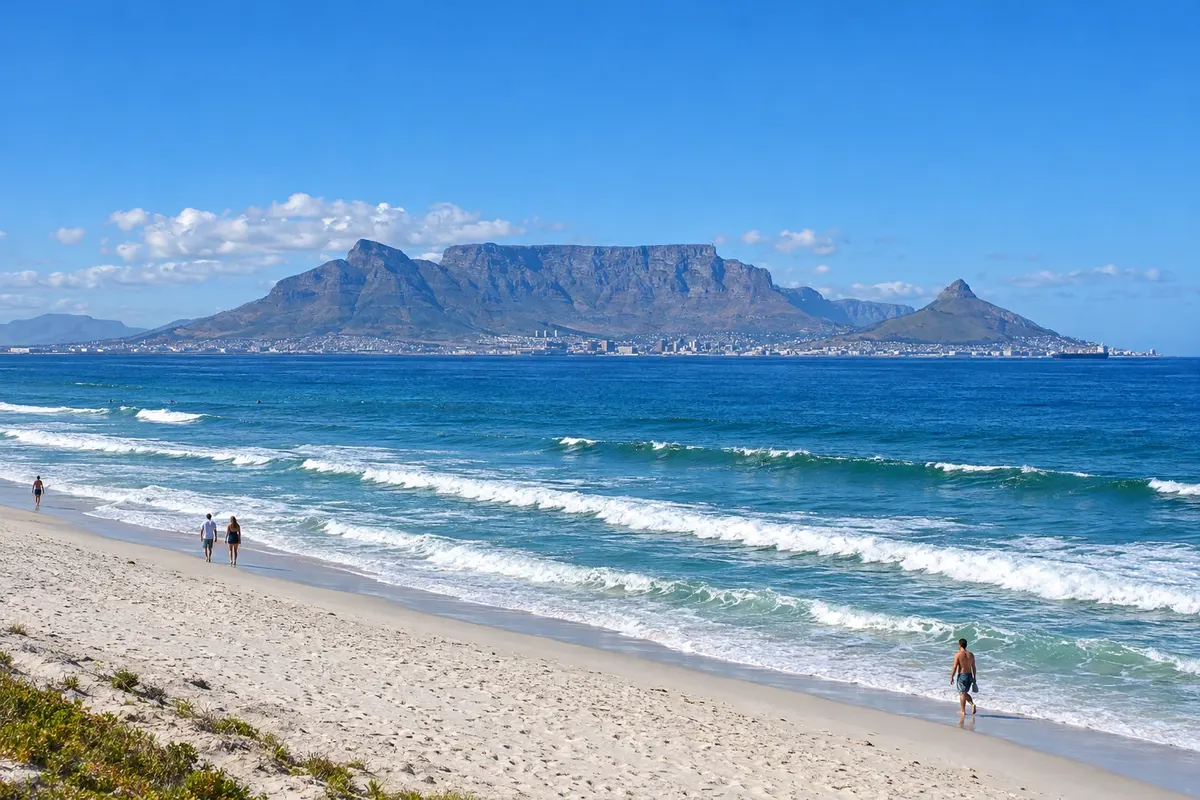
Cape Town spreads out at the foot of Table Mountain, the flat-topped mountain you can ascend by cableway or on foot. The V&A Waterfront combines the harbor, shops and the ferry to Robben Island, the prison island where Nelson Mandela spent 18 years, a World Heritage Site. Bo-Kaap, with its colorful houses, preserves the Cape Malay culture. On the peninsula, the Cape of Good Hope and Cape Point sit at the end of a coastal road, and in Simon's Town African penguins live on Boulders Beach.
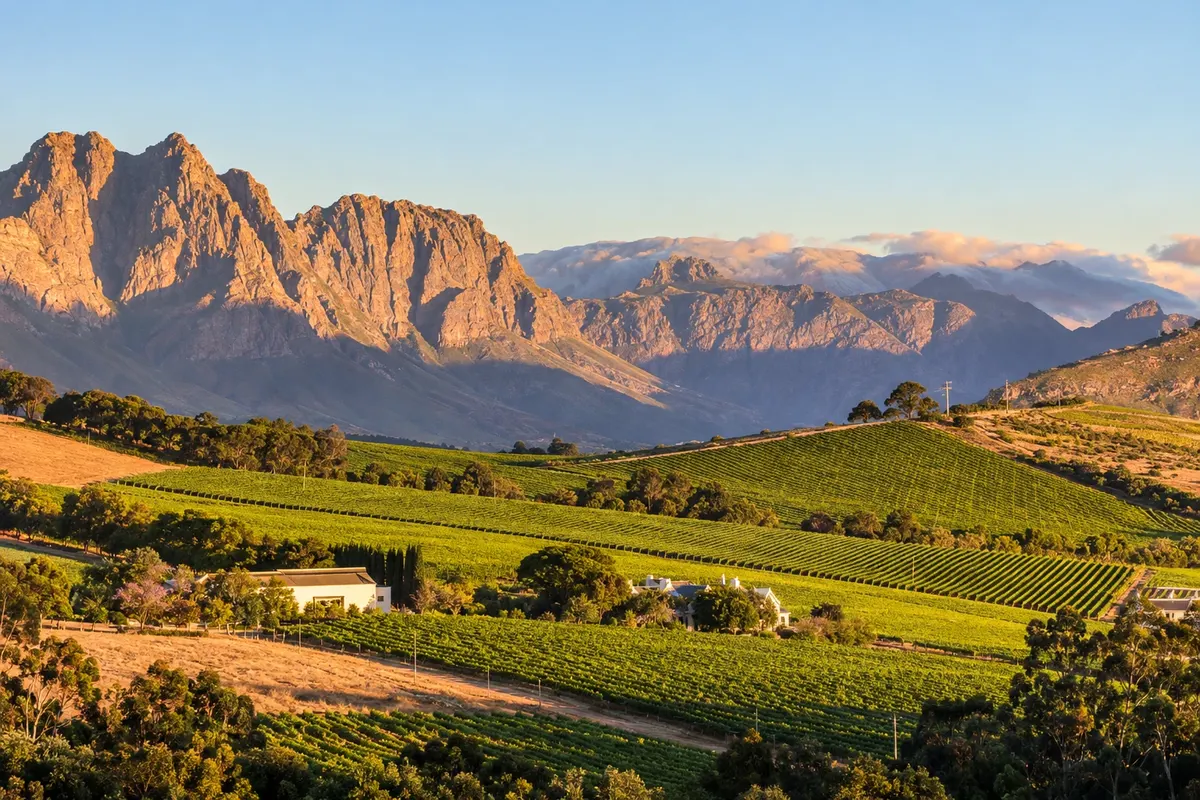
About an hour from the capital, Stellenbosch, Franschhoek and Paarl form the Cape Winelands, with wineries in Cape Dutch-style homesteads against the mountains. To the east, Hermanus is known for shore-based whale watching, and southern right whales typically appear from July to November; Gansbaai is the base for cage diving with sharks, and L'Agulhas is the southernmost point of Africa.
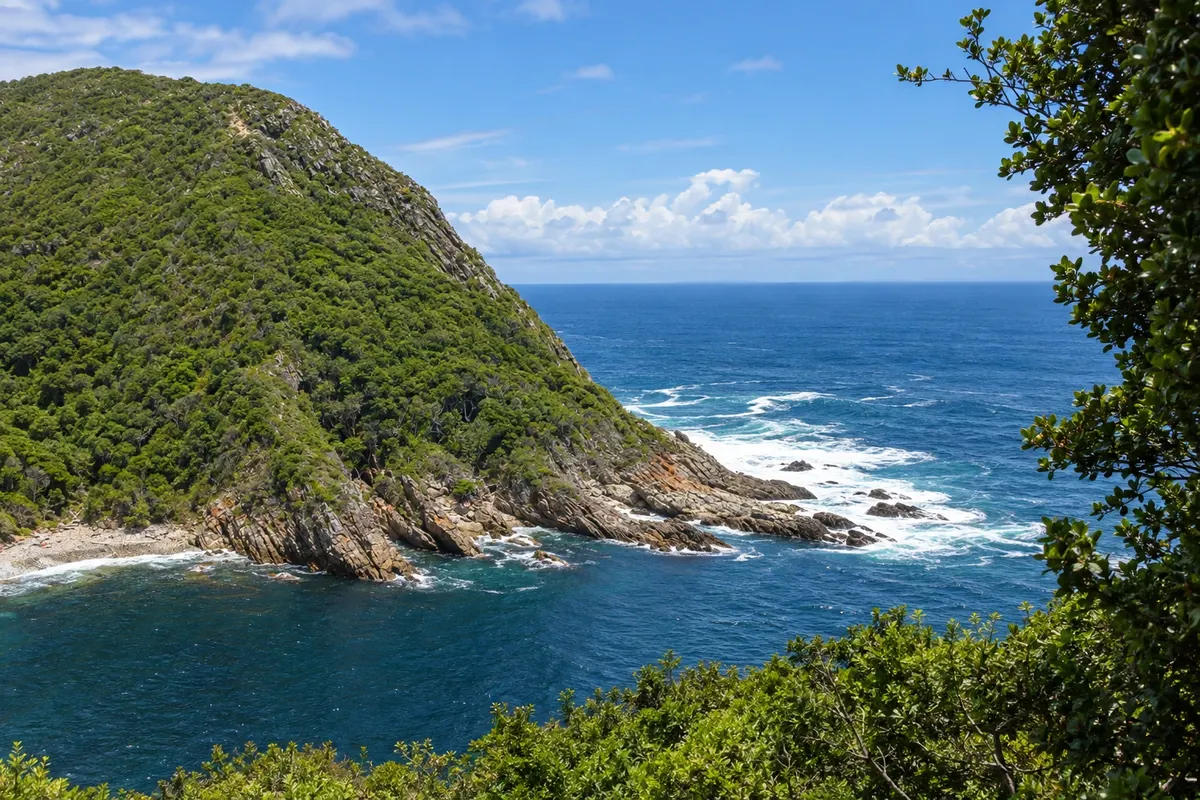
Further east begins the Garden Route, the coastal road through lagoons, forests and beaches: George, Mossel Bay, Wilderness, Knysna and Plettenberg Bay. Oudtshoorn, in the Little Karoo, has the Cango Caves and ostrich farms. On the table, bobotie, the Cape Malay dish, and the braai, the South African barbecue.
Destinations
Cities
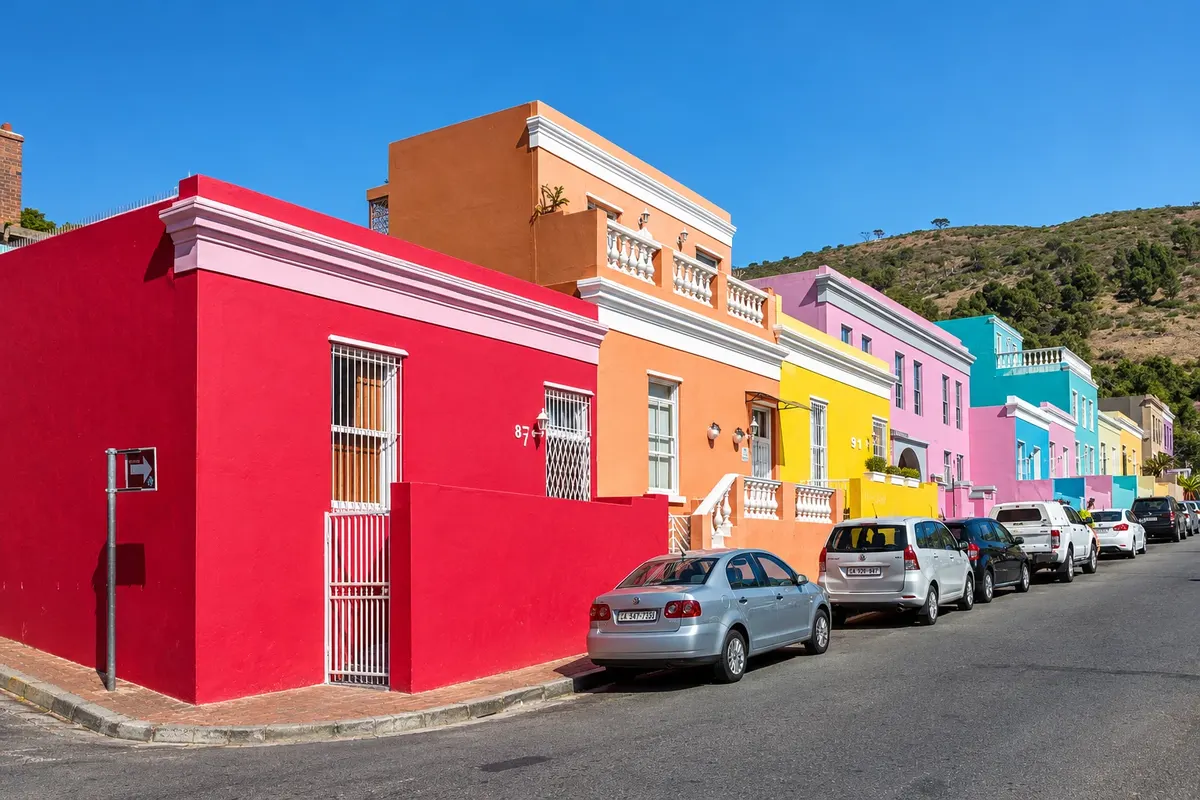
Capital of the Western Cape and seat of the South African Parliament, Cape Town sits between Table Mountain and Table Bay. The cable car climbs the mountain; below are the Castle of Good Hope (1679), the Company's Garden, the colorful Bo-Kaap, the District Six Museum and the V&A Waterfront harbor, with the Zeitz MOCAA and the boat to Robben Island. Kirstenbosch, Camps Bay, Chapman's Peak Drive and Groot Constantia are less than an hour from the center.
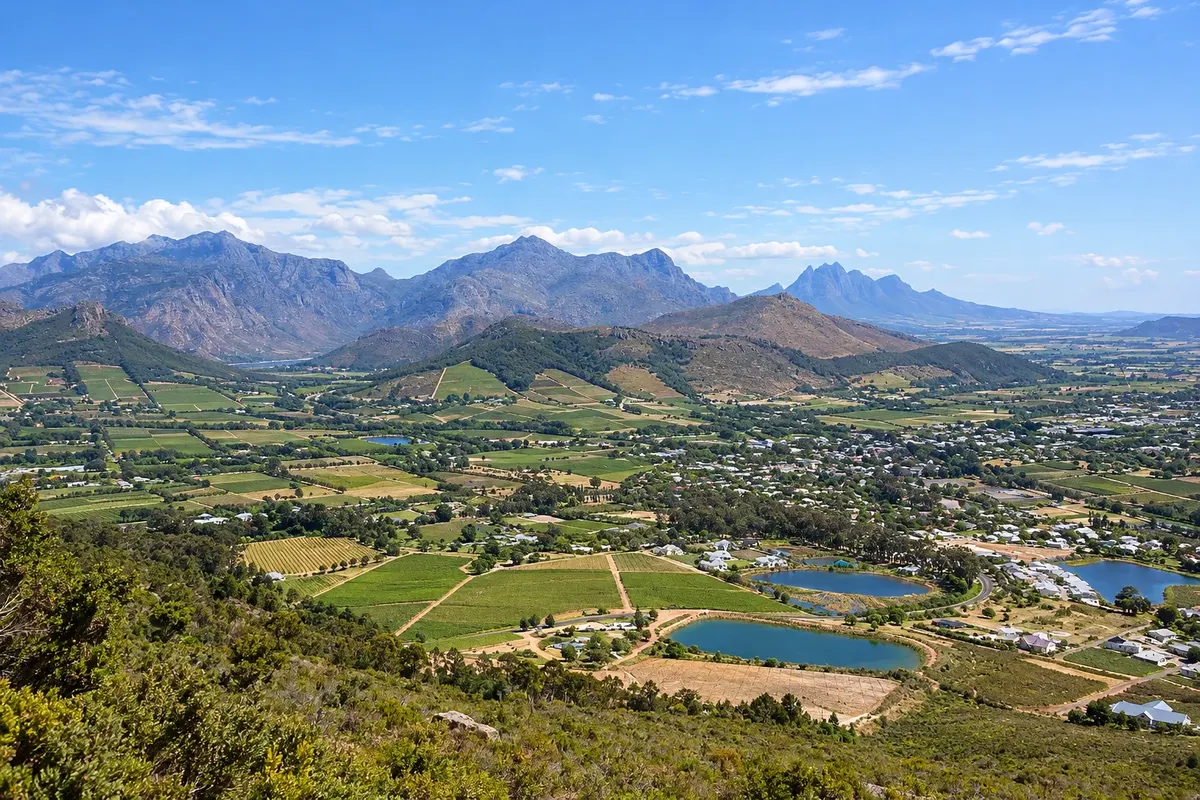
Franschhoek, the 'corner of the French', is a village with one main street at the bottom of a valley surrounded by mountains, about 30 km from Stellenbosch. It was settled by Huguenots, French Protestants who arrived at the Cape from 1688, and preserves that history at the Huguenot Monument and the adjacent museum. Wine estates cover the valley, and the Franschhoek Pass road climbs the range with views over the village.
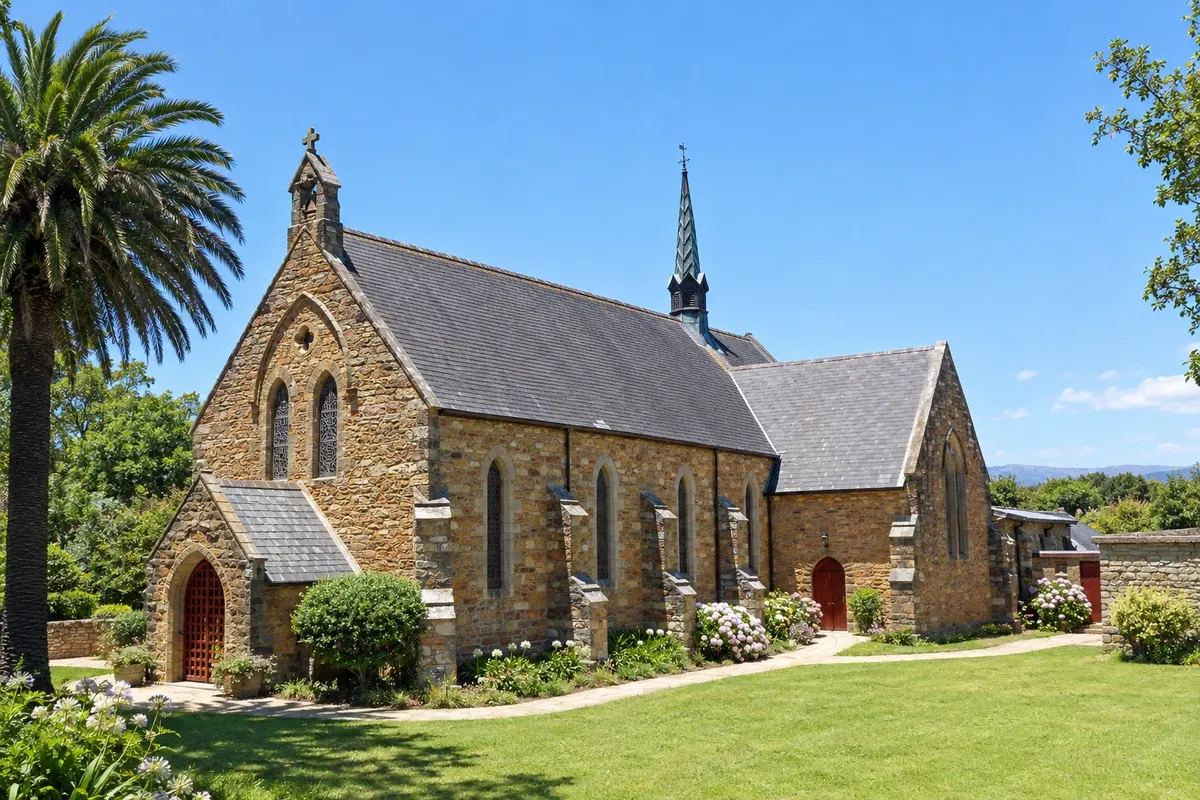
George is the largest town on the Garden Route and the gateway to the route, with George Airport (GRJ). Founded in 1811 and named after King George III, it lies at the foot of the Outeniqua Mountains, about 10 km from the sea. It has the Outeniqua Transport Museum, with steam locomotives, and the exit to the Montagu Pass, an 1847 mountain road. Victoria Bay and Wilderness are less than 20 minutes away.
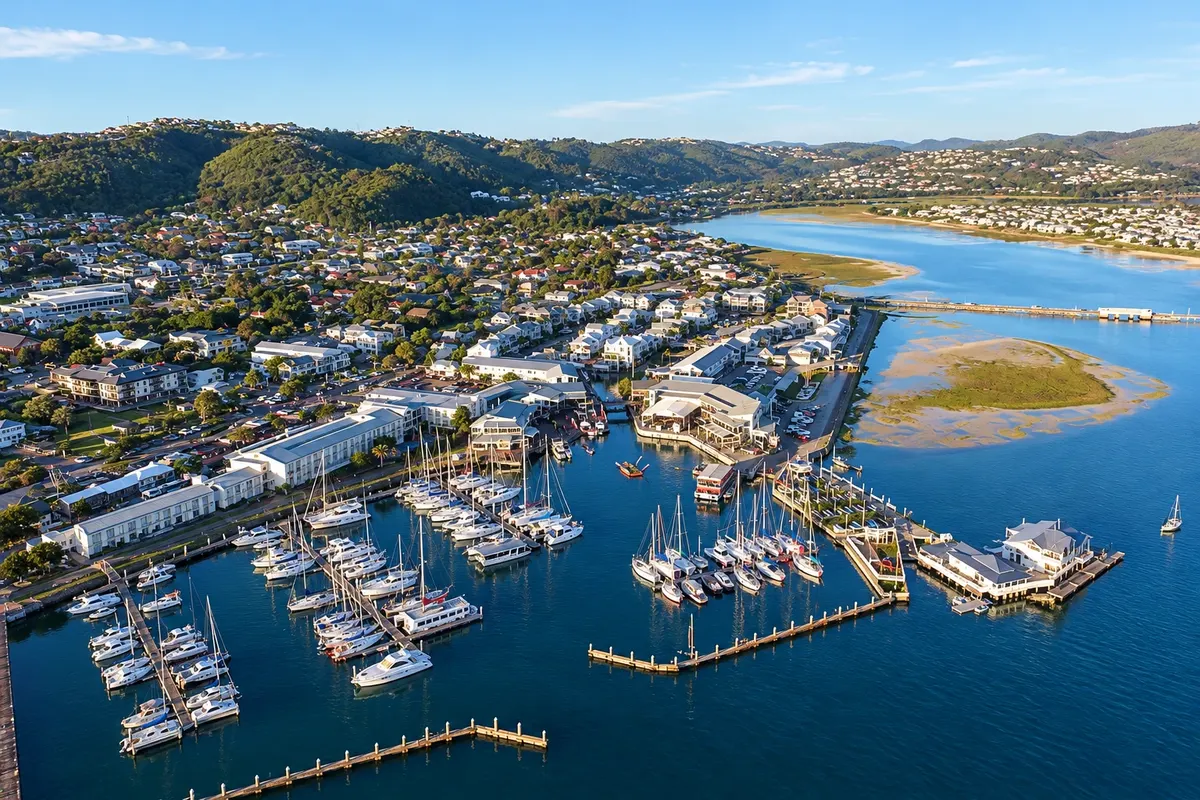
Knysna sits around a large lagoon, linked to the sea by a narrow passage between two sandstone rocks, the Heads. The lagoon is a marine reserve, home to the Knysna seahorse and the oysters that made the town famous, celebrated at a festival in July. Behind Knysna are the country's largest stretches of native forest, with century-old yellowwoods and walking trails. In the town centre and on Thesen Island there are restaurants and boat trips on the lagoon.
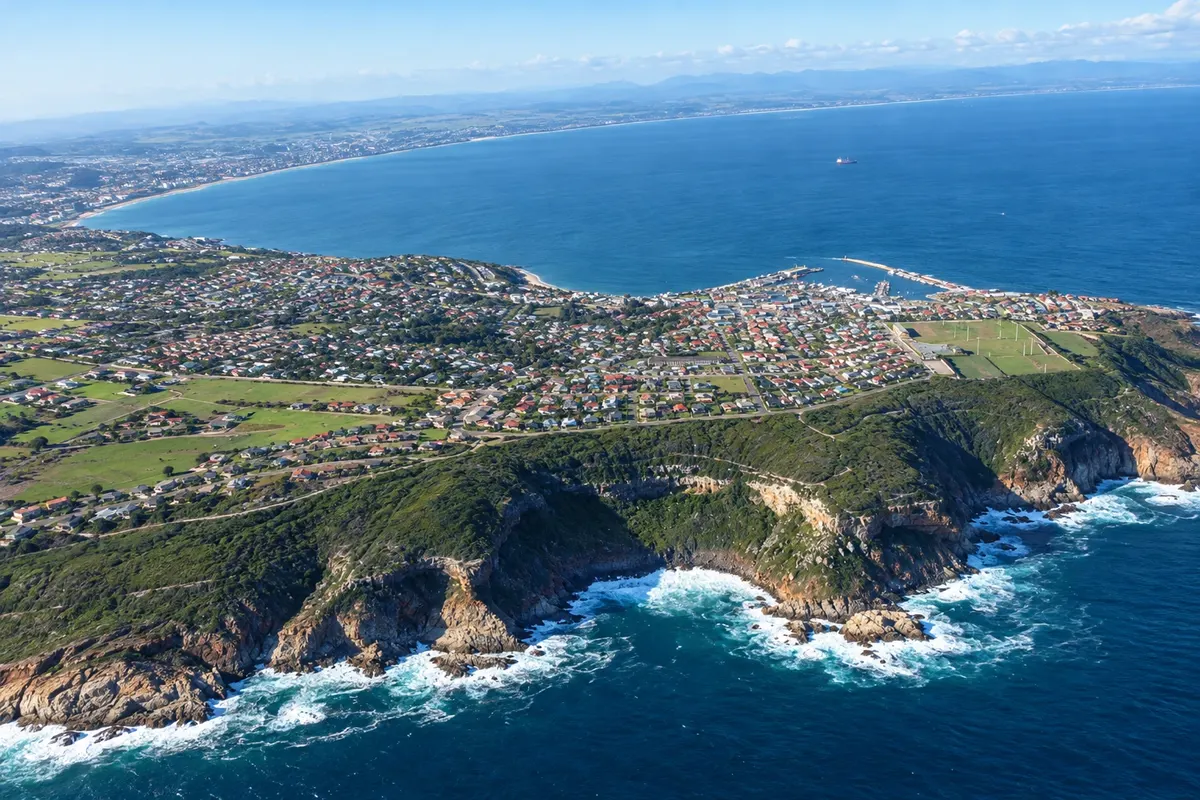
Mossel Bay is where Bartolomeu Dias landed in 1488, at the start of the Garden Route. The Bartolomeu Dias Museum houses a full‑size replica of the caravel and the post tree, where in 1500 a captain of Cabral’s fleet left a letter. At the town’s tip are the lighthouse and the Cape St Blaize cave, with very ancient human remains, and the cliff trail. The bay has warmer water beaches and is a whale‑passing area from July to November.
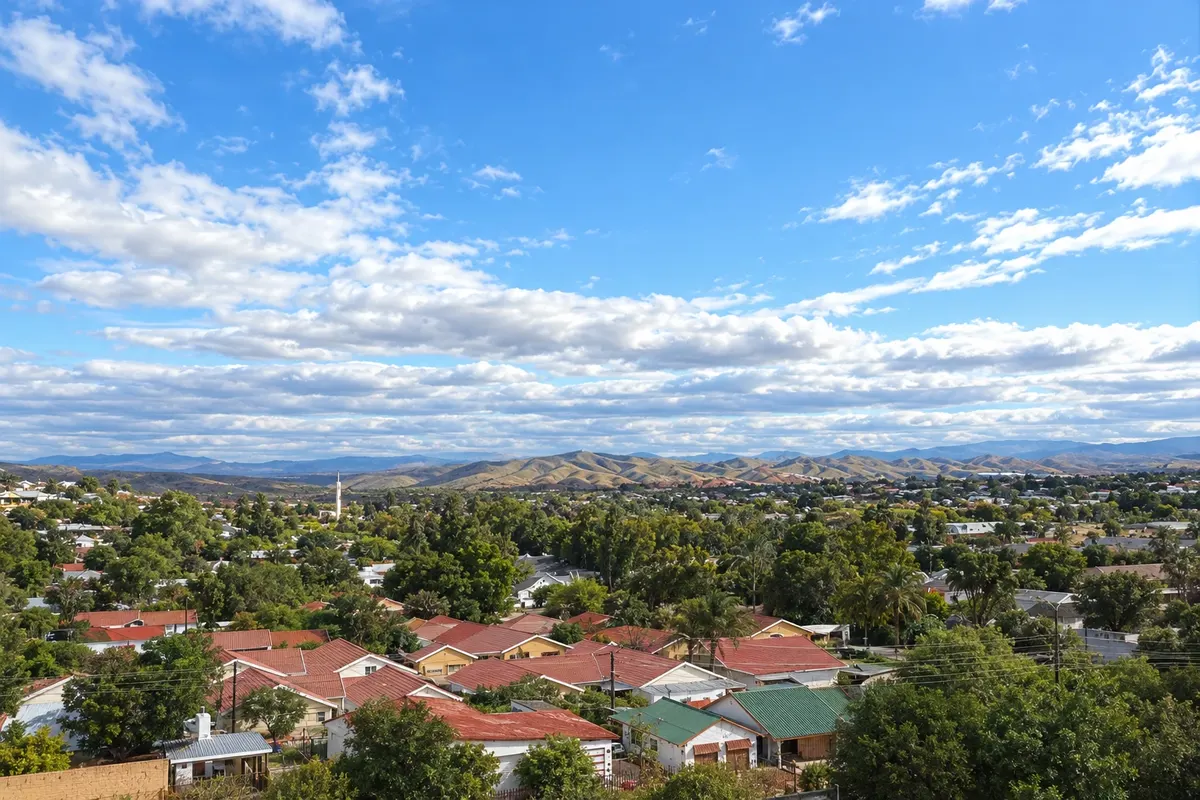
Oudtshoorn is the capital of the Little Karoo, on the far side of the Outeniqua Mountains, about 60 km from George. The town prospered from ostrich feathers in the late 19th century and still preserves the mansions of the 'feather palaces'; ostrich farms still receive visitors. To the north are the Cango Caves, limestone caves with huge chambers, and the Swartberg Pass, an 1888 dirt road that crosses the range to Prince Albert.
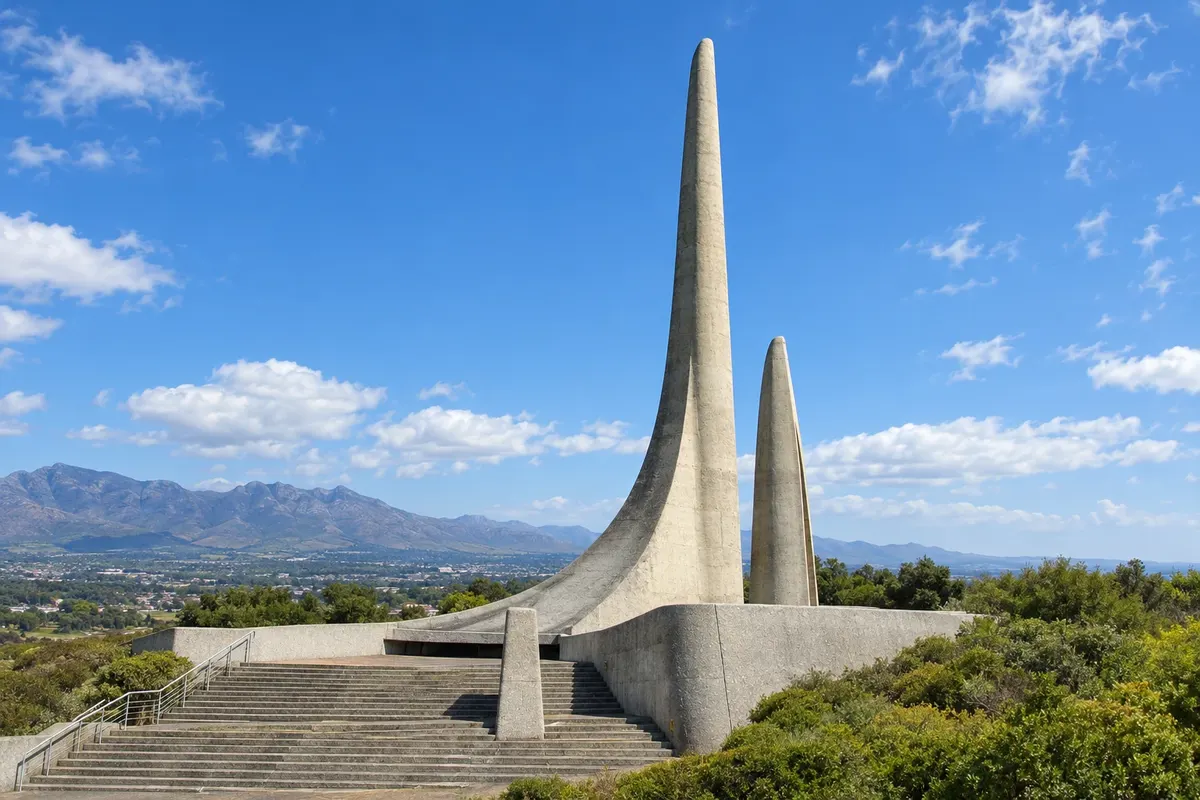
Paarl is the largest town in the Cape Winelands, at the foot of the granite domes of the mountain that gives it its name, the 'pearl'. It was there that, in 1875, the society was founded that made Afrikaans a written language, commemorated by the Afrikaans Language Monument high on the slope, and by the Language Museum. The Main Road, over 10 km long, has Cape houses and old churches. Near the town is the gate of the former Victor Verster prison, through which Mandela walked free in 1990.
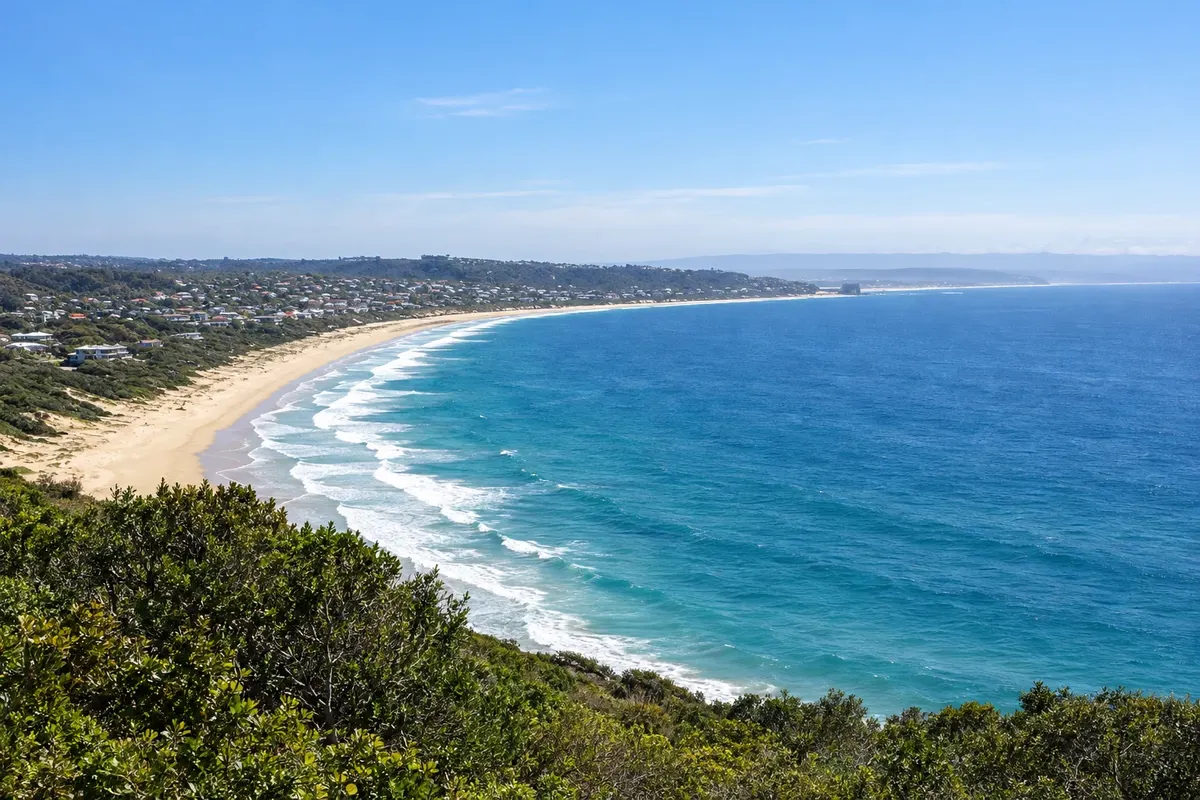
Plettenberg Bay, called Plett, is the most sought-after beach town on the Garden Route, in a bay the Portuguese named Bahia Formosa. It has long white-sand beaches such as Central, Lookout and Robberg, and the Robberg peninsula, a nature reserve with cliff-top trails, a seal colony and Stone Age sites. Dolphins are commonly seen in the bay and, from July to November, whales.
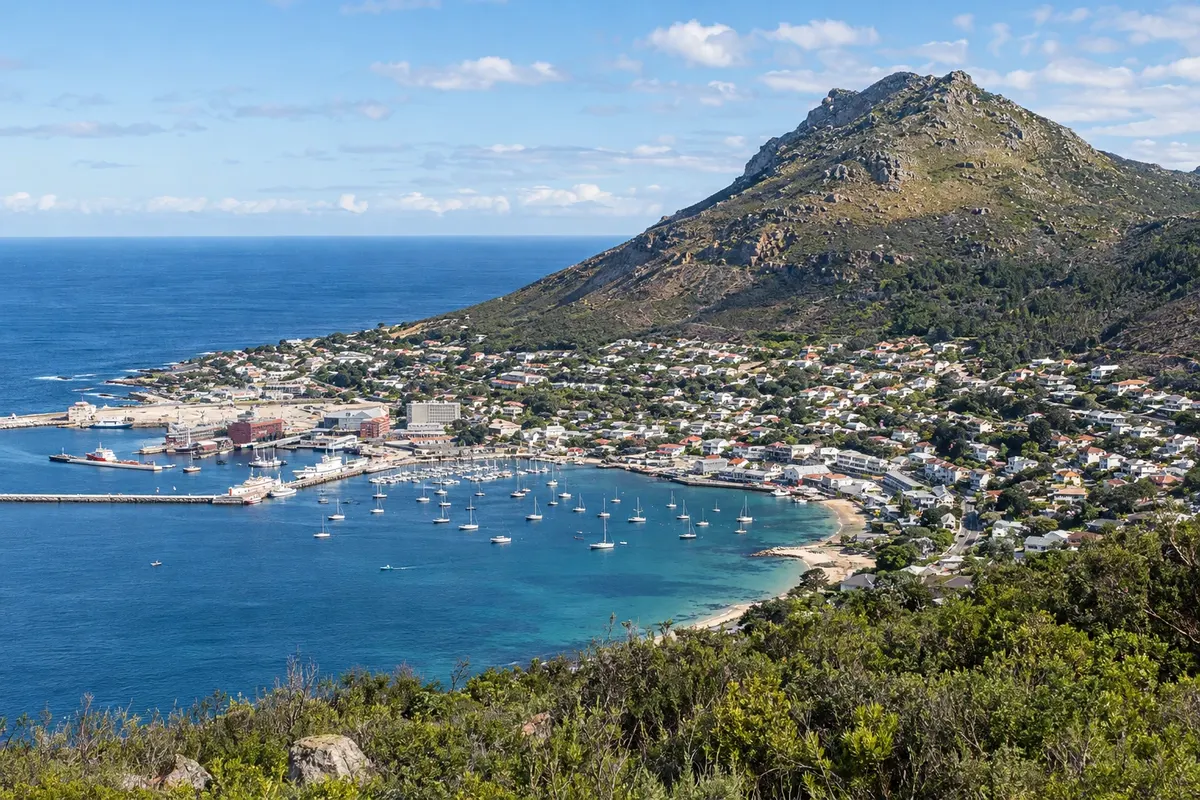
Simon's Town is the South African Navy town on False Bay, about 40 km from central Cape Town. The main street has Victorian houses, the naval harbor and the pier for sightseeing boats. Just to the south is Boulders, with the African penguin colony, and about 25 km along the peninsula is the tip with the Cape of Good Hope and the Cape Point lighthouse. On the way back toward the city are Kalk Bay and the colorful bathing huts of Muizenberg.
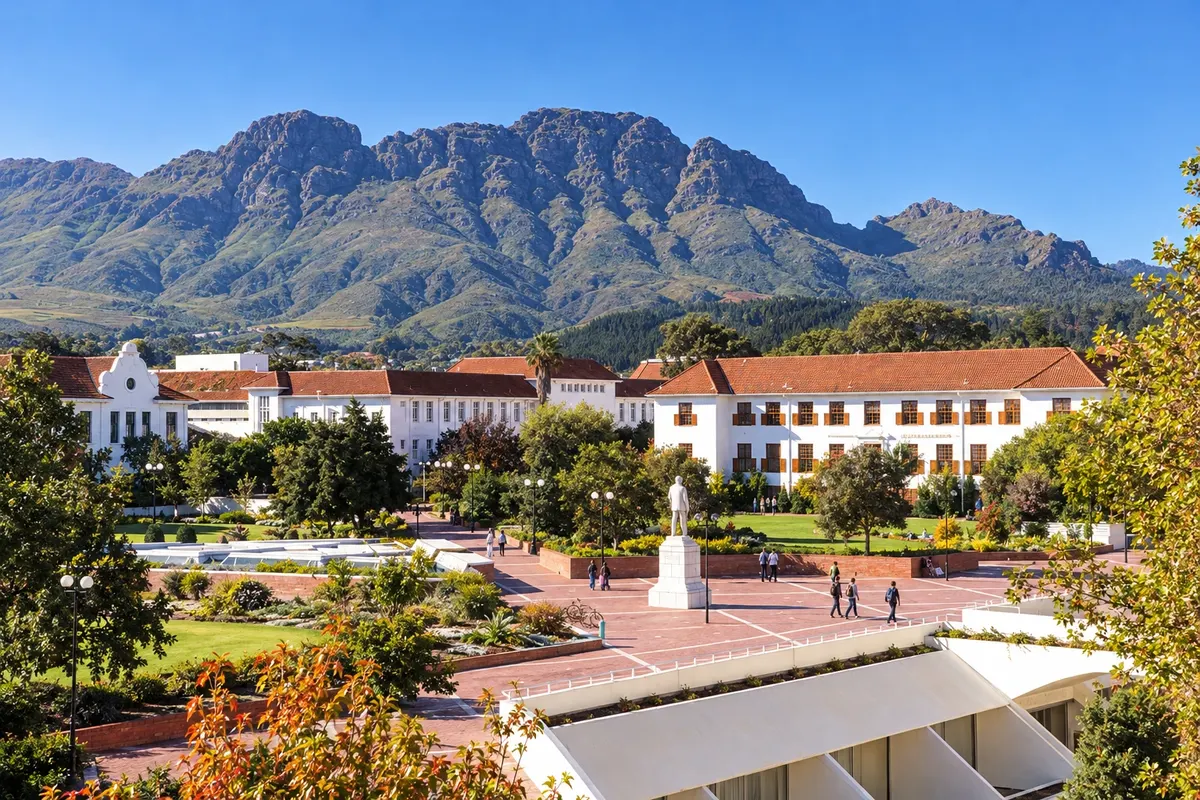
Founded in 1679 by Governor Simon van der Stel, Stellenbosch is the second-oldest town in South Africa. The centre, known as the town of oaks, features Dorp Street with 18th-century houses, the Moederkerk church, the Village Museum in four restored houses, and the University of Stellenbosch campus with its botanical garden. In the surroundings are dozens of wine farms and the Jonkershoek reserve, with mountain trails.
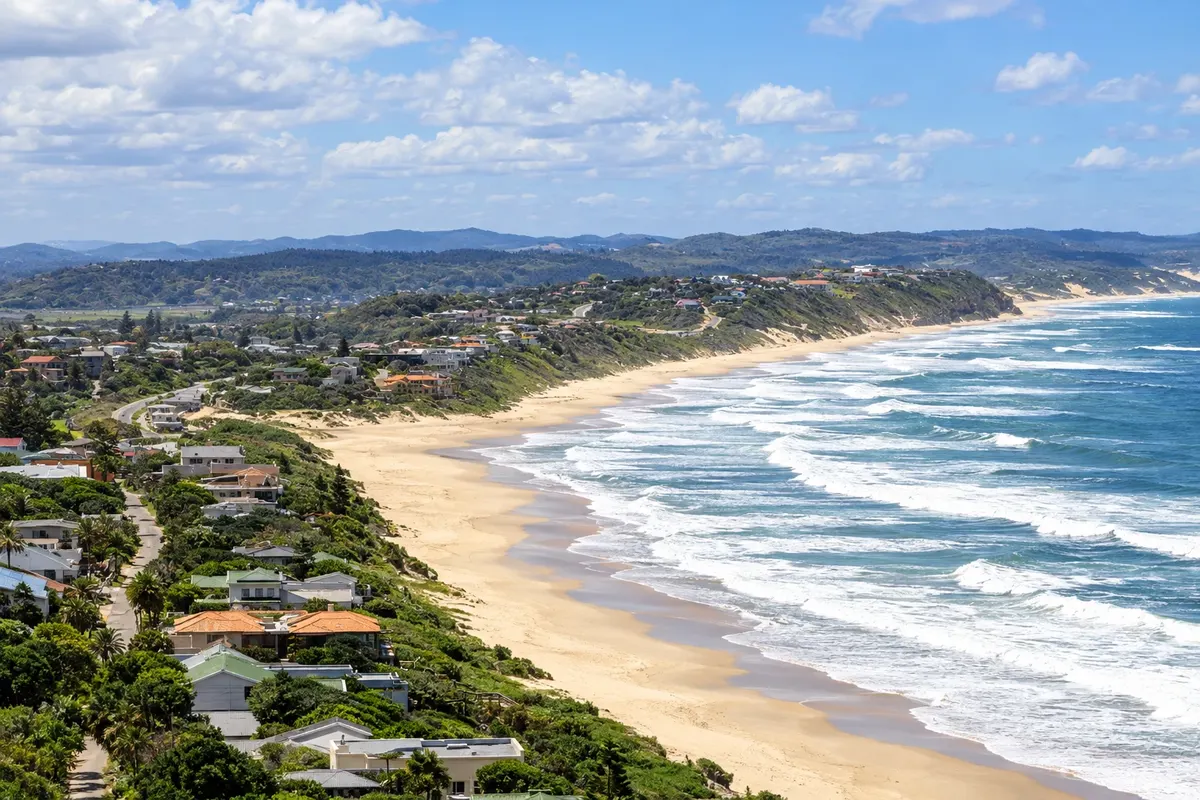
Wilderness is a village between lakes, rivers and a long beach, about 15 km from George. The Wilderness area of Garden Route National Park protects the lakes and the Touw River, with forest trails and canoeing. From the top of the ridge, the Map of Africa viewpoint shows the Kaaimans River tracing the continent's outline. At the village entrance, Dolphin's Point overlooks the beach and the railway bridge over the Kaaimans.
From November to March is the dry summer, with long days and strong winds; it is the high season. From May to August is the rainy winter, cooler, and the whale season in Hermanus runs from July to November. Spring, from September to October, usually brings fynbos blooms. The seasons are the same as in Brazil, and the province is 5 hours ahead of Brasília.
Cape Town International Airport (CPT) receives flights from Johannesburg and abroad. Connections with Brazil may be direct or involve a stopover, depending on the season and the airline. Confirm before booking. George (GRJ) has an airport for the Garden Route. Cape Town is about a 2-hour flight from Johannesburg. In the province, a rented car is the most practical way to get around the winelands, Hermanus and the Garden Route; driving is on the left.
Your questions
Five to six days for Cape Town, the peninsula and the Winelands. The Garden Route requires another four to five days by car.
Southern right whales typically appear close to the coast from July to November and can be seen from the town's cliffs.
For the city, no: there are ride-hailing apps and hop-on hop-off buses. For the peninsula, the Winelands and the Garden Route, a car makes things easier; drive on the left.
By cableway, which departs from the base of the mountain, or on foot via trails such as Platteklip Gorge. The cableway stops operating in high winds or fog; check before you go.
From October to April days are usually warmer and drier; winter is cooler, but the route can be driven year-round.