3 cities

 South Africa
 Brazil
 Argentina
 Bolivia
 Chile
 Colombia
 Ecuador
 Guyana
 French Guiana
 Falkland Islands (Malvinas)
 Paraguay
 Peru
 Suriname
 Uruguay
 Venezuela
 Germany
 Austria
 Belgium
 Croatia
 Denmark
 Spain
 Finland
 France
 Greece
 the Netherlands
 Hungary
 Ireland
 Iceland
 Italy
 Luxembourg
 Norway
 Poland
 Portugal
 the United Kingdom
 the Czech Republic
 Sweden
 Switzerland
 Turkey
 Mexico
 the Dominican RepublicSouth Africa
 Fiji
Province · KwaZulu-Natal
KwaZulu-Natal: Durban and the warm-water beaches, the Drakensberg mountains, the iSimangaliso estuary, Hluhluwe-iMfolozi and Zulu culture.
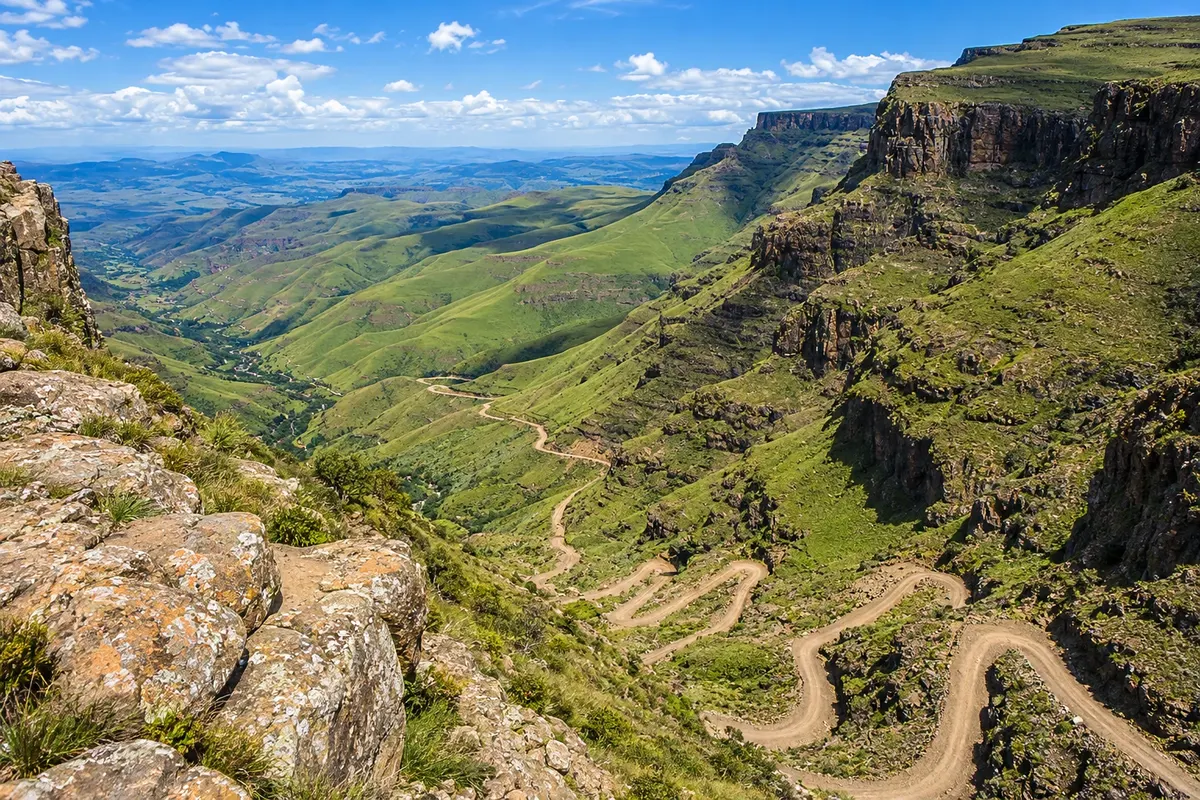
In the photo: Sani Pass
Illustrative images. The pictures in this guide are illustrations based on the real place, not photographs, and may differ from it.

The province
KwaZulu-Natal lies in the east of South Africa, between the Indian Ocean and the Drakensberg mountains. It is the land of the Zulu people and combines warm-water beaches, safari reserves and the highest mountains in the country, in a territory smaller and greener than the inland provinces.
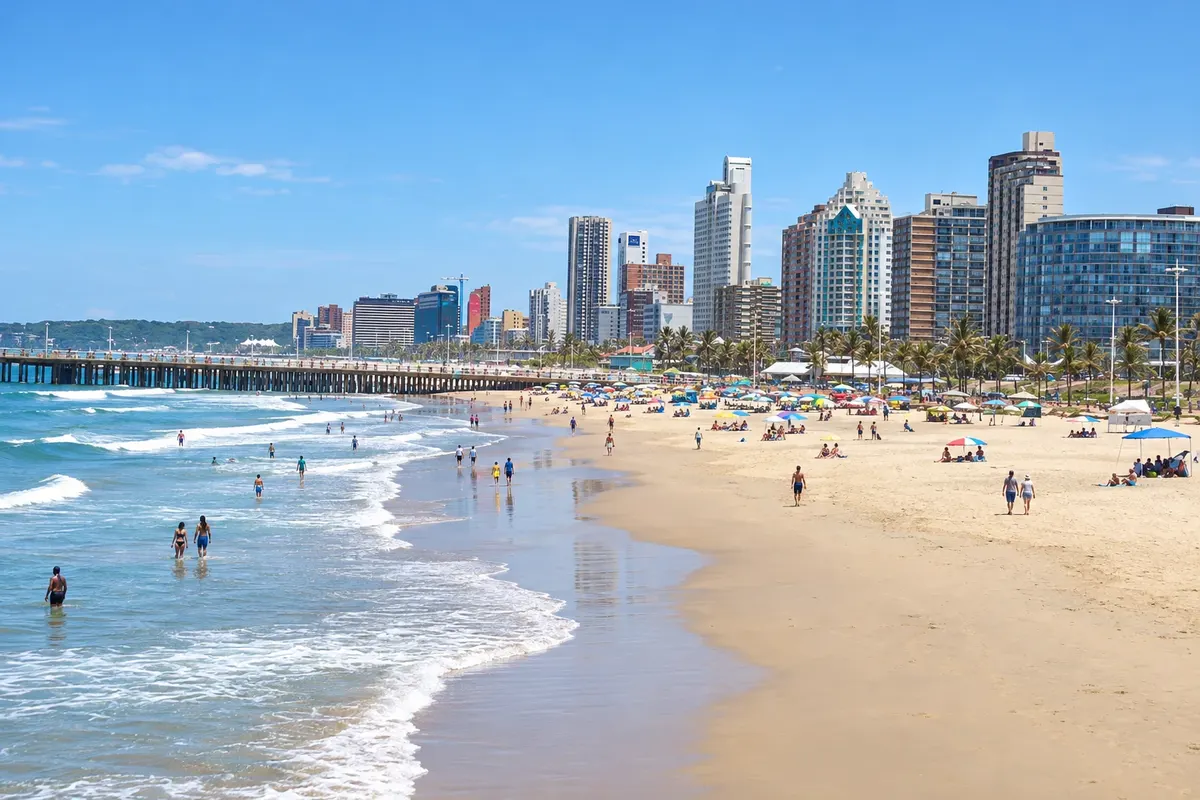
Durban, the largest city, has golden-sand beaches along the Golden Mile, where the sea is usually warm year-round, and a large community of Indian origin, which gave the city the bunny chow, a bread filled with curry. To the north, Umhlanga and Ballito are resort towns with beaches and rock pools.
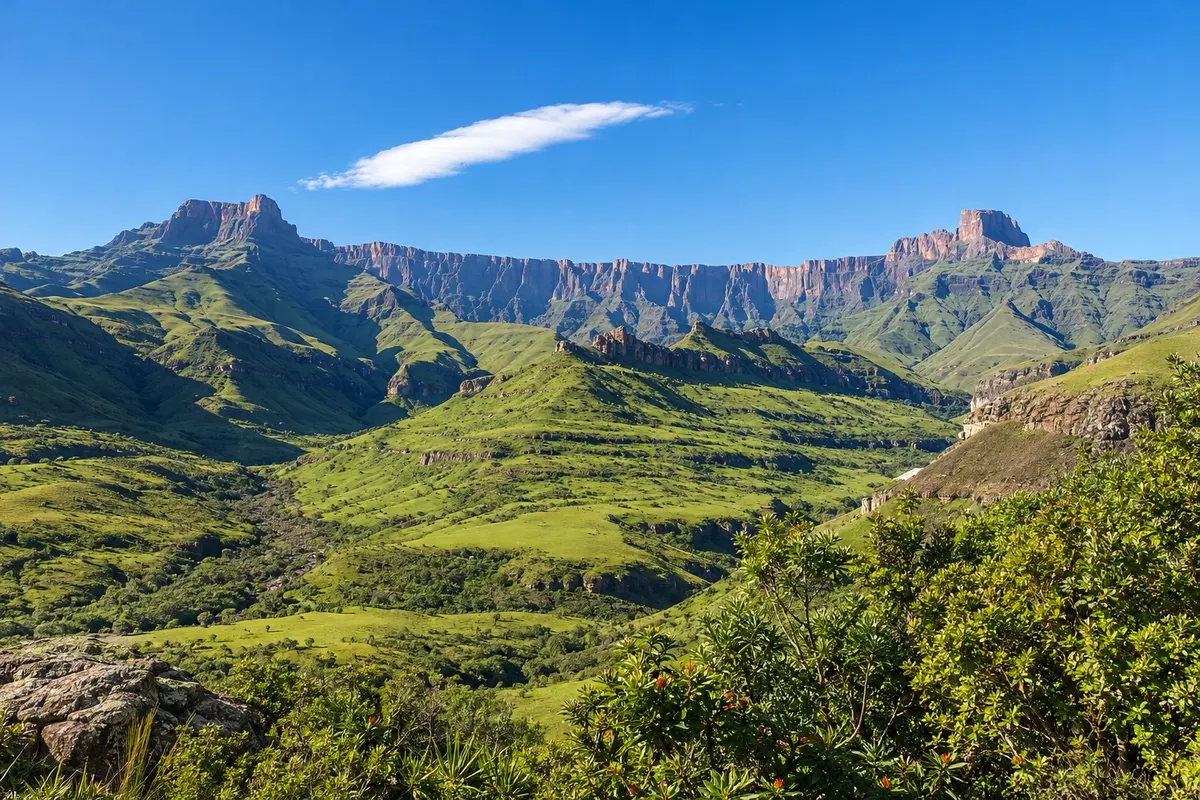
To the west, the Drakensberg, or uKhahlamba, forms a basalt wall over 3,000 metres high, with the Amphitheatre and the Tugela Falls, caves with San rock paintings and trails for all levels; the Maloti-Drakensberg Park is a World Heritage Site. Winterton, Bergville and Underberg are the bases.
In the north, the iSimangaliso Wetland Park, a World Heritage Site, protects the St. Lucia estuary, with hippos and crocodiles, beaches and the reefs of Sodwana Bay. Next door, Hluhluwe-iMfolozi, established in 1895, is one of Africa's oldest reserves, known for its work protecting the white rhinoceros. The capital is Pietermaritzburg.
Destinations
Cities
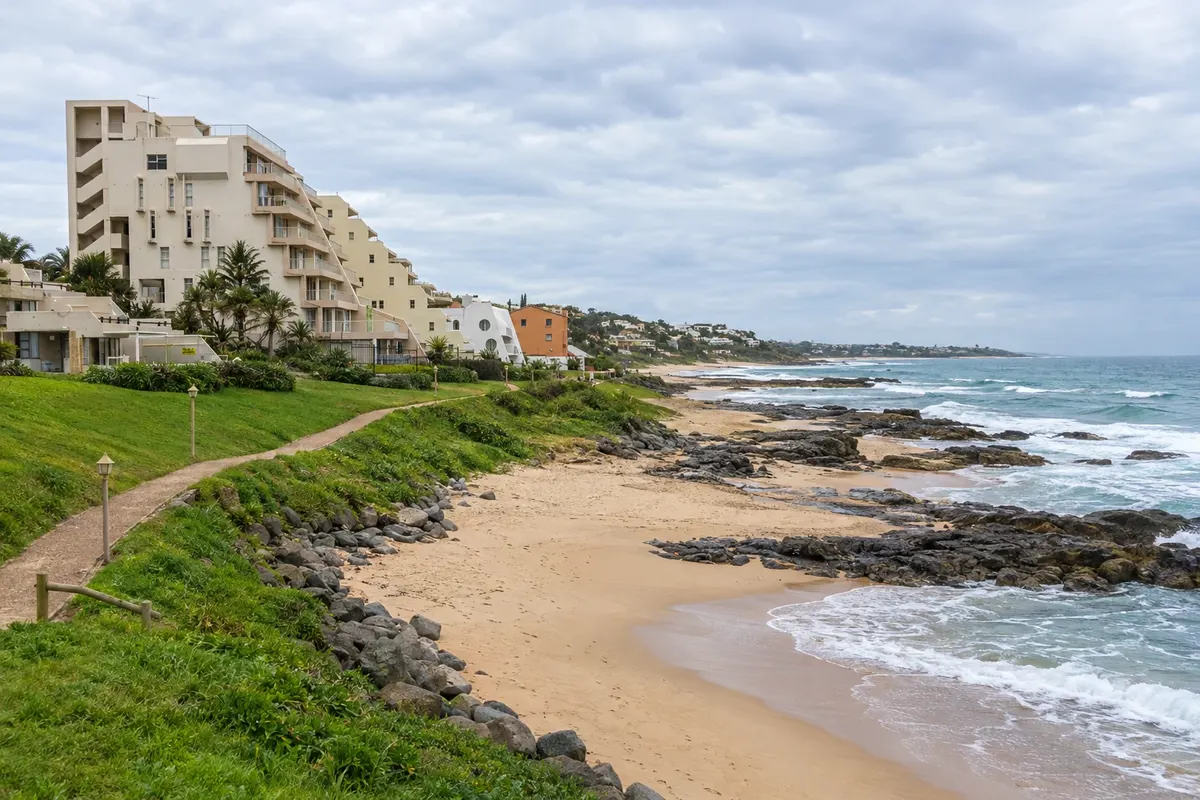
Ballito is a beach town about 45 km north of Durban and roughly 15 km from King Shaka Airport. The waterfront has a promenade among rocks and beaches, with tidal pools like Thompson's Bay where you can swim protected from the waves. The region, called the Dolphin Coast, is popular with South African families on holiday and with travelers who want to be near the airport and away from the city.
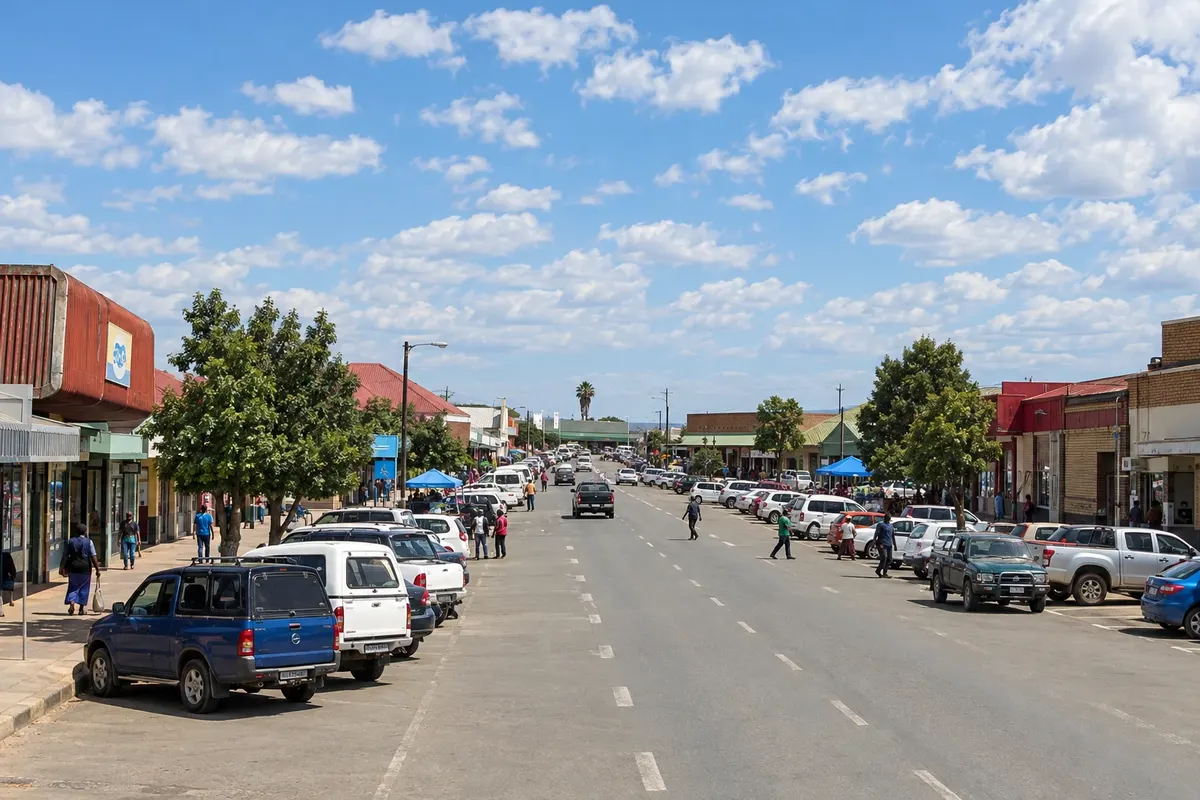
Bergville é uma pequena cidade agrícola às margens do rio Tugela, a porta de entrada do Drakensberg norte. A cerca de 45 km fica o Parque Nacional Royal Natal, com o Anfiteatro, um paredão de cerca de 5 km de largura, e a cachoeira Tugela, que despenca dele em várias quedas. Do outro lado da escarpa, no Estado Livre, a trilha do Sentinel sobe às escadas de corrente até o alto do Anfiteatro.
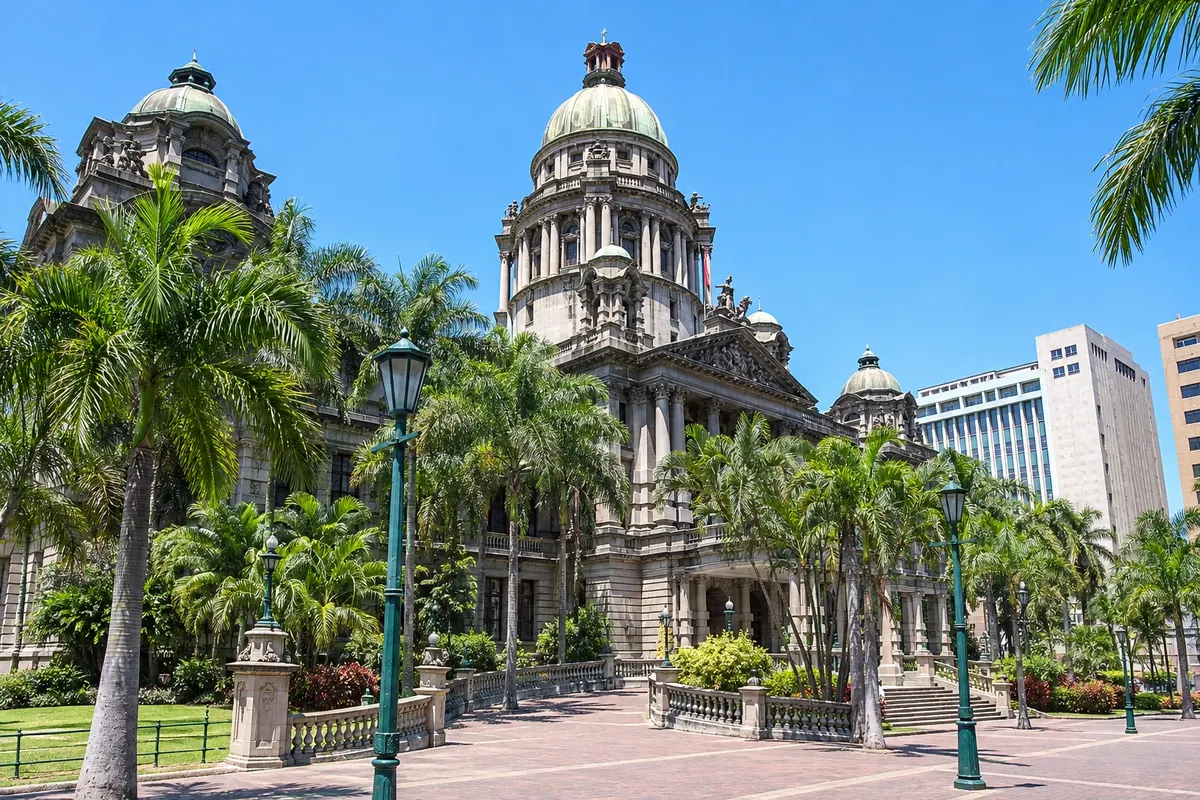
Durban is the largest city in KwaZulu-Natal and the country's main port, with warm waters from the Indian Ocean year-round. The Golden Mile seafront features beaches with lifeguards, piers and a promenade several kilometers long, ending near Moses Mabhida Stadium, built for the 2010 World Cup. Overlooking the city is the Durban Botanic Gardens, founded in 1849. The community of Indian origin shapes the local cuisine, with curry and bunny chow.
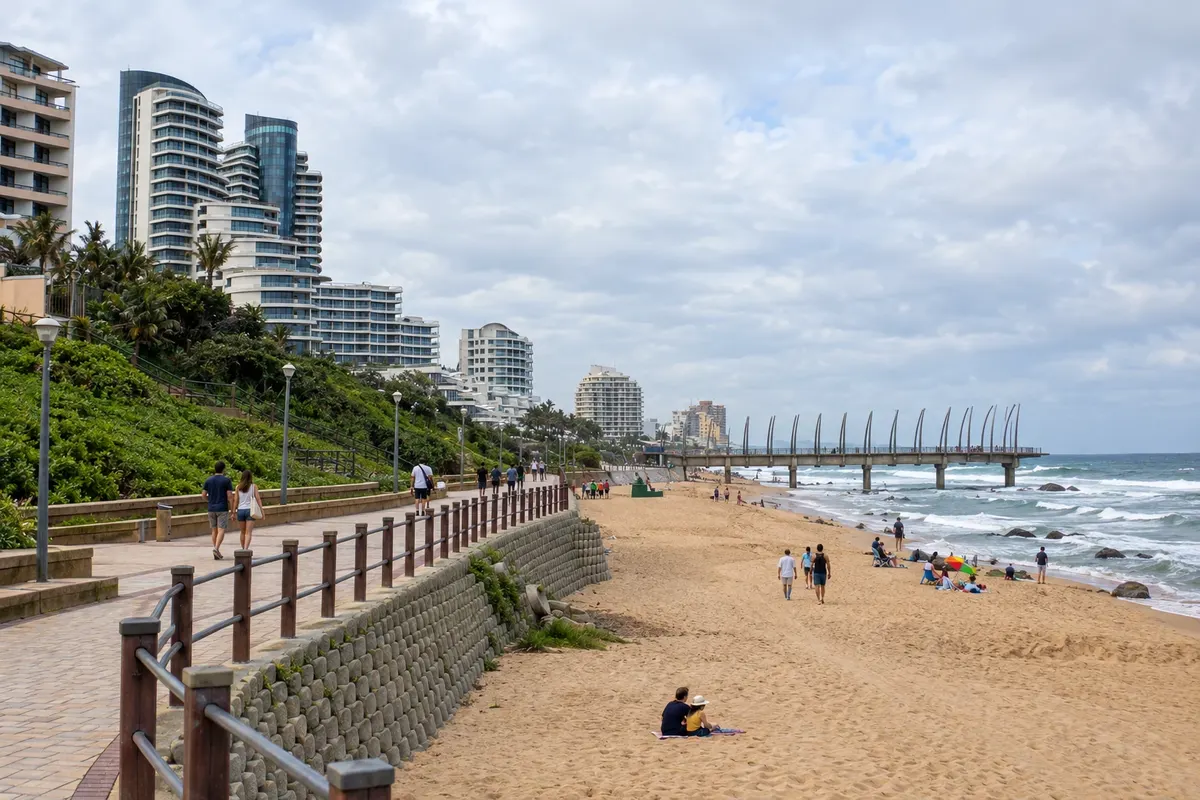
Umhlanga is a beach town about 15 km north of central Durban and about 18 km from King Shaka Airport. The seafront promenade links the red-and-white lighthouse, from 1954, to the pier shaped like a whale skeleton and to the lifeguarded beaches. On the high ground of the town is the KZN Sharks Board headquarters, the body that manages shark-protection nets, and to the north is the Umhlanga lagoon nature reserve.
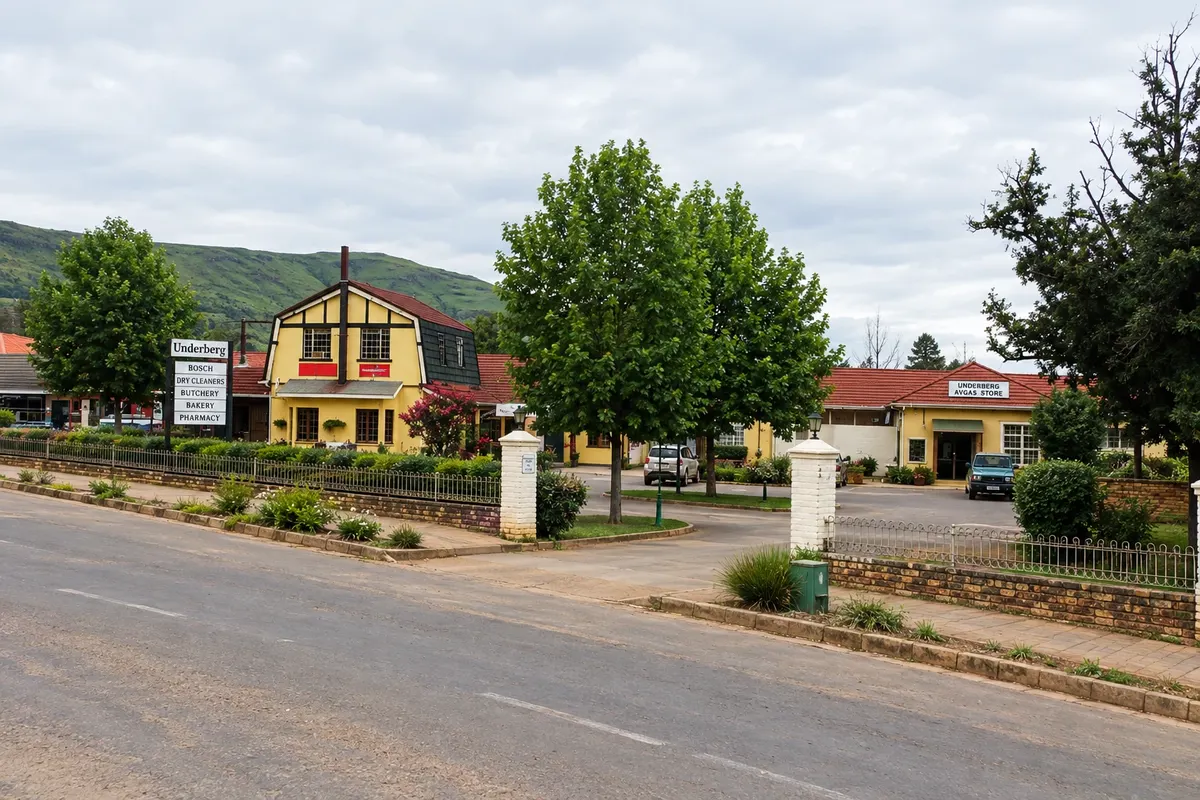
Underberg é uma vila de fazendas no sul do Drakensberg, ao lado da vizinha Himeville, e a base para o Sani Pass, a estrada de terra que sobe a escarpa até a fronteira do Lesoto, a cerca de 2.876 metros. A região tem rios de truta, cavalgadas e trilhas, e a cerca de uma hora ao norte fica Kamberg, com o centro de arte rupestre e o abrigo de Game Pass, uma das pinturas dos san mais conhecidas do país.
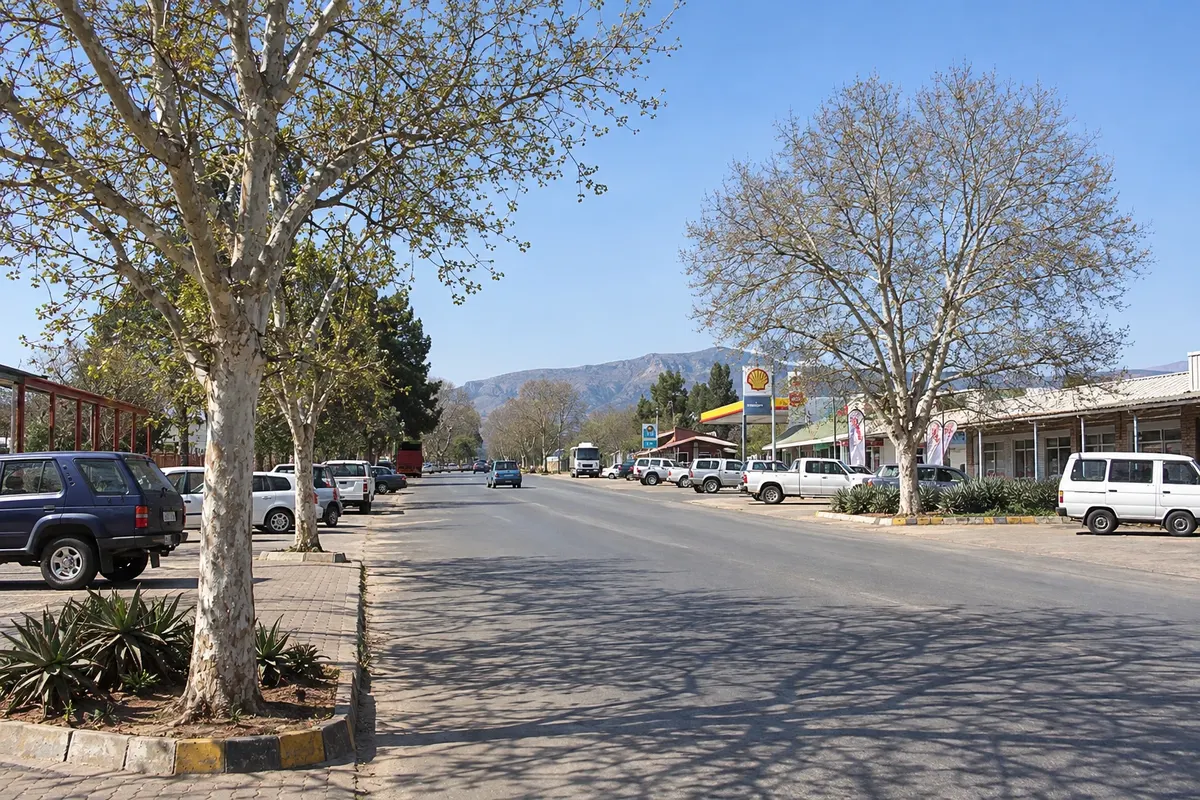
Winterton is an agricultural village on the banks of the Tugela River, the gateway to the central Drakensberg. Roads from there lead to the Champagne Valley at the foot of Champagne Castle and the Monk's Cowl area, and to Cathedral Peak, where the Didima camp hosts a San rock art centre. About 25 km to the north lies Spioenkop hill, the scene of a battle in the Anglo-Boer War in 1900.
The coast has a subtropical climate, with warm sea all year and a humid, rainy summer from November to March. From May to September the days are dry and sunny, good for safaris and hikes; in the Drakensberg, winter is cold and it can snow at higher elevations. KwaZulu-Natal is 5 hours ahead of Brasília.
King Shaka International Airport (DUR), north of Durban, receives flights from Johannesburg, Cape Town and some international cities. The Drakensberg is about a 3-hour drive from Durban, and St. Lucia about 3 hours to the north. A car is the most practical way to travel between the coast, the mountains and the reserves.
Your questions
Yes. The sea is usually warm year-round, and the beaches along the Golden Mile have protected areas with nets and lifeguards.
Two to three days allow for a long hike, a cave with rock paintings and the views of the Amphitheatre.
The St. Lucia estuary, with boat trips to see hippos and crocodiles, the Indian Ocean beaches and diving at Sodwana Bay.
Yes. Hluhluwe-iMfolozi is about 1 hour from St. Lucia, and many itineraries combine the safari, the estuary and the beaches.