Lumblija
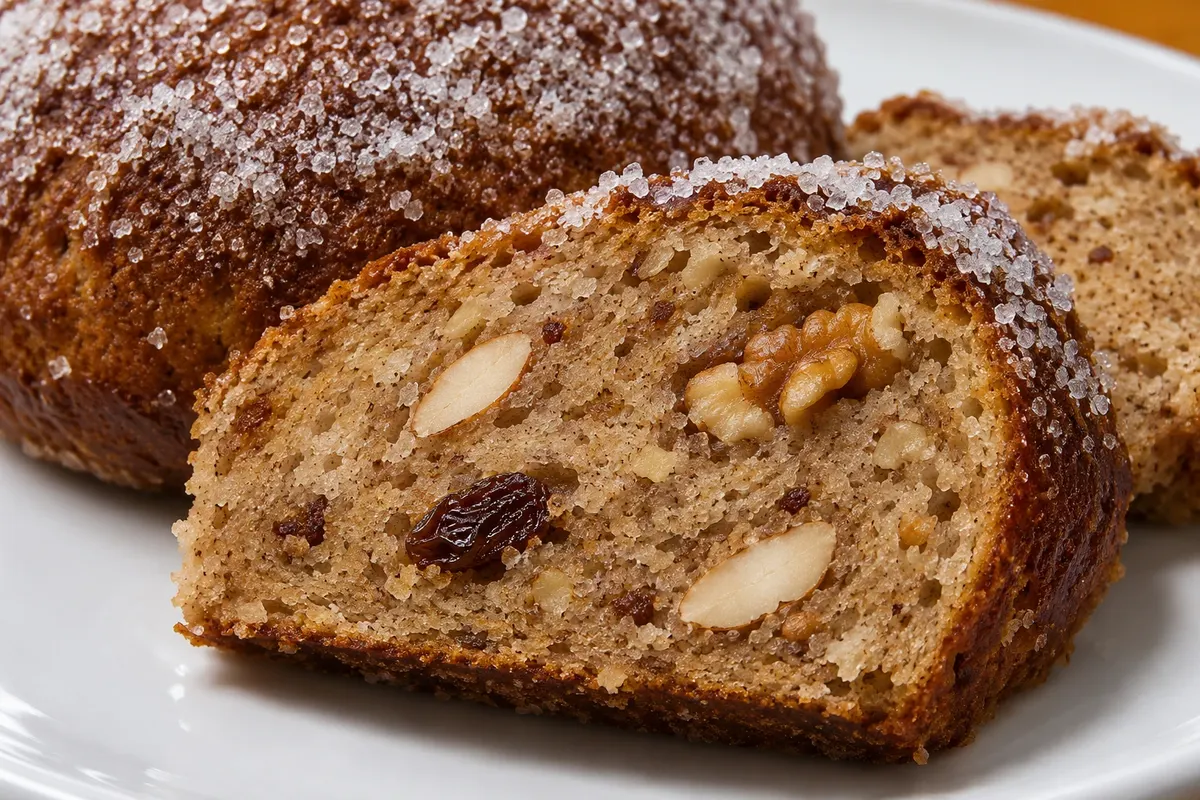
Na Korčuli kušajte lumbliju, okrugli kolač od dizanog tijesta s bademima, orasima, grožđicama, agrumima i začinima. Premazuje se varenikom ili rakijom i posipa šećerom. Nosi europsku zaštićenu oznaku zemljopisnog podrijetla.
Antarktika
Pučka svečanost · Korčula
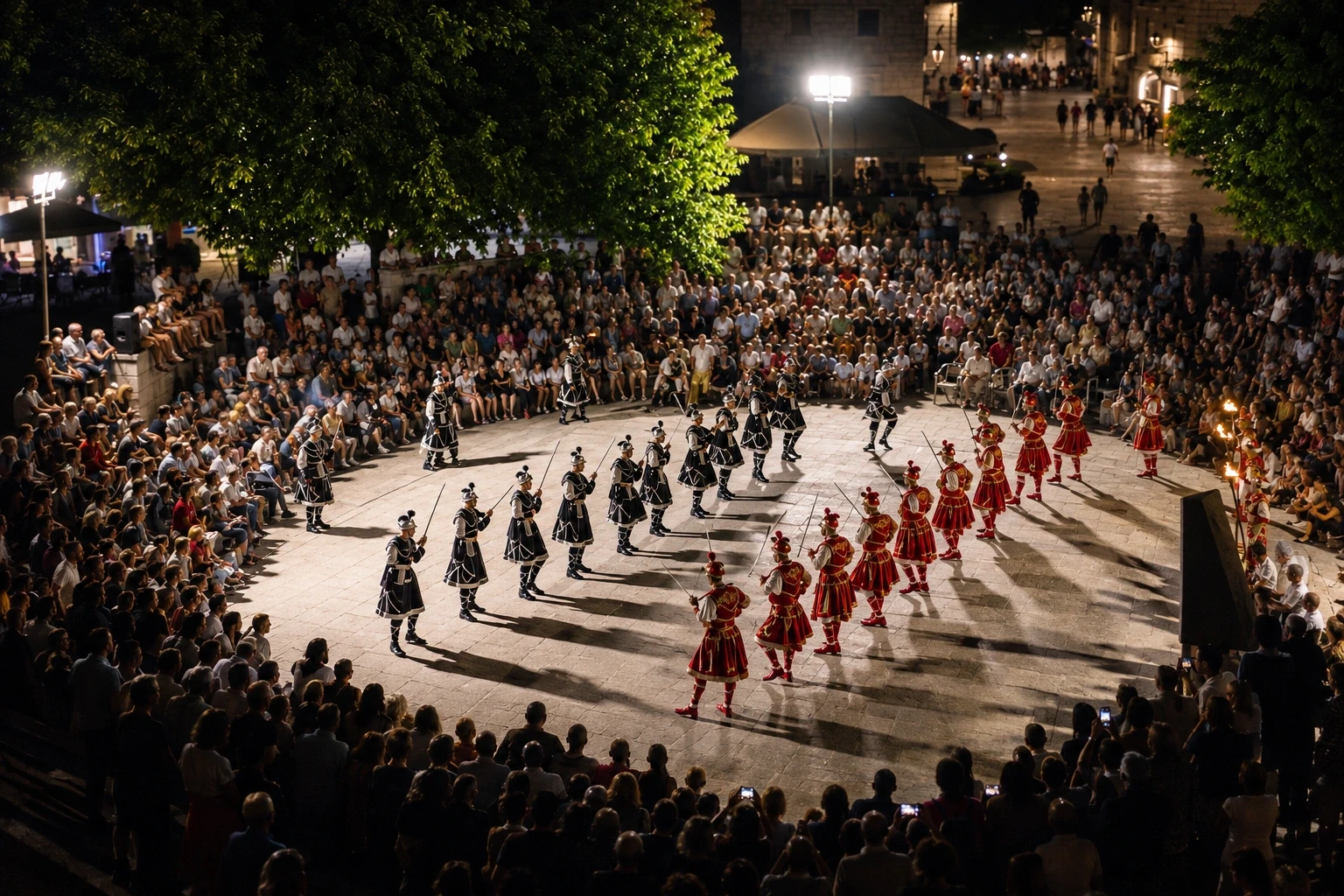
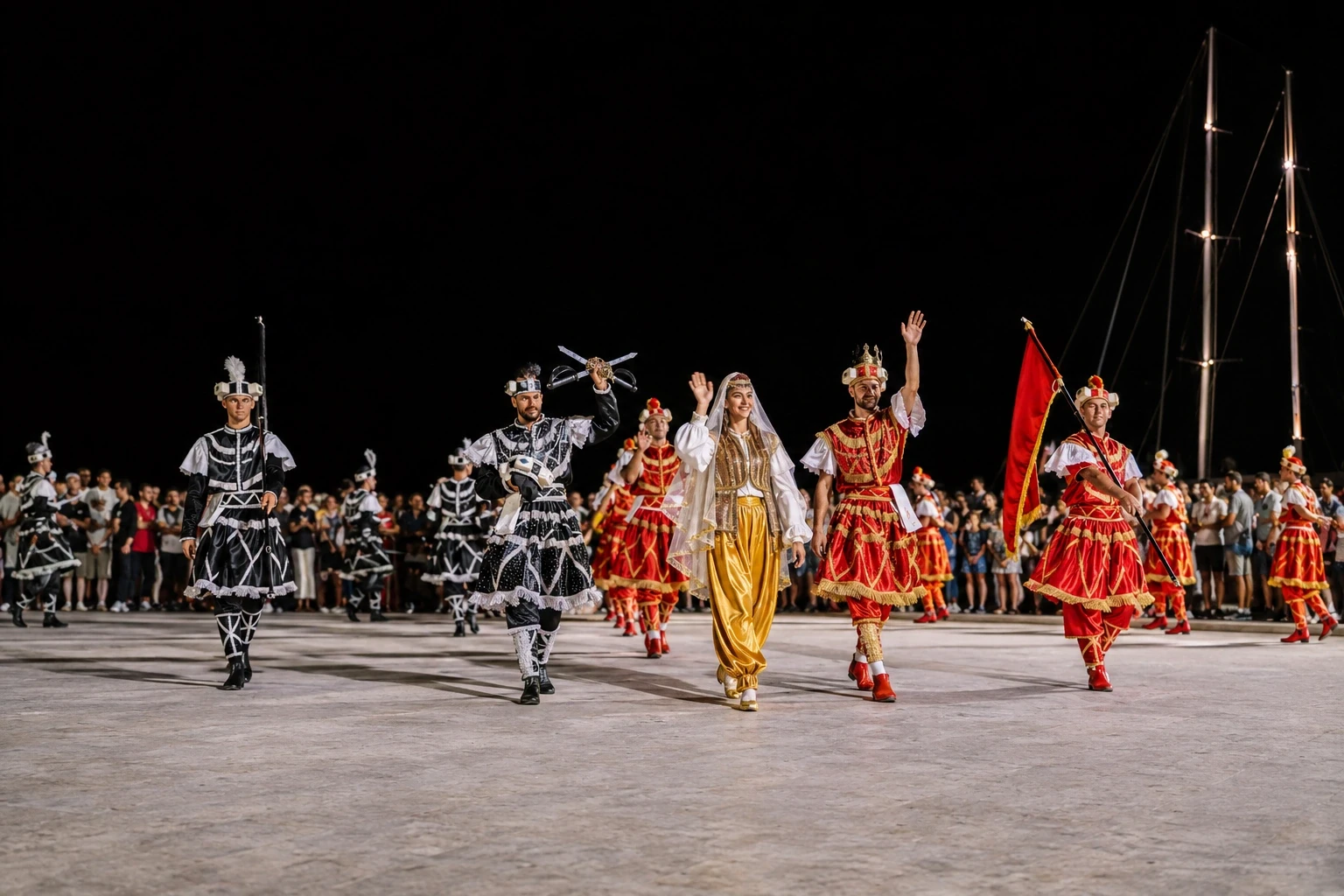
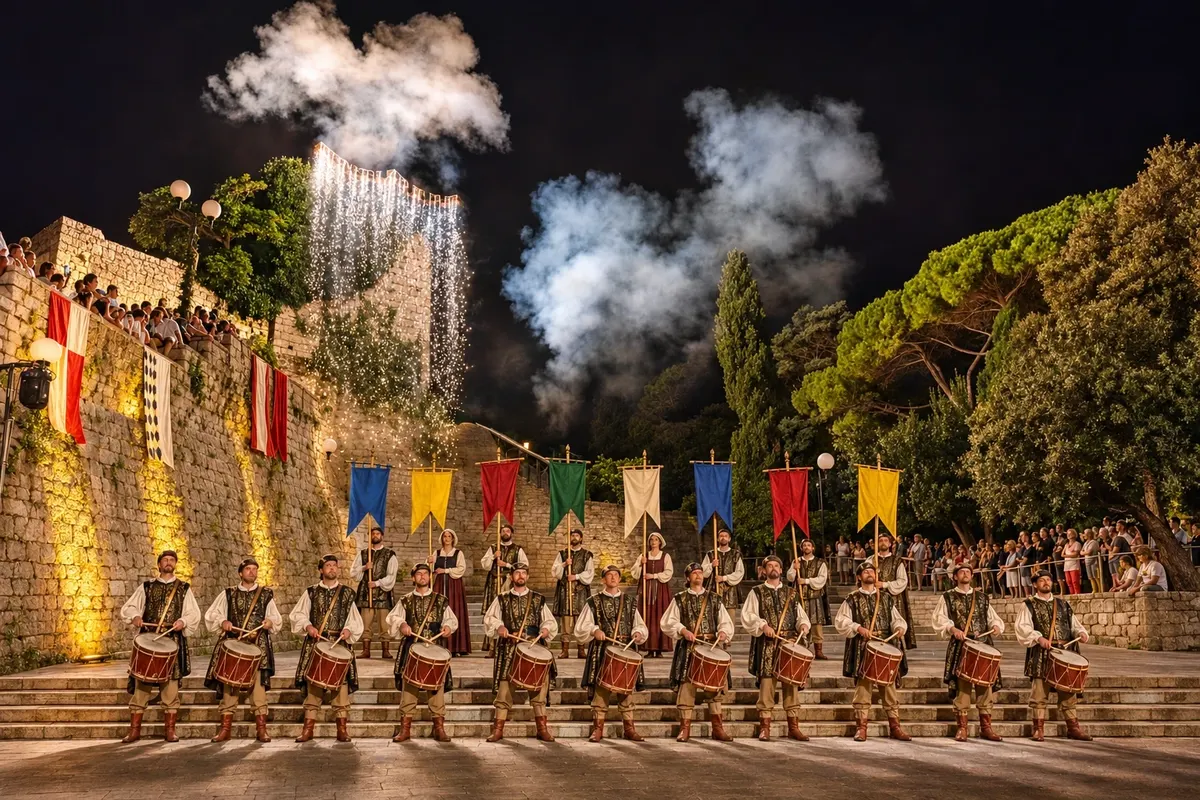
On July 29, both St. Theodore’s Day and Korčula’s town day, Korčula stages the moreška, a sword dance the town has kept alive for more than four centuries. Two kings and their armies fight over a young woman named Bula to the music of a wind band.
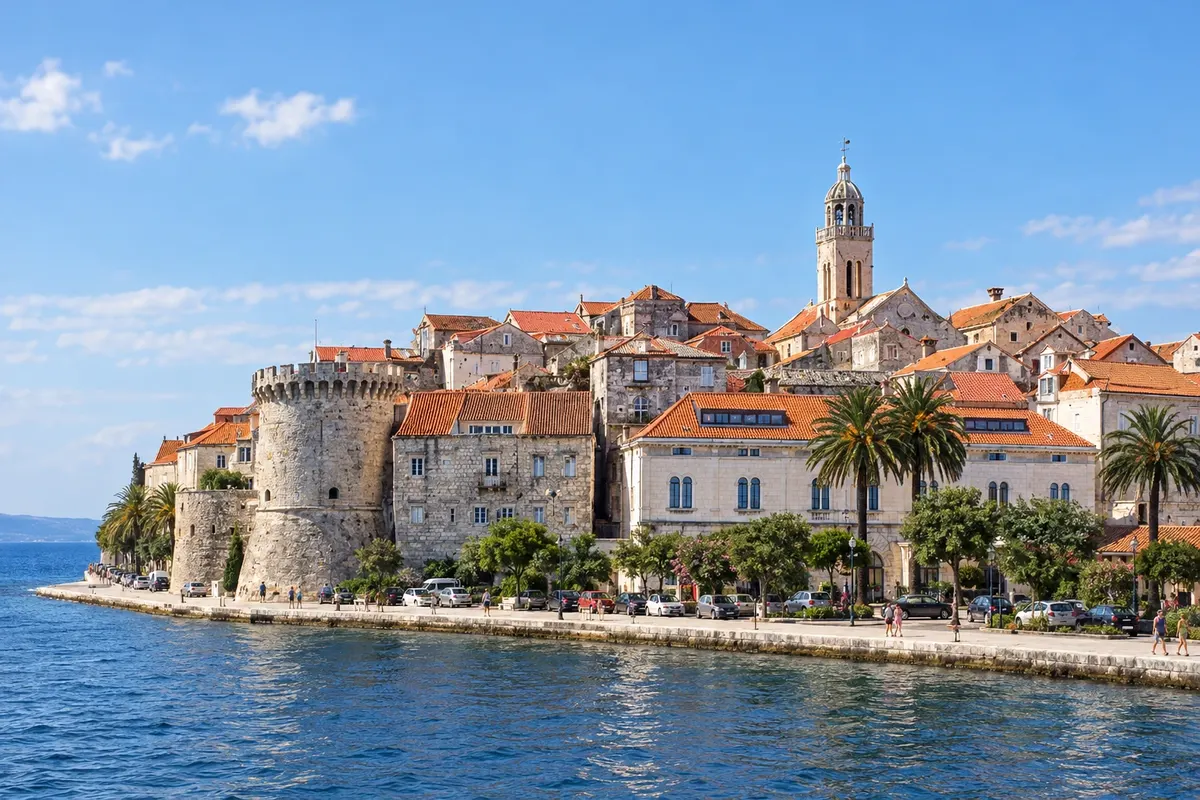
Na fotografiji: Korčula
Ilustrativni prikazi. Slike u vodiču izrađene su prema stvarnim mjestima. Pojedinosti na ilustracijama mogu se razlikovati od izgleda na terenu.
Kliknite na sliku za veći prikaz.
The Moreška of Korčula — Korčula
On July 29, the feast day of St. Theodore. There are also performances during the tourist season.
srpanj
Datum se mijenja svake godine. Prije putovanja provjerite ovogodišnji termin.
O svečanosti
Korčula is the main town on the island of the same name in southern Dalmatia. Its fortified center sits on a small peninsula. The moreška, a sword dance once performed in several Mediterranean countries, survives only in Korčula.
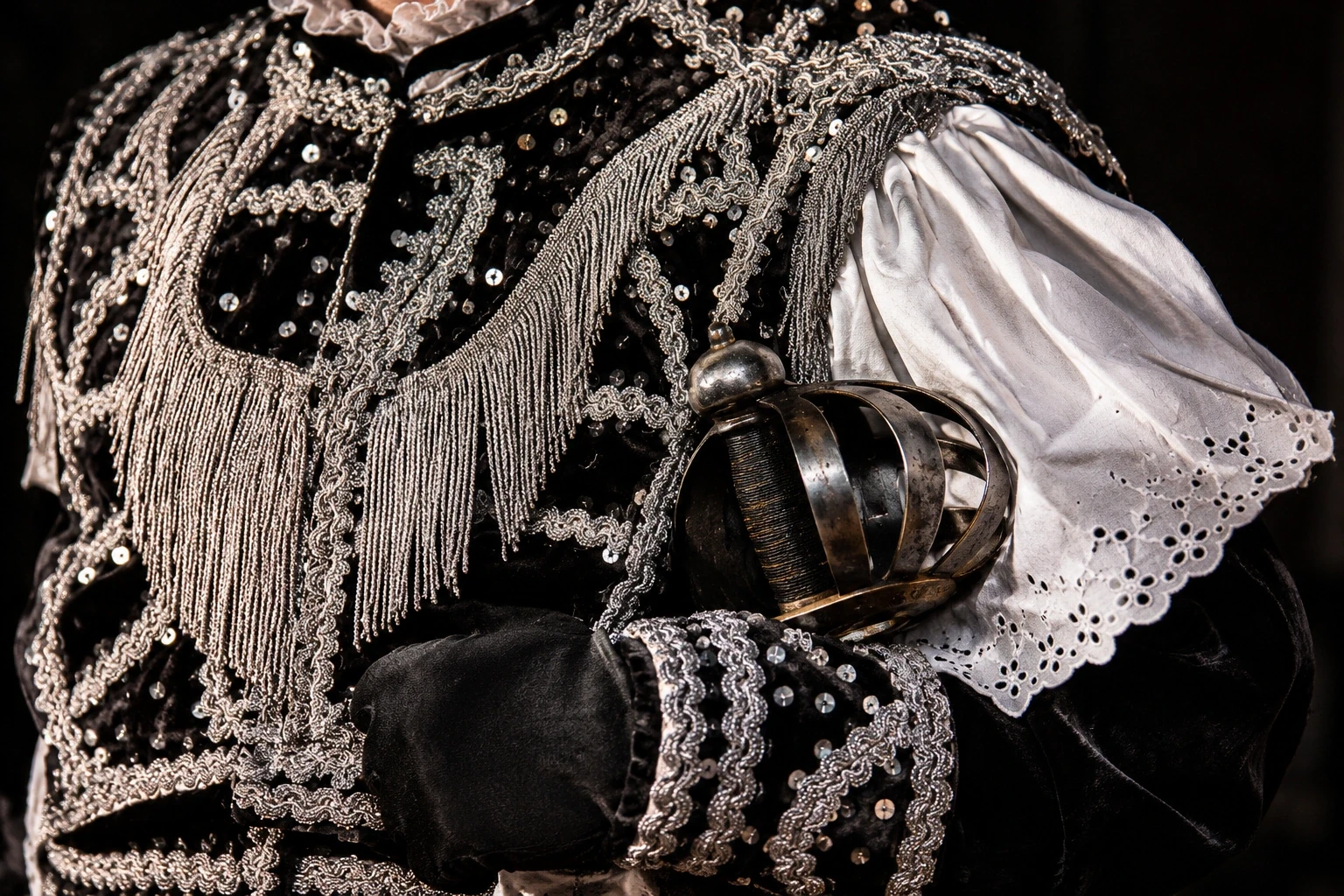
Records of the moreška in Korčula date back to the 17th century. The dance depicts the battle between two kings, the White King and the Black King, and their armies over a young woman named Bula. The dancers, known as moreškanti, each wield two swords and perform rhythmic combat sequences to the music of a wind band. Taking part in the dance is a source of pride for the town’s families.
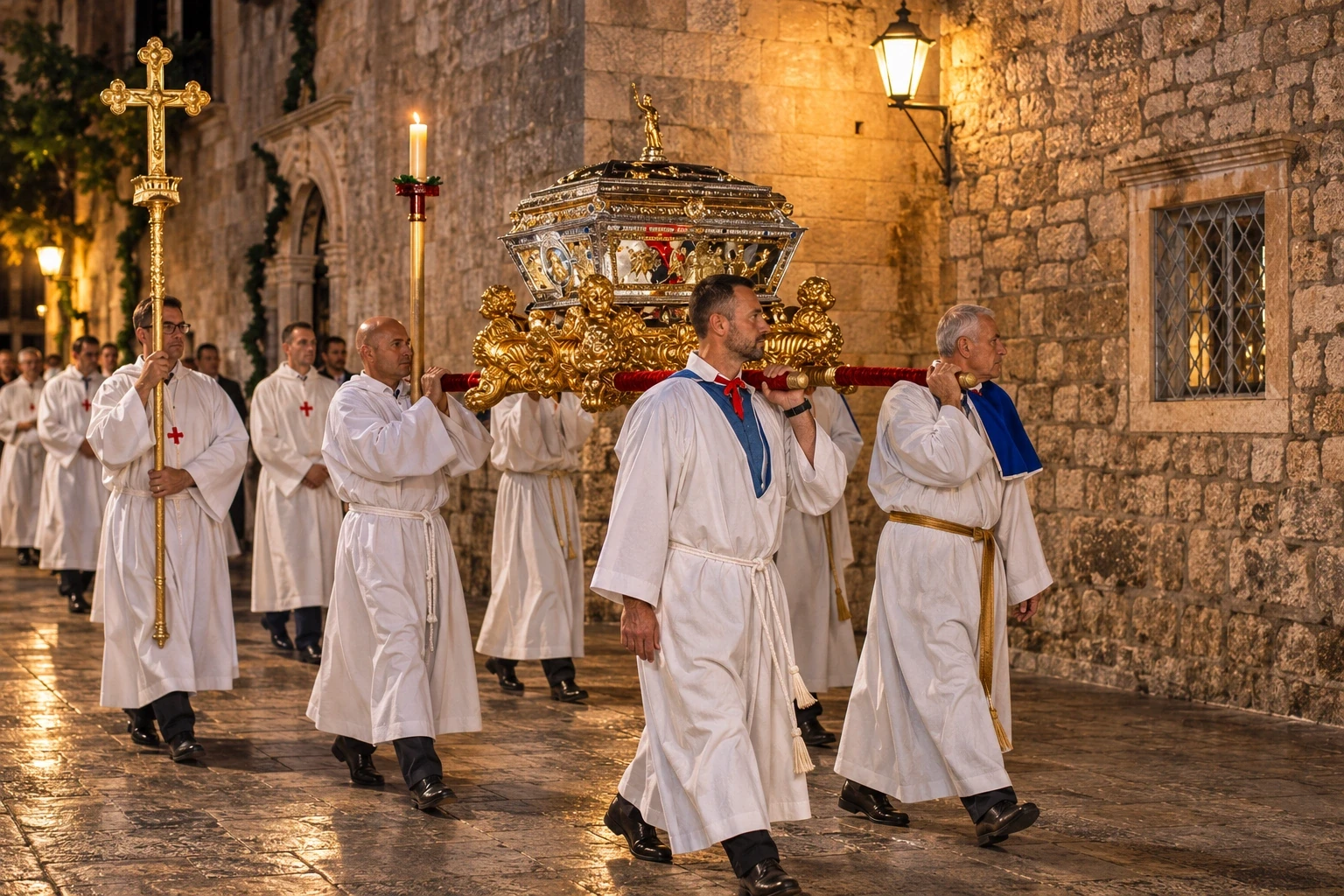
The most important performance takes place on July 29, both the feast day of St. Theodore, Korčula’s patron saint, and the town’s day of celebration. Korčula’s three historic religious brotherhoods also walk in procession through the streets that day. During the tourist season, there are additional performances at the town’s open-air cinema.
The moreška is a protected part of Croatia’s cultural heritage and one of the island’s symbols.
It’s worth making the trip to see the dance and the procession in the old town on the day Korčula celebrates its patron saint.
The moreška performance on July 29, St. Theodore’s Day. The procession of Korčula’s brotherhoods that same day. A walk through the old town and a visit to St. Mark’s Cathedral. The island’s other sword dances, known as kumpanija, in villages such as Blato and Vela Luka.
Buy your ticket in advance for the July 29 performance, the most popular of the season. If you can’t make it that day, catch one of the regular performances during the tourist season.
Check the performance schedule with the Korčula tourist office. Boats serve the island from Split and Dubrovnik, and a ferry runs from Orebić on the Pelješac Peninsula. Book your accommodations early for a summer stay.
Hrvatske – domaći okusi
srpanj
srpanjJuly 25 to 27 every year.
From July 25 to 27, the town of Rab returns to the Middle Ages. Craftspeople practice traditional trades in the streets, people dress in period clothing, a procession honors St. Christopher, the town’s patron saint, and crossbowmen hold their tournament in the square. The celebration recalls a decision made by the town council in 1364.
srpanjFor about a week in July.
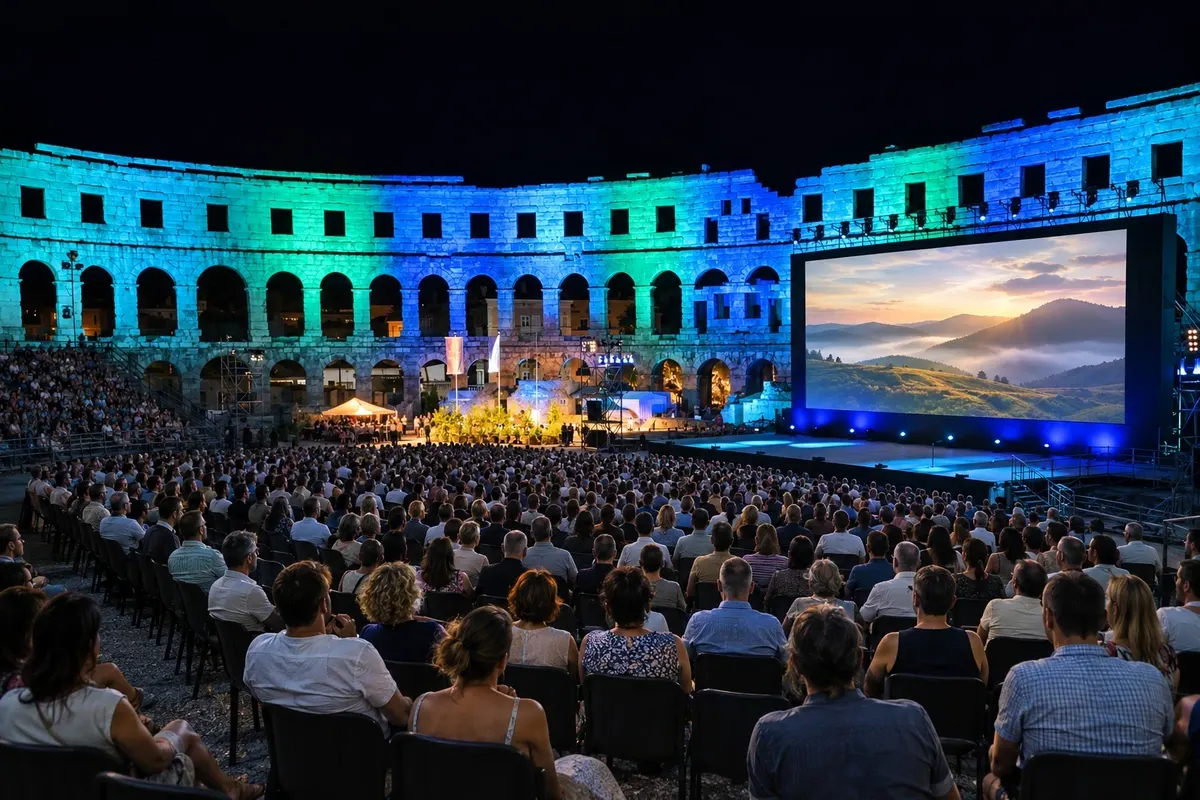
Every July, Pula’s Roman arena becomes an open-air cinema for Croatia’s oldest film festival. Founded in 1954, the festival is where the Golden Arenas, Croatia’s national film awards, are presented.
srpanj/kolovozJuly 10 to August 25 every year.
From July 10 to August 25, Dubrovnik’s squares, palaces, and fortresses become open-air stages for theater, music, opera, and dance during Croatia’s oldest cultural festival, founded in 1950.
Pitanja i odgovori
The most important performance takes place on July 29, St. Theodore’s Day. The Korčula tourist office publishes the other performance dates for the season.
It depicts two kings and their armies fighting over a young woman named Bula. Each dancer uses two swords, and a wind band provides the music.
Performances during the tourist season usually take place at Korčula’s open-air cinema. Check the schedule to confirm the venue and date.
u Hrvatskoj – svečanosti i događanja
siječanj/veljača/ožujakIn the weeks leading up to Lent. The main parade takes place on the Sunday before Ash Wednesday.
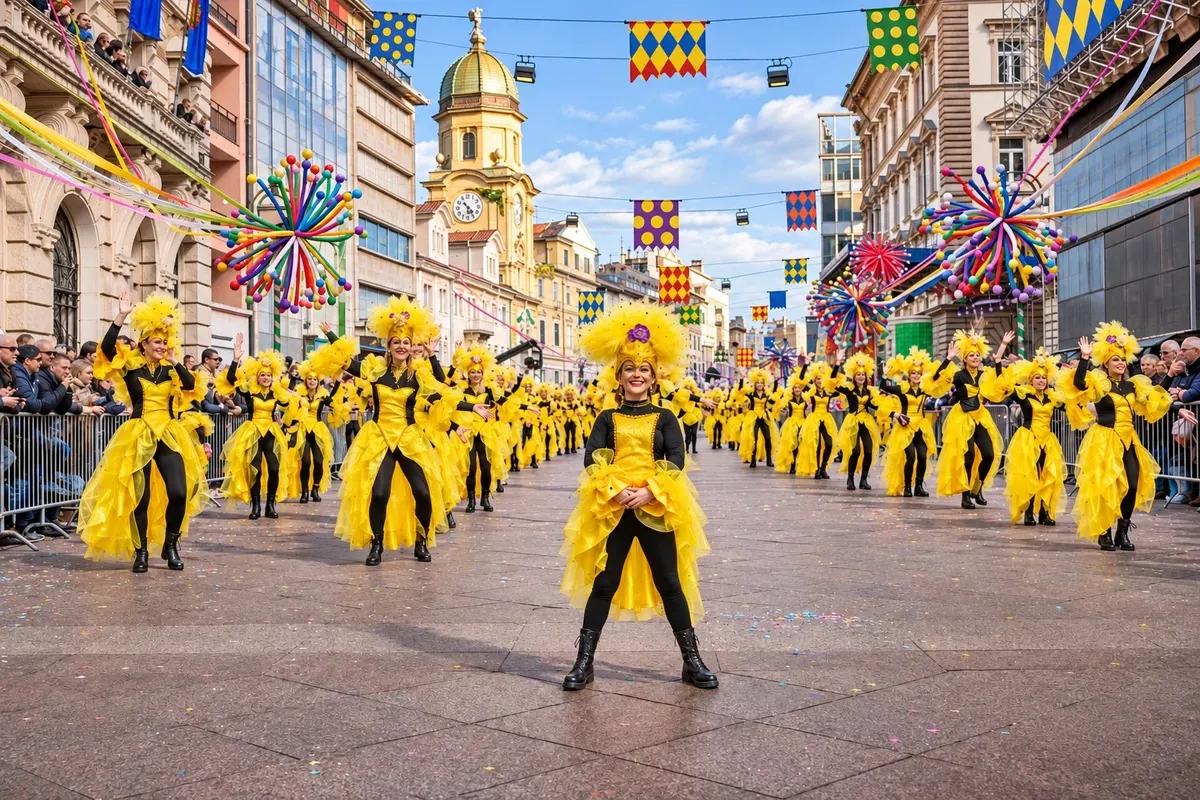
In the weeks leading up to Lent, Rijeka hosts Croatia’s largest carnival, with masked groups, a children’s parade, and a grand international parade. The zvončari, bell ringers from nearby villages, close the parade in a tradition recognized by UNESCO.
veljačaFebruary 3, with festivities beginning the day before, on February 2.
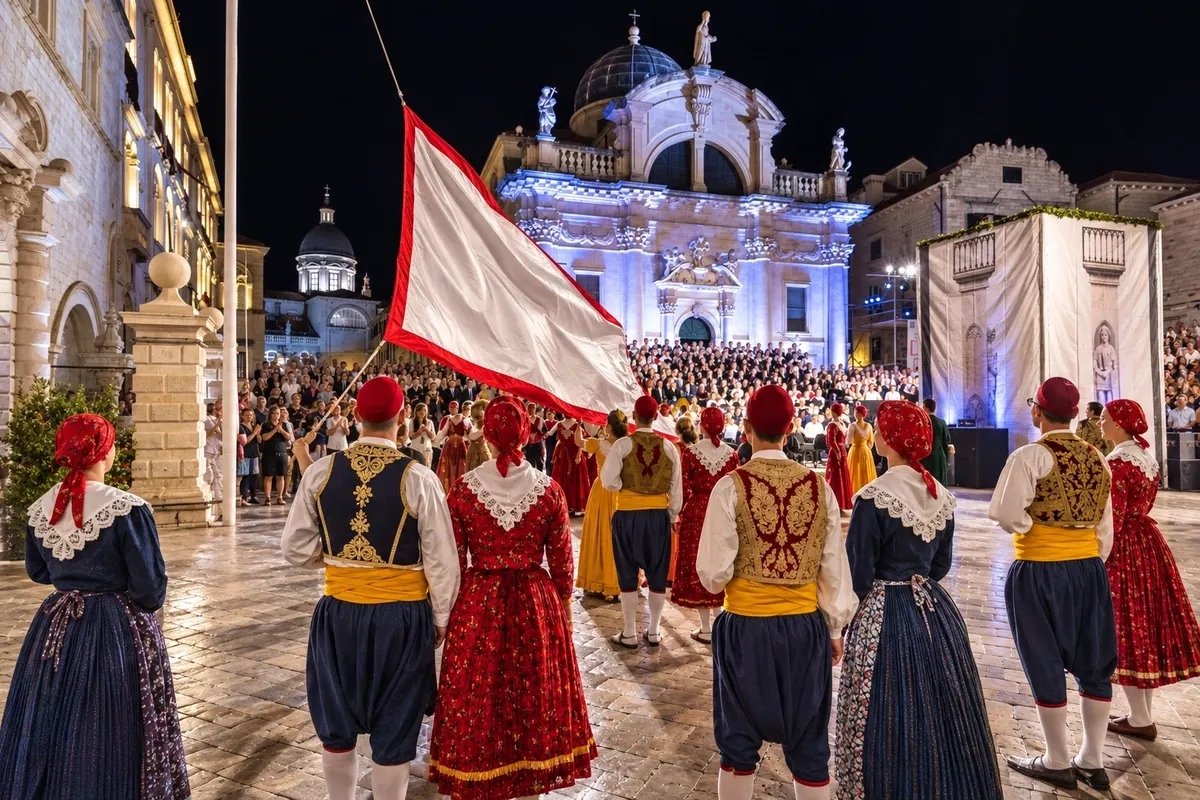
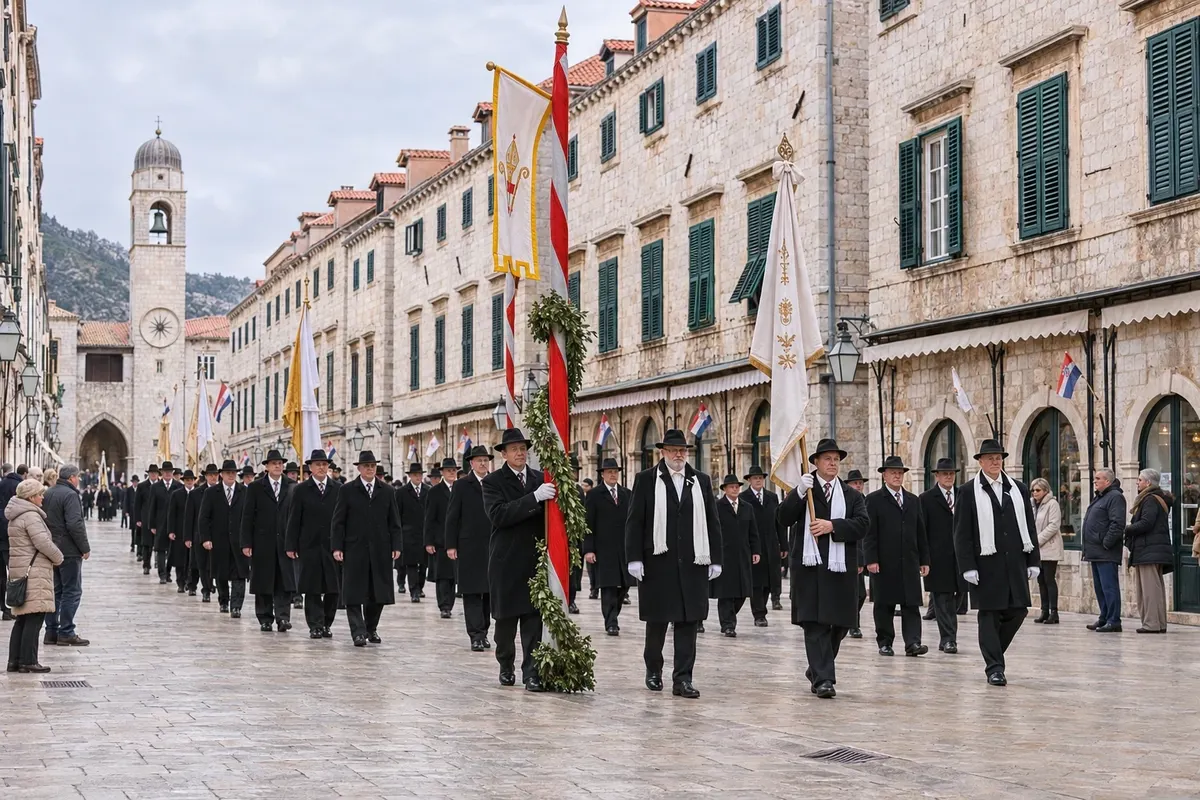
On February 3, Dubrovnik honors its patron saint, St. Blaise, with an outdoor Mass and a procession carrying his relics along the Stradun. People in traditional dress and banners from neighboring parishes accompany the procession as part of this UNESCO-listed celebration.
ožujak/travanjOvernight from Holy Thursday into Good Friday.
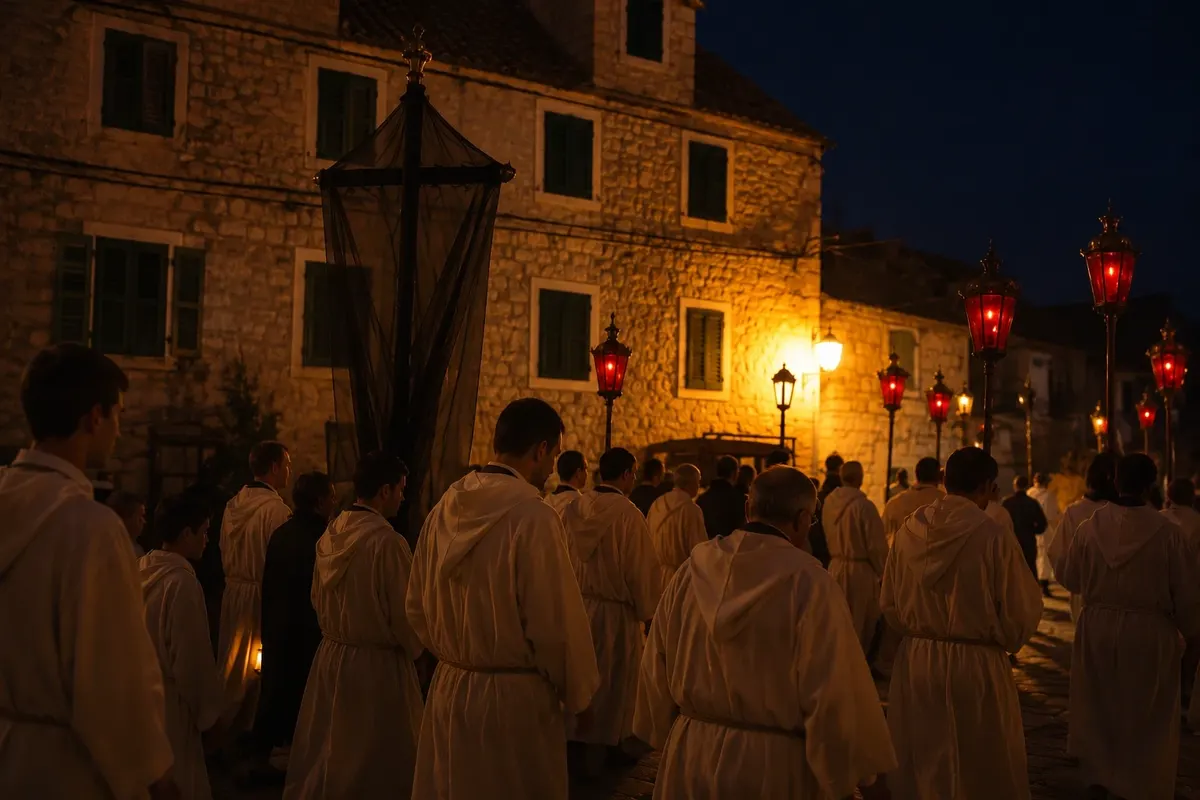
On Holy Thursday night, six villages in the central part of the island of Hvar set out in procession at the same time. Each follows its own cross on a 25-kilometer route through the other villages until dawn, in a five-century-old tradition recognized by UNESCO.
svibanjMay 7, with events in the week leading up to the feast and in the days that follow.
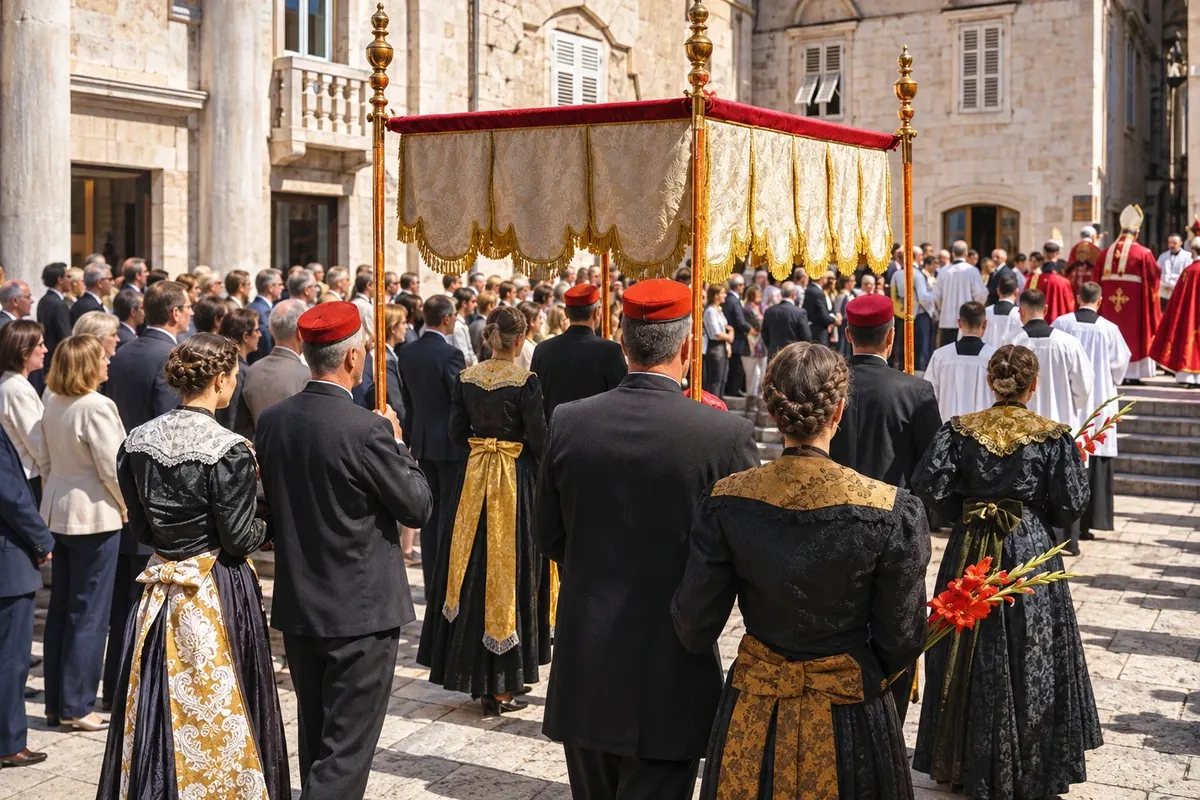
On May 7, Split honors its patron saint, Saint Domnius, and celebrates City Day. A procession carries the saint’s relics from the cathedral to the Riva for an outdoor Mass. A traditional woodcraft fair and concerts are also part of the week of festivities.
lipanjThree days in late June.
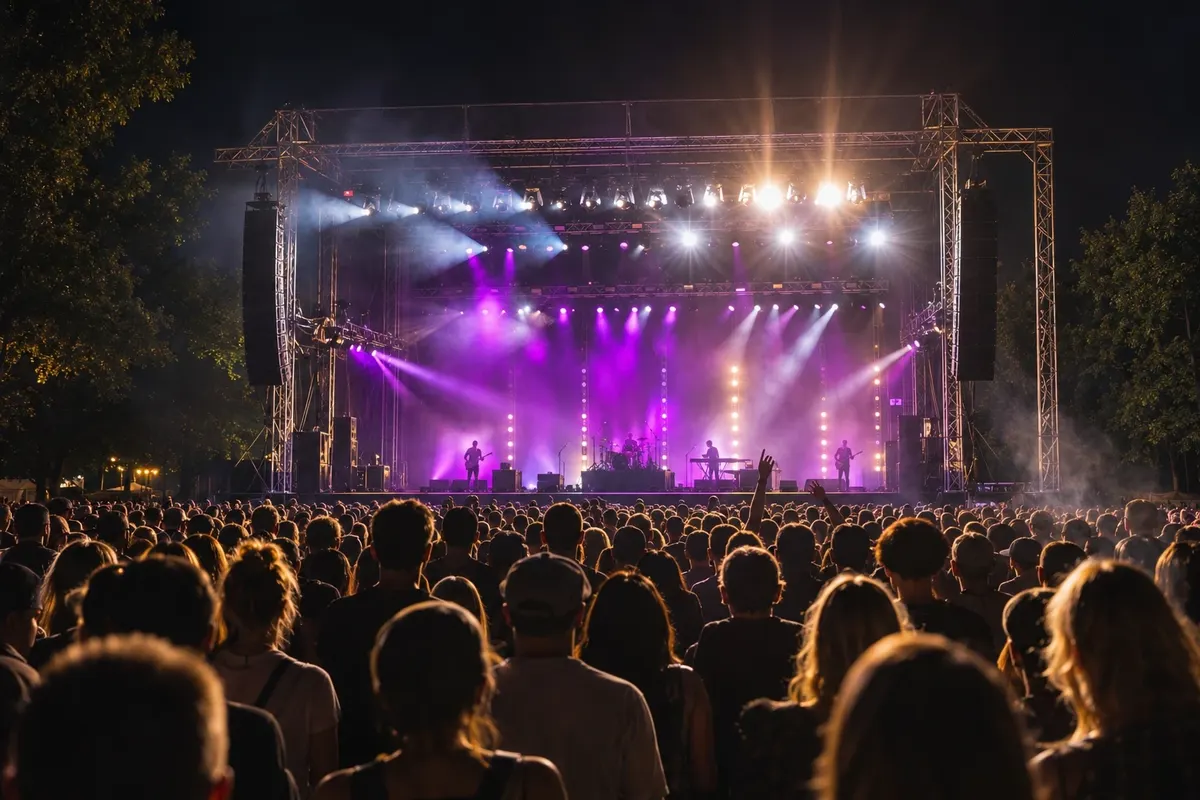
In late June, the islands of Lake Jarun in Zagreb host INmusic, Croatia’s largest outdoor music festival, with three days of rock and contemporary music, Croatian and international bands, and lakeside camping.
kolovoz/rujanFor five days from late August to early September.
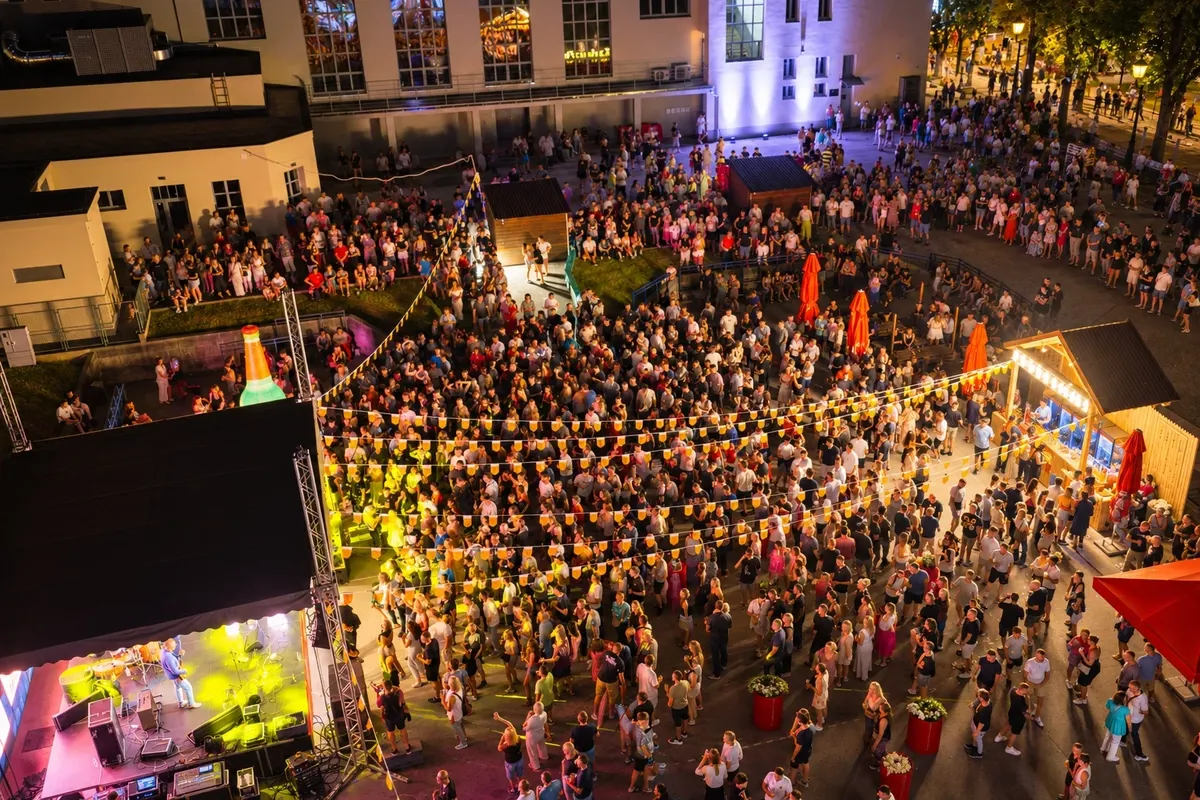
In late August, Karlovac, the city of beer and four rivers, hosts Croatia’s oldest and largest beer festival: five days of concerts, food, and beer from Croatia and abroad.
Istražite još