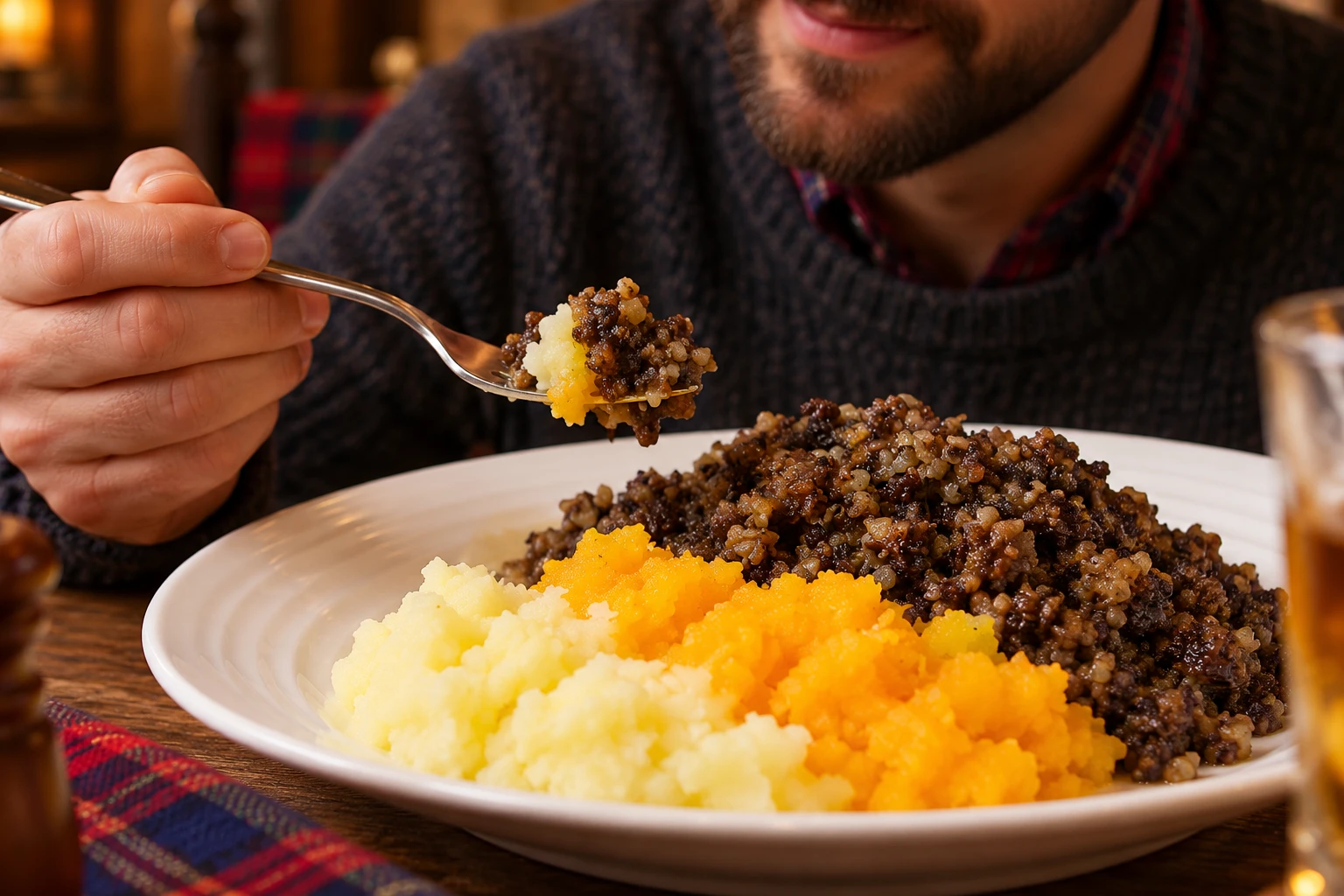
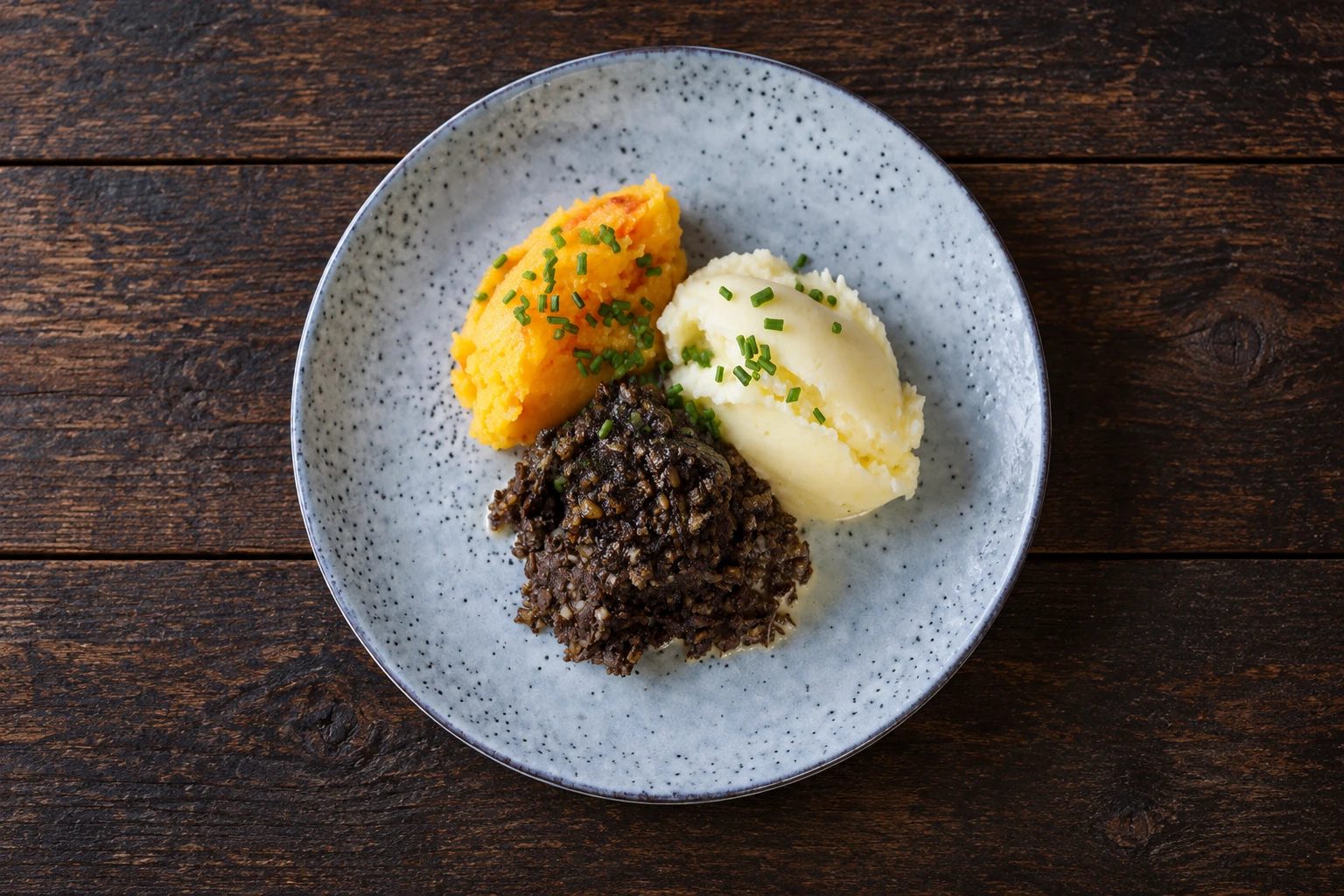
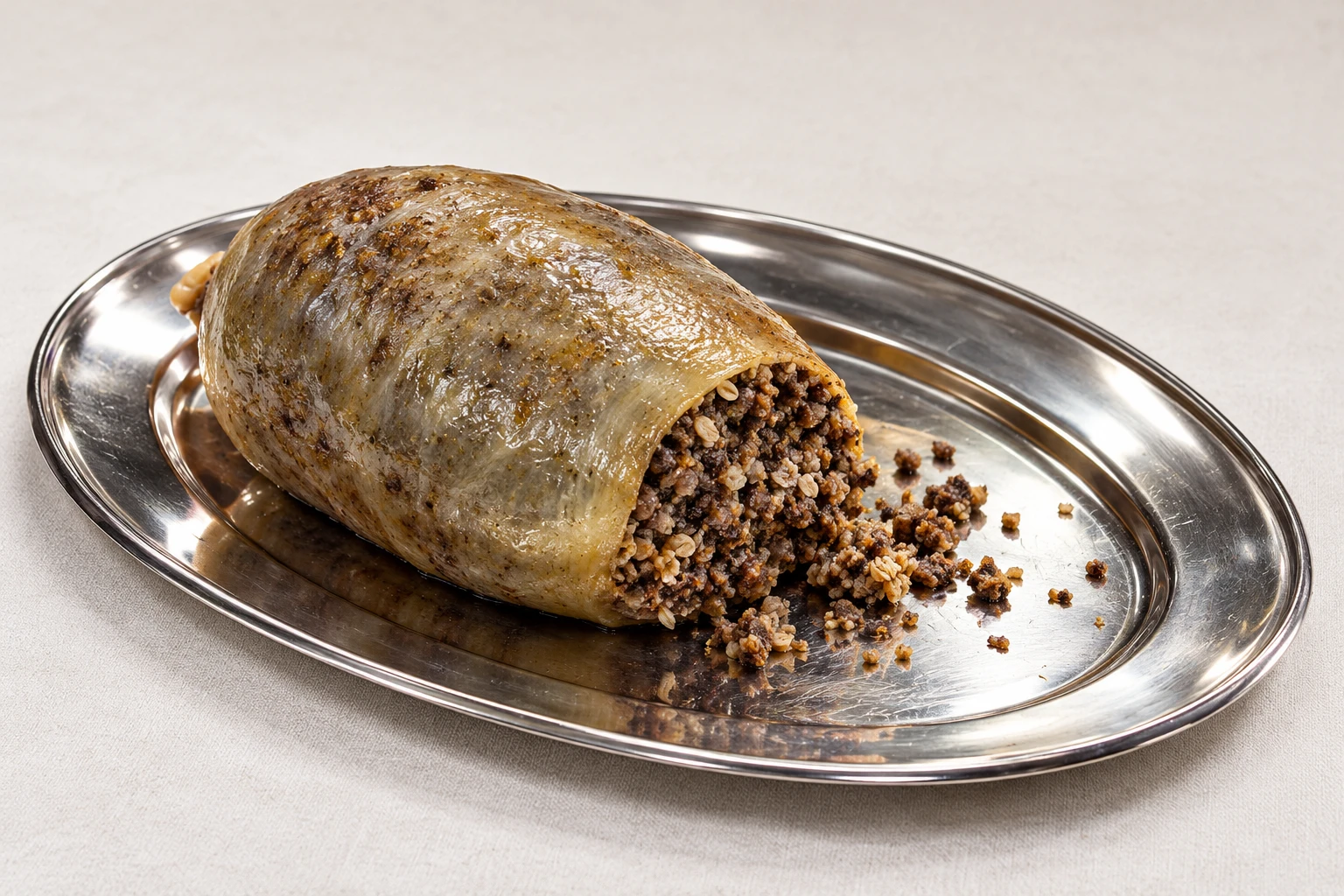
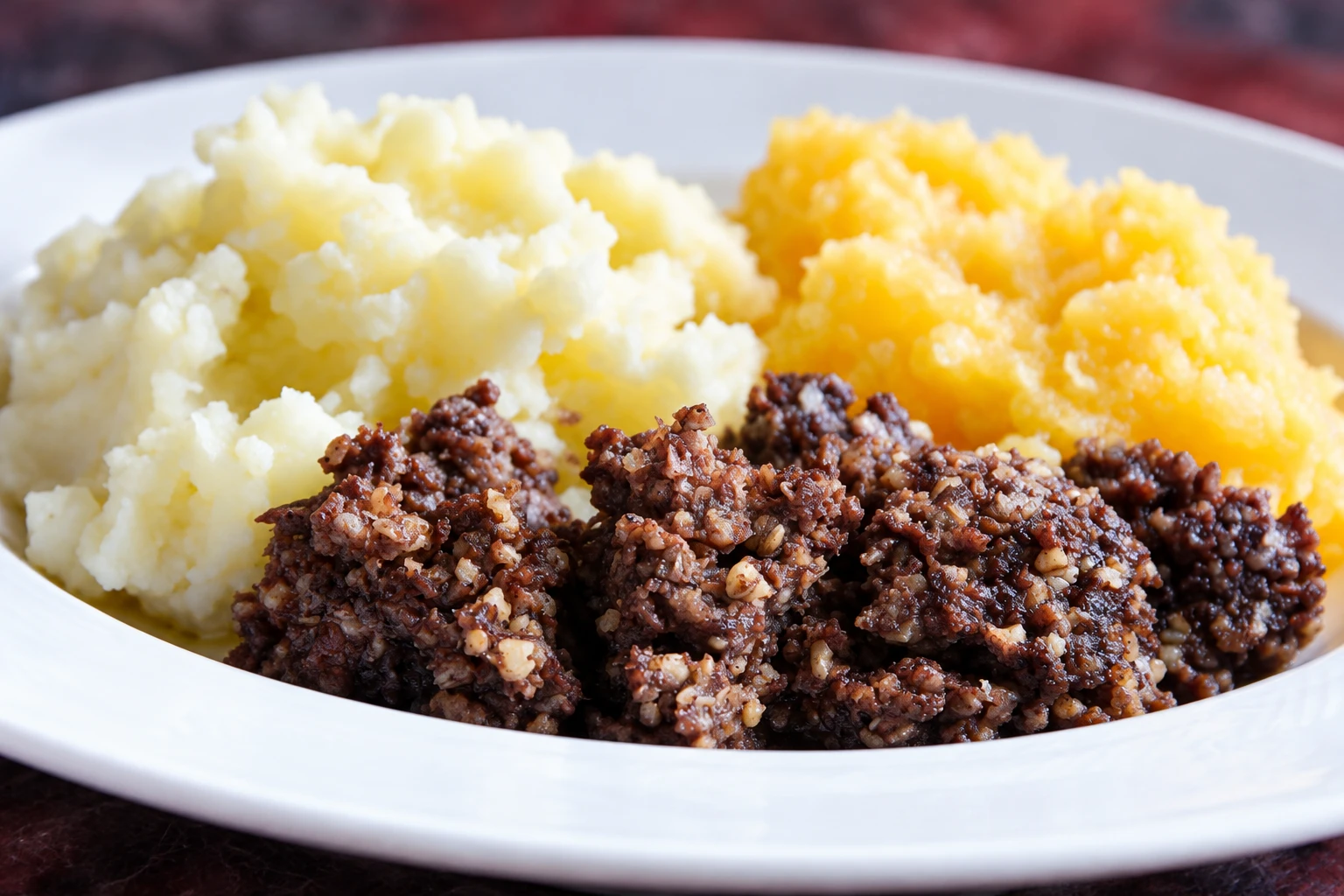
Haggis is a large, round type of sausage. Sheep offal—such as heart, liver and lung—is minced and mixed with oats, onion, fat, salt and spices, and the mixture is cooked inside a casing. Traditionally the casing was the animal’s stomach; today most commercially sold haggis uses a synthetic casing. Inside, the texture is loose and grainy, and the flavour is meaty and seasoned with pepper.
The dish is served with neeps and tatties: turnip purée and potato purée. It appears in restaurants and pubs across Scotland in both traditional and modern versions, and is sold by butchers and at markets. There are also vegetarian versions made with vegetables, grains and oats.
The exact origin of haggis is debated, and similar dishes existed elsewhere in Europe. What made it Scotland’s national dish was the poem "Address to a Haggis" by Robert Burns, the national poet, in the late 18th century, in which Burns calls it the chief of the pudding-race.
Each year, around January 25 (Burns’s birthday), Scotland celebrates Burns Night with dinners called Burns Suppers. The haggis is brought into the room to bagpipe music, someone recites the poem before it and it is cut, and the dish is served with neeps and tatties, often accompanied by a dram of whisky.


 Brazil
 Argentina
 Bolivia
 Chile
 Colombia
 Ecuador
 Guyana
 French Guiana
 Falkland Islands (Malvinas)
 Paraguay
 Peru
 Suriname
 Uruguay
 Venezuela
 Germany
 Austria
 Belgium
 Croatia
 Denmark
 Spain
 Finland
 France
 Greece
 the Netherlands
 Hungary
 Ireland
 Iceland
 Italy
 Luxembourg
 Norway
 Poland
 Portugal
 the Czech Republic
 Sweden
 Switzerland
 Turkey
 the United States
 Mexico
 the Dominican Republic
 South Africa
 Australia
 Fiji
 New Zealand