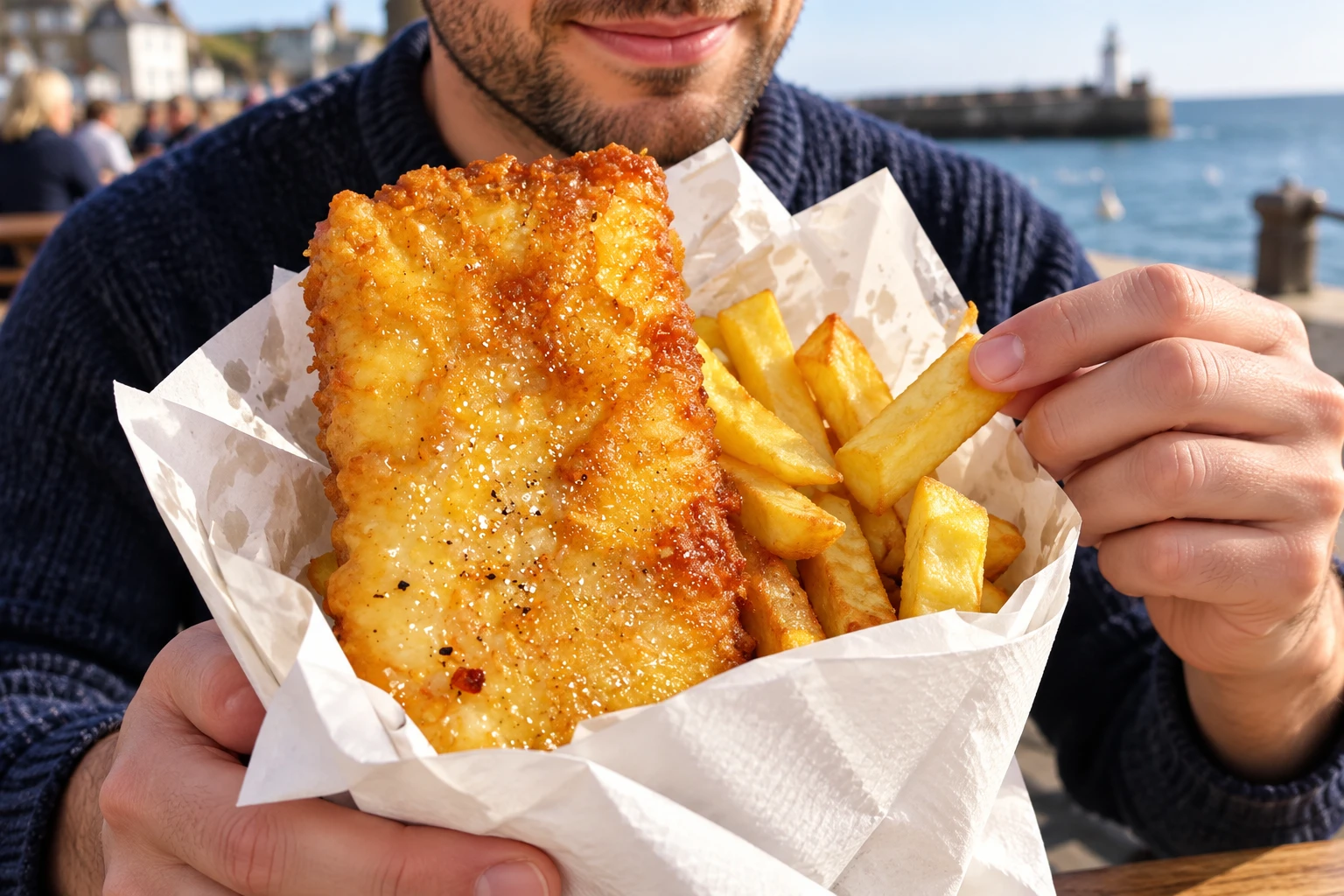
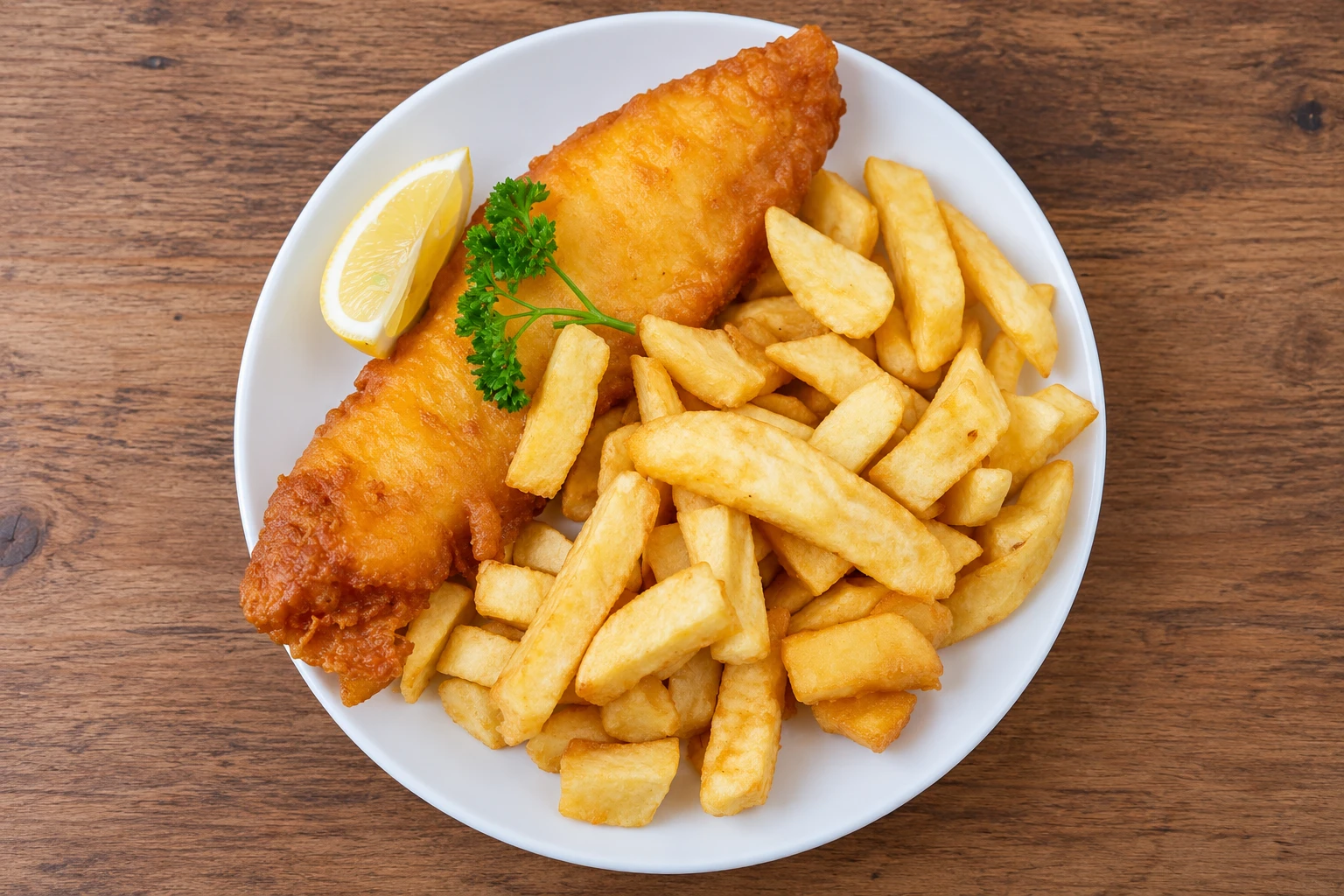
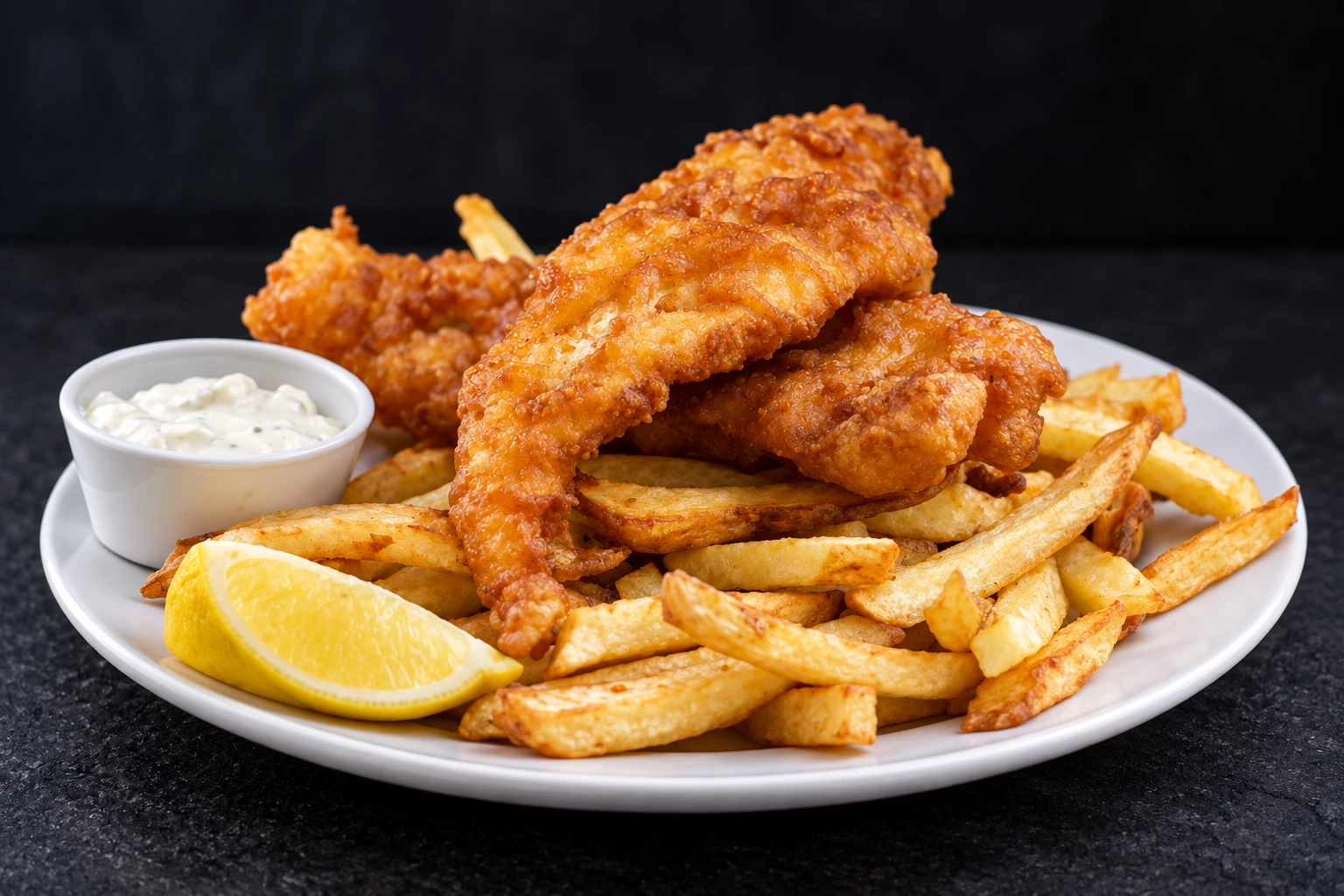
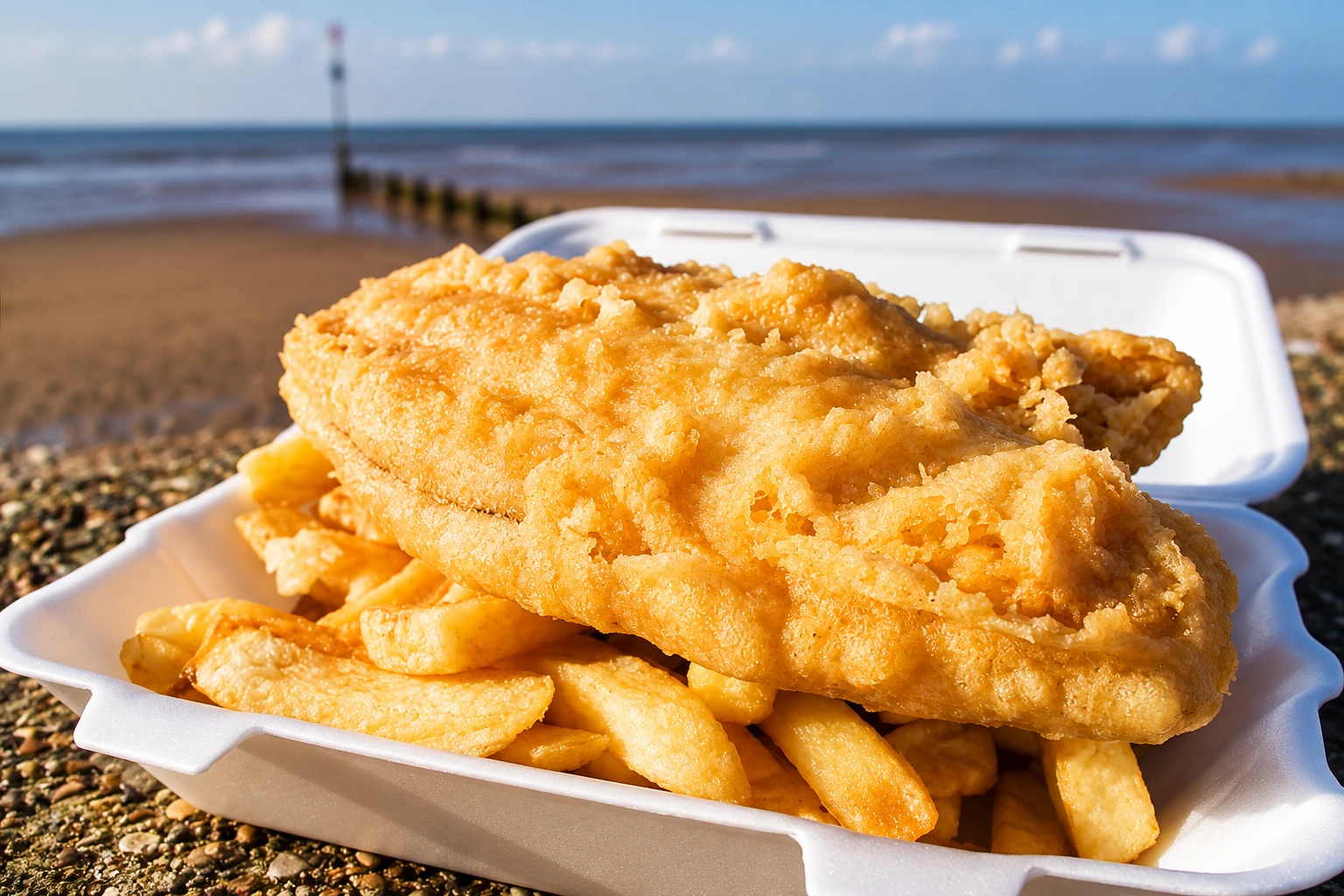
Fish and chips is a fillet of white fish, usually cod or haddock, dipped in a flour batter and fried until golden and crisp, served with thick-cut fries. The seasoning is added at the time: salt and malt vinegar, and often mushy peas, tartar sauce, or ketchup on the side.
The two parts of the dish have different origins. Batter-fried fish is associated with the tradition of Sephardic Jews from the Iberian Peninsula, who likely introduced it to England. French fries in stick form appear in English cookbooks in the early 19th century. The combination of the two emerged in industrial towns in the second half of that century.
Who opened the first shop is disputed. One account credits Joseph Malin, who is said to have sold fried fish with chips in London around 1860; another credits John Lees, who reportedly did the same at a market in Mossley, Lancashire, around 1863. For that reason the dish is linked to England rather than to a particular city.
Fish and chip shops, known as chippies, spread across the country in the late 19th and early 20th centuries. The dish was not rationed during World War II and secured its place as a popular meal. For a long time it was sold wrapped in newspaper, today replaced by food-grade paper.


 Brazil
 Argentina
 Bolivia
 Chile
 Colombia
 Ecuador
 Guyana
 French Guiana
 Falkland Islands (Malvinas)
 Paraguay
 Peru
 Suriname
 Uruguay
 Venezuela
 Germany
 Austria
 Belgium
 Croatia
 Denmark
 Spain
 Finland
 France
 Greece
 the Netherlands
 Hungary
 Ireland
 Iceland
 Italy
 Luxembourg
 Norway
 Poland
 Portugal
 the Czech Republic
 Sweden
 Switzerland
 Turkey
 the United States
 Mexico
 the Dominican Republic
 South Africa
 Australia
 Fiji
 New Zealand