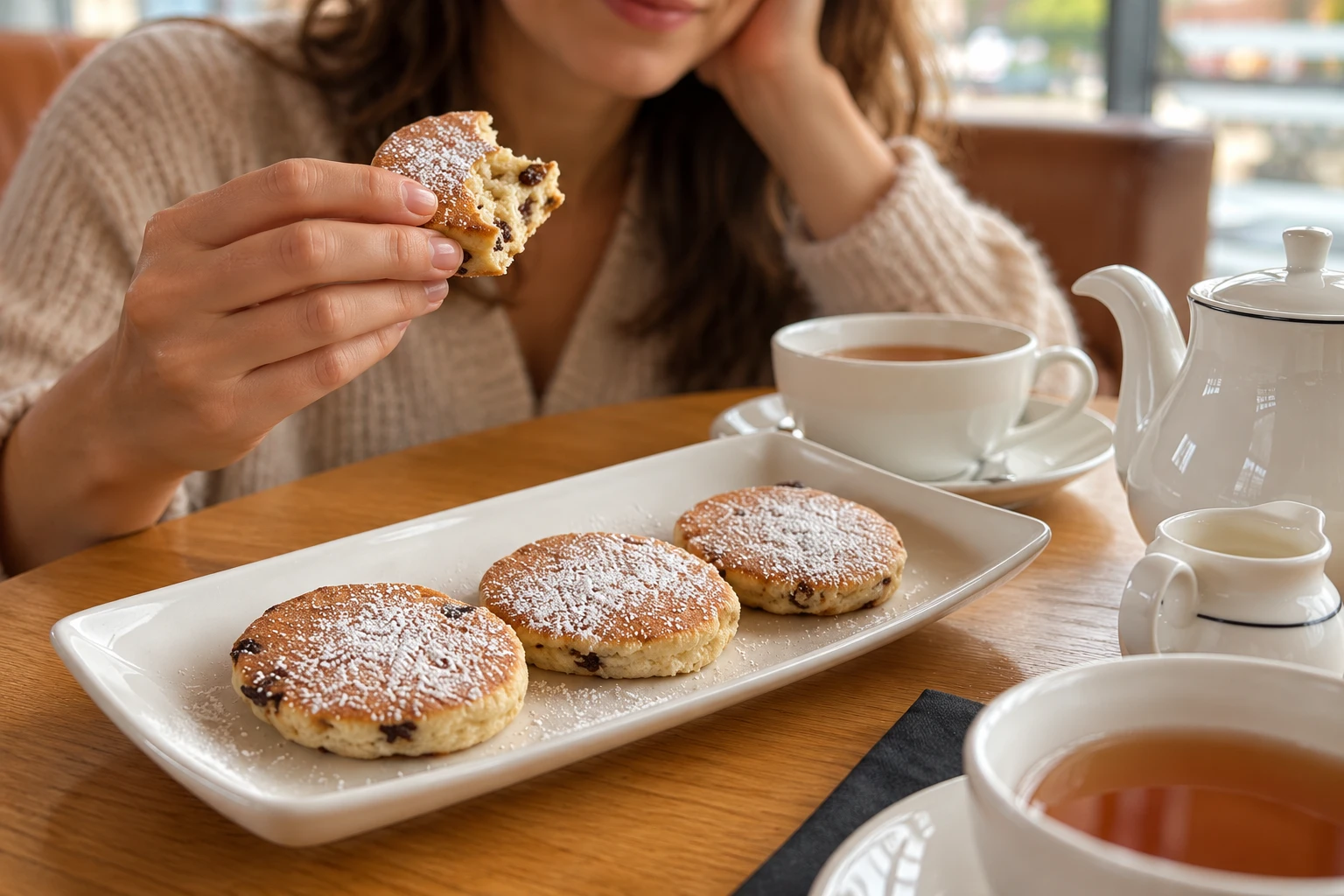
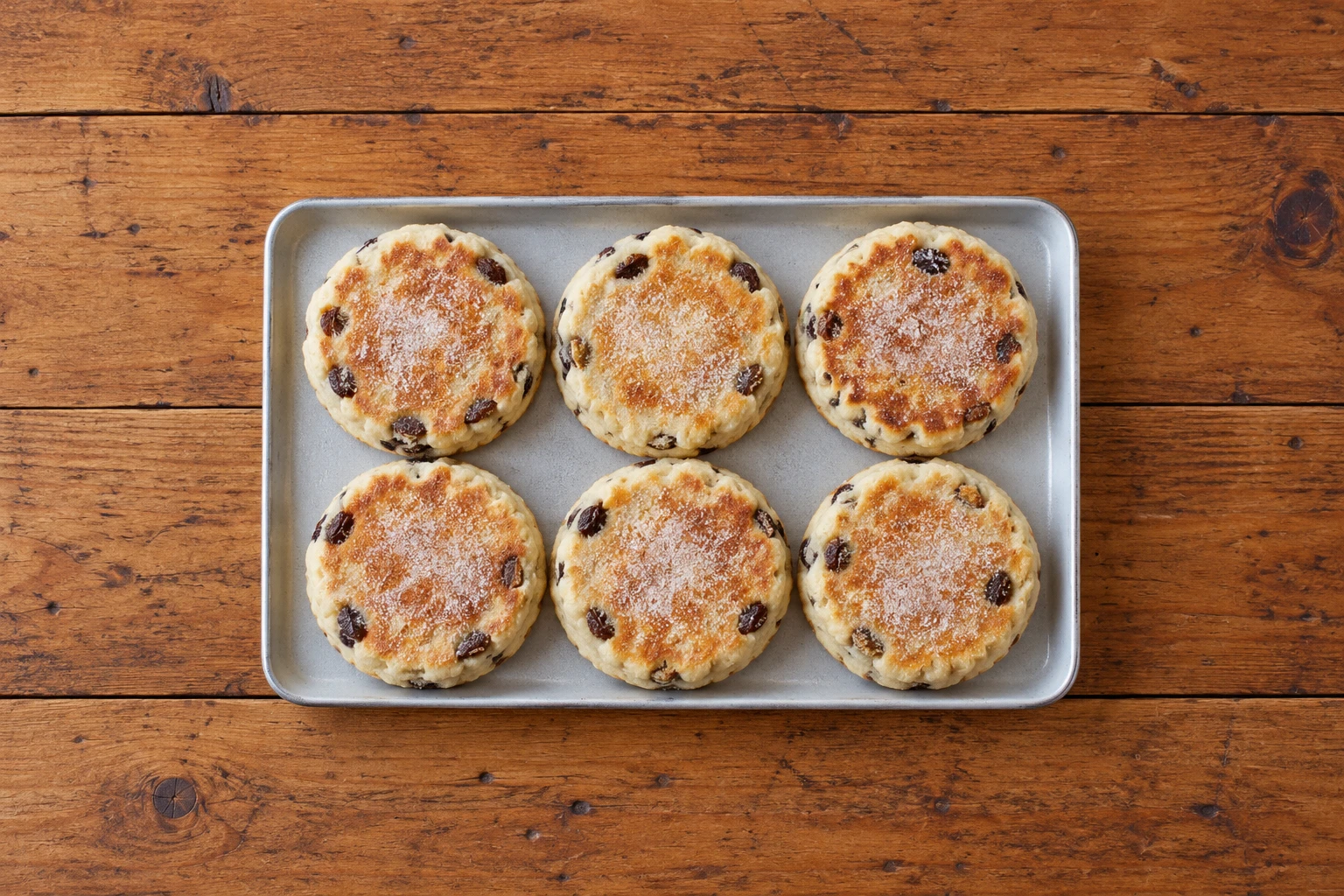
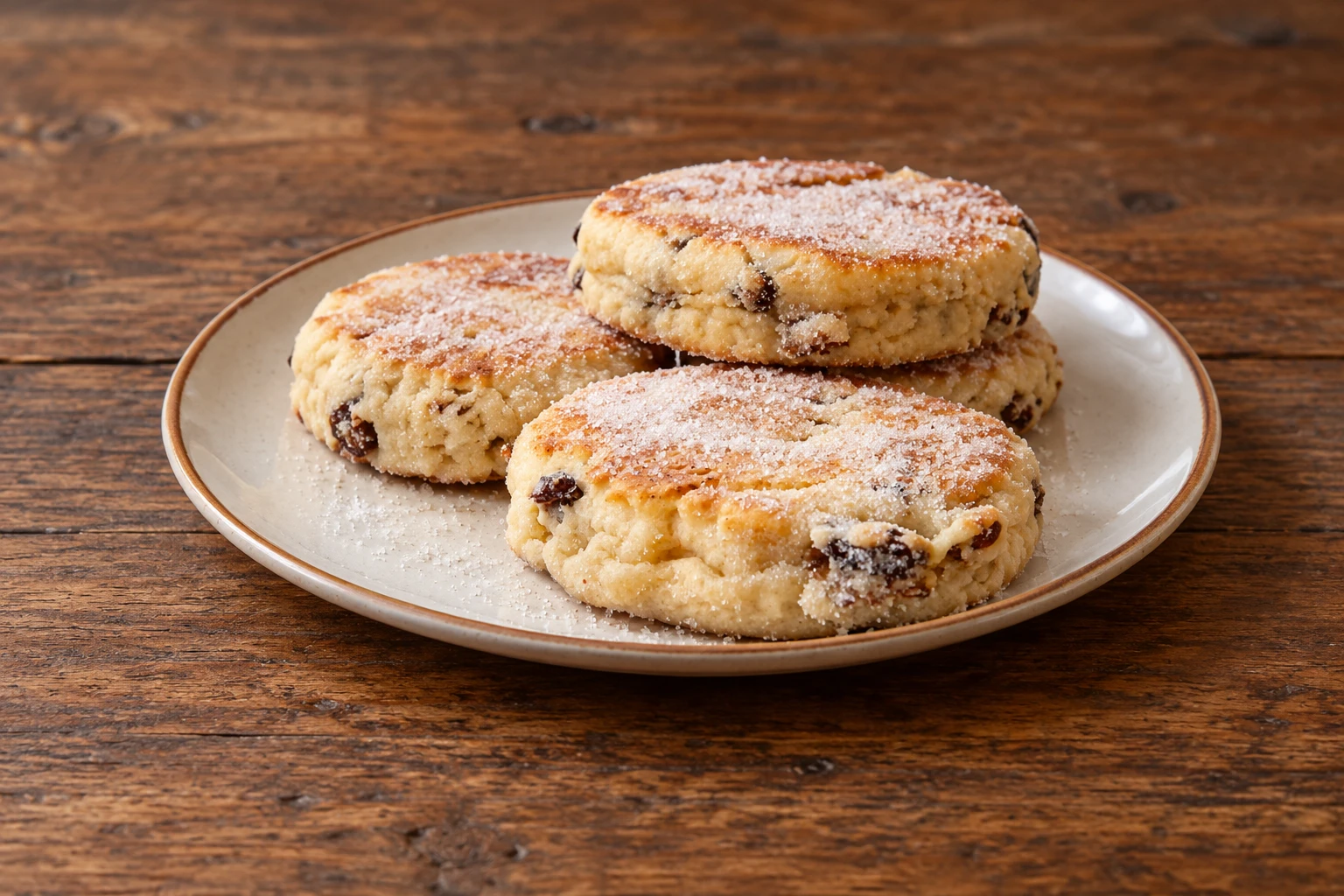
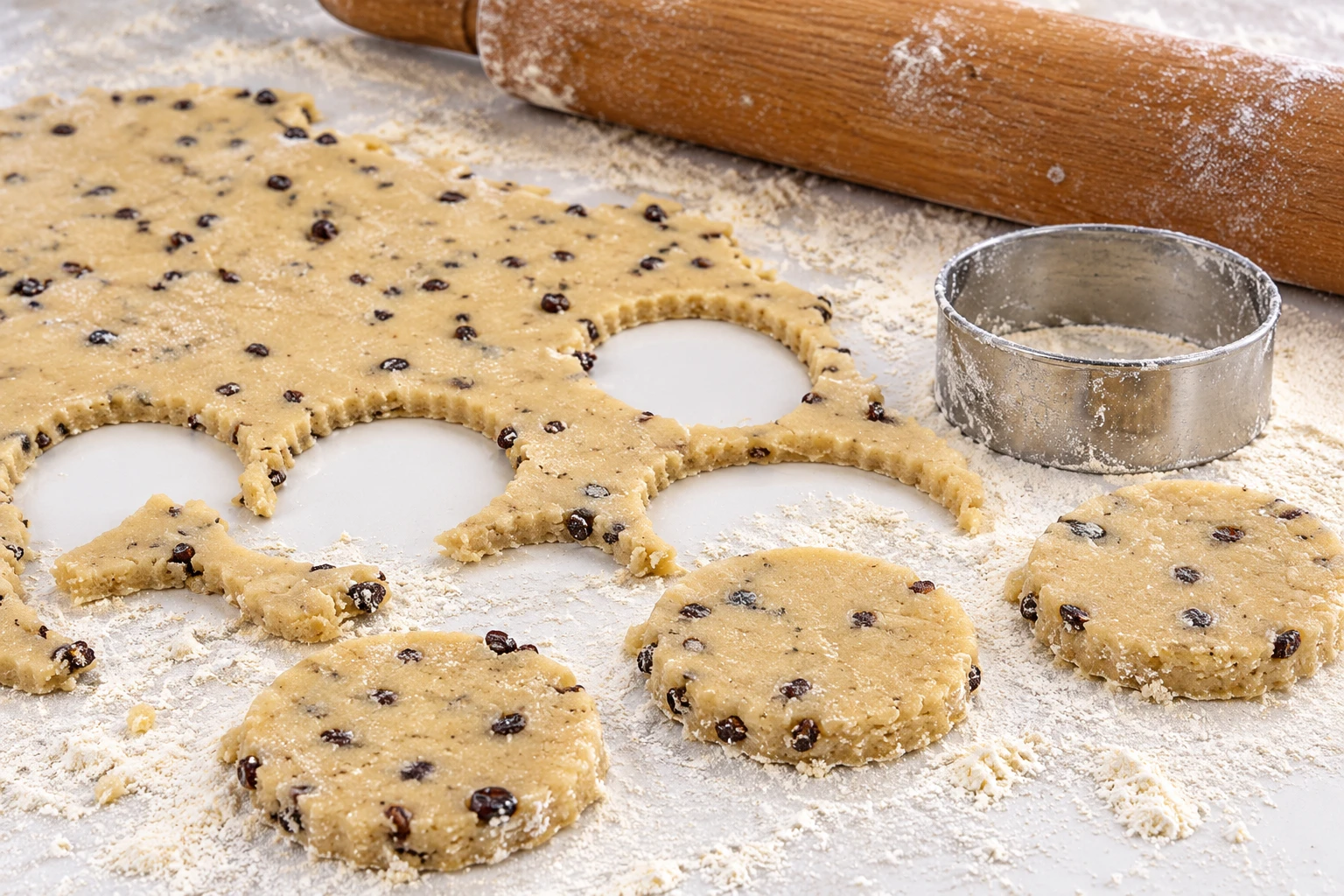
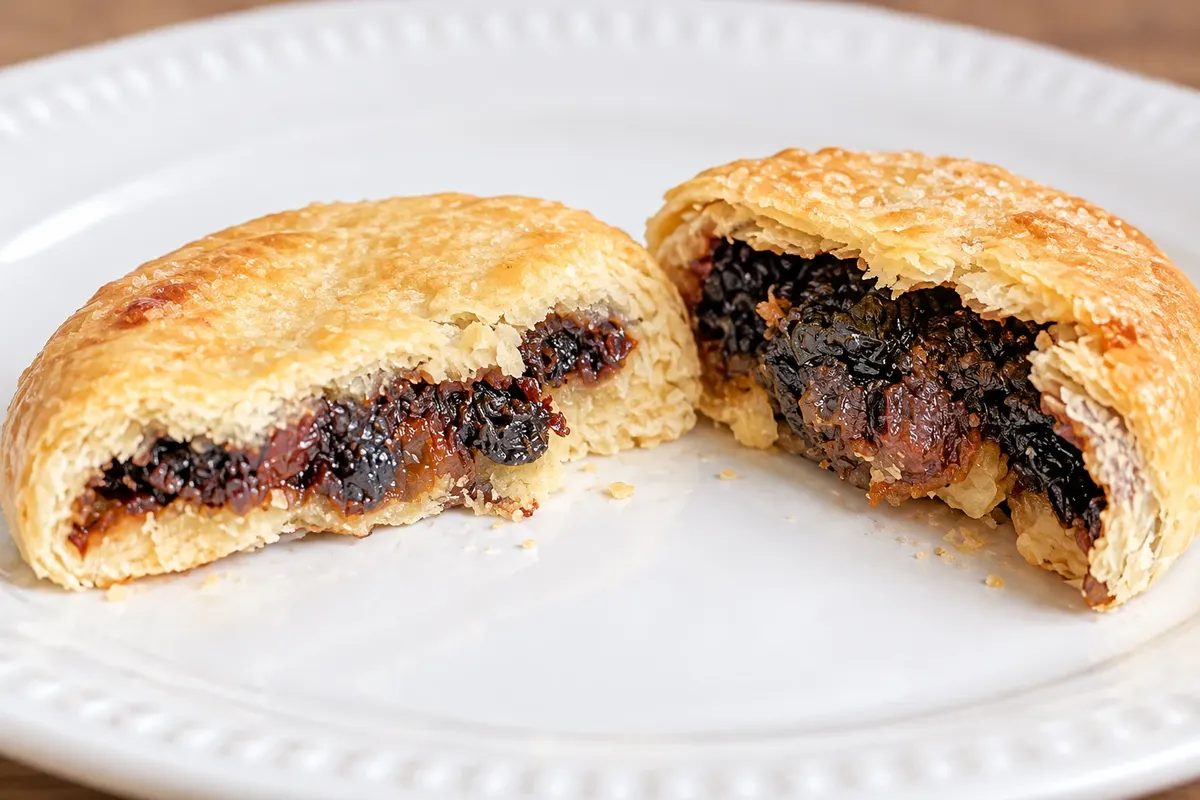
Welsh cakes sit somewhere between a cookie, a scone and a pancake. The dough contains flour, butter, sugar, Corinthian raisins and a little spice; it is rolled out, cut into rounds and cooked for a few minutes on each side on a thick iron griddle, called a bakestone in English and maen or planc in Welsh. They come out golden outside and soft inside and are sprinkled with sugar while still hot.
The best-known Welsh name is picau ar y maen, cakes on the stone, and there are other names that change by region, such as pice bach and cacennau cri. Cooking on a griddle over the fire is an old custom in Wales, and the cakes acquired their current form—with butter, sugar and dried fruit—in the 19th century.
They are among the country’s most common sweets, sold in bakeries, cafés and markets. At Cardiff’s Victorian market it’s common to see them being cooked on the griddle in front of customers. They appear at afternoon tea and on St David’s Day, March 1.


 Brazil
 Argentina
 Bolivia
 Chile
 Colombia
 Ecuador
 Guyana
 French Guiana
 Falkland Islands (Malvinas)
 Paraguay
 Peru
 Suriname
 Uruguay
 Venezuela
 Germany
 Austria
 Belgium
 Croatia
 Denmark
 Spain
 Finland
 France
 Greece
 the Netherlands
 Hungary
 Ireland
 Iceland
 Italy
 Luxembourg
 Norway
 Poland
 Portugal
 the Czech Republic
 Sweden
 Switzerland
 Turkey
 the United States
 Mexico
 the Dominican Republic
 South Africa
 Australia
 Fiji
 New Zealand