

 Brazil
 Antarctica
 Argentina
 Bolivia
 Chile
 Colombia
 Ecuador
 Guyana
 French Guiana
 Falkland Islands (Malvinas)
 Paraguay
 Peru
 Suriname
 Uruguay
 Venezuela
 Germany
 Austria
 Belgium
 Croatia
 Denmark
 Slovakia
 Slovenia
 Spain
 Finland
 France
 Greece
 the Netherlands
 Hungary
 Ireland
 Iceland
 Italy
 Luxembourg
 Norway
 Poland
 Portugal
 the United Kingdom
 the Czech Republic
 Sweden
 Switzerland
 Turkey
 Bermuda
 Canada
 the United States
 Greenland
 Mexico
 Saint Pierre and Miquelon
 the Dominican Republic
 South Africa
 Egypt
 Australia
 Fiji
 New Zealand
 Papua New Guinea
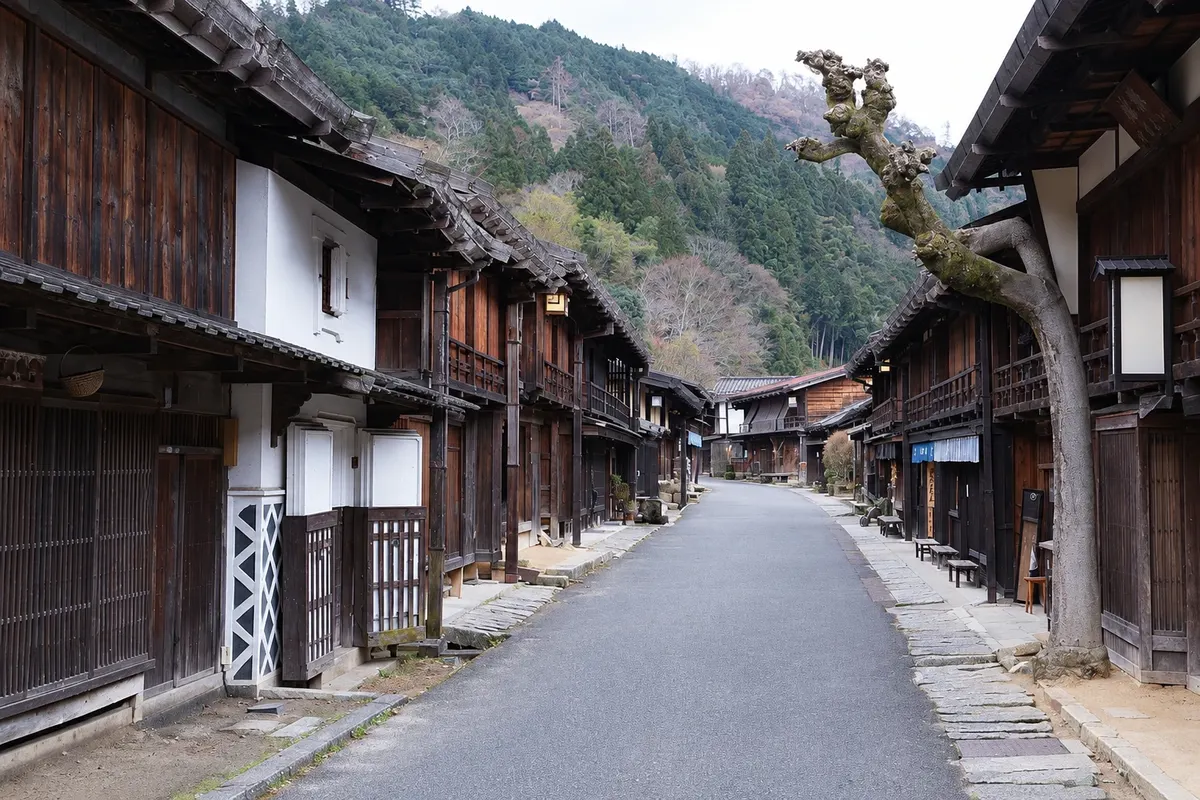
Historic village · Nagiso, Nagano
Tsumago-juku
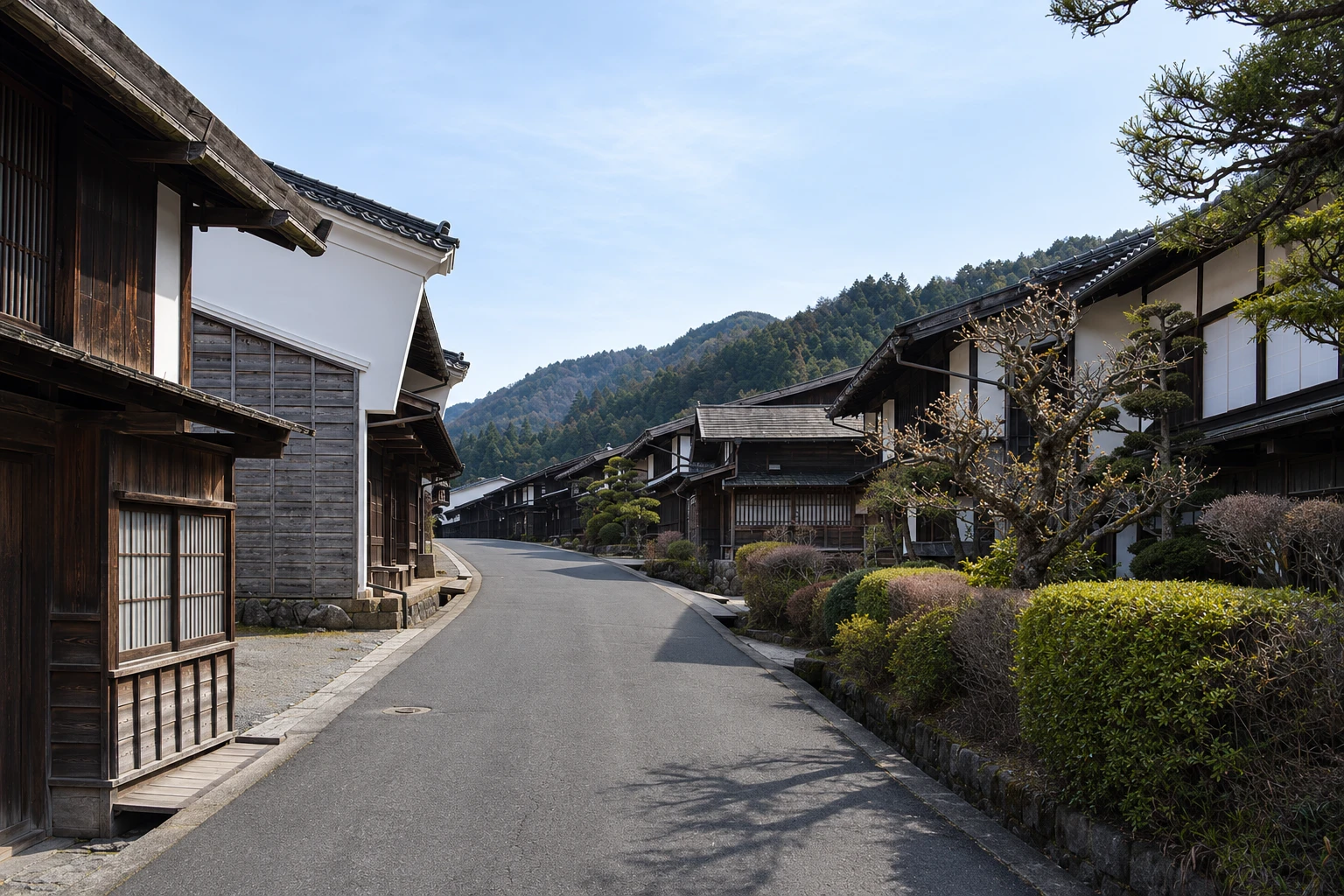
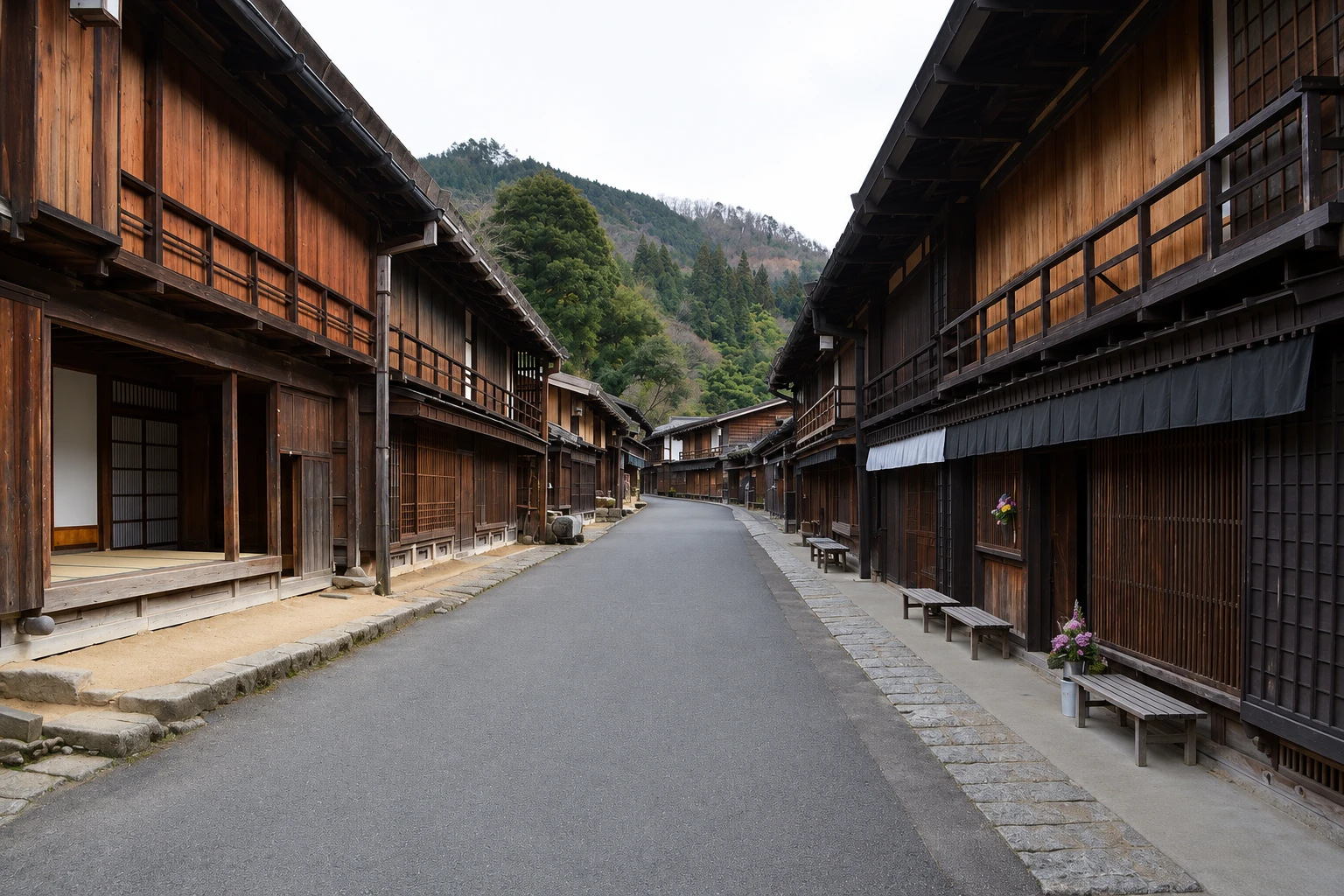
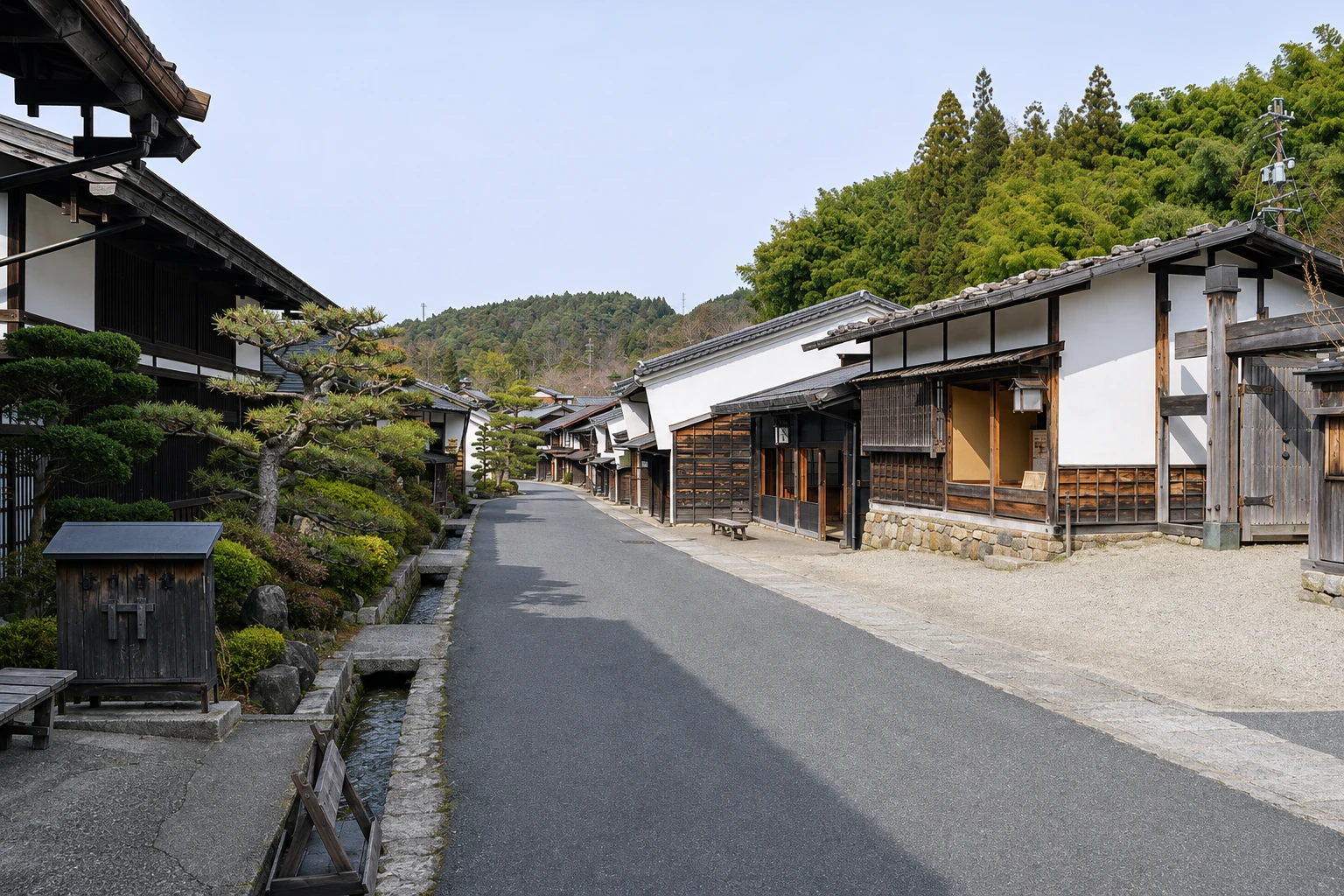
A village of inns on the Nakasendo road preserved by its own residents since the 1970s, with wooden houses, no visible power lines on the main street, and the Waki-honjin Okuya house open to visitors.
Illustrative images. The pictures in this guide are illustrations based on the real place, not photographs, and may differ from it.

A look at the place
Tsumago-juku in pictures
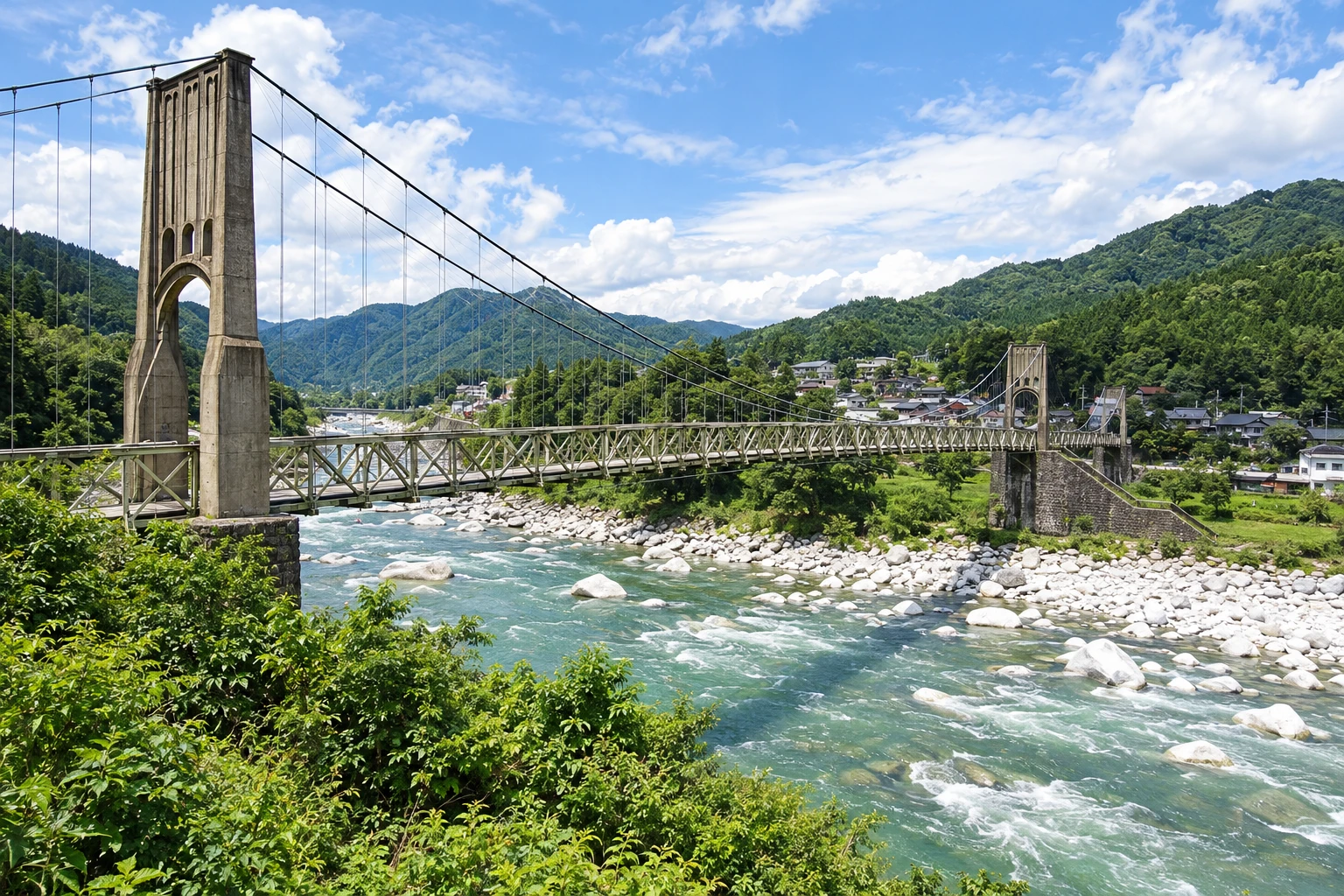
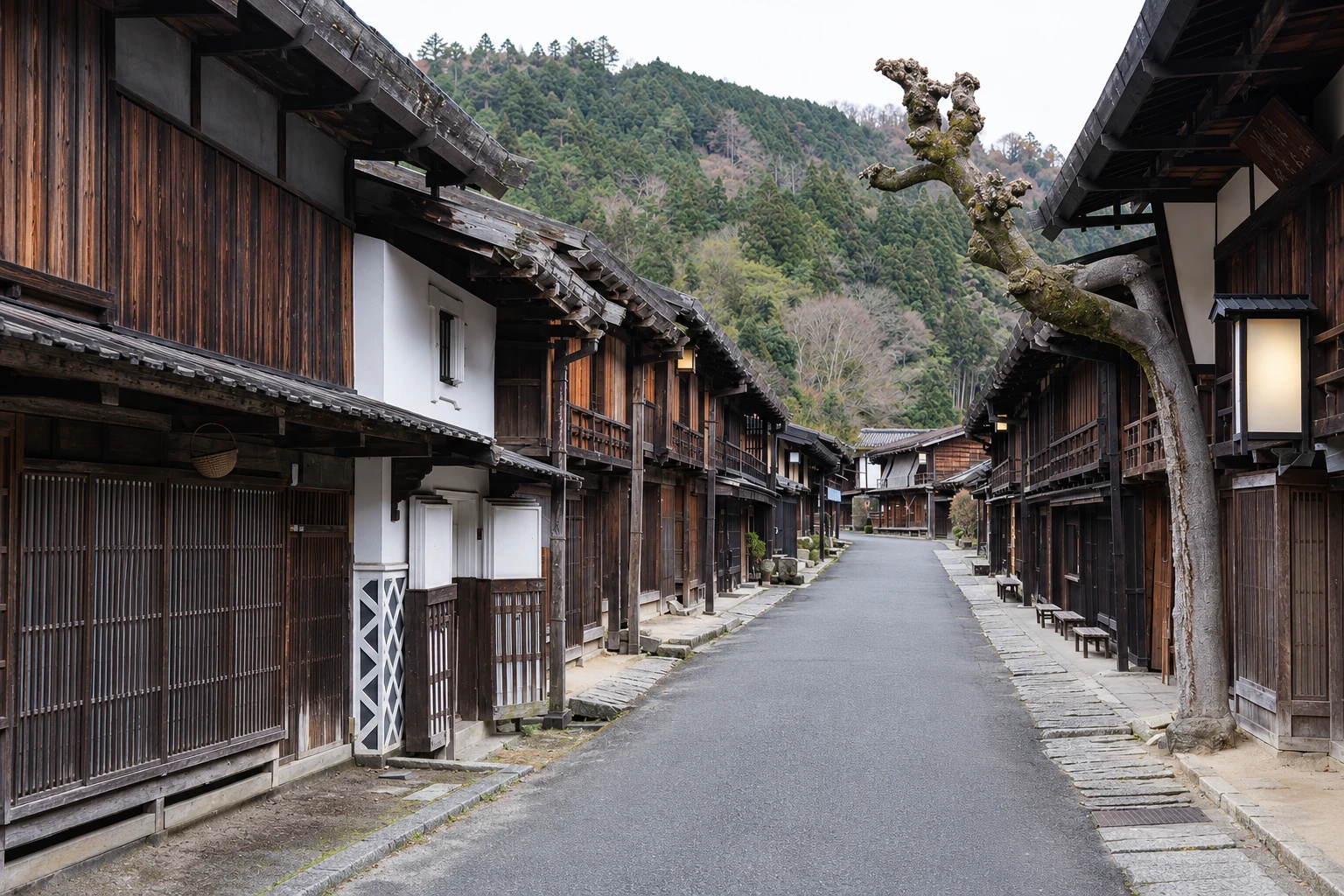
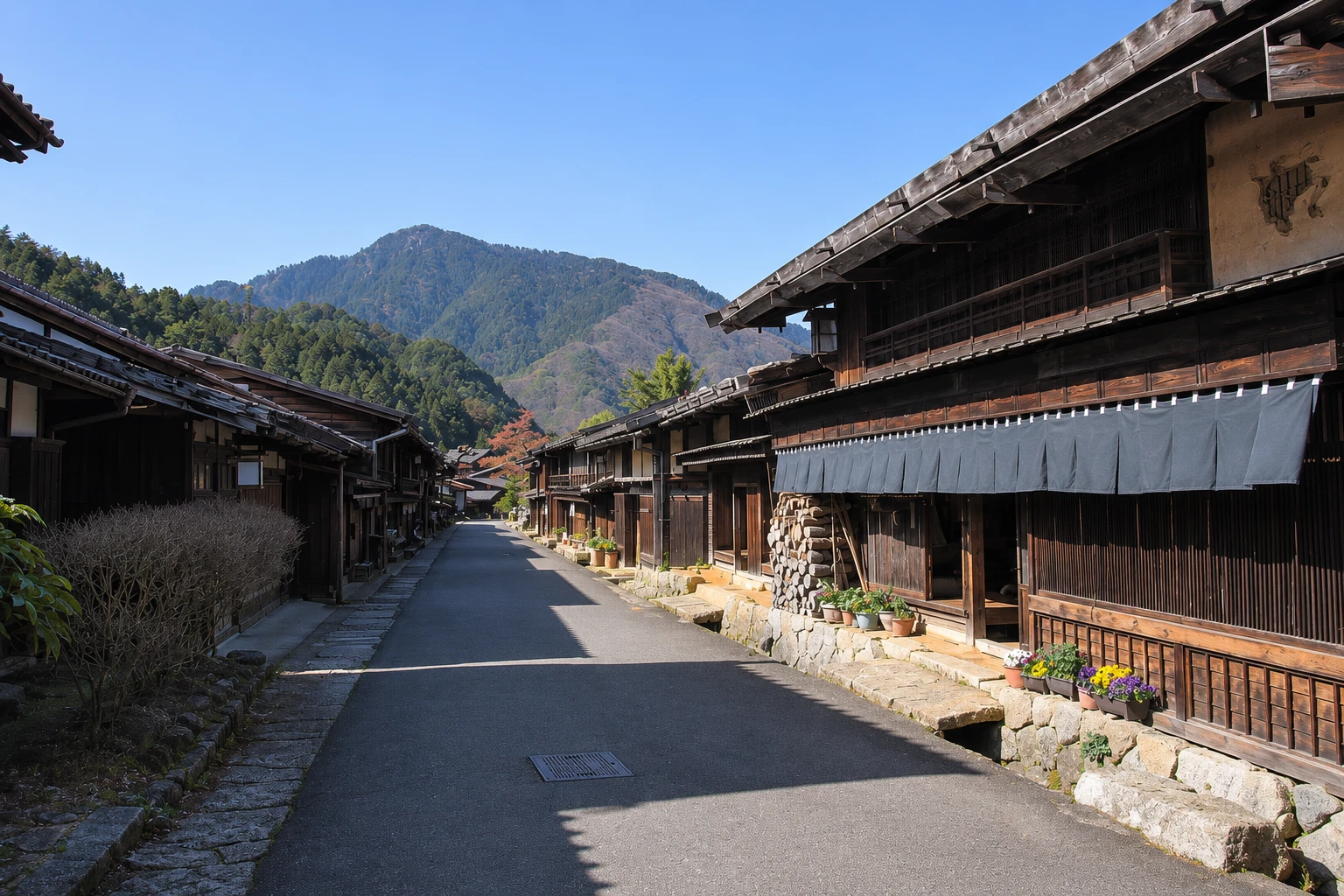
These pictures are illustrations based on the real place, not photographs. They may differ from the place.
Click the picture to enlarge it.
Discover
About Tsumago-juku
Tsumago-juku was the 42nd post station of the Nakasendo counting from Edo. With the arrival of the railway, in the early 20th century, far from the village, Tsumago lost traffic and fell into poverty, which ended up preserving the old houses. In the 1960s and 1970s, residents began restoring them and created a community charter with three principles: do not sell, do not rent, do not destroy.
In 1976, Tsumago was one of the first areas in Japan designated as a Traditional Buildings Preservation Area. The main street, of packed earth and stones, has two-story wooden houses with low eaves and lattice windows, and the power lines were hidden to keep the 19th-century appearance. At night, lanterns are lit at the doorways.
The Waki-honjin Okuya house, the village’s auxiliary inn for high-ranking travelers, was rebuilt in the Meiji period using Japanese cypress wood, whose logging had been prohibited in the Edo period. It is an Important Cultural Property and operates as a museum, with the central hearth lit, the room where Emperor Meiji rested, and family objects on display. Next to it, the honjin, the inn for feudal lords, was rebuilt and can also be visited.
The village has family-run inns, wooden craft shops and soba restaurants. Cars stay off the main street. The trail that comes from Magome arrives at the upper part, and many people end their day there, waiting for the bus to Nagiso station.
Before you go
Practical information
Cidade Turismo reviews its information regularly, but something may have changed. Check with the place before planning your trip.
How much time to set aside
1 to 2 hours for the street and the Waki-honjin Okuya house.
Best time
Late afternoon and early morning, when the village is quiet and the lanterns are lit. From April to November, often combined with the trail; late October and November bring the foliage. Confirm Waki-honjin opening hours before you go.
How to get there
From Nagiso Station, buses reach Tsumago in about 10 minutes; on foot it’s about 3 km, roughly one hour. From Magome, via the Nakasendo trail, about 3 hours.
Tip
Buy the combined ticket for the Waki-honjin Okuya house together with the honjin and the village history museum. If possible, stay overnight in Tsumago to see the street lit after the tour groups leave.
Official website
Get your questions answered
Frequently asked questions about Tsumago-juku
Why is Tsumago so well preserved?
Because residents decided in the 1970s not to sell, rent, or demolish the houses, and the village became one of Japan’s first preserved areas in 1976.
What is the Waki-honjin Okuya house?
It is Tsumago’s former auxiliary inn, rebuilt in the Meiji period in Japanese cypress. It operates as a museum and is an Important Cultural Property.
How long should you stay in Tsumago?
One to two hours for the street and the Waki-honjin house. An overnight stay lets you see the village lit up and peaceful.
Does Tsumago have electrical wires?
Not visible from the main street: they were hidden to preserve the Edo-period appearance.
Beyond the guide


