

 Brazil
 Antarctica
 Argentina
 Bolivia
 Chile
 Colombia
 Ecuador
 Guyana
 French Guiana
 Falkland Islands (Malvinas)
 Paraguay
 Peru
 Suriname
 Uruguay
 Venezuela
 Germany
 Austria
 Belgium
 Croatia
 Denmark
 Slovakia
 Slovenia
 Spain
 Finland
 France
 Greece
 the Netherlands
 Hungary
 Ireland
 Iceland
 Italy
 Luxembourg
 Norway
 Poland
 Portugal
 the United Kingdom
 the Czech Republic
 Sweden
 Switzerland
 Turkey
 Bermuda
 Canada
 the United States
 Greenland
 Mexico
 Saint Pierre and Miquelon
 the Dominican Republic
 South Africa
 Egypt
 Australia
 Fiji
 New Zealand
 Papua New Guinea
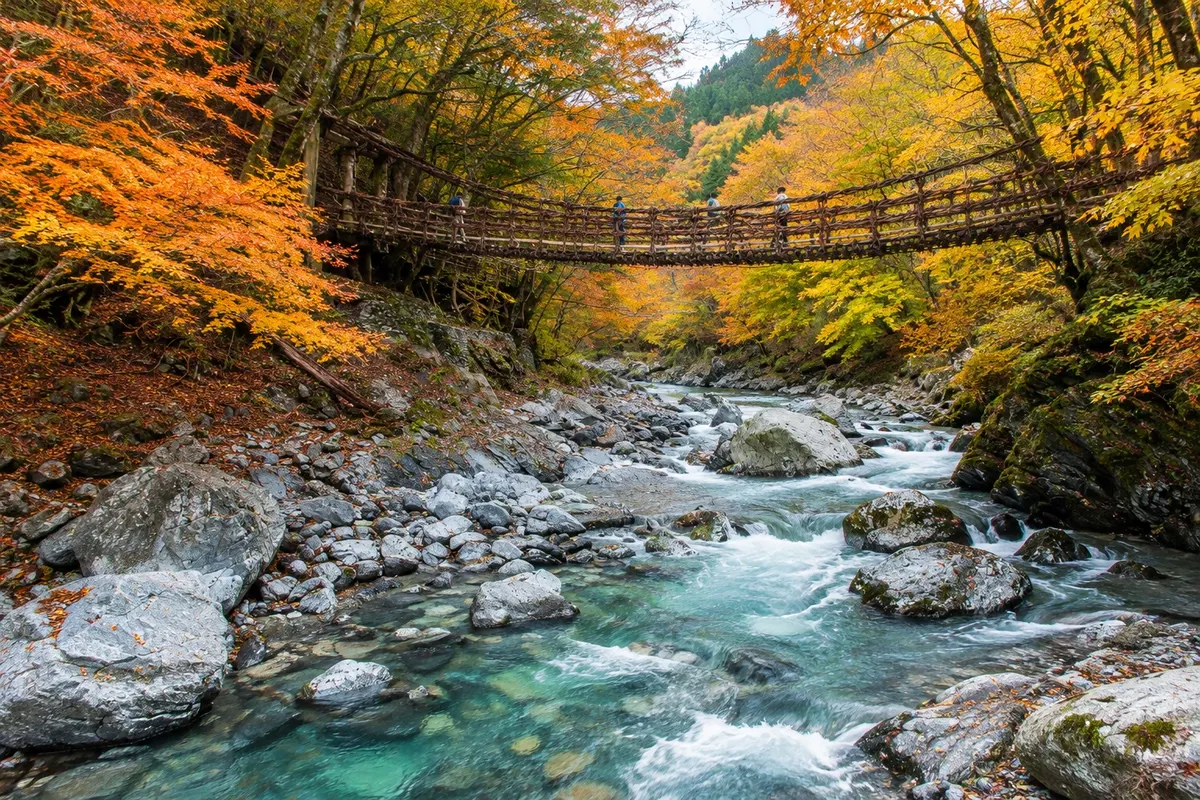
Historic bridge · Miyoshi, Tokushima
Oku-Iya Double Vine Bridges
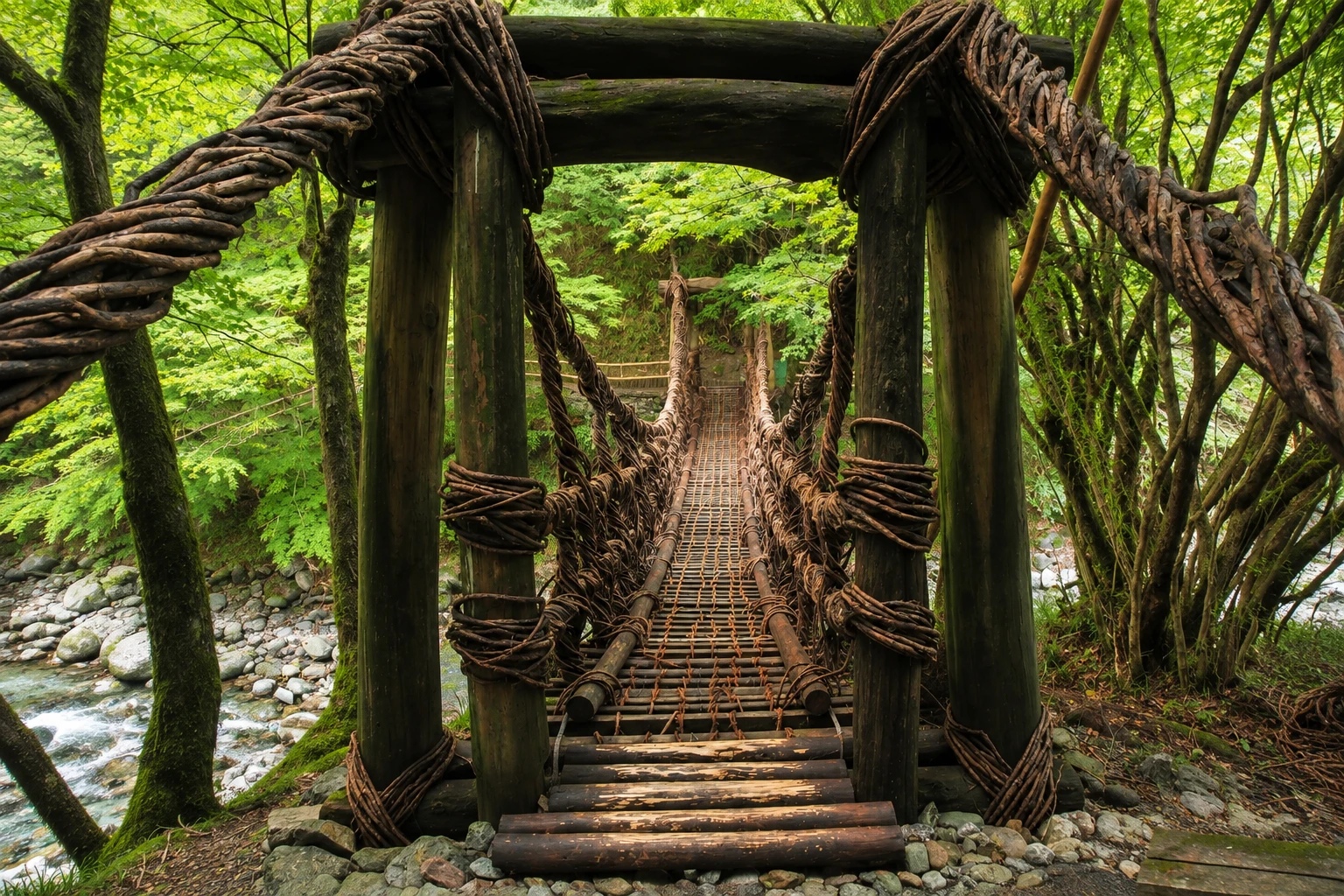
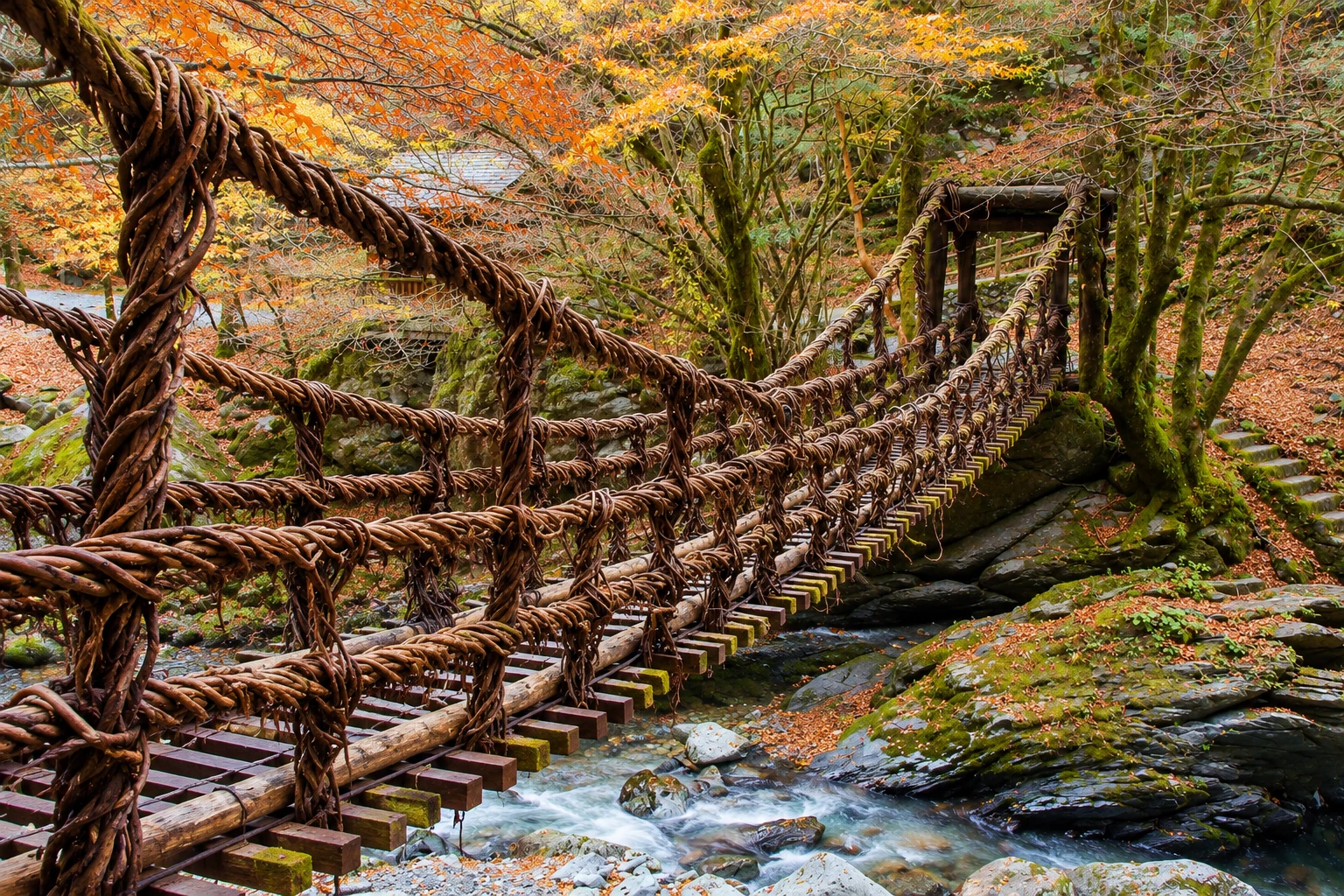
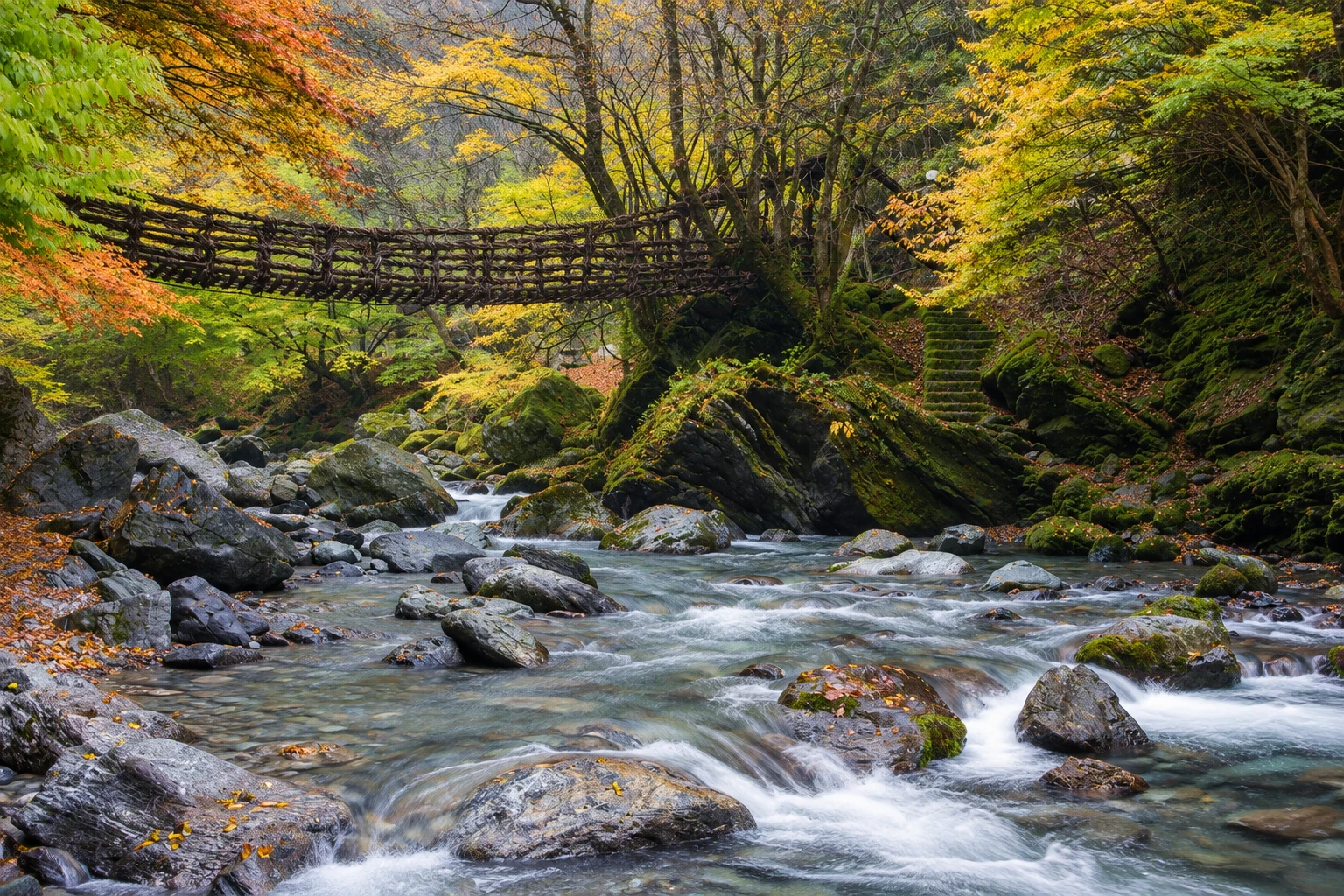
Two vine bridges, the man’s and the woman’s, at the bottom of the Iya Valley in Higashi-Iya, with a hand-pulled wooden cart on a cable to cross the river; they sit in a forested area and close in winter.
Illustrative images. The pictures in this guide are illustrations based on the real place, not photographs, and may differ from it.

A look at the place
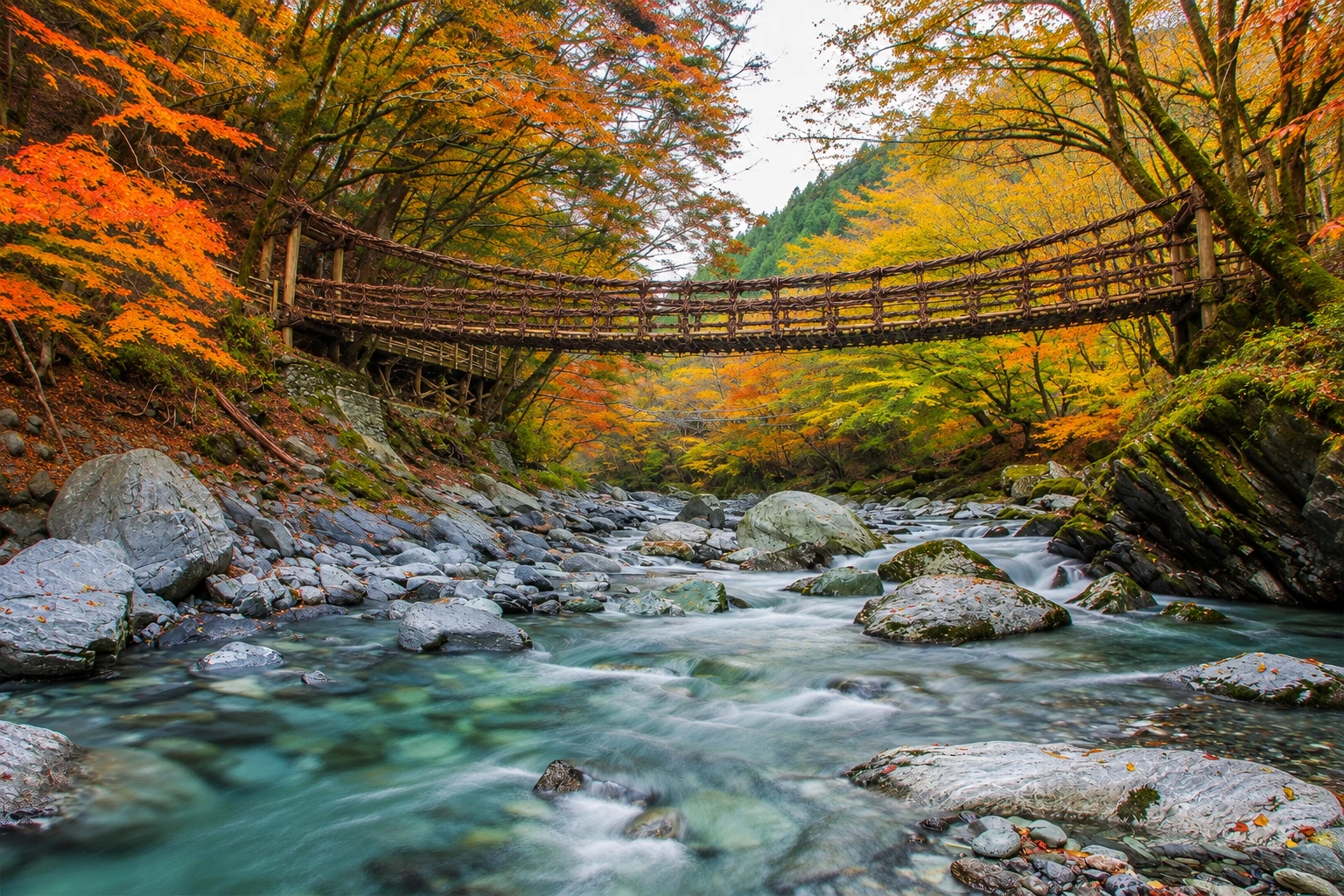
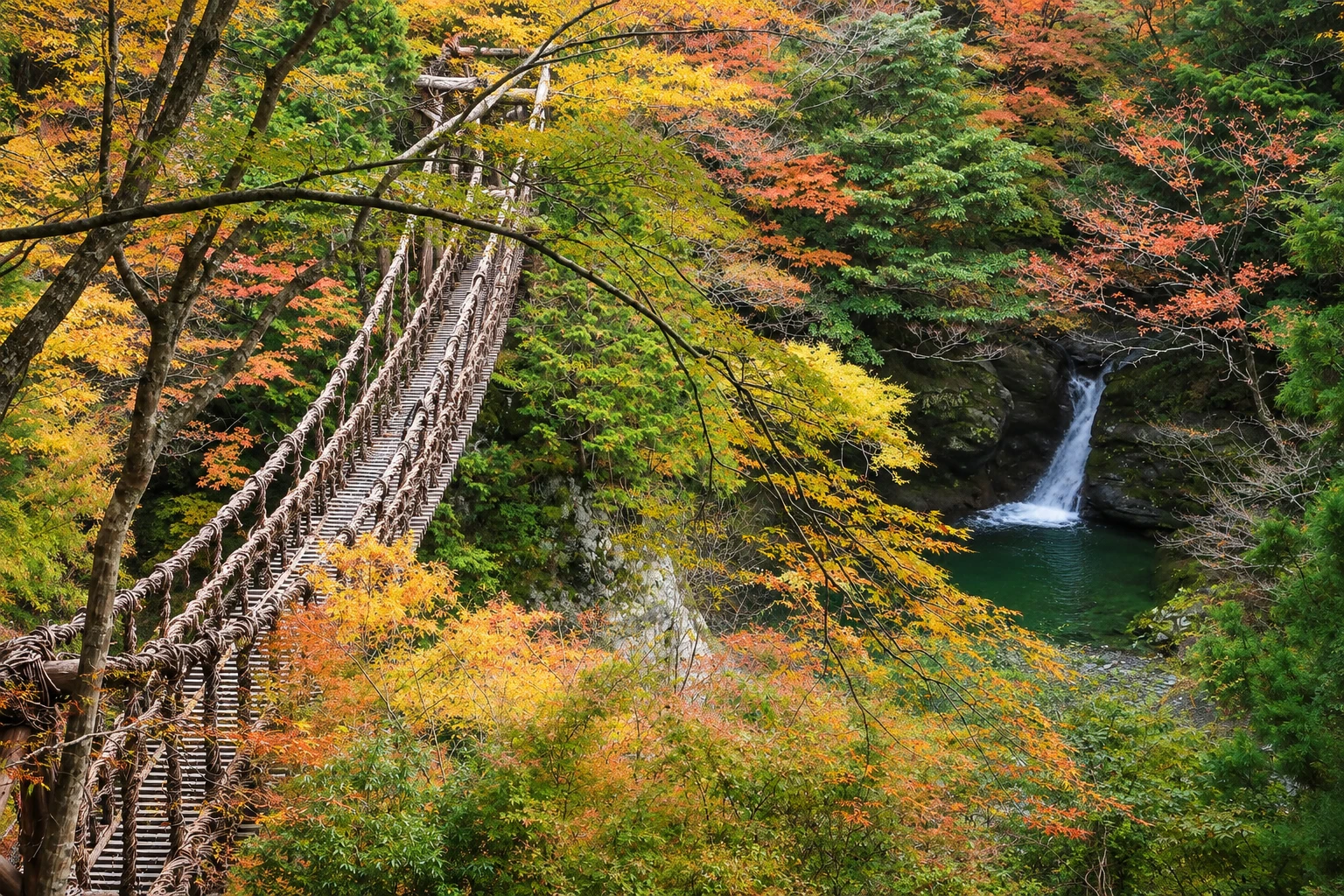
Oku-Iya Double Vine Bridges in pictures
These pictures are illustrations based on the real place, not photographs. They may differ from the place.
Click the picture to enlarge it.
Discover
About Oku-Iya Double Vine Bridges
The double bridges of Oku-Iya, Oku-Iya Niju Kazurabashi, lie at the valley bottom in Higashi-Iya, about 65 km from Ikeda along the river road. There are two side-by-side vine bridges over the Iya River: the larger, called the man’s bridge, Otoko-bashi, is about 44 meters; the smaller, the woman’s bridge, Onna-bashi, about 22 meters. Tradition links them, as in Nishi-Iya, to the Taira clan refugees.
The area is more isolated and tranquil than Nishi-Iya, surrounded by cedar and beech forest. Besides the bridges, there is the yaen, a wooden cart suspended on a cable over the river that visitors pull themselves with a rope to cross, as locals did long ago. A circular path connects the bridges, the yaen, and a small campsite.
On the way to Oku-Iya is the village of Ochiai, with houses and terraced fields scattered along the slope at 300–800 meters elevation. The village is protected as a group of traditional buildings, and the viewpoint across the valley shows the whole slope. Some old houses have been renovated and are rented as accommodations.
Nearby are Mount Tsurugi, which operates a chairlift in season, and the village of Nagoro, where a resident placed life-size dolls around the village, giving it the nickname “the doll village.” The roads there are narrow and long, and the visit requires a full day.
Before you go
Practical information
Cidade Turismo reviews its information regularly, but something may have changed. Check with the place before planning your trip.
How much time to set aside
1 to 1.5 hours at the bridges and the yaen; a full day including Ochiai and the drive.
Best time
From April to November; the bridges usually close in winter, generally from December to March. Autumn foliage, from late October to early November, arrives there earlier than in lower areas. Confirm operations before you go.
How to get there
About 65 km from Awa-Ikeda and about 45 km from Oboke via narrow mountain roads; by car, expect around 1.5 hours from Oboke. Buses to Higashi-Iya have very few departures, and the final stretch may require a taxi.
Tip
Stay overnight in Higashi-Iya to do the bridges in the morning at a relaxed pace. Stop at the Ochiai viewpoint on the way, where morning light falls on the slope.
Get your questions answered
Frequently asked questions about Oku-Iya Double Vine Bridges
What’s the difference between the Nishi-Iya bridge and the Oku-Iya bridges?
Nishi-Iya’s bridge is larger and more visited, near the valley entrance. The Oku-Iya bridges are two smaller ones at the valley bottom in a more isolated area, where the yaen cart is used.
Are the Oku-Iya bridges open year-round?
No. They usually close in winter, generally from December to March. Confirm before you go.
What is the yaen of Oku-Iya?
A small wooden cart suspended on a cable over the river that the visitor pulls with a rope to cross.
Where can you see the village of Ochiai?
From the lookout on the far side of the valley, on the road to Oku-Iya, where you can see the entire slope with the houses and the terraced fields.
Beyond the guide


