Iya Valley

Tokushima · Japan

Iya Valley

Deep valleys in the western Tokushima mountains, with vine bridges over the river, the Oboke and Koboke gorges and villages clinging to the slopes.

Shikoku

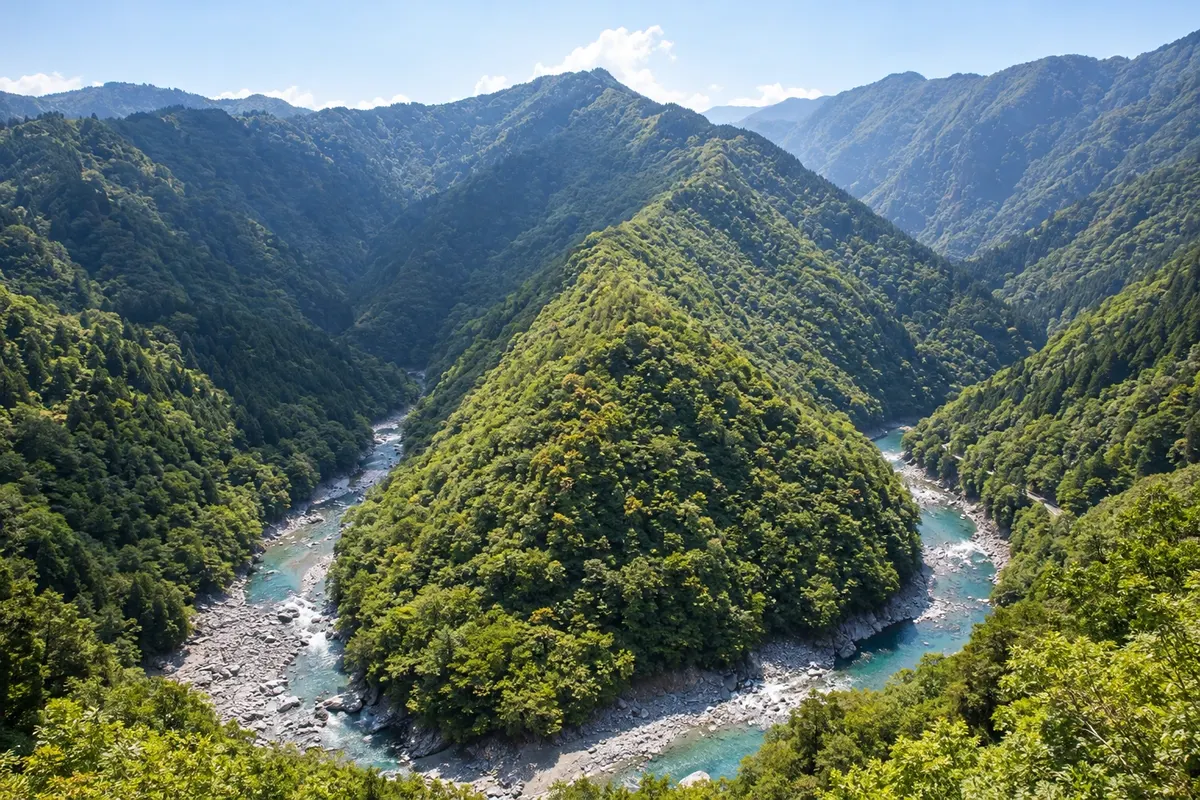
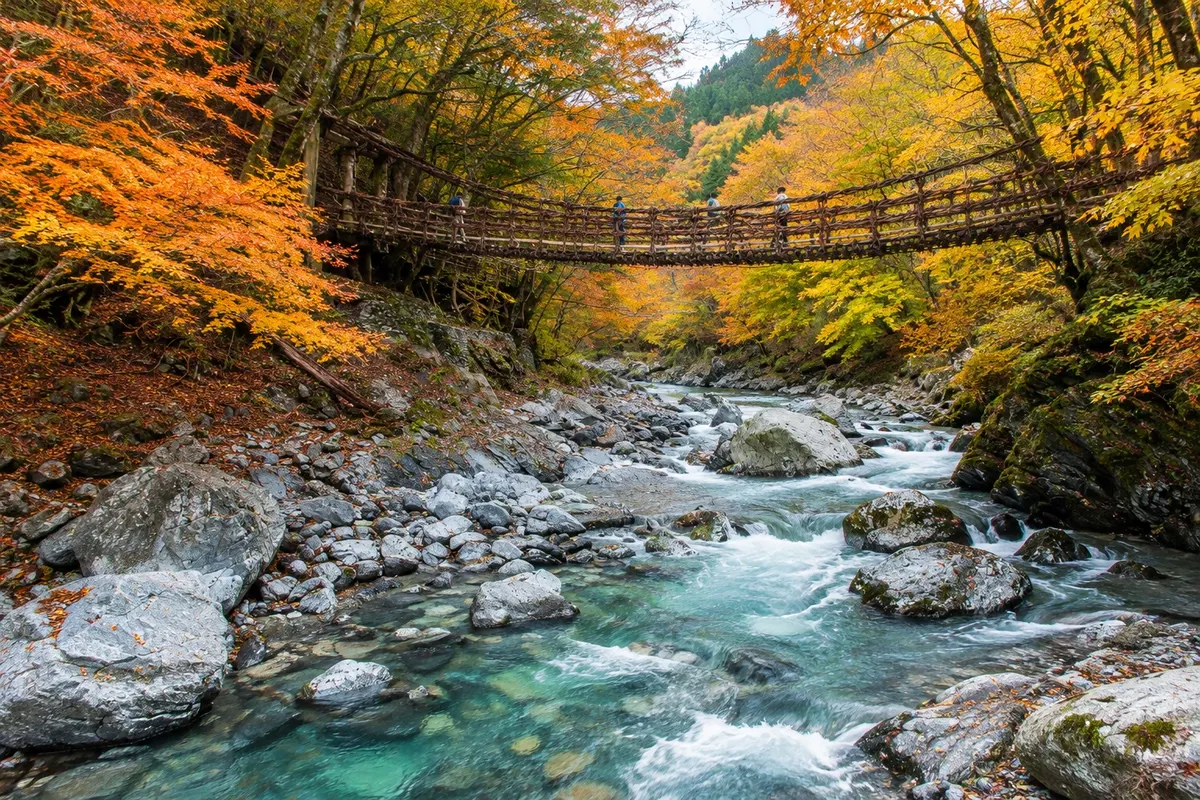
In the photo: Hi-no-Ji meander in the Iya Valley.

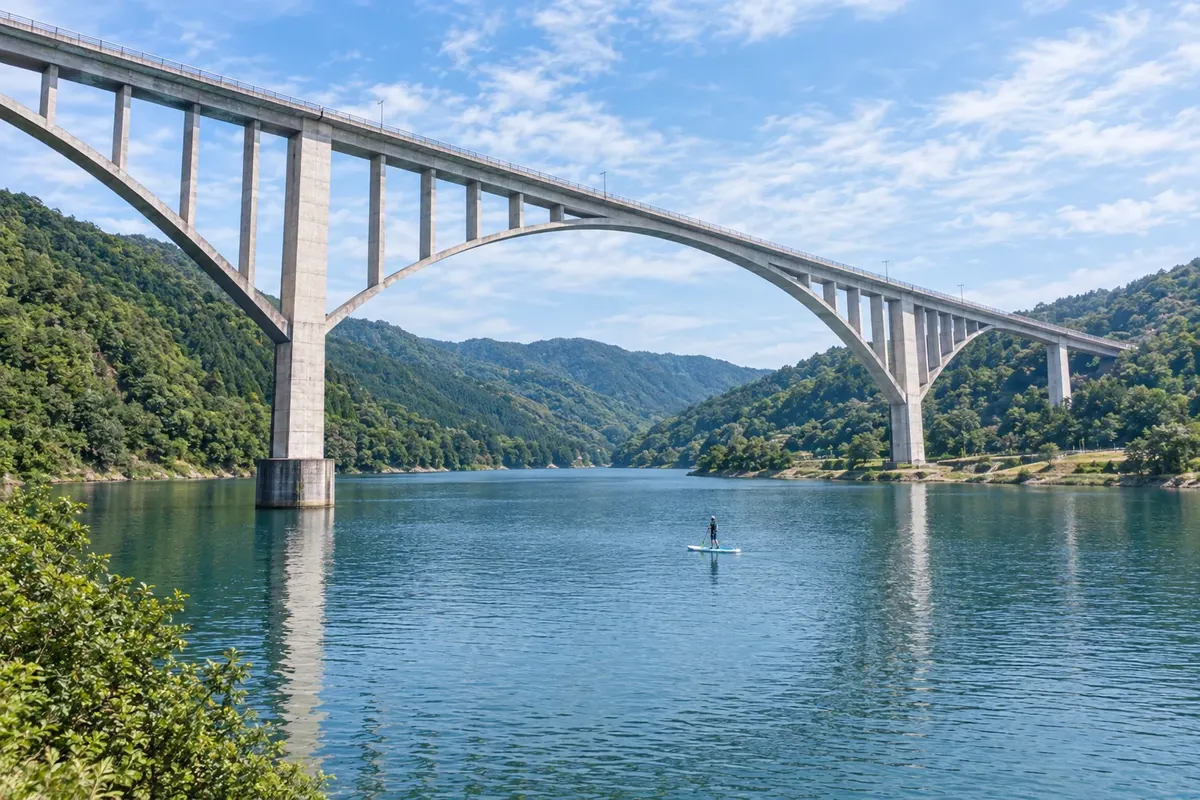
Illustrative images. The pictures in this guide are illustrations based on the real place, not photographs, and may differ from it.

Get to know the place

A region to enjoy
at your own pace.

The Iya Valley lies in the mountains of western Tokushima Prefecture, in central Shikoku, within the town of Miyoshi. It is a region of steep slopes covered in cedar trees, rivers with bluish-green water and villages built on terraces, hundreds of meters above the valley floors. It is counted among Japan’s three most remote regions, and narrow winding roads only truly reached it in the 20th century.

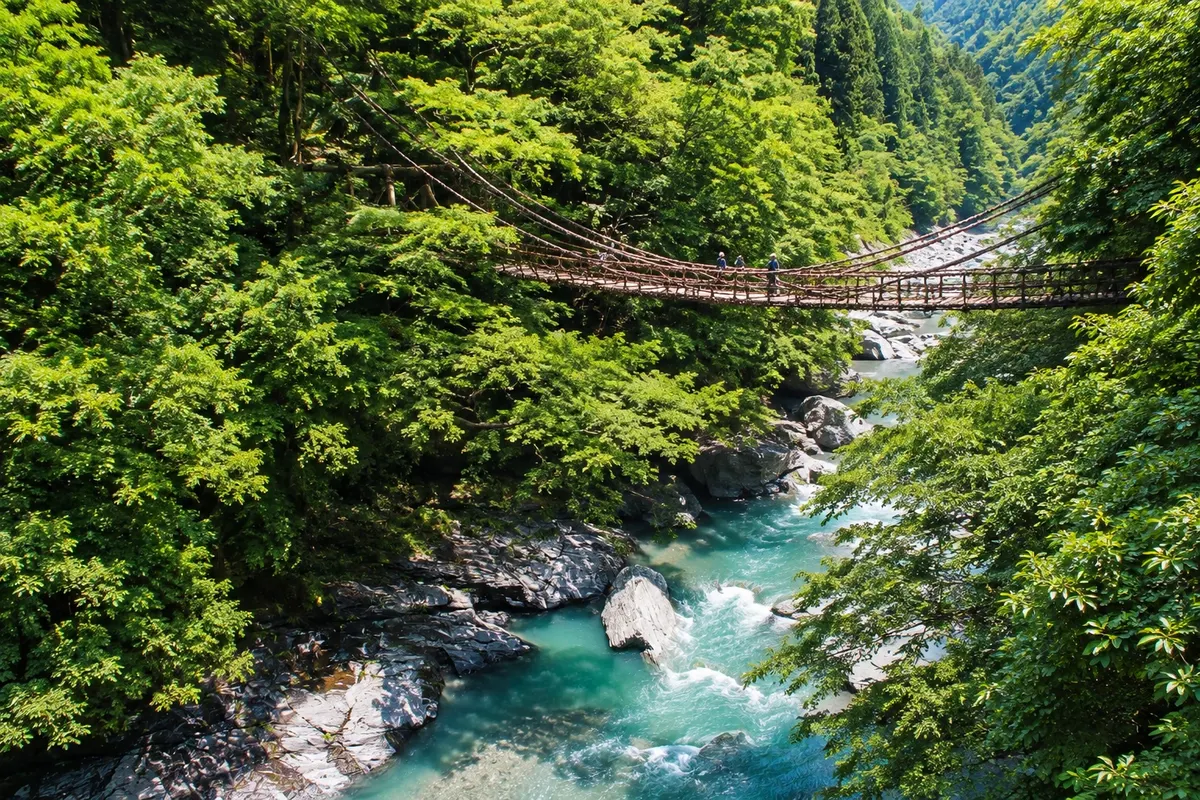
Legend has it that warriors of the Taira clan took refuge here after losing the 1185 war and built vine bridges that could be cut if enemies arrived. Three of those bridges remain, rebuilt periodically with vines over steel cables: Nishi-Iya, the most visited, and the two Oku-Iya bridges at the bottom of the valley.

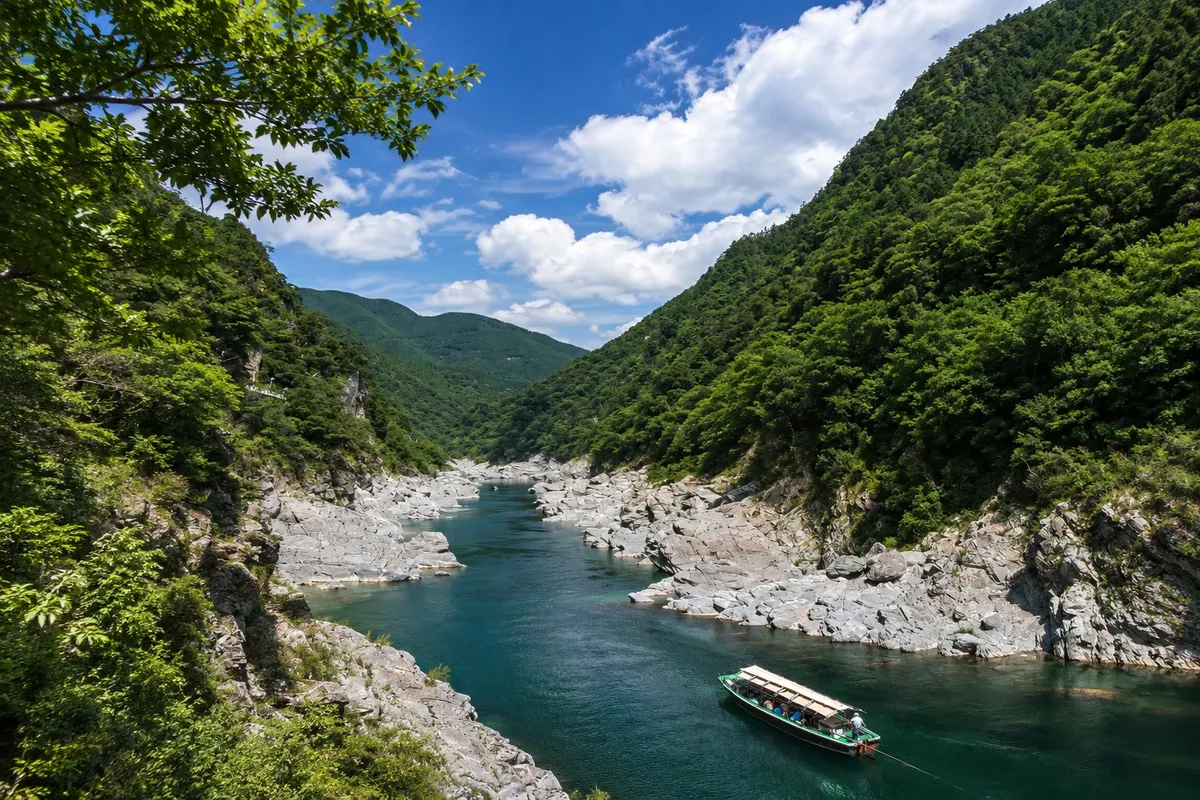
At the region’s entrance, the Yoshino River cuts the Oboke and Koboke gorges, with pale rock walls and rapids. Calm boat rides and rafting runs are offered there. Oboke Station, on the train line between Okayama and Kochi, is the most used gateway. High in the valley, the village of Ochiai shows houses and terraced fields on the slope, and Mount Tsurugi, at nearly 2,000 meters, is one of the high mountains of western Japan.

A visit to Iya requires at least one night, preferably at an inn in the valley or in a renovated traditional house. Public transport is sparse, buses have few departures and the roads demand attention. The reward is the mountain scenery, simple local food such as Iya soba and dekomawashi skewers grilled over fire, and the silence of the villages.

This destination brings together 1 city: Miyoshi.

Share: WhatsApp
Traveler, share your experiences through photos Up to 5 photos of each place you visited.

One destination, many paths

The cities on this trip

Start with one city or combine several in your itinerary.

Where Iya Valley is
Miyoshi

Dados cartográficos: © OpenStreetMap contributors, via Wambacher / geoBoundaries (ODbL 1.0). Adapted by Cidade Turismo.

How to get there: Iya Valley

✈ Aeroporto de Takamatsu (TAK), in Takamatsu · 53 km to Miyoshi

The Nanpu limited express, between Okayama and Kochi, stops at Awa-Ikeda, Miyoshi’s center, in about 1 hour 10 minutes from Okayama, and at Oboke. From Takamatsu there are trains to Awa-Ikeda. From there, local buses with few departures go up the valley; by car, the Nishi-Iya vine bridge is about 30 km from Ikeda.

The local experience

Things to do in Iya Valley

Iya Vine Bridge
Miyoshi · Tokushima · Historic bridge

Iya Vine Bridge

A suspension bridge of woven vines about 45 meters long, 14 meters above the Iya River in Nishi-Iya; it is rebuilt every three years and is crossed by stepping on spaced wooden planks.

Oboke Gorge
Miyoshi · Tokushima · Gorge

Oboke Gorge

An approximately 8 km stretch of the Yoshino River between pale rock cliffs, travelled on a leisurely boat trip; just downstream, the Koboke gorge has the rafting rapids.

Oku-Iya Double Vine Bridges
Miyoshi · Tokushima · Historic bridge

Oku-Iya Double Vine Bridges

Two vine bridges, the man’s and the woman’s, at the bottom of the Iya Valley in Higashi-Iya, with a hand-pulled wooden cart on a cable to cross the river; they sit in a forested area and close in winter.

Before you go

Practical information

A little planning leaves more time to enjoy the journey.

When to go

From April to November. Greens are intense from May to July; autumn foliage usually colors the slopes from late October to mid-November. June and July bring heavy rain, and there is a typhoon risk between August and October. In winter it is cold, high roads can have ice and some Oku-Iya attractions close.

The seasons shown are the most usual ones; nature doesn't always follow the calendar.

How many days to stay

Two days and one night allow visiting the Oboke gorge, the Nishi-Iya vine bridge and the Oku-Iya bridges with Ochiai. With three days, add Mount Tsurugi or rafting in Koboke.

Which city to stay in

Inns and onsen hotels are in the Oboke gorge and along the Iya Valley, some with open-air baths over the river. Renovated traditional thatched-roof houses are rented whole in Ochiai and other villages of Higashi-Iya. Awa-Ikeda, Miyoshi’s center, has simple hotels near the station.

Respect the place

Take your trash with you, follow the signs and support local businesses. In natural areas, follow the visiting guidelines.

Get your questions answered

Frequently asked questions about Iya Valley

Do I need a car in the Iya Valley?

It helps a lot. Buses have few departures and do not reach every point, and villages are far apart. Without a car, combine the train to Oboke, buses and taxis, or join an organized tour, and plan schedules in advance.

Can I see the Iya Valley on a day trip?

You can see Oboke and the Nishi-Iya vine bridge in one day from Takamatsu, Kochi or Okayama. Oku-Iya is much farther, and ideally you should stay overnight in the valley.

Are the roads in the Iya Valley difficult?

They are narrow, winding and in some sections single-lane on the edge of slopes, with pullouts to pass other cars. Drive slowly and avoid night driving and heavy-rain days.

What is the best time to visit the Iya Valley?

From April to November. Late October and early November usually have autumn foliage; summer is green and humid. In winter it is cold and parts of Oku-Iya close.

What should I eat in the Iya Valley?

Iya soba, made from coarse buckwheat; dekomawashi, skewers of potato, tofu and konjac grilled over fire with miso; and river fish such as amego, grilled.

Explore other destinations Search by state and city

Beyond the guide