

 Brazil
 Antarctica
 Argentina
 Bolivia
 Chile
 Colombia
 Ecuador
 Guyana
 French Guiana
 Falkland Islands (Malvinas)
 Paraguay
 Peru
 Suriname
 Uruguay
 Venezuela
 Germany
 Austria
 Belgium
 Croatia
 Denmark
 Slovakia
 Slovenia
 Spain
 Finland
 France
 Greece
 the Netherlands
 Hungary
 Ireland
 Iceland
 Italy
 Luxembourg
 Norway
 Poland
 Portugal
 the United Kingdom
 the Czech Republic
 Sweden
 Switzerland
 Turkey
 Bermuda
 Canada
 the United States
 Greenland
 Mexico
 Saint Pierre and Miquelon
 the Dominican Republic
 South Africa
 Egypt
 Australia
 Fiji
 New Zealand
 Papua New Guinea
Museum · Takayama, Gifu
Hida Folk Village (Hida no Sato)
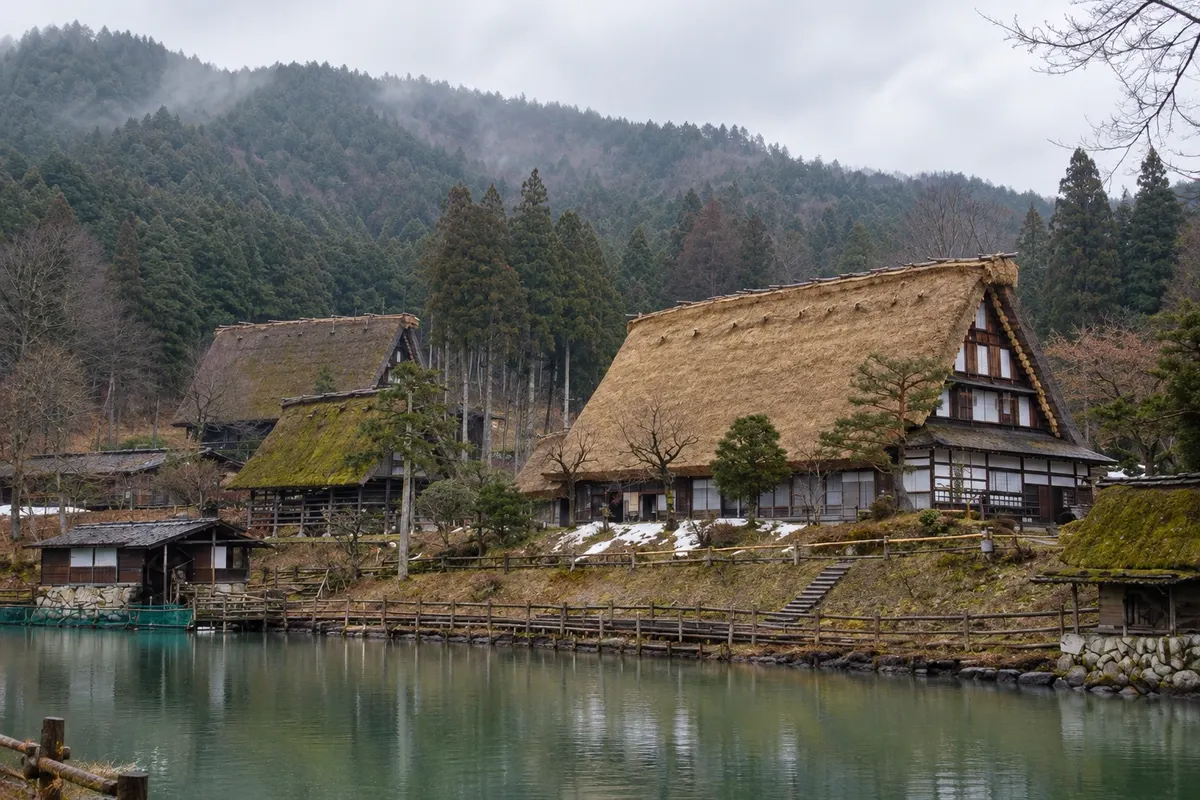
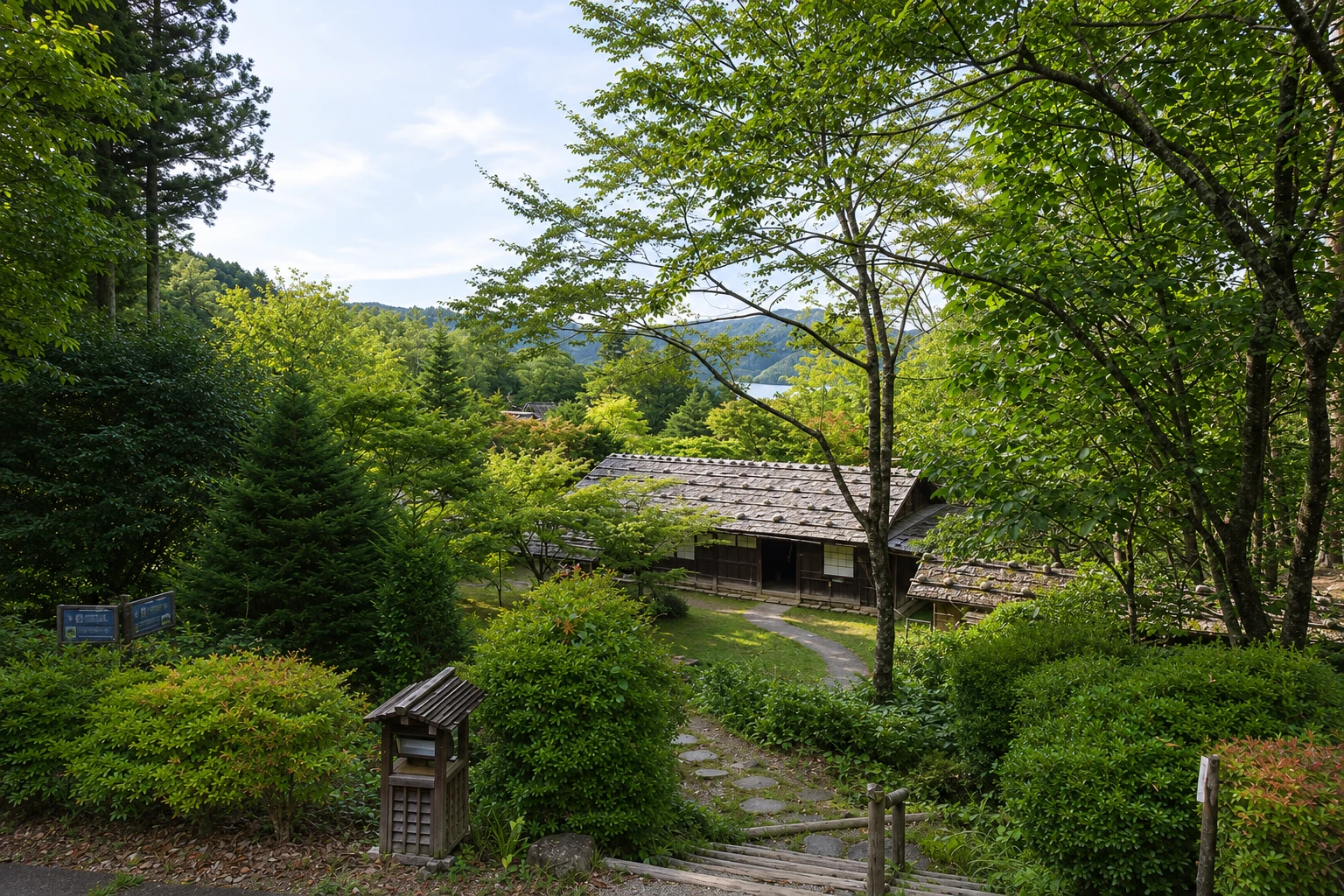
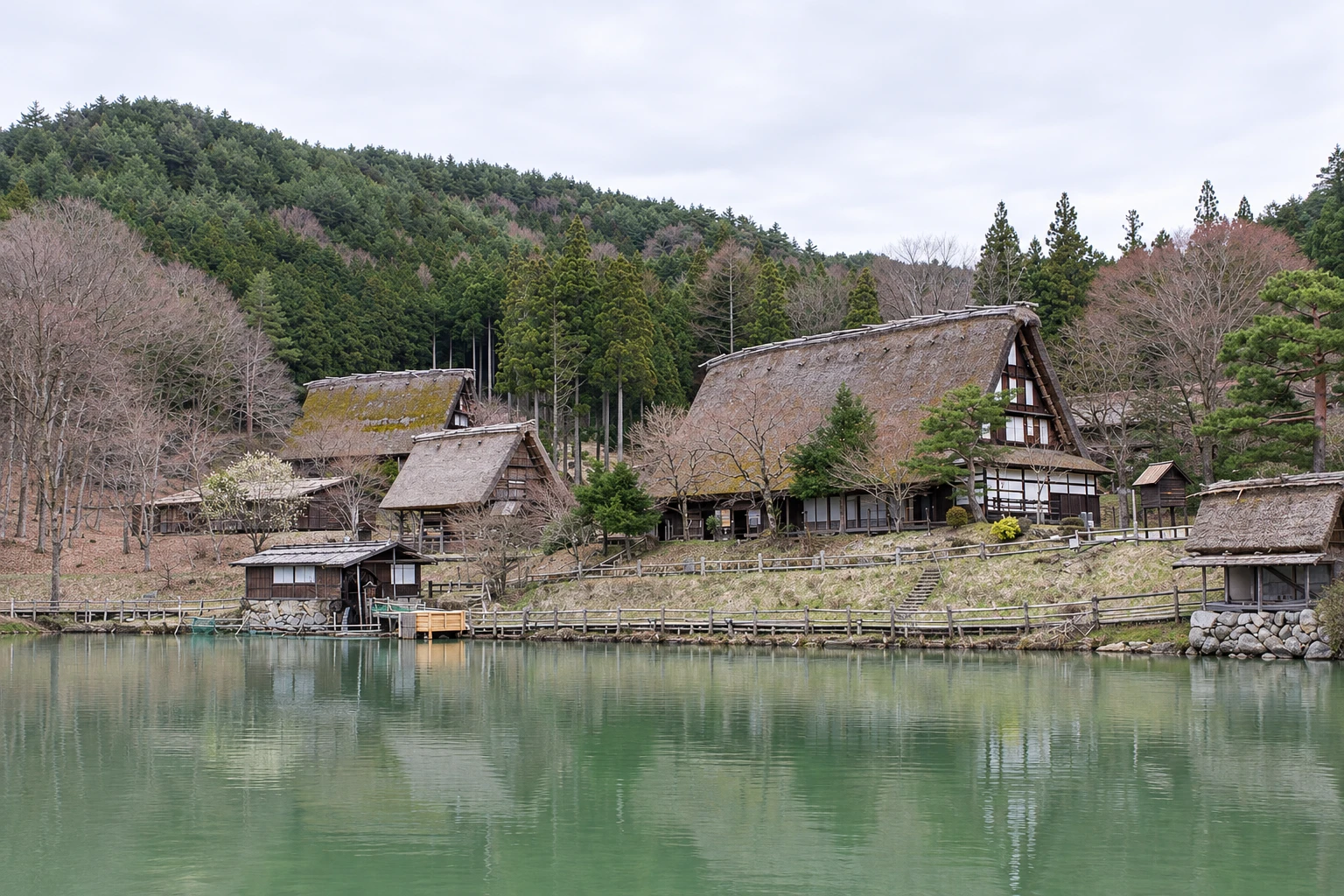
An open-air museum on a slope of Takayama, with around thirty old houses from the Hida region, including gassho-zukuri thatched-roof houses, arranged around a pond.
Illustrative images. The pictures in this guide are illustrations based on the real place, not photographs, and may differ from it.

A look at the place
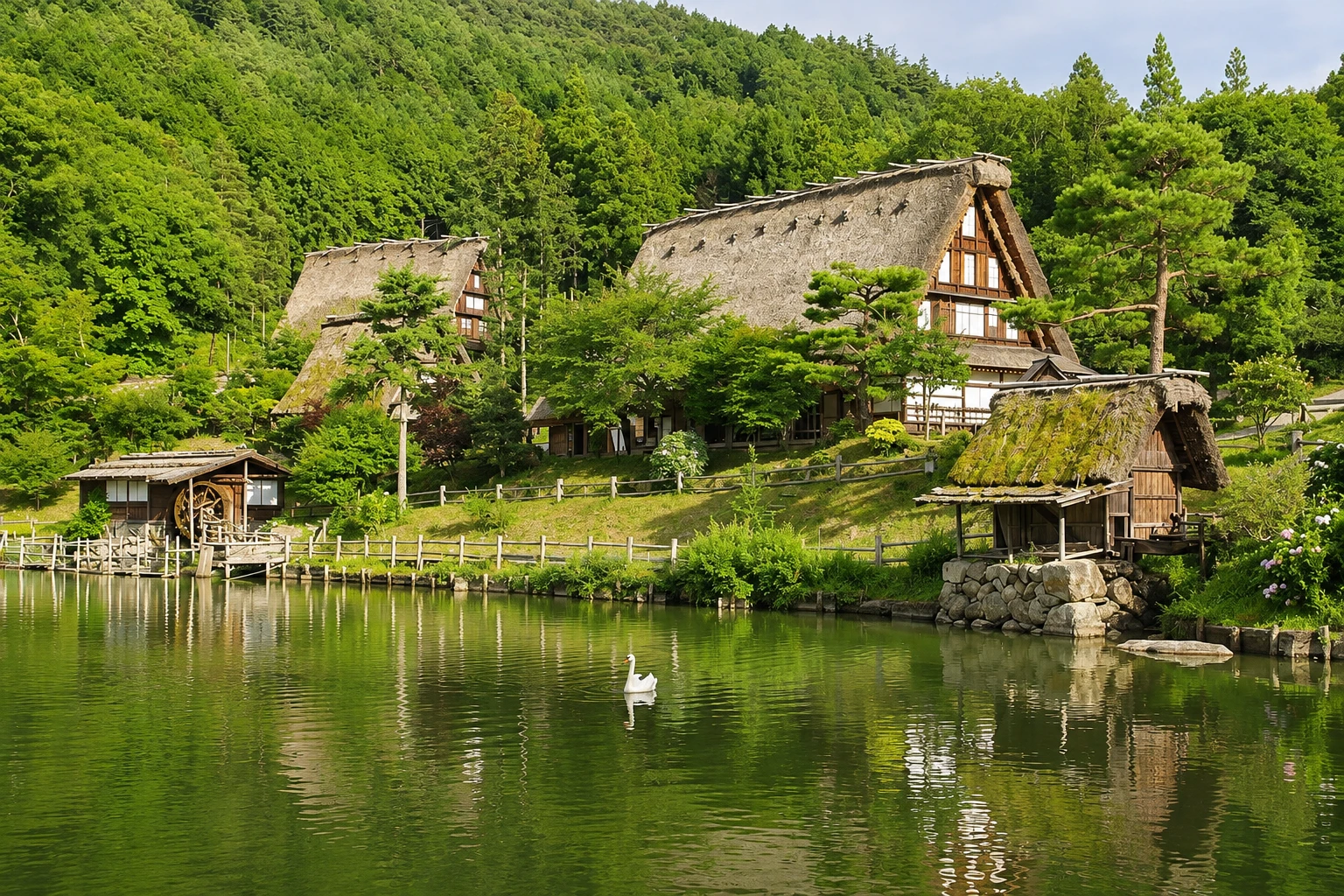
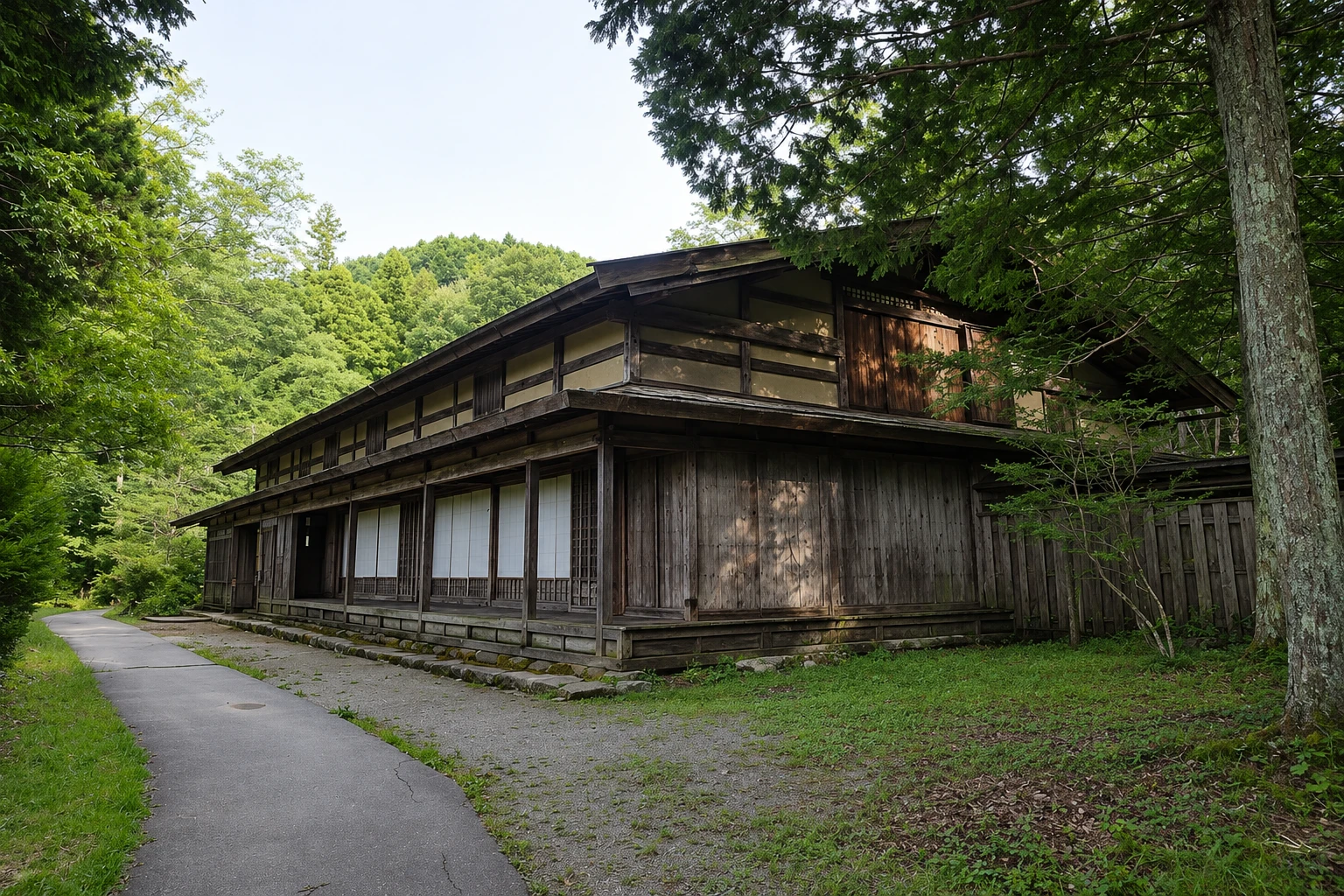
Hida Folk Village (Hida no Sato) in pictures
These pictures are illustrations based on the real place, not photographs. They may differ from the place.
Click the picture to enlarge it.
Discover
About Hida Folk Village (Hida no Sato)
Hida no Sato, the Hida Folk Village, is an open-air museum on a slope west of Takayama’s center. It brings together about thirty houses and rural buildings from the Hida region, from the Edo and Meiji periods, relocated from their original villages and reassembled around a pond, with rice fields, bridges and paths.
Among the houses are several gassho-zukuri, the same steep thatched-roof houses of Shirakawa-go, brought from villages that were flooded by dams or abandoned. There are also farmers’ houses, loggers’ houses and village chiefs’ houses, rice storehouses and a mill. Inside, the houses show sunken hearths, tools, kitchen utensils and the lofts where silkworms were raised.
In some houses, artisans demonstrate regional crafts, such as weaving, yew wood carving (ichii-ittobori) and the making of sarubobo, red faceless cloth dolls, a typical Hida charm. In some hearths, the fire is kept burning as in the old days.
For those who don’t go to Shirakawa-go, Hida no Sato gives an idea of gassho houses. For those who do visit Shirakawa-go, it shows the interiors in more detail. In winter, snow on the roofs and the frozen pond change the scene, and on some nights there is special illumination.
Before you go
Practical information
Cidade Turismo reviews its information regularly, but something may have changed. Check with the place before planning your trip.
How much time to set aside
From 1 hour 30 minutes to 2 hours.
Best time
Any time of year: in spring, the cherry trees and field flowers; in autumn, the maples around the pond, usually in October and November; in winter, the snow on the roofs. In the morning, there are fewer tour groups.
How to get there
Buses leave from the terminal next to Takayama Station and reach Hida no Sato in about 10 minutes. On foot, the walk takes about 30 minutes, uphill.
Tip
Visit Hida no Sato before Shirakawa-go to compare the interiors. Buy a sarubobo, the red faceless doll of Hida, as a souvenir.
Official website
Get your questions answered
Frequently asked questions about Hida Folk Village (Hida no Sato)
What is Hida no Sato?
An open-air museum with about thirty old houses from the Hida region, including gassho-zukuri houses, moved and reconstructed around a lake.
How do you get to Hida no Sato?
By bus from the terminal next to Takayama Station, about 10 minutes.
Is it worth going to Hida no Sato if I’m going to Shirakawa-go?
Yes, to see the interiors at a relaxed pace and other types of rural houses. Those who don’t go to Shirakawa-go can get an idea of gassho houses there.
What is a sarubobo?
A red faceless cloth doll, a typical Hida amulet, sold as a souvenir in Takayama.
How long does a visit to Hida no Sato take?
About 1h30 to 2 hours.
Beyond the guide


