

 Brazil
 Antarctica
 Argentina
 Bolivia
 Chile
 Colombia
 Ecuador
 Guyana
 French Guiana
 Falkland Islands (Malvinas)
 Paraguay
 Peru
 Suriname
 Uruguay
 Venezuela
 Germany
 Austria
 Belgium
 Croatia
 Denmark
 Slovakia
 Slovenia
 Spain
 Finland
 France
 Greece
 the Netherlands
 Hungary
 Ireland
 Iceland
 Italy
 Luxembourg
 Norway
 Poland
 Portugal
 the United Kingdom
 the Czech Republic
 Sweden
 Switzerland
 Turkey
 Bermuda
 Canada
 the United States
 Greenland
 Mexico
 Saint Pierre and Miquelon
 the Dominican Republic
 South Africa
 Egypt
 Australia
 Fiji
 New Zealand
 Papua New Guinea
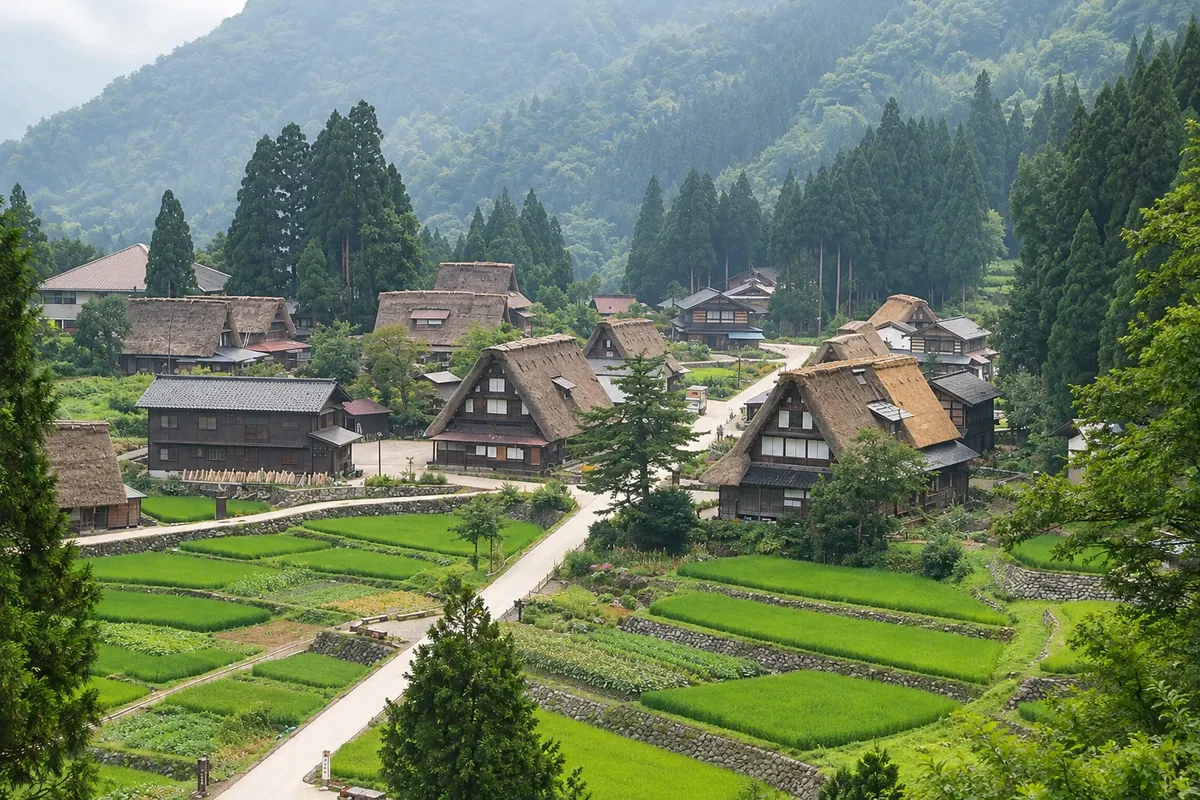
Historic village · Shirakawa, Gifu
Gokayama (Ainokura, Suganuma)
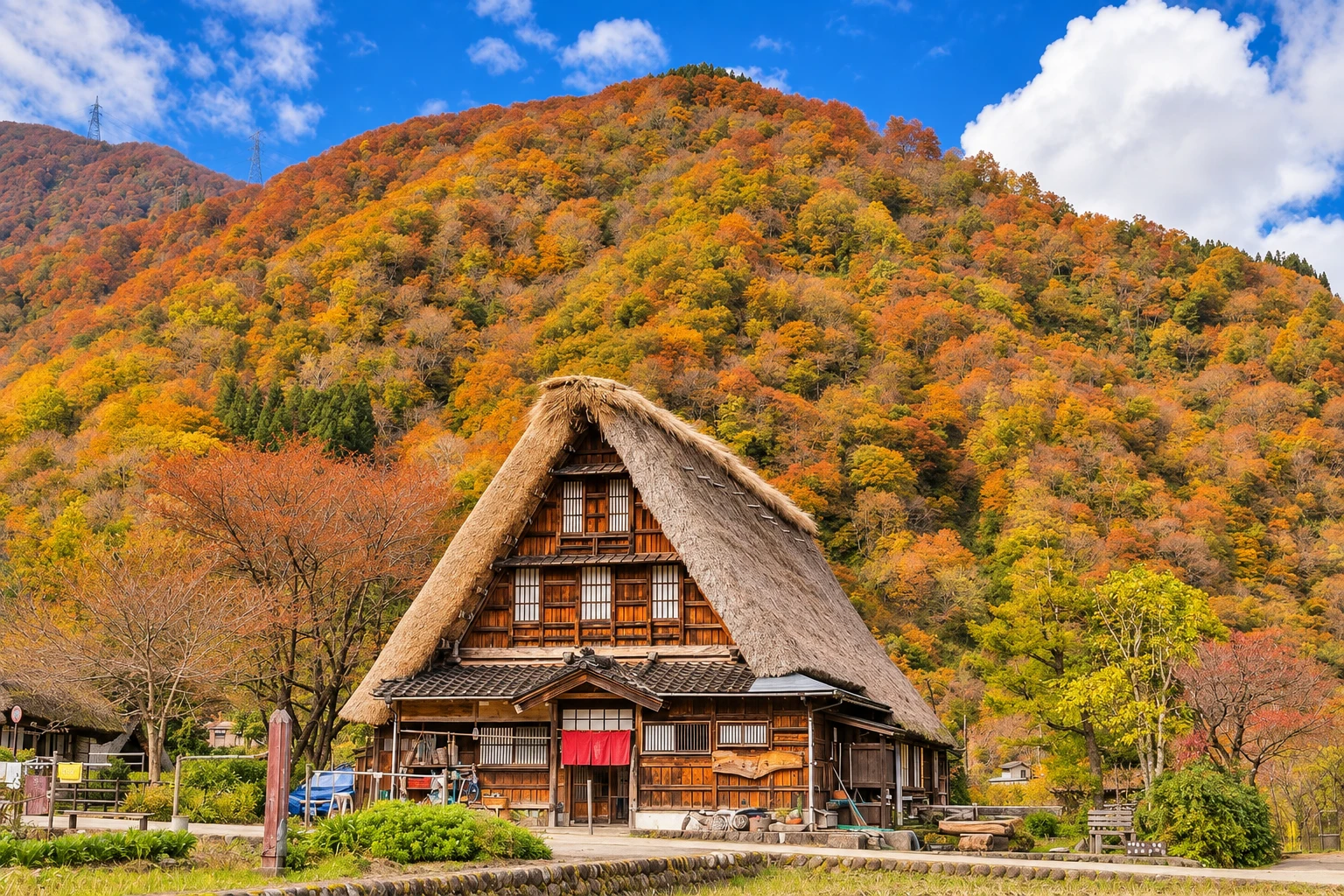
The villages of Ainokura and Suganuma in Toyama, with gassho-zukuri houses in a mountain valley, quieter than Shirakawa-go and part of the same World Heritage site.
Illustrative images. The pictures in this guide are illustrations based on the real place, not photographs, and may differ from it.

A look at the place
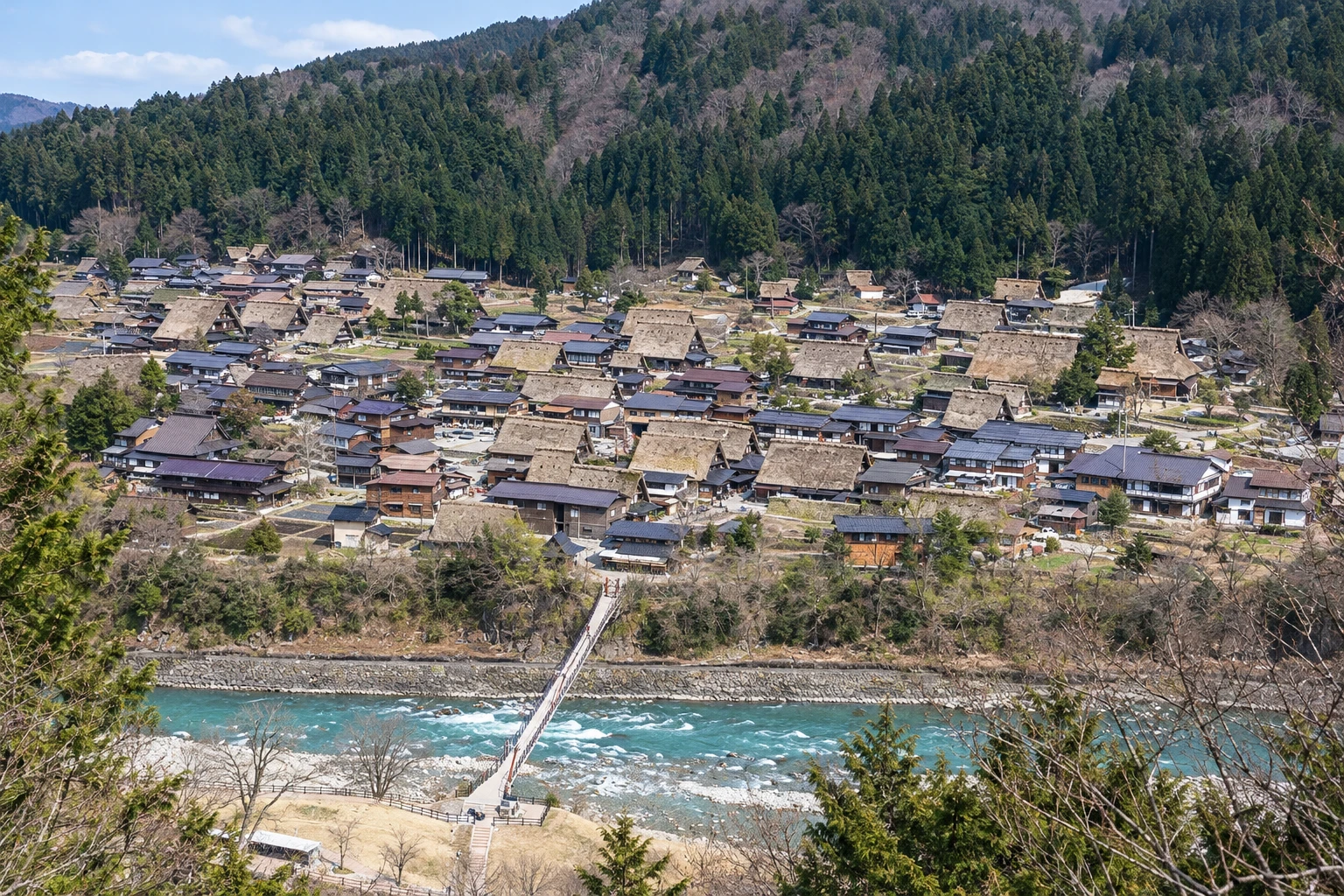
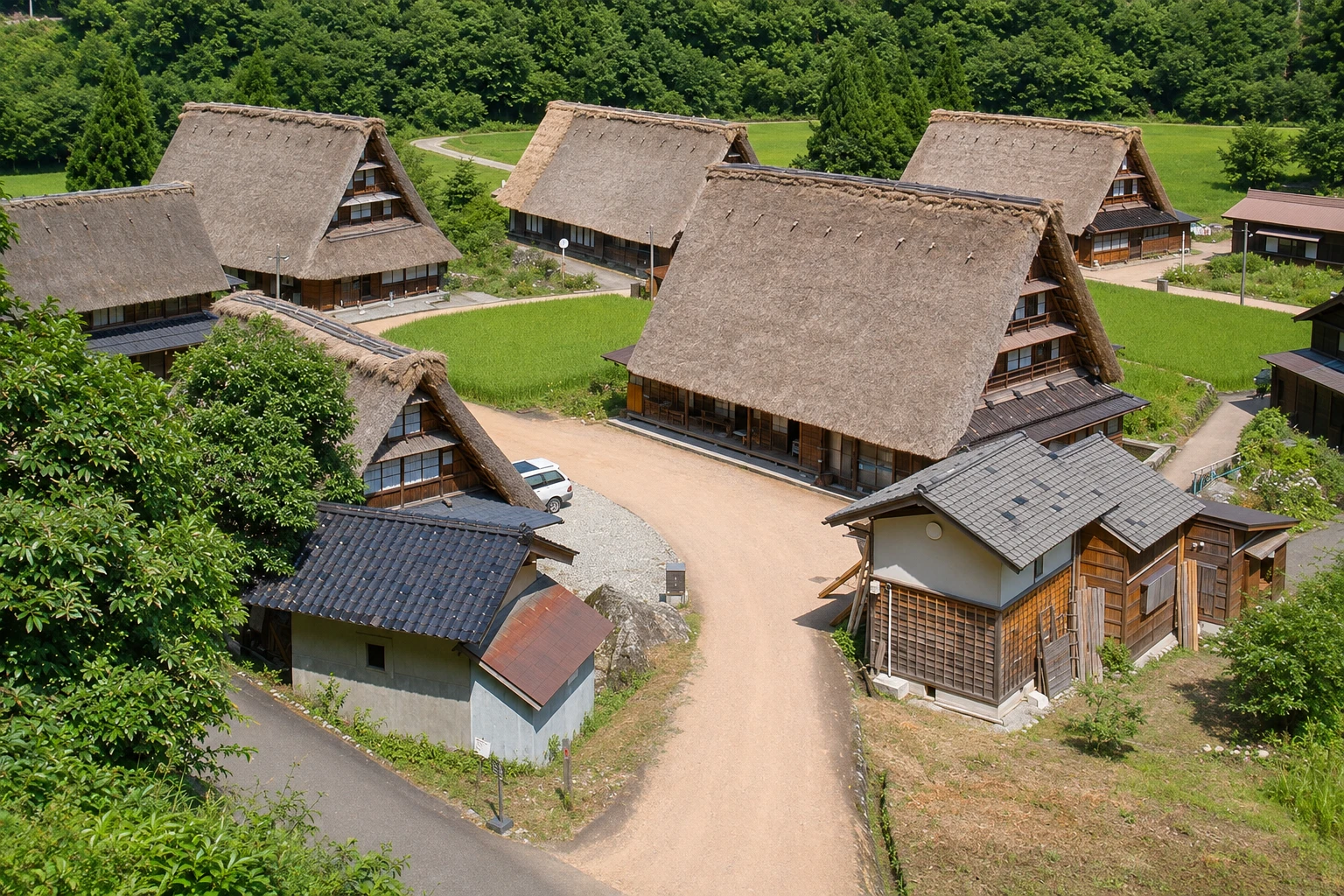
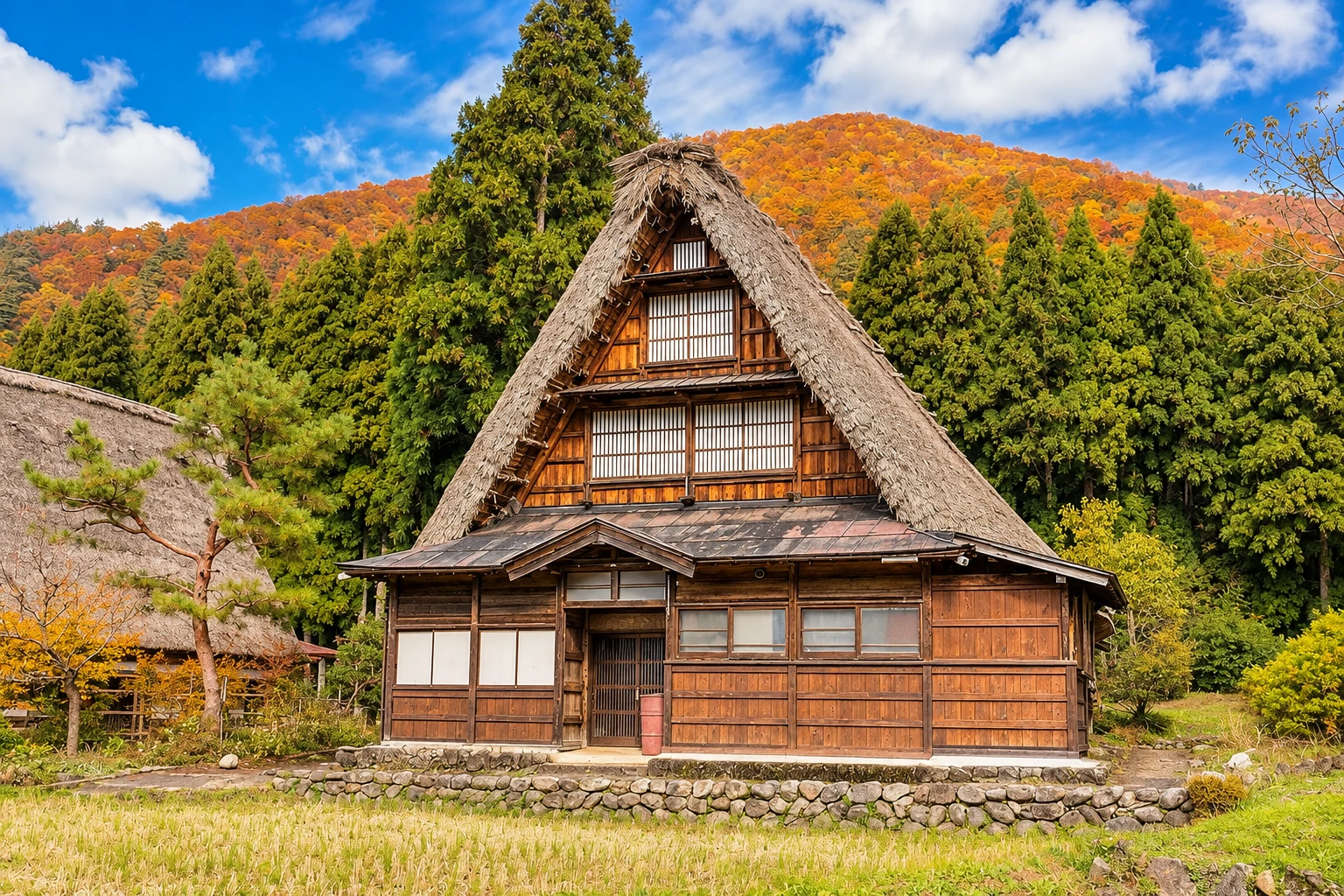
Gokayama (Ainokura, Suganuma) in pictures
These pictures are illustrations based on the real place, not photographs. They may differ from the place.
Click the picture to enlarge it.
Discover
About Gokayama (Ainokura, Suganuma)
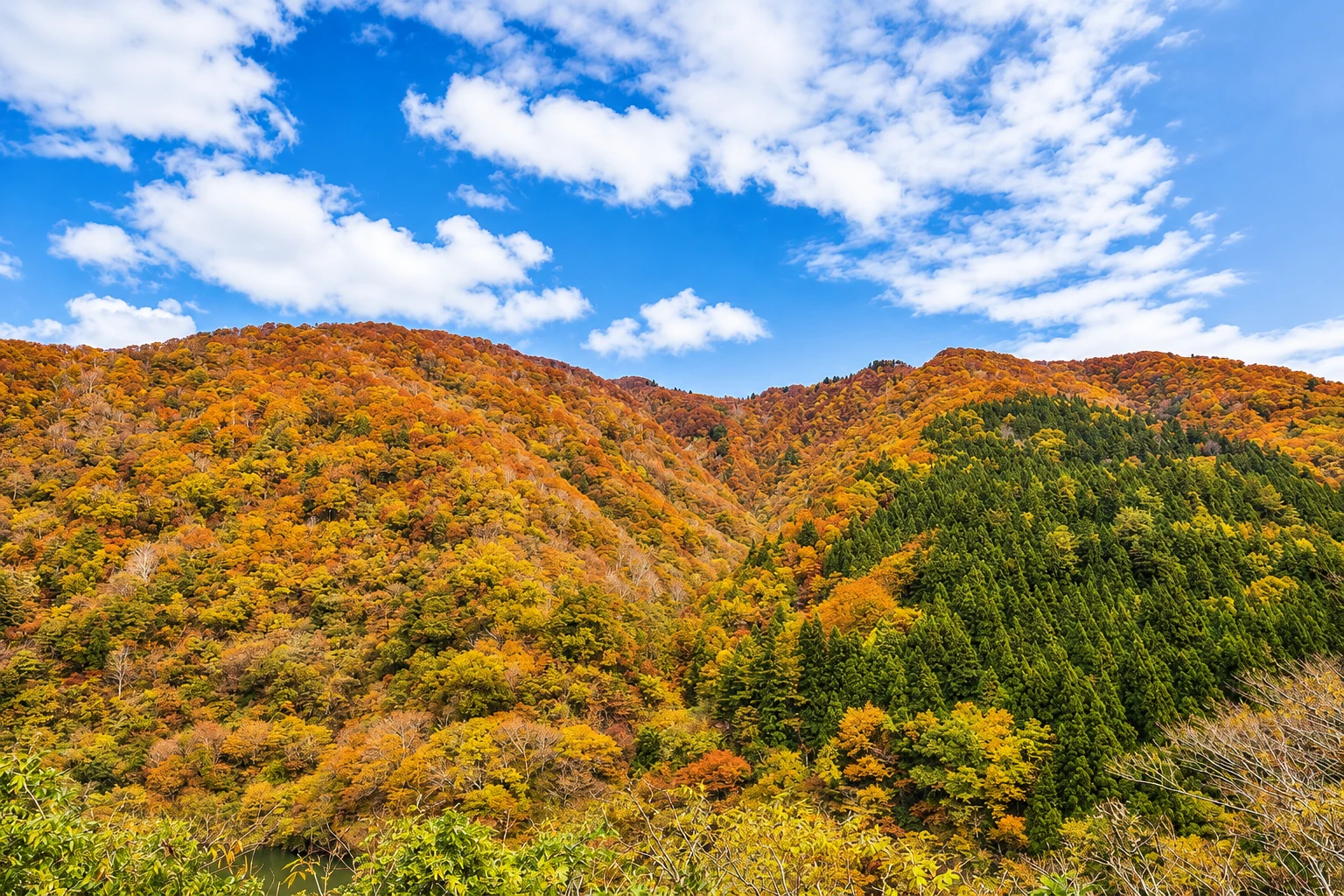
Gokayama is a region of mountain valleys in southern Toyama Prefecture, downstream on the Sho River from Shirakawa-go, now part of the city of Nanto. Two of its villages, Ainokura and Suganuma, are part of the Historic Villages of Shirakawa-go and Gokayama World Heritage site. They are smaller and more isolated than Ogimachi and receive fewer visitors.
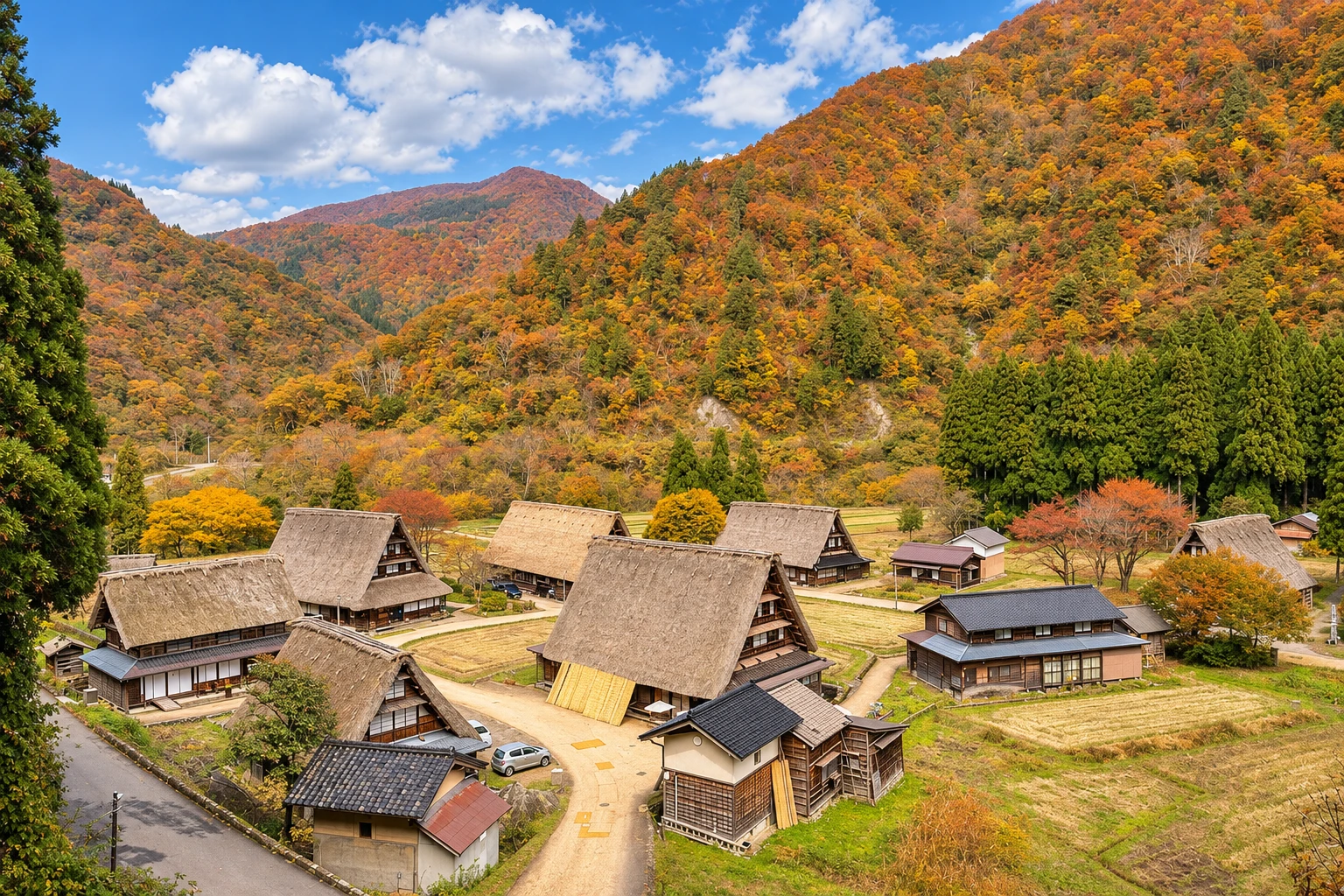
Ainokura has about twenty gassho-zukuri houses on a hillside, with terraced rice fields and a cedar forest at the back. A path climbs to a viewpoint from which you can see the entire village. Some houses operate as family-run guesthouses, and there is a small museum of rural life and shops selling handmade paper.
Suganuma, lower in the valley, has a few houses on a river bend, connected to the parking area by an elevator and a tunnel. There is the saltpeter museum, which tells how the region secretly produced the gunpowder ingredient for the Kaga domain in the upper floors of houses. Another museum displays residents’ tools and way of life.
Gokayama is known for handmade washi paper, which can be produced in workshops, and for the folk song Kokiriko, one of Japan’s oldest, accompanied by wooden instruments. The villages are lit on some winter nights, and snow covers the roofs from December to March.
Before you go
Practical information
Cidade Turismo reviews its information regularly, but something may have changed. Check with the place before planning your trip.
How much time to set aside
Allow 1 to 2 hours per village; half a day for both.
Best time
Spring and autumn, with fresh green and mountain colors; winter with snow from December to March. The villages are quieter than Shirakawa-go at any time, especially on weekdays.
How to get there
Buses connect Shirakawa-go with Suganuma and Ainokura in about 30 to 45 minutes, and continue to Takaoka and Shin-Takaoka stations in Toyama. Services are infrequent; having a car makes visiting both villages easier.
Tip
Visit Gokayama en route between Shirakawa-go and Takaoka or Kanazawa if you have a car or if the bus schedules allow. In Ainokura, climb to the viewpoint behind the village.
Official website
Get your questions answered
Frequently asked questions about Gokayama (Ainokura, Suganuma)
What’s the difference between Shirakawa-go and Gokayama?
They’re part of the same World Heritage site, but Gokayama’s villages, Ainokura and Suganuma, are smaller, more isolated and quieter than Ogimachi in Shirakawa-go.
How do you get to Gokayama?
By bus from Shirakawa-go or from Takaoka Station in Toyama with limited schedules, or by car.
Can you visit Shirakawa-go and Gokayama in the same day?
Yes, but bus services are limited. By car, the two Gokayama villages are about 30 to 45 minutes from Shirakawa-go.
What is the Kokiriko song?
A folk song from Gokayama, considered one of the oldest in Japan, accompanied by wooden instruments.
Can you sleep in Gokayama?
Yes. In Ainokura and Suganuma there are gassho houses that operate as family-run guesthouses, by reservation.
Beyond the guide


