

 Brazil
 Antarctica
 Argentina
 Bolivia
 Chile
 Colombia
 Ecuador
 Guyana
 French Guiana
 Falkland Islands (Malvinas)
 Paraguay
 Peru
 Suriname
 Uruguay
 Venezuela
 Germany
 Austria
 Belgium
 Croatia
 Denmark
 Slovakia
 Slovenia
 Spain
 Finland
 France
 Greece
 the Netherlands
 Hungary
 Ireland
 Iceland
 Italy
 Luxembourg
 Norway
 Poland
 Portugal
 the United Kingdom
 the Czech Republic
 Sweden
 Switzerland
 Turkey
 Bermuda
 Canada
 the United States
 Greenland
 Mexico
 Saint Pierre and Miquelon
 the Dominican Republic
 South Africa
 Egypt
 Australia
 Fiji
 New Zealand
 Papua New Guinea
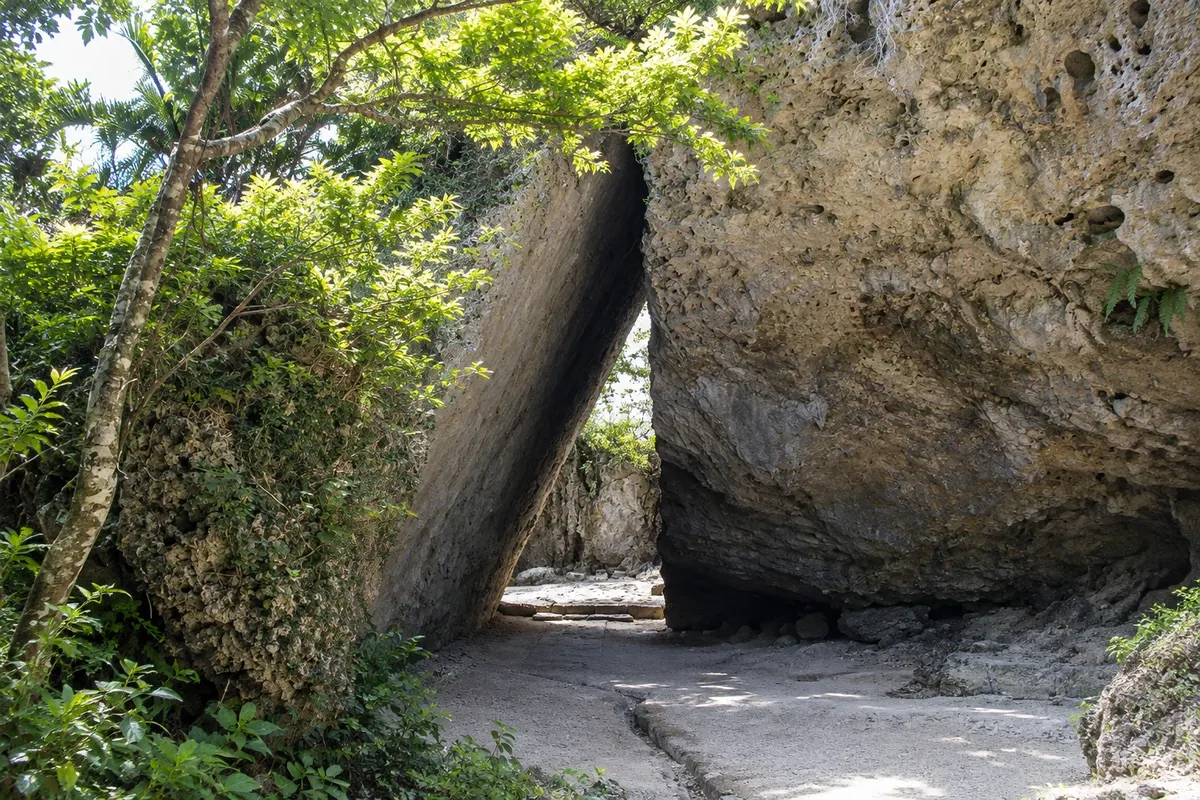
Sacred site · Naha, Okinawa
Sefa-utaki
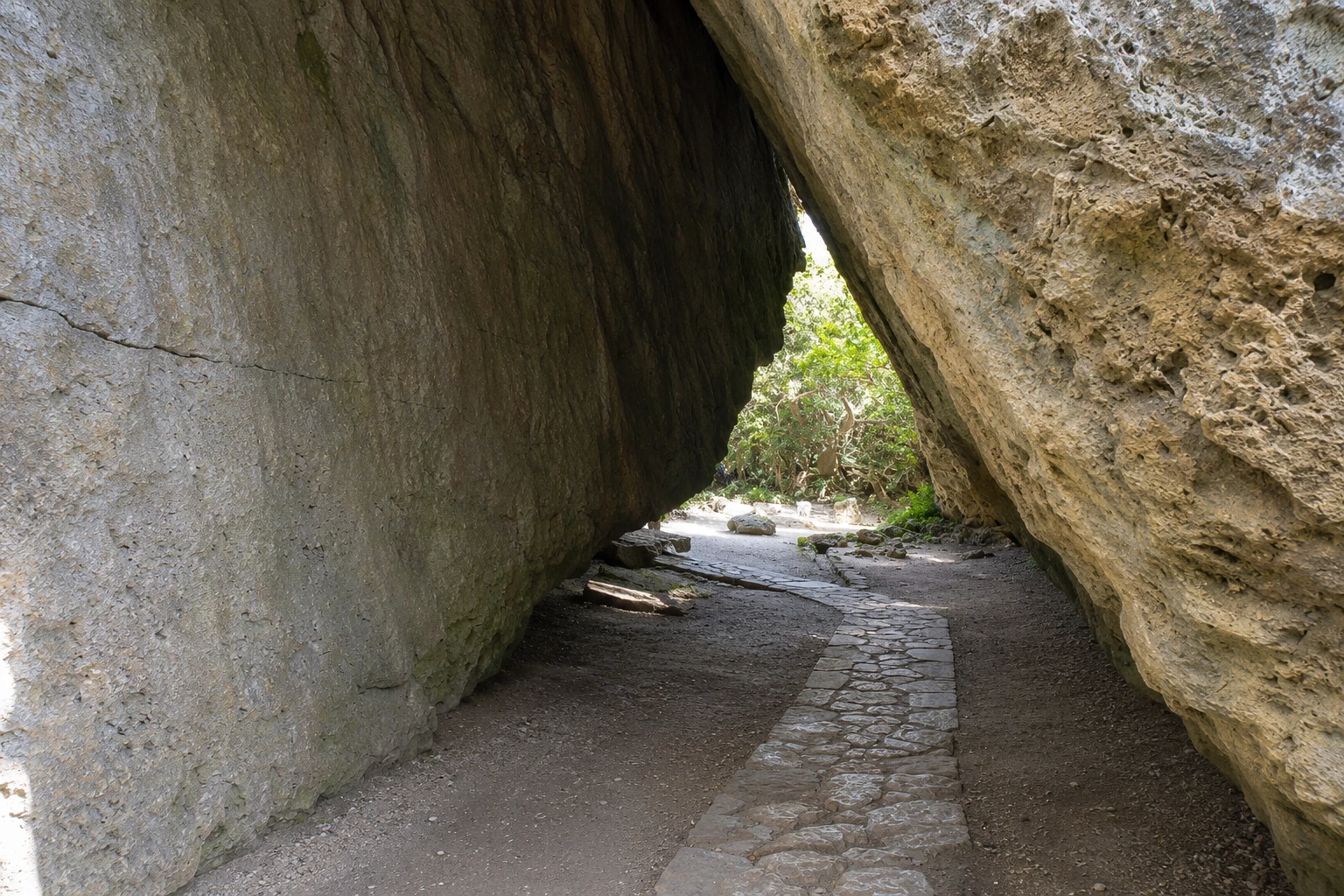
The most important sacred site of the former Ryukyu Kingdom, in a limestone-rock forest in the south of the island, with a triangular fissure that frames a view of Kudaka Island. World Heritage site.
Illustrative images. The pictures in this guide are illustrations based on the real place, not photographs, and may differ from it.

A look at the place
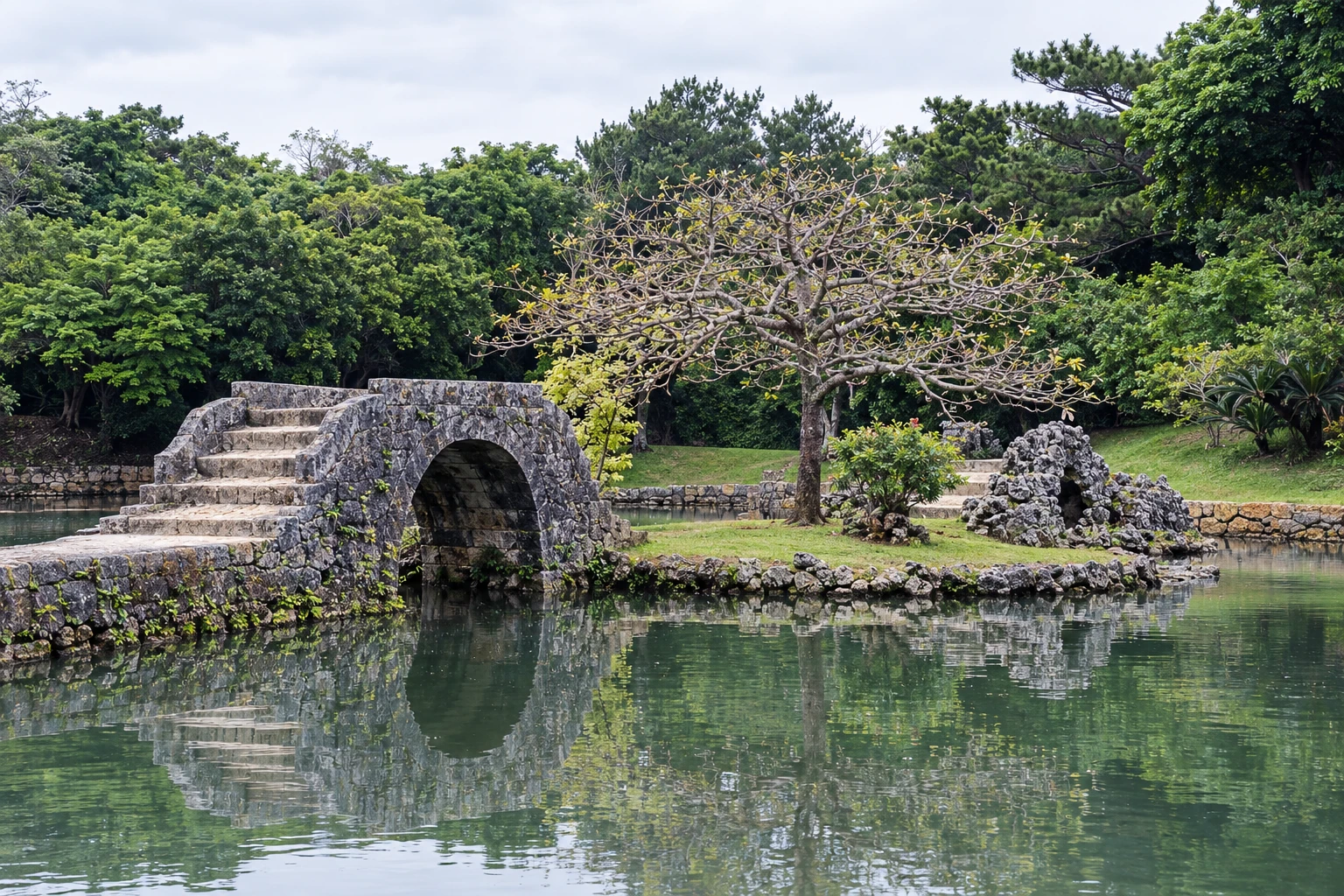
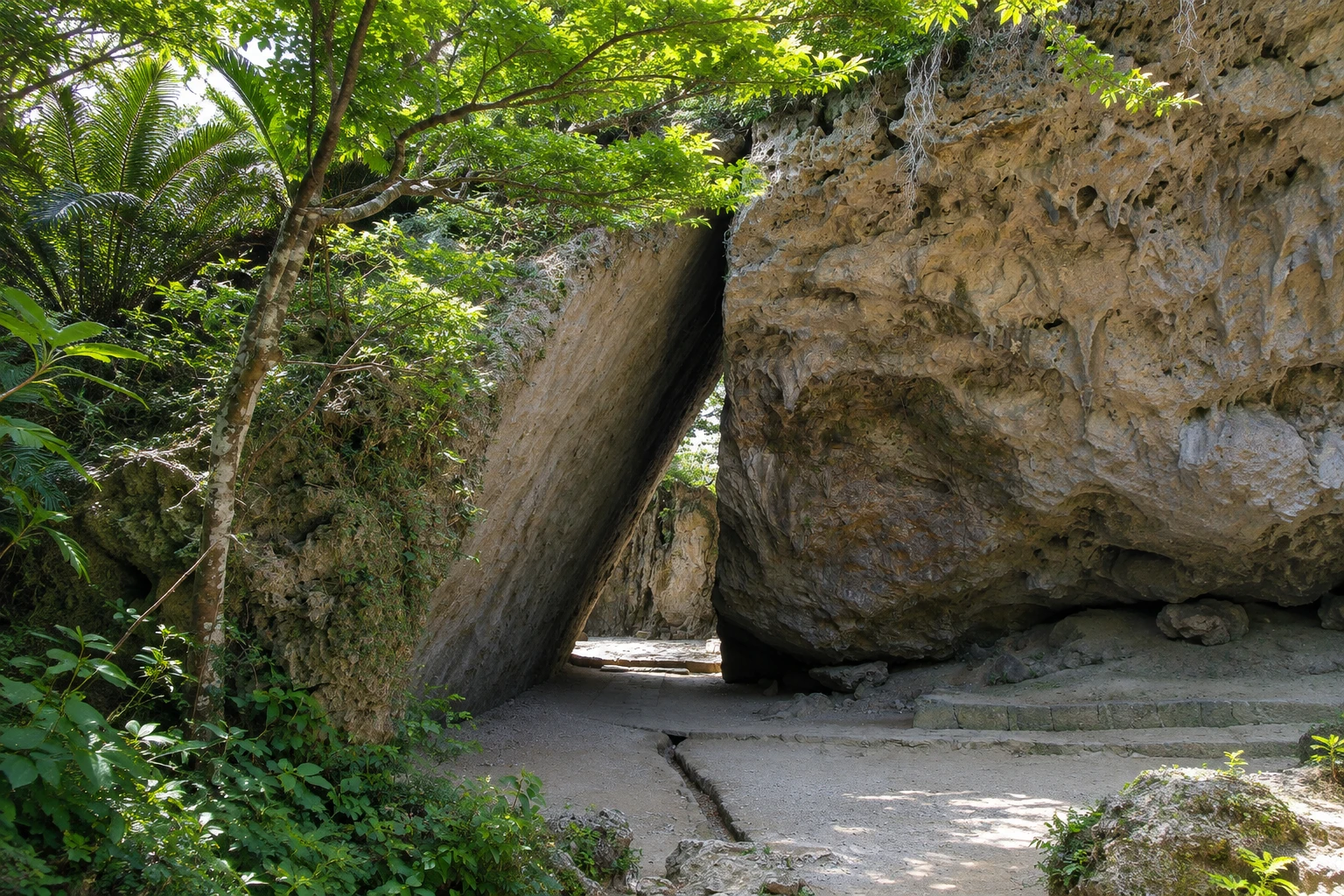
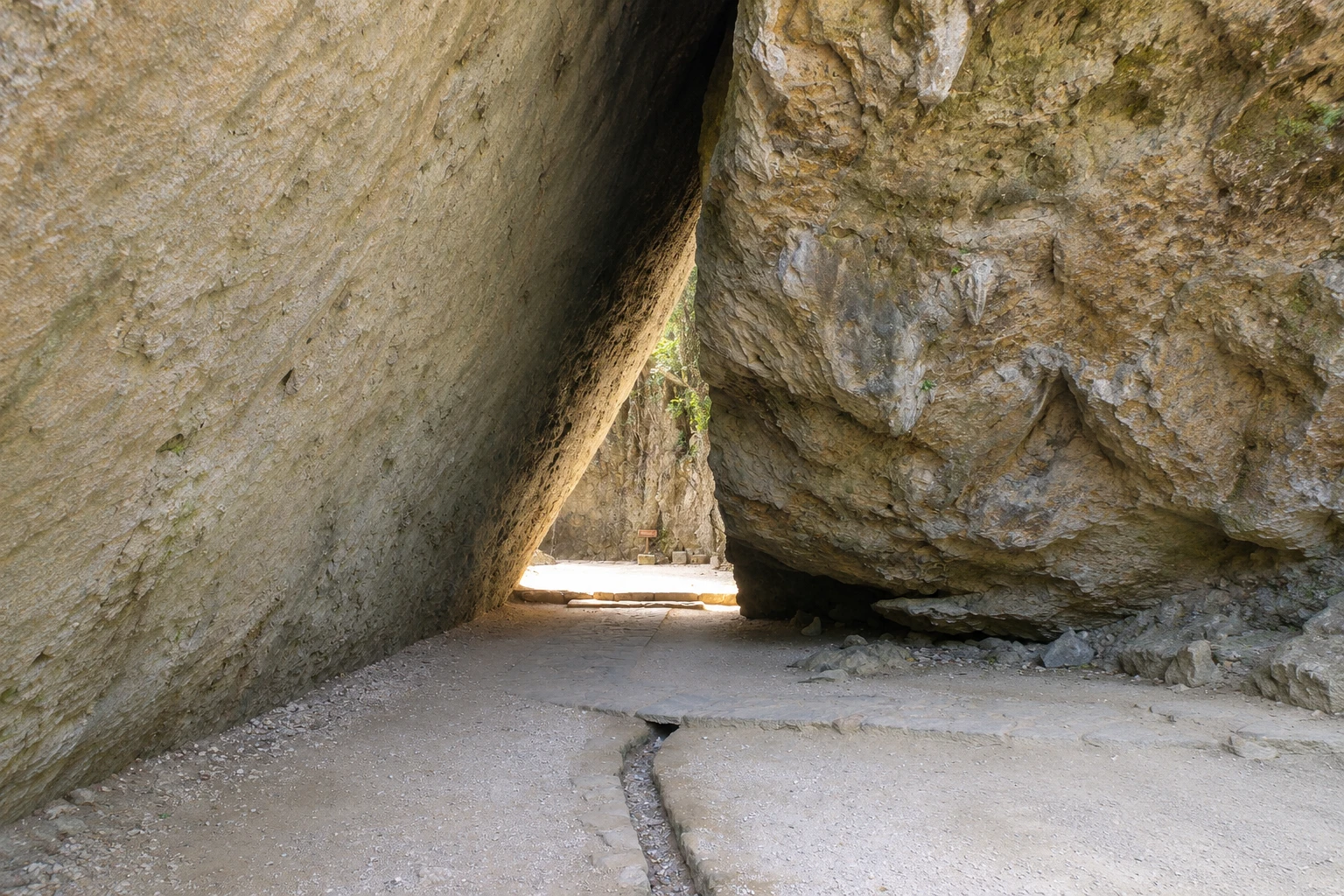
Sefa-utaki in pictures
These pictures are illustrations based on the real place, not photographs. They may differ from the place.
Click the picture to enlarge it.
Discover
About Sefa-utaki
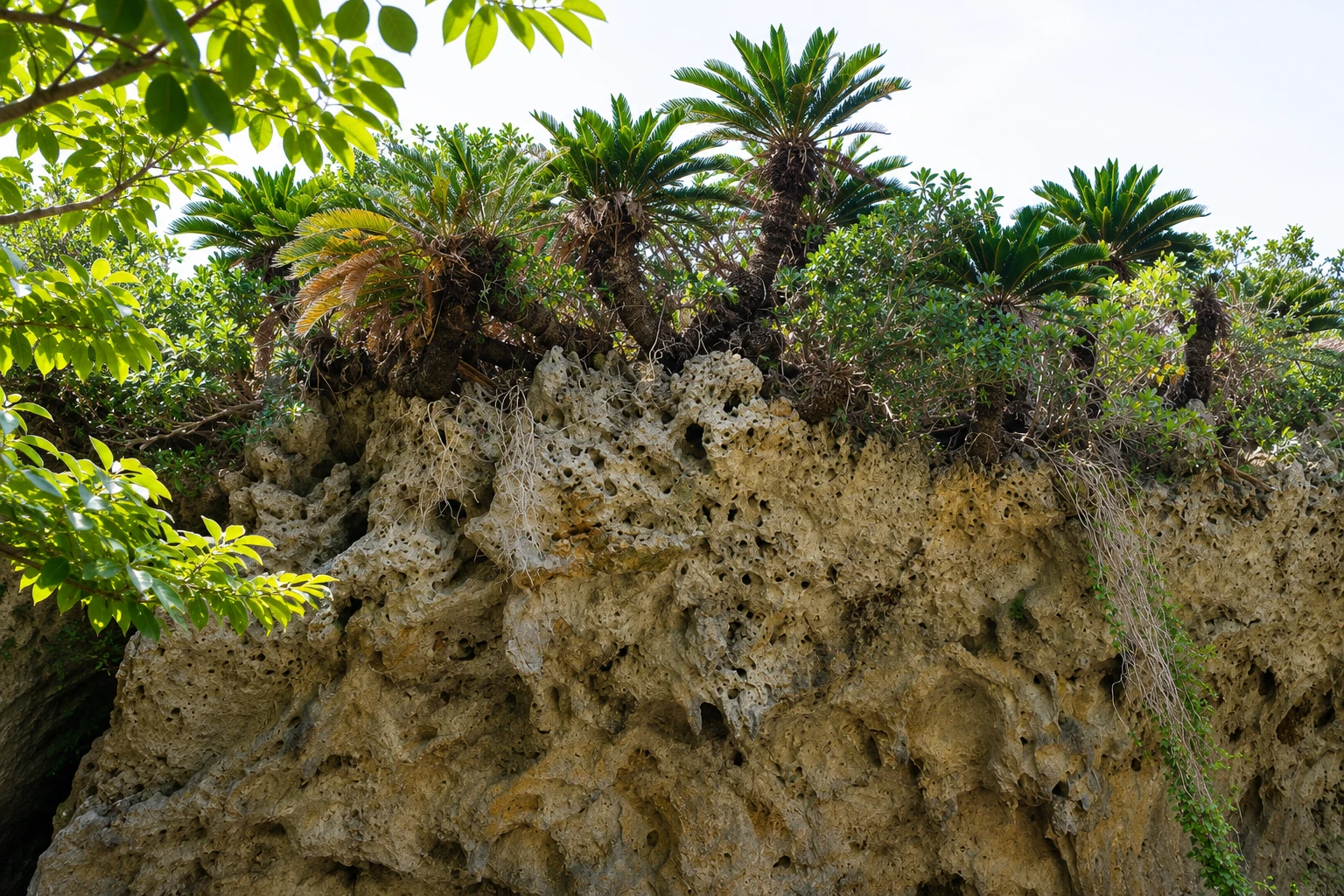
Sefa-utaki is in Nanjo, in the southeastern part of Okinawa Island, and was the most important sacred site of the Ryukyu Kingdom. Utaki are the sacred groves and rock formations of Okinawan traditional religion, connected to ancestors and nature deities. There, the kingdom’s supreme priestess, the Kikoe-ogimi, was consecrated in a special ceremony, and the royal family made pilgrimages.
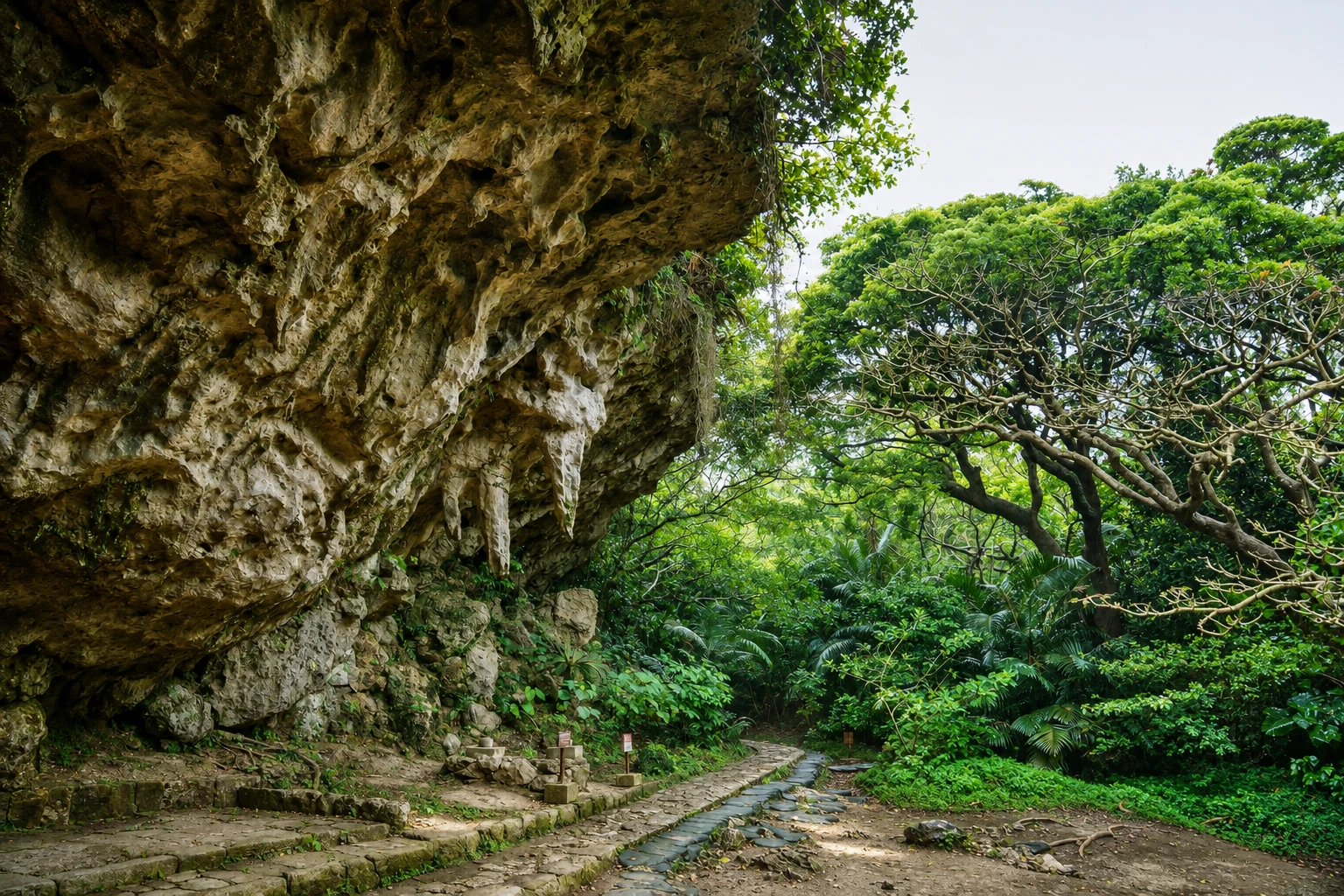
There are no temples or buildings: the sanctuary is the subtropical forest itself and the limestone rock formations. A stone-paved trail passes six prayer points, called ibi, each in a rocky nook. The best-known is Sangui, where two large stone slabs lean against each other and form a triangular passage. Beyond it, an opening in the vegetation reveals Kudaka Island on the horizon, considered the island of the gods in local tradition.
The site is part of the Ryukyu Kingdom sites inscribed by UNESCO in 2000. Because it is sacred and fragile, access is regulated: entry is through the ticket office at a visitor center a few minutes’ walk away, where a video explains the site; there are closing days linked to the ritual calendar; and you must not touch the prayer stones or take anything.
The visit is short, but the stone path is uneven and wet. Many locals still come to pray; silence is expected.
Before you go
Practical information
Cidade Turismo reviews its information regularly, but something may have changed. Check with the place before planning your trip.
How much time to set aside
About 1 hour, including the visitor center.
Best time
In the morning, right after opening, before groups arrive and before the heat. The site closes on some days of the year for ritual reasons; check before you go.
How to get there
It is in Nanjo, about 25 km from central Naha. By car, around 50 minutes; park at the Nanjo City Local Products Center and walk about 10 minutes. By bus, lines from the Naha terminal stop nearby, about a 1-hour ride.
Tip
Buy your ticket at the visitor center before following the trail and wear closed shoes, because the stones are slippery. Do not touch the prayer points and keep quiet.
Official website
Get your questions answered
Frequently asked questions about Sefa-utaki
What is Sefa-utaki?
It is the most important sacred place of the former Ryukyu Kingdom, a forest with limestone rocks and prayer points where the kingdom’s supreme priestess was consecrated. It is part of the World Heritage listing.
Is Sefa-utaki open every day?
No. It is closed on some days of the year according to the ritual calendar and may close in bad weather. Closure dates are posted on Nanjo’s website.
How do I get to Sefa-utaki from Naha?
By car, in about 50 minutes, or by bus from the Naha terminal in about 1 hour. Tickets are bought at a visitor center about a 10-minute walk from the entrance.
What are the visiting rules at Sefa-utaki?
Stay on the trail, do not touch the prayer stones, do not take stones or plants and keep quiet, as locals still come to pray. Wear closed shoes.
Beyond the guide


